
Professional Nail Drill Bit Set Materials Compared: Carbide, Ceramic, or Diamond
Professional Nail Drill Bit Set Materials Compared: Carbide, Ceramic, or Diamond
Choosing a professional nail drill bit set is rarely a simple material preference. In real salon and distribution environments, carbide, ceramic, and diamond bits behave differently under load, speed, heat, and repeated sterilization. That is why material comparison matters in the light industrial daily-use sector, where product consistency, operator safety, and long service life directly affect purchasing decisions and end-user satisfaction.
A useful evaluation goes beyond catalog claims. The right professional nail drill bit set should be judged by cutting efficiency, debris control, heat generation, surface finish, and durability across repeated use cycles. For companies supplying multiple markets, stable quality control also becomes part of the material discussion, because bit performance depends not only on raw material type, but also on machining accuracy, grit uniformity, and packing reliability.
Why material choice has become a practical business issue
Nail tools are part of everyday professional consumption, but they are not low-impact accessories. A poor bit can slow service time, increase heat on the nail plate, leave uneven removal marks, or wear out too quickly.
For that reason, buyers comparing a professional nail drill bit set now look at total working value rather than unit price alone. Material affects replacement frequency, training requirements, and suitability for gel removal, cuticle work, surface preparation, or finishing.
This is especially relevant for businesses handling large-volume supply. Wuxi Yaqin Trading Co., Ltd. operates with a strict QC system covering raw material purchasing, production process, and product packing, while supporting global export and OEM/ODM needs. In that context, material comparison is closely tied to repeatability and risk control.
Three materials, three performance profiles
Although shapes and grit patterns also matter, the base material often sets the performance ceiling. Carbide, ceramic, and diamond are each useful, but they solve different working problems.
Carbide for removal speed and production efficiency
Carbide remains the benchmark for aggressive, controlled removal. In a professional nail drill bit set, it is often selected for reducing hard gel, acrylic overlays, and product bulk without excessive pressure.
Its cutting structure removes material in chips rather than fine dust alone, which can improve speed and working clarity. When the flute geometry is accurate, carbide bits stay efficient over many service cycles.
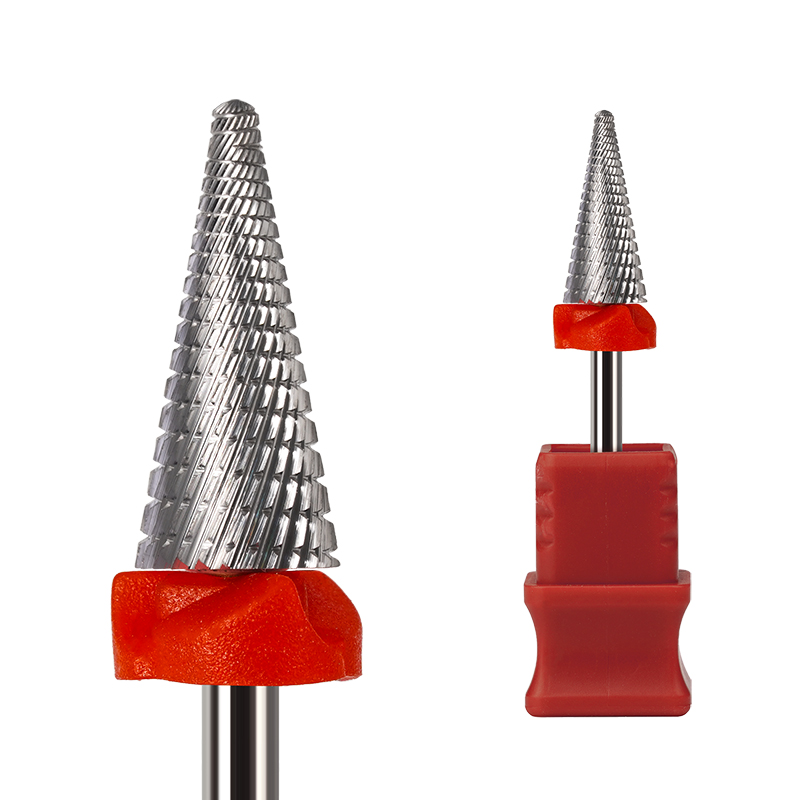
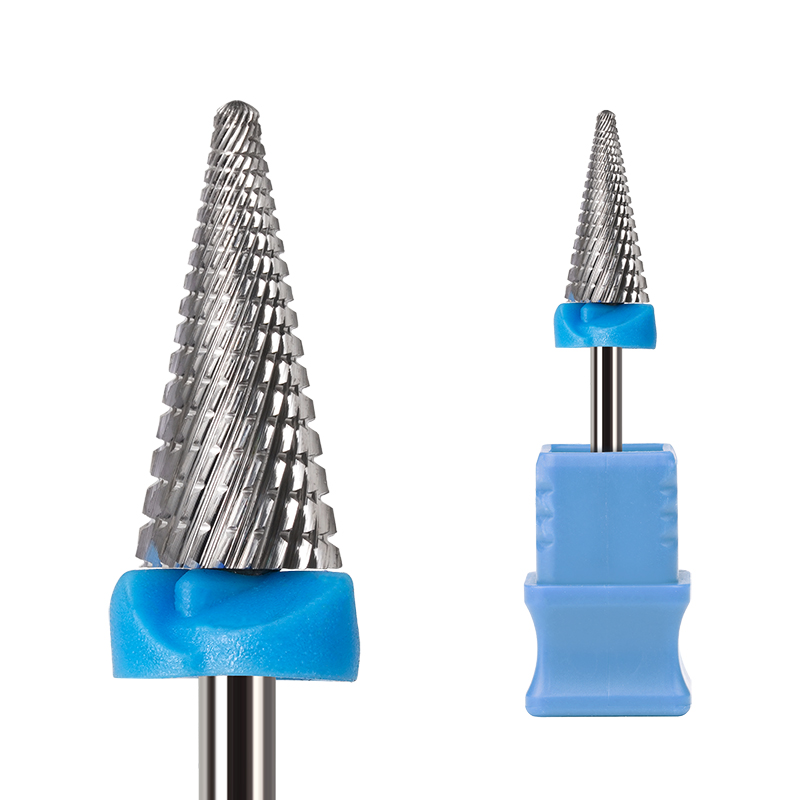
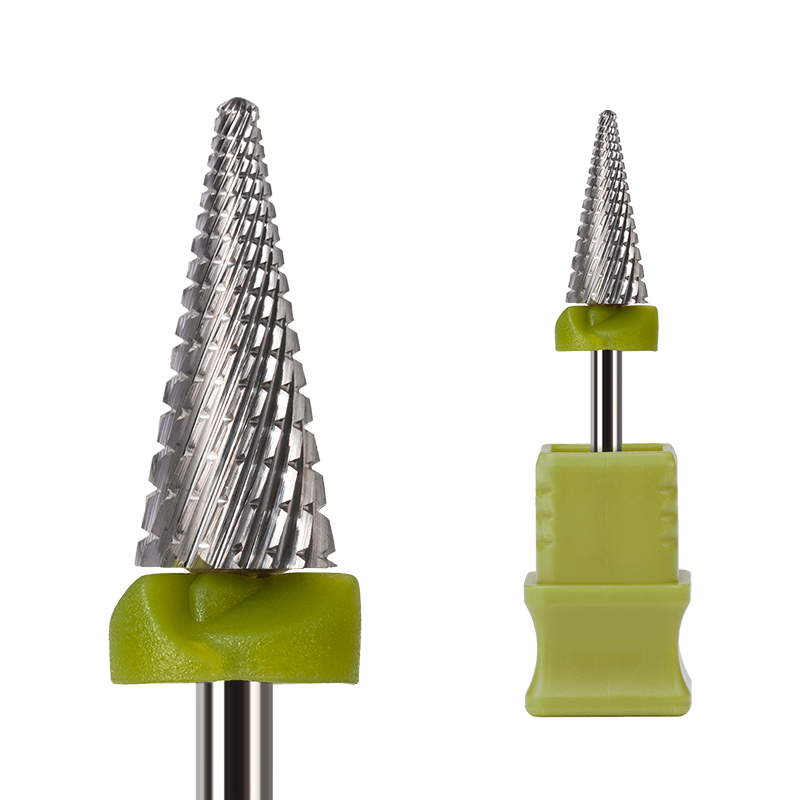
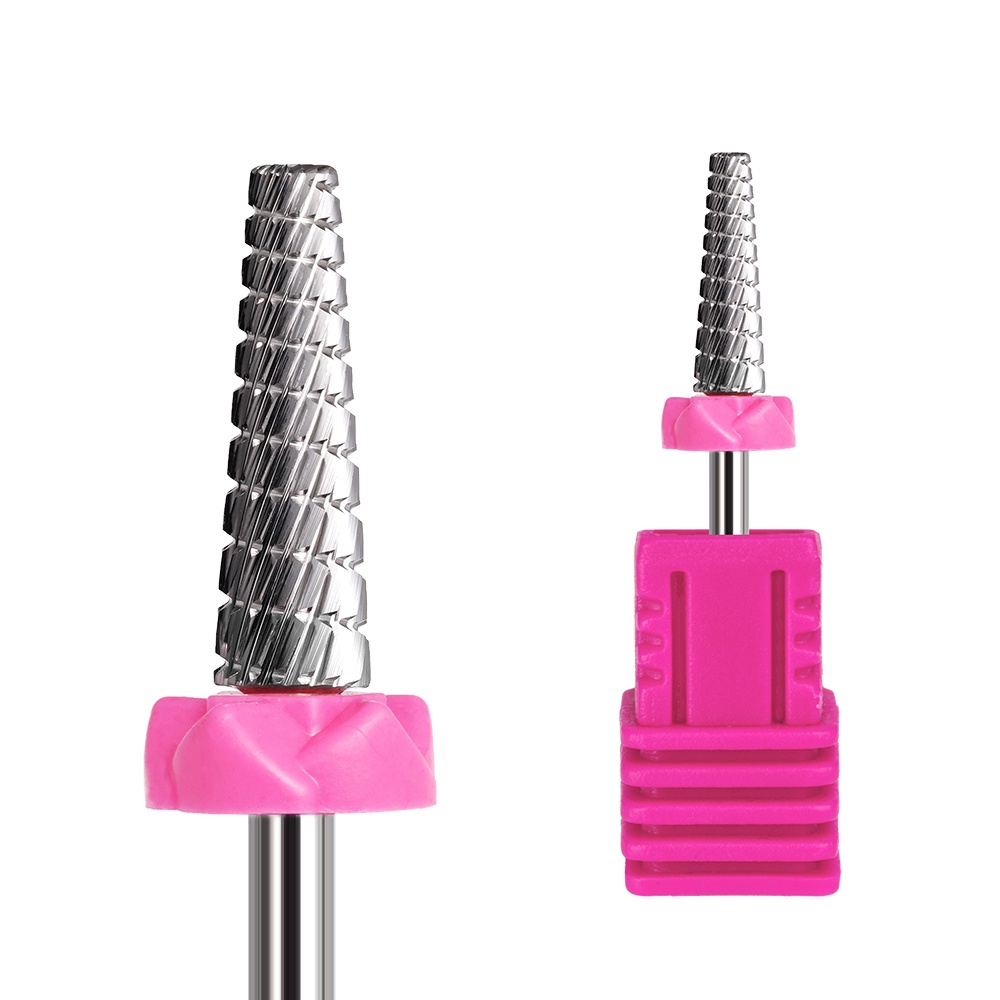
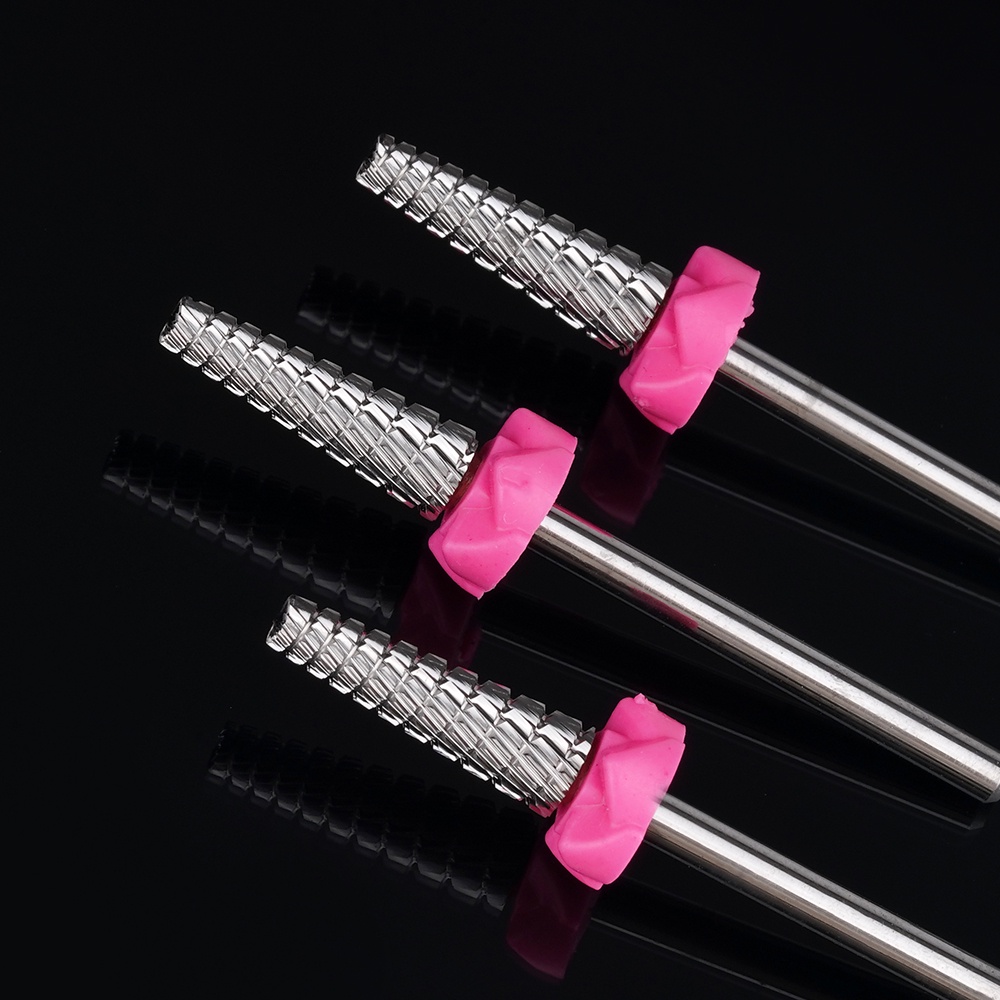
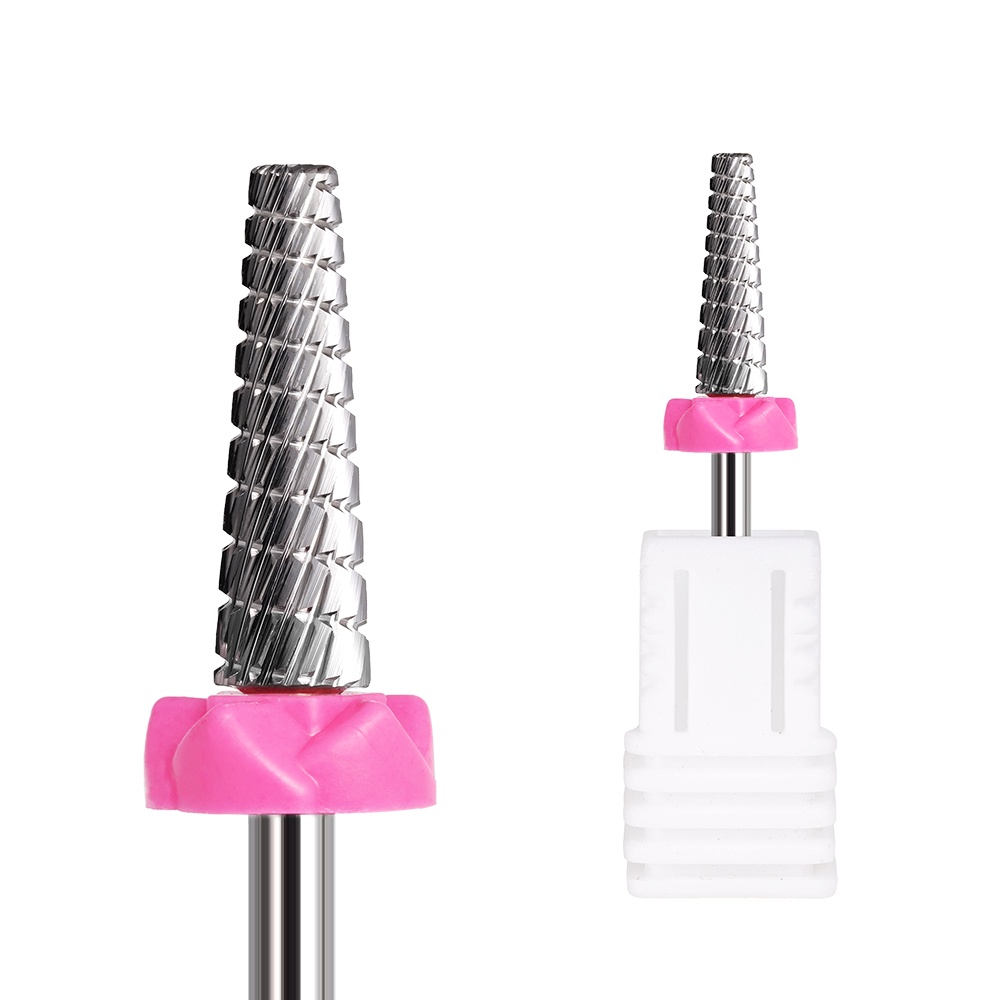
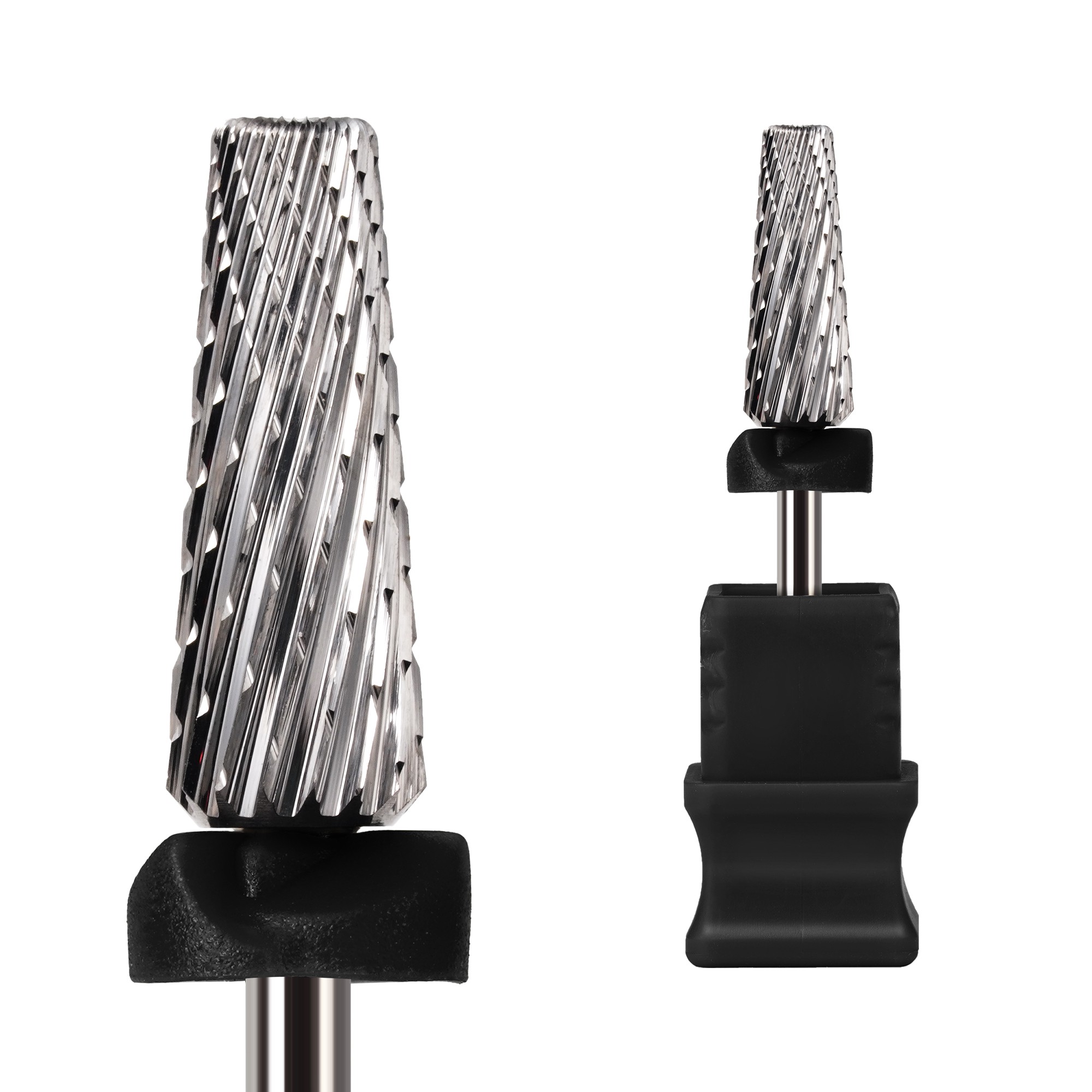
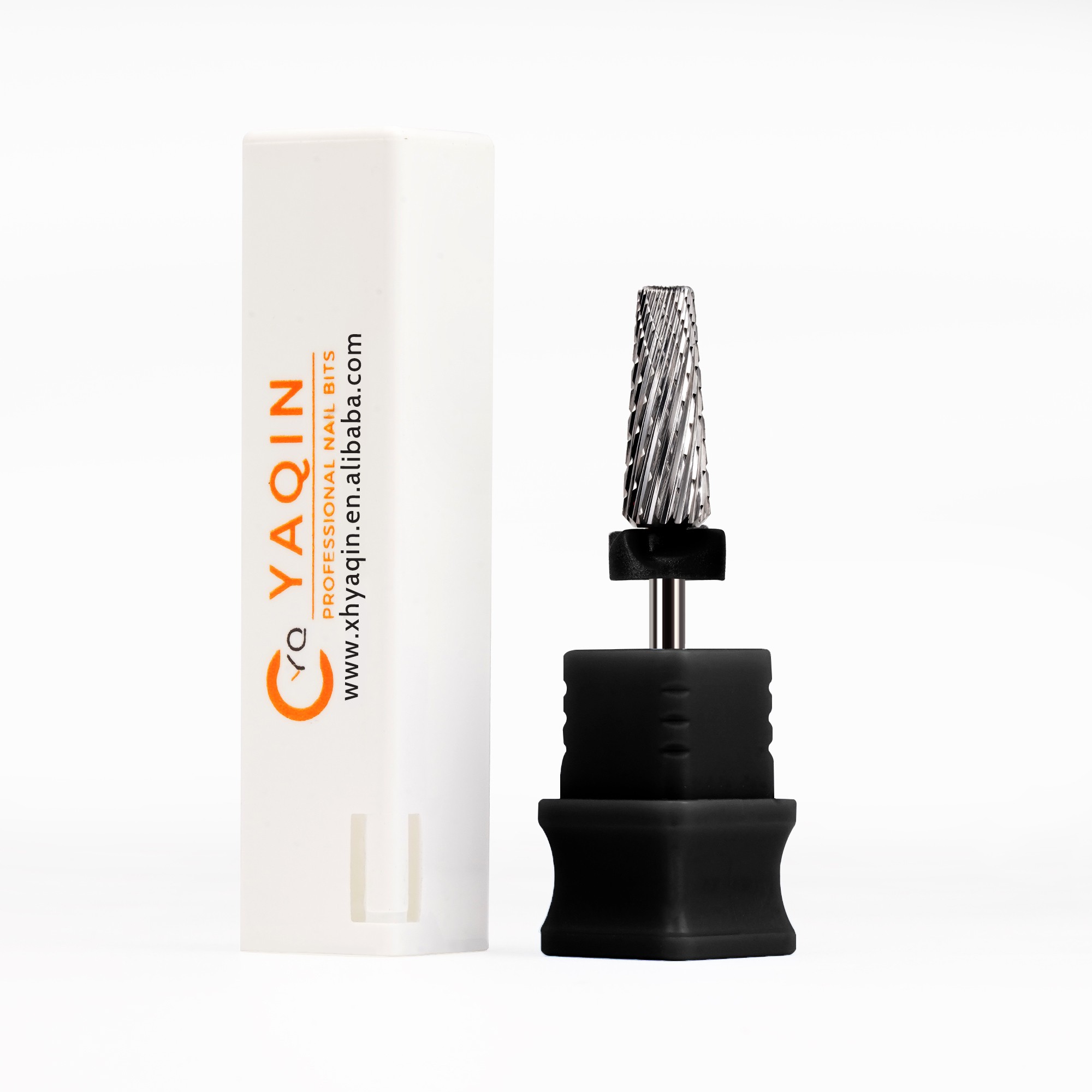
One practical example is Tungsten Carbide Large Barrel Smooth Top Nail Drill Bits. This type of bit is designed for quick gel removal, efficient nail prep, and safer contact near surrounding skin through a smooth-top profile.
Ceramic for cooler feel and quieter operation
Ceramic bits are often chosen when user comfort is a priority. They are known for a lighter feel in operation and can create less perceived heat during continuous gel removal.
That makes ceramic a strong option in a professional nail drill bit set used for frequent gel maintenance. It is also favored where smoother vibration behavior helps support stable hand control.
The trade-off is impact sensitivity. Ceramic can perform very well, but storage, transport, and cleaning protocols need more care than with many carbide options.
Diamond for precision contact zones
Diamond bits work differently. Instead of cutting with flutes, they abrade through a bonded grit surface. This makes them valuable for refining sidewalls, preparing the natural nail, and working around the cuticle zone.
In most cases, diamond is not the first choice for fast bulk removal. Its strength is precision, especially where surface control matters more than speed.
How to compare a professional nail drill bit set in real working conditions
Material alone does not decide field performance. Evaluation is more reliable when several working factors are reviewed together.
- Cutting efficiency: how quickly the bit removes gel or surface layers without forcing pressure.
- Heat behavior: whether the bit stays manageable during longer operation periods.
- Surface result: whether the finish is even, predictable, and easy to control.
- Durability: how long the bit retains function after cleaning, sterilization, and repeat use.
- Safety design: whether shape, top profile, and grit grade reduce accidental skin contact risk.
For example, large barrel carbide formats with smooth tops can support both speed and safer handling. Coarse, medium, and fine grit options also matter because the same material can perform very differently across removal stages.
A narrow size may help access tighter areas, while a wide version improves coverage on larger surfaces. This is why a professional nail drill bit set should be reviewed as a system, not as isolated single bits.
Application fit matters more than broad claims
The most suitable material depends on the service mix. A salon focused on fast overlay removal may prioritize carbide. A setup emphasizing comfort-focused gel maintenance may prefer ceramic in key positions. Detail and prep work still often rely on diamond.
This is where practical specifications become more useful than marketing language. A bit intended for hard gel removal should show clear speed guidance and grit logic. For instance, recommended ranges such as 15,000 to 20,000 RPM for hard gel, and 10,000 to 15,000 RPM for soft or base gel, make evaluation more grounded.
Model segmentation also helps. C, M, and F versions give a more precise path for matching removal force with operator technique and coating type. That reduces the risk of over-specifying one bit for every task.
Quality control and export consistency shape long-term value
For cross-border supply, performance consistency is often more important than a strong first sample. A professional nail drill bit set must remain stable from batch to batch, especially when it is sold into different compliance and service environments.
Yaqin’s manufacturing and export background is relevant here. The company supplies abrasive products to markets including the USA, Canada, Germany, the UK, Italy, and Poland, with distribution across 42 countries. Its QC coverage, ISO9001:2000 certification, and one-stop production-to-delivery capability support a more controlled sourcing process.
That matters when evaluating corrosion resistance, precision cutting quality, and packaging integrity. Even a well-designed carbide or diamond bit can lose commercial value if production tolerance and shipment protection are inconsistent.
A practical selection framework
A balanced material decision usually comes from matching task, speed, and maintenance expectations.
- Choose carbide when removal speed, high durability, and repeated salon use are the main priorities.
- Choose ceramic when lower heat feel and smoother operating comfort are more important.
- Choose diamond when prep accuracy, cuticle work, and fine abrasion define the application.
- Review grit, shape, and top design together with material before final judgment.
- Check whether the supplier can support OEM/ODM adaptation without weakening QC discipline.
In many cases, the best professional nail drill bit set is not an all-carbide, all-ceramic, or all-diamond selection. It is a planned combination that reflects real procedures, training level, and replacement cycles.
A sensible next step is to map each service stage to a required bit function, then compare materials against speed range, finish quality, durability, and sourcing consistency. That approach makes the final decision clearer, more measurable, and easier to scale.
News List
- Is It Better to Source All Nail Drill Bits From One Factory?Aug 24, 2026
- How to Spot Fake Diamond Coating on Nail Drill BitsAug 24, 2026
- Are Silicone Nail Drill Bits Reusable After Sterilization?Aug 24, 2026
- Essential tools for manicures that make beginner work more consistentAug 24, 2026
- Which must-have items for nail technicians improve service speed mostAug 24, 2026
- How gel removal bits affect speed and heat during soak-off removalAug 24, 2026
Best-Selling Products
 Cross Cut Safety Stainless Steel Tungsten Carbide Nail Drill Bits Salon Foot Use XF-C Grit for Removing Nails
 First-rate Quality Tungsten Carbide Nail Drill Bits Best Coating Manicure Remove Gel Nails Accessories
 Professional Advanced Safety Cuticle Bits Two-Way Rotate 3/32'' Carbide Tungsten 5 in 1 Nail Drill Bits
 Wholesale 5 in 1 Electric Manicure Nail Drill Bits Various Coating Cone Cuticle Bit with Rotary Cross Cut for Nail Art
 New Slant Tooth Tungsten Steel Nail Drill Bits Dead Skin Removal 5-in-1 Universal Grinding Nail Polish Head Tool Nail Drill Bits
 4.0mm Small 5 in 1 Integrated Sharpe Tungsten Nail Drill Bit Straight Teeth Gel Polish Removal
 Flame Sharp XF F M C XC Silver Safety Professional Corn Tungsten Carbide Nail Bit for Drill Machine Accessories
 Factory Direct 5 in 1 Tungsten Carbide Nail Drill Bits 6.8MM Cross Cut Safety Manicure 5 in 1 Nail Drill Bits
Please give us a message