
All Kinds of Nail Burrs for Your Business
We customize and manufacture a wide range of products for brands or distributors in the beauty and health industry around the world.
Yaqin has launched beauty products such as nail bits, nail lamps, nail drills, sanding bands, nail files, and cuticle scissors for users with different needs.
CONTACT US TODAY
What Is A Professional Nail Drill Bit Set
A professional nail drill bit set is a coordinated group of e-file attachments designed for controlled work on acrylic, gel, poly gel, natural nails, and surrounding cuticle areas. In B2B purchasing, the term usually implies stable shank dimensions, consistent grit grading, durable bonding of abrasive material, and predictable performance across repeated salon use.
Unlike single replacement bits bought for occasional use, a professional nail drill bit set is selected as a system. Buyers consider the relationship between material, shape, grit, rotation speed, and hygiene workflow. A well-built set helps technicians move from product removal to surface refining and cuticle preparation without unnecessary tool changes or inconsistent finish quality.
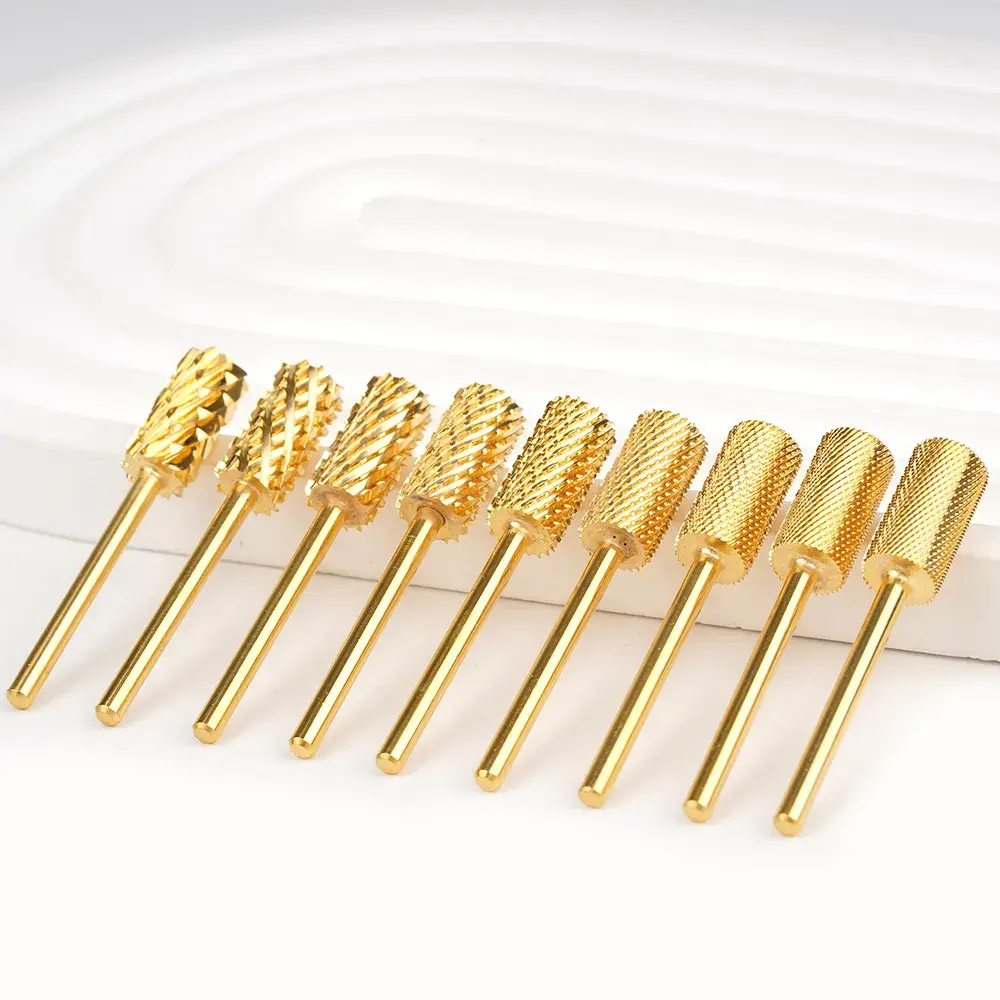
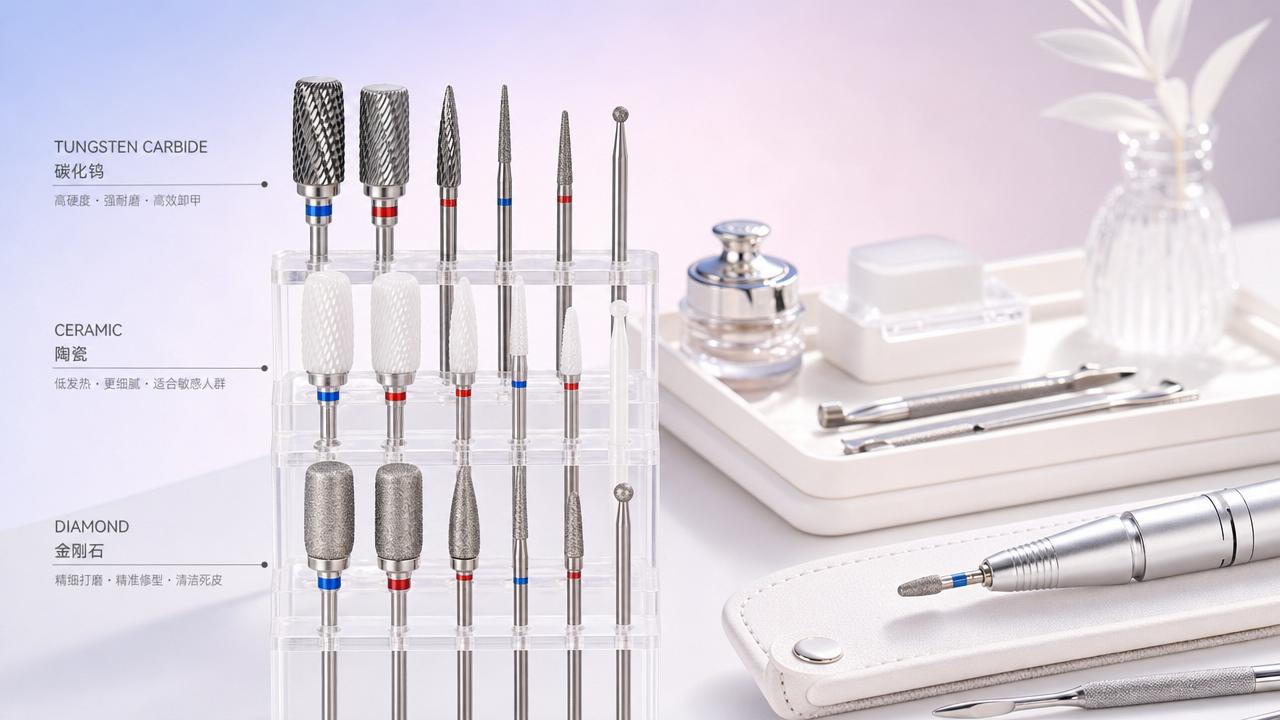
Common components include carbide bits for bulk removal, ceramic bits for cooler-running debulking, diamond bits for precision prep, and sanding bands or caps for shaping and smoothing. In many wholesale programs, sets are paired with nail drill machines so distributors and salons can offer a complete service package rather than isolated accessories.
For searchers comparing a professional nail drill bit set, the key question is not which material is universally better. The real issue is application fit. Carbide, ceramic, and diamond bits solve different technical problems, and a balanced set combines them to improve service speed, nail safety, and replacement planning.
How Carbide, Ceramic, And Diamond Bits Work
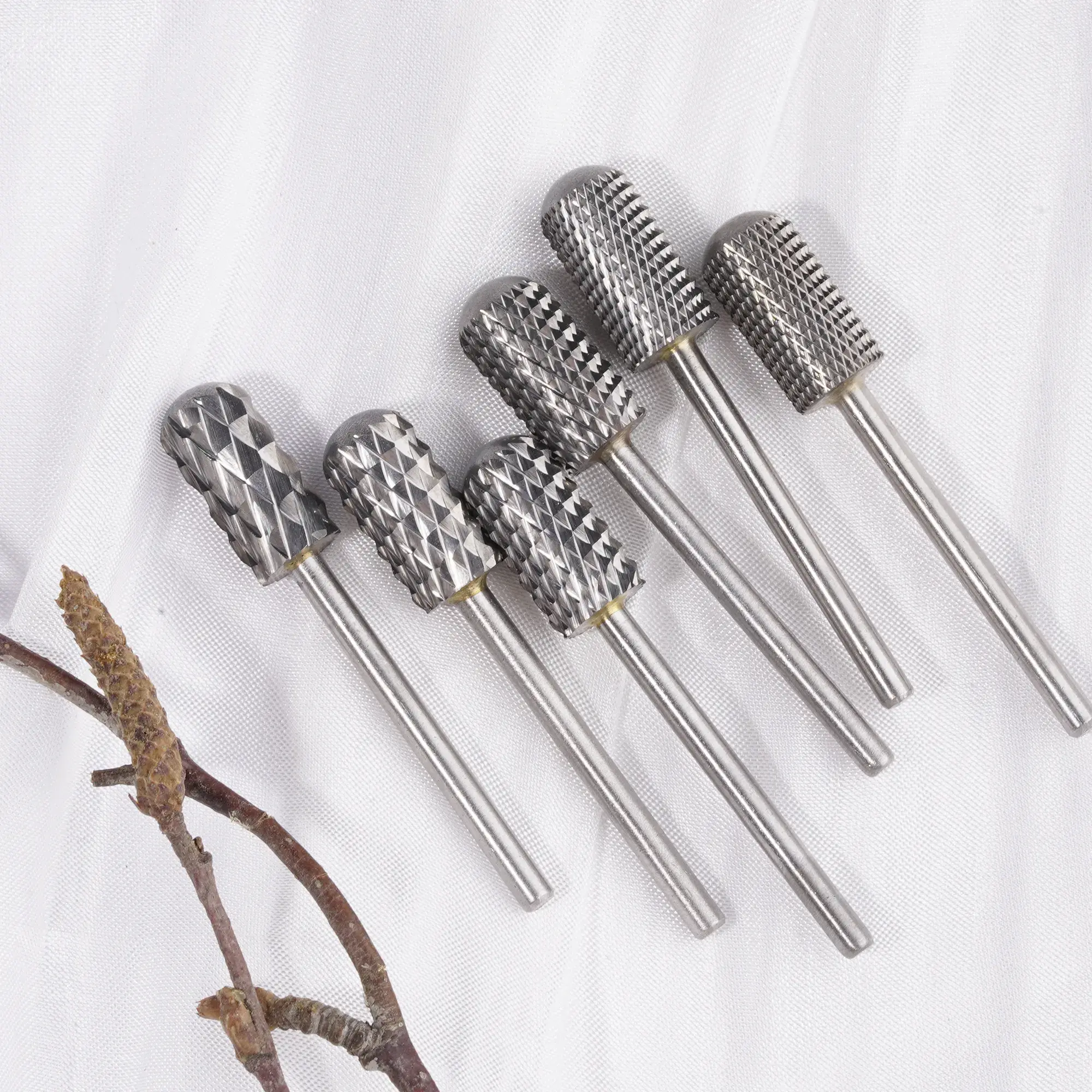
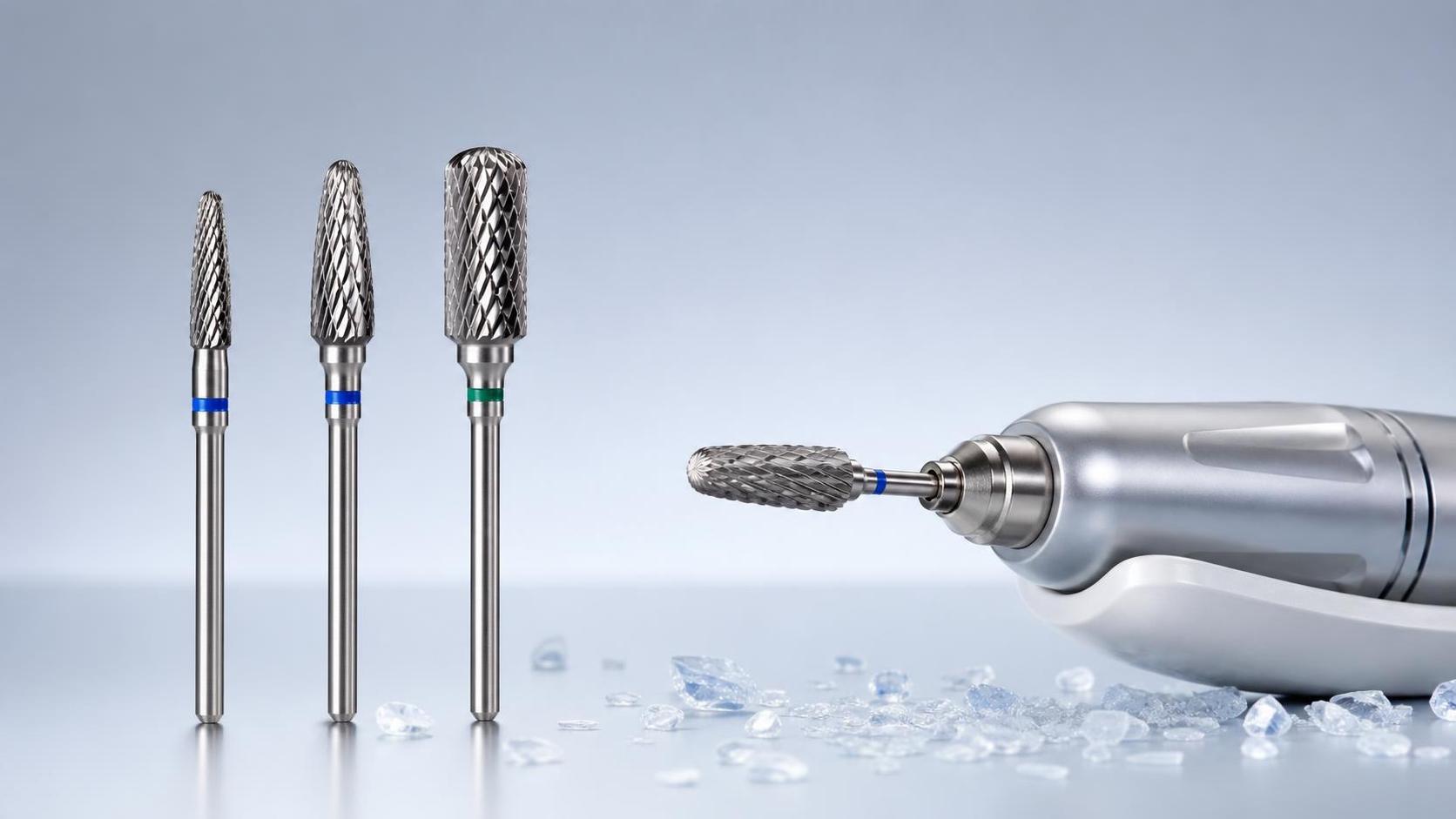
The working principle of each bit material is different. Tungsten carbide bits remove product through machined cutting flutes that shear away acrylic, hard gel, or builder layers. Their efficiency depends on flute geometry, sharpness, direction, and grit grade. This makes them especially useful when speed and controlled stock removal are priorities.
Ceramic bits also use flute-based cutting, but their material structure changes the heat and vibration experience. Many technicians prefer ceramic when they want a smoother sensation and lower heat buildup during extended debulking sessions. Ceramic can be effective for gel polish removal and overlay reduction, though the exact performance depends on flute pattern and operating technique.
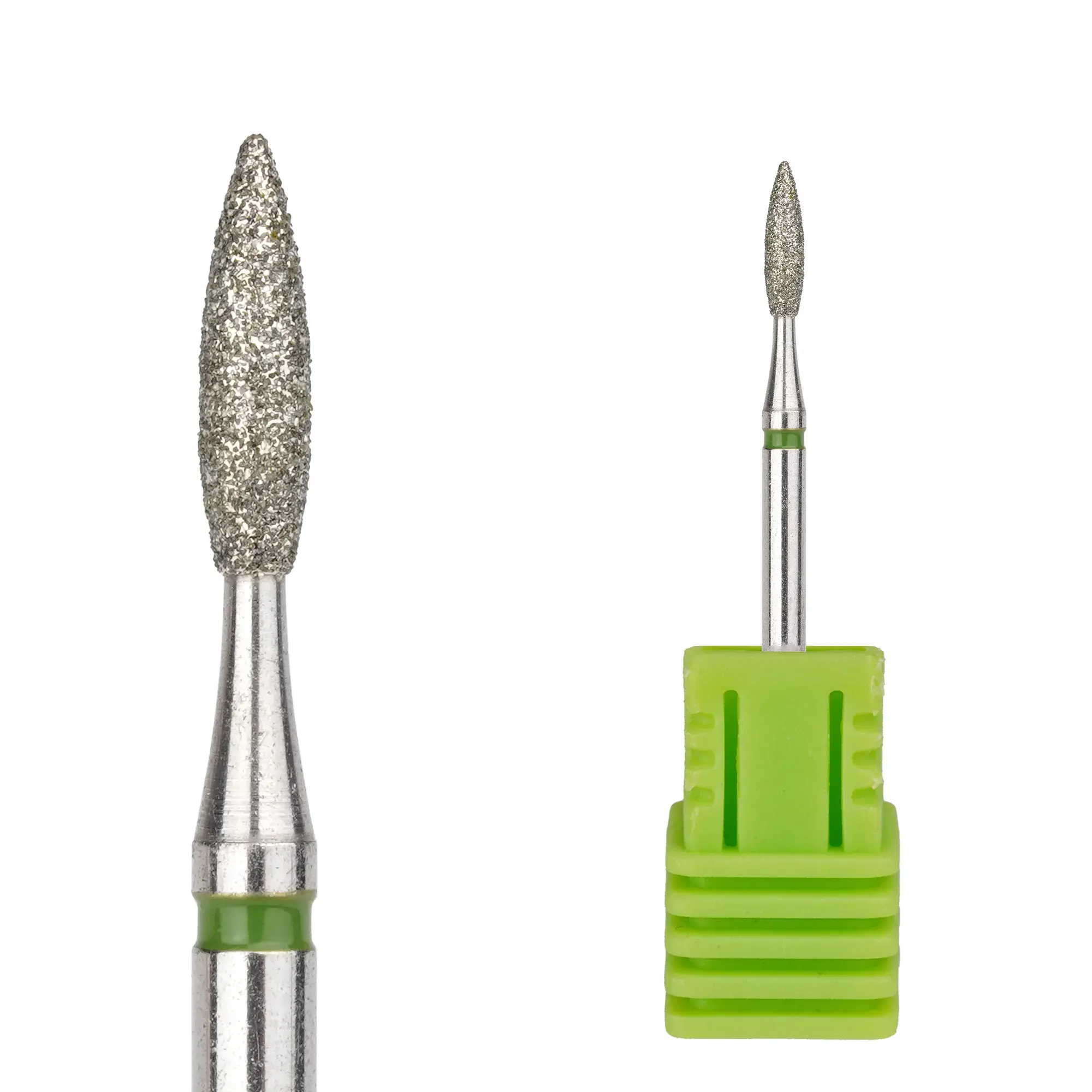
Diamond bits do not cut in the same way as carbide or ceramic. Instead, industrial diamond particles bonded to the surface create controlled abrasion. This makes them suitable for refining cuticle zones, cleaning sidewalls, opening dead skin, and pre-treatment tasks where precision matters more than aggressive removal. A flame-shaped diamond bit, for example, is often chosen for detailed cuticle work.
In a professional nail drill bit set, these materials complement one another. Carbide handles high-efficiency removal, ceramic supports smooth product reduction, and diamond covers preparation and detailing. Understanding the cutting versus abrasive action is the foundation for correct selection, technician training, and service safety.
Main Types, Shapes, And Grit Levels
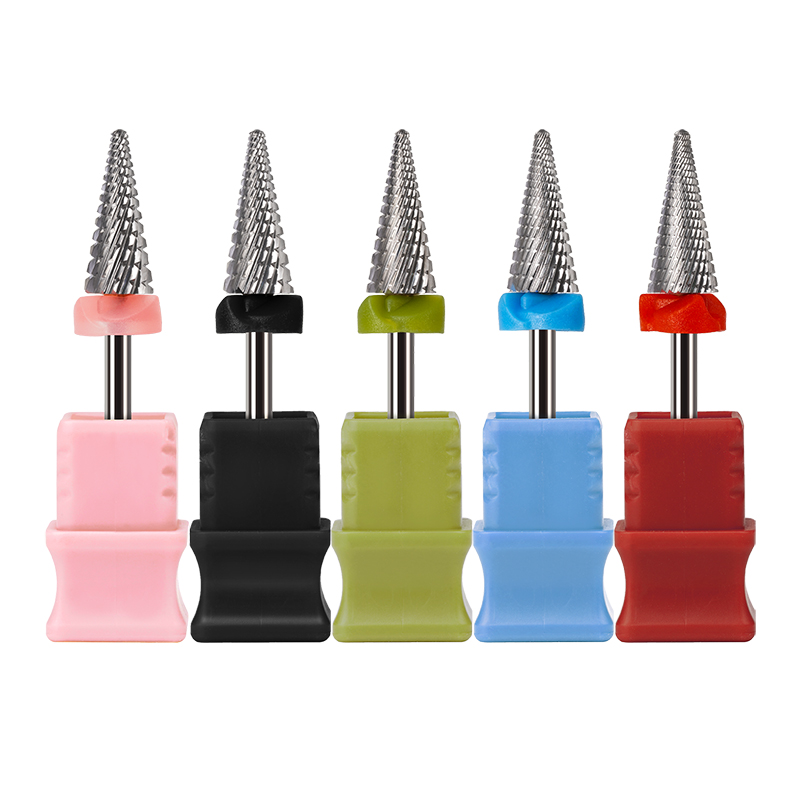
Material alone is not enough to define performance. Shape strongly affects access angle, contact area, and control. Barrel bits are widely used for surface leveling and bulk removal. Cone and tapered barrel designs help technicians work around the apex and side areas. Needle and flame shapes are more suitable for tight cuticle zones and detailed cleaning tasks.
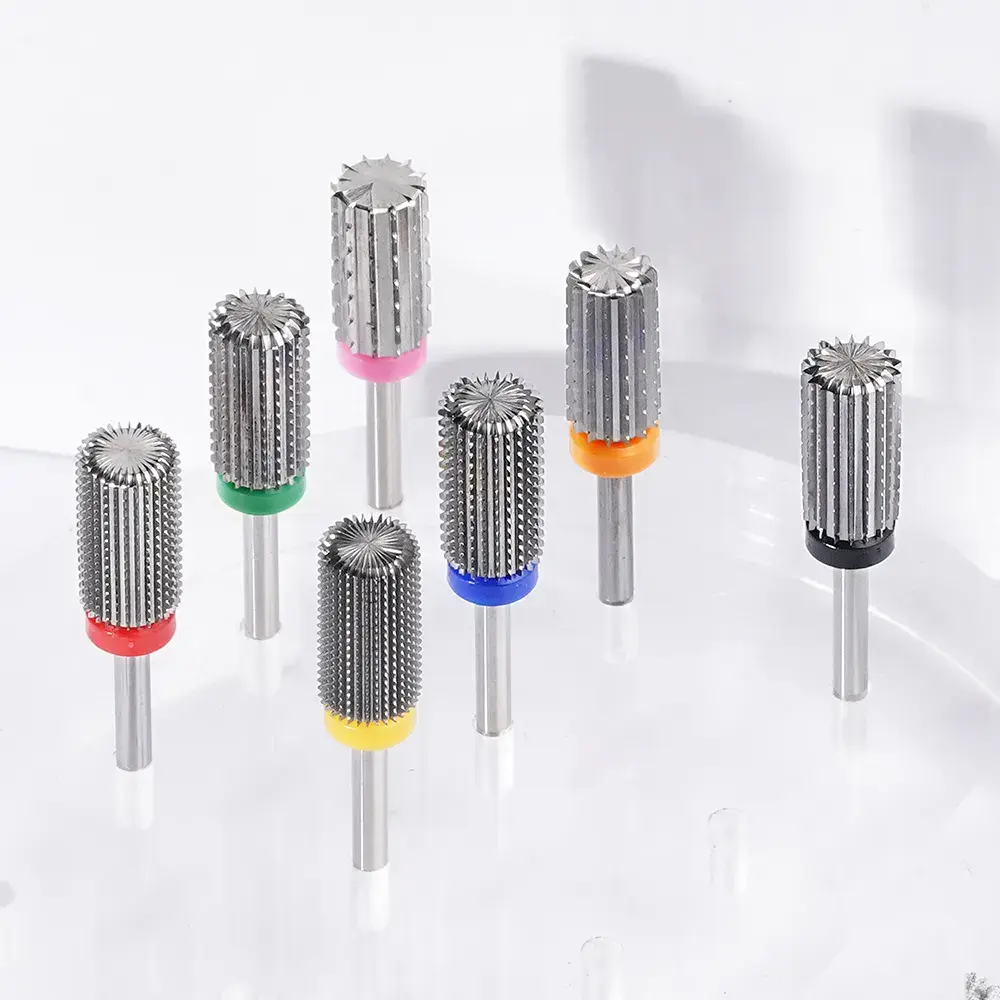
Grit selection is equally important. Extra fine and fine grades are generally chosen for refining, smoothing, or delicate prep. Medium grades are widely used for balanced daily work. Coarse and extra coarse options increase removal speed but require better pressure control and operator experience. Buyers evaluating a professional nail drill bit set should match grit range to service menu rather than assuming more aggressive is more professional.
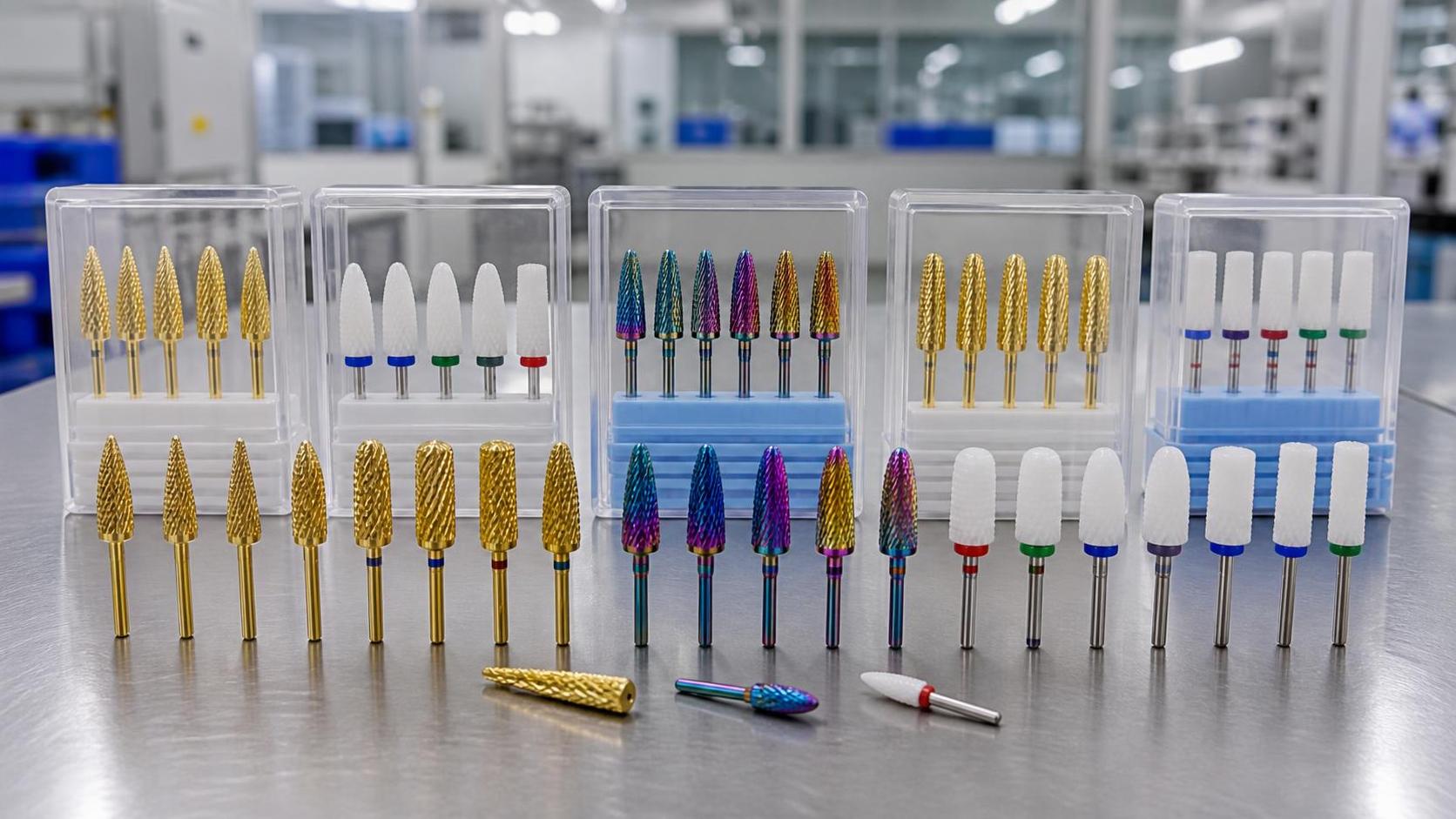
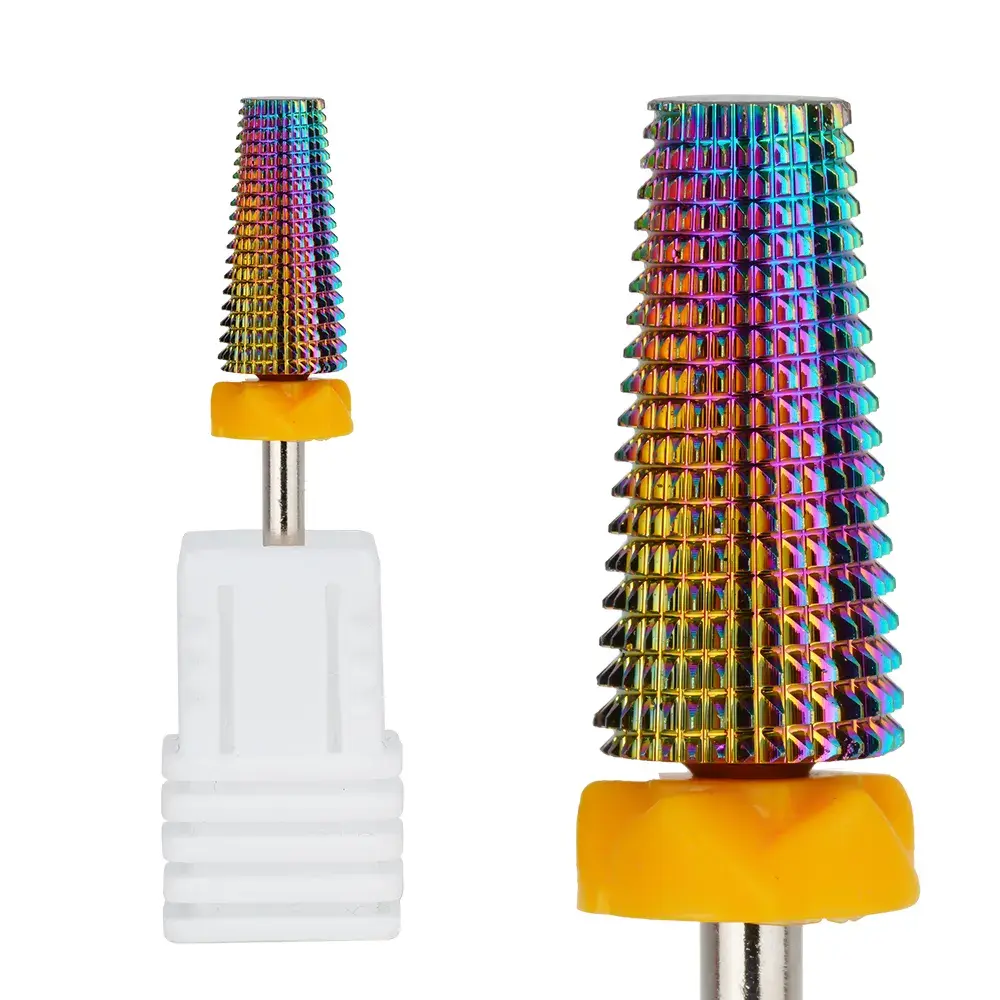
Coatings and surface finishes also influence buying decisions. Rainbow coatings, for example, may support product differentiation and retail presentation, while practical buyers still focus on substrate quality, particle retention, and wear behavior. For diamond bits, uniform abrasive distribution is more important than decorative appearance. For carbide and ceramic, flute consistency directly affects cutting stability.
Yaqin offers tungsten carbide nail drill bits, diamond nail bits, ceramic nail bits, sanding bands and sanding caps, plus nail drill machines and OEM or private-label support. For distributors building a broad professional nail drill bit set assortment, this range is useful because it covers the main salon workflow from prep to removal to finishing.
Who Uses These Sets And Why They Matter
The main users of a professional nail drill bit set are salon chains, independent nail technicians, training academies, distributors, and beauty supply importers. Each group buys with a different priority. Salons focus on service speed, hygiene repeatability, and technician comfort. Distributors focus on catalog coverage, reorder stability, and packaging flexibility. Educators look for clear progression from prep bits to removal bits to finishing tools.
Professional users need predictable tools because inconsistent abrasion creates service variation. If one batch runs hotter, dulls too quickly, or cuts too aggressively, the salon experiences slower treatments, higher replacement rates, and more training difficulties. That is why material quality and process control matter as much as the visible shape of the bit.
In the light industrial daily-use sector, these products are not merely accessories. They are operational tools linked to labor efficiency and client experience. A technician performing frequent dry manicure or gel removal services relies on the correct professional nail drill bit set to reduce unnecessary hand filing, maintain cleaner work flow, and support a more professional finish.
From a brand perspective, a structured set also simplifies purchasing decisions. Instead of buying isolated bits from multiple sources, buyers can standardize service steps, simplify staff training, and create more consistent replenishment rules across locations or reseller networks.
How To Choose The Right Set For Acrylic, Gel, And Natural Nails
For acrylic removal, carbide bits are often the first choice because they remove dense enhancement material quickly. Medium to coarse barrels or 5-in-1 style shapes are frequently selected for controlled debulking. Buyers should still verify technician skill level, because a more aggressive flute profile can raise the risk of over-filing if pressure and angle are not managed correctly.
For gel and builder gel services, ceramic bits are often valued for a smoother feel and lower heat perception during longer sessions. They can be a strong option in a professional nail drill bit set intended for busy salons offering repeated gel maintenance. However, high-quality carbide remains relevant for many gel applications, so the right answer depends on service pace, technician preference, and finish target.
For natural nail prep and cuticle work, diamond bits usually take priority because they allow fine, controlled abrasion. Flame, ball, and needle variants are widely used to lift dead skin, clean sidewalls, and refine the cuticle area before product application. These tasks demand precision rather than heavy cutting force, which is why diamond remains a core category in nearly every professional nail drill bit set.
Buyers should also consider left- and right-handed use, drill machine compatibility, sanitation procedures, and whether the bit will be used in high-frequency dry manicure services. If the customer base includes both advanced salons and entry-level technicians, a tiered assortment with fine, medium, and coarse options is usually more practical than a single universal set.
Quality Control, Manufacturing, And Industry Expectations
In professional sourcing, performance begins long before a bit reaches the salon. For carbide bits, buyers look at raw material quality, flute machining accuracy, concentricity, weld or joint stability where applicable, and consistency of finish. For ceramic bits, structural integrity and flute uniformity are important. For diamond bits, abrasive particle distribution and bond retention influence both cutting feel and service life.
A reliable professional nail drill bit set should be supported by stable inspection routines. Yaqin states that it uses tungsten carbide, diamond, and ceramic materials, offers a full range of shapes and grits, and applies a strict QC process from raw material to packing. The company also cites ISO9001:2000 quality management system certification, which is relevant for buyers seeking a more systematic manufacturing and inspection framework.
Industry expectations also extend to practical packaging and labeling. Wholesale buyers often need clear grit identification, material separation, and SKU logic that simplifies warehousing and salon issue control. When OEM or private-label programs are involved, consistency in print, packing, and set composition becomes part of quality, because poor packaging accuracy creates costly confusion at the distributor and end-user level.
For importers evaluating suppliers, the most useful question is not only whether a bit looks polished in a sample box. It is whether batch-to-batch performance stays stable after repeat orders. That is especially important for distributors building branded lines or salon groups that standardize a professional nail drill bit set across multiple locations.
Global Use Cases And Market Requirements
Real purchasing patterns show how different markets prioritize different bit combinations. According to the provided cases, professional salon chains in the United States and Russia have sourced 5-in-1 tungsten steel grinding heads and diamond pre-treatment grinding heads for gel removal, cuticle cleaning, and nail shaping. This indicates demand for sets that support high-frequency dry polishing services with a balance between removal speed and precise prep.
In Germany, the United Kingdom, and Italy, nail distributors have sourced sanding rings, ceramic grinding heads, and nail machine sets for local salons and independent technicians, together with customized packaging and branding. This reflects a common European distribution model in which buyers value a professional nail drill bit set that can be adapted for private label, mixed-service environments, and small-batch retail presentation.
The Dominican Republic case involving ORIENTAL NAILS & BEAUTY shows another market pattern: combining rainbow-coated diamond bits with nail lamps and other salon products for both retail and service use. In such markets, visual differentiation can matter, but it still needs to be backed by reliable product function, especially where salons depend on repeat purchase and reputation.
For global trade, buyers should confirm routine import details such as product labeling accuracy, packaging durability, and compatibility disclosures for machines and shank sizes. Market access is not only about certification claims. It is also about documentation clarity, product consistency, and the supplier’s ability to support long-term distributor communication.
Total Cost Of Ownership And ROI For Buyers
The lowest unit price rarely defines the best purchasing decision. Total cost of ownership for a professional nail drill bit set includes purchase price, usable lifespan, technician efficiency, heat management, replacement frequency, sanitation handling, and potential service inconsistency from unstable batches. A cheaper bit that dulls early or runs rough can cost more through labor time and client dissatisfaction.
Carbide bits may offer strong ROI in high-volume acrylic removal because they reduce debulking time. Ceramic bits may support ROI where technician comfort and lower heat sensation improve workflow during frequent gel services. Diamond bits often deliver value by improving prep precision and reducing over-reliance on manual tools. The right professional nail drill bit set therefore creates savings through role specialization, not only through direct material cost.
Factory-direct sourcing can further influence cost control. Yaqin highlights factory-direct pricing, stable supply, and no middlemen, which can be meaningful for wholesalers, salon chains, and private-label buyers managing ongoing replenishment. Custom packaging and design services may also reduce the need for secondary vendors when building a branded assortment.
For ROI planning, buyers should calculate cost per service rather than cost per piece. A slightly higher-grade bit that lasts longer, performs more consistently, and shortens service time can generate better commercial results than a low-price alternative with unstable wear. This is especially relevant for distributors serving professional users who judge value through repeatable field performance.
Maintenance Cycles And Future Industry Trends
A professional nail drill bit set should be reviewed regularly based on service frequency, bit wear, and evolving treatment menus. High-use salons often replace removal bits and prep bits on different cycles because the wear pattern is not the same. Dull bits create more friction, reduce control, and may encourage technicians to compensate with pressure, which is not a sustainable workflow.
One future trend is greater specialization. Instead of one general-purpose set, distributors increasingly separate kits for acrylic removal, dry manicure, beginner technician training, and retail starter bundles. This allows clearer merchandising and more precise replenishment. Another trend is integration, with bits, sanding bands, and machines bundled together for simpler procurement.
Private label and customization are also becoming more important. As salons and distributors seek differentiation, they want packaging, coatings, and set combinations that match local branding. Yaqin’s OEM, ODM, and private-label service model fits this direction, especially for buyers who want to combine carbide, ceramic, diamond, and abrasive accessories within one supply chain.
The most resilient buying strategy is to treat a professional nail drill bit set as a performance system. Buyers who align material choice, shape logic, quality control, and replacement planning are better positioned to support salon efficiency, stronger product positioning, and more stable long-term procurement results.
 Professional Nail Drill Bit Set Materials Compared: Carbide, Ceramic, or DiamondProfessional nail drill bit set materials compared: discover how carbide, ceramic, and diamond differ in speed, heat, precision, and durability to choose the best fit for salon and OEM supply needs.
 Wholesale Nail Drill Bit Pricing: Which Specs Affect Cost and Repeat Orders?Wholesale Nail Drill Bit pricing depends on material, grit, coating, tolerance, and packaging. Learn which specs cut risk, improve durability, and drive repeat orders.
 How gel removal bits affect speed and heat during soak-off removalGel removal bits directly impact soak-off speed, friction, and heat. Learn how material, grit, and shape improve comfort, control, and safer gel removal results.
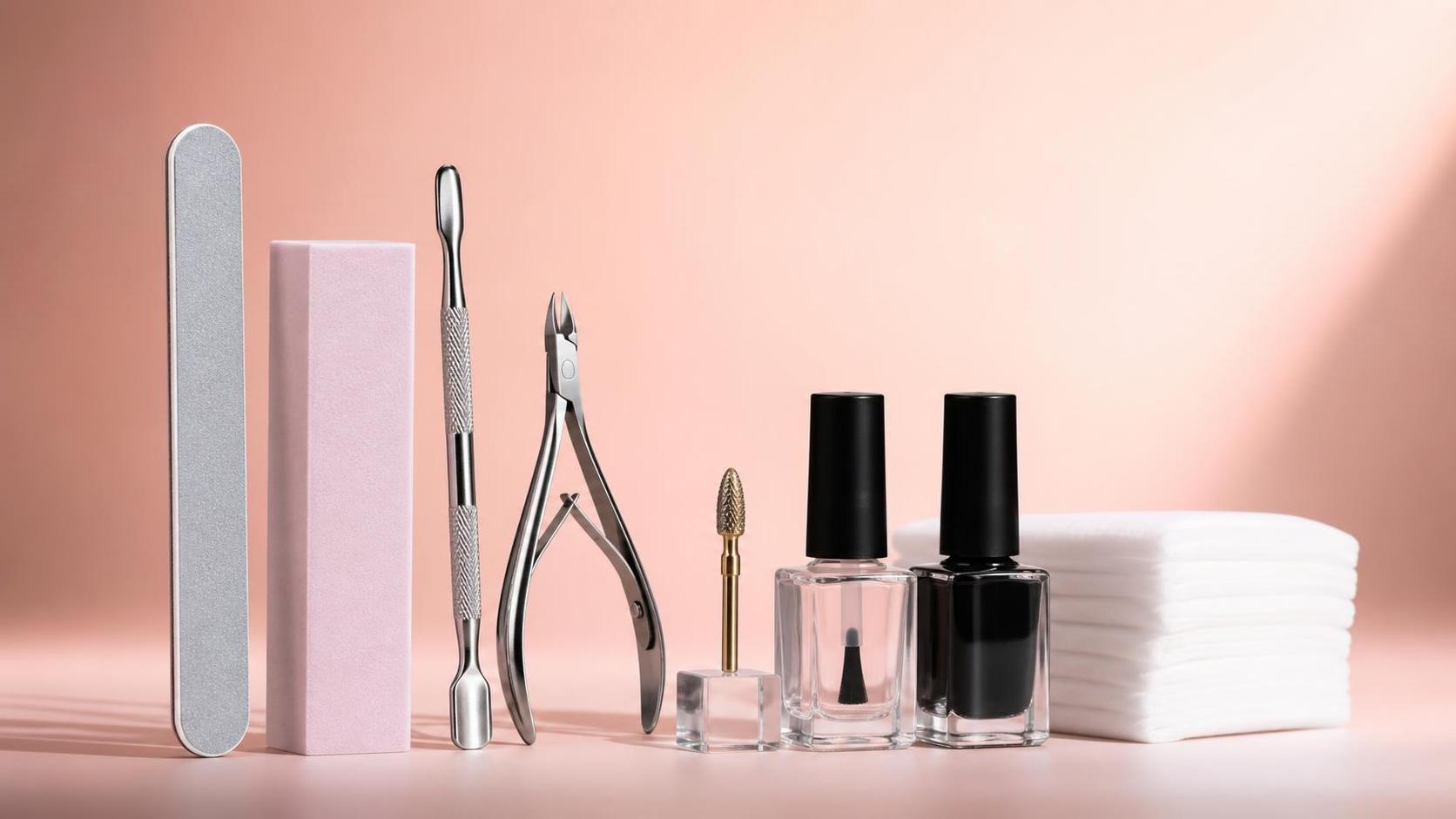
 Essential tools for manicures that make beginner work more consistentEssential tools for manicures every beginner should own. Learn which files, cuticle tools, and prep basics create cleaner, longer-lasting results with less trial and error.
 2*8mm Flame Bit Diamond Nail Drill Bits Stainless Steel Cuticle Remover BurrHigh-Performance Grinding Heads – Versatile Nail Preparation Tools for Professional and At-Home Use
Our High-Performance Grinding Heads , designed for both Russian and Japanese manicure techniques. Achieve salon-quality results with our affordable and high-quality products that cater to every nail technician’s needs. High Quality Tungsten Cuticle Carbide Nail Drill Bits Nail Removal Pre-Treatment Grinding Head Umbrella Shape Nail Drill BitUpgrade your nail care routine with our versatile Tungsten Steel Nail Drill Bit. Designed for use with electric nail drills, this innovative tool is perfect for filing nails, removing dead skin, and tackling gel polish with ease.
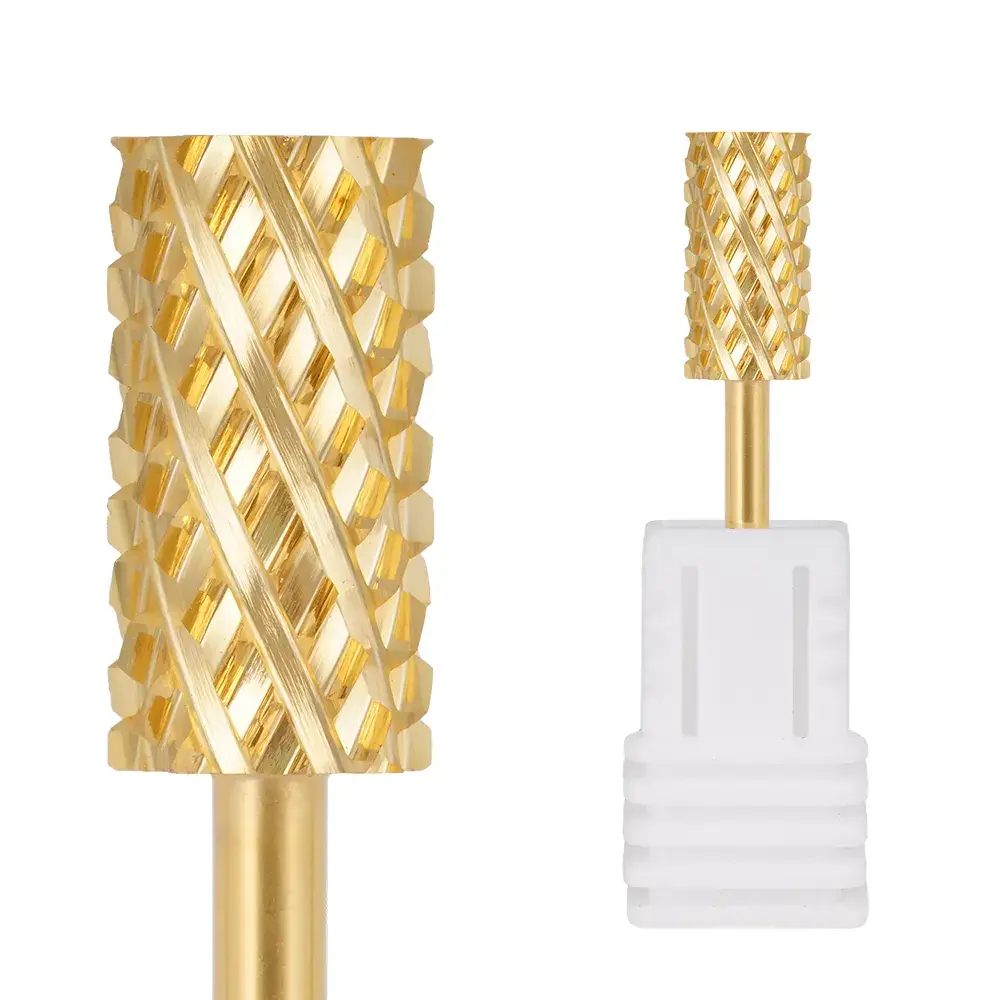
 Golden Flat Tip Carbide 4XC Nail Drill Bit Gel Remover Skewed ToothAchieve salon-quality nail care with our Tungsten Steel Nail Drill Bit, specially designed for efficient nail polish removal and nail preparation. This versatile, high-performance tool is perfect for professional nail technicians and DIY enthusiasts alike.
 4xc Bi-Directional Nail Drill Bit Tungsten Steel With Colorful CoatingElevate your nail care routine with our Bi-Directional Nail Drill Bit, expertly crafted from tungsten steel and featuring a striking colorful coating. Designed for both professional and at-home use, this nail drill bit is the perfect tool for fast and efficient nail removal and nail care.
Please give us a message