
Nail Drill Bit Shapes Explained for Cleaner Prep and Removal
Nail Drill Bit Shapes Explained for Cleaner Prep and Removal
Nail Drill Bit Shapes Explained for Cleaner Prep and Removal

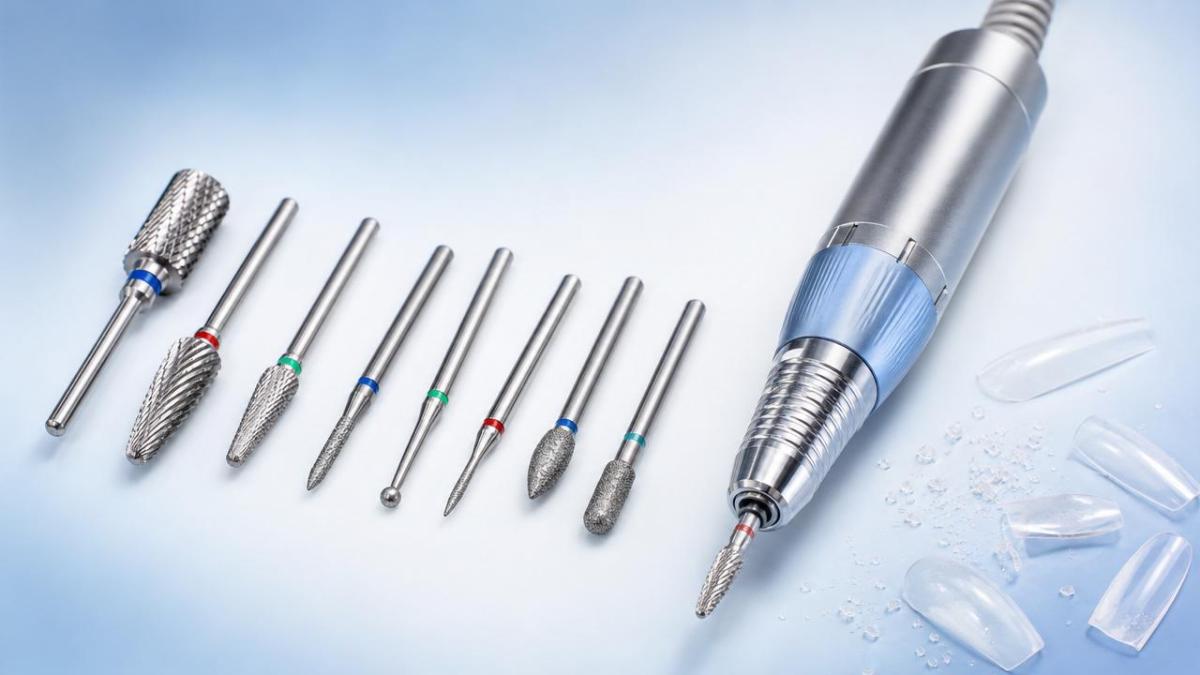
Choosing the right Nail Drill Bit shape can make prep smoother, removal safer, and results noticeably cleaner.
A good shape improves control, reduces heat, and helps protect the natural nail.
That matters during cuticle work, gel removal, surface refining, and backfill preparation.
Many people compare grit first.
In practice, shape is just as important.
The right Nail Drill Bit shape affects contact area, pressure, viewing angle, and product removal speed.
It also changes how easily a technician can work around the sidewall or near the cuticle line.
From a buying perspective, understanding these differences makes product selection far more practical.
This guide explains common Nail Drill Bit shapes, where they work best, and how to choose them with more confidence.
Why Nail Drill Bit Shape Matters
A Nail Drill Bit does not cut the same way across every angle.
Shape controls how the bit touches the nail surface.
A wide barrel covers more area fast.
A tapered shape reaches tighter zones with less awkward hand movement.
A flame shape gives detailed control around lifted cuticle and sidewalls.
Cleaner prep usually comes from matching the shape to the exact step.
Safer removal comes from reducing unnecessary pressure and repeated passes.
This also means fewer chances of rings of fire, gouging, or uneven remaining product.
- Better shape match improves visibility during service.
- Less pressure often means lower heat buildup.
- Fewer strokes can reduce service time.
- Cleaner contact helps leave a more even surface.
Common Nail Drill Bit Shapes and Best Uses
Barrel Shape
The barrel shape is one of the most common Nail Drill Bit options for product removal.
It has a broad working surface.
That makes it efficient on overlays, hard gel, builder gel, and acrylic reduction.
A smooth top barrel is especially useful for reducing accidental cutting near the cuticle area.
For faster salon work, this shape is often the first choice.
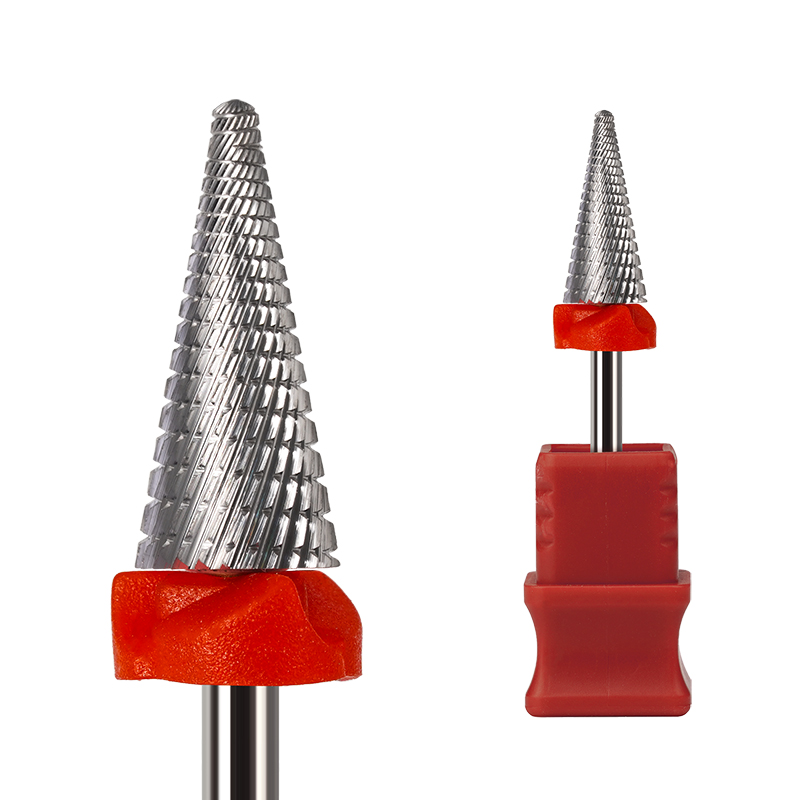
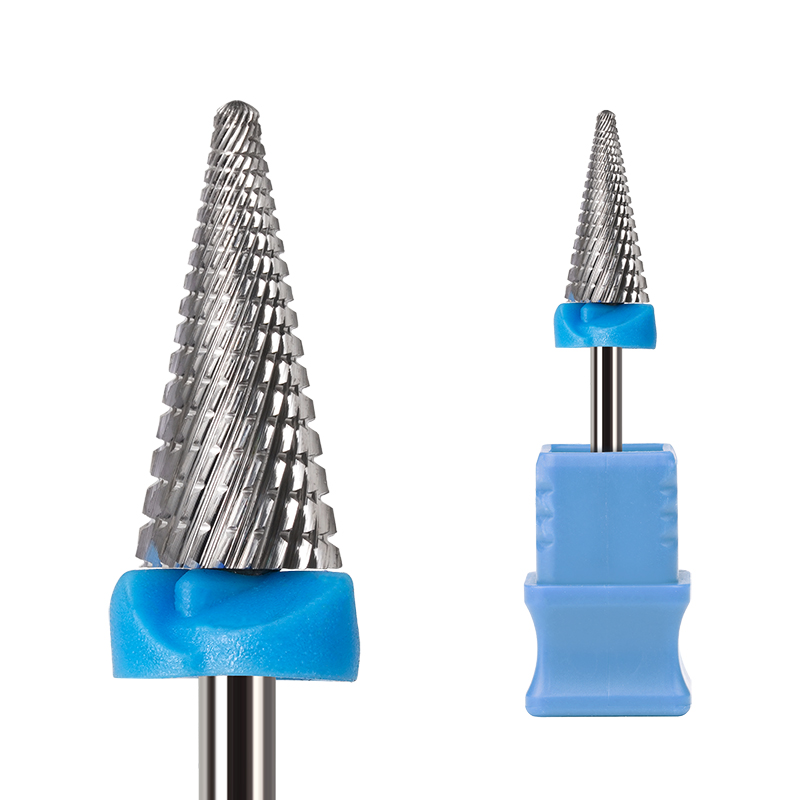
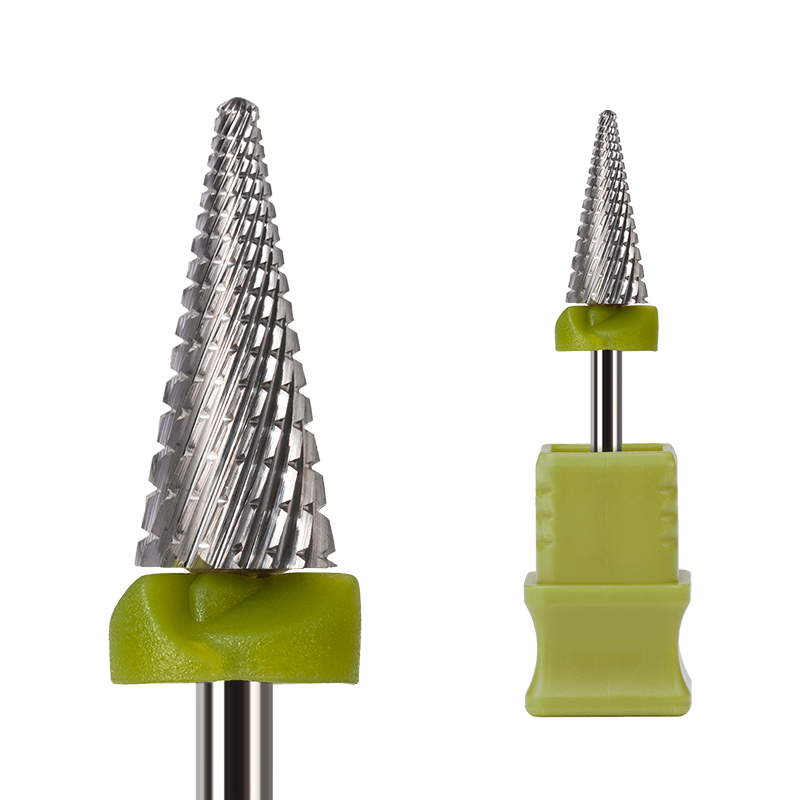
Cone and Tapered Cone
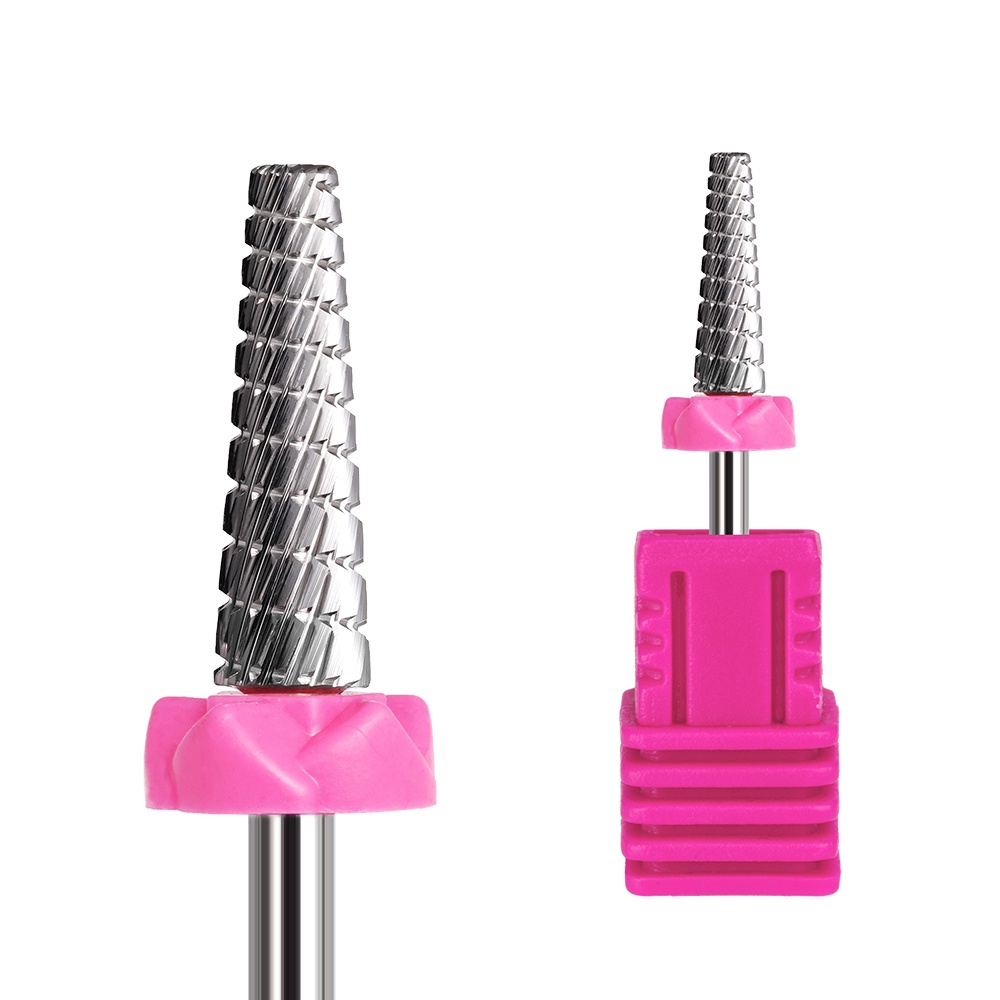
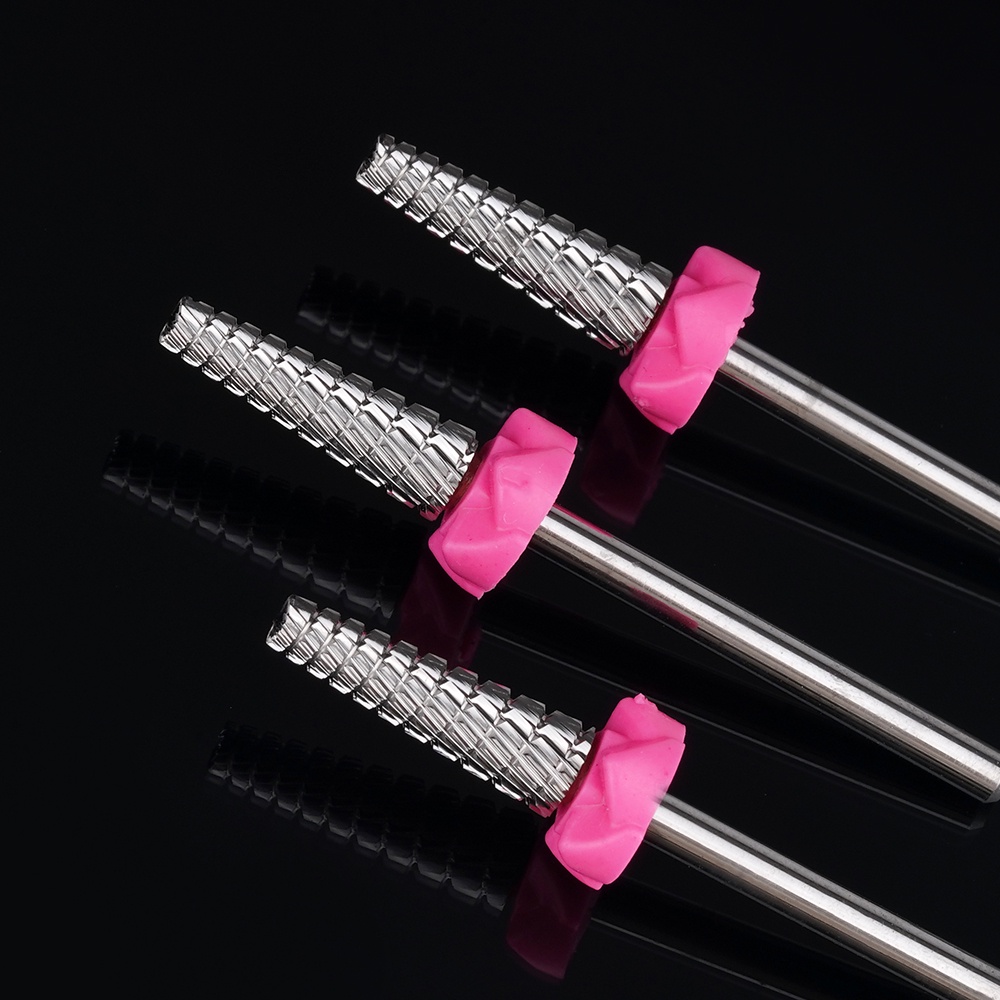
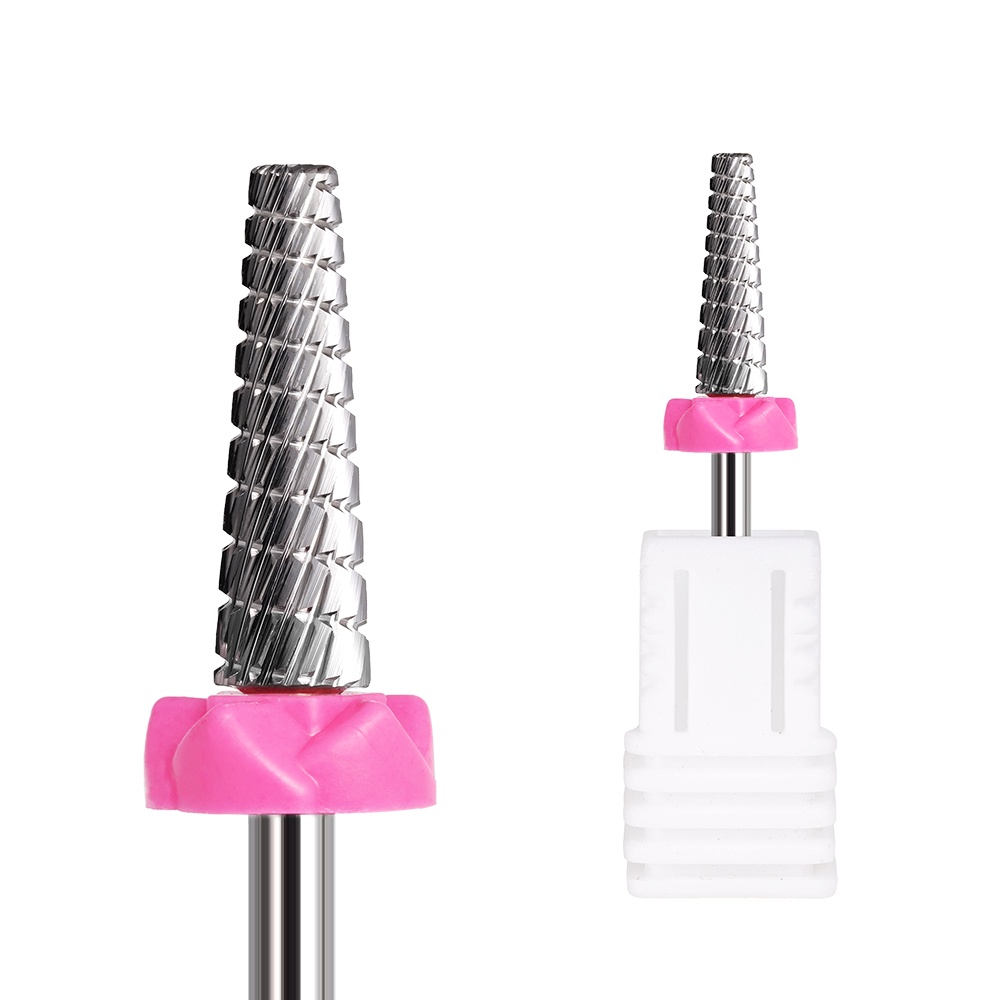
Cone shapes narrow toward the tip.
They are helpful for under-nail cleaning, sidewall refining, and smaller detail zones.
A tapered cone offers a balance between access and surface coverage.
This Nail Drill Bit style is useful when the work area changes quickly within one service.
Flame Shape
The flame shape is popular for cuticle prep.
It lifts non-living tissue and helps clean the pocket area with precision.
It requires more technique than a barrel.
Still, it is one of the most effective Nail Drill Bit shapes for detailed prep.
Safety Bit
A safety bit usually has a rounded or smooth top.
That design lowers the chance of nicking surrounding skin.
It is often preferred for gel polish removal near the cuticle margin.
For less experienced users, this Nail Drill Bit style feels more forgiving.
Needle and Pointed Bits
These shapes target very narrow spaces.
They can clean side channels or remove trapped residue.
They are not ideal for broad removal.
Used incorrectly, they can become too aggressive on natural nails.
How to Match Shape With Prep and Removal Tasks
A cleaner result usually comes from using different shapes for different steps.
Trying to do everything with one Nail Drill Bit often slows the service down.
- Use a flame or tapered bit for cuticle zone cleaning.
- Use a barrel Nail Drill Bit for bulk gel or acrylic removal.
- Use a finer shape for refining remaining product near the edge.
- Use detail bits only where access is limited.
This workflow keeps each tool doing what it does best.
It also makes training easier because roles are clearly defined.
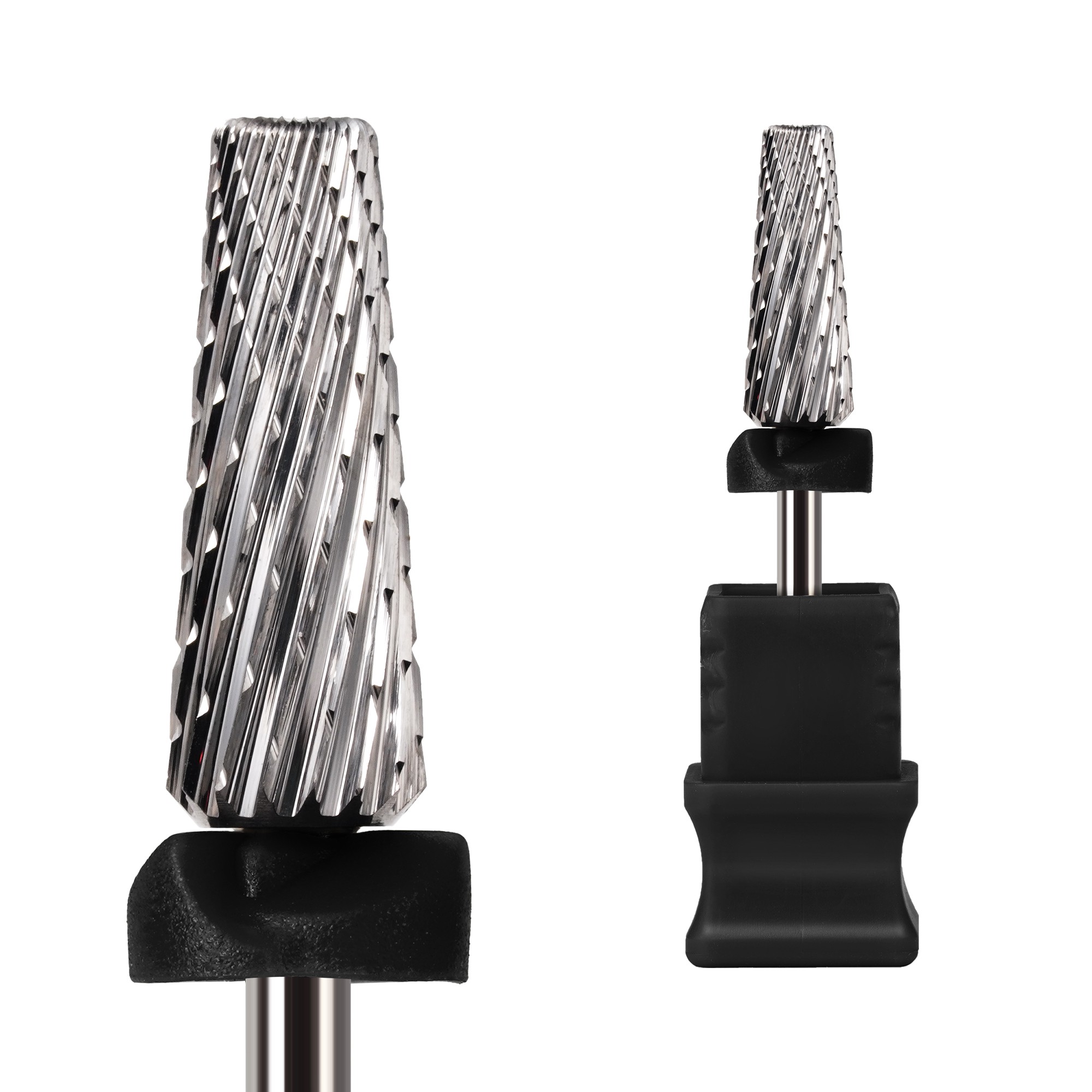
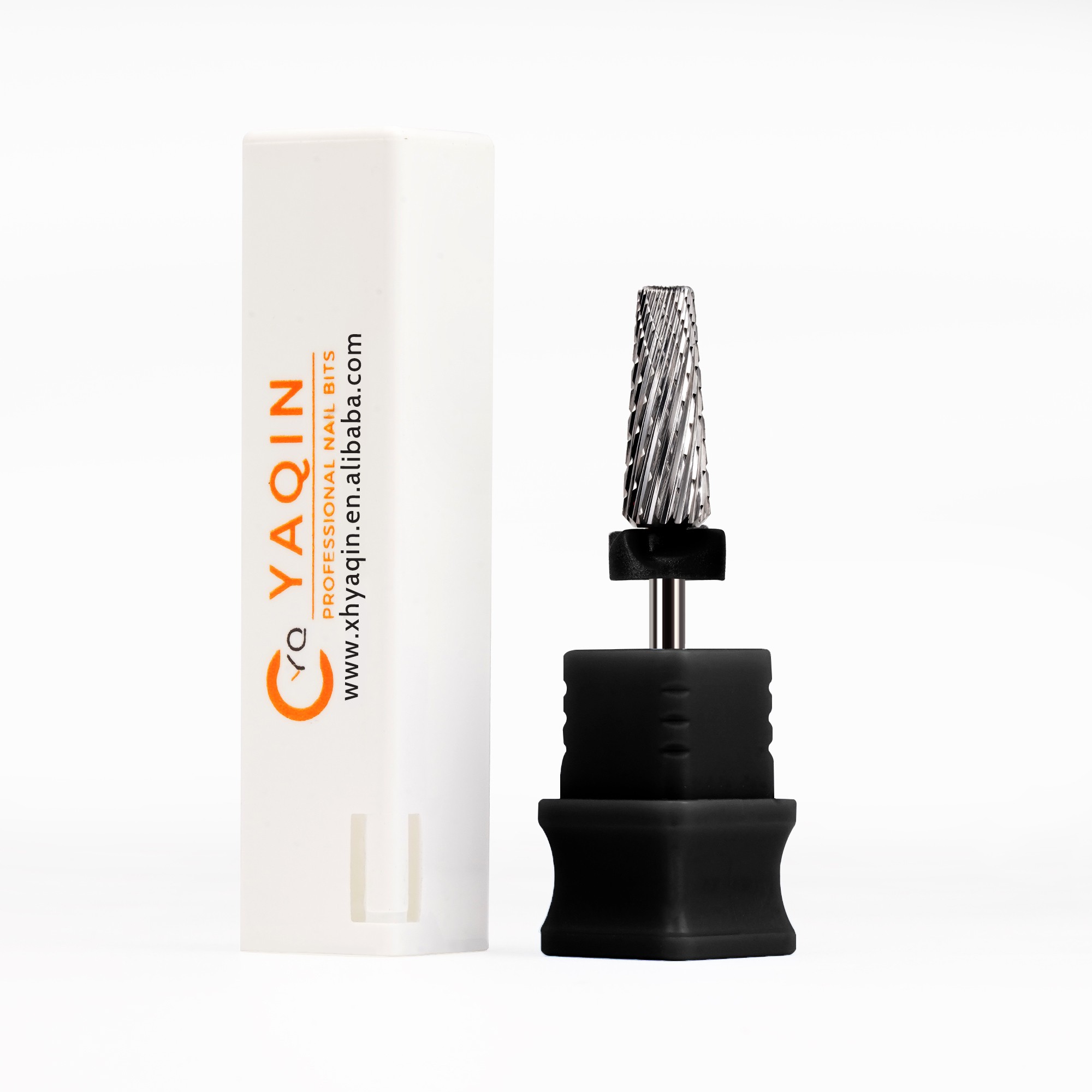
A useful example is Large Barrel Smooth Top Natural Tungsten E Life Machine Carbide Nail Drill Bits.
This style combines broad coverage with a smoother top profile.
That supports quick and safe gel removal while helping maintain better control near sensitive areas.
Material, Grit, and Speed Still Matter
Shape is only part of Nail Drill Bit performance.
Material and grit change how the bit behaves on contact.
Tungsten carbide and tungsten steel are widely chosen for durability and cutting efficiency.
Coarse, medium, and fine options should match the coating thickness and service goal.
A coarse Nail Drill Bit removes product faster, but needs disciplined control.
A fine Nail Drill Bit is better for finishing, smoothing, and lighter prep steps.
Recommended speed ranges also support cleaner cutting.
For hard gel removal, 15,000 to 20,000 RPM is commonly effective.
For soft gel and base gel removal, 10,000 to 15,000 RPM is often more appropriate.
These ranges help balance speed, safety, and finish quality.
What Buyers Should Compare Before Choosing a Nail Drill Bit
When reviewing Nail Drill Bit options, shape alone is not enough.
The more practical approach is to compare shape, grit, material, width, and consistency.
- Check whether narrow and wide sizes are both available.
- Confirm coarse, medium, and fine grit options.
- Look for corrosion resistance and stable cutting edges.
- Ask about packing control and production consistency.
- Review OEM and ODM capability if private labeling matters.
In actual business, repeatability matters as much as sharpness.
A Nail Drill Bit that performs well once but varies between batches creates service risk.
That is why manufacturing control deserves attention during sourcing.
Wuxi Yaqin Trading Co., Ltd. focuses on high quality abrasive products for export markets.
Its business covers the USA, Canada, Germany, the UK, Italy, Poland, and many other countries.
The company maintains strict QC from raw material purchasing to production and packing.
It also provides one-stop service, ISO9001:2000-based management, and experienced OEM and ODM support.
Mistakes That Lead to Rough Prep or Unsafe Removal
Even a quality Nail Drill Bit can perform poorly if used for the wrong job.
Several mistakes appear again and again.
- Using a pointed bit for broad surface removal.
- Using coarse grit too close to the natural nail.
- Working at the wrong RPM for the product type.
- Holding the Nail Drill Bit at a poor angle.
- Trying to complete prep and removal with one shape.
The cleaner approach is to build a small system.
Choose one Nail Drill Bit for bulk removal, one for detail prep, and one for refining.
That setup is easier to teach, repeat, and scale.
A Practical Way to Choose the Right Shape
Start with the service goal, not the catalog photo.
Ask what the Nail Drill Bit needs to do most often.
If the focus is fast gel removal, a wide or large barrel is usually the stronger option.
If the focus is detailed prep, a flame or tapered bit makes more sense.
If both speed and safety matter, smooth top barrel designs stand out.
For example, Large Barrel Smooth Top Natural Tungsten E Life Machine Carbide Nail Drill Bits offers coarse, medium, and fine choices in narrow and wide formats.
That makes it easier to support both nail professionals and beginners with one product family.
In the end, the best Nail Drill Bit shape is the one that fits the task, protects the natural nail, and keeps results consistent.
When those three points line up, prep gets cleaner, removal gets safer, and tool selection becomes much easier.
News List
- Is It Better to Source All Nail Drill Bits From One Factory?Aug 24, 2026
- How to Spot Fake Diamond Coating on Nail Drill BitsAug 24, 2026
- Are Silicone Nail Drill Bits Reusable After Sterilization?Aug 24, 2026
- Essential tools for manicures that make beginner work more consistentAug 24, 2026
- Which must-have items for nail technicians improve service speed mostAug 24, 2026
- How gel removal bits affect speed and heat during soak-off removalAug 24, 2026
Best-Selling Products
 Cross Cut Safety Stainless Steel Tungsten Carbide Nail Drill Bits Salon Foot Use XF-C Grit for Removing Nails
 First-rate Quality Tungsten Carbide Nail Drill Bits Best Coating Manicure Remove Gel Nails Accessories
 Professional Advanced Safety Cuticle Bits Two-Way Rotate 3/32'' Carbide Tungsten 5 in 1 Nail Drill Bits
 Wholesale 5 in 1 Electric Manicure Nail Drill Bits Various Coating Cone Cuticle Bit with Rotary Cross Cut for Nail Art
 New Slant Tooth Tungsten Steel Nail Drill Bits Dead Skin Removal 5-in-1 Universal Grinding Nail Polish Head Tool Nail Drill Bits
 4.0mm Small 5 in 1 Integrated Sharpe Tungsten Nail Drill Bit Straight Teeth Gel Polish Removal
 Flame Sharp XF F M C XC Silver Safety Professional Corn Tungsten Carbide Nail Bit for Drill Machine Accessories
 Factory Direct 5 in 1 Tungsten Carbide Nail Drill Bits 6.8MM Cross Cut Safety Manicure 5 in 1 Nail Drill Bits
Please give us a message