
Silicone Nail Drill Bit Finishing Tips for a Safer Natural Nail Shine
Silicone Nail Drill Bit Finishing Tips for a Safer Natural Nail Shine
A safer natural nail shine depends on more than polishing speed. In professional nail care, the finishing stage is where heat, friction, and surface pressure can either protect the natural nail or weaken it.
That is why the silicone nail drill bit has become a practical point of focus. When material consistency, shape accuracy, and process control are stable, finishing results become easier to predict.
In light industrial daily-use products, small tool details often decide whether a product supports safe routine use. For operations handling repeated polishing work, a reliable finishing tip helps reduce variation across batches and applications.
Why finishing quality matters more than it seems
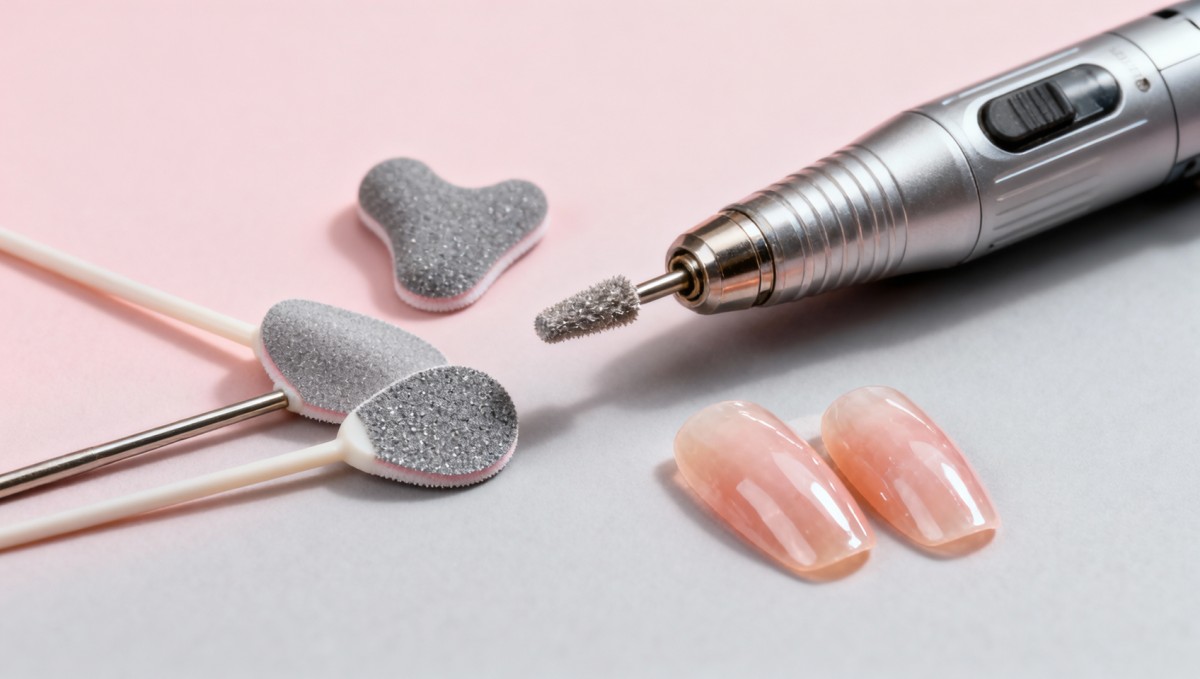
A natural nail shine should look smooth, even, and healthy. Yet over-finishing can create micro-scratches, heat spots, or thinning that may not be visible at first glance.
A silicone nail drill bit is typically chosen for the last stage of refinement. Its role is not aggressive removal. Its role is controlled contact, surface smoothing, and gentle shine enhancement.
This distinction matters in process evaluation. If a finishing tip acts too harshly, the issue is not only user technique. It may also reflect material hardness variation, shape imbalance, or weak production control.
In high-frequency salon or distribution environments, those inconsistencies create larger safety and complaint risks over time.
What a silicone nail drill bit should actually do
A good silicone nail drill bit should create a mild polishing effect without cutting into the nail plate. It should also maintain smooth rotation and stable friction across repeated use.
The ideal finishing tip usually balances four factors:
- Consistent abrasive distribution
- Controlled elasticity under pressure
- Low tendency to generate sudden heat
- Stable fit with standard handpiece systems
When any of these factors shifts, the finishing outcome changes. The nail may appear shiny, but the process may still be unsafe or difficult to reproduce.
Common misunderstanding in finishing selection
One common mistake is treating every polishing bit as interchangeable. In practice, different finishing materials respond differently to pressure, speed, and dwell time.
A silicone nail drill bit is usually better suited to natural nail shine work than a removal-oriented bit. Removal tools may be efficient, but they are not designed for delicate surface finishing.
Current industry concerns around safer polishing
The market now pays closer attention to controlled abrasion, hygiene support, and repeatable quality. This is especially true for export products serving mature markets with stricter expectations.
For a silicone nail drill bit, buyers increasingly look beyond surface appearance. They want to know whether the tip performs consistently between lots and under routine operating speed.
Another concern is overheating. Even when a bit is labeled as gentle, poor balance or unstable material density can raise friction quickly.
That is where manufacturing background matters. Wuxi Yaqin Trading Co., Ltd. has built its abrasive product business around strict control from raw material purchasing to packing.
Its export coverage across more than 42 countries, along with ISO9001:2000 certification, signals a process-oriented approach rather than a purely price-driven one.
For finishing tools, that mindset is valuable because safe results depend heavily on repeatability.
How to judge a finishing tip beyond basic appearance
Visual inspection is useful, but it is not enough. A silicone nail drill bit should be reviewed through both physical checks and application checks.
Routine sampling should include real polishing trials, not just dimensional checks. A bit can pass size inspection and still perform poorly on a natural nail surface.
Where finishing tools connect with broader bit selection
Finishing safety does not exist in isolation. In many workflows, operators use different bits for removal, repair, cuticle care, and final shine.
That is why a complete bit program often matters more than a single SKU. For example, some operations pair a silicone nail drill bit for shine with durable carbide tools for earlier stages.
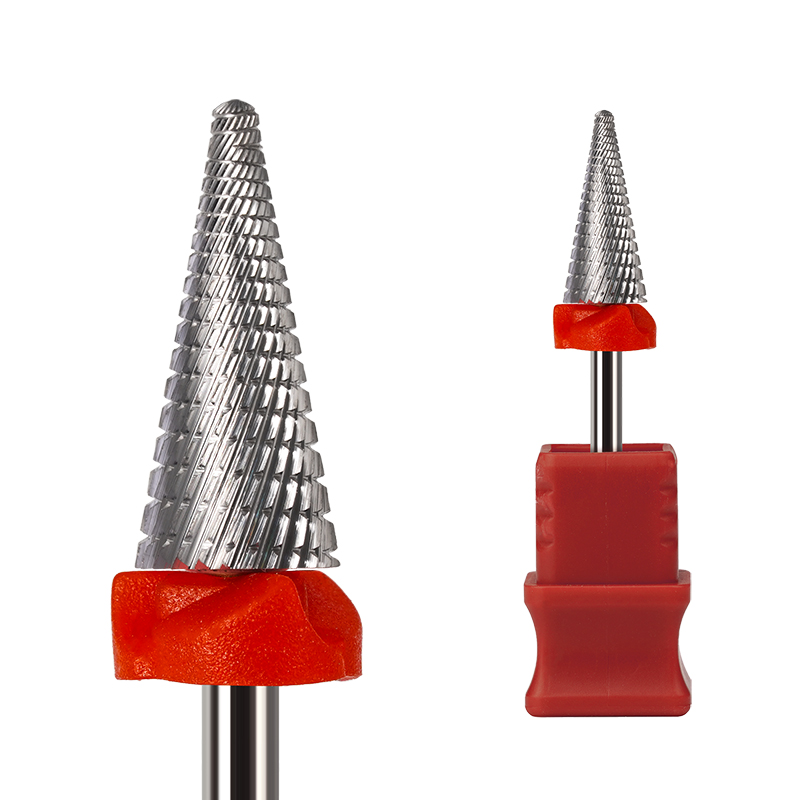
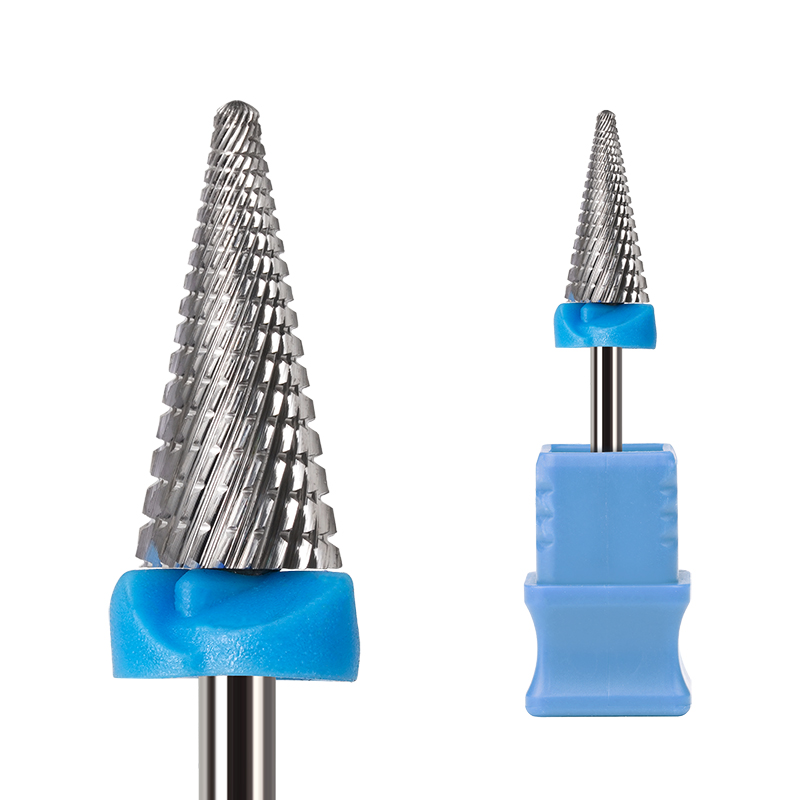
In that context, Blue Coated Nail Drill Bits can fit supporting roles such as polish removal, nail repair, and cuticle care.
Their range includes round cylinder, corn shape, round cone, flat head cylinder, and large round head options.
With tungsten steel or tungsten carbide construction, 2.35mm shank compatibility, and medium or fine grit choices, such bits help organize earlier process steps more precisely.
That matters because a finishing tip works best when the nail surface has been prepared correctly beforehand.
Why this supporting detail is relevant
If an earlier bit leaves roughness or heat stress, the silicone nail drill bit must compensate for damage it was never meant to fix. Safer shine begins with the full sequence, not only the last touch.
Practical control points during real use
In actual operations, a safer natural nail shine usually depends on simple but strict controls.
- Keep rotational speed within the bit’s intended finishing range.
- Avoid prolonged contact on one spot of the nail plate.
- Monitor pressure drift during repetitive work cycles.
- Separate finishing bits from removal bits during storage and handling.
- Replace worn tips before friction behavior becomes unpredictable.
These controls are basic, but they reveal whether a silicone nail drill bit is truly process-friendly. A good tool should support disciplined use, not demand constant correction.
What to review when comparing supply options
When evaluating finishing tools, the most useful questions are often practical ones.
- Is batch-to-batch material behavior stable?
- Are packaging and labeling aligned with traceability needs?
- Does the supplier control raw materials and production steps clearly?
- Can the same finishing standard be maintained in OEM or ODM programs?
- Are related bits available for integrated workflow planning?
A silicone nail drill bit may look like a small accessory, but its effect on safety, claims risk, and service consistency is not small.
The same applies to supporting tools. For heavier-duty stages, some buyers review wear resistance, impact resistance, corrosion resistance, and overheating prevention in coated carbide options before finalizing a system.
A sensible next step for safer nail shine programs
A better finishing result starts with clear evaluation criteria. Define the acceptable shine level, temperature behavior, contact feel, and replacement cycle before comparing products.
Then review the silicone nail drill bit within the full workflow, including preparation bits, handpiece fit, operator habits, and batch traceability.
Where supply stability is important, it also helps to compare manufacturers that combine export experience, documented QC systems, and one-stop production support.
That approach makes the final shine easier to trust, not only easier to achieve.
News List
- Is It Better to Source All Nail Drill Bits From One Factory?Aug 24, 2026
- How to Spot Fake Diamond Coating on Nail Drill BitsAug 24, 2026
- Are Silicone Nail Drill Bits Reusable After Sterilization?Aug 24, 2026
- Essential tools for manicures that make beginner work more consistentAug 24, 2026
- Which must-have items for nail technicians improve service speed mostAug 24, 2026
- How gel removal bits affect speed and heat during soak-off removalAug 24, 2026
Best-Selling Products
 Cross Cut Safety Stainless Steel Tungsten Carbide Nail Drill Bits Salon Foot Use XF-C Grit for Removing Nails
 First-rate Quality Tungsten Carbide Nail Drill Bits Best Coating Manicure Remove Gel Nails Accessories
 Professional Advanced Safety Cuticle Bits Two-Way Rotate 3/32'' Carbide Tungsten 5 in 1 Nail Drill Bits
 Wholesale 5 in 1 Electric Manicure Nail Drill Bits Various Coating Cone Cuticle Bit with Rotary Cross Cut for Nail Art
 New Slant Tooth Tungsten Steel Nail Drill Bits Dead Skin Removal 5-in-1 Universal Grinding Nail Polish Head Tool Nail Drill Bits
 4.0mm Small 5 in 1 Integrated Sharpe Tungsten Nail Drill Bit Straight Teeth Gel Polish Removal
 Flame Sharp XF F M C XC Silver Safety Professional Corn Tungsten Carbide Nail Bit for Drill Machine Accessories
 Factory Direct 5 in 1 Tungsten Carbide Nail Drill Bits 6.8MM Cross Cut Safety Manicure 5 in 1 Nail Drill Bits
Please give us a message