
How to Test Nail Drill Bit Quality Before a Bulk Purchase
How to Test Nail Drill Bit Quality Before a Bulk Purchase
Bulk nail drill bit orders should never be approved from appearance alone. A bit can look clean, sharp, and evenly coated in a sample box, then fail once it runs at working speed, heats under pressure, or meets repeated sanitation and packaging cycles. A practical quality test focuses on a few things that reveal whether the batch is stable: the base material, abrasive surface, concentricity, shank accuracy, joint strength, finishing, and consistency between pieces.
When asking how to test nail drill bit quality before bulk purchase, the first useful step is to define the exact bit type being evaluated. A ceramic bit, a carbide bit, and a diamond-coated bit do not fail in the same way. Ceramic pieces are often judged by brittleness, sharp edge retention, and smooth debris release. Carbide pieces need clean flute geometry, stable cutting performance, and good balance. Diamond bits depend heavily on abrasive distribution, bond quality, and whether the grit stays attached after repeated use. If the sample pack mixes different structures, testing becomes vague and misleading.
Start with the substrate, not the surface
The visible cutting area gets most of the attention, but the body underneath determines whether the tool can survive real work. Inspect the shank and head under bright light. The metal should look dense and uniform rather than porous, patchy, or overly polished to hide machining marks. If a bit is plated or bonded, the transition between the working head and the shank should be neat and stable, without gaps, bubbles, or excess adhesive-like buildup.
A simple bench test can reveal a lot. Hold several pieces from the sample lot side by side and compare the shank diameter, head length, and profile shape. If there is visible variation without measurement tools, tolerance control may already be weak. Then use a caliper or micrometer to confirm the shank size. Nail drill handpieces usually require stable fit; a shank that runs undersized may vibrate, while one that is oversized can damage the chuck or feel tight in some machines and loose in others.
Material hardness is harder to verify without lab equipment, but indirect signs still matter. A carbide bit with edges that dull after limited trial use may indicate weak raw material quality or poor heat treatment. A ceramic bit that chips from light contact or routine handling may be too brittle or insufficiently sintered. These are not final lab conclusions, but they are strong warnings during sample review.
Read the abrasive layer carefully
For diamond and other abrasive-coated bits, grit consistency matters more than a glossy finish. Under magnification, the abrasive particles should appear reasonably even across the active area. Large bald patches, crowded clumps, or irregular edges often lead to uneven cutting and early wear. A coarse grit sample should still feel controlled, not random. If one side of the head appears denser than the other, it may cut off-center and leave inconsistent contact on the nail surface.
Rubbing the bit lightly against a standard test surface can expose weak bonding. The goal is not to destroy the sample, but to see whether loose particles shed immediately. If visible abrasive dust drops off before meaningful use, the coating may not survive normal operation. With diamond bits, another detail is edge coverage. On some low-grade samples, the center looks acceptable while the corners and tip are thinly coated. In actual use, those thin zones wear first and change the bit's behavior long before the rest of the surface is exhausted.
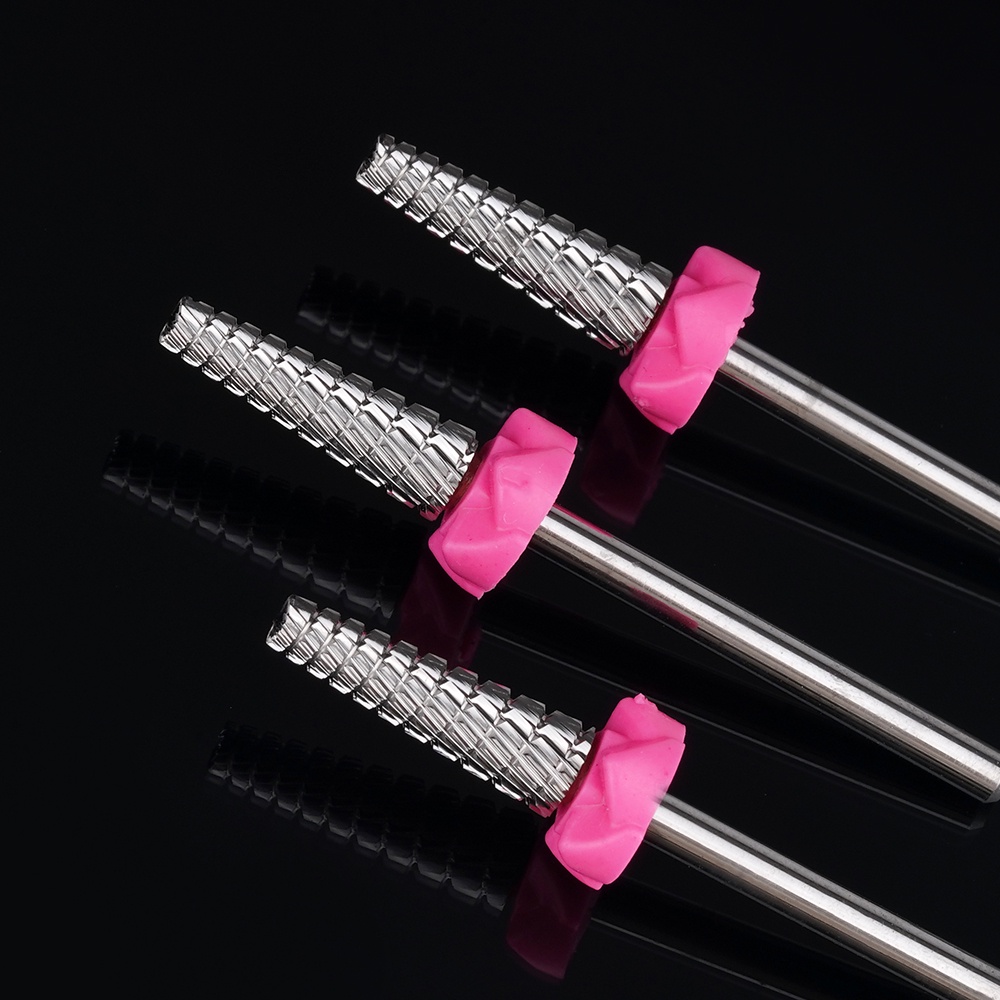
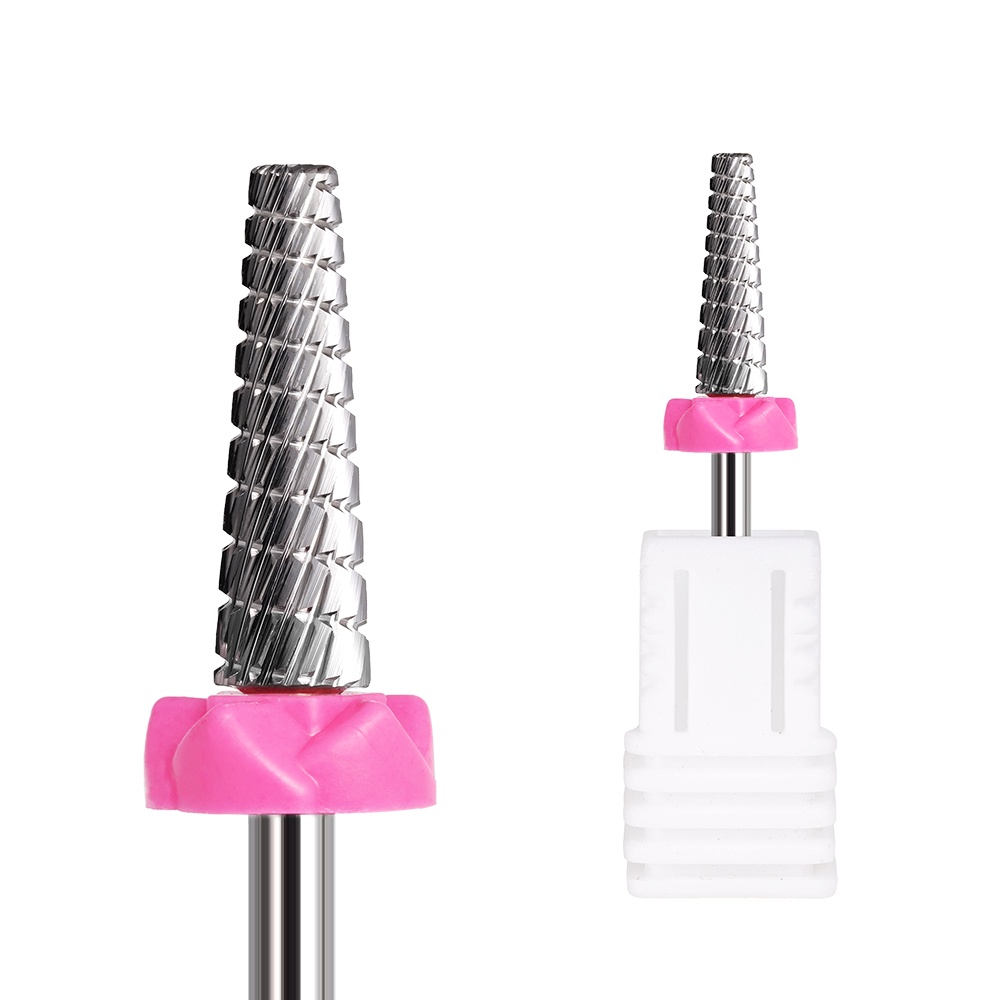
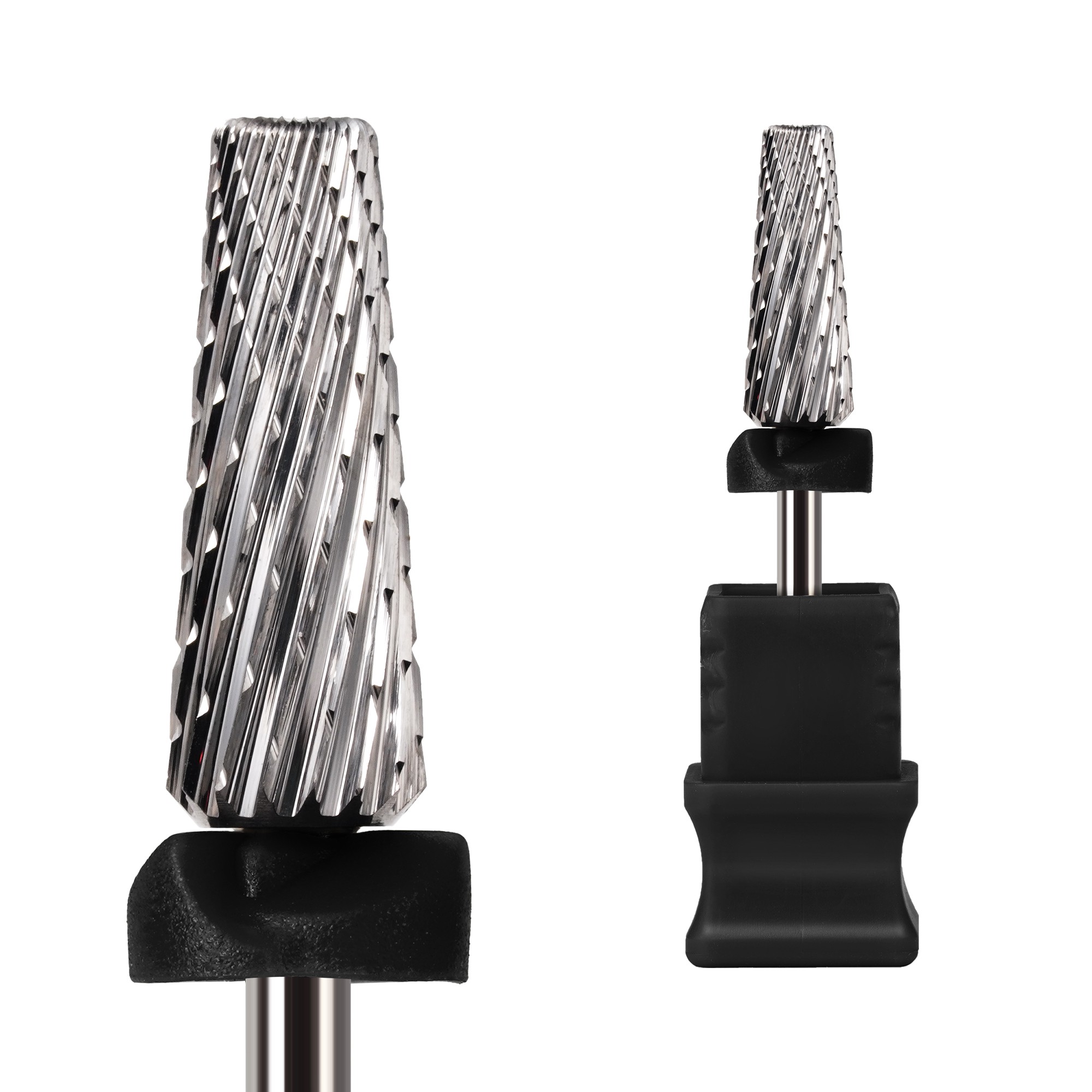
Carbide flutes need a different kind of inspection. The cutting channels should be crisp, even, and free from burrs. Burrs can snag, overheat, or produce a rougher finish than intended. Flute spacing should remain stable around the full circumference. If the geometry shifts from one section to another, chip removal becomes uneven, and the bit may feel aggressive in one angle and dull in the next.
Runout matters more than many sample sheets suggest
A nail drill bit can be made from acceptable material and still be poor quality if it does not rotate true. Runout creates vibration, noise, hand fatigue, uneven abrasion, and premature wear on both the bit and the handpiece. It is one of the easiest issues to miss when only looking at static samples.
Install each sample in a stable handpiece and run it at several speeds, including a low speed for visible observation and a higher speed where vibration becomes easier to detect. Watch the tip against a fixed reference point. If the head appears to orbit rather than spin on center, the problem may come from a bent shank, poor head alignment, or loose manufacturing tolerance. Test more than one piece from the same sample set. A single bad piece can happen; repeated wobble across several pieces points to process instability.
Sound is also informative. A balanced bit tends to produce a cleaner, steadier tone. A bit with runout often creates a fluctuating pitch or a harsher mechanical note. This kind of judgment should not replace dimensional inspection, but it helps identify samples that deserve closer measurement.
Heat buildup reveals hidden weaknesses
Some bits appear acceptable during a short dry spin, then show problems when they work against actual material. During trial use, monitor how quickly the bit heats, whether debris clears from the grooves, and whether the cutting feel remains stable after repeated passes. Excess heat can come from blunt geometry, poor grit exposure, weak chip evacuation, or imbalance.
Heat testing should be done under controlled and repeatable conditions. Use the same handpiece, speed range, contact pressure, and test medium when comparing samples. Changing all variables at once makes the result meaningless. If one sample becomes noticeably hot faster than another of the same specification, it may wear quickly in service or create uncomfortable friction during normal use.
After the bit cools, inspect the head again. Discoloration, edge softening, local shedding of abrasive, or micro-chipping around the tip can suggest that the material or bond structure is unstable under friction.
Pay attention to finishing quality and cleaning behavior
Finishing quality is not cosmetic. Sharp residual burrs on non-cutting edges, rough transitions near the neck, and poorly deburred shanks can create handling issues and make cleaning harder. A well-finished bit usually has smooth non-working surfaces, clear geometry, and no stray metal fragments. On coated bits, the boundary between coated and uncoated areas should be controlled rather than smeared or ragged.
Cleaning behavior is often overlooked before bulk ordering. Residue should release from the grooves or abrasive surface without unusual trapping. If debris packs tightly into the pattern after light use, the structure may be too closed, the flute angle may be weak, or the surface texture may be inconsistent. That does not just affect hygiene; it also changes cutting behavior over time.
If the intended application includes repeated disinfection or sterilization exposure, test a few cycles on the samples. The point is not to simulate years of use, but to see whether the coating lifts, the ceramic surface shows fresh cracking, or corrosion appears around joints and shank transitions. Some finishing problems only become visible after moisture and cleaning chemistry interact with the surface.
Batch consistency is the real bulk-order question
A good single sample is only evidence that one piece can be made well. Bulk risk appears when the next carton contains visible variation in grit, profile, or fit. Request samples from different production moments if possible rather than relying on one perfectly prepared set. If that is not possible, inspect enough pieces to see whether dimensions and performance stay within a narrow band.
Lay out multiple samples and compare:
- head shape and symmetry
- uniformity of abrasive or cutting edges
- shank straightness and insertion feel in the handpiece
- weight and balance by simple handling and rotation tests
- surface finish around the neck, tip, and non-working areas
Even before formal measurement, human vision catches instability quickly when items are placed side by side. If one medium grit piece behaves closer to coarse, or one barrel bit has slightly different shoulder angles than the rest, that inconsistency often becomes larger at scale.
Packaging can affect quality before the product is even used
The bit itself may leave production in good condition and still arrive compromised. Thin inner holders, loose compartments, weak caps, or poor separation between pieces can cause impact damage, chipped ceramic edges, or abrasive wear during transit. Packaging review should therefore be part of quality testing, especially when the order will move through multiple handling points.
Open and re-pack samples several times. If bits scrape one another, shift too easily, or fall out of holders during ordinary movement, the packaging is not protecting the product adequately. Shank rust spots, crushed labels, and mixed sizes inside one tray are signs that final packing control may be unreliable.
Documents help, but they do not replace physical verification
Specifications are useful only when they match the actual goods. Ask for clear details on material type, grit level, shank diameter tolerance, head dimensions, and intended speed or use range where relevant. Then verify those points against the sample. A common mistake is accepting broad wording such as “high quality carbide” or “premium diamond” without any practical definition. Those phrases do not tell you how the bit is made or whether the batch will be consistent.
It is also worth confirming whether the sample came from normal production or was specially prepared. A polished pre-production sample can look better than mass output if process controls are not settled. That issue is easy to miss when testing focuses only on one attractive piece.
Common questions during sample review
Is visual inspection enough for a first decision?
No. Visual inspection can eliminate obviously poor samples, but runout, heat buildup, bond strength, and grit retention usually need trial use.
Should every bit type be tested the same way?
No. Ceramic, carbide, and diamond bits should be judged with methods that fit their structure, because their failure patterns differ.
How many samples are enough?
Enough to reveal whether the result is repeatable. One attractive piece is not strong evidence for a bulk order.
Does a smoother finish always mean better quality?
Not necessarily. An overly polished appearance can hide weak geometry or thin abrasive coverage. Function should confirm appearance.
The strongest test is a small, repeatable routine that compares dimensions, rotation, cutting behavior, heat, debris release, and post-use condition across several pieces. That approach gives a more reliable answer to how to test nail drill bit quality before bulk purchase than any catalog description or polished sample photo.
News List
- What certifications matter when reviewing a nail drill bit supplier in the UKAug 25, 2026
- How shipping costs affect bulk orders from a nail drill bit supplier in CanadaAug 25, 2026
- What materials are most common from a nail drill bit supplier in ItalyAug 25, 2026
- How to compare minimum order terms from nail drill bit suppliers in PolandAug 25, 2026
- When does an Australia nail drill bit supplier make sense for local salonsAug 25, 2026
- How to verify product consistency from a nail drill bit supplier in FranceAug 25, 2026
Best-Selling Products
 Cross Cut Safety Stainless Steel Tungsten Carbide Nail Drill Bits Salon Foot Use XF-C Grit for Removing Nails
 First-rate Quality Tungsten Carbide Nail Drill Bits Best Coating Manicure Remove Gel Nails Accessories
 Professional Advanced Safety Cuticle Bits Two-Way Rotate 3/32'' Carbide Tungsten 5 in 1 Nail Drill Bits
 Wholesale 5 in 1 Electric Manicure Nail Drill Bits Various Coating Cone Cuticle Bit with Rotary Cross Cut for Nail Art
 New Slant Tooth Tungsten Steel Nail Drill Bits Dead Skin Removal 5-in-1 Universal Grinding Nail Polish Head Tool Nail Drill Bits
 4.0mm Small 5 in 1 Integrated Sharpe Tungsten Nail Drill Bit Straight Teeth Gel Polish Removal
 Flame Sharp XF F M C XC Silver Safety Professional Corn Tungsten Carbide Nail Bit for Drill Machine Accessories
 Factory Direct 5 in 1 Tungsten Carbide Nail Drill Bits 6.8MM Cross Cut Safety Manicure 5 in 1 Nail Drill Bits
Please give us a message