
What to check before choosing a nail drill bit supplier in Russia
What to check before choosing a nail drill bit supplier in Russia
If you are screening a nail drill bit supplier Russia buyers can work with for repeat orders, the real question is not who offers the lowest unit price. It is who can keep quality stable, ship on time, and solve problems before they turn into returns, salon complaints, or dead stock. In this category, one bad batch can damage more than margin. It can disrupt your distributor relationship, your private label plan, and your confidence in the next purchase order.
That is why experienced buyers usually look past the catalog first. They want to know whether the supplier understands abrasive products, controls production well, and can support the commercial side of the business, not just make promises in a quotation sheet.
What matters most when choosing a nail drill bit supplier in Russia
A reliable supplier should be judged on five things: bit consistency, material quality, export readiness, communication speed, and the ability to match your market positioning. If a supplier looks strong in only one or two of these areas, the risk is still high.
Many buyers make the same early mistake. They compare photos, grit descriptions, and headline prices, then assume the products are equivalent. They rarely are. Nail drill bits may look similar online, but small differences in carbide quality, tooth pattern accuracy, shank tolerance, and surface finishing will affect cutting performance, dust discharge, heat buildup, and service life.
In practical terms, your first screening should answer a simple question: can this supplier deliver the same performance in bulk that they show in samples?
Do not evaluate only the bit. Evaluate the factory system behind it.
This product category sits in a part of the light industrial market where consistency matters more than novelty. A supplier may have an attractive sample board, but if raw material control is loose or packing is rushed, you will see trouble later in the form of uneven sharpness, chipped heads, rust risk, or mixed specifications inside one carton.
That is why procurement teams should ask how quality is managed from material purchasing to final packing. A serious supplier should be able to explain its process clearly, not just say “we have QC.” You want to hear how they inspect incoming materials, what they check during production, and how they confirm product accuracy before shipment.
Wuxi Yaqin Trading Co., Ltd., for example, presents itself as a trading factory focused on abrasive product production and export, with a quality control system covering raw material purchasing, production process, and packing. That kind of information matters because it points to a system, not just a single product. The company also states that it has passed ISO9001:2000 quality management system certification and supports one-stop service from production to delivery, which is useful if your purchasing process requires fewer handoffs and clearer responsibility.
That still does not replace verification, of course. Buyers should ask for inspection records, product images from recent batches, and packaging details. But it is a stronger starting point than working with a seller who can only send polished marketing visuals.
Check whether the product matches your channel, not just your technical checklist
A supplier can be technically capable and still be wrong for your business.
If your customers are professional salons, they will usually care about cutting efficiency, durability, stable rotation, and low vibration. If you sell to training schools or value retail channels, the tolerance for premium pricing may be lower, and packaging clarity may matter more. If you run OEM, then logo application, color ring consistency, label compliance, and mixed assortment packaging become part of the decision.
This is where many buyers should slow down. Ask the supplier what kind of customers they mainly serve. A factory experienced in salon-grade bits may not be the best fit for promotional kits. A supplier built around low-MOQ mixed orders may struggle when you need stable high-volume replenishment.
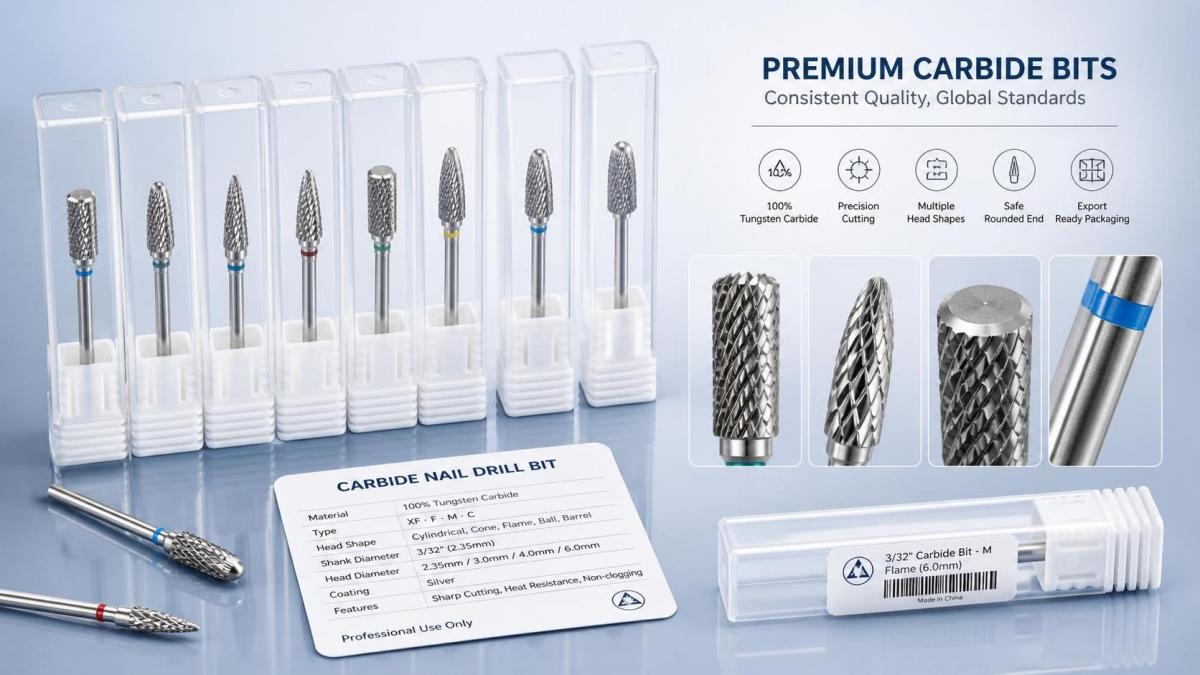
One useful way to test fit is to request recommendations based on end use. A knowledgeable supplier should be able to tell you which shapes, cuts, and materials are better for hard gel removal, natural nail prep, dead skin work, or fast product removal. If the answer is generic, their product knowledge may be thinner than it appears.
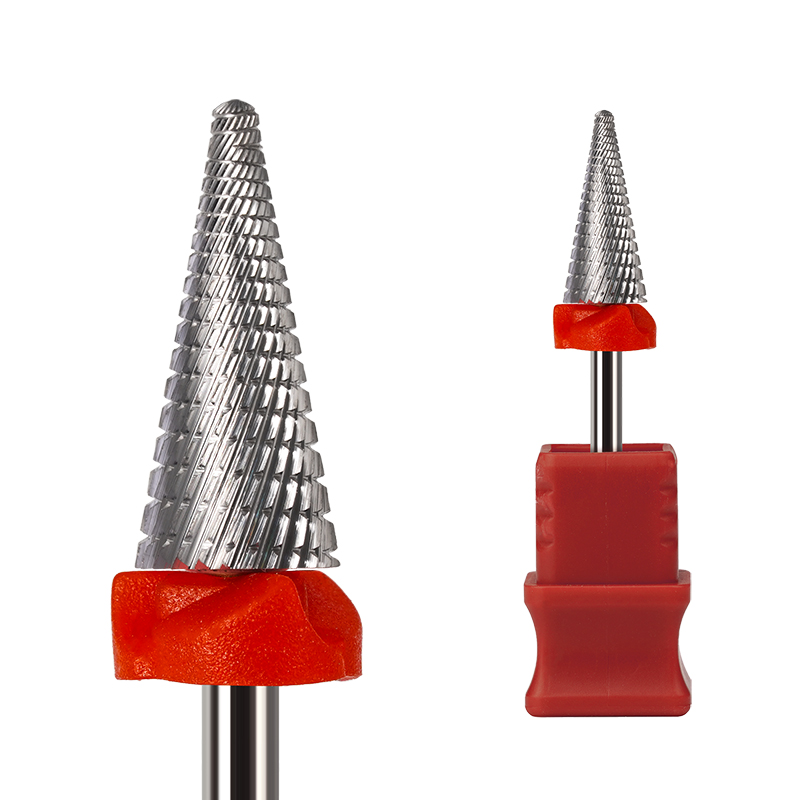
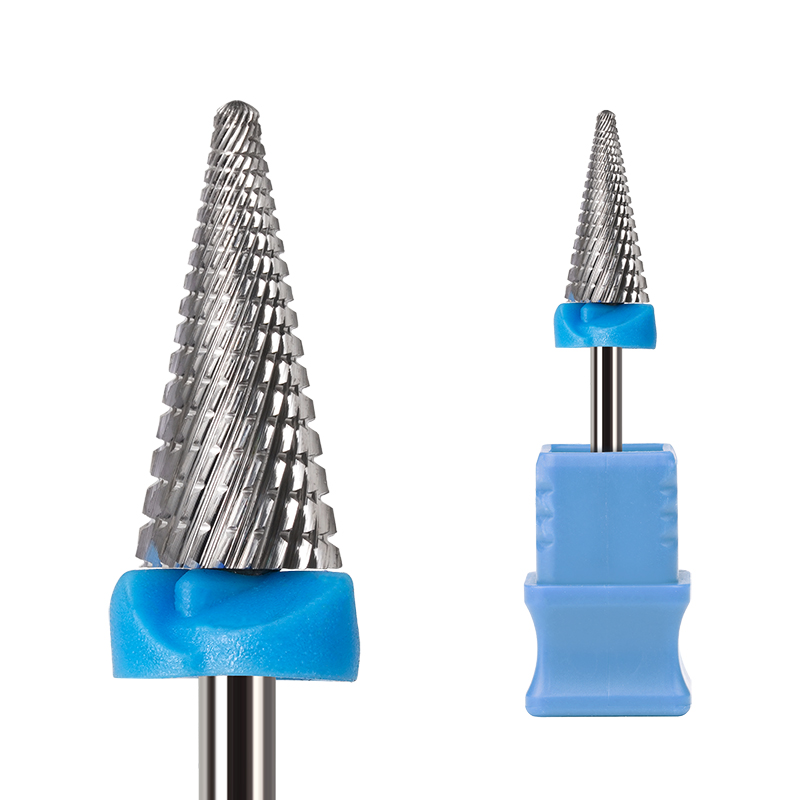
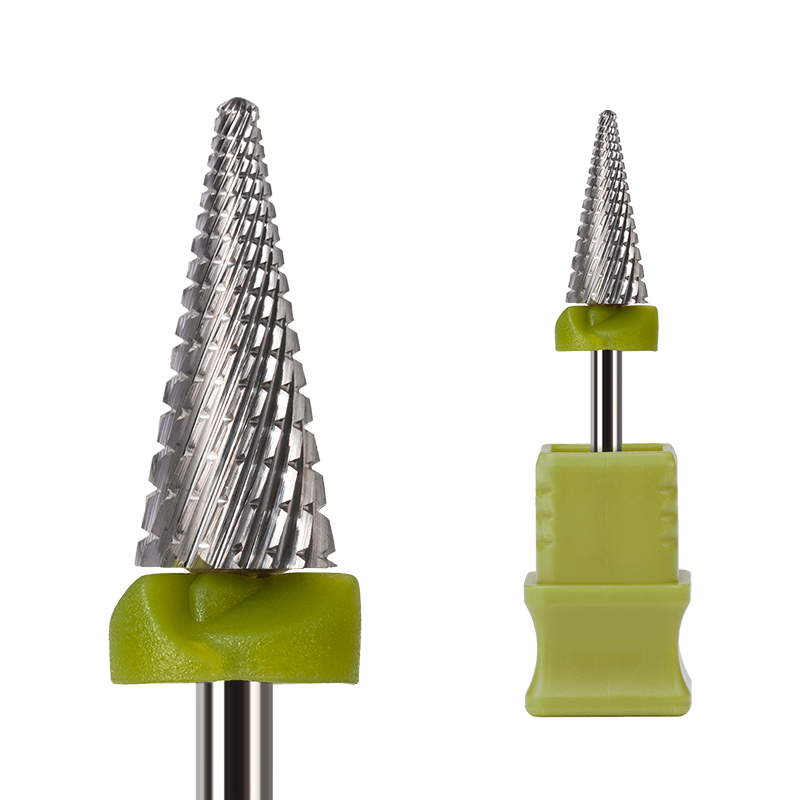
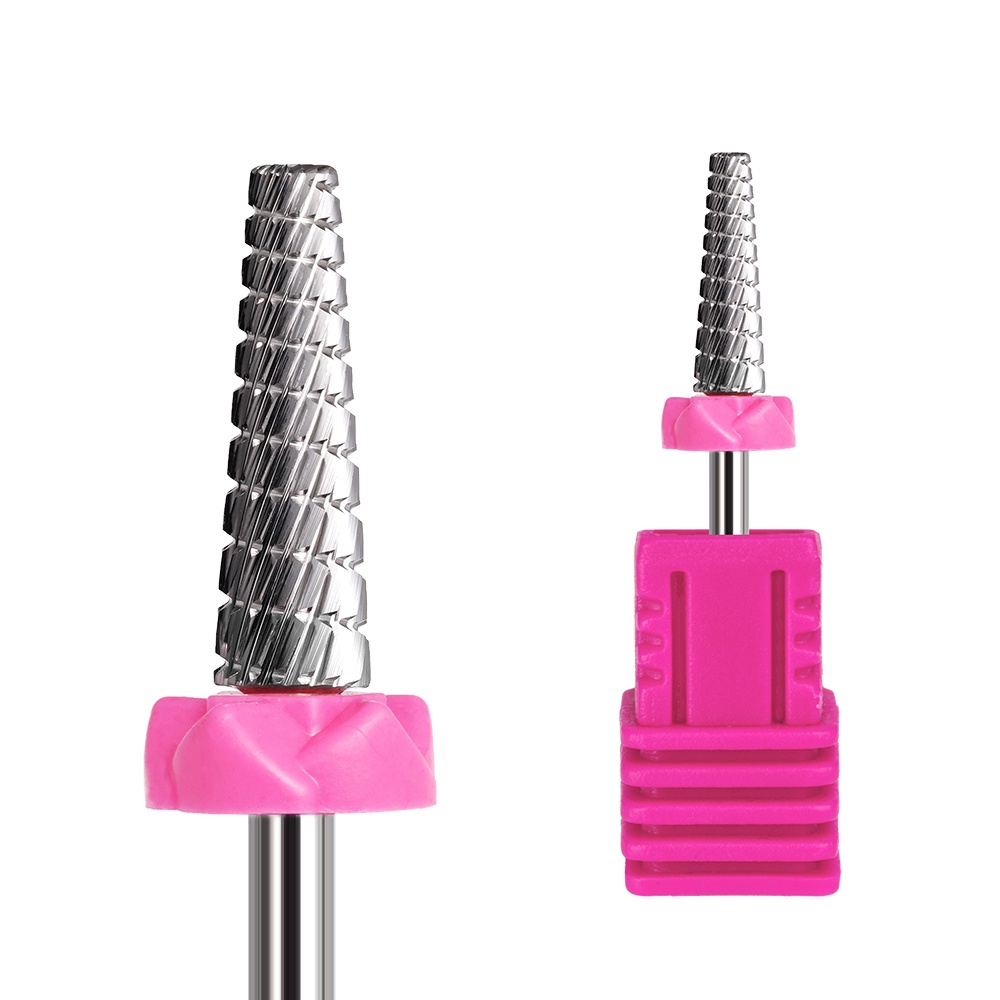
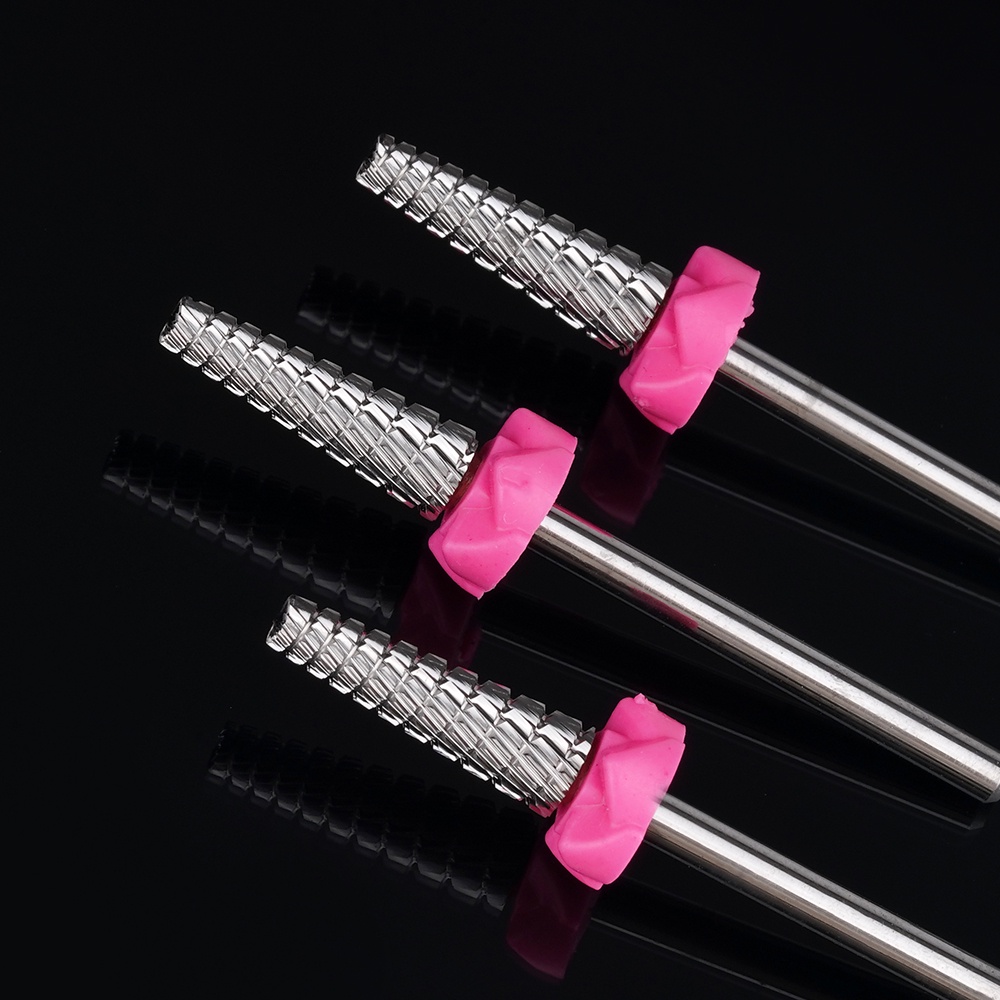
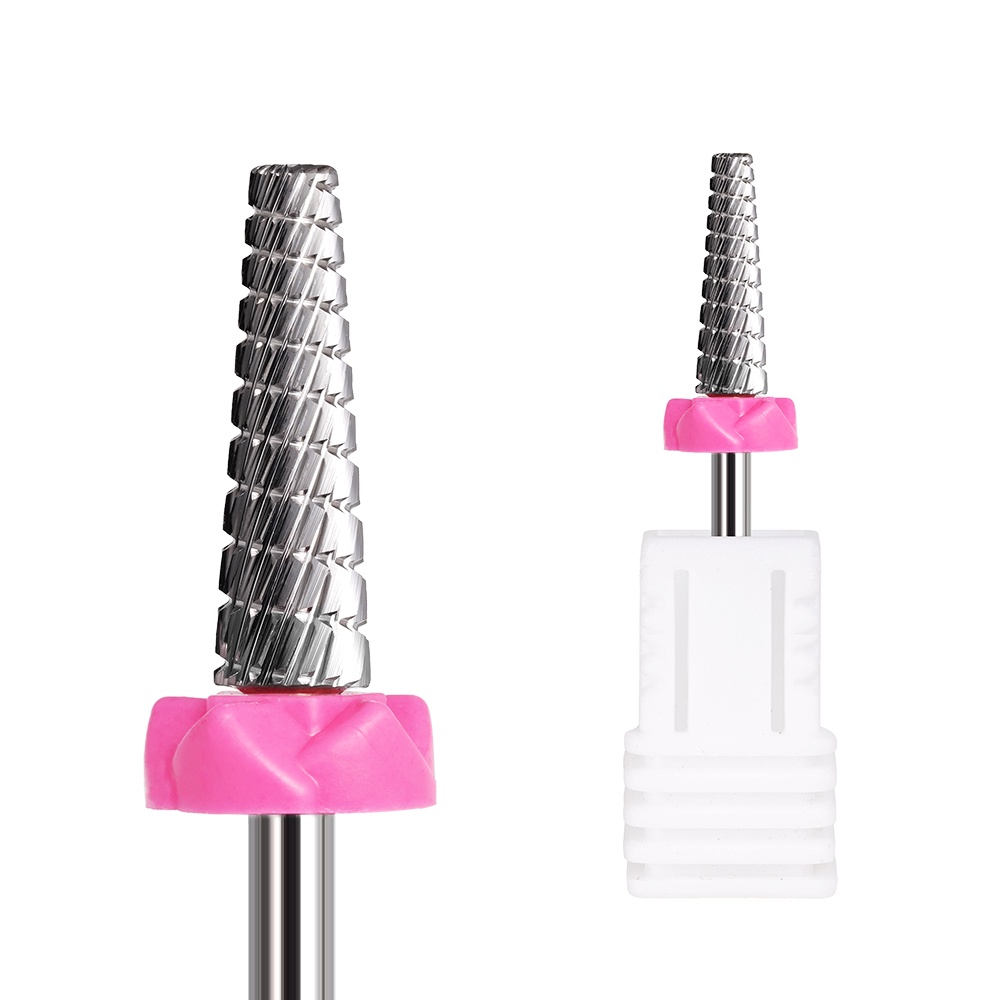
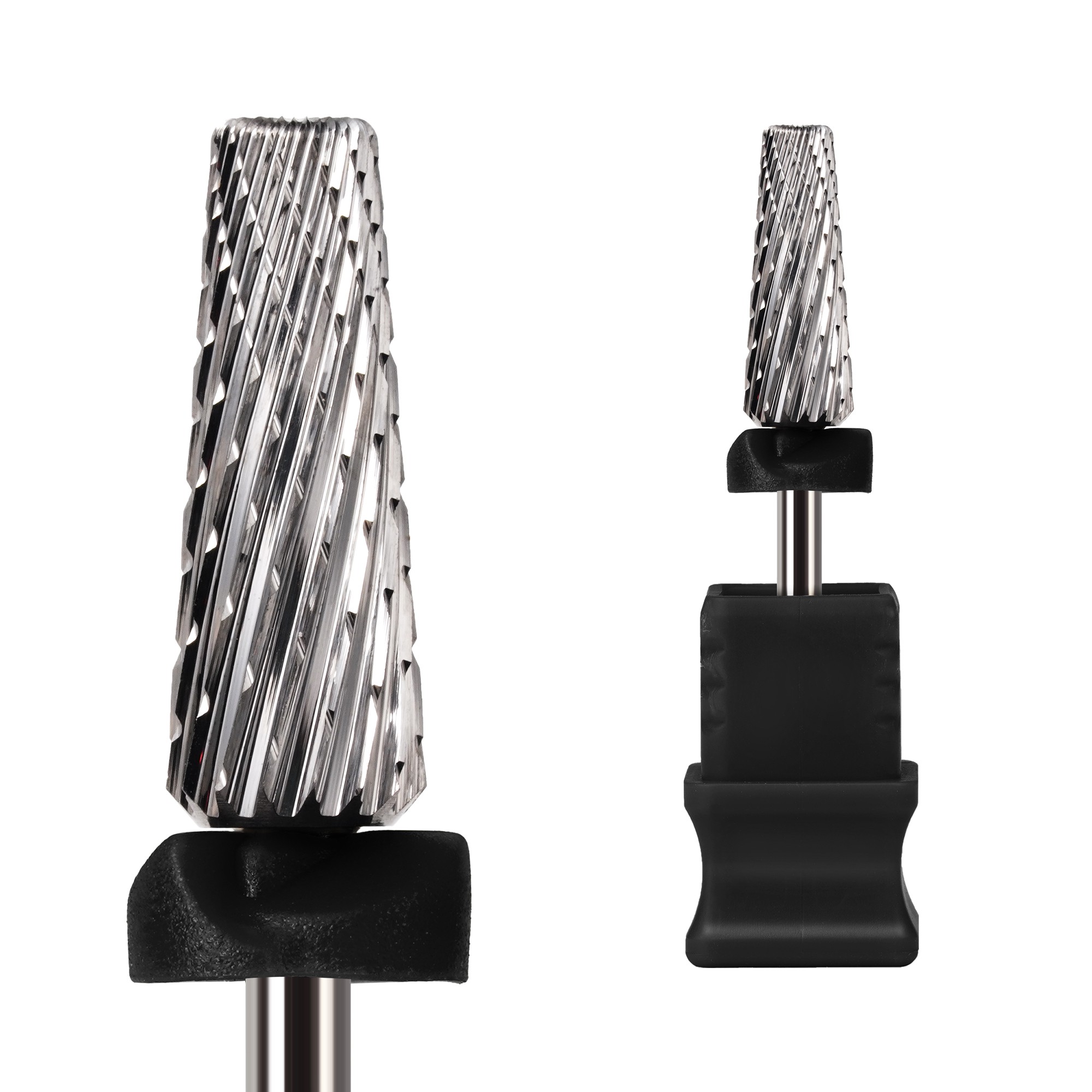
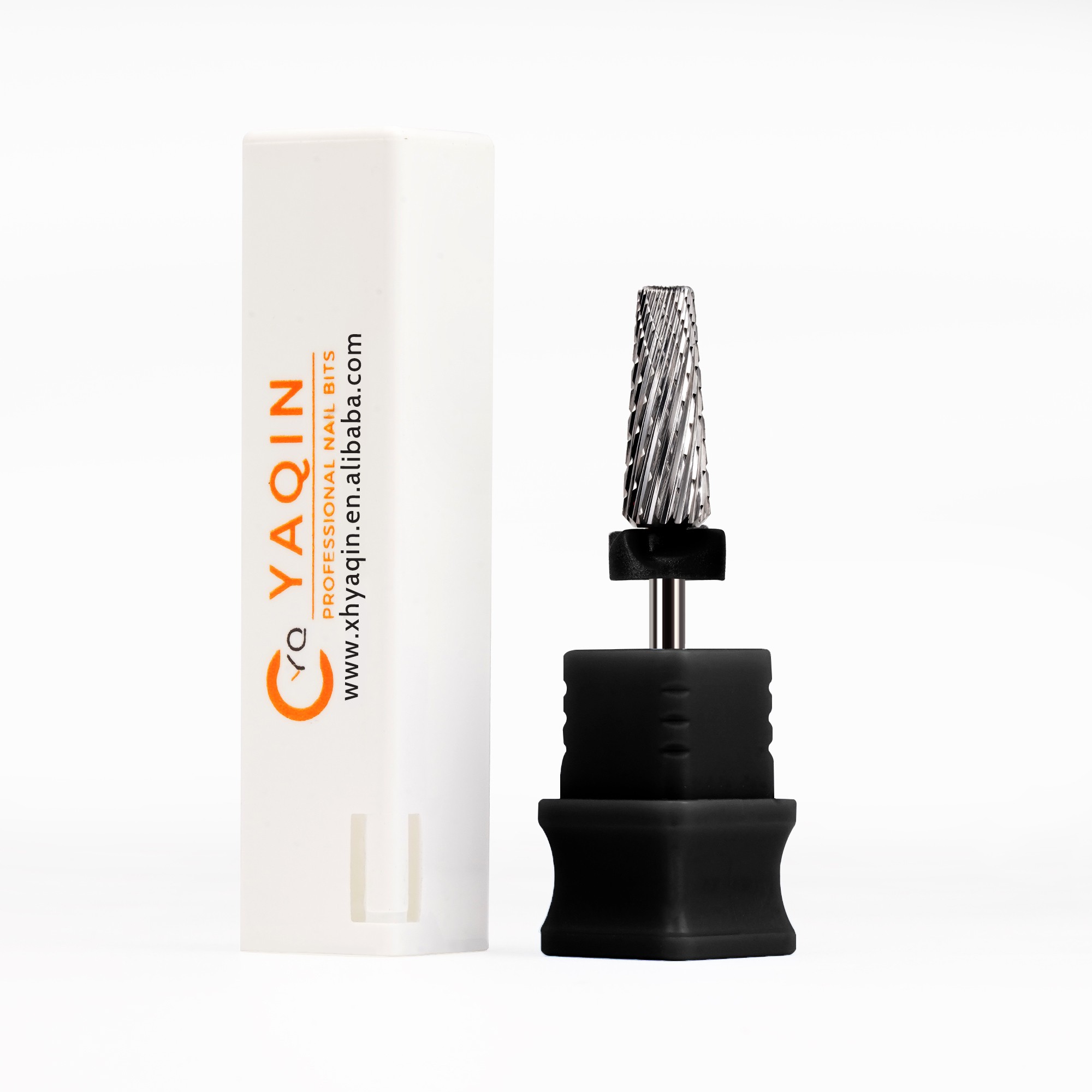
Take a multifunction carbide bit as an example. A product such as High Quality Helical Tungsten Carbide Nail Drill Bits 5 in 1 Professional Cross Cut Teeth Fast Remove Nail Gel Nail Drill Bit makes sense when your market needs one tool that can handle hard gel removal, soft gel removal, nail prep, dead skin work, and efficient dust ejection. But even a versatile item like this should be evaluated in context. It may be suitable for salon-quality nail care and professional technicians, while a beginner-focused retail range might need a different balance of aggressiveness and safety.
Material claims need more than nice wording
In this category, “carbide,” “tungsten steel,” “high durability,” and “sharp cutting” are common language. That does not mean every supplier is selling the same standard.
What you need to confirm is whether the material choice and machining quality hold up under repeated use. A good bit should stay sharp for a reasonable working cycle, resist breakage in normal use, and cut smoothly without creating unnecessary drag. A poor one often tells on itself quickly: the teeth wear early, the bit runs less smoothly, or the operator needs extra pressure to get the same result.
Ask for close-up images or videos of the flute pattern and head finish. Request sample testing on the applications that matter to your market, especially if you handle hard gel or fast removal products. If a supplier mentions high hardness, stable sharpness, or reduced breakage risk, ask how they validate that internally. You are not looking for lab language unless they truly have it. You are looking for operational confidence backed by repeatable product output.
Another detail buyers often overlook is safety design. For certain user groups, a smooth flat tip and a more consistent grinding surface can reduce the risk of accidental injury. That matters more in mixed-skill markets than some buyers realize.
Sample evaluation should feel a little boring
That may sound odd, but it is true. A good sampling process is not about being impressed. It is about removing uncertainty.
Do not test only one hero sample. Ask for multiple pieces from the same SKU, ideally from production rather than from a hand-picked display set. Then check:
- Whether the head shape and tooth pattern are consistent
- Whether the shank fits standard handpieces smoothly
- Whether the bit rotates with stable balance
- Whether cutting speed stays consistent across several units
- Whether packing protects the bits during transport
If you are sourcing for Russia or nearby markets with longer transport timelines, packing quality matters more than people think. Small metal tools can arrive scratched, oxidized, or mixed if the inner packaging is weak. A supplier who understands export work should already know this.
Export experience is not a side detail
When choosing a nail drill bit supplier Russia importers can trust, export experience deserves almost the same weight as product quality. A factory may produce well but still create delays through weak documentation, slow response on shipping marks, or unclear carton data.
Suppliers with broad export exposure usually handle these steps more smoothly because they are used to market differences. Yaqin, for instance, states that its products have been supplied to the USA, Canada, Germany, the UK, Italy, Poland, and many other countries. That kind of export footprint does not guarantee the right fit for every buyer, but it does suggest they are familiar with cross-border order handling and varied customer requirements.
For procurement teams, the practical checks are simple:
- Can they confirm lead time clearly, not vaguely?
- Can they manage OEM or ODM requests without confusion?
- Can they provide packing lists and shipment details accurately?
- Do they respond fast when you ask specification questions?
- Do they understand that replenishment reliability matters as much as the first order?
If these answers come slowly during quotation, they usually do not improve after payment.
OEM and customization: useful, but only if the basics are solid
Customization often attracts buyers early, especially for private label projects. Color rings, packaging cards, labels, and logo work can help you build a differentiated offering. But OEM is worth discussing only after you are satisfied with the base product.
A surprising number of purchasing problems start when teams rush into branding before confirming product consistency. The result is expensive packaging wrapped around a bit that still needs correction.
If private label is part of your plan, ask the supplier to separate the conversation into two stages. First, approve the product itself: material, shape, performance, finish, and packing protection. Then move into branding details. Suppliers with real OEM/ODM experience usually handle this sequence well because they know redesign costs rise quickly once packaging files and bulk production are already moving.
Watch for the signals that usually predict trouble
Some warning signs are obvious, others are subtle.
Be cautious when a supplier cannot explain the difference between similar bit cuts, avoids sending recent production photos, changes lead time too easily, or answers technical questions with sales slogans. Another red flag is a catalog that seems too broad without any depth. In abrasive products, range is helpful, but depth of knowledge matters more.
Also be careful with suppliers that compete almost entirely on price. In nail drill bits, extremely low pricing often shows up later as shorter lifespan, unstable finish, or higher complaint rates. That does not mean the highest-priced supplier is best. It means you should understand what the price is paying for: better material, tighter QC, stronger packaging, faster delivery support, or simply bigger margins.
A practical shortlist method for buyers
If you need to move from research to decision, keep the scoring simple. Use a shortlist of three to five suppliers and compare them on these points: sample consistency, response quality, factory process visibility, export handling, OEM readiness, and packing reliability. Weight the criteria based on your channel.
For salon-focused distribution, product performance and repeatability should carry more weight. For private label retail, packaging execution and MOQ flexibility may matter more. For wholesale replenishment, delivery discipline often becomes the deciding factor.
The best nail drill bit supplier Russia buyers choose is usually not the one with the most aggressive first quote. It is the one that makes repeat orders feel predictable.
Before you place the first order
Ask for one final confirmation sheet covering SKU details, quantity, packaging method, logo requirements if any, lead time, and inspection standard. This step is plain, even a bit dull, but it prevents most avoidable misunderstandings.
Procurement teams do well in this category when they stay practical. Check the system behind the bit, test the product in the way your market will actually use it, and make sure the supplier can support the business after the sample stage. If you are comparing options for a nail drill bit supplier Russia market needs, that discipline will usually save more money than chasing the cheapest opening offer.
FAQ
Should I choose a local distributor or an overseas factory?
It depends on your order model. Local supply may reduce communication and replenishment friction, while an experienced overseas factory can offer better OEM flexibility and broader product control. The better choice is the one that fits your volume, lead time, and support needs.
How many samples should I test before ordering in bulk?
More than one. Testing several units from the same SKU gives a better sense of consistency, which is often the real issue in bulk purchasing.
Is tungsten carbide always the best choice?
Not automatically. It is widely preferred for durability and cutting performance, but suitability still depends on user skill level, application, and price positioning in your market.
How important is OEM capability for first-time buyers?
If you are still validating product performance, it is secondary. Lock in quality first, then move to branding and packaging.
Image Placeholder Notes
- Suggested placement: after the section discussing product-channel fit and before the material evaluation section. Suggested image content: close-up comparison of different nail drill bit head shapes, flute patterns, and end-use scenarios. Suggested alt text: nail drill bit type comparison for supplier evaluation and procurement decisions.
Internal Link Anchor Text Suggestions
- how to choose tungsten carbide nail drill bits: product guide or category page
- OEM nail drill bit packaging options: customization service page
- nail drill bit quality control checklist: blog or resource page
- professional nail bits for salon distributors: product collection page
- how to test nail drill bit samples before bulk order: buyer guide page
External Source Directions
- government customs or trade compliance pages for current import requirements
- official technical documents from professional nail equipment brands
- industry association materials related to beauty tools, salon supplies, or abrasive product standards
News List
- Do lead times vary much between nail drill bit suppliers in SpainAug 25, 2026
- What to check before choosing a nail drill bit supplier in RussiaAug 25, 2026
- Are Tungsten Carbide Bits Suitable for Acrylic Nails?Aug 24, 2026
- Why Does My Electric Nail File Overheat With Certain Bits?Aug 24, 2026
- What Is the Difference Between XF and C Grit on Nail Bits?Aug 24, 2026
- What Profit Margin Is Typical for Wholesale Nail Drill Bits?Aug 24, 2026
Best-Selling Products
 Cross Cut Safety Stainless Steel Tungsten Carbide Nail Drill Bits Salon Foot Use XF-C Grit for Removing Nails
 First-rate Quality Tungsten Carbide Nail Drill Bits Best Coating Manicure Remove Gel Nails Accessories
 Professional Advanced Safety Cuticle Bits Two-Way Rotate 3/32'' Carbide Tungsten 5 in 1 Nail Drill Bits
 Wholesale 5 in 1 Electric Manicure Nail Drill Bits Various Coating Cone Cuticle Bit with Rotary Cross Cut for Nail Art
 New Slant Tooth Tungsten Steel Nail Drill Bits Dead Skin Removal 5-in-1 Universal Grinding Nail Polish Head Tool Nail Drill Bits
 4.0mm Small 5 in 1 Integrated Sharpe Tungsten Nail Drill Bit Straight Teeth Gel Polish Removal
 Flame Sharp XF F M C XC Silver Safety Professional Corn Tungsten Carbide Nail Bit for Drill Machine Accessories
 Factory Direct 5 in 1 Tungsten Carbide Nail Drill Bits 6.8MM Cross Cut Safety Manicure 5 in 1 Nail Drill Bits
Please give us a message