
How shipping costs affect bulk orders from a nail drill bit supplier in Canada
How shipping costs affect bulk orders from a nail drill bit supplier in Canada
For finance decision-makers evaluating bulk purchases, shipping can change the real economics of sourcing far more than the quoted unit price suggests. When a buyer compares offers from a nail drill bit supplier Canada importers may work with, the visible price per piece is only the starting point. Freight structure, carton utilization, customs handling, lead-time variability, and the cost of carrying extra inventory can either protect margin or quietly erode it.
That is why the shipping discussion matters most at the approval stage. The question is rarely “Is this supplier’s FOB or EXW price lower?” The more useful question is “What will this order cost when it is landed, received, checked, and held in stock until it turns into revenue?” For bulk nail drill bit orders, especially in the light industrial and daily-use category, small cost leakages across logistics often add up faster than buyers expect.
What buyers are really trying to judge
Searchers looking into this topic usually are not trying to learn what freight is. They are trying to decide whether offshore sourcing still makes financial sense once shipping is included, and whether a lower ex-factory quote remains competitive after all downstream costs are counted.
For a finance approver, the practical concerns tend to be these: whether shipping volatility will distort budget assumptions, whether reorder timing is reliable enough to avoid emergency replenishment, and whether the supplier’s packaging and documentation discipline is strong enough to prevent avoidable extra charges. In other words, this is less about transportation in isolation and more about cost predictability.
Shipping cost is not one line item
In bulk procurement, shipping is often treated as a single number in a quotation sheet. That is convenient, but it can hide the structure of the risk. In reality, the landed cost of nail drill bits shipped into Canada is influenced by several layers:
- International freight mode and market rate at booking time
- Order density: how much value and usable quantity fit into each carton or pallet
- Packing design, inner box count, and master carton efficiency
- Customs clearance, brokerage, and local delivery fees
- Transit time and the resulting working-capital impact
- Damage, rejection, or relabeling costs if packaging or paperwork is wrong
This matters because abrasive tools such as nail drill bits are relatively small items, but not all SKUs behave the same way in logistics. A dense, standardized assortment with stable packaging may absorb freight well. A mixed order with many low-volume variants, specialty shapes, or custom branding can look efficient on paper while becoming expensive to pack, count, and clear.
Why bulk orders can reduce cost and still create new exposure
There is an old assumption in procurement that larger orders always solve freight inefficiency. Sometimes they do. A higher order volume can lower freight cost per unit, improve booking efficiency, and justify better consolidation. But finance teams should be careful not to confuse lower unit freight with lower total supply-chain risk.
A larger order usually increases cash tied up in inventory, lengthens the period between payment and sell-through, and raises the cost of quality failure if the shipment arrives with issues. If a container or consolidated shipment is delayed, the operational impact is larger because more of the purchasing plan is sitting in transit at once. The landed cost may improve while the risk concentration worsens.
This is particularly relevant when the order mix includes high-runner items together with slower-moving technical variants. A buyer may be tempted to expand the assortment in one shipment to make freight more efficient. The logistics math may look better, but the inventory turns may get worse.
Packaging efficiency is often underestimated
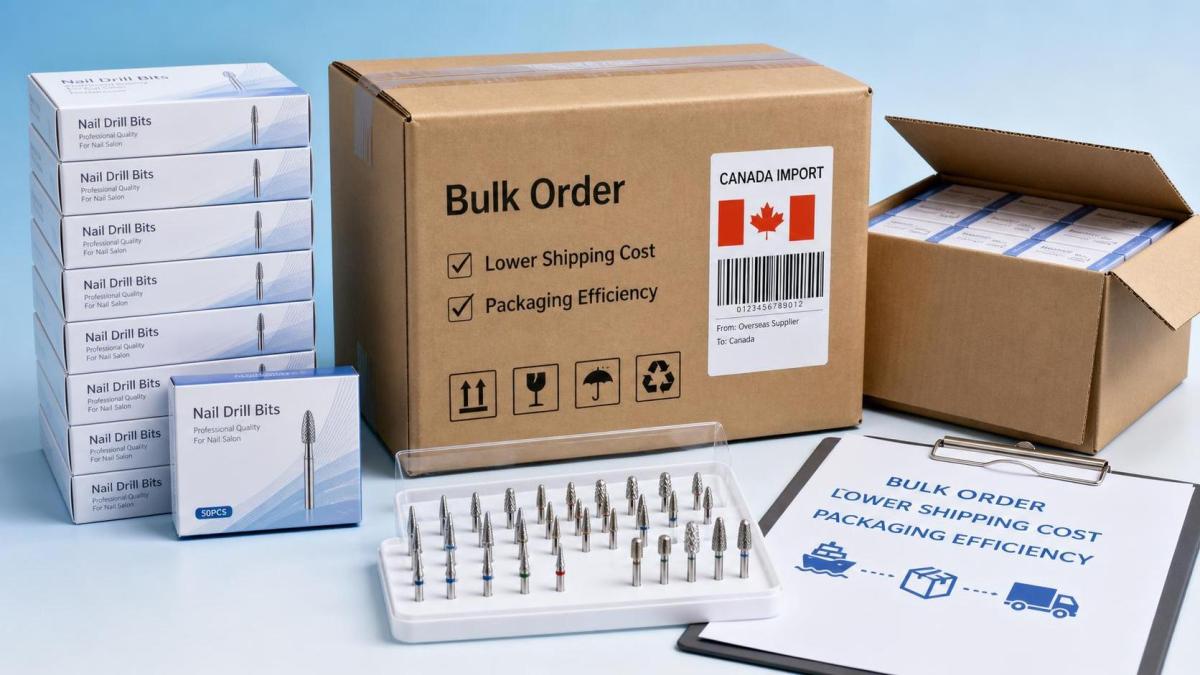
One of the most overlooked drivers of shipping cost is packaging design. With compact products like nail drill bits, outer-carton efficiency can materially change freight allocation. Two suppliers offering similar product quality may produce very different logistics outcomes depending on how they pack sleeves, inner boxes, labeling sets, and mixed SKU cartons.
For finance review, a few questions usually surface value quickly:
- How many saleable units fit into one master carton?
- Are dimensions optimized for standard pallet and courier handling?
- Does custom OEM packaging reduce packing density?
- Will mixed-SKU cartons increase receiving labor and error rates?
- Is protective packaging strong enough to avoid breakage or contamination?
If the supplier has a mature QC and packing process, that often helps beyond product quality alone. Wuxi Yaqin Trading Co., Ltd., for example, positions itself as a trading factory with a complete QC system covering raw material purchasing, production process, and packing, along with one-stop production-to-delivery support and OEM/ODM experience. For a finance team, the relevance of that claim is not branding value by itself; it is whether disciplined packing and shipment preparation reduce the chance of rework, claims, and avoidable logistics leakage. Specific process details still need to be validated during supplier review.
Freight mode changes the buying logic
The decision between air, courier, and sea is not simply a speed-versus-cost comparison. It changes the whole sourcing model.
Courier or air shipments may work for urgent replenishment, sampling, or smaller trial orders, but they can distort the apparent viability of an imported program if used too often. A business that repeatedly solves planning gaps with express freight may think it has a supplier problem when it actually has a forecasting and reorder discipline problem.
Sea freight usually offers better economics for stable, larger orders, but it requires better scheduling discipline and more tolerance for variability. Even when ocean rates are favorable, the total lead time includes production, consolidation, booking, transit, customs release, and inland delivery. Finance teams should evaluate not just the nominal freight saving but the stock buffer required to support that model.
That stock buffer has a cost. If an offshore sourcing program saves 6% on procurement price but requires meaningfully higher safety stock, the net benefit may be smaller than commercial teams expect. This is why landed-cost analysis should be paired with inventory carrying assumptions, not separated from them.
Customs and compliance are not side issues
For importers into Canada, customs treatment, documentation accuracy, and product classification can affect both timing and cost. Exact tariff treatment, duty exposure, and any product-specific regulatory considerations should be confirmed with a qualified customs broker or trade adviser because requirements may vary by product detail and current policy【待核实】. Finance approvers should still ask the operational question early: does the supplier provide consistent, clean documentation that minimizes border friction?
Typical hidden costs include brokerage adjustments, inspection-related delays, relabeling, and corrections to packing lists or commercial invoices. These are rarely headline numbers in supplier quotations, but they hit the landed cost all the same. A supplier that exports regularly to Canada and other mature markets often has an advantage here, not because errors disappear, but because documentation routines tend to be more standardized.
Quality problems amplify shipping cost, not just product cost
In this category, a quality issue is not limited to rejected units. It can also make the original freight spend less efficient. If even a modest percentage of goods must be replaced, the buyer may pay for return handling, supplemental shipment costs, and additional receiving labor. The replacement units themselves may be inexpensive; the correction process is usually not.
That is why technical consistency matters in freight economics. Consider a detailed bit used in salon and professional prep work, such as 2*8mm Flame Bit Diamond Nail Drill Bits Stainless Steel Cuticle Remover Burr. On the surface, it is a small line item. But for professional buyers, consistency in concentricity, coating durability, and application suitability affects whether the goods can be sold and used without complaint. Features such as multi-layer diamond sandblasting, integrated forming for reduced wobble, and stable stainless steel construction are not only technical claims; they can influence return rates, replacement frequency, and therefore the real logistics cost attached to each usable unit.
Mixed assortment orders require a different cost lens
Many bulk buyers do not purchase one SKU at scale. They buy assortments across sizes, shapes, and use cases, covering professional manicure, pedicure, and at-home channels. This is commercially sensible, but it complicates freight allocation.
A mixed order that includes fast-moving core bits and niche variants can produce a misleading average shipping cost. High-volume lines absorb logistics efficiently; slower SKUs inherit freight they may never earn back quickly. That is why finance teams should avoid approving assortment expansions based only on average landed cost per piece.
A more useful review framework is to split the order into three groups:
- Core replenishment SKUs with predictable sell-through
- Strategic assortment SKUs that support account coverage but move slower
- Experimental or custom SKUs that should carry stricter approval thresholds
This structure makes it easier to decide which items deserve sea-freight planning, which can be consolidated periodically, and which should stay limited until demand is proven.
Supplier location matters less than supplier shipping discipline
Buyers sometimes assume that working with a nail drill bit supplier Canada distributors know well will automatically reduce total cost. In some cases, domestic or near-market supply does reduce lead-time exposure and simplify receiving. But for bulk programs, the better financial outcome often depends less on nominal supplier geography and more on process reliability: how well the supplier forecasts production, packs goods, confirms dimensions, documents shipments, and supports claims resolution.
A disciplined offshore supplier can outperform a geographically closer option if its freight planning and quality consistency are stronger. The reverse is also true. Geography affects the range of outcomes; execution determines where within that range the buyer actually lands.
Questions finance teams should ask before approving the order
At approval stage, the most useful questions are usually simple and operational:
- What is the landed cost by SKU family, not only the blended order total?
- What freight assumptions were used, and how recent are they?
- What happens to margin if freight rises or delivery slips by two to three weeks?
- How much additional inventory must be held under this sourcing model?
- Does the supplier have evidence of stable export packing and QC routines?
- What is the cost of failure if 3% to 5% of the shipment needs replacement【待核实 as scenario assumption】?
These questions do not slow procurement down. They prevent the organization from approving a low visible price that later becomes an expensive operating model.
The practical takeaway
Shipping costs affect bulk nail drill bit orders less like a surcharge and more like a multiplier. They amplify whatever is already true about the sourcing setup. If the order mix is disciplined, packaging is efficient, documentation is accurate, and quality is stable, freight can be managed as a controllable part of landed cost. If those fundamentals are weak, even a competitive quote can turn into margin drag.
For finance decision-makers, the right comparison is not supplier A versus supplier B on unit price alone. It is supplier A versus supplier B on total landed cost stability, cash conversion impact, and error tolerance. That is the level where a sourcing decision becomes commercially useful, rather than merely cheaper on paper.
News List
- Are China nail drill bit suppliers a good fit for private label linesAug 26, 2026
- What certifications matter when reviewing a nail drill bit supplier in the UKAug 25, 2026
- How shipping costs affect bulk orders from a nail drill bit supplier in CanadaAug 25, 2026
- What materials are most common from a nail drill bit supplier in ItalyAug 25, 2026
- How to compare minimum order terms from nail drill bit suppliers in PolandAug 25, 2026
- When does an Australia nail drill bit supplier make sense for local salonsAug 25, 2026
Best-Selling Products
 Cross Cut Safety Stainless Steel Tungsten Carbide Nail Drill Bits Salon Foot Use XF-C Grit for Removing Nails
 First-rate Quality Tungsten Carbide Nail Drill Bits Best Coating Manicure Remove Gel Nails Accessories
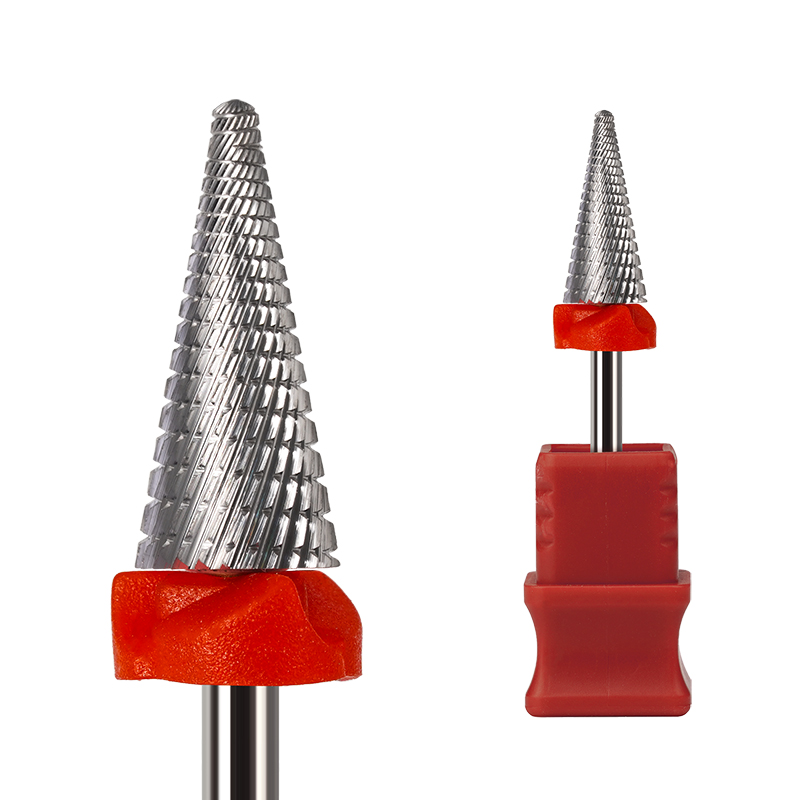
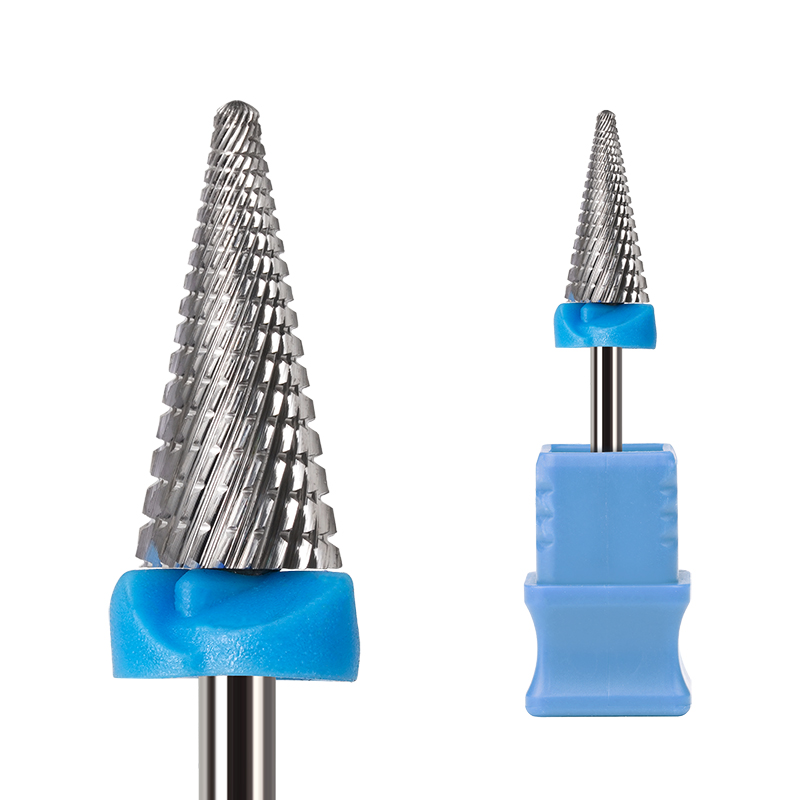
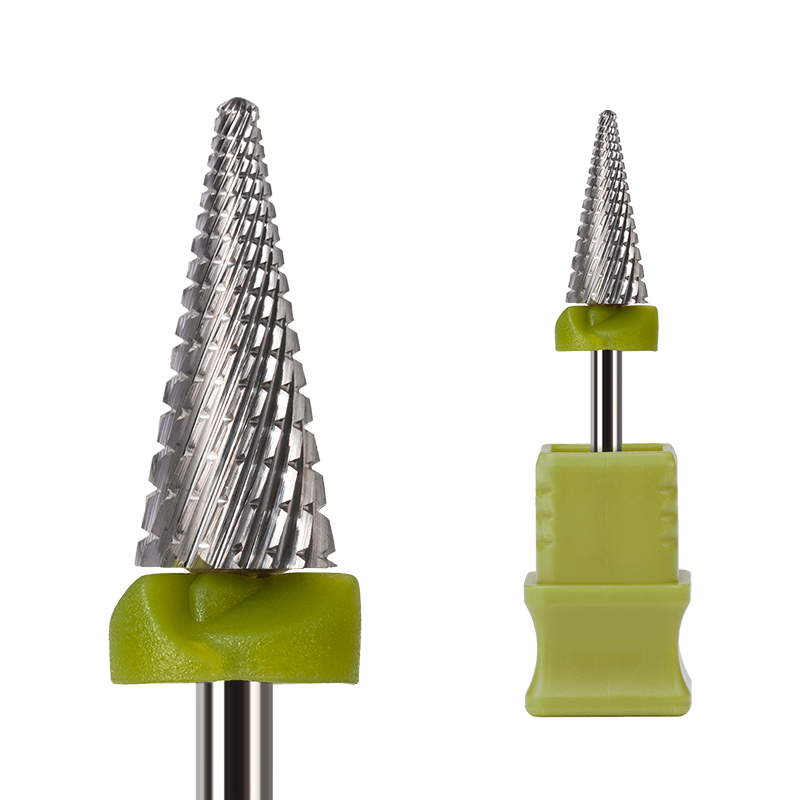
 Professional Advanced Safety Cuticle Bits Two-Way Rotate 3/32'' Carbide Tungsten 5 in 1 Nail Drill Bits
 Wholesale 5 in 1 Electric Manicure Nail Drill Bits Various Coating Cone Cuticle Bit with Rotary Cross Cut for Nail Art
 New Slant Tooth Tungsten Steel Nail Drill Bits Dead Skin Removal 5-in-1 Universal Grinding Nail Polish Head Tool Nail Drill Bits
 4.0mm Small 5 in 1 Integrated Sharpe Tungsten Nail Drill Bit Straight Teeth Gel Polish Removal
 Flame Sharp XF F M C XC Silver Safety Professional Corn Tungsten Carbide Nail Bit for Drill Machine Accessories
 Factory Direct 5 in 1 Tungsten Carbide Nail Drill Bits 6.8MM Cross Cut Safety Manicure 5 in 1 Nail Drill Bits


Please give us a message