Italian sourcing discussions around professional nail bits usually begin with material choice, because the material determines cutting speed, friction, heat buildup, surface finish, and how long the bit keeps its edge. When people search for a nail drill bit supplier Italy options are often compared by shape or color ring first, yet the more useful distinction is whether the bit body is tungsten carbide, ceramic, stainless steel, or a steel core finished with diamond grit. These materials behave differently under gel, acrylic, dead skin, and natural nail contact, so they should not be treated as interchangeable.
Tungsten carbide is the most common material for heavy product removal
Among the materials commonly offered through an Italian nail drill bit supply channel, tungsten carbide appears most often in bits intended for rapid removal of gel, poly gel, acrylic overlays, and bulk filing. The reason is practical. Carbide combines high hardness with strong edge retention, so flutes can be machined into the surface and remain sharp through repeated use if cleaning and speed settings are handled properly. A carbide bit cuts material away instead of simply sanding it down, which often reduces work time when the flute pattern matches the service.
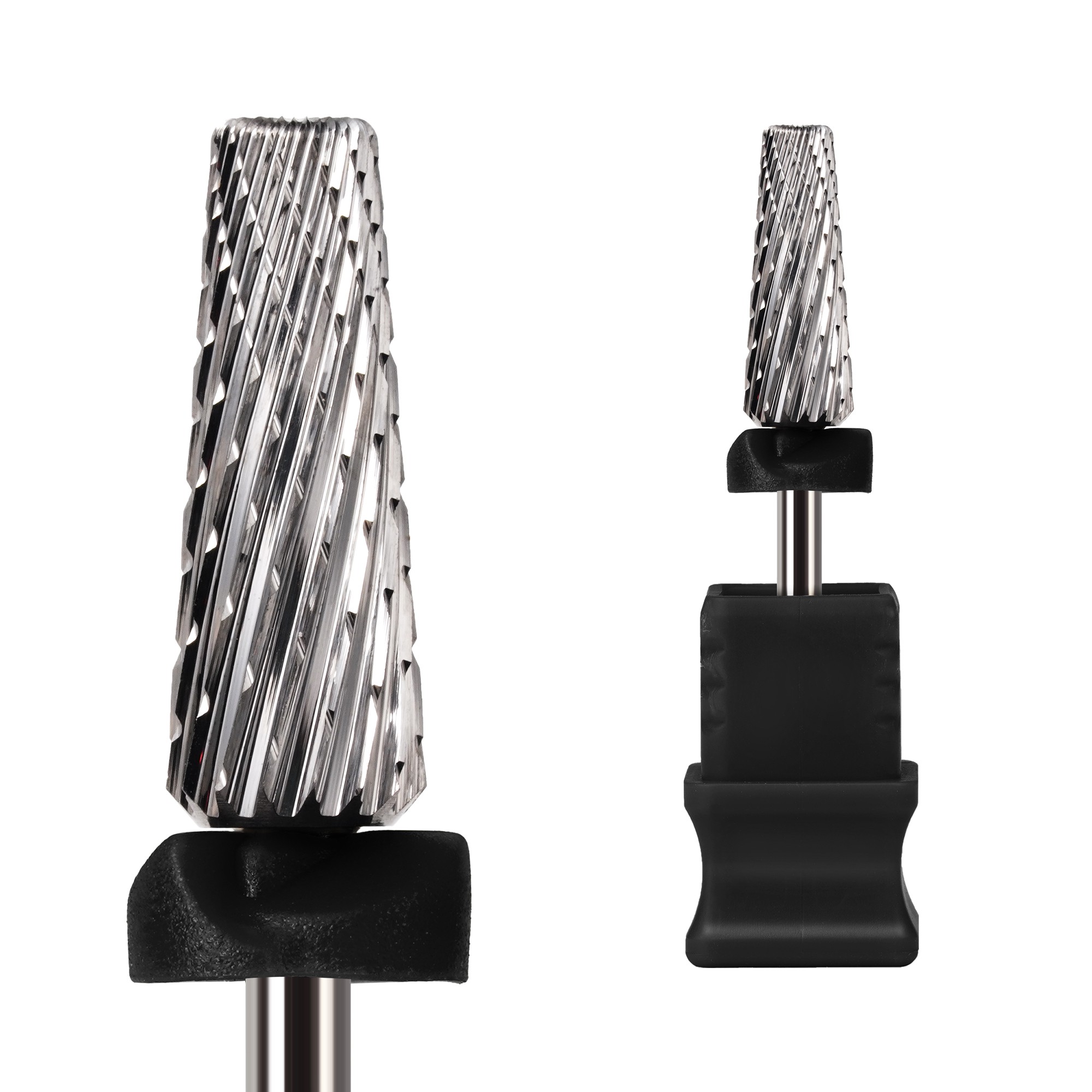
Carbide bits are usually identified by their flute design: cross-cut, single-cut, fine, medium, coarse, undercut, or safety-top variants. In actual salon use, that flute geometry matters almost as much as the base material. A coarse carbide may remove hard gel efficiently but feel too aggressive near the cuticle area. A fine carbide can leave a more controlled finish yet may load up faster when dealing with thicker enhancement layers. Helical teeth patterns are also common because they can support smoother chip evacuation and more consistent contact on curved nail surfaces.
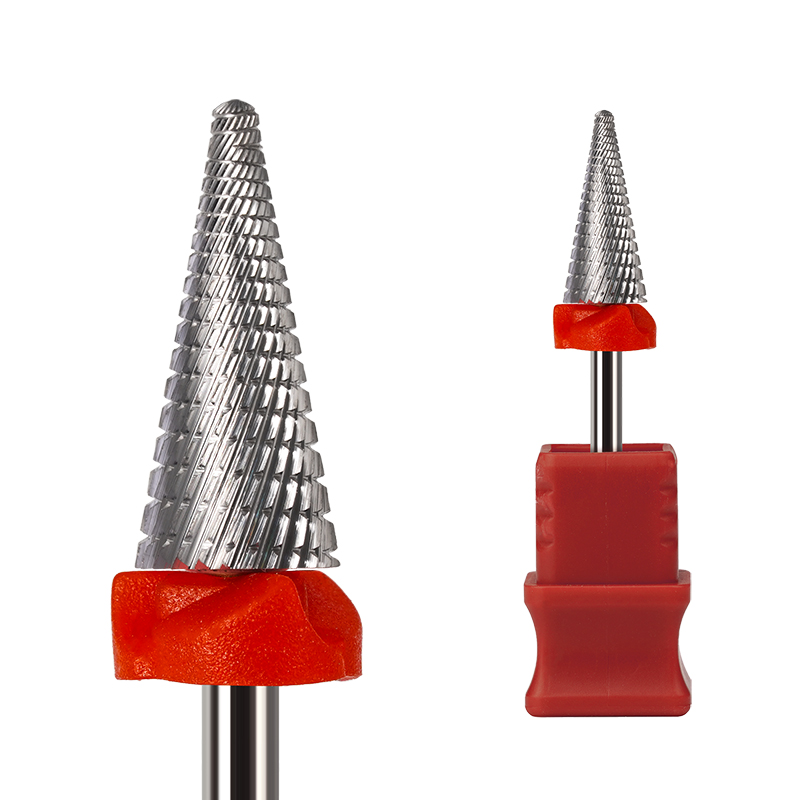
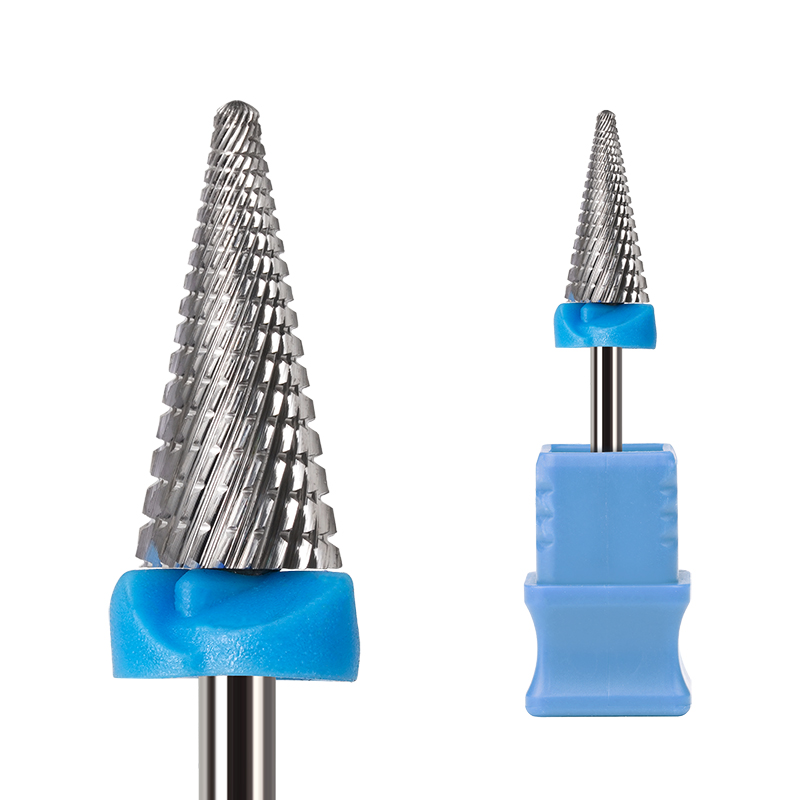
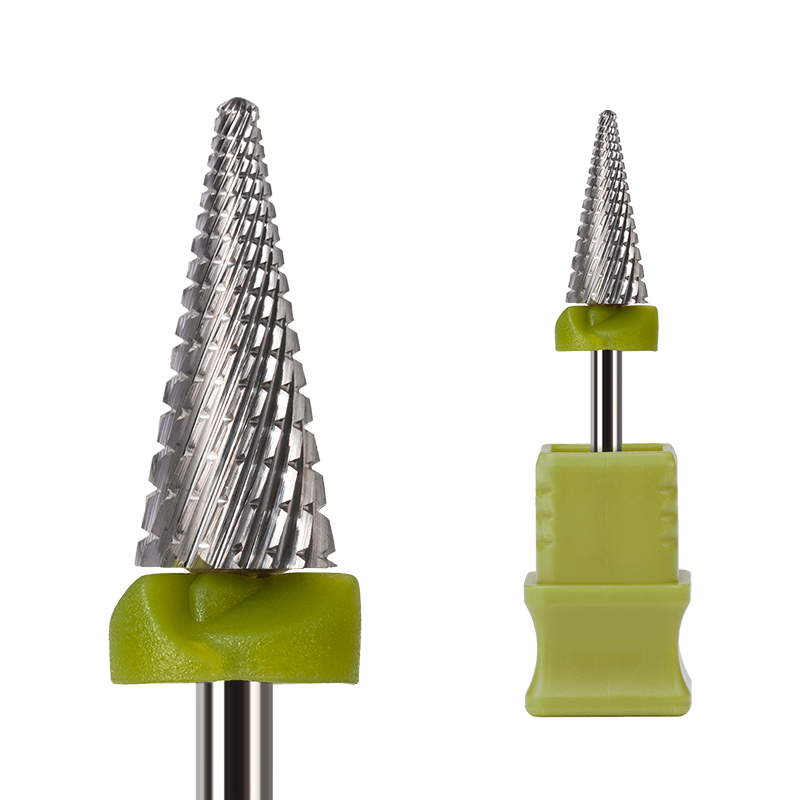
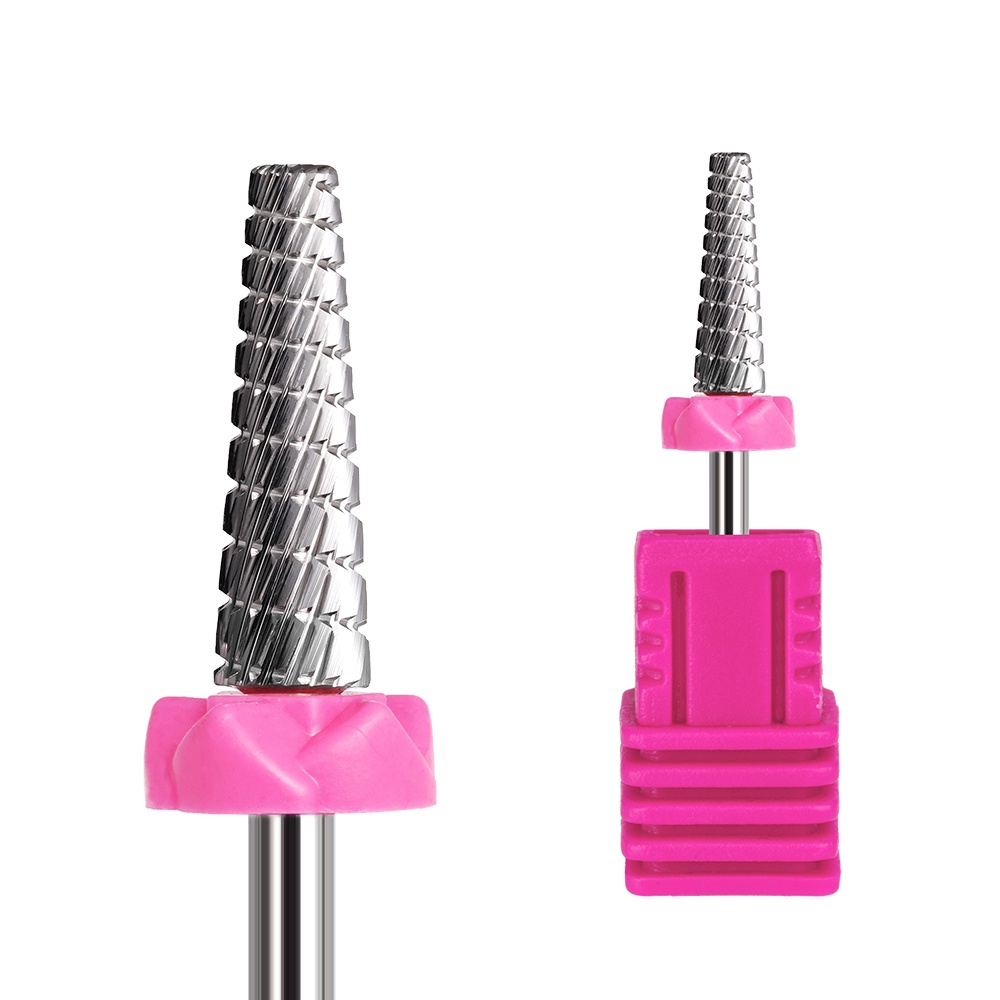
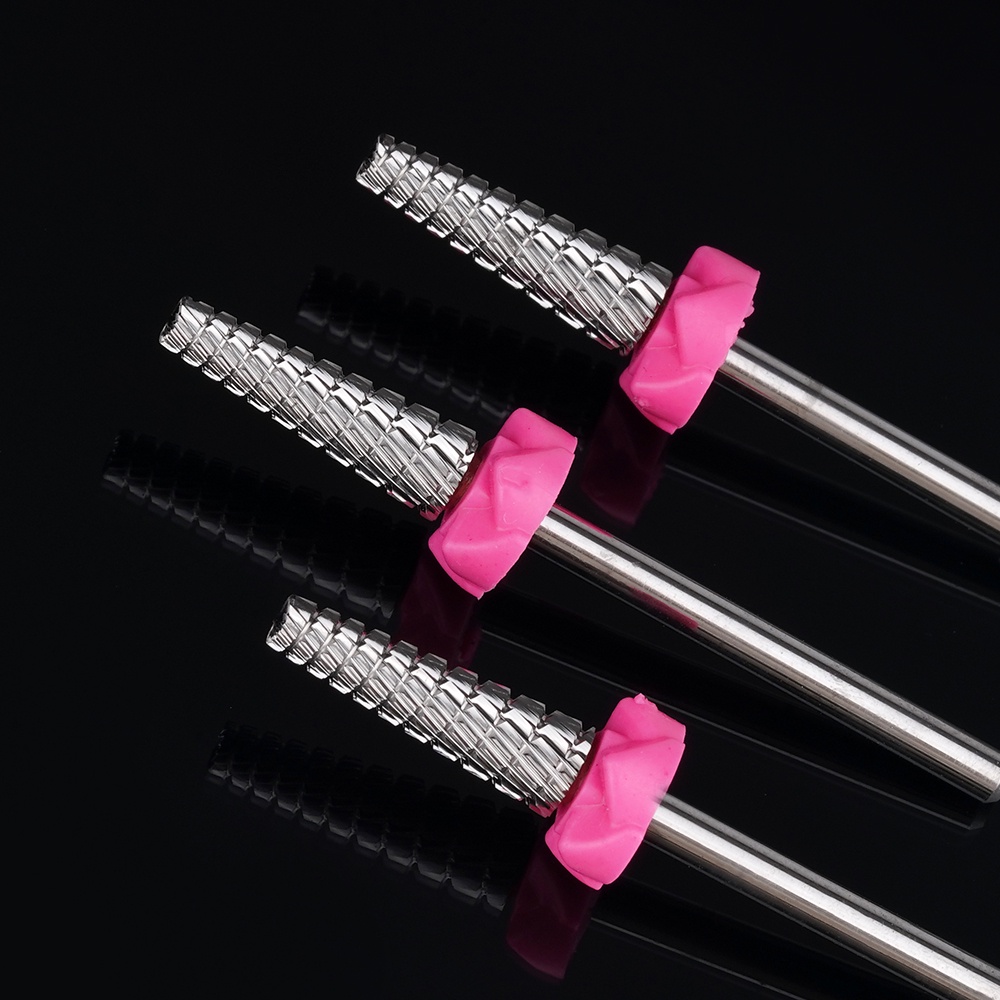
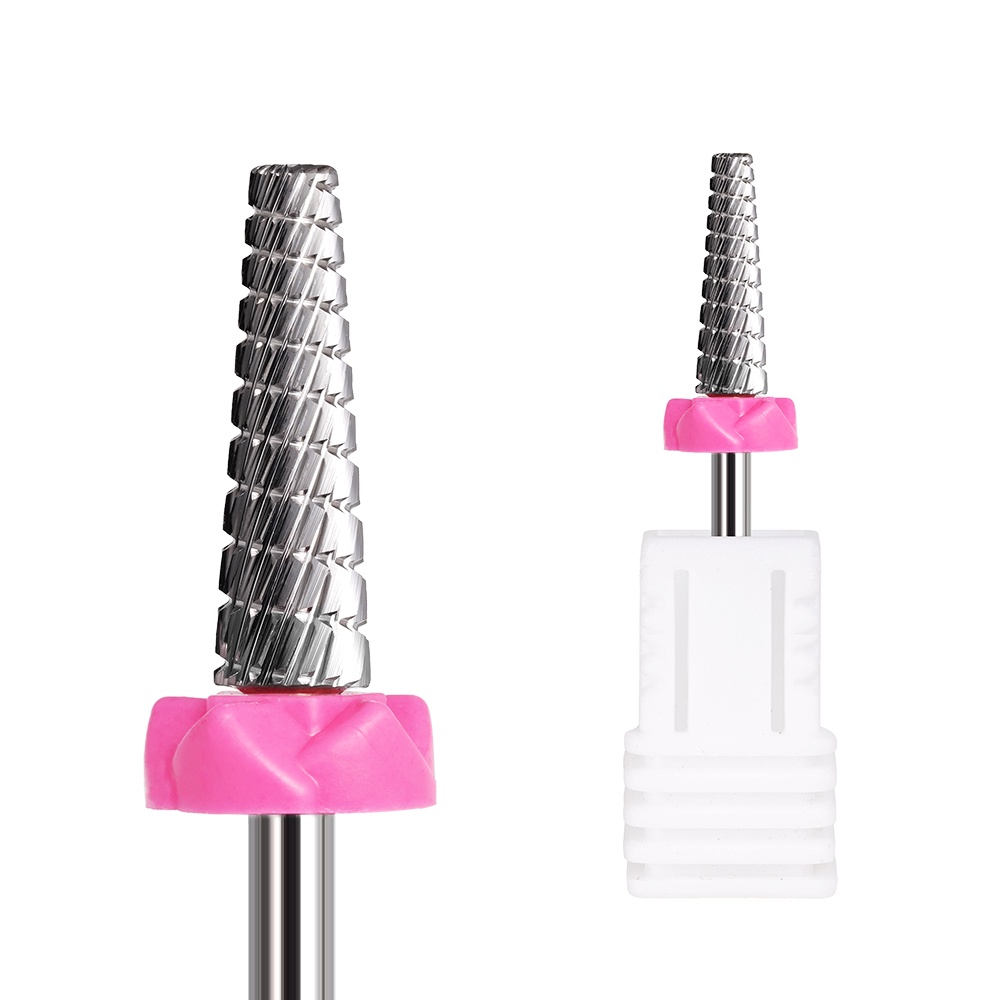
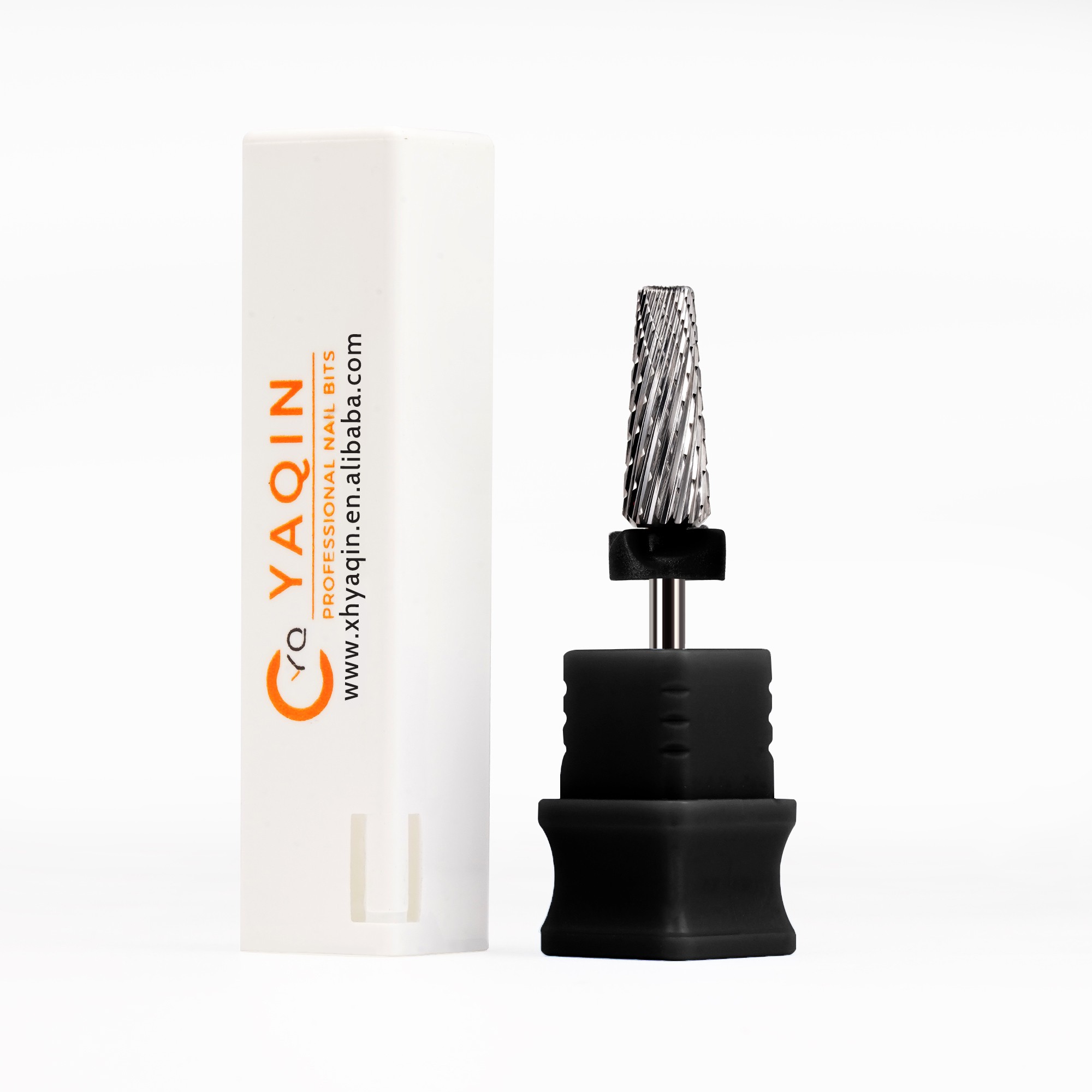
A representative example in this category is Quick Nail Polish Remover No Vibration Your Hands Pink Label Helical Teeth 5-in-1 Universal Tungsten Carbide Nail Drill Bits, which reflects several typical carbide expectations: high hardness, maintained sharpness, a reduced chance of breakage under normal use, and a shape intended for more than one working zone. That kind of 5-in-1 construction is often considered when one bit must handle surface removal, sidewall approach, and finer transitions without constant bit changes.
Ceramic is common where heat control and smoother feel matter
Ceramic nail bits are also widely seen from a nail drill bit supplier Italy market participants deal with, especially in categories focused on gel removal and reduced surface heat. Ceramic does not always remove product faster than a sharp carbide bit, but it is often chosen because it can feel smoother during continuous filing and may transfer less heat to the nail area in certain working conditions. That is one reason ceramic bits are frequently positioned for color gel removal, finishing passes, or lighter debulking tasks.
The term “ceramic” still needs careful reading in product sheets. Some ceramic bits vary noticeably in brittleness, grit consistency, and flute precision. A ceramic bit with poor machining can chip more easily if dropped, or it may cut unevenly along the flute edge. In transport and storage, ceramic often needs better protection than carbide because impact damage is a practical risk even when the bit looks intact from a distance. If a shipment arrives with minor edge damage, performance can change immediately through added vibration or rough contact.
Ceramic also tends to be selected when visual cleanliness matters in merchandising, since white or light-colored bit bodies make dust easier to see. That can be useful during bench inspection, but color should never be read as a quality indicator on its own. The core issue remains density, machining quality, and the stability of the shank.
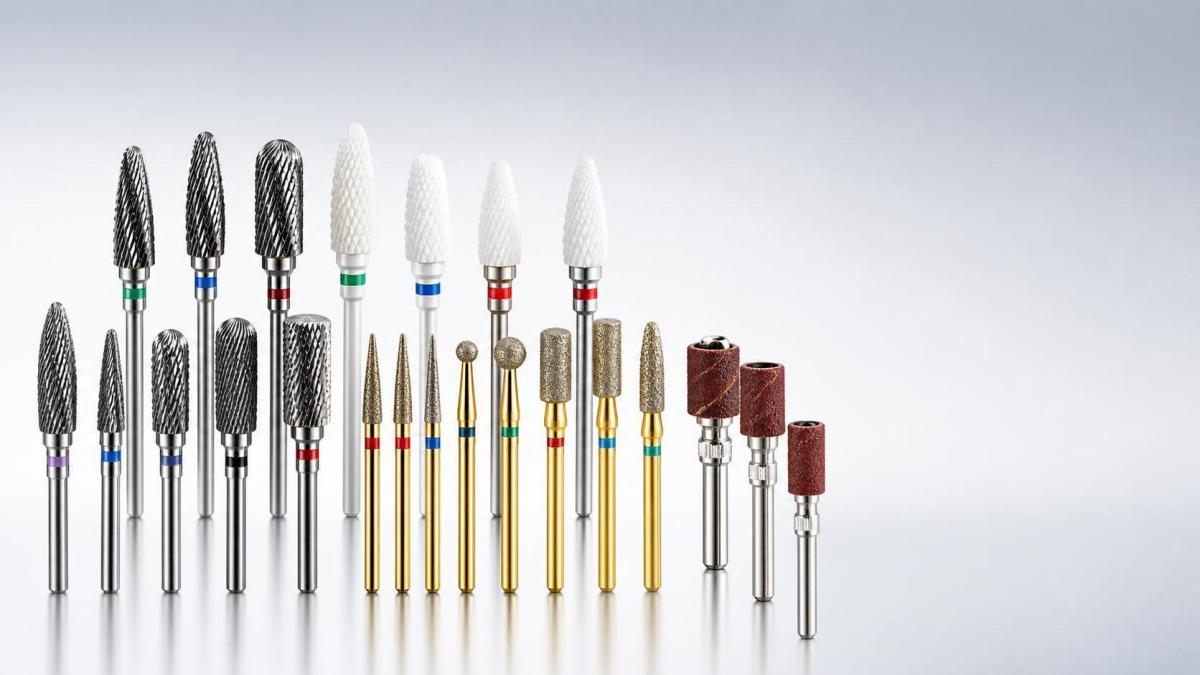
Diamond-coated bits are common for cuticle work and surface refinement
Another material frequently found in Italian supply catalogs is the diamond bit, though in most cases this means a metal base with industrial diamond grit bonded to the working surface rather than a solid diamond structure. These bits are common in flame, ball, needle, cone, and small barrel shapes used for cuticle cleaning, sidewall access, skin preparation, and fine surface work. They are not mainly chosen for bulk enhancement removal. Their value lies in controlled abrasion on small areas where a cutting flute would be too harsh or too large.
Diamond grit raises several sourcing questions. One is grit distribution: if the coating is uneven, the bit may scratch unpredictably or wear out in patches. Another is bond strength. Low-quality plating can shed abrasive particles early, especially after repeated cleaning cycles or chemical exposure. For this reason, a simple visual check under good light is useful, but it does not replace actual rotation testing. A bit that looks uniform when stationary may still run off-center at operating speed.
Fine and medium diamond grits are especially common in prep work. Coarser grit versions exist, but they can create unnecessary friction if used too aggressively on delicate skin areas. In this segment, consistency from batch to batch matters more than dramatic cutting power.
Stainless steel and mandrel-based formats remain part of the range
Stainless steel is not always the headline material, yet it remains common in mandrels, core structures, and specialty bits. Mandrel systems hold disposable sanding bands and are still widely used for basic shaping, surface blending, and pedicure-related services where replaceable abrasives are preferred. In those cases, the performance comes less from the steel itself and more from the concentric stability of the mandrel and the fit tolerance between mandrel and sanding band.
If the mandrel diameter is inconsistent, the sanding band may wobble or loosen during use. That is a quality issue that can be missed when attention is placed only on the abrasive sleeve. Stainless steel bits are also used where corrosion resistance is important, particularly under repeated cleaning and disinfection cycles. Still, stainless steel alone does not imply cutting efficiency. It often serves as a support material rather than the main abrasive surface.
Material choice changes with the task, not just with preference
A common mistake in product comparisons is asking which material is “best” without separating the service type. For thick acrylic or hard gel take-down, carbide is usually the standard reference because it combines speed and durability. For refined prep around the cuticle zone, diamond-coated bits are more typical. For a smoother removal feel with controlled heat, ceramic is often included. For simple sanding-band workflows, the mandrel system remains relevant.
That is why a catalog from a nail drill bit supplier Italy source may look broad even when the shapes appear repetitive. Two bits can share the same barrel profile yet perform very differently because one uses fluted carbide and the other uses ceramic with a different chip-release pattern. The visual outline alone does not reveal the operating behavior.
Small technical details often reveal more than marketing names
Material descriptions become more useful when paired with technical details that affect real use. Shank diameter compatibility is one example. Many professional e-files use a standard 3/32 inch shank, so an otherwise suitable bit becomes impractical if tolerance is loose or the shank finish causes poor chuck grip. Surface balance is another detail. Even with a strong material such as tungsten carbide, a poorly balanced bit may create vibration, which changes both comfort and precision.
Hardness claims should also be read with care. High hardness can support wear resistance, but if the bit geometry is wrong, the result may still be rough cutting, excessive dust scatter, or difficult cleaning. Likewise, “sharpness” is useful only when edge geometry remains stable after sterilization or repeated service cycles. In procurement samples, short bench testing across gel, acrylic, and dead-skin contact often reveals more than broad descriptors.
Processing quality matters as much as the material label
Even the most common materials can perform poorly if the processing is weak. Carbide requires precise machining of flutes and clean finishing around the tip. Ceramic needs stable firing and accurate shaping. Diamond bits depend on even grit application and a dependable bond layer. A material name without process control says very little about service life.
Several practical signs are worth examining during sample review: whether the bit runs true in the handpiece, whether debris clears from the flutes instead of packing tightly, whether the transition near the tip feels abrupt, and whether repeated cleaning leaves discoloration, rust spots, or surface shedding. None of these signs alone defines quality, but together they reveal whether the bit was made for repeat professional use or only for light, short-term consumption.
Transport, storage, and cleaning can change material performance
Material selection is also connected to logistics. Ceramic may need more protective inner packaging to reduce chipping during shipment. Diamond-coated bits can lose value quickly if abrasive surfaces rub directly against each other in transit. Carbide is durable, but sharp flutes can still be damaged by impact against other metal tools. In international movement, the packaging insert, tube fit, and tray separation are not minor details; they protect the working surface that determines actual performance after delivery.
Cleaning methods also interact with material. Residual gel dust trapped in carbide flutes can harden and reduce cutting efficiency. Diamond bits may lose tactile consistency if residue fills the grit pattern. If a bit is labeled for dust-proof and waterproof compatibility, that usually suggests attention to cleaning resilience, but it should still be matched with the actual disinfection routine and the electrical tool environment where the bit is used.
Where confusion often happens during sourcing conversations
One recurring misunderstanding is mixing up coating and substrate. A “diamond bit” may not be a solid diamond tool, and its longevity depends heavily on how the abrasive layer is applied. Another confusion appears when tungsten steel and tungsten carbide are treated as identical language in every listing. In trade usage the terms may overlap loosely, yet the exact construction and cutting behavior should be confirmed from the product specification rather than assumed from the title alone.
There is also frequent overreliance on color rings or decorative labels. Those can indicate grit level or internal classification, but color coding is not universal across all factories. A pink label, blue ring, or gold finish may support organization, though it should not replace confirmation of grit, cut, shank size, and intended material contact.
So, what materials are most common from a nail drill bit supplier in Italy? In practical terms, tungsten carbide leads the category for fast removal and long wear, ceramic remains common where smoother operation and heat management are valued, diamond-coated bits are standard for cuticle and detail work, and stainless steel stays relevant in mandrels and structural components. The useful comparison is not which material sounds stronger on paper, but which one matches the actual service, machine compatibility, handling conditions, and cleaning routine.