
Why Does a Silicone Nail Drill Bit Wear Quickly? Causes, Care, and Replacement Signs
Why Does a Silicone Nail Drill Bit Wear Quickly? Causes, Care, and Replacement Signs
Why Does a Silicone Nail Drill Bit Wear Quickly? Causes, Care, and Replacement Signs
A silicone nail drill bit that wears out too quickly can disrupt service schedules, increase replacement costs, and affect finishing quality. For maintenance teams supporting busy salons, training centers, or private-label tool programs, the problem is rarely solved by simply ordering more bits. The useful question is why the bit is losing its working surface: excessive pressure, unsuitable speed, poor cleaning practice, an incompatible task, handpiece vibration, or inconsistent abrasive material may all be involved.
Silicone polishers are consumable finishing tools. Their abrasive particles are held in a flexible silicone-rubber binder, so a degree of gradual wear is normal and necessary: as the outer layer wears, fresh abrasive can become available. Premature failure is different. It appears when the surface becomes smooth, glazed, cracked, misshapen, or ineffective long before the expected work cycle is complete. Identifying the failure pattern helps separate normal consumption from a correctable process issue.
Understand What a Silicone Bit Is Designed to Do
A silicone nail drill bit is generally intended for refining rather than aggressive bulk removal. Depending on its grit and shape, it may smooth a prepared surface, soften minor roughness around the nail edge, polish enhancement material, or support controlled finishing near cuticle areas. It is not a substitute for a carbide or tungsten-steel bit when the job involves removing substantial acrylic, hard gel, or thick product layers.
When a finishing bit is asked to remove material too quickly, the operator often compensates with pressure. That creates friction and heat. The binder then softens or smears, trapped debris begins to clog the abrasive surface, and the bit feels less effective. More pressure follows, accelerating the cycle. What may look like a weak bit can therefore be a task-selection problem.
A practical maintenance program should classify drill bits by function rather than store all shapes together. Keep silicone polishers for refinement, use a suitable removal bit for enhancement reduction, and reserve fine detailing tools for cuticle work. This simple separation protects both the consumable and the consistency of the finished nail.
The Most Common Reasons for Fast Wear
Too much pressure and prolonged contact
Silicone abrasives work best with a light, controlled touch. Heavy downward force does not usually make polishing more efficient. Instead, it raises surface temperature and compresses the elastic binder against the nail or enhancement. The result may be a shiny glazed area that no longer cuts evenly. Operators may also wear one side of a cone, bullet, or wheel faster than the rest by holding the same angle for too long.
A quick check is useful: if a bit becomes hot after short contact, leaves a burned smell, or has a visibly flattened working edge, review hand pressure and dwell time before questioning the batch. The drill should move continuously across the surface rather than remain parked in one spot.
Speed that does not match the material or bit shape
There is no single RPM setting that suits every silicone polisher, nail system, and handpiece. A speed that feels stable on a broad polishing point may generate unnecessary heat on a small tip. Conversely, an overly slow speed can encourage pressing because the bit appears inactive. Equipment instructions, the bit supplier’s recommendations, the material being finished, and the operator’s technique all need to be considered together.
Maintenance personnel should avoid setting one universal speed as a rule for every attachment. Instead, confirm that the handpiece runs smoothly, begin conservatively, and monitor heat, vibration, dust behavior, and finish quality. A bit that is run beyond the stable capability of the handpiece may also suffer from eccentric rotation rather than ordinary abrasion.
Using the wrong bit for removal work
Hard acrylic removal is a frequent source of avoidable silicone-bit wear. Acrylic and crystal nail enhancements can be demanding materials, particularly where product has been applied thickly or has aged. A silicone tool may be useful after reduction, but it should not carry the main removal load. Similar problems occur when a polishing bit is repeatedly used to strip gel polish or reshape thick extensions.
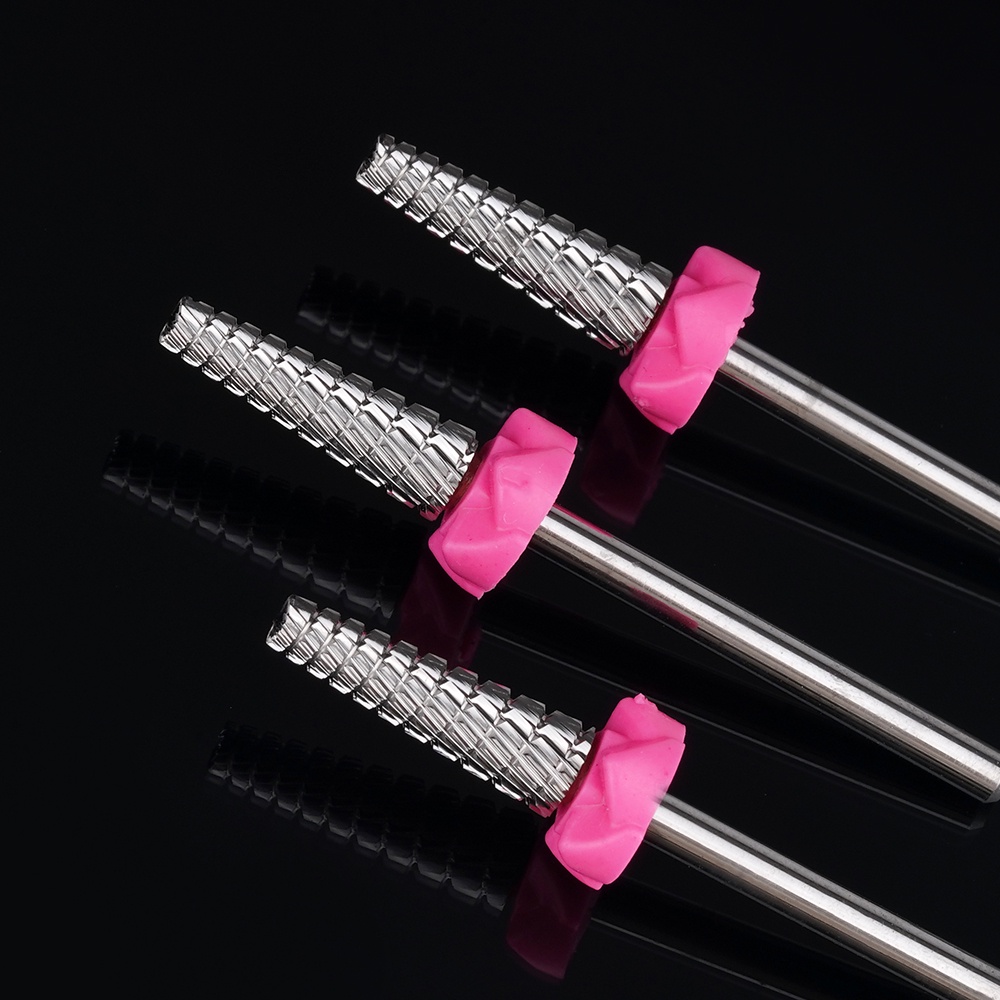
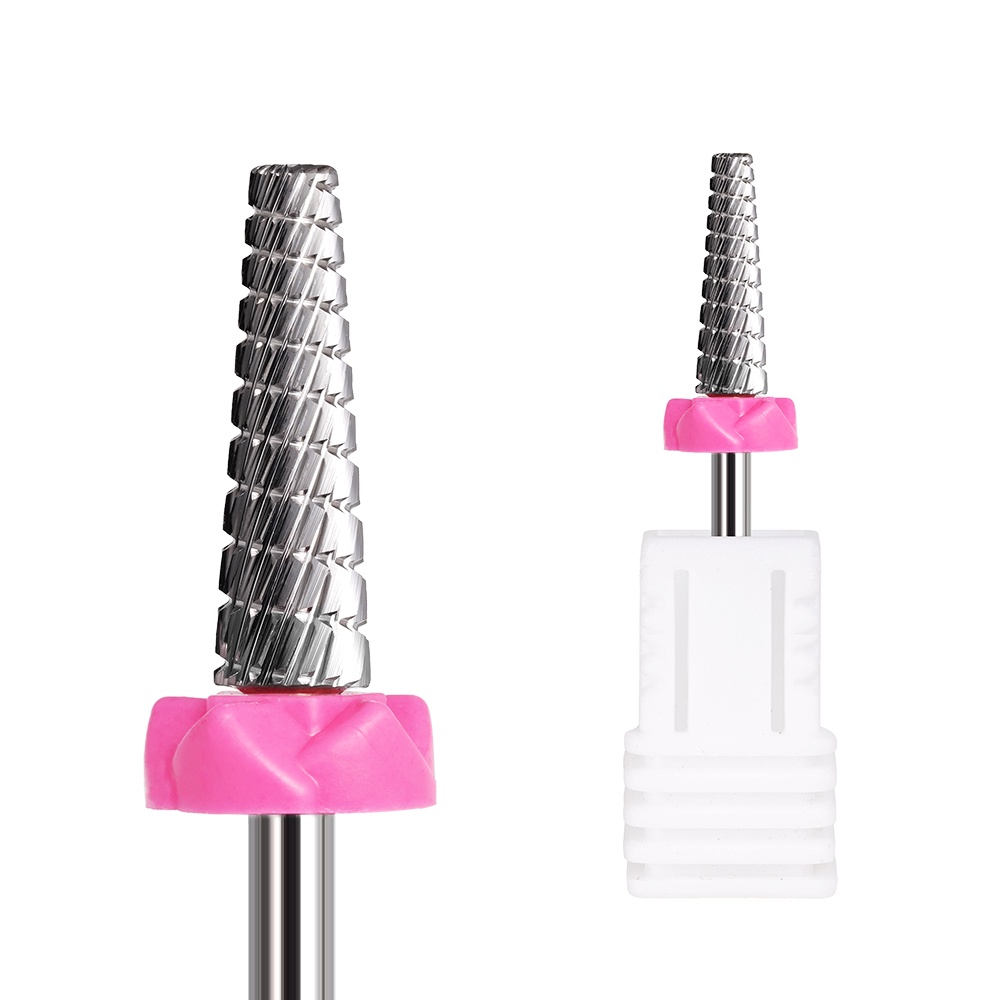
For those stages, a dedicated metal cutting tool is usually more appropriate. For example, a fine tungsten-steel option such as Gold Coated Efficient &Stable Nail Drill Bit Cuticle Clean is designed for controlled nail preparation, cuticle care, surface work, and selected acrylic-removal tasks. Its 2.35 mm shank fits many common grinding machines, while the available sharp round, fine-tooth flat, and small ball tip forms allow the work area to guide tool selection. It does not eliminate the need for correct technique, but assigning removal and detailing tasks to a purpose-built bit can preserve silicone polishers for the finishing work they do best.
Clogging, residue, and unsuitable cleaning
Fine nail dust, gel residue, oils, and polishing compound can fill the exposed abrasive structure. A clogged bit may look intact but perform like a worn one. The common mistake is to press harder, which embeds debris further into the silicone and increases heat. Cleaning should be performed promptly after use, using a method compatible with the bit manufacturer’s care guidance and the site’s hygiene procedure.
Avoid treating every drill bit as though it has the same chemical resistance. Metal bits may tolerate cleaning agents differently from silicone-bonded polishers. Long soaking, harsh solvents, or cleaning methods that attack the binder can shorten service life even when the abrasive section has seen little work. The safest process is to remove visible dust with an appropriate brush, clean according to the supplier’s instructions, dry thoroughly, and store the bit away from residue and moisture.
Vibration, bent shanks, and worn handpiece components
A silicone bit can wear unevenly because the problem is not in the silicone at all. A damaged shank, contaminated chuck, worn bearings, or an unstable collet may cause runout. Instead of rotating concentrically, the bit strikes the work surface unevenly. One side is consumed rapidly, the tool may feel rough in use, and the finish becomes difficult to control.
Inspect the shank before installation and do not force it into a chuck. If several different bits show vibration in the same handpiece, service the handpiece before rejecting the bits. Repeated vibration is also a safety concern, especially during close cuticle work.
A Simple Fault-Finding Guide
Care Practices That Extend Useful Life
The most effective care routine is not complicated, but it needs to be consistent. Clean residue after each service cycle rather than allowing it to harden. Dry bits completely before storage. Keep them in a covered organizer where tips do not rub against one another or contact metal tools. Separate clean and used attachments so that inspection is not skipped during busy periods.
It also helps to record recurring issues by bit type, workload, and handpiece. A log does not need to be elaborate. If one shape repeatedly fails after use on acrylic removal, or if failures occur only with one machine, the pattern becomes visible quickly. This is more actionable than a general complaint that bits “do not last.”
For multi-site operations, a short handling standard should cover installation, approved cleaning methods, storage, and removal criteria. Training should emphasize that a bit is not restored by higher pressure. When the cutting or polishing behavior changes, stopping to inspect is usually faster than correcting an uneven finish later.
When Replacement Is the Safer Decision
Replace a silicone bit when its profile is noticeably altered, the abrasive face is glazed beyond effective cleaning, cracks or tears are visible, or it no longer produces a controlled finish with normal light pressure. Replace it immediately if the shank is bent, loose, corroded, or associated with abnormal vibration. A bit that creates heat during ordinary use should also be withdrawn until both the bit and handpiece have been checked.
Do not judge replacement only by appearance. A silicone polisher can look acceptable while delivering inconsistent results, especially when its abrasive particles are depleted or clogged below the visible surface. If operators repeatedly make extra passes to achieve the same finish, the tool is already costing time and increasing the chance of unnecessary heat exposure.
Quality Control Begins Before the Bit Reaches the Workstation
For distributors and service teams, consistent bit life depends partly on procurement controls. Samples should be assessed not only for initial cutting feel, but also for shank fit, concentric rotation, surface uniformity, packaging protection, and behavior after the cleaning process used in the intended market. Where OEM or ODM packaging is required, lot identification and clear care instructions can make later investigation more practical.
Wuxi Yaqin Trading Co., Ltd. focuses on the production and export of abrasive products and supplies markets including the USA, Canada, Germany, the UK, Italy, Poland, and other countries. Its quality-control process covers raw-material purchasing, production, and product packing, and the company states that it has passed ISO9001:2000 quality management system certification. For larger programs, the relevant discussion is not merely which bit is available; it is how the material, shape, shank compatibility, cleaning routine, labeling, and delivery requirements fit the actual maintenance workflow.
Fast wear is often preventable. Match the silicone nail drill bit to finishing work, reduce unnecessary pressure, keep the abrasive face clean, inspect the handpiece when wear is uneven, and replace the tool before its loss of control affects the result. When failures persist, review the complete system rather than the bit alone: application material, operator technique, machine condition, cleaning chemistry, and incoming product consistency all leave a trace on the tool.
News List
- Preventing Gouges and Uneven Filing With Small Barrel Nail Drill BitsSep 20, 2026
- How Diameter and Grit Affect Small Barrel Nail Drill Bit PerformanceSep 20, 2026
- Can Hytos Nail Drill Bits Be Used Safely on Natural Nails and Gel Polish?Sep 20, 2026
- How to Verify Fit Between Hytos Nail Drill Bits and an E-File HandpieceSep 20, 2026
- Safe Speed Settings for Umbrella Nail Drill Bits Around the Nail FoldSep 20, 2026
- Umbrella vs Flame Nail Drill Bits: Which Shape Offers Better Cuticle Control?Sep 20, 2026
Best-Selling Products
 Cross Cut Safety Stainless Steel Tungsten Carbide Nail Drill Bits Salon Foot Use XF-C Grit for Removing Nails
 First-rate Quality Tungsten Carbide Nail Drill Bits Best Coating Manicure Remove Gel Nails Accessories
 Professional Advanced Safety Cuticle Bits Two-Way Rotate 3/32'' Carbide Tungsten 5 in 1 Nail Drill Bits
 Wholesale 5 in 1 Electric Manicure Nail Drill Bits Various Coating Cone Cuticle Bit with Rotary Cross Cut for Nail Art
 New Slant Tooth Tungsten Steel Nail Drill Bits Dead Skin Removal 5-in-1 Universal Grinding Nail Polish Head Tool Nail Drill Bits
 4.0mm Small 5 in 1 Integrated Sharpe Tungsten Nail Drill Bit Straight Teeth Gel Polish Removal
 Flame Sharp XF F M C XC Silver Safety Professional Corn Tungsten Carbide Nail Bit for Drill Machine Accessories
 Factory Direct 5 in 1 Tungsten Carbide Nail Drill Bits 6.8MM Cross Cut Safety Manicure 5 in 1 Nail Drill Bits
Please give us a message