
Safe Speed Settings for Umbrella Nail Drill Bits Around the Nail Fold
Safe Speed Settings for Umbrella Nail Drill Bits Around the Nail Fold
Safe Speed Settings for Umbrella Nail Drill Bits Around the Nail Fold
Safe RPM selection is essential when using umbrella nail drill bits near the nail fold, where thin skin and delicate tissue increase the risk of heat, friction, and accidental injury.
For quality control and safety managers, clear speed-setting standards support consistent surface refinement while reducing complaints, technician variation, service interruptions, and avoidable skin damage during professional nail treatments.
The core principle is simple: umbrella nail drill bits should operate at low, controlled speeds around the nail fold, with the technician adjusting pressure before increasing RPM.
There is no single universally safe speed because bit diameter, grit, machine condition, client sensitivity, technician technique, and intended task all influence the final operating setting.
However, a documented RPM range gives salons, training centers, and product distributors a practical baseline for safer service delivery and more reliable quality inspections.
What Searchers Usually Need to Know First
Safety managers searching for umbrella nail drill bits typically need more than a recommended number. They need a repeatable policy that technicians can apply under real service conditions.
The immediate concern is how to clean, refine, or lift dry cuticle without allowing the rotating bit to catch living skin near the proximal fold.
They also need to determine whether inconsistent outcomes come from poor technician handling, an unsuitable bit profile, excessive machine vibration, or inadequate cleaning and replacement controls.
For quality teams, the correct question is not simply, “What is the maximum RPM?” It is, “What RPM supports the intended task with the lowest manageable risk?”
That distinction matters because a speed that performs well during product removal may be unsafe for delicate detailing near thin, sensitive nail-fold tissue.
Recommended RPM Ranges Around the Nail Fold
For close work around the nail fold, a conservative working range of approximately 3,000 to 8,000 RPM is appropriate for many professional applications using fine umbrella-style bits.
New technicians, clients with sensitive skin, and services involving thin natural nails should normally begin near the lower end, often around 3,000 to 5,000 RPM.
Experienced technicians may work between 5,000 and 8,000 RPM when removing loose nonliving cuticle, refining product near the margin, or cleaning narrow sidewall areas.
Speeds above 8,000 RPM require stronger justification near the nail fold, because heat generation and contact severity can rise quickly when pressure or dwell time is uncontrolled.
For most cuticle-focused procedures, high RPM is rarely the answer. Better visibility, a fine grit, stable hand support, and short contact passes usually improve performance more safely.
These ranges are operational starting points, not substitutes for technician competency, manufacturer guidance, client assessment, or local hygiene and occupational safety requirements.
Why Umbrella Nail Drill Bits Require Conservative Speed Control
Umbrella nail drill bits are commonly selected for their broad, rounded working profile, which can help technicians blend and clean around curved cuticle areas with controlled contact.
That same profile can create a larger contact zone than a narrow pointed bit. If it remains stationary, excessive friction can develop despite a relatively low RPM setting.
Heat is produced through the combined effect of rotation, pressure, abrasive condition, contact duration, and material resistance. RPM alone does not determine client comfort or injury risk.
A dull, contaminated, damaged, or poorly balanced bit may force technicians to apply more pressure. This can create unsafe friction even when machine settings appear conservative.
Quality systems should therefore treat speed as one part of a broader process-control package rather than as an isolated operating specification.
Where umbrella nail drill bits are used around the nail fold, technicians should keep the bit moving lightly and avoid pressing it into the eponychium or lateral skin.
Set the Speed According to the Actual Service Task
Speed selection should begin with identifying the service objective. Cuticle cleaning, gel refinement, acrylic removal, and nail-bed residue removal have different material loads and risk profiles.
For natural nail preparation, the objective is usually to remove surface residue and detached tissue while preserving the nail plate and protecting the surrounding skin barrier.
In this setting, low speed and a fine grit are generally preferable because the technician is working close to sensitive tissue rather than removing thick enhancement material.
When refining cured gel or acrylic near the cuticle line, slightly higher settings may be needed, but the working area should remain visible and frequently checked.
Technicians should not use a nail-fold detailing procedure to compensate for poor product application. Heavy overflow should be corrected with controlled removal away from live skin whenever possible.
Pedicure work may involve thicker surrounding skin, but safety managers should avoid assuming that higher speeds are automatically acceptable. Sensitivity, circulation concerns, and skin condition still matter.
Use Fine Grit and Bit Geometry as Safety Controls
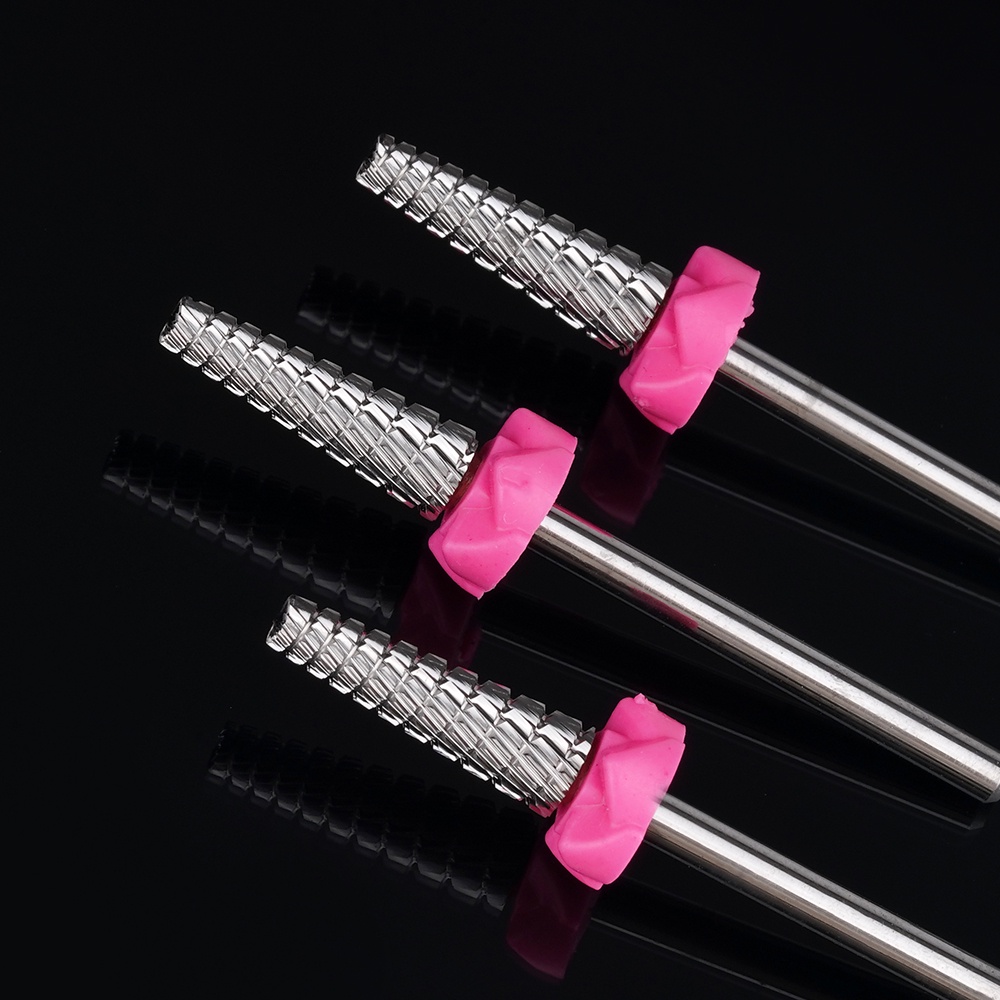
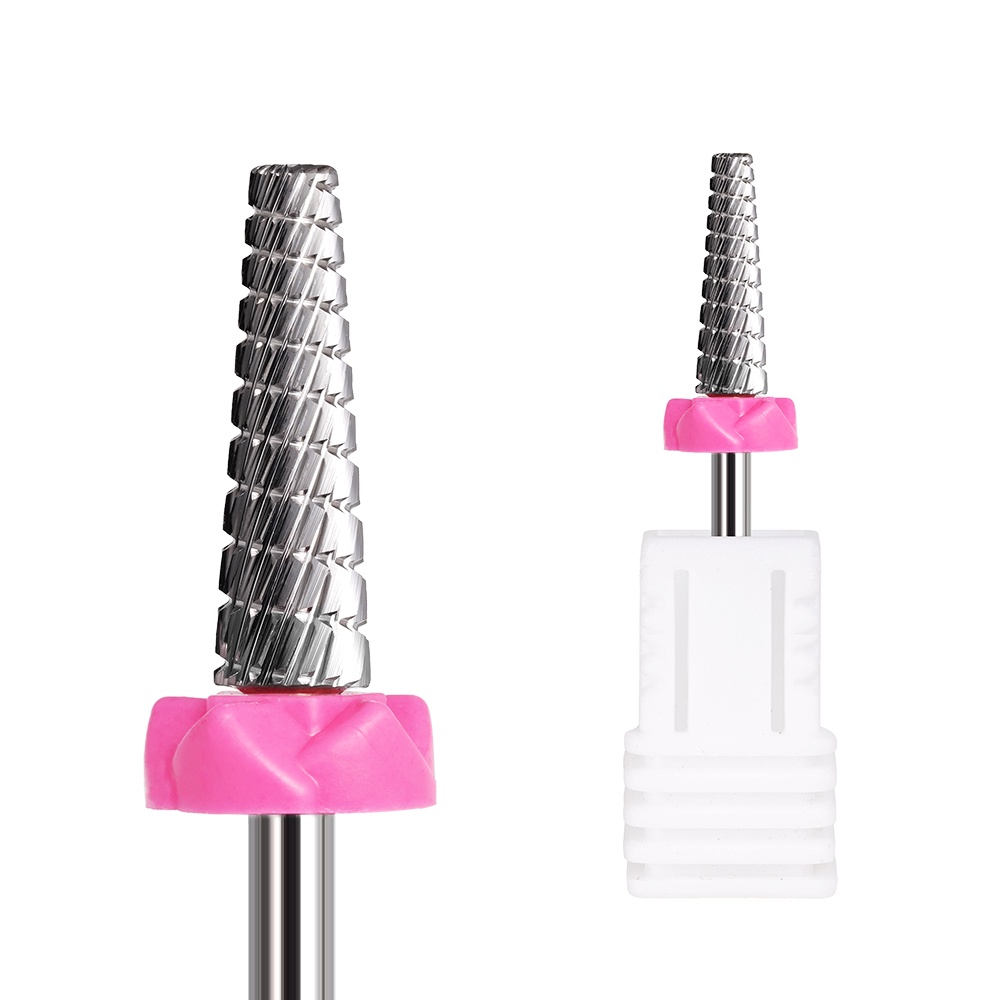
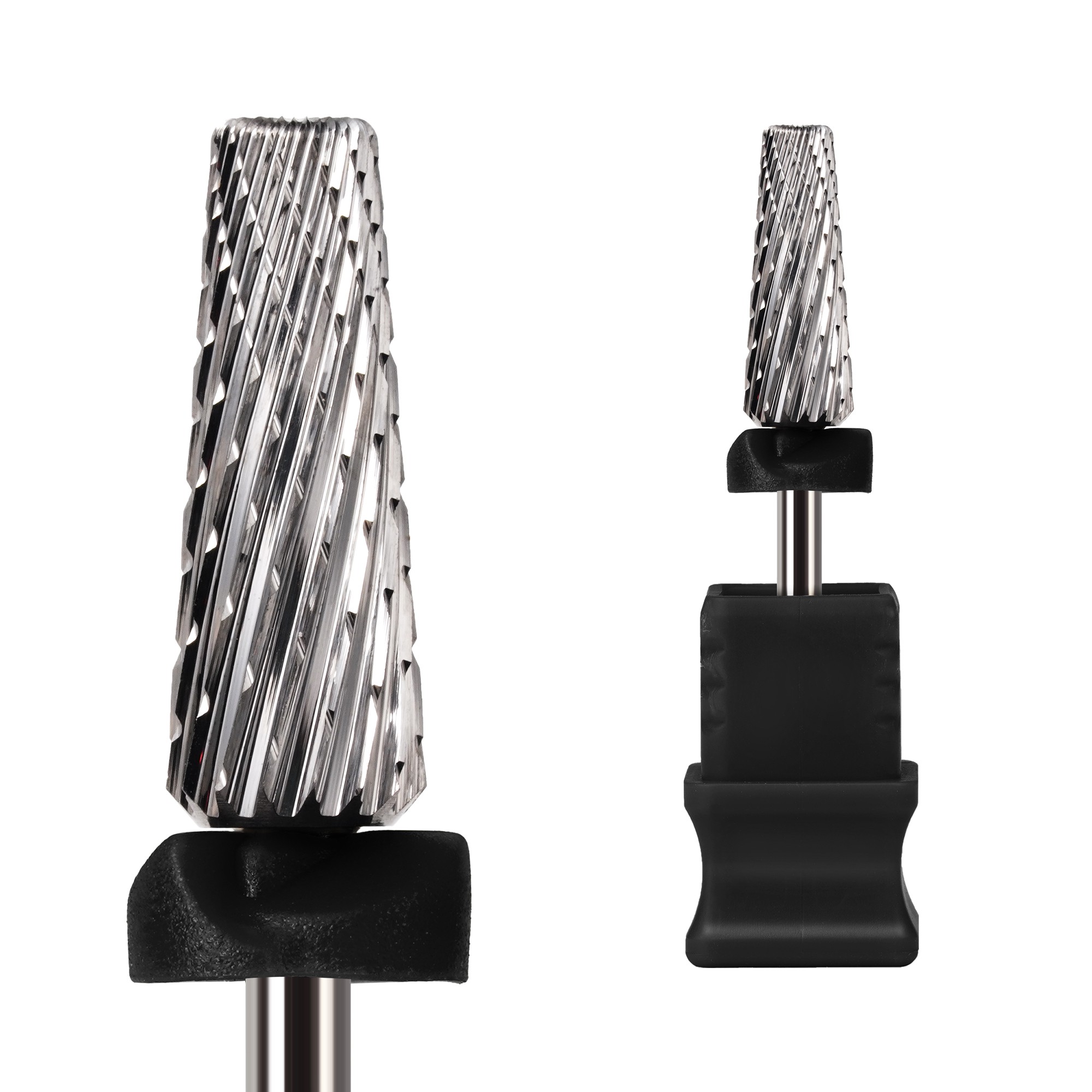
A fine-grit bit is generally better suited to controlled preparation and cuticle-related refinement than a coarse abrasive intended for rapid bulk removal of enhancement material.
Fine teeth or a smooth finishing surface can help reduce aggressive cutting action, provided that the bit remains clean, sharp, balanced, and compatible with the intended task.
Rounded or ball-style tips can offer useful control for localized dead-skin removal, while flat fine-tooth profiles may suit careful surface refinement along product margins.
Bit selection should never be based solely on speed. A technically unsuitable shape can increase the chance of skin contact, even when the e-file is set below the salon standard.
For example, the Gold Coated Efficient &Stable Nail Drill Bit Cuticle Clean uses fine tungsten-steel working surfaces and a 2.35 mm shank designed for broad machine compatibility.
Its available tip options support task-based selection, but QC personnel should still verify smooth rotation, cleaning status, and technician competence before approving routine use.
Pressure and Dwell Time Matter More Than Many Technicians Expect
Low pressure is essential around the nail fold. A rotating abrasive should glide over the intended area rather than be pushed into the skin or nail plate.
When technicians report that a bit “is not working,” the corrective action should not automatically be more pressure or higher RPM. Inspection should identify the real cause.
Possible causes include a dull bit, packed debris, unsuitable grit, incorrect rotation direction, weak lighting, poor hand positioning, or an attempt to remove material beyond the bit’s intended capability.
Dwell time should remain short. Repeated light passes with frequent visual checks are safer than a prolonged pass, especially at the proximal nail fold.
A useful training cue is to treat each contact as a brief refinement action, not as a grinding operation. This supports more deliberate technician movement and earlier response to discomfort.
Client feedback also matters. Heat, burning, pulling, sharp discomfort, or sudden sensitivity should trigger immediate withdrawal, inspection, and reassessment before work continues.
Machine Performance Must Be Included in Quality Checks
Even the best operating standard can fail when the e-file machine produces vibration, inconsistent torque, unstable speed changes, or poor bit retention during use.
A properly seated 2.35 mm shank should rotate concentrically. Visible wobble can cause unpredictable contact and may lead technicians to compensate with unnecessary pressure.
Quality managers should include handpiece inspection in routine checks. Confirm that the chuck locks correctly, the bit is fully inserted, and the machine reaches settings smoothly.
Equipment noise can also be informative. Unusual sound, intermittent resistance, or vibration may indicate maintenance needs, debris in the chuck, or a damaged bit.
Documented preventive maintenance reduces uncertainty during incident investigations. It also helps distinguish technique-related failures from equipment-related failures when client complaints occur.
Using a stable, low-vibration bit can improve control, but it does not remove the need for operator training or enforceable service procedures.
Direction of Rotation Changes the Risk Profile
Rotation direction should be selected according to technician handedness, work position, and the area being refined. The goal is to guide dust and motion away from vulnerable skin.
Incorrect direction can make the bit pull toward the nail fold, sidewall, or fingertip. This is especially hazardous when working on narrow areas near lifted cuticle.
Training procedures should specify which direction is preferred for each hand and each sidewall position. Verbal instruction alone is often too inconsistent for standardized service quality.
Technicians should never switch rotation direction casually while the bit is contacting the nail. Stop contact first, confirm positioning, then resume with controlled movement.
During observations, safety managers should look for pulling, skipping, sudden hand movements, and repeated corrections. These behaviors may reveal poor directional control or inappropriate speed selection.
Build a Practical SOP for Umbrella Nail Drill Bits
A clear standard operating procedure should begin with client screening. Inspect for cuts, inflamed skin, suspected infection, bleeding, extreme sensitivity, or other conditions requiring service postponement.
The SOP should define approved bit types, grit levels, task-specific RPM ranges, cleaning requirements, machine inspection steps, and criteria for removing worn tools from service.
For nail-fold work, require technicians to start at the lowest effective speed and increase only when the material, visibility, and client response justify adjustment.
Include a rule that technicians must stop immediately if they feel catching, see skin blanching or redness, hear abnormal vibration, or receive a discomfort report.
Document the approved speed ranges directly in training materials and workstation references. This prevents vague guidance such as “use low speed,” which different technicians may interpret differently.
A practical SOP can also specify a maximum working range for cuticle detailing. Many businesses choose to cap routine nail-fold procedures at 8,000 RPM unless authorized training says otherwise.
Inspection Points for Quality Control and Safety Managers
Routine observations should assess whether technicians select the bit intentionally, rather than using the same tool and speed for every procedure regardless of material or client condition.
Inspect the visual condition of umbrella nail drill bits before use. Look for clogging, corrosion, dullness, bent shanks, damaged teeth, coating wear, and residual product.
Confirm that cleaning and disinfection procedures match the material compatibility of the bit. Reusable tools must be processed according to applicable hygiene protocols and manufacturer instructions.
Review whether technicians maintain a light touch and continuous movement. These are observable behaviors that often predict safety outcomes more reliably than stated RPM alone.
Complaint records should identify the exact service stage, bit type, machine setting, technician, client feedback, and corrective action. Generic incident notes make trend analysis much harder.
Managers should investigate recurring heat complaints quickly. The cause may be training, tool life, equipment calibration, workflow pressure, or an inconsistent product selection process.
Common Speed-Setting Mistakes to Prevent
The most common mistake is increasing RPM before checking pressure and bit condition. Higher speed may briefly improve removal, but it can magnify heat and reduce reaction time.
Another mistake is using a coarse or damaged bit for cuticle work because it is already installed. Convenience should never override the task-specific safety requirement.
Some technicians keep the machine setting low but compensate with heavy force. This defeats the purpose of conservative RPM control and can still injure the nail fold.
Failing to stabilize the client’s finger is another preventable issue. Unexpected movement can turn a normally safe pass into accidental skin contact within seconds.
Finally, managers should avoid judging safety only by visible injury. Mild heat, soreness, redness, or repeated discomfort reports may signal a process problem before serious harm occurs.
How to Train Technicians for Consistent Results
Training should combine numerical guidance with supervised practice. Technicians need to feel the difference between light contact, excess pressure, stable movement, and vibration-related instability.
Begin practice on training tips or enhancement surfaces before working near live tissue. Progress only after technicians demonstrate bit control, correct rotation direction, and appropriate speed adjustment.
Use observation checklists that score setup, client screening, bit inspection, hand support, RPM selection, contact technique, cleaning, and post-service documentation.
Short refresher sessions are useful when new bit designs, e-file machines, or service procedures are introduced. Changes in equipment can alter handling expectations even for experienced staff.
Training should also encourage technicians to stop and ask for support. A safety culture is stronger when uncertainty is treated as a reason to verify, not a reason to continue.
Final Guidance for Safer Nail-Fold Work
For umbrella nail drill bits used around the nail fold, low to moderate RPM settings are the appropriate operational baseline, usually beginning around 3,000 to 5,000 RPM.
Routine refinement can often remain within 5,000 to 8,000 RPM when technicians use fine grit, light pressure, brief passes, correct rotation, and stable hand support.
Speed should never be evaluated alone. Bit condition, geometry, machine stability, cleaning controls, client sensitivity, and technician technique all determine whether a procedure remains safe.
For quality control and safety managers, the most effective policy is a documented task-based RPM standard supported by inspections, training, incident records, and timely tool replacement.
When those controls are in place, technicians can achieve clean, consistent cuticle-area refinement while protecting client comfort and reducing preventable operational risk.
News List
- Preventing Gouges and Uneven Filing With Small Barrel Nail Drill BitsSep 20, 2026
- How Diameter and Grit Affect Small Barrel Nail Drill Bit PerformanceSep 20, 2026
- Can Hytos Nail Drill Bits Be Used Safely on Natural Nails and Gel Polish?Sep 20, 2026
- How to Verify Fit Between Hytos Nail Drill Bits and an E-File HandpieceSep 20, 2026
- Safe Speed Settings for Umbrella Nail Drill Bits Around the Nail FoldSep 20, 2026
- Umbrella vs Flame Nail Drill Bits: Which Shape Offers Better Cuticle Control?Sep 20, 2026
Best-Selling Products
 Cross Cut Safety Stainless Steel Tungsten Carbide Nail Drill Bits Salon Foot Use XF-C Grit for Removing Nails
 First-rate Quality Tungsten Carbide Nail Drill Bits Best Coating Manicure Remove Gel Nails Accessories
 Professional Advanced Safety Cuticle Bits Two-Way Rotate 3/32'' Carbide Tungsten 5 in 1 Nail Drill Bits
 Wholesale 5 in 1 Electric Manicure Nail Drill Bits Various Coating Cone Cuticle Bit with Rotary Cross Cut for Nail Art
 New Slant Tooth Tungsten Steel Nail Drill Bits Dead Skin Removal 5-in-1 Universal Grinding Nail Polish Head Tool Nail Drill Bits
 4.0mm Small 5 in 1 Integrated Sharpe Tungsten Nail Drill Bit Straight Teeth Gel Polish Removal
 Flame Sharp XF F M C XC Silver Safety Professional Corn Tungsten Carbide Nail Bit for Drill Machine Accessories
 Factory Direct 5 in 1 Tungsten Carbide Nail Drill Bits 6.8MM Cross Cut Safety Manicure 5 in 1 Nail Drill Bits
Please give us a message