
How Diameter and Grit Affect Small Barrel Nail Drill Bit Performance
How Diameter and Grit Affect Small Barrel Nail Drill Bit Performance
For technical evaluators, the performance of small barrel nails drill bits depends heavily on two core specifications: diameter and grit. These variables influence far more than the shape printed on a product label. They affect how much material is removed per pass, how close the operator can work to a sidewall or cuticle area, how readily heat develops, the texture left on the nail surface, and the margin for error when the handpiece is moving at speed.
That makes bit selection a practical engineering decision rather than a simple preference. A barrel bit that removes hard gel quickly may be inappropriate for refining a natural nail. Likewise, a compact bit that offers excellent visibility may become inefficient on a full enhancement removal task if its grit and flute design are poorly matched to the material. Evaluators comparing nail drill accessories should therefore consider diameter and grit as an interacting system, together with tooth geometry, material, balance, shank compatibility, and process control.
Why small barrel geometry changes the working result
A barrel nail bit has a cylindrical cutting zone, usually with a flat or near-flat end. In a small-diameter configuration, the bit presents a narrower contact band to the workpiece. This gives the technician more localized control: a useful quality when cleaning product near the sidewalls, reducing bulk around the apex, refining a free edge, or approaching detailed areas without using an oversized cutting surface.
Diameter influences the contact area at any given moment. A wider barrel typically touches more of the nail plate or artificial surface as it is swept across the work. That can make broad, controlled removal faster, particularly on an even overlay. A smaller barrel concentrates the action in a tighter zone. The benefit is precision; the trade-off is that the operator needs more passes to cover a broad surface.
For a purchasing or qualification team, “small” should not be treated as a standalone performance claim. The relevant question is: small relative to which service task? A narrow barrel can be an excellent tool for contour work, but it may not replace a medium or large barrel in a high-volume removal workflow. A well-built bit range should allow technicians to move from bulk reduction to detail refinement without forcing one geometry into every job.
Contact pressure and thermal behavior
Smaller diameters often encourage closer, more deliberate work. However, concentrated contact also means that excessive hand pressure can raise friction quickly. Heat is not determined by diameter alone. It is the combined result of rotational speed, dwell time, applied force, abrasive sharpness, debris clearance, and the thermal sensitivity of the material being worked.
A small barrel bit used with light pressure and continuous movement can feel controlled and predictable. The same bit held in one area for too long may generate heat, even if its grit is nominally safe for the application. Evaluators should assess performance under realistic operating conditions rather than judging only by appearance or a short free-spin test.
Good cutting geometry contributes to heat management because it removes material instead of merely rubbing it. Effective flute spacing also creates a route for dust to leave the contact zone. When debris packs into the cutting surface, removal efficiency falls and friction tends to rise. This is especially relevant during hard gel, base coat, and acrylic reduction, where fine dust can accumulate rapidly.
Grit is a removal-rate decision, not merely a surface-finish label
In nail drill terminology, grit commonly describes the aggressiveness of the cutting or abrasive surface. For carbide-style barrel bits, this may be communicated through tooth spacing, cut pattern, or a color-band convention. These conventions are useful, but they are not perfectly standardized across every supplier. A “medium” designation from one factory may not cut exactly like a “medium” bit from another.
Technical evaluation should therefore go beyond the color ring. Inspect the actual cutting profile, ask how the grit category is defined, and test it on the intended material. A bit’s practical behavior is shaped by tooth depth, rake angle, flute count, surface finish, and the consistency of the manufacturing process.
Fine grit does not automatically mean “safe,” and coarse grit does not automatically mean “dangerous.” Safety depends on the whole application. A fine bit operated with high pressure at one fixed point can still create discomfort or unwanted thinning. A coarse bit, used with appropriate speed, movement, and a competent technician, can remove enhancement material efficiently while leaving a protective layer for later refinement.
How diameter and grit work together
The most useful way to assess small barrel nail bits is to consider a matrix rather than two isolated specifications. Diameter determines access and contact width; grit determines the cutting response. Their combination shapes the technician’s workflow.
A small, fine barrel is generally suited to controlled finishing, targeted smoothing, and work where visibility matters. Its narrower profile can help the operator navigate curved areas and reduce the chance of unintentionally contacting adjacent skin. It is not the most productive choice for removing a thick builder-gel structure from every nail in a set.
A small, medium barrel often occupies the most versatile position. It can reduce gel product with more speed than a fine cut while retaining the access advantages of a compact head. This combination is commonly relevant for technicians who need one tool to move between preparation, product removal, and shaping tasks, provided that the natural nail is not treated as the removal target.
A small, coarse barrel concentrates significant cutting action in a compact area. It can be valuable for tough artificial material, narrow zones of buildup, and targeted correction, but it demands careful handling. The smaller contact footprint does not eliminate risk; it can make an overly aggressive pass more localized. For this reason, buyers should distinguish between a bit intended for trained professionals and one positioned for broad beginner use.
Flat-tip design and edge behavior
The barrel’s end profile is another important variable. A smooth flat tip can support controlled work while reducing the likelihood of catching the skin when the bit is held at an improper angle. This does not make any drill bit skin-proof, but it provides a more forgiving geometry than a sharply edged end in many situations.
When assessing small barrel nails drill bits, examine the transition between the cutting body and the tip. Rough finishing, burrs, inconsistent tooth termination, or poorly defined edges can affect both comfort and accuracy. A bit that looks similar in a catalog can behave very differently once it reaches the nail surface.
Material and manufacturing quality behind the specification
Tungsten carbide and tungsten steel are widely used for durable nail drill bits because they can maintain a cutting profile under repeated use when produced correctly. Yet the material name alone does not establish quality. The bit must be manufactured with concentricity, consistent flute formation, a stable shank, and a surface finish that supports cleaning and reliable use.
Runout is particularly important. If the bit does not rotate concentrically, the technician experiences vibration rather than a stable cut. That vibration can reduce precision, create an uneven finish, increase fatigue, and make a technically appropriate grit feel harsher than it should. A small barrel bit is often selected for detailed control, so poor balance undermines the very reason for choosing it.
Shank fit should also be checked against the intended e-file handpiece. “Universal” compatibility is helpful only when the actual shank dimensions and retention behavior are appropriate for the equipment in use. Qualification samples should be installed, spun at normal working speeds, and evaluated for insertion fit, wobble, heat, and sound before a larger purchasing decision is made.
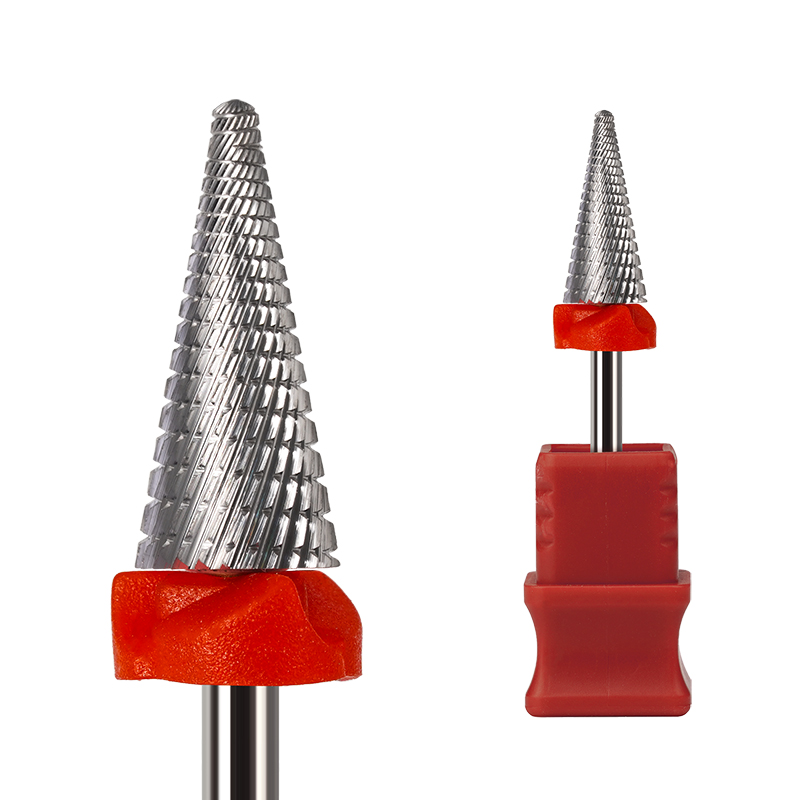
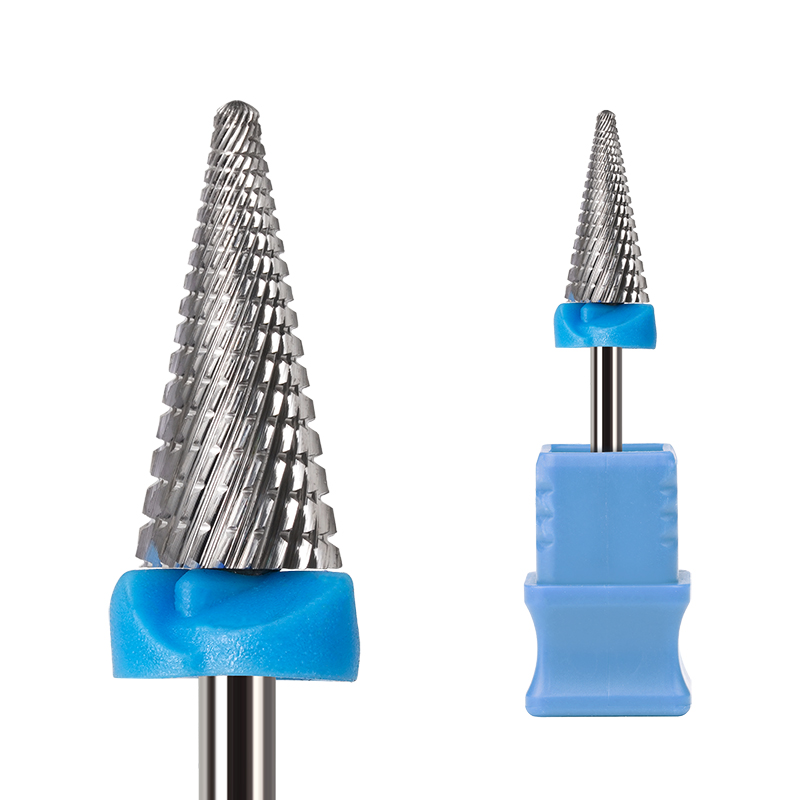
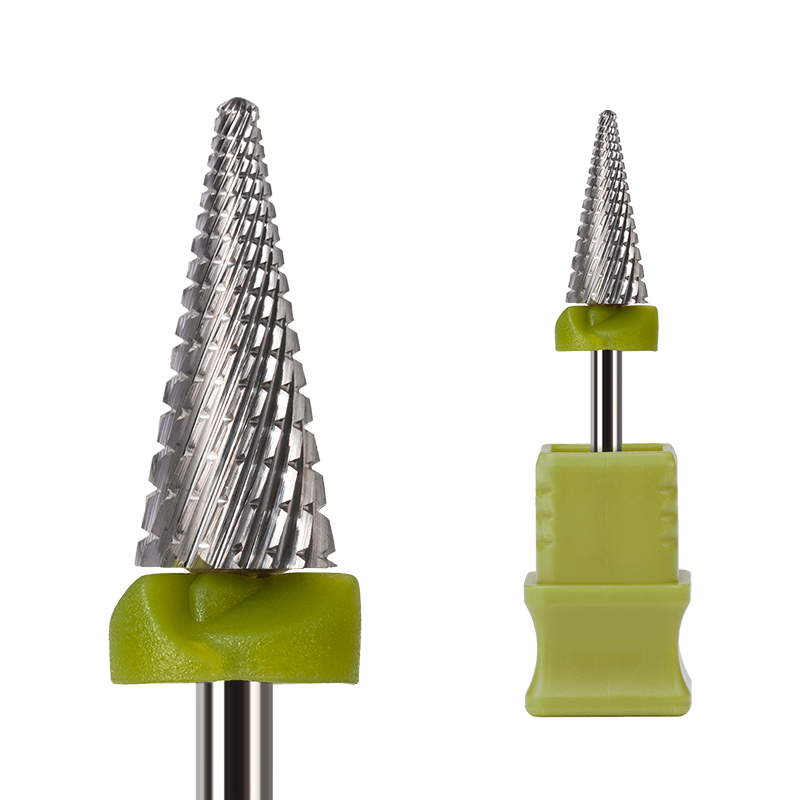
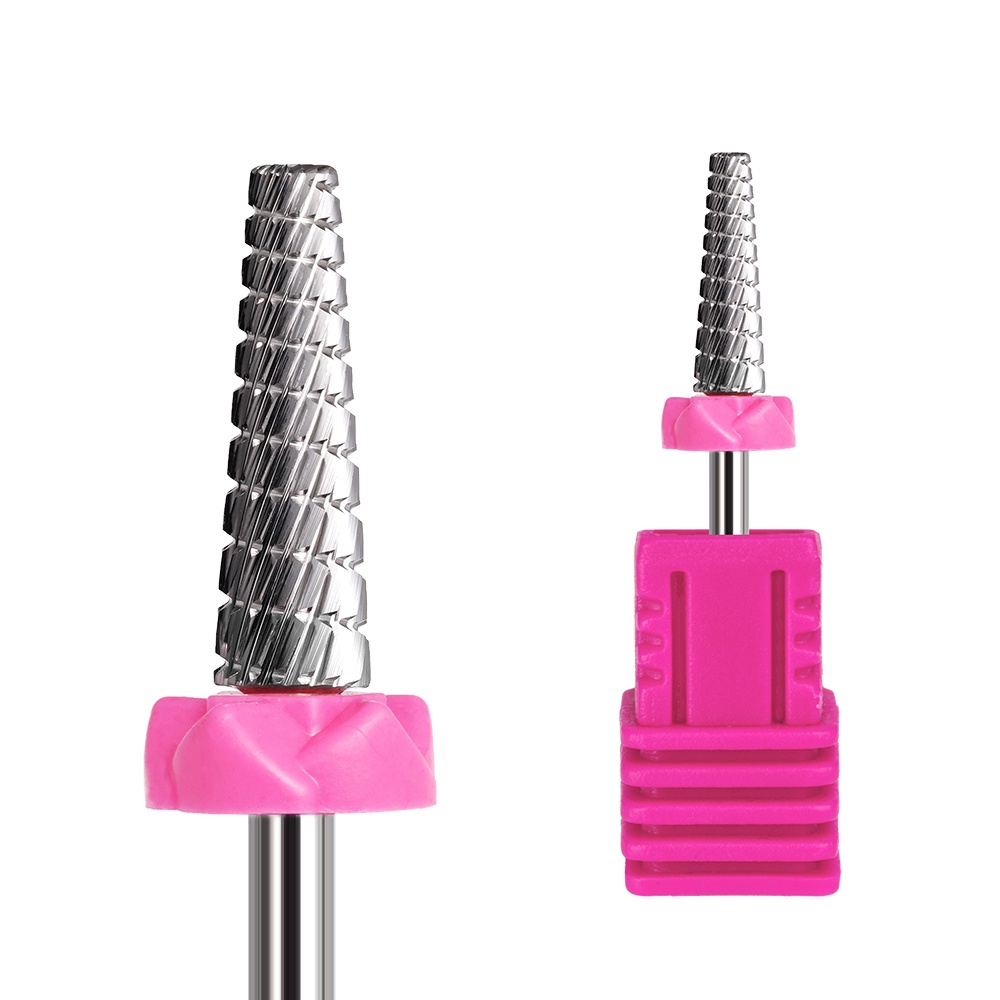
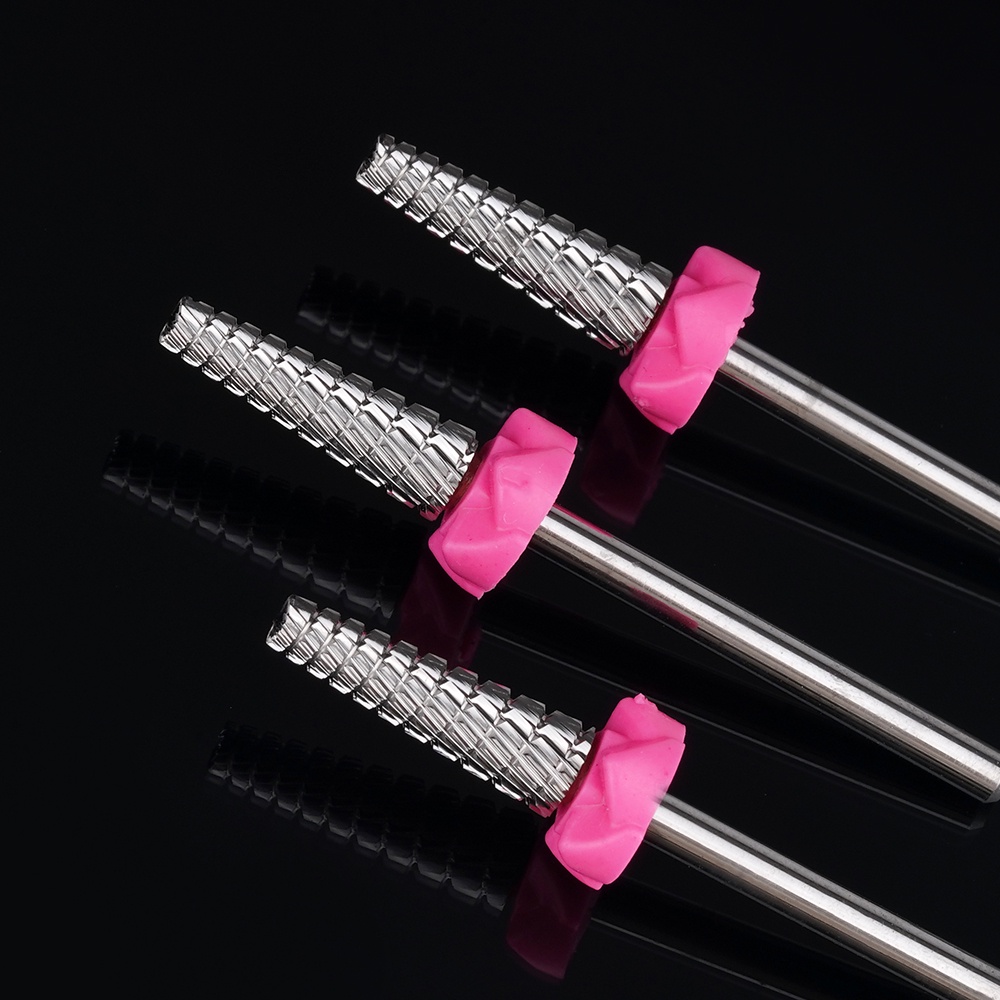
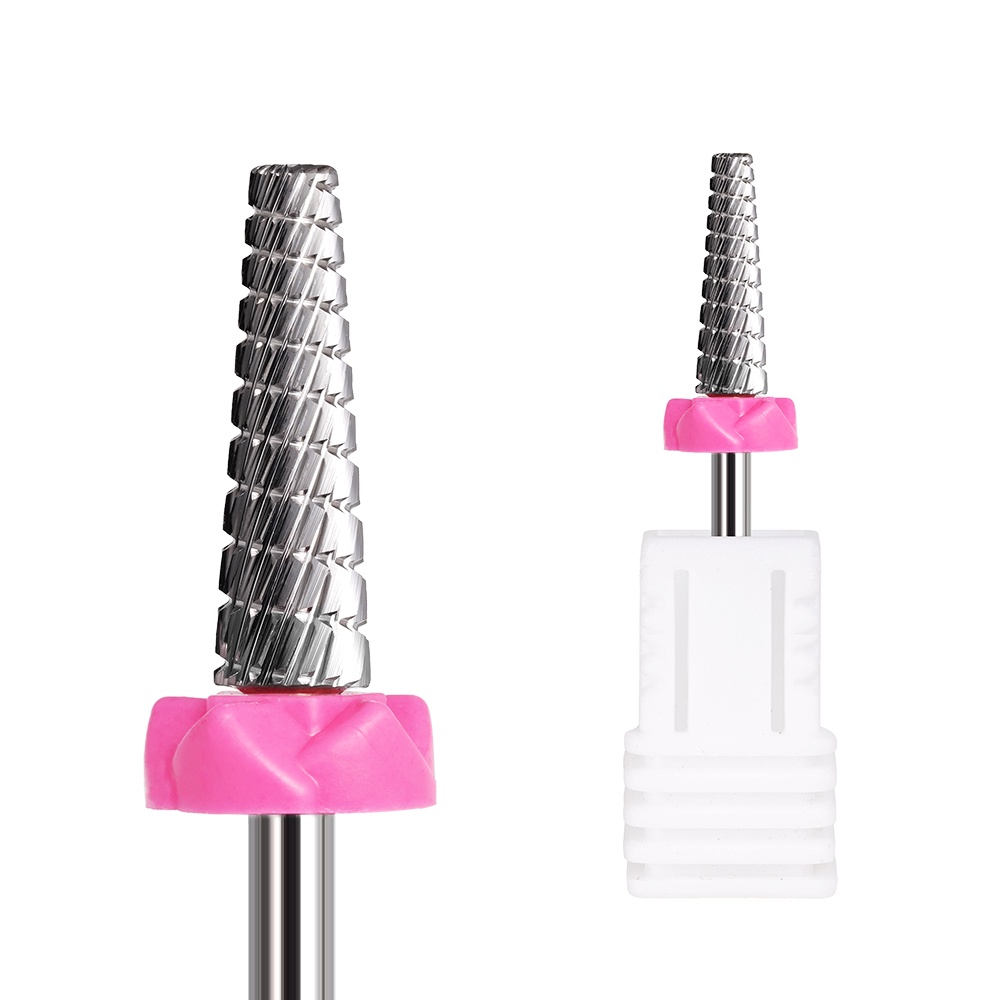
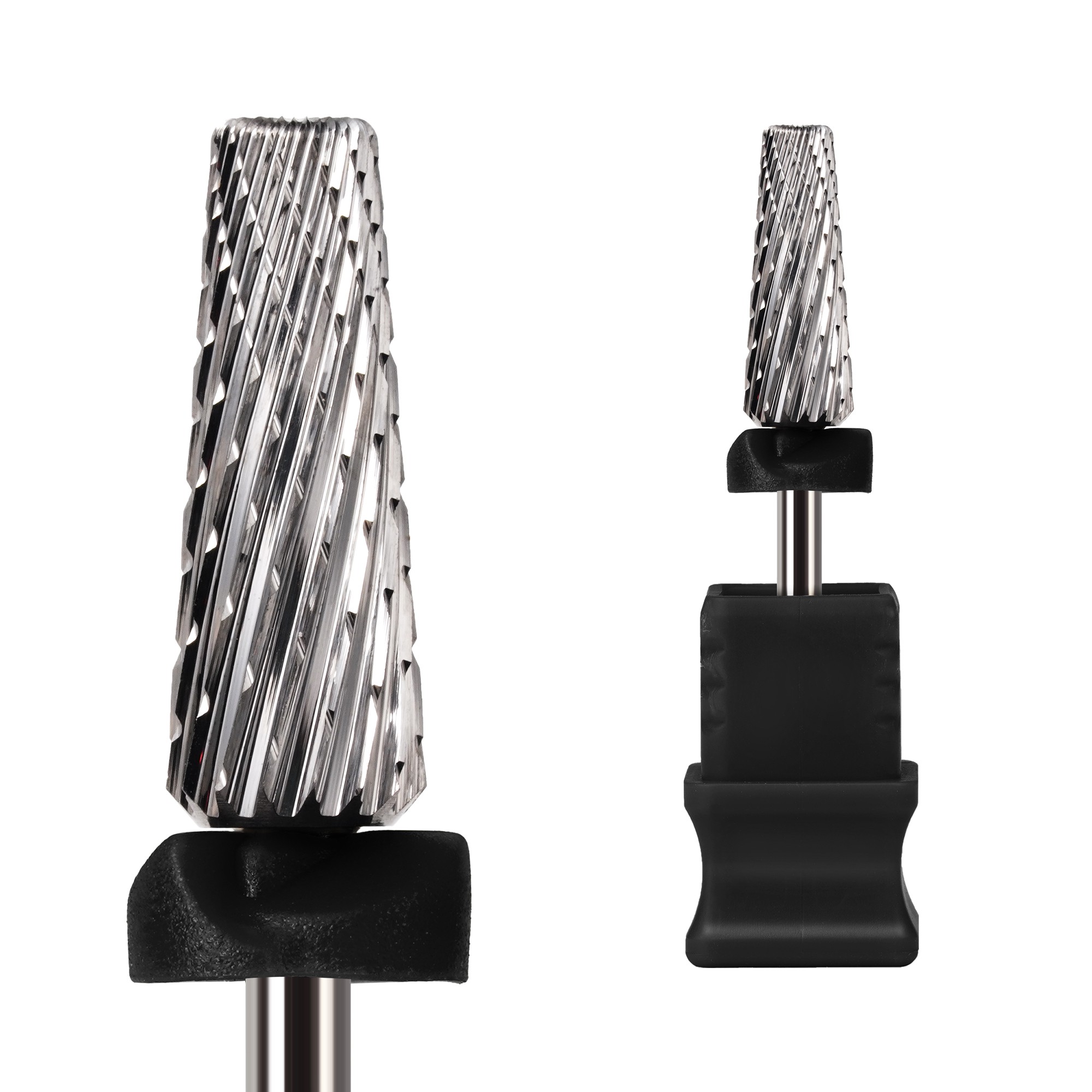
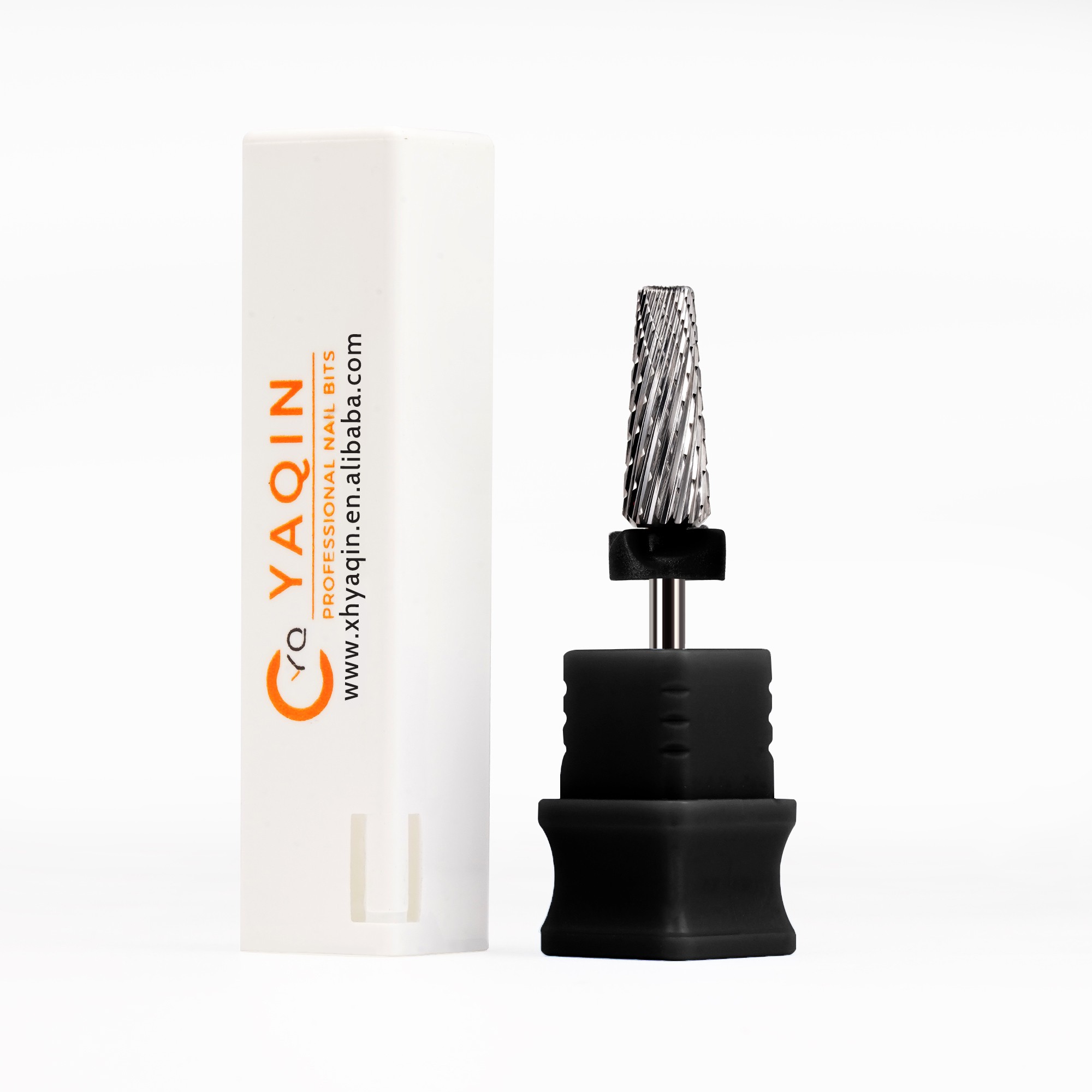
For applications requiring a compact multi-purpose carbide design, the New Slant Tooth Tungsten Steel Nail Drill Bits Dead Skin Removal 5-in-1 Universal Grinding Nail Polish Head Tool Nail Drill Bits combines a slant-tooth cutting concept with a smooth flat-tip profile. Its stated functions cover hard and soft gel removal, base coat reduction, nail-tip work, and callus-related grinding. From an evaluation perspective, the notable points are not simply the broad task list, but the intended dust-ejection direction, durable tungsten-carbide construction, and tip design intended to support controlled use around the skin.
A practical evaluation protocol for buyers and technical teams
A product comparison becomes more reliable when every candidate bit is tested through the same sequence. Begin with visual and dimensional inspection. Confirm head diameter, usable cutting length, total length, shank condition, tip finish, and color-band or grit identification. Check whether the supplied description states a clear intended use rather than relying on vague claims of universal performance.
Next, assess rotation. Mount the bit in the designated drill system and observe concentricity at low and normal working speeds. Any visible wobble should be recorded. Then test removal behavior on representative materials: soft gel, hard gel, base layers, and artificial tips where applicable. The objective is not only to determine which bit removes material fastest. It is to identify whether the cut remains even, whether dust clears effectively, and whether the bit tends to skip, grab, clog, or leave deep grooves.
Surface quality should be reviewed after controlled passes. A coarse tool may be accepted for rapid reduction if it is followed by a finishing step; it should not be criticized solely for leaving a rougher surface when that is inherent to its designed role. Conversely, a fine tool should not be expected to match the throughput of a bulk-removal bit. Evaluation criteria need to reflect the intended process stage.
Cleaning and repeat-use inspection matter as well. After cleaning according to the salon or distributor’s hygiene procedure, inspect the cutting area for retained debris, corrosion signs, chipped teeth, and changes in perceived cutting action. Durable performance is especially relevant for organizations supplying professional technicians, where inconsistent wear can disrupt service timing and tool standardization.
Common selection errors that distort performance assessments
One recurring mistake is comparing bits only at the same RPM. Equal speed does not mean equal operating condition. A small, coarse bit and a larger, fine bit have different contact behavior and should be evaluated with appropriate pressure, movement, and task materials. Another error is using a single test nail or one type of gel to make a universal conclusion. Product hardness and thickness strongly affect the result.
It is also risky to assume that a bit capable of dead-skin or callus-related work should be used identically on the natural nail plate. These areas have different mechanical characteristics and require different technique. Product instructions, technician training, and local hygiene practices should guide use. Nail drill accessories are precision tools, not substitutes for process judgment.
Finally, procurement teams sometimes focus on aggressive initial cutting while overlooking batch consistency. For export-oriented supply programs, repeatability matters: the next order should match the approved sample in material, dimensions, grit character, packaging condition, and rotation quality. Wuxi Yaqin Trading Co., Ltd. supports this type of sourcing requirement through quality control covering raw-material purchasing, production, and packing, alongside ISO9001:2000 quality-management certification and OEM/ODM experience for customers in multiple international markets.
Making a defensible choice
The best small barrel bit is rarely the one with the most aggressive marketing description. It is the one whose diameter, grit, tip geometry, and material construction match a defined task. Select small diameters when access, visibility, and localized control are priorities. Select grit according to the material-removal stage, then verify the real cutting pattern rather than trusting a color designation alone.
For technical evaluators, that approach turns small barrel nails drill bits from a broad catalog category into measurable tooling choices. A controlled test of removal rate, finish, heat behavior, dust clearance, balance, and repeat-use stability will reveal whether a bit is genuinely suitable for professional nail drilling applications—and whether it can deliver consistent results from sample approval through routine use.
News List
- Preventing Gouges and Uneven Filing With Small Barrel Nail Drill BitsSep 20, 2026
- How Diameter and Grit Affect Small Barrel Nail Drill Bit PerformanceSep 20, 2026
- Can Hytos Nail Drill Bits Be Used Safely on Natural Nails and Gel Polish?Sep 20, 2026
- How to Verify Fit Between Hytos Nail Drill Bits and an E-File HandpieceSep 20, 2026
- Safe Speed Settings for Umbrella Nail Drill Bits Around the Nail FoldSep 20, 2026
- Umbrella vs Flame Nail Drill Bits: Which Shape Offers Better Cuticle Control?Sep 20, 2026
Best-Selling Products
 Cross Cut Safety Stainless Steel Tungsten Carbide Nail Drill Bits Salon Foot Use XF-C Grit for Removing Nails
 First-rate Quality Tungsten Carbide Nail Drill Bits Best Coating Manicure Remove Gel Nails Accessories
 Professional Advanced Safety Cuticle Bits Two-Way Rotate 3/32'' Carbide Tungsten 5 in 1 Nail Drill Bits
 Wholesale 5 in 1 Electric Manicure Nail Drill Bits Various Coating Cone Cuticle Bit with Rotary Cross Cut for Nail Art
 New Slant Tooth Tungsten Steel Nail Drill Bits Dead Skin Removal 5-in-1 Universal Grinding Nail Polish Head Tool Nail Drill Bits
 4.0mm Small 5 in 1 Integrated Sharpe Tungsten Nail Drill Bit Straight Teeth Gel Polish Removal
 Flame Sharp XF F M C XC Silver Safety Professional Corn Tungsten Carbide Nail Bit for Drill Machine Accessories
 Factory Direct 5 in 1 Tungsten Carbide Nail Drill Bits 6.8MM Cross Cut Safety Manicure 5 in 1 Nail Drill Bits
Please give us a message