
Quartz Nail Drill Bit Applications: When Is It Suitable for Precision Nail Surface Work?
Quartz Nail Drill Bit Applications: When Is It Suitable for Precision Nail Surface Work?
Quartz Nail Drill Bit Applications: When Is It Suitable for Precision Nail Surface Work?
For professional nail services, abrasive selection is rarely a simple question of choosing the “strongest” bit. The useful question is whether a bit removes only the material intended, at a predictable rate, without creating unnecessary heat, chatter, dust, or risk to the natural nail. A Quartz Nail Drill Bit can be a practical option for controlled surface refinement, but it is not automatically the best choice for every removal task.
Technical evaluation should begin with the actual working condition: natural nail preparation, smoothing a cured gel overlay, reducing a small ridge near the sidewall, or finishing a product transition before rebalance. These are very different jobs. A quartz-style abrasive bit is generally more relevant when the operator needs gradual contact and a forgiving cutting action than when large volumes of hard gel or acrylic must be removed quickly.
There is also a terminology issue worth addressing. “Quartz” is used inconsistently in the nail-tool market. It may describe a quartz-like abrasive surface, a stone-based bit, a coating appearance, or a product family name rather than a verified mineral composition. For purchasing teams, the label alone is not a sufficient technical specification. The supplier should be able to clarify the abrasive material, bonding method, grit grade, shank dimensions, intended applications, and cleaning guidance.
Where a Quartz Nail Drill Bit Makes Sense
The strongest application for a Quartz Nail Drill Bit is controlled surface work where “less aggressive” is an advantage. In salon practice, this may include lightly mattifying a glossy gel surface before a correction service, blending a lifted edge after the unstable material has been removed manually, or refining a transition line between retained product and regrowth. The bit should be treated as a finishing or preparation tool, not as a universal removal tool.
A properly selected fine or medium abrasive surface can help an experienced technician work close to a product boundary with more feedback than a very sharp cutting bit. That feedback matters. When a bit begins to skate, clog, or drag, the operator can usually feel that the contact condition has changed. With a highly aggressive bit, the same change can become a visible groove before the operator reacts.
Quartz-type abrasive tools can also suit detailed work around areas that require restraint: the upper arch of an enhancement, the perimeter of a gel overlay, and localized unevenness after product application. They are often more appropriate for reducing texture than for reshaping structure. If the task involves changing the apex, shortening a thick extension, or stripping a dense hard-gel layer, a dedicated carbide or coarse ceramic bit is usually the more efficient and controllable choice.
For natural nails, the margin for error is narrow. Even a mild abrasive can thin the plate when used with high speed, pressure, or repeated passes in the same area. A quartz bit may be suitable for very light surface preparation, but it should not become a shortcut for aggressive buffing. The goal is to create a uniform, lightly prepared surface—not to erase shine until the nail looks chalky or uneven.
Abrasive Behavior Matters More Than the Product Name
Evaluators should focus on how the abrasive behaves in use. A bit that feels smooth in hand may still run unevenly at operating speed. A visually coarse surface may remove product slowly if its abrasive particles are poorly bonded or quickly clogged. Conversely, an abrasive that cuts efficiently can become difficult to control when particle distribution is inconsistent.
Several points deserve close inspection during qualification:
- Consistency of grit coverage across the head, especially around edges and the tip.
- Uniform bonding, with no obvious loose particles, bare patches, cracks, or excessive coating buildup.
- Shank straightness and stable rotation in the intended e-file handpiece.
- Heat behavior during sustained, light-contact use on representative enhancement materials.
- Ease of cleaning after gel dust and filing residue accumulate on the working surface.
- Whether the shape permits safe access without forcing the wrist or angling the bit into the nail plate.
The relationship between grit and pressure is often misunderstood. A finer abrasive does not guarantee safer work if the technician compensates by pressing harder or lingering too long. Heat is generated by friction, pressure, dwell time, speed, and the material being removed. A properly matched bit should allow the operator to maintain light contact. If removal is taking too long, changing to a more suitable tool is generally better than increasing pressure.
Bit geometry also affects precision. Barrel forms can level wider surfaces efficiently, but they demand careful control near sidewalls. Tapered or flame-like profiles provide access to tighter areas, though the working edge can become more concentrated. Rounded safety tops reduce the likelihood of accidental digging at the cuticle-side area, but a safety top does not eliminate technique-related risk.
When Quartz Is Not the Right Tool
A quartz abrasive bit is not an efficient first choice for bulk removal of thick acrylic, dense builder gel, or extended hard-gel overlays. In these situations, the abrasive surface may load with material, generate unnecessary friction, and slow the service. The technician may then apply more force, which is exactly the behavior a technical team should avoid encouraging.
For fast reduction of artificial material, a well-made tungsten carbide bit is often the more logical tool category. Carbide cutting teeth remove material by a different mechanism than a coated abrasive surface, and their flute design can support more effective debris evacuation. The correct cut direction, tooth pattern, and bit shape still depend on the product system and the operator’s preferred workflow.
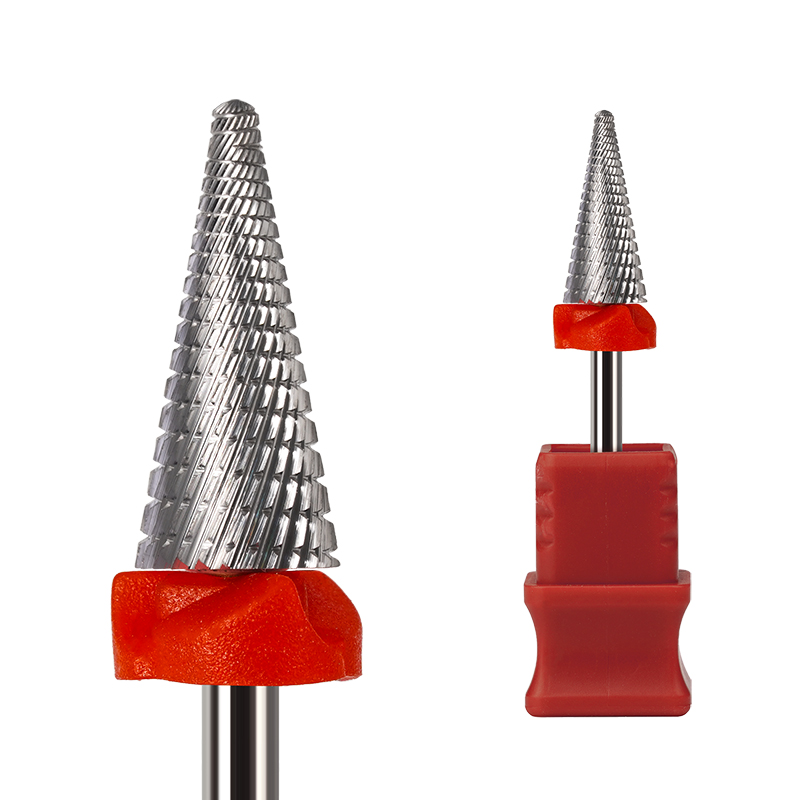
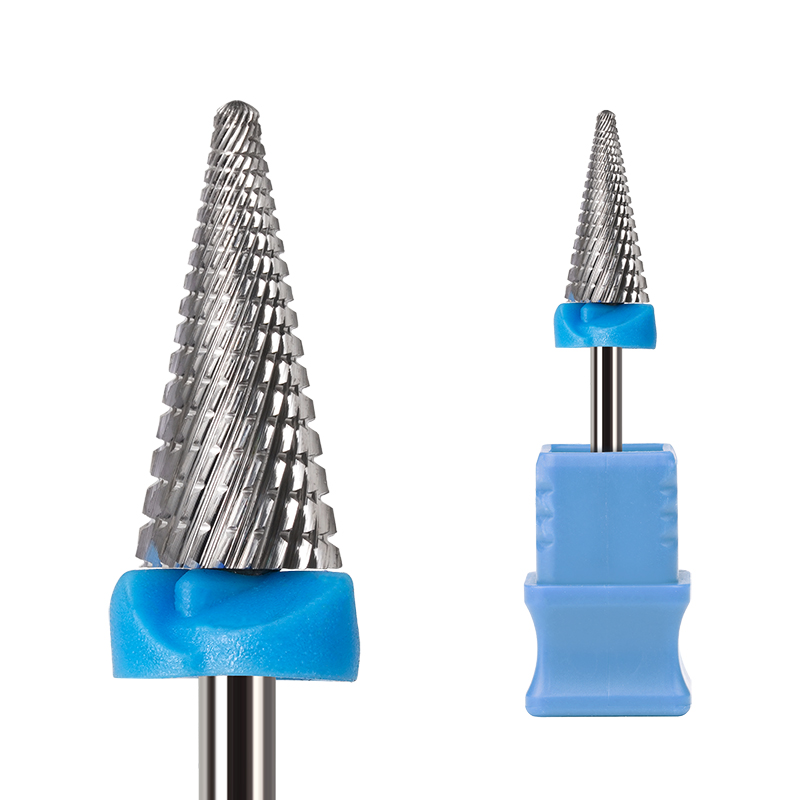
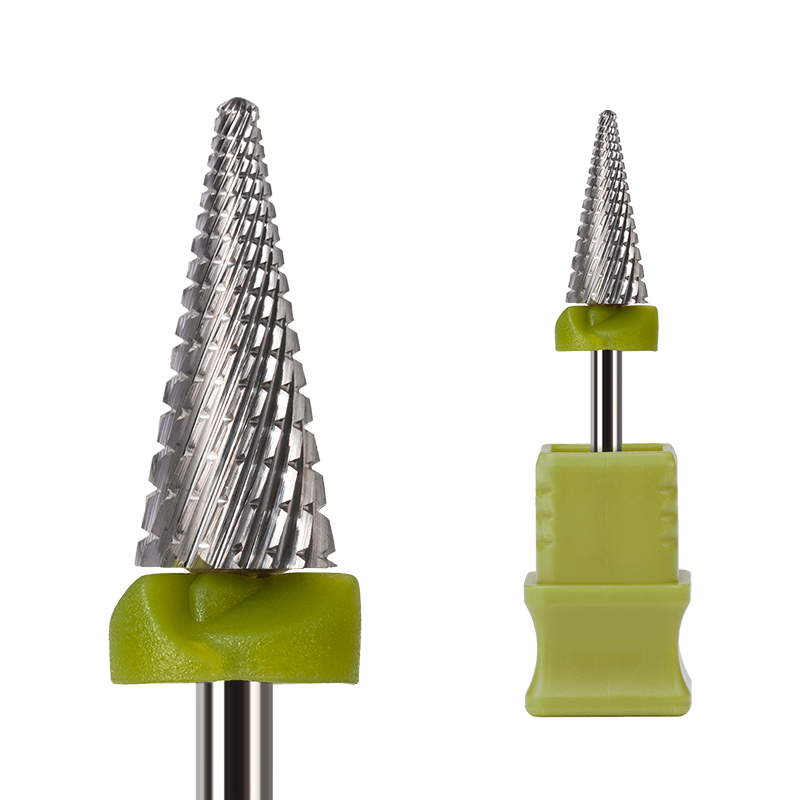
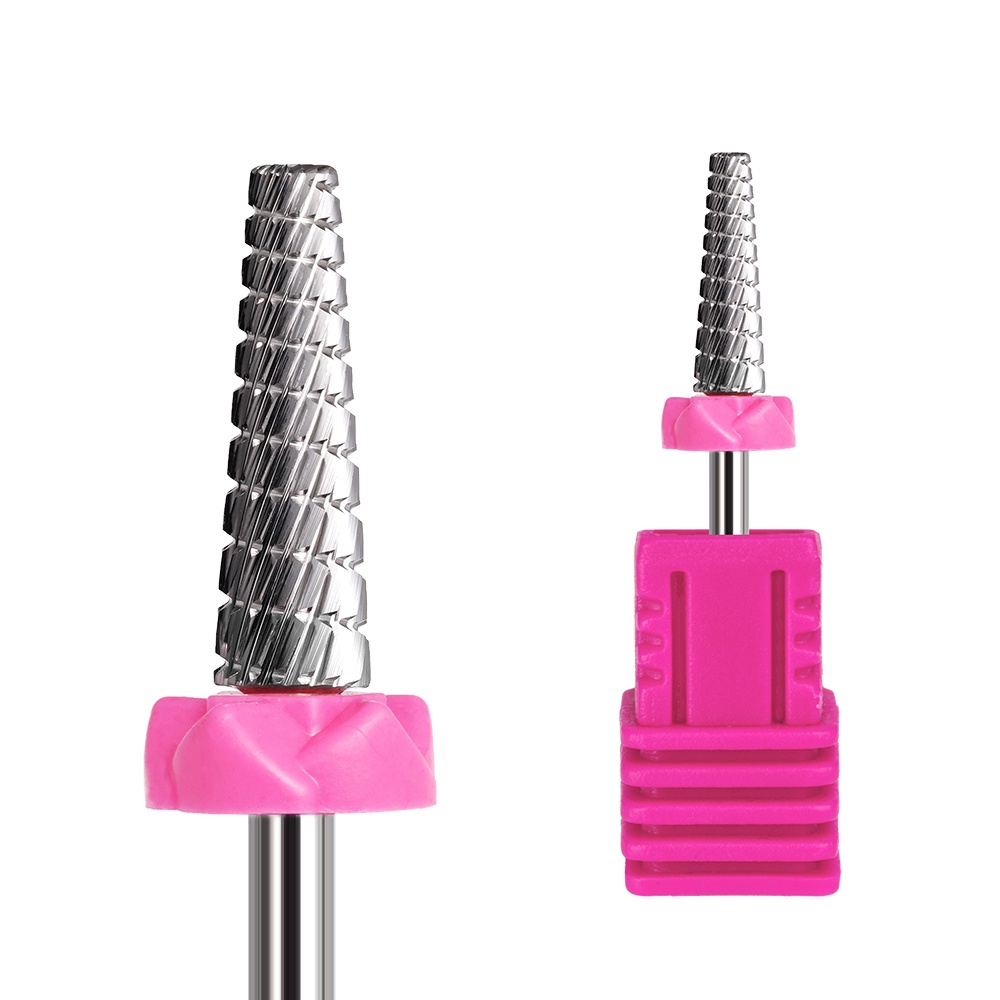
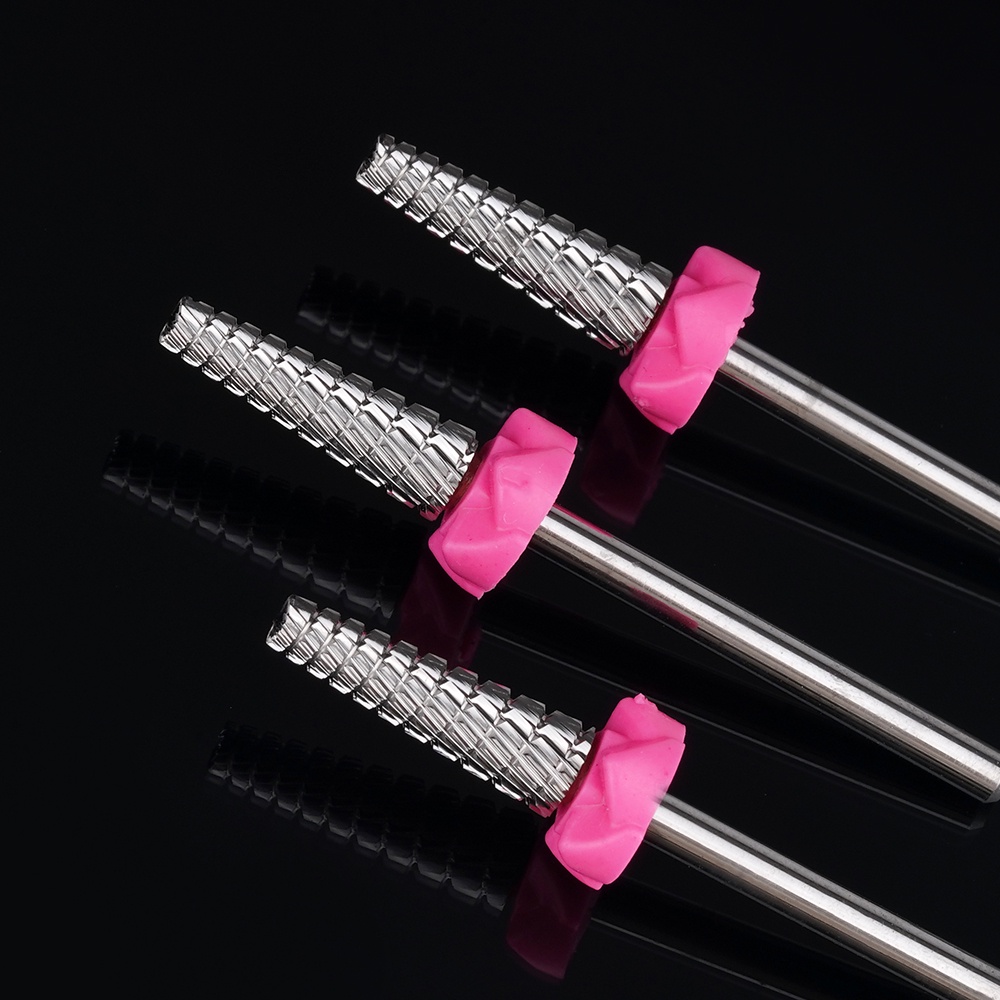
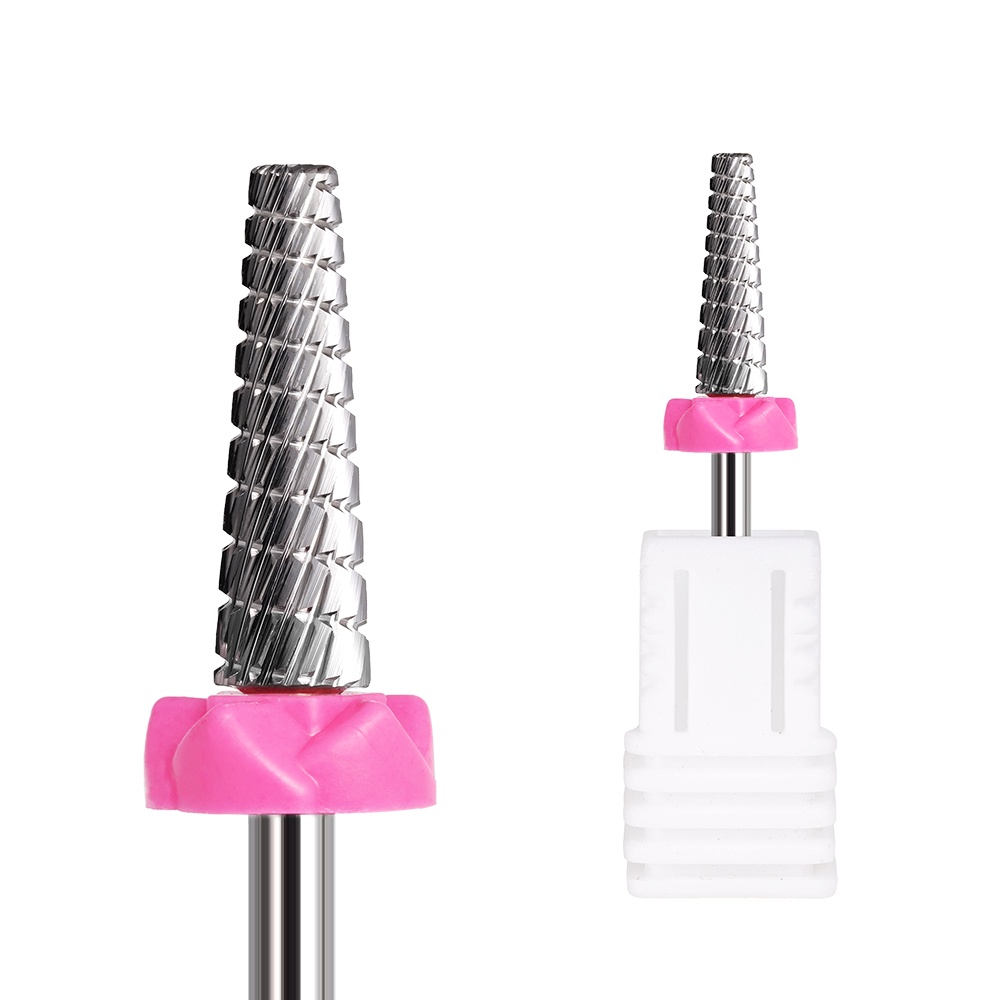
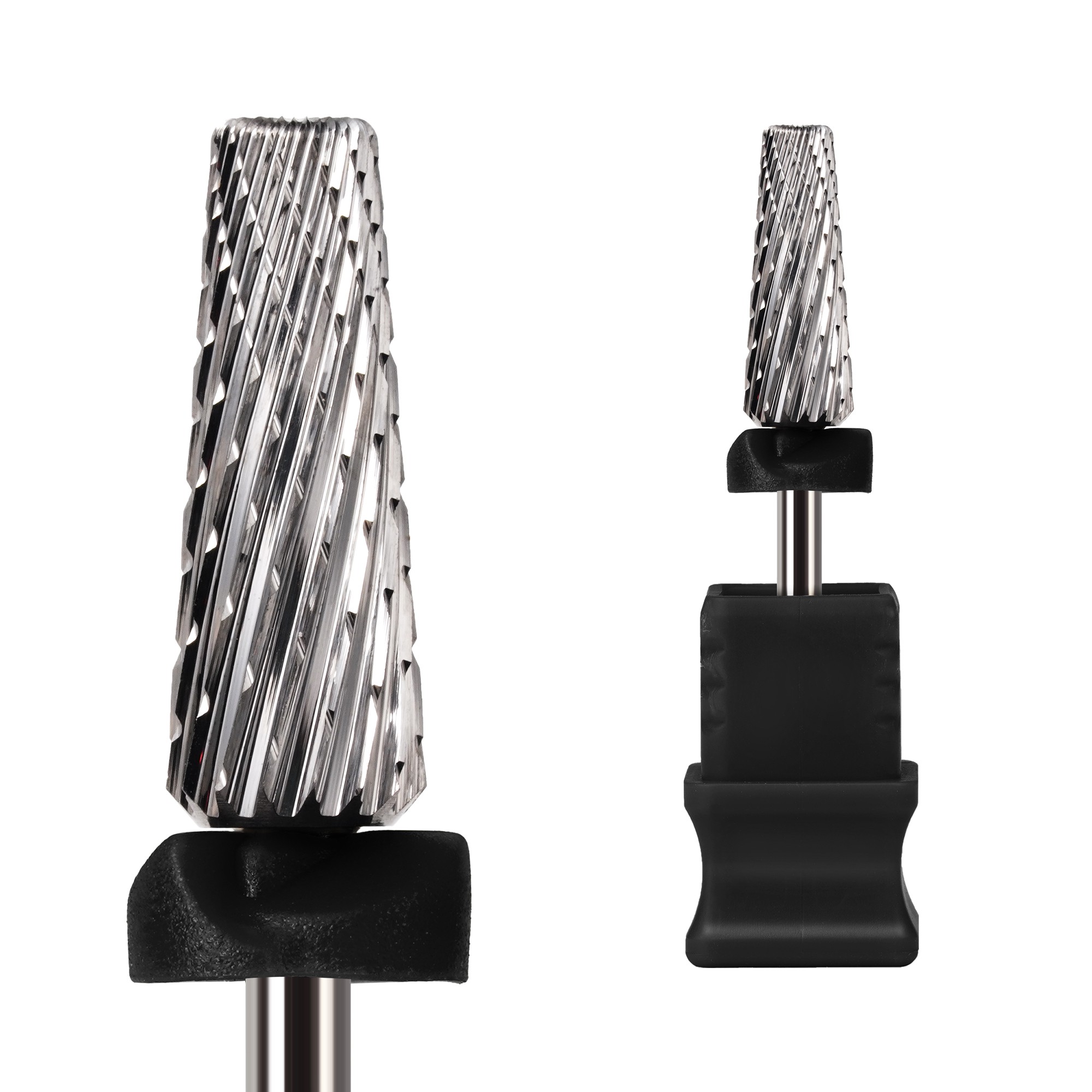
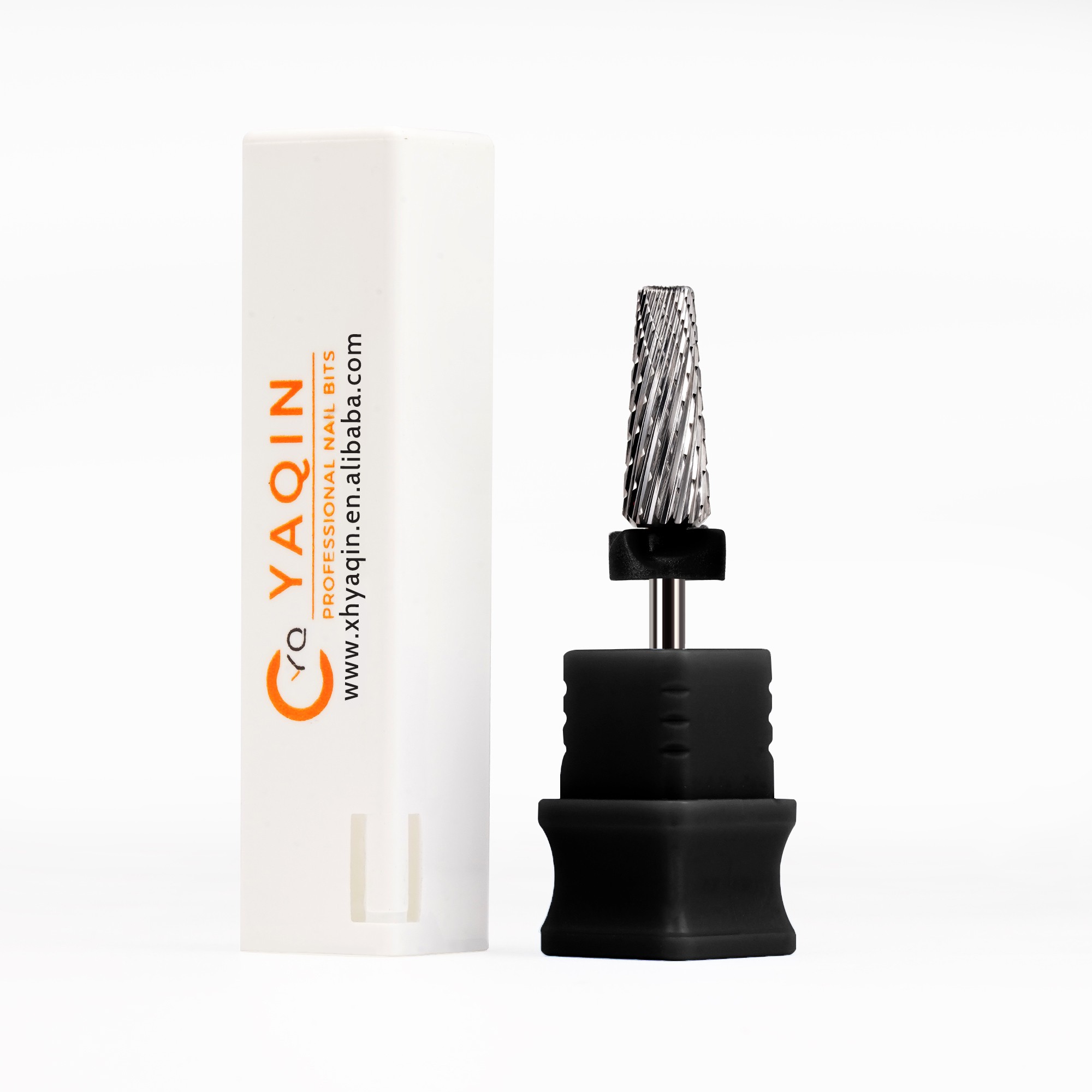
For example, a cross-cut carbide option such as the High Quality Helical Tungsten Carbide Nail Drill Bits 5 in 1 Professional Cross Cut Teeth Fast Remove Nail Gel Nail Drill Bit is positioned for jobs including hard-gel and soft-gel removal, nail preparation, dead-skin work, and reduction of tougher surfaces. Its helical tooth structure is intended to support dust ejection rather than allowing residue to remain concentrated at the contact point. That makes it a different tool decision from choosing a quartz bit for delicate surface blending.
The practical distinction is simple: use quartz-style abrasives when controlled refinement is the priority; use a purpose-designed carbide when the task requires fast, repeatable product removal. Trying to make one bit cover both roles usually produces slower services and less consistent results.
Dust, Heat, and Cleaning Are Part of the Application Decision
Surface work creates dust even when the bit is used correctly. In technical terms, dust control is not a cosmetic concern. Fine residue affects visibility, can clog an abrasive surface, and changes how the bit contacts the nail or overlay. Local extraction, appropriate personal protective practices, regular brush cleaning, and timely bit replacement should be considered part of the working system rather than optional extras.
If a product is marketed as containing actual quartz or another mineral that may create respirable particulate during filing, the material documentation deserves particular attention. Buyers should request safety and composition information from the supplier and evaluate it against the workplace requirements that apply in their sales market. It is not enough to assume that a familiar product name answers the exposure question.
Cleaning methods must also match construction. Some abrasive coatings are more vulnerable to harsh chemicals, prolonged soaking, or aggressive mechanical cleaning than solid carbide tools. A supplier should state whether the bit is intended for cleaning, disinfection, or sterilization under specific procedures, rather than making broad assumptions based on its appearance. Repeated processing can alter bonding integrity over time, so lifecycle evaluation should include post-cleaning performance, not just first-use cutting behavior.
A Useful Evaluation Method Before Volume Purchase
For a salon group, distributor, private-label project, or professional education brand, a small structured trial is more revealing than a desk comparison. Test the bit on the materials it will actually encounter: natural nails, soft gel, hard gel, acrylic, or a combination. A product that works acceptably on one overlay may behave very differently on another formulation.
It is sensible to inspect samples before and after the trial. Check the abrasive face for shedding, smooth spots, discoloration, or damage around the transition from head to shank. Also confirm compatibility with the intended handpiece. A nominally standard shank is not a substitute for checking actual fit and rotation stability.
Sourcing Considerations Beyond the Bit Itself
For larger programs, consistency between lots often matters more than an impressive sample. Abrasive tools may look nearly identical while delivering different service behavior because of changes in raw material, grit distribution, curing or bonding conditions, packaging protection, or dimensional control. Procurement specifications should therefore define what must remain consistent, not merely state a product name and color.
Wuxi Yaqin Trading Co., Ltd. works in abrasive-product production and export, with supply experience across the United States, Canada, Germany, the United Kingdom, Italy, Poland, and other international markets. For buyers assessing OEM or ODM projects, the relevant value is not a generic promise of quality; it is the ability to trace control from raw-material purchasing through production and packing, and to discuss the required application honestly. The company states that its quality management system has passed ISO9001:2000 certification, while project-specific documentation and current certification status should always be confirmed during supplier qualification.
A good sourcing conversation should cover expected use, preferred bit shape, grit or cutting profile, packaging format, cleaning expectations, label requirements, and inspection criteria. If the intended use is precision surface work, ask for samples that represent the production specification—not only pre-production pieces selected for display. That small distinction prevents many avoidable disputes later.
The Practical Decision
A Quartz Nail Drill Bit is suitable when the service calls for measured abrasion, local smoothing, gentle preparation, and a controllable finish. It is less suitable when the real need is speed in removing substantial artificial material. The bit should be evaluated by actual abrasive quality, heat behavior, dust management, cleaning compatibility, and stability in the handpiece—not by the word “quartz” alone.
The most reliable tool assortment usually separates refinement from removal. Keep a controlled abrasive option for detailed surface work, select carbide geometry for bulk reduction, and set clear handling guidance for each. That approach protects the natural nail, makes technician technique easier to standardize, and gives purchasing teams a more realistic basis for comparing suppliers.
News List
- Preventing Gouges and Uneven Filing With Small Barrel Nail Drill BitsSep 20, 2026
- How Diameter and Grit Affect Small Barrel Nail Drill Bit PerformanceSep 20, 2026
- Can Hytos Nail Drill Bits Be Used Safely on Natural Nails and Gel Polish?Sep 20, 2026
- How to Verify Fit Between Hytos Nail Drill Bits and an E-File HandpieceSep 20, 2026
- Safe Speed Settings for Umbrella Nail Drill Bits Around the Nail FoldSep 20, 2026
- Umbrella vs Flame Nail Drill Bits: Which Shape Offers Better Cuticle Control?Sep 20, 2026
Best-Selling Products
 Cross Cut Safety Stainless Steel Tungsten Carbide Nail Drill Bits Salon Foot Use XF-C Grit for Removing Nails
 First-rate Quality Tungsten Carbide Nail Drill Bits Best Coating Manicure Remove Gel Nails Accessories
 Professional Advanced Safety Cuticle Bits Two-Way Rotate 3/32'' Carbide Tungsten 5 in 1 Nail Drill Bits
 Wholesale 5 in 1 Electric Manicure Nail Drill Bits Various Coating Cone Cuticle Bit with Rotary Cross Cut for Nail Art
 New Slant Tooth Tungsten Steel Nail Drill Bits Dead Skin Removal 5-in-1 Universal Grinding Nail Polish Head Tool Nail Drill Bits
 4.0mm Small 5 in 1 Integrated Sharpe Tungsten Nail Drill Bit Straight Teeth Gel Polish Removal
 Flame Sharp XF F M C XC Silver Safety Professional Corn Tungsten Carbide Nail Bit for Drill Machine Accessories
 Factory Direct 5 in 1 Tungsten Carbide Nail Drill Bits 6.8MM Cross Cut Safety Manicure 5 in 1 Nail Drill Bits
Please give us a message