
Umbrella vs Flame Nail Drill Bits: Which Shape Offers Better Cuticle Control?
Umbrella vs Flame Nail Drill Bits: Which Shape Offers Better Cuticle Control?
Neither shape is inherently “better” for cuticle control. An umbrella bit usually gives more predictable control along the visible cuticle arc because its working surface is broader and its shoulder can be kept parallel to the nail plate. A flame bit gives more precise access at the lateral folds and beneath lifted cuticle edges because its taper reaches into narrower contours. The correct choice depends less on the nominal shape than on the relationship among head diameter, abrasive grade or flute geometry, rotation direction, speed, and the operator’s ability to maintain a stable contact angle.
For technical evaluation, the useful distinction is this: umbrella nail drill bits are primarily contour-following tools, while flame bits are primarily detail-access tools. Selecting one as a universal replacement for the other usually creates either incomplete cleaning in confined areas or excessive contact risk on flatter, more exposed areas of the proximal nail fold.
Why shape changes cuticle control
Cuticle-area work is not performed on one flat surface. The working zone includes the nail plate near the proximal fold, the curved cuticle line, lateral sidewalls, and, depending on the service, adherent non-living tissue that remains attached to the nail plate. Each area presents a different contact geometry.
An umbrella bit has a rounded or flared upper working zone that resembles a small canopy. Its profile creates a relatively wide contact band when the bit is held nearly parallel to the nail plate. This allows the technician to sweep along the cuticle line without relying on a very narrow point. The bit’s geometry can reduce the tendency to dig into one small area when the handpiece follows the natural curve of the nail.
A flame bit narrows toward one end and widens through its body. Its active contact zone can be shifted simply by changing angle: the wider midsection can work close to the cuticle arc, while the taper can reach toward a sidewall or a tight pocket near the lateral fold. This versatility is valuable, but it also means contact pressure is concentrated more easily. A small change in wrist angle can move the working point from a broad section to a much narrower, more aggressive area.
That difference explains why a flame bit may feel more precise but less forgiving, particularly when used around thin nail plates, sensitive folds, or uneven product residue. Precision of access should not be confused with precision of tissue removal. A narrow tip reaches a restricted location; it does not automatically provide a safer or more controlled result there.
Where the umbrella profile has an advantage
The umbrella shape is strongest when the required task is controlled cleaning along a broad, visible cuticle perimeter. Its wider geometry makes it easier to maintain a consistent relationship with the nail plate during a sweeping pass. On a normally curved nail, the operator can use the shoulder or underside of the head to follow the arc rather than repeatedly repositioning a pointed tip.
This is particularly relevant when the desired outcome is uniform removal of adherent cuticle from the nail plate before product application. Incomplete removal can affect the quality of surface preparation, while overworking the same zone can leave visible thinning, heat discomfort, or damage to adjacent living tissue. The umbrella profile provides a larger visual and physical reference point, helping the operator judge whether the bit is gliding across the plate rather than entering the fold.
Another advantage is consistency across repeated services. When a salon, training organization, or private-label product program is standardizing a bit set, the umbrella shape can be easier to define for routine cuticle-line refinement because the intended working posture is relatively specific: low angle, light engagement, controlled lateral movement. That does not remove the need for training, but it can reduce variability caused by overuse of the pointed end of a tapered bit.
The limitations are equally important. An umbrella bit may not enter deep lateral recesses effectively, especially on nails with pronounced sidewall curvature, product buildup near the fold, or tight skin anatomy. Trying to force the broad head into these areas defeats its control advantage. The bit can begin to press against the fold rather than work on the intended nail-plate surface.
Where the flame profile provides better access
A flame bit is more effective where the working area becomes narrow or changes direction sharply. The tapered end can be directed toward sidewalls and the corners adjacent to the proximal fold without requiring the body of the bit to occupy the entire space. This makes it useful for lifting or refining material at the edges of the cuticle zone, provided the tip is not used as a digging instrument.
For nail shapes with deep sidewalls or strong lateral curvature, a flame profile can maintain access where an umbrella bit becomes too broad. It also allows a technician to work selectively: the wider body may address an exposed portion of the cuticle line, then the tapered section can refine a remaining area near the sidewall. That flexibility is the main reason flame bits often appear in multipurpose e-file sets.
However, the same taper creates a higher sensitivity to angle and dwell time. If the bit is held too upright, the contact area becomes very small. Friction then concentrates at a point, increasing the chance of heat generation, grooves in the nail plate, or unintended contact with the fold. A flame bit should therefore be evaluated not only by its reach but also by whether its taper, abrasive surface, and intended rotation direction permit controlled work at the speeds used in the actual service protocol.
A flame bit is not automatically the better option for “detailed work” if the task is simply broad cuticle removal on an open, easily visible nail plate. In that setting, its extra reach may add complexity without improving the finish.
Control is determined by more than head shape
Comparing silhouettes alone can lead to poor selection. Cuticle performance changes significantly with the following construction variables:
- Maximum head diameter: A small umbrella bit may be appropriate for compact nail beds, while an oversized version can obstruct visibility and touch the folds. Flame bits with a larger belly provide more stable broad contact but may lose access in narrow sidewalls.
- Taper length and tip radius: A long, sharp flame reaches farther into restricted zones but demands greater angle control. A rounded flame tip is less likely to behave like a point tool, though it may be less effective in very narrow contours.
- Abrasive grade or cut pattern: Fine diamond abrasives and fine carbide cuts generally support refinement work more appropriately than coarse, high-removal surfaces. Shape does not compensate for an overly aggressive grit.
- Flute direction and handpiece rotation: Carbide bits must be matched to the intended forward or reverse rotation. An incorrect directional match can produce chatter, pulling, or reduced control rather than a clean cutting action.
- Shank accuracy and balance: A well-shaped head cannot compensate for runout. Eccentric rotation makes the bit strike intermittently, reducing surface consistency and increasing vibration at the point of contact.
For this reason, a sample evaluation should include more than visual inspection. The bit should be checked in the intended handpiece for concentric running, perceived vibration, access around different nail curvatures, visibility of the working zone, and the finish left on the nail plate. The assessment should use the same operating conditions that the final user will encounter, including rotation mode, typical speed range, and cleaning procedure.
Material and abrasive surface affect the appropriate use case
Diamond-coated umbrella and flame bits are commonly associated with cuticle lifting, dead-skin refinement, and surface-level preparation because their abrasive action is distributed across the coated surface. Their effectiveness depends on grit size, coating uniformity, and whether the abrasive remains clear during use and cleaning.
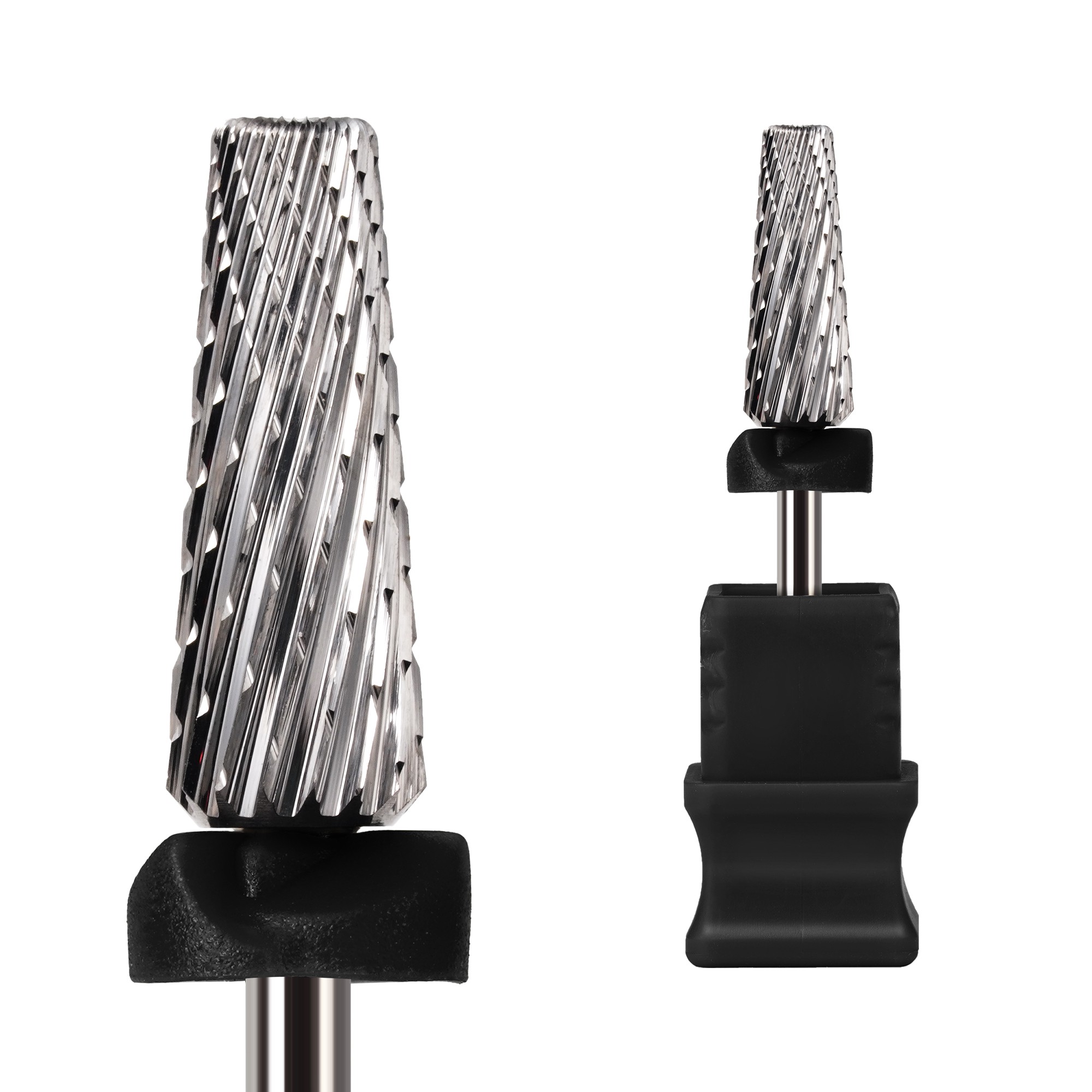
Tungsten carbide versions remove material through machined cutting flutes rather than a bonded abrasive layer. They can offer efficient cutting and durable geometry, but a carbide cuticle bit requires particularly careful matching of cut design to task. A carbide tool intended for removing gel, acrylic, or bulk product is not automatically suitable for work at the cuticle margin. A coarse flute pattern, even in a small umbrella or flame profile, can remove material too rapidly for delicate preparation.
When assessing carbide options, it is useful to separate the bit’s shape from its removal class. A flame carbide with a fine cross-cut may be evaluated for controlled detail refinement, while a coarse flame carbide may be better reserved for product removal away from the natural nail and surrounding skin. The same distinction applies to umbrella profiles.
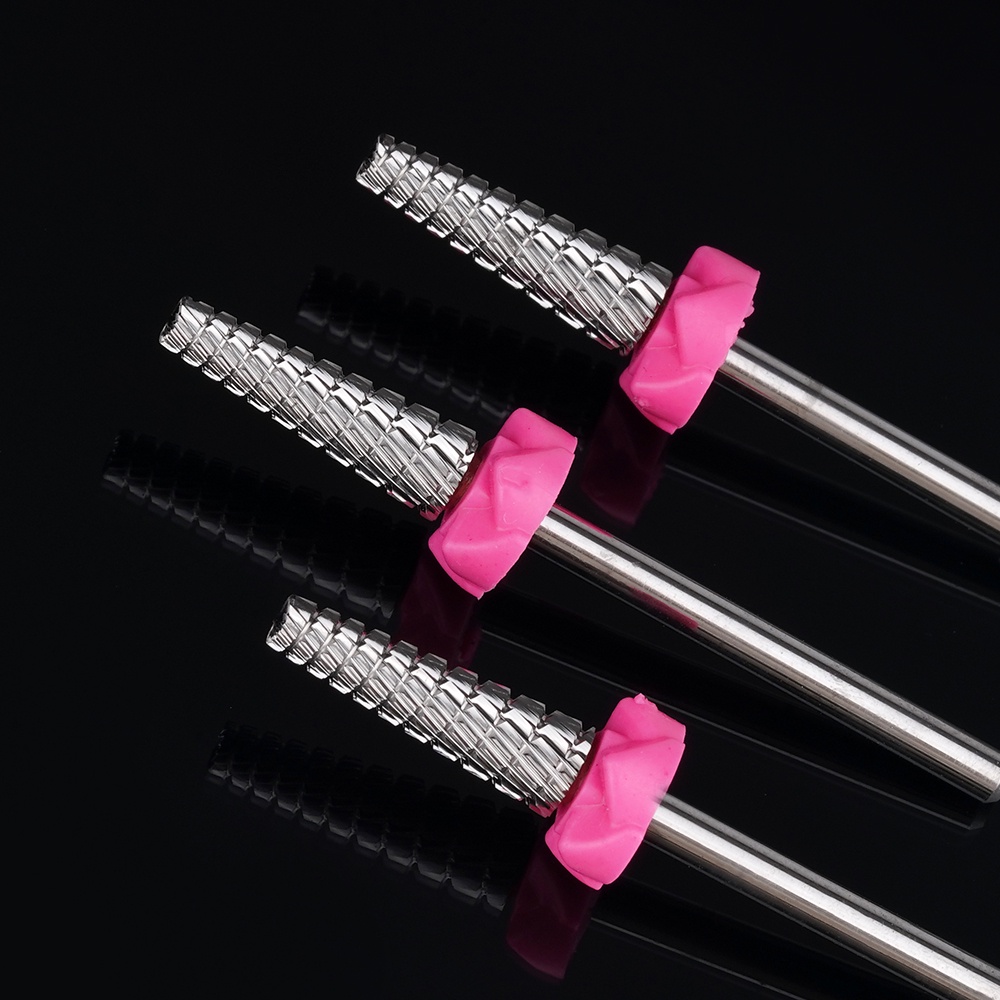
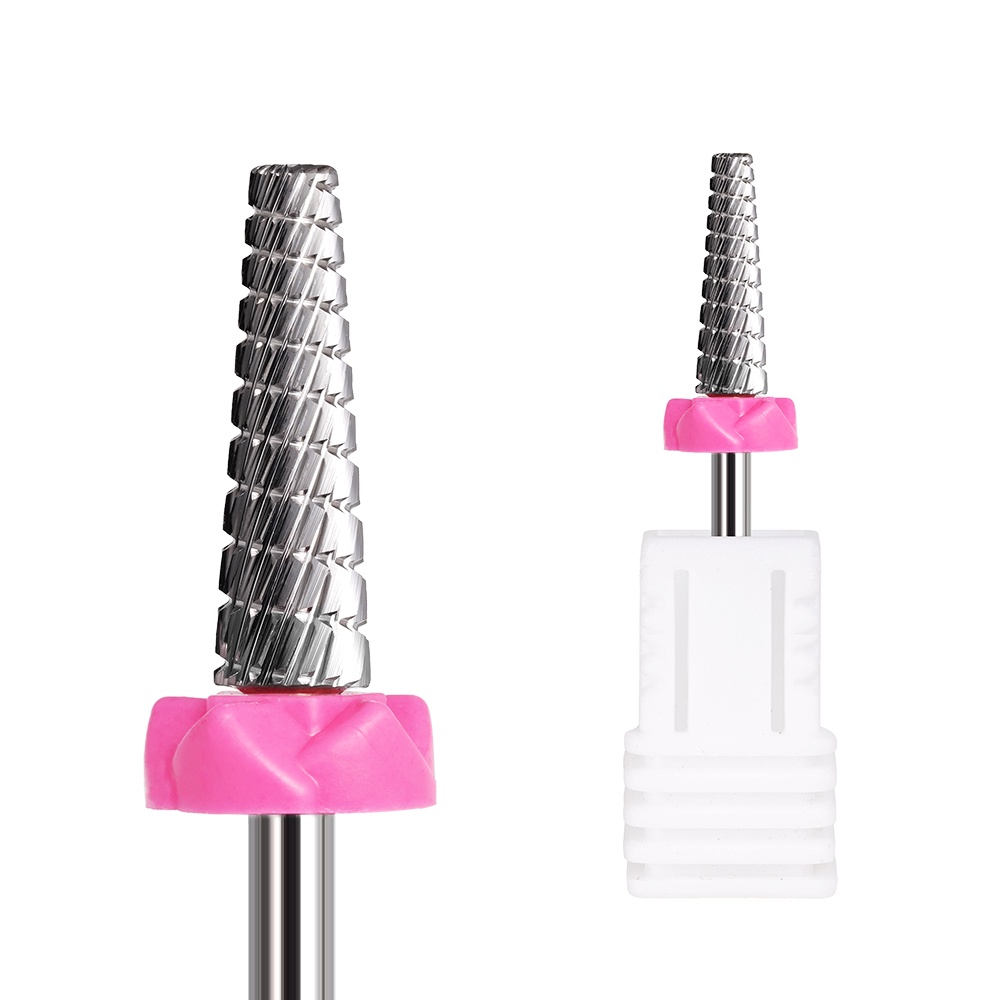
Products such as First-rate Quality Tungsten Carbide Nail Drill Bits Best Coating Manicure Remove Gel Nails Accessories illustrate why specification review must go beyond a broad claim of high hardness or grinding efficiency. Those properties are relevant to service life and material removal, but cuticle-area suitability still depends on head profile, flute fineness, directional configuration, surface finish, and the manufacturer’s intended application guidance.
Risk points that can distort a shape comparison
A common evaluation error is to judge a bit after using it at excessive speed. At a speed beyond the operator’s ability to maintain smooth movement, both umbrella and flame bits can generate friction marks or heat. The flame often appears “more aggressive” in this situation because its small contact zone exposes poor angle control more quickly. Conversely, an umbrella bit can be mistakenly regarded as harmless because its contact is broader, even though prolonged dwell in one area can still abrade the nail plate.
Another error is using head shape to compensate for inadequate visibility. Product residue, dust accumulation, poor lighting, or an unstable client hand can obscure the border between adherent cuticle and living tissue. No bit profile can safely resolve an unclear working boundary. The correct response is to improve preparation and visibility, not to select a narrower, sharper tool.
Cleaning and inspection also influence control over time. Debris trapped in diamond particles reduces cutting consistency. Damaged carbide flutes can create rough engagement rather than a clean, predictable cut. After cleaning and disinfection according to the bit material and local hygiene requirements, the head should be inspected for coating loss, bent shanks, chipped cutting edges, corrosion, or residue. A worn bit can require more pressure, which changes the risk profile of either shape.
A practical selection logic
Choose an umbrella profile when the primary task is to follow the proximal cuticle curve on an exposed nail plate with a stable, low-angle pass. It is generally the more suitable shape where broad contact, visible control, and repeatable perimeter refinement matter more than deep access into sidewalls.
Choose a flame profile when sidewall access, narrow contours, or localized refinement are the dominant requirements. Its value is greatest when the operator needs to place the active area selectively, not when a broad cuticle arc can be addressed more simply with a wider profile.
Where service protocols require both broad cuticle-line cleaning and lateral-detail work, the most controlled solution may be a two-bit sequence rather than asking one shape to perform every task. An umbrella bit can manage the accessible arc, while a fine flame bit can be reserved for confined sidewalls. This division reduces the tendency to use the flame tip across broad areas or to force an umbrella head into narrow folds.
The deciding question is therefore not whether umbrella or flame bits are superior in general. It is whether the selected profile creates a stable, visible, low-pressure contact at the exact area being treated. For broad cuticle-line control, the umbrella shape usually has the advantage. For access to tight lateral contours, the flame shape is more capable. A technically sound selection matches each geometry to its working zone, then confirms that grit or flute design, rotation, balance, and operating technique support that intended use.
News List
- Preventing Gouges and Uneven Filing With Small Barrel Nail Drill BitsSep 20, 2026
- How Diameter and Grit Affect Small Barrel Nail Drill Bit PerformanceSep 20, 2026
- Can Hytos Nail Drill Bits Be Used Safely on Natural Nails and Gel Polish?Sep 20, 2026
- How to Verify Fit Between Hytos Nail Drill Bits and an E-File HandpieceSep 20, 2026
- Safe Speed Settings for Umbrella Nail Drill Bits Around the Nail FoldSep 20, 2026
- Umbrella vs Flame Nail Drill Bits: Which Shape Offers Better Cuticle Control?Sep 20, 2026
Best-Selling Products
 Cross Cut Safety Stainless Steel Tungsten Carbide Nail Drill Bits Salon Foot Use XF-C Grit for Removing Nails
 First-rate Quality Tungsten Carbide Nail Drill Bits Best Coating Manicure Remove Gel Nails Accessories
 Professional Advanced Safety Cuticle Bits Two-Way Rotate 3/32'' Carbide Tungsten 5 in 1 Nail Drill Bits
 Wholesale 5 in 1 Electric Manicure Nail Drill Bits Various Coating Cone Cuticle Bit with Rotary Cross Cut for Nail Art
 New Slant Tooth Tungsten Steel Nail Drill Bits Dead Skin Removal 5-in-1 Universal Grinding Nail Polish Head Tool Nail Drill Bits
 4.0mm Small 5 in 1 Integrated Sharpe Tungsten Nail Drill Bit Straight Teeth Gel Polish Removal
 Flame Sharp XF F M C XC Silver Safety Professional Corn Tungsten Carbide Nail Bit for Drill Machine Accessories
 Factory Direct 5 in 1 Tungsten Carbide Nail Drill Bits 6.8MM Cross Cut Safety Manicure 5 in 1 Nail Drill Bits
Please give us a message