
Ceramic vs Carbide Nail Drill Bits: Which Handles Heat Better in Long Salon Sessions?
Ceramic vs Carbide Nail Drill Bits: Which Handles Heat Better in Long Salon Sessions?
For extended salon sessions, a ceramic bit generally transfers less heat toward the nail plate and surrounding tissue than a carbide bit. That makes it the more forgiving choice when the work involves prolonged contact, thin natural nails, detail work, or technicians whose pressure and handpiece control vary. Carbide, however, can keep total heat exposure lower during heavy product removal if its flute geometry, grit, speed, and feed rate allow it to remove material quickly rather than rub against it.
The practical answer is not that ceramic always “runs cooler.” It is that ceramic and carbide manage heat differently. Ceramic is less thermally conductive, so heat generated at the cutting surface travels through the bit more slowly. Tungsten carbide conducts heat more readily, but a sharp carbide cutter can remove hard gel, acrylic, and bulk enhancement material in fewer passes. For technical selection, the relevant measure is not material conductivity alone; it is the temperature experienced at the client interface during a complete removal task.
Heat in nail drilling is created by cutting failure as much as by bit material
A nail drill bit generates heat when mechanical energy is converted into friction. Efficient cutting produces chips or dust with relatively limited sliding contact. Inefficient cutting produces rubbing, repeated passes, and pressure buildup. The latter condition is responsible for much of the uncomfortable heat associated with e-file work.
Several operating variables can outweigh the base material of the bit:
- Sharpness and flute condition: A dull carbide bit may skate over product instead of cutting it. A ceramic bit with clogged teeth can do the same. Both conditions increase friction.
- Bit geometry: Flute depth, tooth angle, barrel diameter, safety-top configuration, and grit coarseness determine how effectively material exits the cutting zone.
- Rotation speed: Excessive RPM can raise surface temperature quickly, especially when the bit remains in one area. Insufficient RPM can also cause dragging and pressure, so lower speed is not automatically cooler.
- Contact pressure and dwell time: Holding any bit stationary near the natural nail is a heat risk. A properly selected bit still requires continuous movement and a light, controlled touch.
- Material being removed: Hard gel, acrylic, builder gel, base coat, and soft gel do not respond the same way. A bit that performs cleanly on one system may smear, load up, or chatter on another.
- Handpiece condition: Runout, vibration, weak torque delivery, and poor collet retention can cause inconsistent cutting. The operator may compensate with more pressure, increasing heat regardless of bit type.
This is why comparative testing should not be limited to touching the bit after use. A carbide barrel may feel warm because it conducts and retains heat differently, while the nail surface may have experienced a short, controlled removal cycle. Conversely, a ceramic bit may feel less hot in the hand but create discomfort if the operator uses repeated slow passes on a heavily loaded surface.
Why ceramic tends to feel gentler in long sessions
A ceramic nail drill bit is made from a hard ceramic cutting body with machined or molded cutting teeth. Its relatively low thermal conductivity is its most relevant advantage in heat-sensitive work. Heat does not move from the contact point through the tool as readily as it does with metal carbide. This can reduce the rapid heat transfer sensation that clients sometimes associate with e-file removal.
Ceramic bits also tend to produce a smoother, less aggressive cutting feel when used for gel reduction, surface refinement, and removal near the natural nail. Their tooth profiles are often broader than the fine cutting flutes found on carbide bits. That geometry can make them easier to control during controlled product reduction, particularly where the goal is to leave a thin protective layer rather than remove all material to the natural nail.
The benefit has limits. Ceramic is hard but more brittle than tungsten carbide. A drop onto a hard salon floor, collision with a metal implement, or poor storage can chip a ceramic cutting edge. Once a tooth is damaged, cutting becomes uneven and localized friction increases. Ceramic also has less margin for applications where substantial force or impact is likely, such as fast bulk removal of very thick acrylic overlays.
Another practical limitation is cleaning. Ceramic teeth can retain compacted gel dust, especially if the bit is used on products that soften or smear under friction. A blocked ceramic cutter does not merely cut more slowly; it becomes more likely to rub. Cleaning should therefore be treated as part of thermal control, not only as a hygiene task.
Why carbide can be cooler over the whole removal cycle
Tungsten carbide is a highly wear-resistant cutting material and remains the primary choice where removal rate is important. Its cutting action is more aggressive, especially in coarse and medium grits with properly formed flutes. On thick hard gel, acrylic, poly gel, or multiple layers of product, a sharp carbide can substantially reduce the number of passes required to reach the desired remaining thickness.
This matters in long service environments. Heat risk is cumulative: every extra pass adds friction, and every pause at one spot concentrates it. A carbide bit that removes bulk efficiently may expose the nail plate to less total frictional energy than a ceramic bit that requires slower, repeated passes. The comparison must therefore distinguish between instantaneous heat transfer and total task heat load.
Carbide is not a suitable excuse for aggressive technique. Its fast cutting capability can create sudden thinning, rings of fire, or lateral gouging when the grit is too coarse for the task or the operator applies pressure. The metal body also transfers generated heat more readily. In prolonged sessions, carbide works best when the bit is allowed to cut with light contact, regular sweeping motion, and a clearly defined endpoint before the natural nail is approached.
Directional fluting is another consideration. Right- and left-handed rotation patterns must match the handpiece direction and intended use. A mismatched bit can cut poorly, vibrate, trap debris, and raise heat. Evaluators should check the intended rotation rather than assuming a double-cut or cross-cut appearance makes a bit universally compatible.
The most useful division is bulk removal versus nail-adjacent refinement
For many service systems, the strongest thermal strategy is not choosing one material for every stage. It is assigning each bit to the work it performs most efficiently.
A common selection error is specifying one “universal” barrel bit for both bulk removal and finishing. That approach simplifies inventory, but it creates contradictory requirements. A bit aggressive enough to remove thick product quickly may be too severe near the natural nail. A bit gentle enough for final refinement may become inefficient and heat-generating when asked to remove a full extension overlay.
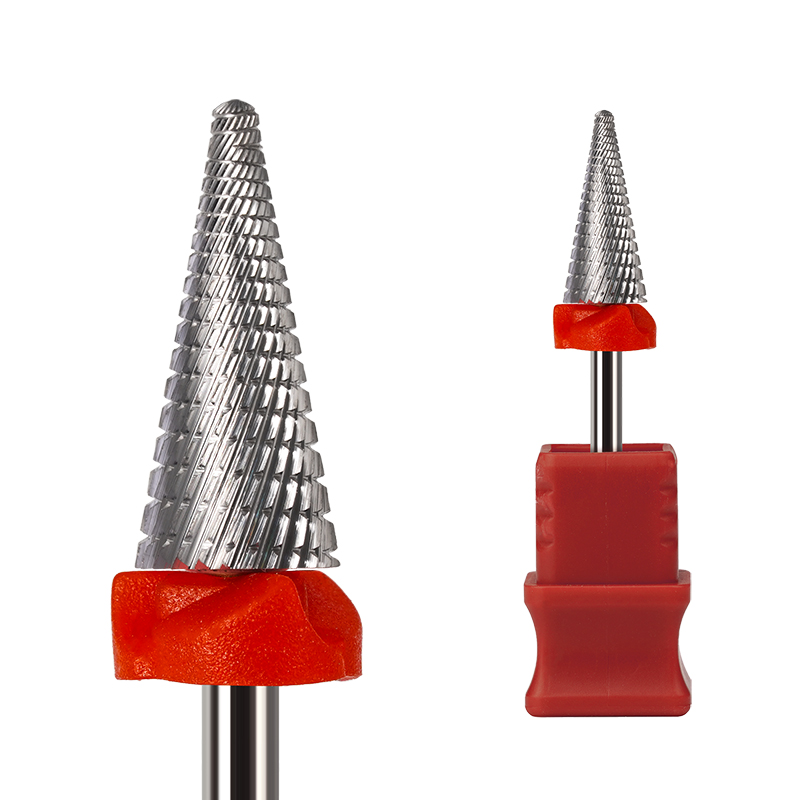
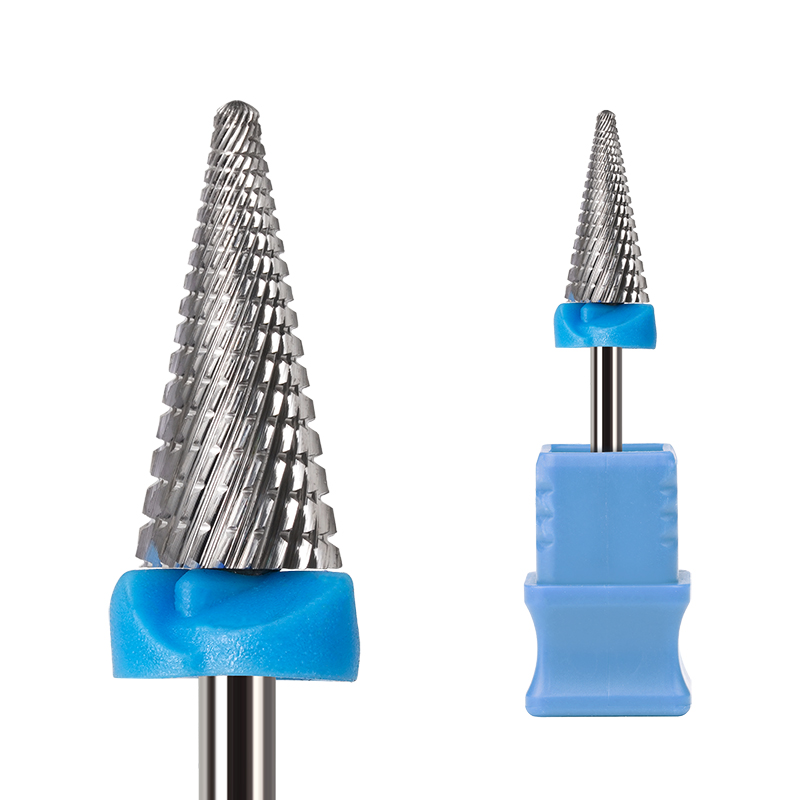
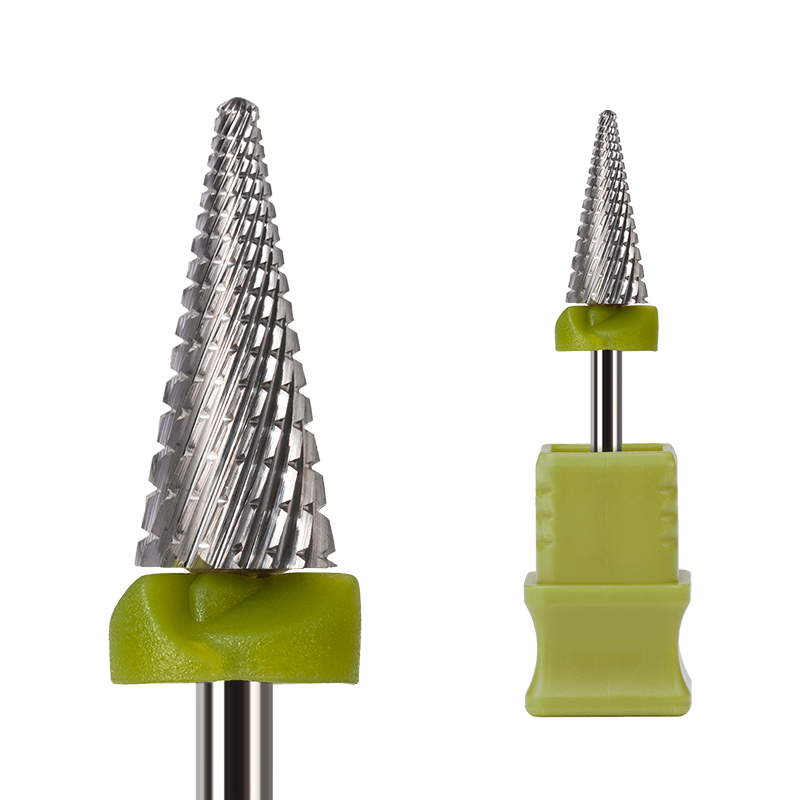
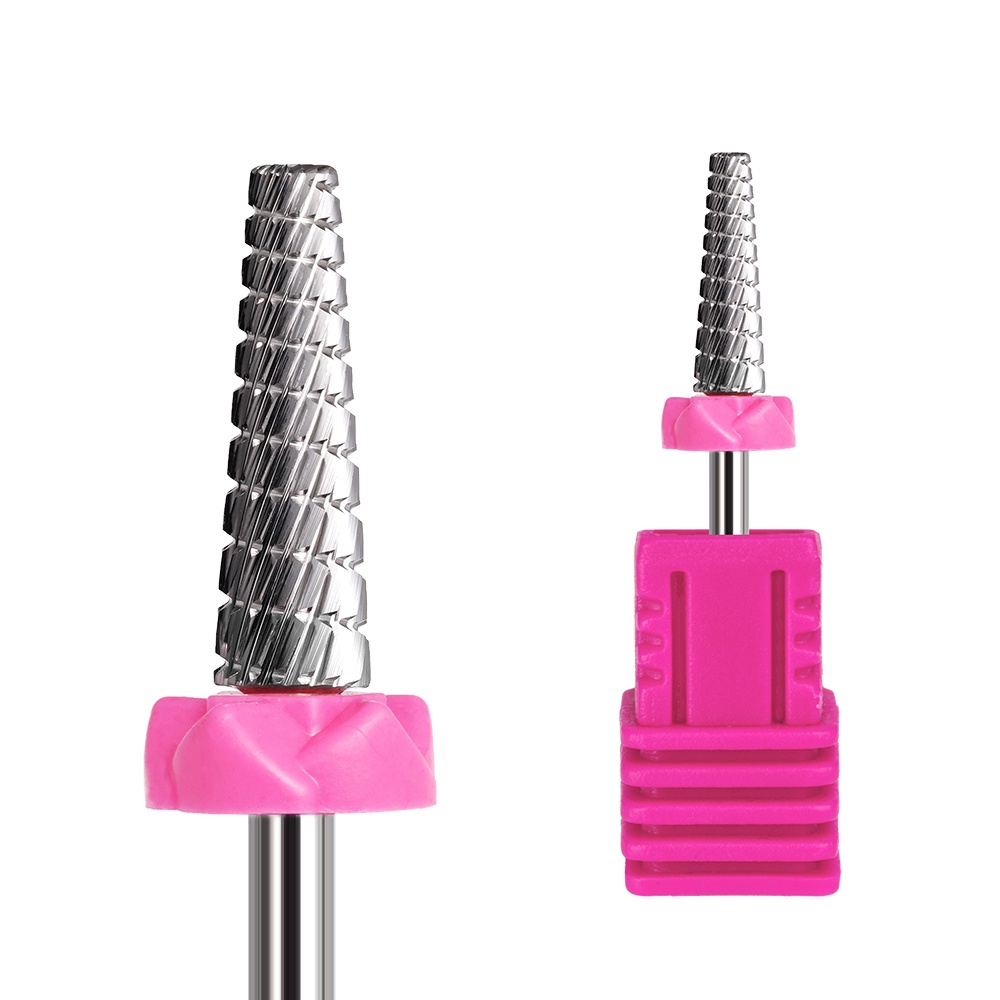
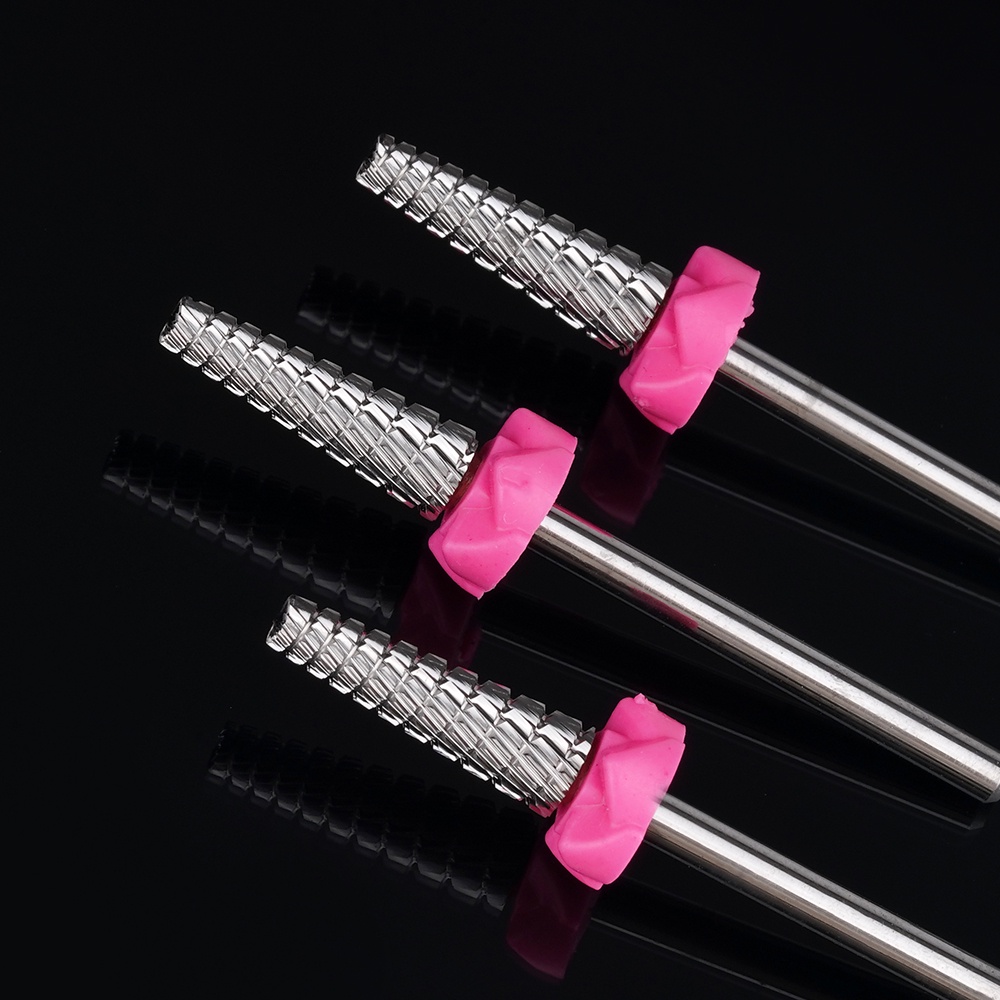
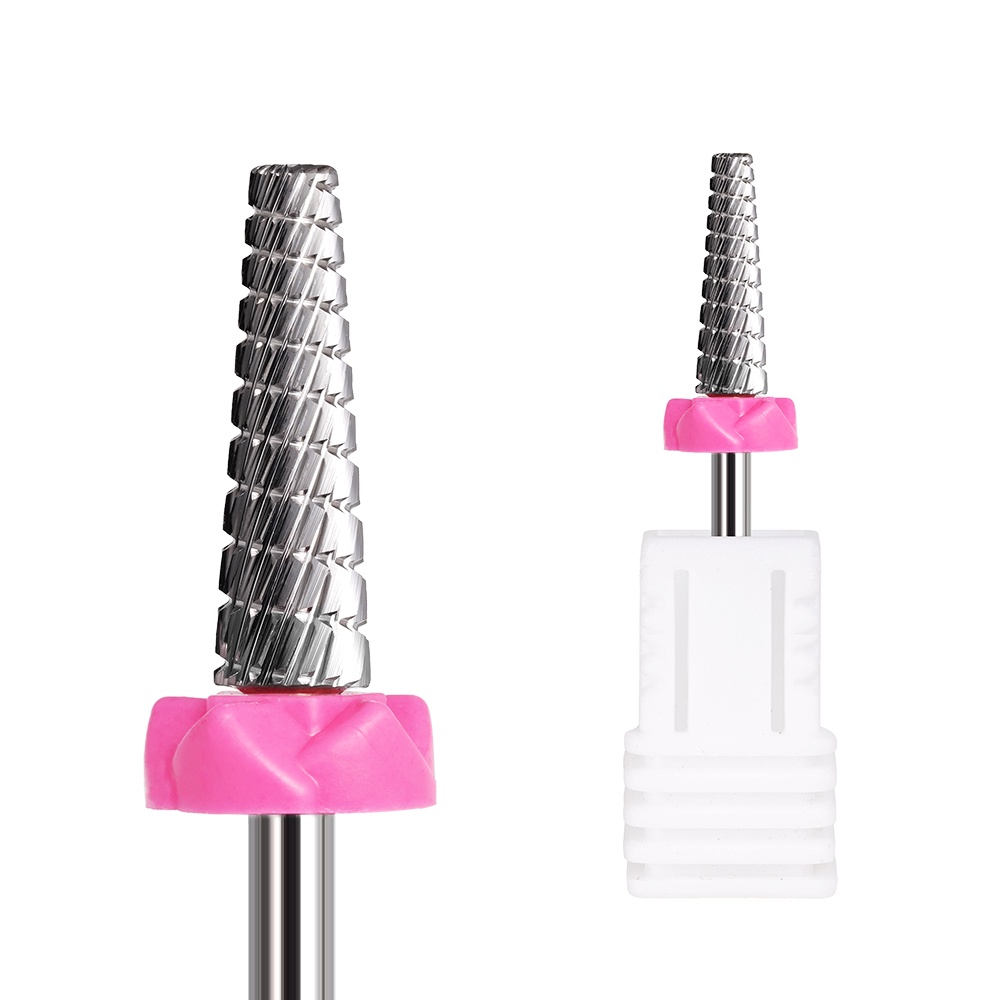
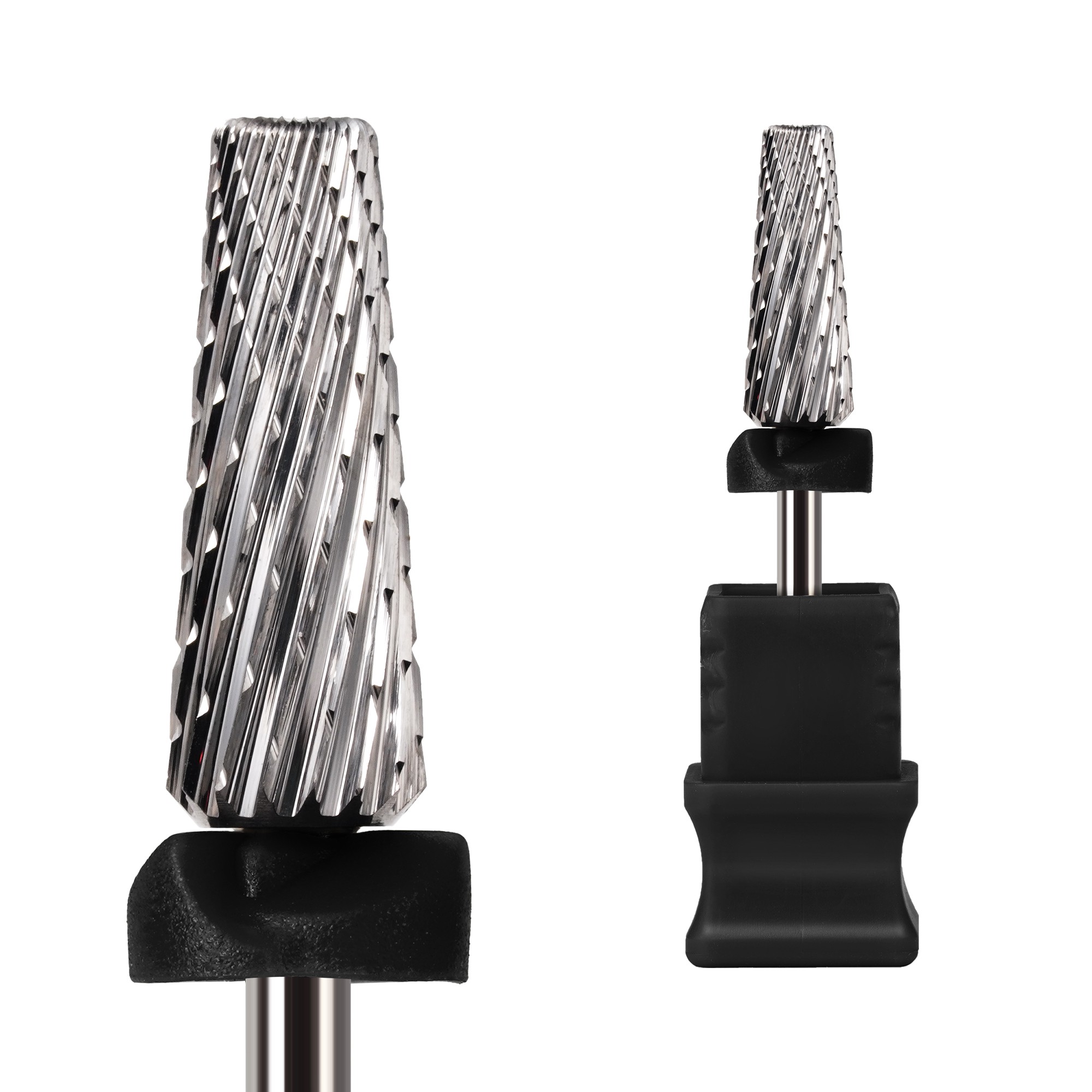
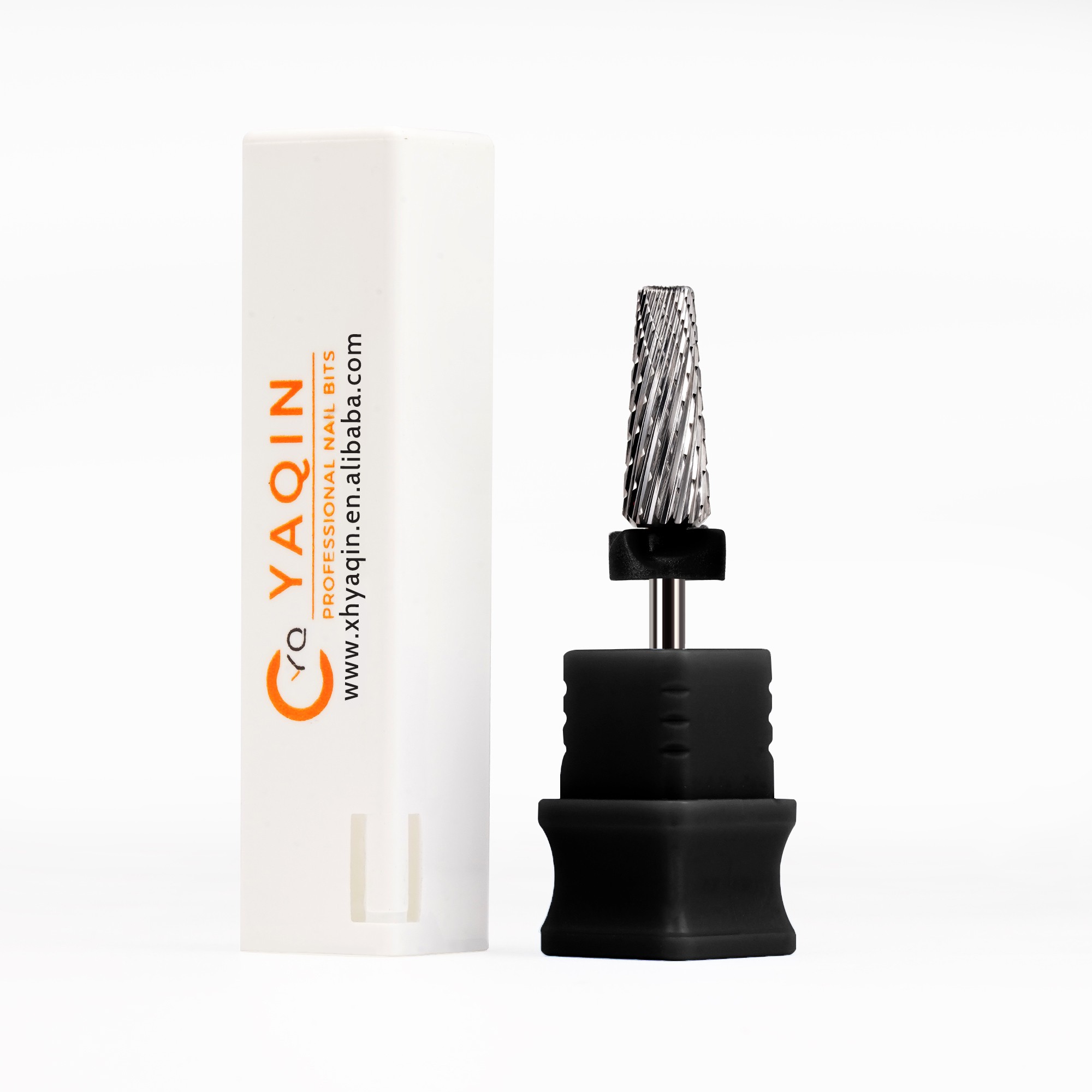
The same distinction applies to integrated multi-function carbide designs. A 5-in-1 carbide bit can combine cutting zones intended for different positions along the barrel, potentially reducing bit changes during gel work. For example, the 4.0mm Small 5 in 1 Integrated Sharpe Tungsten Nail Drill Bit Straight Teeth Gel Polish Removal uses a tungsten-carbide construction and straight-tooth configuration intended for gel removal and controlled grinding. Its value in a heat-management evaluation depends less on the “5 in 1” designation than on whether its cutting zones remain sharp, clear debris consistently, and match the salon’s handpiece direction and service sequence.
Durability changes the heat profile over time
New bits can produce misleadingly favorable comparisons. A bit should be judged not only when freshly opened but also after repeated cleaning and normal service exposure. As a carbide edge wears, its removal rate decreases and the technician may compensate with pressure or repeated strokes. Heat then rises even though the bit is not visibly damaged.
Ceramic wear may present differently. The bit can remain apparently intact while individual cutting surfaces become rounded or packed with residue. Chipping is easier to identify, but reduced cutting efficiency is not always obvious without a defined inspection routine. A ceramic bit should be removed from service when the teeth are chipped, the body shows cracks, cutting becomes inconsistent, or cleaning no longer restores clear tooth geometry.
Durability should therefore be evaluated as retained cutting performance rather than simply the absence of breakage. A carbide bit often offers stronger resistance to continuous heavy removal, while ceramic can be a sound choice where lower transfer heat and controlled finishing are more important than maximum material removal rate. The best lifecycle decision depends on the share of each service type in the operating mix.
Cleaning and sterilization must preserve cutting behavior
Residual product in the flutes changes both cutting efficiency and thermal behavior. Fine dust acts as a barrier between the teeth and the nail product, turning a cutting tool into a rubbing surface. It can also make a coarse bit appear less aggressive, leading an operator to increase pressure instead of cleaning or replacing it.
Cleaning procedures should follow the bit manufacturer’s material and reprocessing guidance as well as applicable local hygiene requirements. In general operational terms, visible debris should be removed from teeth with a suitable brush before any further disinfection or sterilization process. The important selection question is whether the bit’s geometry can be cleaned reliably without damaging the cutting structure. Deep, complex flutes can improve chip evacuation, but they also require effective brushing and inspection.
“Waterproof” or corrosion-resistant claims should not be interpreted as proof that every reprocessing chemistry or cycle is suitable. Ceramic cutting bodies, carbide shanks, bonding areas, coatings, and colored surface treatments may respond differently to repeated exposure. A supplier should be able to state the intended cleaning and reprocessing compatibility for the exact bit construction, rather than relying on a generic statement about nail drill accessories.
How to evaluate heat performance without relying on marketing claims
A useful internal comparison uses the same handpiece, product system, rotation direction, and operator technique for both bit types. Evaluate at least three task conditions: bulk reduction, controlled gel removal over the natural nail, and final product refinement. The goal is not to produce a universal RPM figure, because machine torque, bit diameter, product hardness, and technique make universal settings unreliable.
Record the factors that explain the result: time to remove a defined product area, number of passes, dust evacuation quality, tendency to load, vibration, visible marks on the remaining product layer, and any need to increase pressure. If temperature measurement is available, measure at a consistent point and time interval; otherwise, client comfort feedback alone should not be treated as a precise thermal metric. It is important but influenced by sensitivity, nail condition, and service history.
Inspect the remaining surface after each trial. A cooler-feeling bit that leaves irregular product thickness or requires excessive finishing may not improve the overall process. Likewise, a rapid carbide that saves time but creates frequent over-thinning risk is not a better solution merely because it cuts faster.
The selection decision becomes clearer when heat is treated as a system outcome. Ceramic is usually the safer material choice where low heat transfer, gradual reduction, and a smooth operating feel are priorities. Carbide is often the stronger choice where thick, durable material must be removed efficiently and the process can maintain sharp tooling, appropriate grit, stable handpiece performance, and disciplined movement. Long salon sessions benefit most from using ceramic and carbide as complementary tools rather than forcing either one to perform every stage of removal.
News List
- Preventing Gouges and Uneven Filing With Small Barrel Nail Drill BitsSep 20, 2026
- How Diameter and Grit Affect Small Barrel Nail Drill Bit PerformanceSep 20, 2026
- Can Hytos Nail Drill Bits Be Used Safely on Natural Nails and Gel Polish?Sep 20, 2026
- How to Verify Fit Between Hytos Nail Drill Bits and an E-File HandpieceSep 20, 2026
- Safe Speed Settings for Umbrella Nail Drill Bits Around the Nail FoldSep 20, 2026
- Umbrella vs Flame Nail Drill Bits: Which Shape Offers Better Cuticle Control?Sep 20, 2026
Best-Selling Products
 Cross Cut Safety Stainless Steel Tungsten Carbide Nail Drill Bits Salon Foot Use XF-C Grit for Removing Nails
 First-rate Quality Tungsten Carbide Nail Drill Bits Best Coating Manicure Remove Gel Nails Accessories
 Professional Advanced Safety Cuticle Bits Two-Way Rotate 3/32'' Carbide Tungsten 5 in 1 Nail Drill Bits
 Wholesale 5 in 1 Electric Manicure Nail Drill Bits Various Coating Cone Cuticle Bit with Rotary Cross Cut for Nail Art
 New Slant Tooth Tungsten Steel Nail Drill Bits Dead Skin Removal 5-in-1 Universal Grinding Nail Polish Head Tool Nail Drill Bits
 4.0mm Small 5 in 1 Integrated Sharpe Tungsten Nail Drill Bit Straight Teeth Gel Polish Removal
 Flame Sharp XF F M C XC Silver Safety Professional Corn Tungsten Carbide Nail Bit for Drill Machine Accessories
 Factory Direct 5 in 1 Tungsten Carbide Nail Drill Bits 6.8MM Cross Cut Safety Manicure 5 in 1 Nail Drill Bits
Please give us a message