
Wholesale Nail Drill Bit Buying Tips for Salons, Schools, and Beauty Distributors
Wholesale Nail Drill Bit Buying Tips for Salons, Schools, and Beauty Distributors
If you are sourcing a Wholesale Nail Drill Bit line for resale, the hard part is not finding suppliers. It is knowing which bits will actually perform well across salons, beauty schools, and retail buyers without creating complaints, returns, or inconsistent repeat orders. In this category, a low quote can become expensive very quickly if the bit wears fast, cuts unevenly, rusts after cleaning, or feels unsafe in the hand.
Most distributors do better when they buy nail drill bits the same way they would buy any professional-use abrasive tool: by checking application fit, material consistency, grit structure, shape mix, packaging stability, and factory quality control before they focus on price. That is what usually separates a product that moves steadily from one that only looks good on a sample sheet.
What buyers usually get wrong first
A common mistake is treating all nail drill bits as interchangeable consumables. They are not. A salon that mainly removes gel polish needs something different from a school training beginners every day, and both are different from a distributor serving mixed local resellers.
Another mistake is buying too narrow a product range. One popular shape or one grit level may sell at the beginning, but professional users almost always ask for options. If your assortment only covers one cutting strength, you force the customer to go elsewhere for the rest of the workflow.
The third problem is overvaluing appearance and undervaluing machining quality. In this product segment, the finish, edge precision, shank consistency, and heat behavior matter more than cosmetic presentation. Buyers do not keep reordering because a bit looked polished in photos. They reorder because it performs predictably.
In practical terms, a good wholesale decision is usually the one that balances three things: enough sharpness to work efficiently, enough control to reduce risk, and enough durability to hold margin after repeated use.
How to evaluate a Wholesale Nail Drill Bit for real end-use
Before placing a bulk order, ask a simple question: who will use this bit most often, and for which exact step?
That sounds basic, but it changes the entire buying decision. For example, a beauty school often needs safer, more forgiving bits because students are still learning pressure control and angle handling. A high-volume salon may prioritize speed and lifespan. A distributor selling into several channels needs a mixed SKU strategy rather than one “best” bit.
Here is the short answer many buyers are actually looking for: choose by application first, then by material, then by grit and shape, and only then compare price. If the order of priorities is reversed, product problems usually show up within the first reorder cycle.
When reviewing a sample, pay attention to these points:
- Whether the bit removes product smoothly or skips on the surface
- Whether the cutting teeth are uniform
- Whether heat builds up too quickly during normal use
- Whether the shank fits standard e-file handpieces consistently
- Whether cleaning and disinfection affect corrosion resistance
- Whether the packaging protects the bit during transport and storage
These details sound small, but they shape user trust. In the professional nail market, one unreliable bit can damage confidence in the entire supplier line.
Material matters more than many new distributors expect
For gel removal and prep work, carbide and tungsten steel options are usually where serious buyers spend most of their attention. The reason is straightforward: they are expected to keep cutting efficiency longer than lower-grade alternatives, especially in repeated salon use.
That does not mean every carbide-style bit is equal. The actual result depends on raw material stability, tooth geometry, manufacturing precision, and process control. A bit can be labeled as premium material and still perform poorly if the production quality is inconsistent.
This is where factory discipline becomes important. Buyers working with suppliers that have clear QC procedures from raw material purchasing through production and packing usually face fewer surprises after shipment. For distributors building private label or long-term catalog programs, that consistency matters more than chasing the cheapest landed cost on a first order.
Wuxi Yaqin Trading Co., Ltd. is one example of the type of supplier many importers look for in this category: a trading factory focused on abrasive products, with export experience across the USA, Canada, Germany, the UK, Italy, Poland, and many other markets, supported by a complete QC system and OEM/ODM capability. That kind of background does not automatically make every product right for every buyer, but it does reduce one of the biggest risks in wholesale purchasing, which is unstable product quality between batches.
Do not buy shapes and grits in isolation
Many first-time importers choose bits by shape name alone. In reality, shape only makes sense when matched with grit and user skill level.
For example, coarse bits can speed up hard gel removal, but they are not automatically the right choice for every account. Schools and beginner-heavy markets often need more forgiving options. Fine or medium cuts may move more slowly, yet they can create fewer complaints from users who value control over speed.
Width also matters. Narrow bits are useful for smaller nails, more detailed prep work, or tighter zones around product edges. Wider bits make more sense when the goal is faster coverage on average to larger nail sizes. This is one reason mixed sets often outperform single-SKU programs in B2B sales.
A practical assortment for distributors usually includes:
- Coarse options for faster bulk removal
- Medium options for general-purpose salon use
- Fine options for controlled prep or lighter removal work
- Narrow profiles for precision areas
- Wider profiles for efficiency on larger surfaces
When a supplier can explain where each variation fits instead of only sending a price list, that is usually a good sign.
One product example that makes sense for mixed-channel buyers
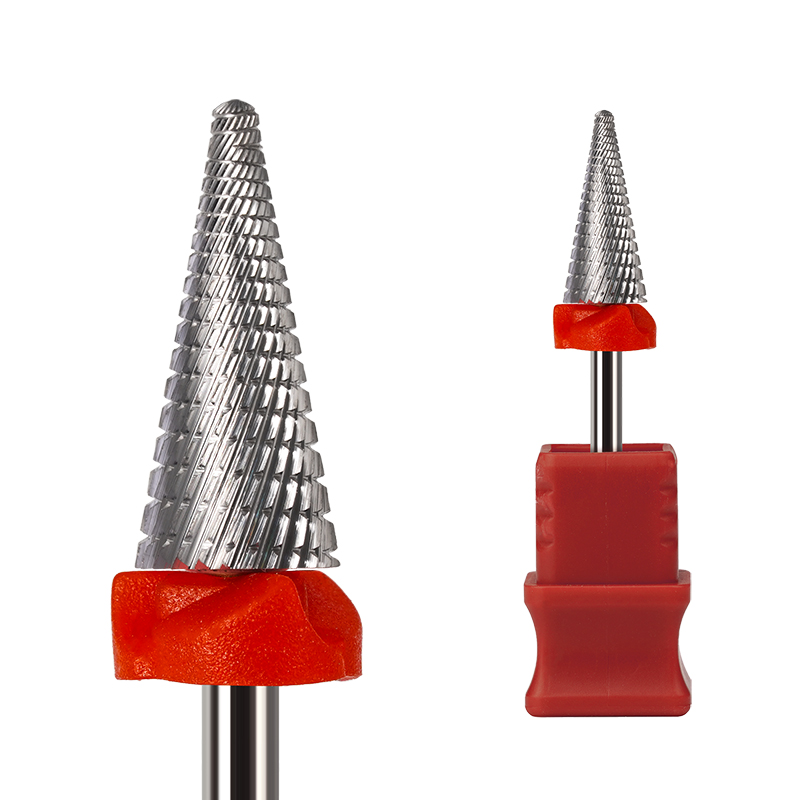
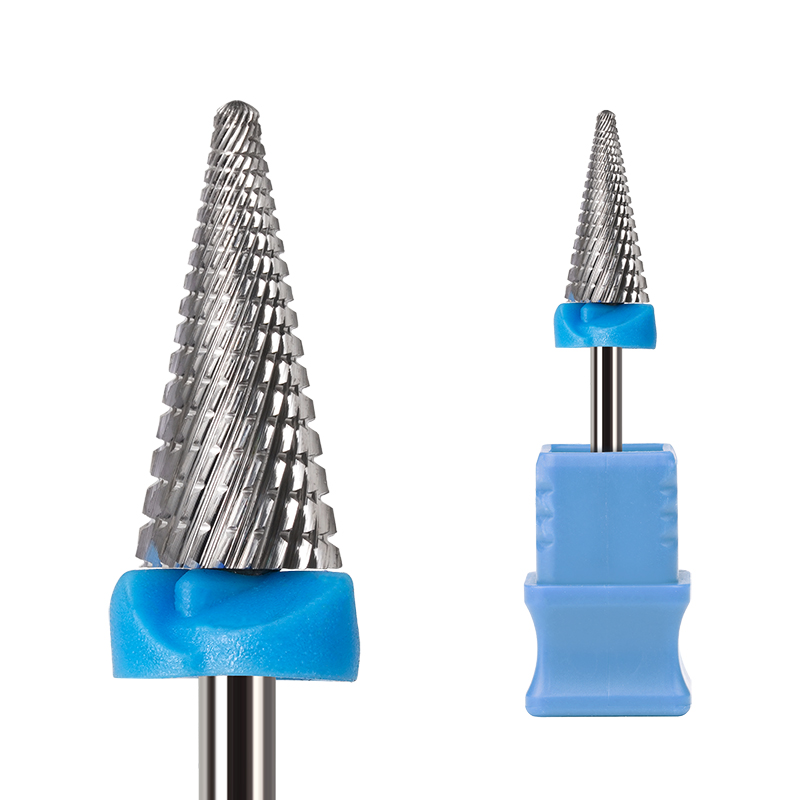
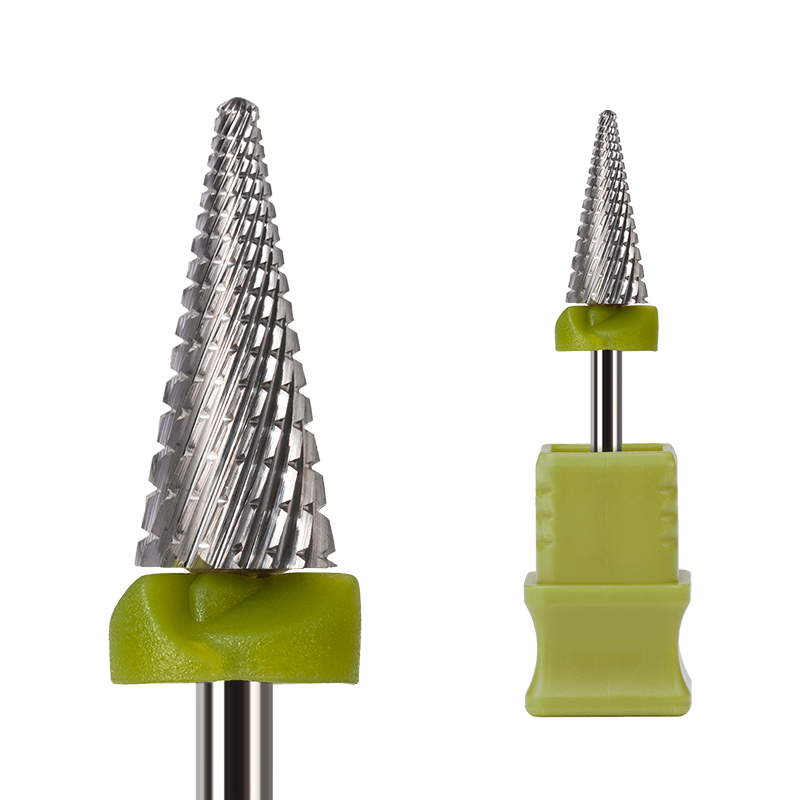
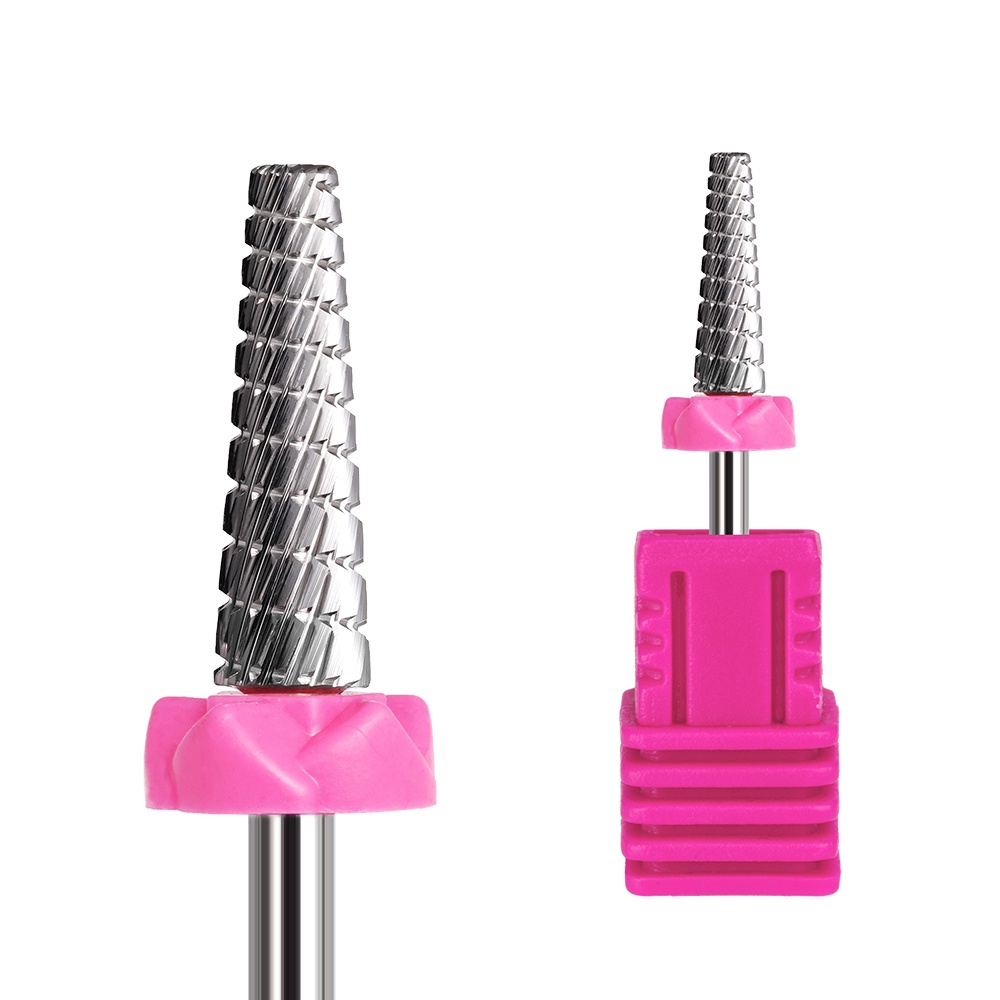
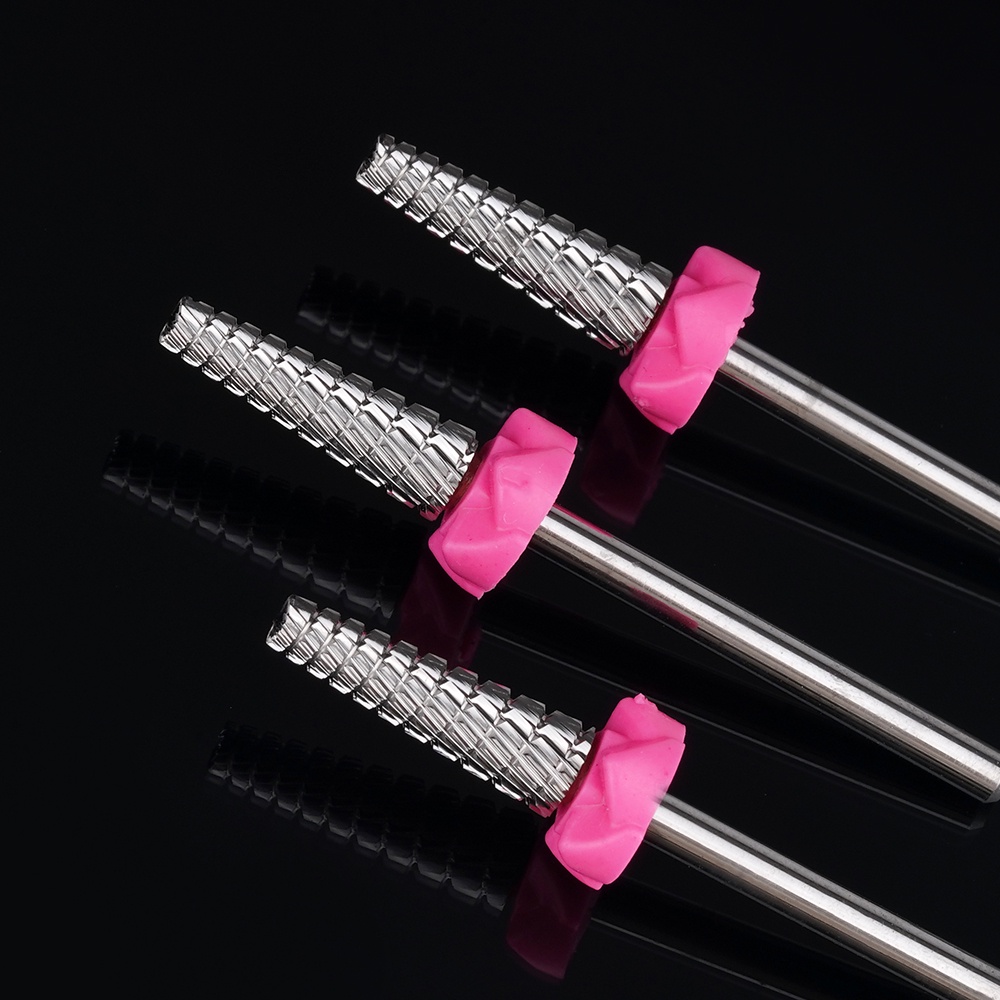
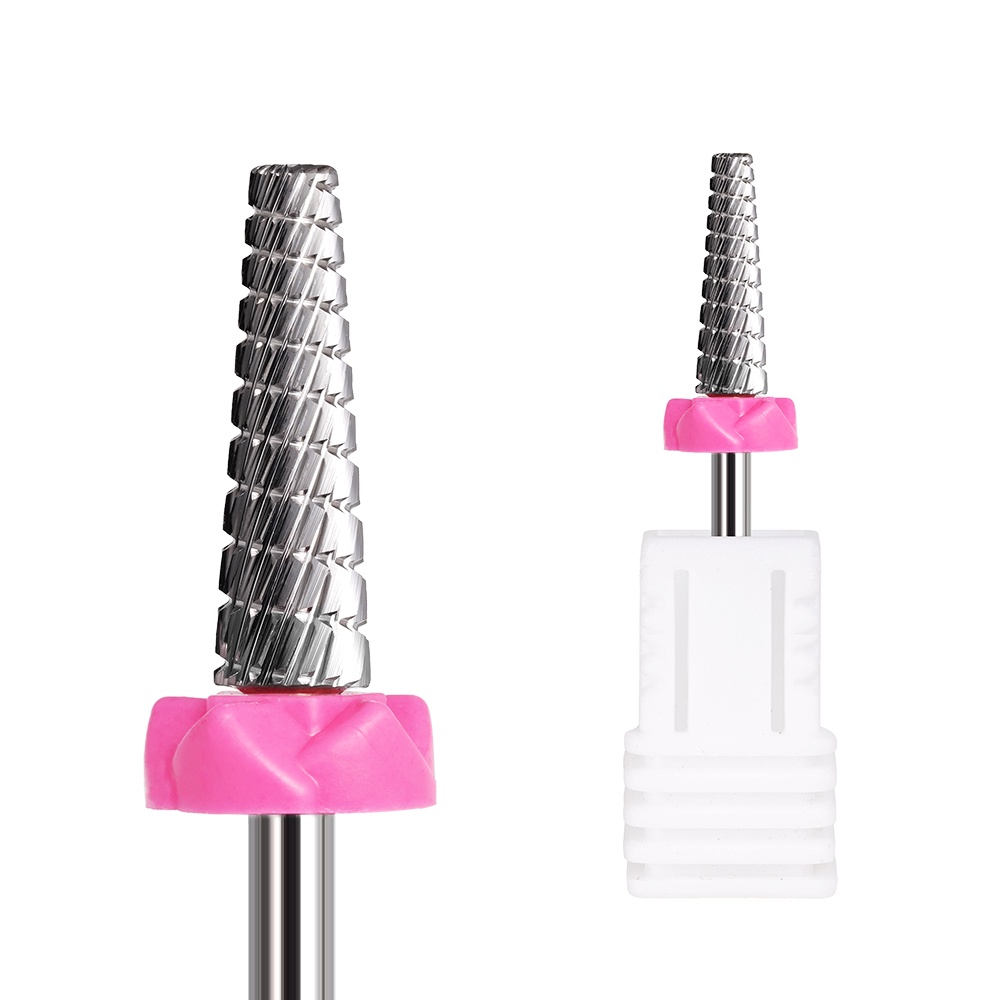
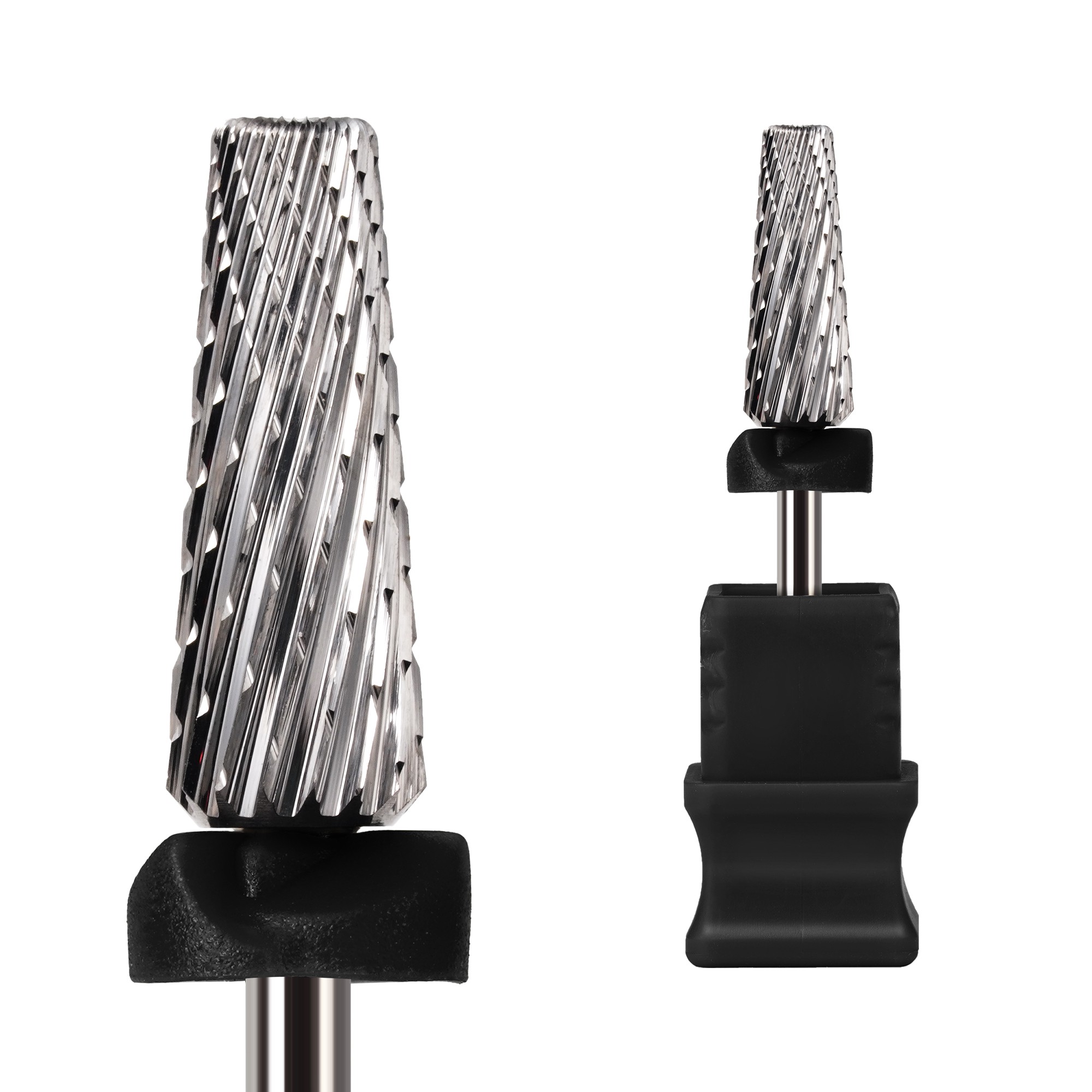
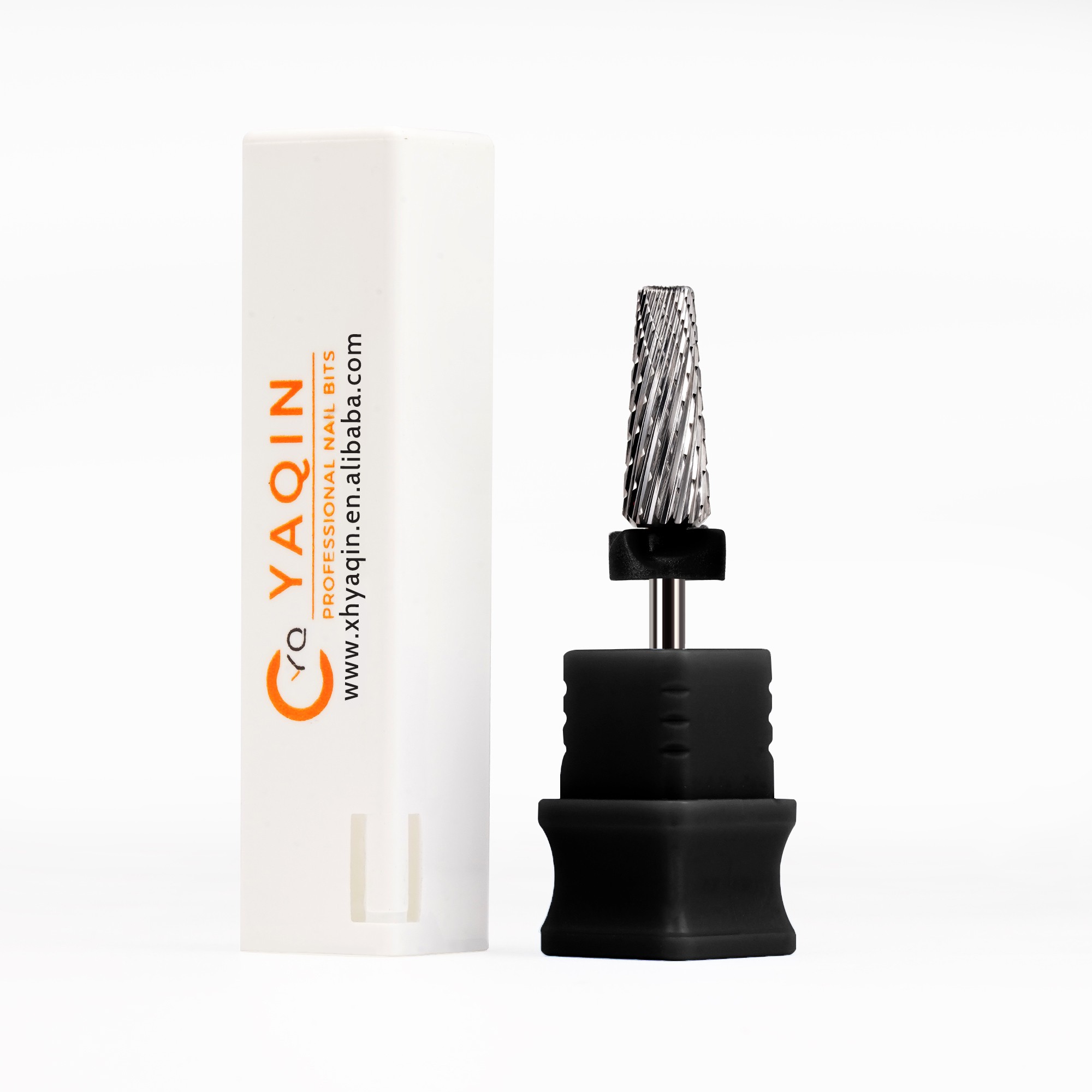
If you are comparing sample lines, one useful reference point is whether a supplier offers bits designed around common professional tasks rather than vague “multi-use” claims. A product such as Nail Supplier Manicure Art Carbide Drill Bits Set Sharp 5XC Nail Drill Bit Tungsten Drill Bits for Nail Gel Cuticle Take Off is relevant because the specification logic is clear: tungsten steel material, multiple grit choices such as coarse, medium, and fine, narrow and wide formats, and a rounded-tip design aimed at reducing accidental skin contact.
That combination is typically useful for distributors serving both experienced nail technicians and entry-level users. It is also easier to position commercially because the application scenarios are concrete: gel removal, nail prep, soft gel removal, base gel removal, and work across different nail sizes. The recommended speed ranges provided for hard gel and soft gel removal are also helpful as a training and after-sales reference, though actual operating practice should still be confirmed against the e-file equipment and user technique.
What matters here is not the product name itself. It is the fact that the offer is specific enough to judge. Buyers should prefer products with this level of application clarity over generic listings that provide no usable decision support.
For salons, schools, and distributors, the “best” bit is not the same
This is where many catalogs lose focus. They try to present one hero product for everyone. That rarely reflects how the market buys.
Salons usually care about speed, durability, and client comfort. If a bit removes gel quickly, stays sharp, and does not create excessive heat under correct use, it will usually earn repeat orders. Beauty schools often care more about control, safety, and price stability across semester purchasing. Rounded-tip designs, medium or fine cuts, and predictable packaging tend to be more suitable there.
Distributors and agents need one more layer of thinking. You are not just buying for use. You are buying for resale, margin protection, complaint reduction, and SKU logic. That means your questions should include:
- Will this item fit the majority of handpieces in my market?
- Can I explain the difference between coarse, medium, and fine clearly to resellers?
- Will the packaging survive warehouse handling and parcel shipment?
- Can the supplier keep the same quality over repeat orders?
- Do they support OEM/ODM if I want to build my own brand later?
If those answers are unclear, the product may still sell once, but it is harder to scale into a reliable line.
QC, documentation, and OEM/ODM are not side issues
Experienced buyers usually stop treating quality control as a background detail. In abrasive products, QC is part of the product itself. If the supplier cannot explain how they control raw material input, machining consistency, and final packing, you are buying uncertainty.
This is why many importers prefer suppliers with established export routines and documented quality systems. Yaqin, for example, states that it has a complete QC system covering raw material purchasing, production process, and product packing, along with ISO9001:2000 quality management system certification and one-stop service from production to delivery. For distributors planning OEM or ODM programs, that type of operational structure is often more valuable than a slightly lower unit price from a less organized source.
Private label buyers should also confirm basics early: logo method, minimum order quantity, packaging options, lead time, sample policy, and whether product labeling matches the destination market’s compliance and language requirements. These points are not glamorous, but they are where many wholesale projects slow down.
What to confirm before you place the order
Right before commitment, keep the checklist simple and commercial:
- Sample performance matches the intended use case
- Material and grit options fit your customer mix
- Shank size and machine compatibility are clear
- Rust resistance and cleaning durability are acceptable
- Packaging is secure enough for your shipping model
- Repeat-order consistency has been discussed, not assumed
- OEM/ODM support is available if your channel needs differentiation
If you are still unsure, ask for a mixed sample set rather than a single bit. One sample does not tell you enough about a supplier’s range discipline.
The better long-term decision in Wholesale Nail Drill Bit sourcing is rarely the one with the lowest entry cost. It is the one that gives your customers fewer performance surprises, gives your sales team a clearer product story, and gives your business a cleaner path to repeat orders. In this category, stable quality and application fit usually win over aggressive pricing.
FAQ
Should distributors focus on carbide bits first?
Usually yes, if your market has strong demand for gel removal and professional salon use. But you still need the right grit and shape mix, not just the material.
Are coarse bits always better sellers?
Not always. Coarse bits sell well in fast-removal applications, but schools and cautious users often prefer medium or fine options for control.
Is OEM worth considering for nail drill bits?
Yes, especially if you already have stable distribution channels. OEM helps with brand differentiation, but only if the supplier can keep quality consistent.
How many SKUs should a new distributor start with?
Start with a focused range that covers the main use cases: one coarse, one medium, one fine, plus at least one narrow and one wider format if your customers vary.
What creates the most returns in this category?
Inconsistent cutting performance, fast wear, poor fit in handpieces, and bits that feel too aggressive for the user level are common causes.
Internal link anchor text suggestions
- carbide nail drill bits guide: category page or educational buying guide
- how to choose nail drill bit grits: blog article or help center page
- OEM nail drill bit manufacturer: service page
- nail bit shapes for gel removal: application-focused article
- professional nail supplies wholesale: main product category page
External authority source directions
- beauty industry association training materials
- government or customs guidance on imported cosmetic tool products and labeling
- official technical documentation from professional e-file equipment brands
News List
- Preventing Gouges and Uneven Filing With Small Barrel Nail Drill BitsSep 20, 2026
- How Diameter and Grit Affect Small Barrel Nail Drill Bit PerformanceSep 20, 2026
- Can Hytos Nail Drill Bits Be Used Safely on Natural Nails and Gel Polish?Sep 20, 2026
- How to Verify Fit Between Hytos Nail Drill Bits and an E-File HandpieceSep 20, 2026
- Safe Speed Settings for Umbrella Nail Drill Bits Around the Nail FoldSep 20, 2026
- Umbrella vs Flame Nail Drill Bits: Which Shape Offers Better Cuticle Control?Sep 20, 2026
Best-Selling Products
 Cross Cut Safety Stainless Steel Tungsten Carbide Nail Drill Bits Salon Foot Use XF-C Grit for Removing Nails
 First-rate Quality Tungsten Carbide Nail Drill Bits Best Coating Manicure Remove Gel Nails Accessories
 Professional Advanced Safety Cuticle Bits Two-Way Rotate 3/32'' Carbide Tungsten 5 in 1 Nail Drill Bits
 Wholesale 5 in 1 Electric Manicure Nail Drill Bits Various Coating Cone Cuticle Bit with Rotary Cross Cut for Nail Art
 New Slant Tooth Tungsten Steel Nail Drill Bits Dead Skin Removal 5-in-1 Universal Grinding Nail Polish Head Tool Nail Drill Bits
 4.0mm Small 5 in 1 Integrated Sharpe Tungsten Nail Drill Bit Straight Teeth Gel Polish Removal
 Flame Sharp XF F M C XC Silver Safety Professional Corn Tungsten Carbide Nail Bit for Drill Machine Accessories
 Factory Direct 5 in 1 Tungsten Carbide Nail Drill Bits 6.8MM Cross Cut Safety Manicure 5 in 1 Nail Drill Bits
Please give us a message