
China Nail Drill Bit Sourcing Guide: Materials, Grit Options, and Supplier Risks
China Nail Drill Bit Sourcing Guide: Materials, Grit Options, and Supplier Risks
Sourcing a China Nail Drill Bit supplier is rarely a simple price exercise. For procurement teams serving salons, private-label beauty brands, distributors, or professional tools channels, the bigger question is whether the product can stay consistent across batches while meeting the end-user expectation for cutting performance, safety, and service life. A low unit cost looks attractive in a quotation sheet, but if grit selection is unclear, shank tolerance varies, or coating quality drifts after scale-up, the savings disappear quickly through complaints, returns, and replacement orders.
That is why serious buyers usually want to understand three things before placing volume orders: what the bit is actually made of, how the abrasive grade or cut profile fits the intended application, and where supplier risk is most likely to show up. These are the points that determine whether the item performs like a professional consumable or becomes another unstable SKU in the catalog.
Why material choice matters more than many quotations suggest
In this category, “nail drill bit” is not one uniform product. The market includes carbide bits, diamond bits, ceramic bits, sanding bands, and mixed-purpose attachments. Yet many supplier lists flatten those differences and compete mainly on appearance or headline pricing. For procurement, that is a mistake. Material selection directly affects cutting speed, heat generation, corrosion resistance, durability, and ultimately the user segment the product can serve.
For example, tungsten carbide bits are commonly chosen for gel removal, acrylic reduction, and higher-frequency salon use because they generally offer stronger wear resistance and a more stable cutting edge than lower-grade alternatives. Diamond-coated bits, by contrast, are often used for prep work, cuticle area refinement, and more delicate surface treatment. Ceramic options may appeal where lower heat transfer is a selling point, but consistency in brittleness control and finish quality deserves close checking. A buyer comparing suppliers should first separate products by real application function, not by catalog naming.
This is also where many factory claims need to be read carefully. Terms such as “high durability,” “sharp,” or “premium quality” have little value unless they connect to specific material grade, manufacturing process, and test standards. Ask what substrate is used, whether the cutting head is solid carbide or coated, how the flute geometry is controlled, and what the expected lifespan is under normal salon-duty use. If the supplier cannot answer in practical terms, the quotation is incomplete even if the price is competitive.
Grit and cut options are not minor details
Buyers outside the category sometimes treat grit as a simple menu choice: coarse, medium, or fine. In real procurement, grit or cut selection determines customer fit, complaint rate, and reorder quality. A coarse bit may improve removal efficiency for hard gel or acrylic, but it also raises the risk of aggressive cutting if sold into beginner-heavy channels. Fine options reduce that risk, though they may create dissatisfaction if professional users find removal too slow. Medium often becomes the broadest commercial compromise, but “medium” is not standardized across all factories.
That lack of standardization is important. One supplier’s medium can feel closer to another supplier’s fine, especially when flute depth, spacing, edge sharpness, and bit shape differ. This is why a procurement team should request physical sample comparison rather than rely on catalog labels alone. Internal grading systems vary, and in export trade the naming may stay the same while the actual performance changes after a tooling adjustment or outsourced subcontracting.
Shape matters alongside grit. Barrel, cone, flame, safety bit, under-nail, and tapered forms each serve different working angles and removal tasks. If your channel includes both experienced nail technicians and less experienced users, safety-oriented head design deserves attention. Rounded-tip designs can reduce accidental skin contact risk in beginner-facing applications, but the benefit only holds if the bit stays balanced and the edge profile is finished correctly.
In practice, many procurement problems start when a buyer tries to cover every scenario with one universal SKU. It is usually better to define a small but clear range: one option for fast product removal, one for general-purpose salon work, and one for finer prep or finishing. That simplifies inventory while still matching real use cases.
How to read a sample beyond the obvious
Sampling should go further than checking whether the bit “works.” A usable procurement sample review looks at fit, balance, finish, and repeatability. The first step is dimensional accuracy. If the shank diameter is inconsistent, the bit may wobble in the handpiece, causing vibration, user fatigue, and premature wear. Even when a sample performs well individually, poor tolerance control can create hidden risk in mass orders.
Second, inspect the cutting head under magnification if possible. Look for uneven flute depth, rough finishing, chipped edges, patchy coating, or visible asymmetry. These issues do not always show up in a short trial, but they often appear later as overheating, snagging, or shorter service life. Third, test the bit on representative material: hard gel, soft gel, base gel, acrylic, or prep work depending on the SKU’s claimed use. Ask the supplier to define recommended speed ranges and intended material compatibility, then confirm whether sample performance matches those claims.
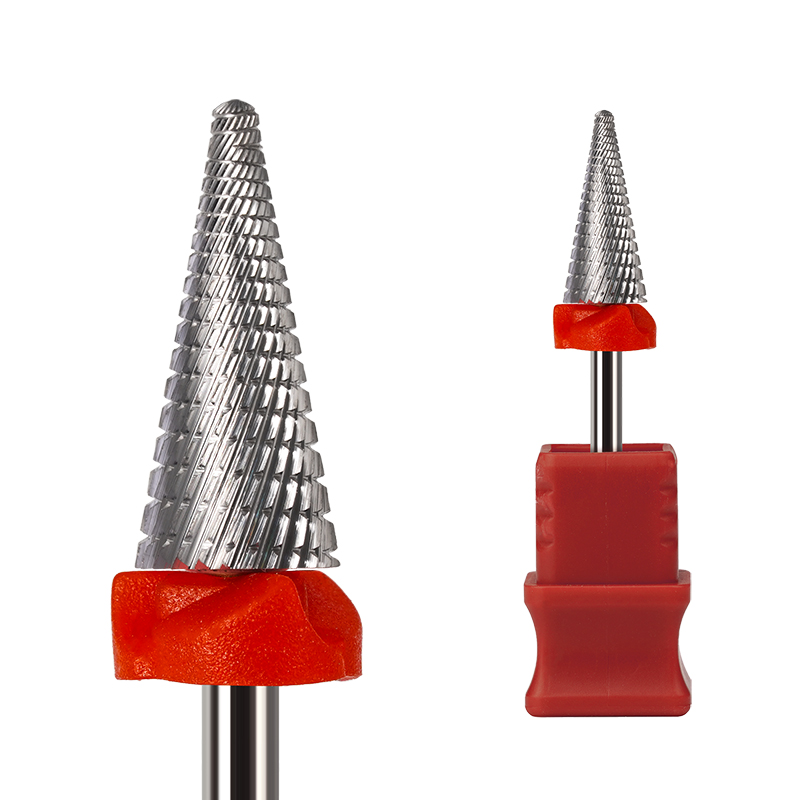
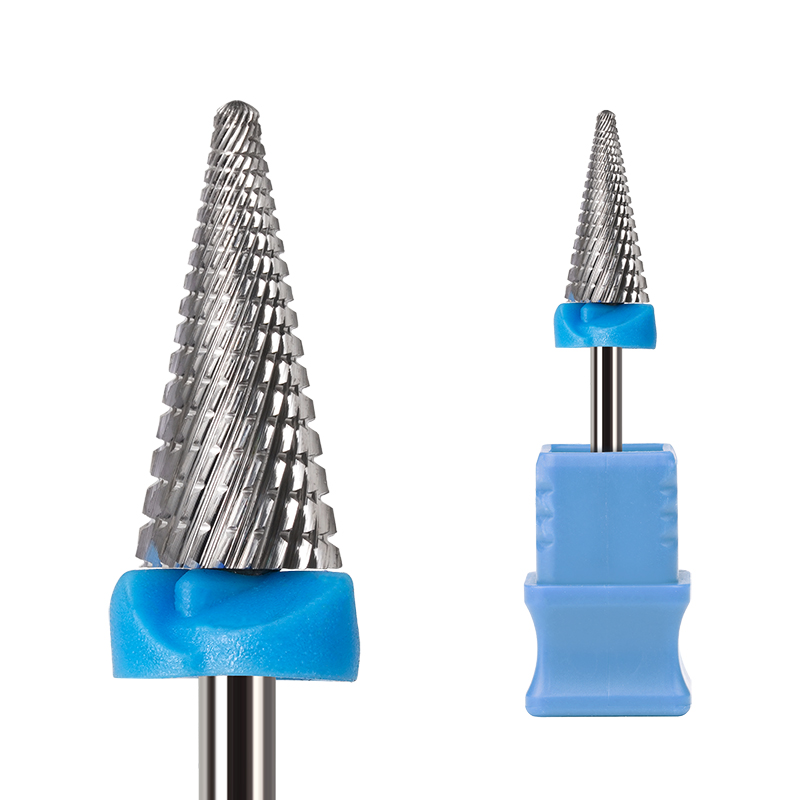
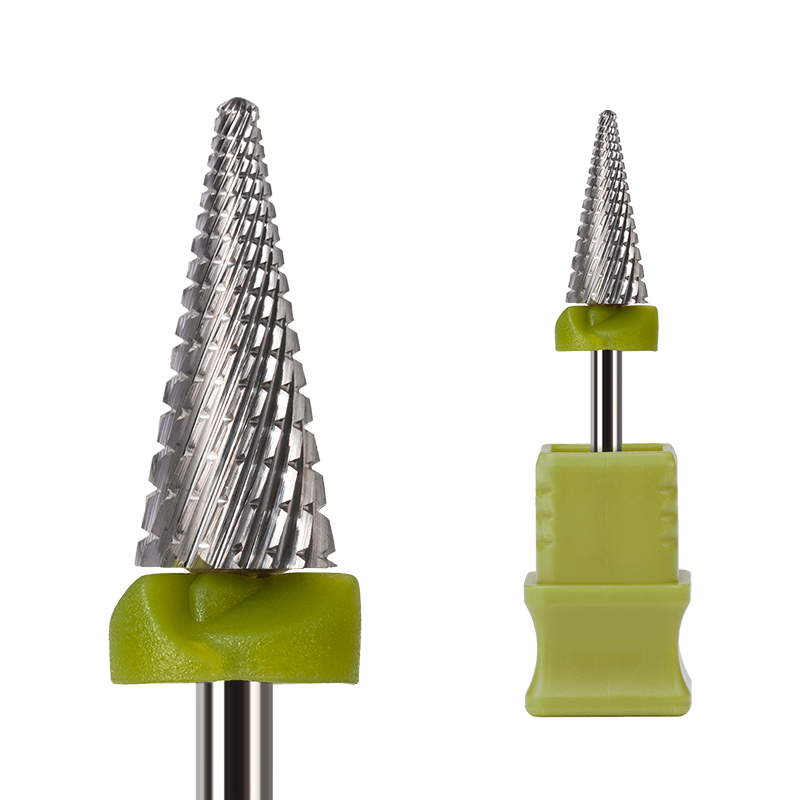
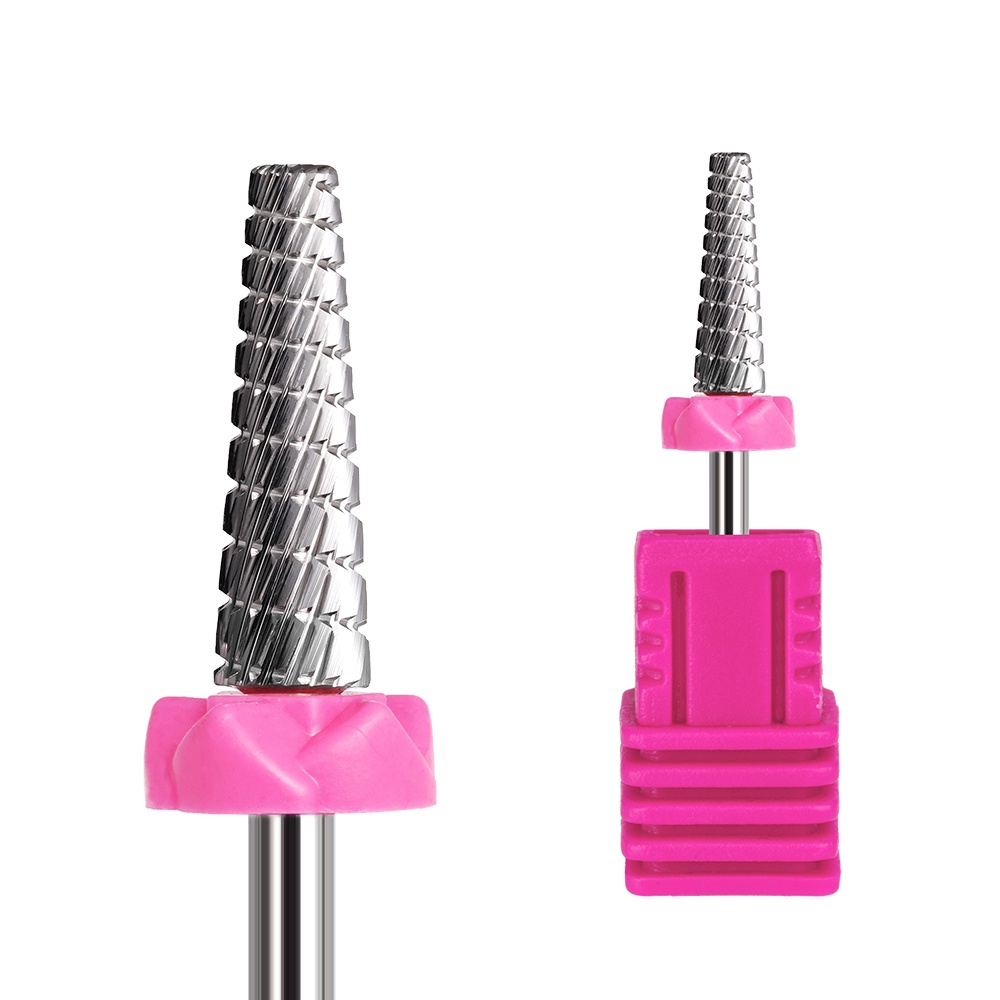
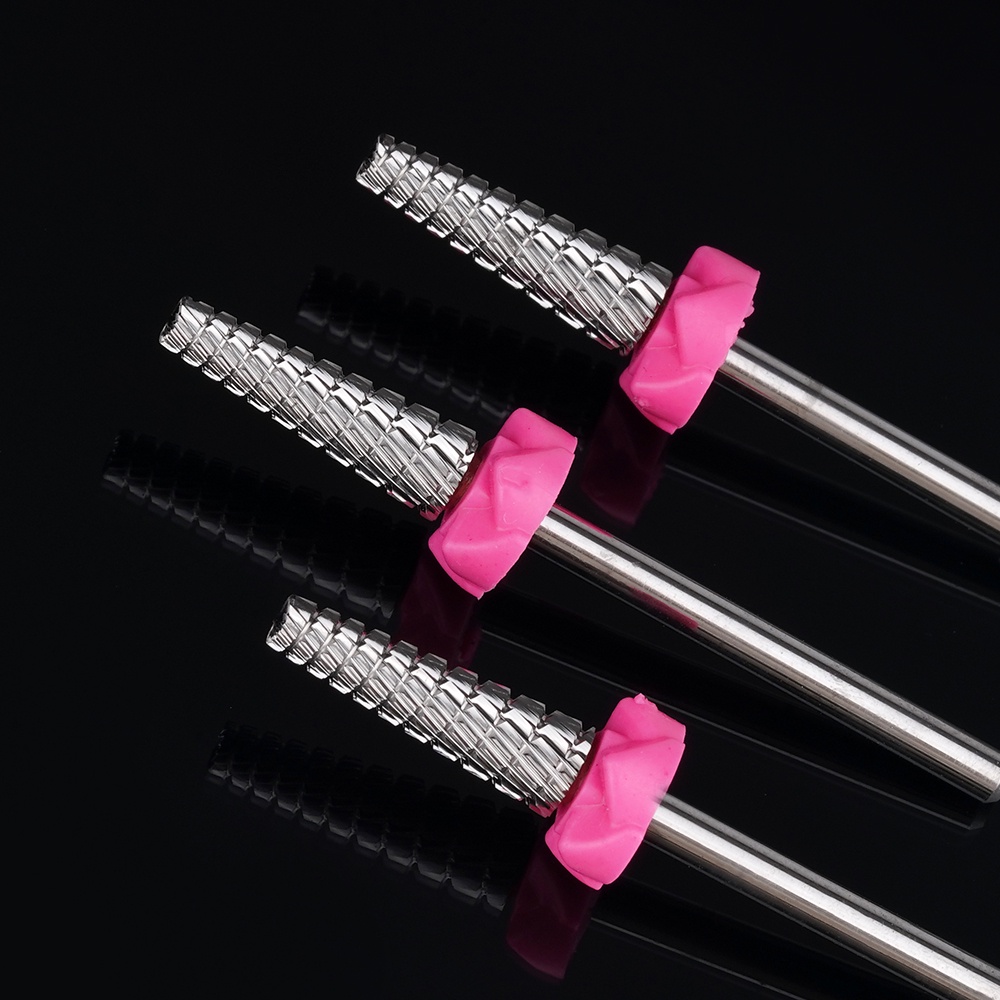
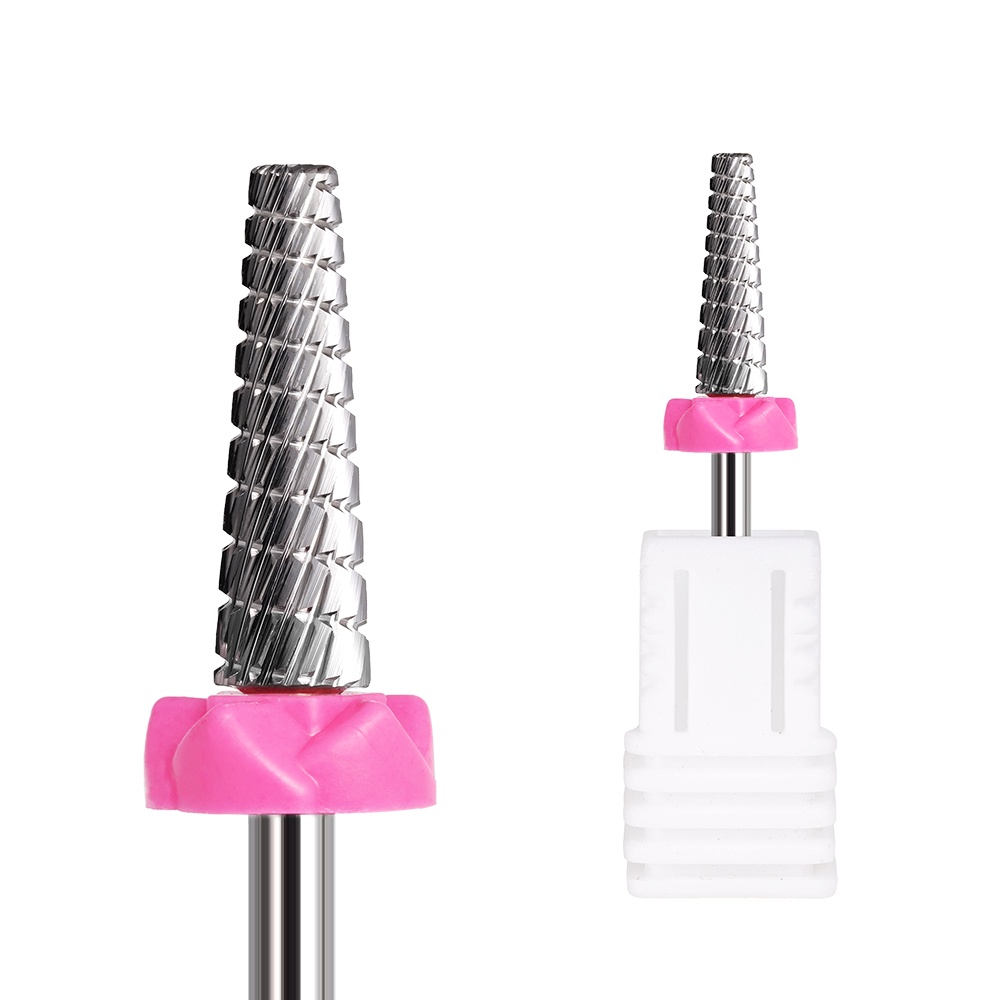
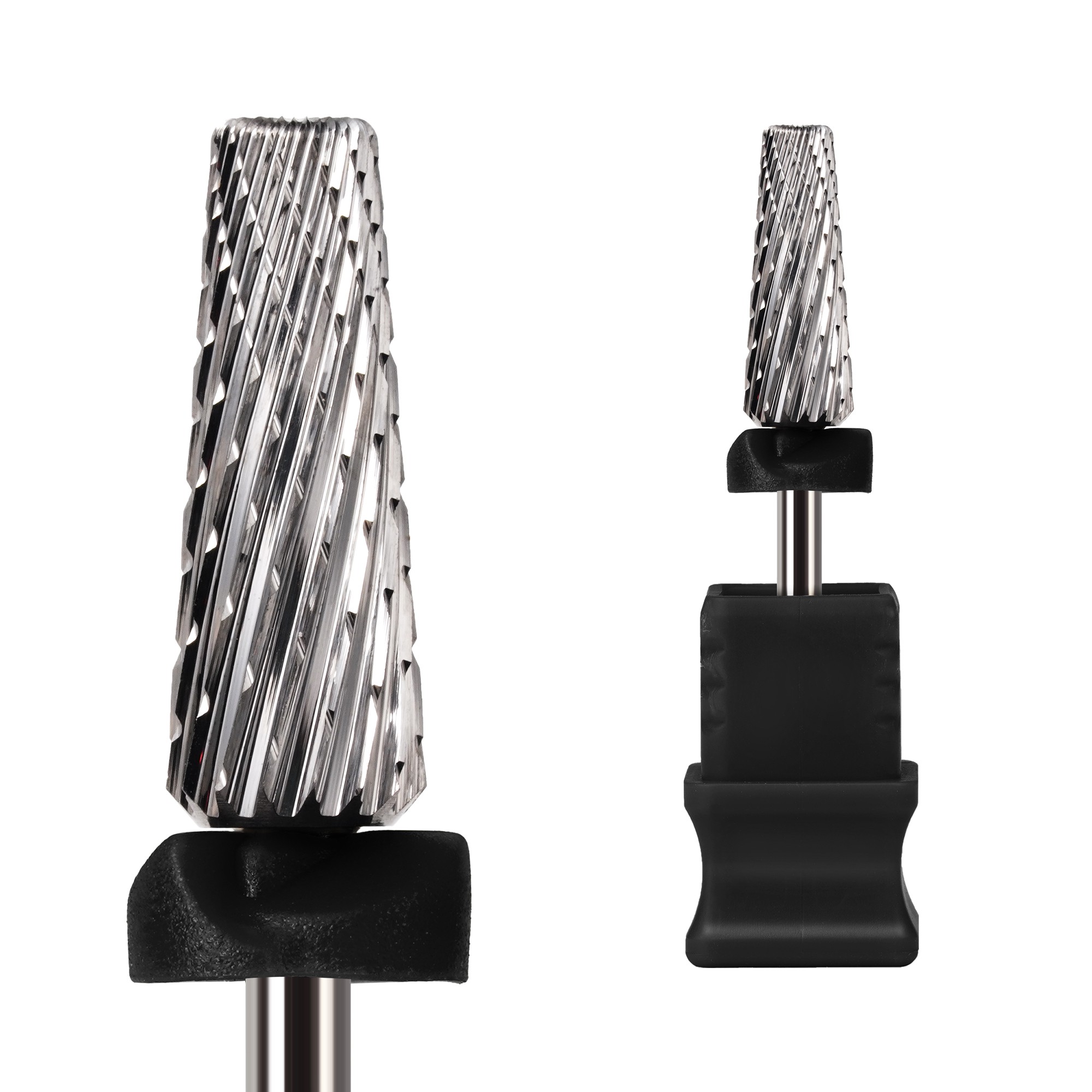
A practical example is the Professional Right and Left Handle Customized Logo Print Tungsten Manicure Art Use Carbide Nail Drill Bit. As a reference type, this kind of carbide bit is positioned around quick gel removal, corrosion resistance, and a safer rounded-tip structure for broader user handling. Those are useful selling points, but a buyer still needs to verify whether the coarse, medium, and fine versions produce clearly differentiated cutting behavior, whether right- and left-hand variants are marked accurately, and whether the recommended RPM range is realistic in everyday salon equipment rather than only under ideal testing conditions.
Supplier risk usually shows up in process control, not in brochures
China remains a deep sourcing base for this category because it offers scale, tooling flexibility, OEM/ODM responsiveness, and broad export experience. But supplier selection should focus less on website polish and more on process stability. The highest risks in nail drill bits usually come from inconsistent raw material sourcing, weak incoming inspection, subcontracted grinding or coating steps, and final packing errors that mix specifications within a batch.
For procurement teams, the right conversation is operational. Ask how raw materials are verified, how grit or cut profiles are classified, how many inspections happen between grinding and packing, and whether traceability exists by production lot. If a factory states that it runs a complete QC system and export workflow, the next step is to request evidence in process terms: inspection records, defect criteria, batch coding method, and action taken when out-of-spec pieces are found. Broad references to ISO certification are useful, but they do not replace product-specific control details.
There is also a difference between a pure trader and a trading factory with production integration. That difference affects communication speed, customization flexibility, and problem resolution. A supplier with stronger control over production and packing can usually handle logo work, model differentiation, and replacement claims more efficiently. Still, buyers should confirm what is actually made in-house and what is outsourced, especially for grinding, coating, sterilization-related packing claims, or custom labeling.
Where total cost is often misjudged
Unit price is only one part of landed cost. In this category, total procurement cost is shaped by sample iteration, minimum order quantity, packaging complexity, defect allowance, replacement handling, and sales-channel reputation risk. A cheaper bit that wears out faster or triggers more after-sales questions can become the more expensive choice once distribution labor and brand damage are counted.
Private-label buyers should pay particular attention to packaging accuracy and model identification. Confusion between coarse and medium, or between left-hand and right-hand cutting directions, can create avoidable returns. If the supplier offers custom logo printing or mixed-model sets, ask how labeling mistakes are prevented during packing. This is a common weak point in smaller operations, especially when several visually similar SKUs run in parallel.
Freight economics matter too. Nail drill bits are small, but they are often packed in a way that makes unit handling cost more significant than physical volume suggests. If you are buying a broad assortment rather than a single high-runner SKU, carton efficiency and inner-pack design deserve review. It is worth asking whether the supplier has experience shipping to the exact markets you serve, because retail compliance expectations, barcode placement, and packaging language may differ by region.
Questions procurement teams should ask before committing volume
A useful supplier assessment is usually built around a short set of hard questions, not long marketing presentations.
- What material and production process are used for each bit type, and which steps are completed in-house?
- How is grit or cut classification defined, and how do you keep coarse, medium, and fine consistent across repeat orders?
- What is the shank tolerance standard【待核实】, and how do you test concentricity or vibration risk?
- Can you provide samples from current production rather than specially selected pieces?
- How are right-hand and left-hand versions differentiated during production and packing?
- What defect rate is considered acceptable internally, and what is your claim process for export orders?
- Which markets do you ship to regularly, and what packaging or labeling requirements have you handled there?
These questions do two things. They improve the chance of choosing the right supplier, and they reveal whether the supplier understands the category at an operational level. A vague answer is often more informative than a polished one.
A simple framework for comparing offers
When comparing suppliers, this framework is usually more useful than asking who has the “best” nail bit. There is no single best option across all business models. A distributor serving value-conscious salons may prioritize stable mid-tier performance and broad SKU coverage. A premium private-label brand may accept higher pricing in exchange for tighter finish consistency, more refined packaging, and lower complaint risk.
What a good sourcing decision looks like
A good purchase decision in this category is not the one with the lowest opening quotation. It is the one where material choice fits the application, grit options are commercially sensible, and supplier controls are strong enough to preserve consistency after the first successful sample. If a factory can explain its process clearly, provide repeatable samples, support customization without confusing SKUs, and demonstrate disciplined QC from raw material to packing, it is usually worth more than a supplier winning only on price.
For buyers evaluating China Nail Drill Bit sources today, the real work is not finding a manufacturer willing to quote. It is separating those who can make a convincing sample from those who can deliver the same result across multiple batches, markets, and packaging formats. That distinction is where most procurement results are decided.
News List
- Preventing Gouges and Uneven Filing With Small Barrel Nail Drill BitsSep 20, 2026
- How Diameter and Grit Affect Small Barrel Nail Drill Bit PerformanceSep 20, 2026
- Can Hytos Nail Drill Bits Be Used Safely on Natural Nails and Gel Polish?Sep 20, 2026
- How to Verify Fit Between Hytos Nail Drill Bits and an E-File HandpieceSep 20, 2026
- Safe Speed Settings for Umbrella Nail Drill Bits Around the Nail FoldSep 20, 2026
- Umbrella vs Flame Nail Drill Bits: Which Shape Offers Better Cuticle Control?Sep 20, 2026
Best-Selling Products
 Cross Cut Safety Stainless Steel Tungsten Carbide Nail Drill Bits Salon Foot Use XF-C Grit for Removing Nails
 First-rate Quality Tungsten Carbide Nail Drill Bits Best Coating Manicure Remove Gel Nails Accessories
 Professional Advanced Safety Cuticle Bits Two-Way Rotate 3/32'' Carbide Tungsten 5 in 1 Nail Drill Bits
 Wholesale 5 in 1 Electric Manicure Nail Drill Bits Various Coating Cone Cuticle Bit with Rotary Cross Cut for Nail Art
 New Slant Tooth Tungsten Steel Nail Drill Bits Dead Skin Removal 5-in-1 Universal Grinding Nail Polish Head Tool Nail Drill Bits
 4.0mm Small 5 in 1 Integrated Sharpe Tungsten Nail Drill Bit Straight Teeth Gel Polish Removal
 Flame Sharp XF F M C XC Silver Safety Professional Corn Tungsten Carbide Nail Bit for Drill Machine Accessories
 Factory Direct 5 in 1 Tungsten Carbide Nail Drill Bits 6.8MM Cross Cut Safety Manicure 5 in 1 Nail Drill Bits
Please give us a message