
When is a carbide nail drill bit better than a diamond bit?
When is a carbide nail drill bit better than a diamond bit?
Choosing between a carbide nail drill bit and a diamond bit is not simply a matter of selecting the “stronger” tool. The right choice depends on what must be removed, how quickly it must be removed, the technician’s control of the e-file, and the surface condition required after the service. For technical evaluators comparing tools for salons, distributors, training centers, or high-volume nail operations, the question is really about matching cutting behavior to the workpiece.
In most cases, a carbide bit is the better option when the task involves bulk removal of artificial product: acrylic overlays, hard gel, builder gel, poly gel, thick gel polish, or product buildup during a fill. Diamond bits generally take the lead in precision preparation, cuticle-area work, refining natural nail surfaces, and controlled abrasion where aggressive cutting would introduce unnecessary risk.
The distinction matters because a tool that saves a few seconds but creates excess heat, vibration, or uneven removal can cost more in rework, training time, and customer comfort. A sound selection process considers the entire service sequence rather than looking at grit alone.
Why carbide cuts differently from diamond
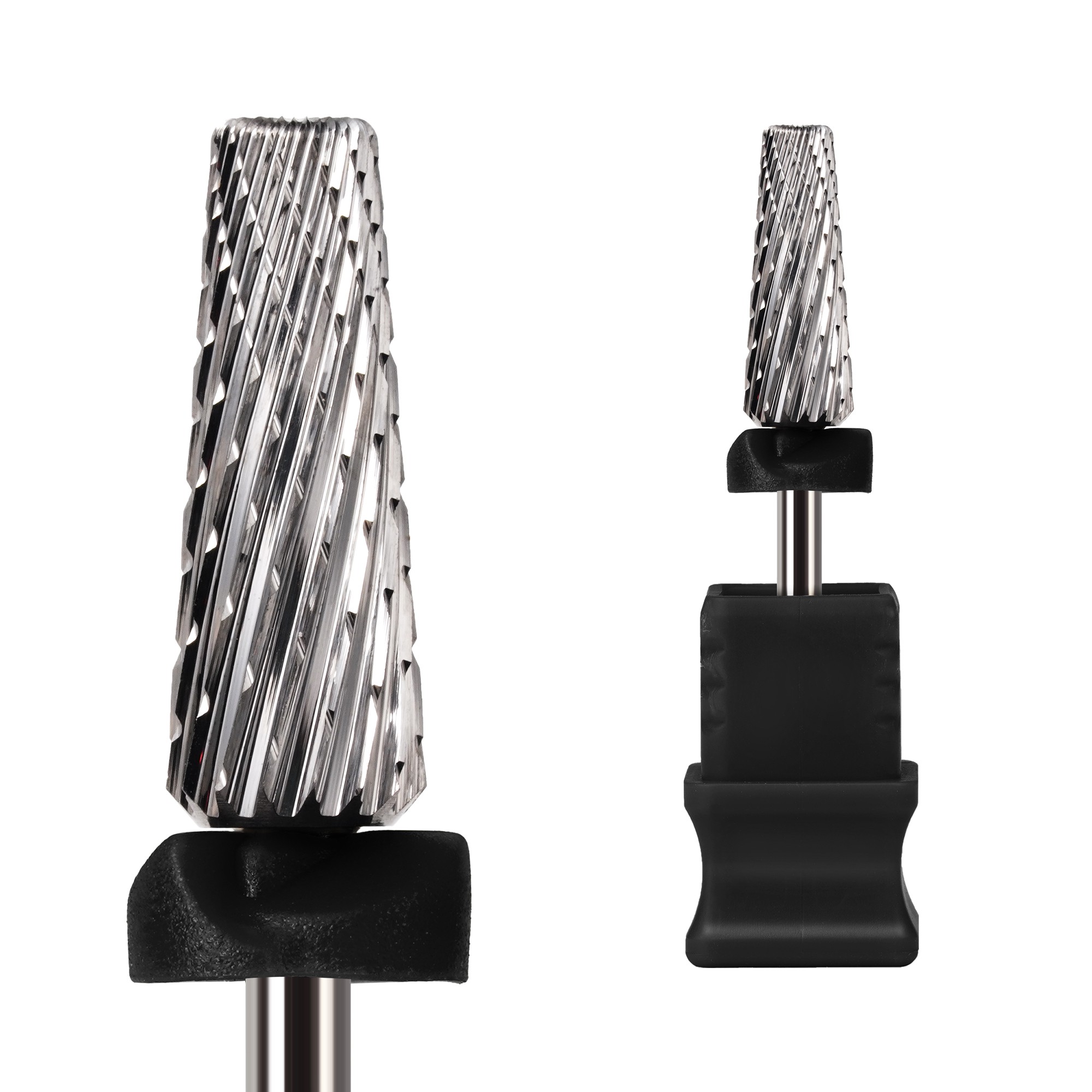
A carbide nail drill bit has machined or ground flutes—cutting edges designed to shave material away. Instead of relying primarily on abrasion, it removes product in small chips. This makes carbide especially effective on cured enhancements that are dense, thick, or structurally hard. The flutes also create channels that help move removed material away from the working surface.
Diamond bits use a metal substrate coated with diamond particles. Their surface works by abrasion: countless hard particles gradually wear material down. This produces a more controlled, less aggressively cutting action, especially when a fine diamond grit is used. It also explains why diamond is valued for detail work, such as lifting non-living cuticle, cleaning sidewalls, smoothing small areas, and preparing the natural nail before product application.
Neither design is universally superior. Carbide is a removal tool; diamond is often a refinement and preparation tool. The correct comparison begins with the material being contacted.
When a carbide nail drill bit is the better choice
Carbide becomes the preferred choice when removal rate, efficiency, and consistent performance across repeated services are the main criteria. The following situations are where it usually provides a clearer technical advantage.
Removing bulk acrylic or hard gel
Acrylic and hard gel systems can be time-consuming to reduce with an abrasive bit, particularly when the product is thick at the apex or has been layered through several fills. A medium-grit carbide bit removes the bulk more directly, allowing the operator to reduce thickness without spending excessive time in one area. The goal is not necessarily to remove every trace of product. In a fill service, leaving a thin, stable layer may protect the natural nail while creating a suitable foundation for the next application.
For full removal, carbide is often used for the initial reduction stage, followed by a gentler bit or hand file as the technician approaches the natural nail. This staged approach provides speed without treating a sensitive substrate as if it were an enhancement material.
High-volume refill and rebalance services
In busy professional environments, a consistent removal profile is important. Carbide flutes can reduce cured product efficiently, which helps standardize service timing across technicians. The benefit is not merely faster work. It is more predictable work: the operator can remove length, reduce the old surface, and rebalance structure with a bit that has a defined cutting action.
For technical purchasers, this is often where durability enters the decision. A quality tungsten carbide construction should retain its working geometry through routine cleaning and repeated use. If a bit dulls quickly, the operator may increase pressure or speed to compensate, raising the chance of heat and inconsistent results.
Reducing length and reshaping enhanced nails
When artificial nails need meaningful length reduction or a substantial reshaping of the free edge, a carbide bit is usually more practical than a diamond bit. The bit can remove material from the extension efficiently, provided that it is used at an appropriate angle and does not contact surrounding skin. A barrel or cylinder shape is often selected for broad, flat working areas, while a tapered or cone geometry can help reach transitions near sidewalls.
Working on dense product without prolonged contact
Heat is frequently misunderstood in bit selection. Carbide is not automatically “cool,” and diamond is not automatically “hot.” Heat is generated by friction, pressure, speed, dwell time, bit condition, and debris accumulation. Yet because a carbide bit can remove hard product more rapidly, it may reduce total contact time on one area. In skilled hands, that can support better heat control during bulk removal.
The key phrase is in skilled hands. Pressing a carbide bit into the nail plate, keeping it stationary, or using an unsuitable grit can still cause an uncomfortable heat sensation. Tool efficiency is useful only when paired with correct technique.
A practical comparison for technical evaluation
Where diamond remains the more sensible tool
A carbide bit should not replace every diamond bit in an e-file system. Diamond tools retain a meaningful role wherever the work demands delicacy rather than material removal speed.
Fine diamond bits are commonly selected for cuticle preparation and the removal of dry, non-living tissue around the nail plate. Their abrasive surface can provide controlled contact around curved contours when used by a trained operator. They are also useful for lightly refining a natural nail before application, correcting small imperfections, and smoothing areas that do not require a fluted cutter.
Diamond is also a reasonable choice when the technician is working with a thin gel-polish layer and does not need to remove a substantial enhancement. Using an aggressive carbide bit for a light surface task can be inefficient from a risk perspective. The tool may remove product quickly, but there is little value in that speed if it reduces the margin for error.
For evaluators creating a standardized bit set, the most functional approach is usually complementary rather than competitive: carbide for product reduction, diamond for preparation and finishing details.
Grit, flute direction, and head geometry affect the answer
Calling a bit “carbide” does not tell the full performance story. Grit level, cutting-flute configuration, and head shape determine how the bit behaves on the nail.
Fine carbide is often chosen for controlled gel removal, smoothing enhancement surfaces, and working closer to the product-natural nail transition. Medium carbide is a versatile option for routine fills and bulk reduction. Coarser options may be appropriate for rapid acrylic removal, but they demand more precise technique and are not automatically the best choice for every high-volume setting.
Flute direction is equally important. A standard right-hand cutting configuration should correspond to the e-file rotation and the operator’s working method. Reverse-cut or safety-oriented options may support left-handed use or bidirectional operation, depending on the product design. An incorrect rotation direction can make the bit feel ineffective, create pulling, or produce a rougher working experience.
Head geometry should follow the treatment area. A round-top barrel can be useful for reducing surface product with a more forgiving edge profile. A flat-top cylinder may be preferred for certain shaping tasks but requires greater care near cuticles and sidewalls. Corn, cone, and rounded cone designs can offer access around contours, under the nail edge, or near localized product buildup. The right shape improves control; it does not eliminate the need for technique.
Evaluate heat control as a system, not a coating claim
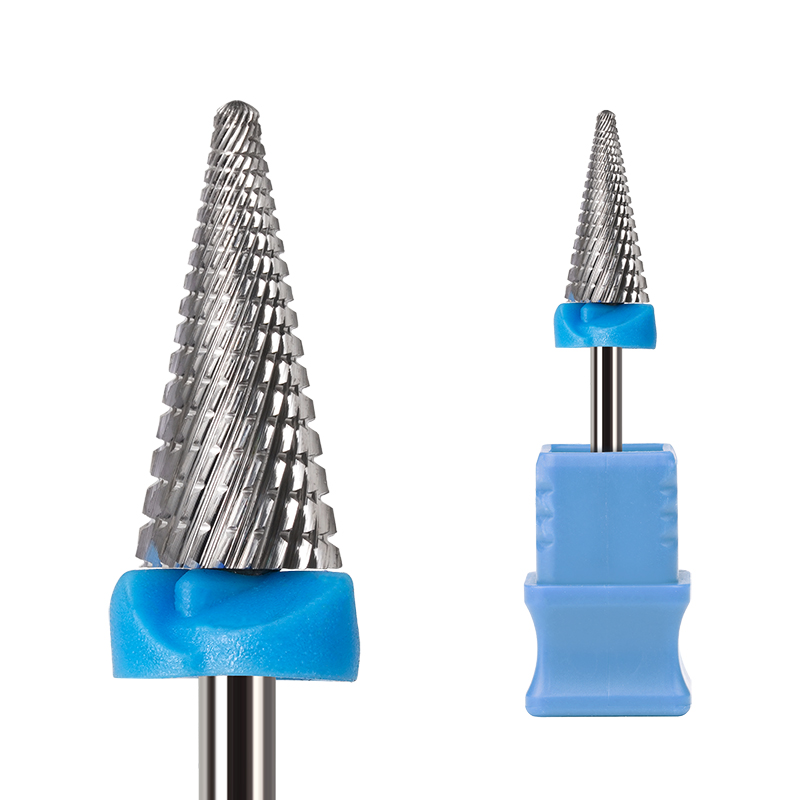
Surface coatings can contribute to wear resistance, corrosion resistance, and cleaning durability, but they should not be interpreted as a guarantee that a bit cannot become warm. A blue coating, for example, may be selected for its protective and visual characteristics, while actual operating temperature remains dependent on the full service system.
Consider the bit material, flute design, grit, e-file speed, hand pressure, working angle, product thickness, and cleaning condition. A clogged bit cuts less effectively. A dull bit encourages pressure. A poorly balanced bit can vibrate. Each factor can influence perceived heat and the precision of the result.
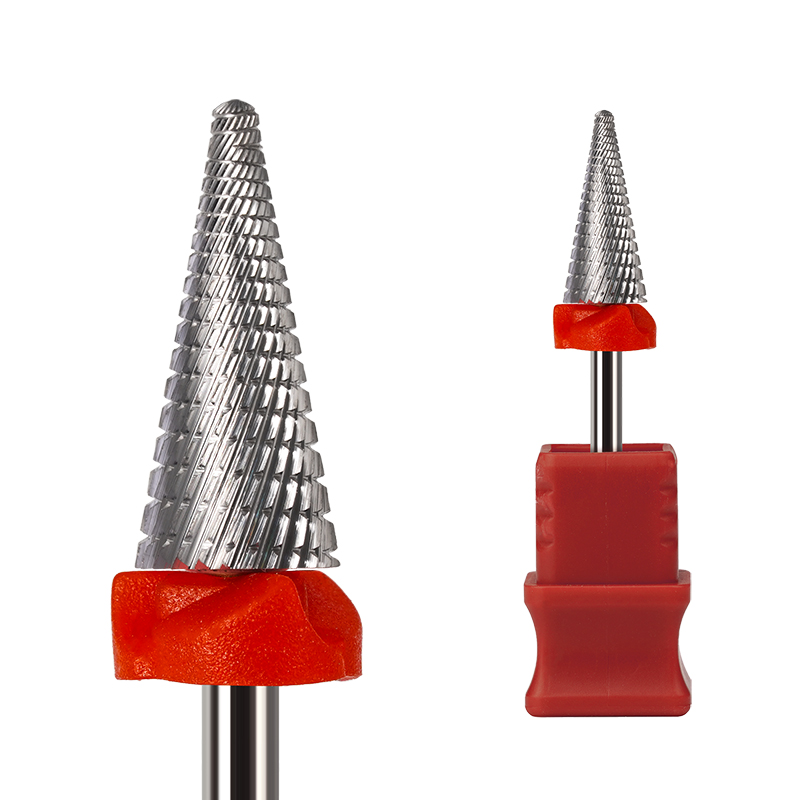
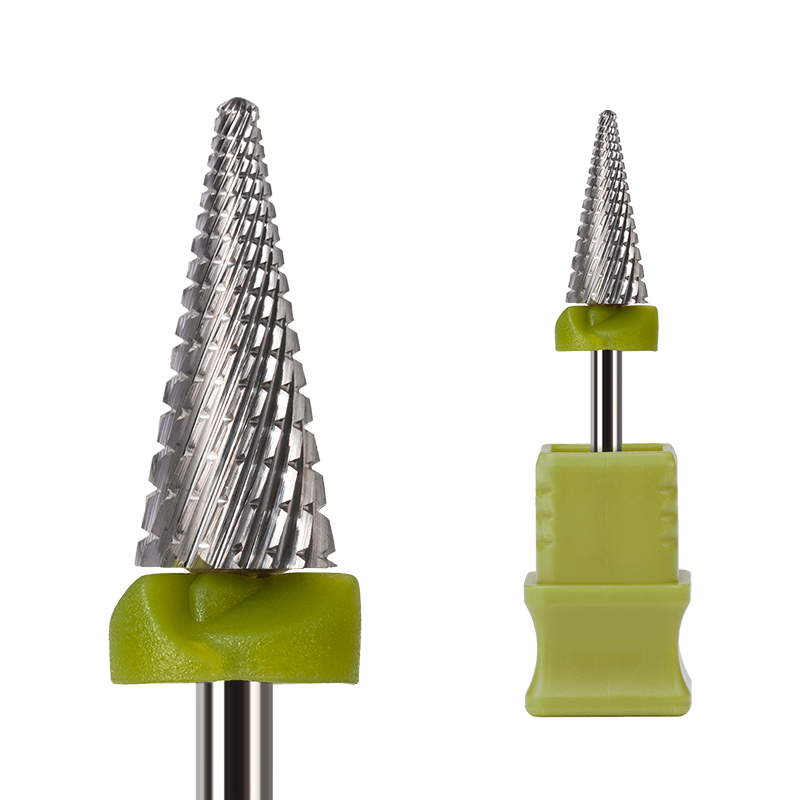
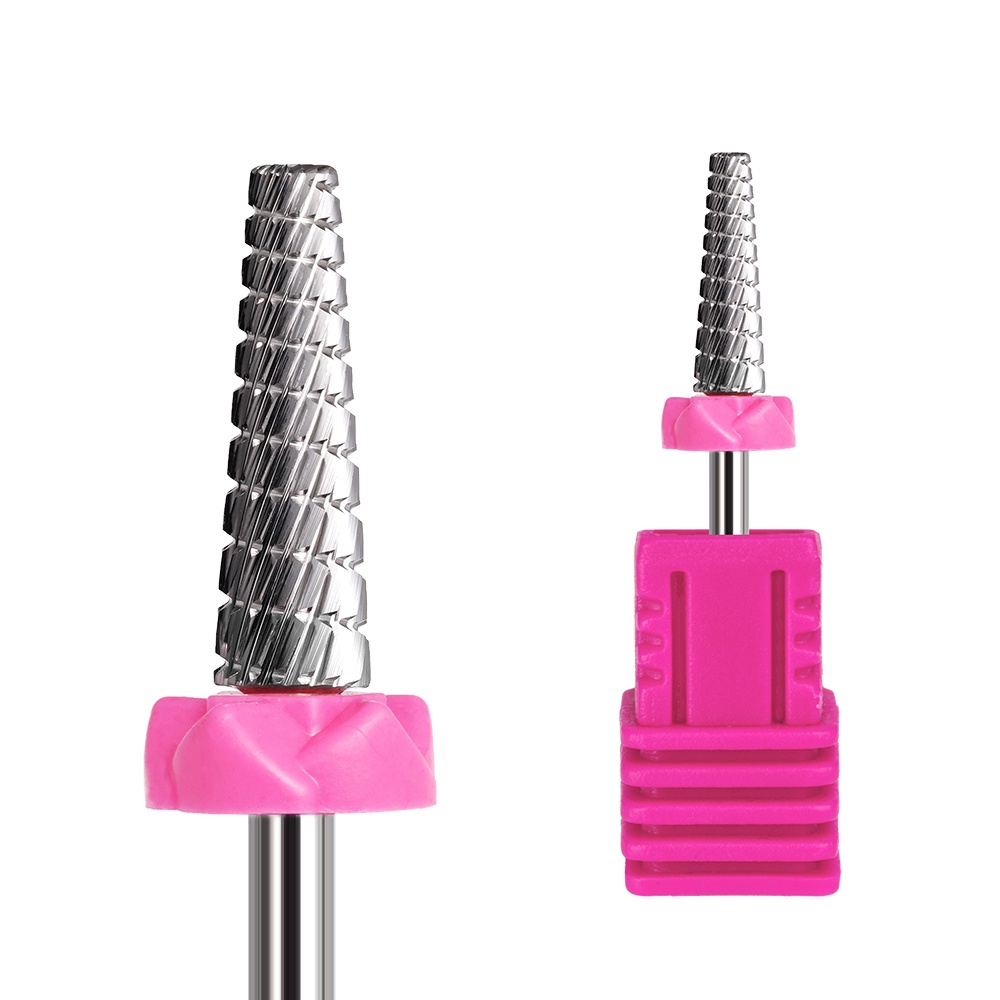
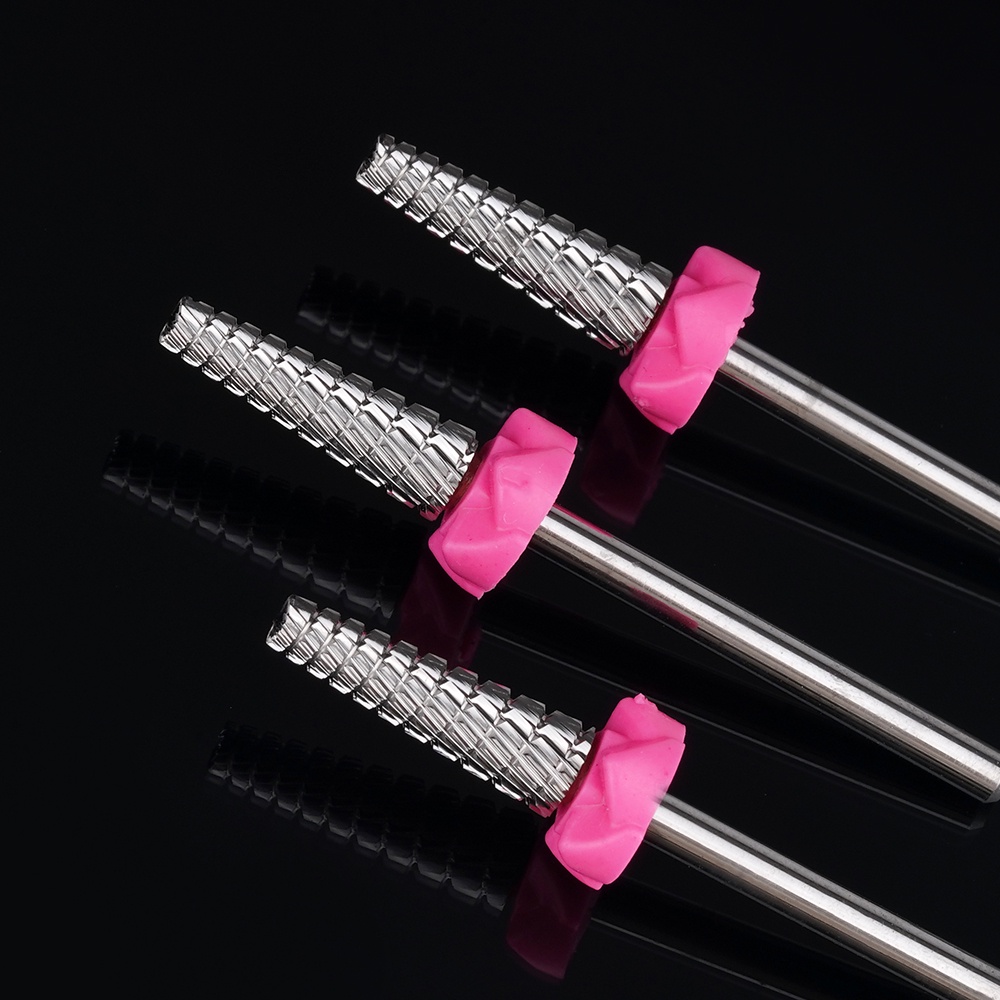
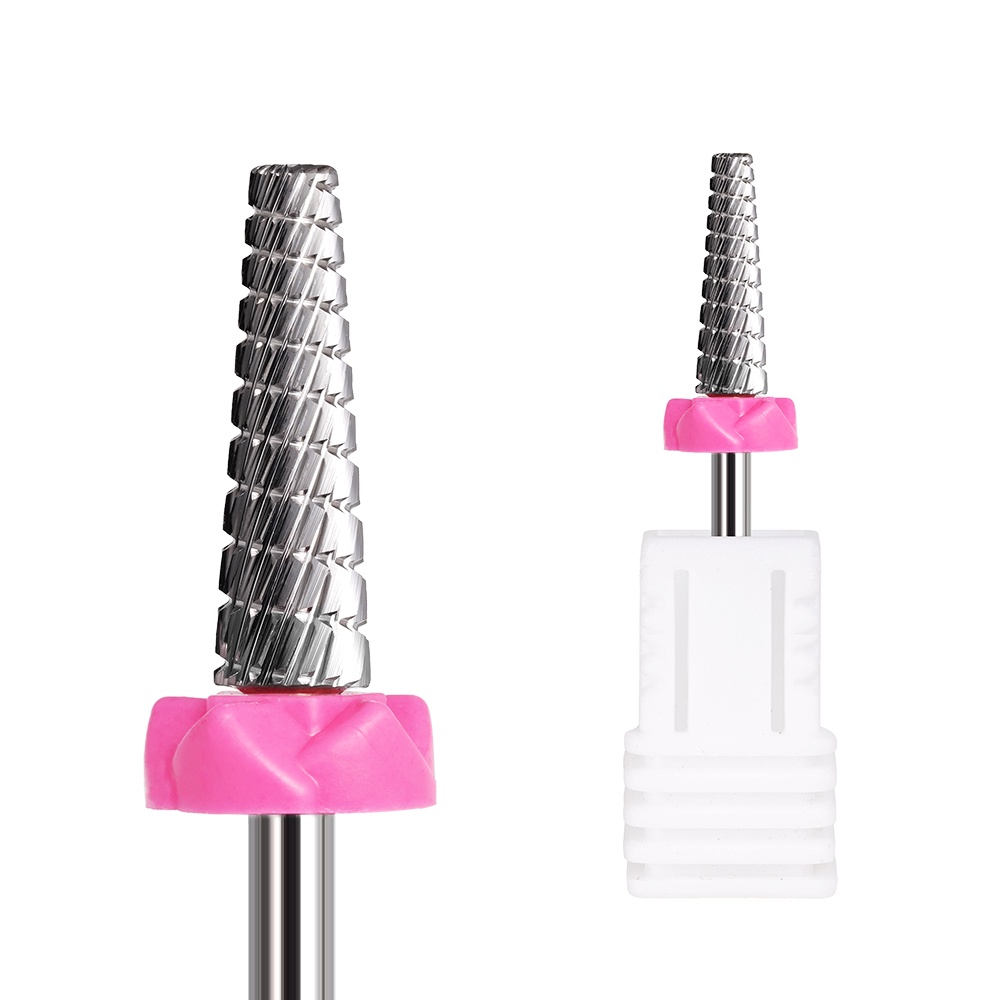
For salons and distributors seeking a versatile carbide option, Blue Coated Nail Drill Bits are available in shapes including round cylinder, corn, round cone, flat head cylinder, and large round head styles. Made with tungsten steel/tungsten carbide construction and a 2.35 mm shank diameter, these designs can be assessed for standard e-file compatibility, routine polish removal, nail repair, and controlled enhancement work. Medium and fine grit options allow the evaluator to match removal intensity to the service protocol rather than relying on one bit for every stage.
What to inspect before approving a carbide bit for regular use
Technical evaluation should include more than an initial cutting test. A new bit can feel sharp on the first service yet provide inconsistent results after repeated cleaning cycles. Inspect the flute edges for uniformity, the coating for consistent coverage where applicable, and the shank for clean finishing. The 2.35 mm shank remains a common professional e-file standard, but compatibility should still be checked against the chuck system and manufacturer guidance for the specific machine.
Runout is another practical concern. If the bit does not rotate concentrically, it may create vibration that reduces operator confidence and makes controlled work more difficult. Test the bit in the intended handpiece at normal service speeds, not just by visual inspection. Observe whether it tracks smoothly through a representative enhancement material and whether debris clears from the flute channels as expected.
Cleaning and disinfection procedures should be considered during qualification. Bits used in professional nail care require a hygiene process aligned with local regulations and the manufacturer’s material guidance. Thoroughly remove product debris before disinfection or sterilization steps where applicable. Residue left in flutes can compromise both hygiene and cutting performance.
Common selection mistakes
One recurring mistake is choosing the coarsest carbide bit to solve every removal problem. Coarse grit may reduce bulk quickly, but it can be excessive for thin overlays, shorter appointments involving gel polish, or technicians still developing e-file control. A medium grit often offers a more balanced starting point for evaluation.
Another mistake is judging a carbide bit by speed alone. Fast removal with visible gouges, harsh vibration, or a rough transition near the cuticle is not a successful result. The bit should support a predictable surface that can be refined efficiently without adding unnecessary finishing time.
It is also unwise to use carbide indiscriminately on the natural nail plate. Even a fine carbide bit can remove natural keratin rapidly if held incorrectly. When the remaining enhancement layer becomes thin, changing to a fine diamond, buffer, or manual file may offer a safer control margin.
The decision in one sentence
A carbide nail drill bit is better than a diamond bit when the priority is efficient, repeatable removal of acrylic, hard gel, and other dense artificial nail products; a diamond bit is better when the priority is gentle abrasion, surface preparation, and precise work around natural nails and cuticle areas.
For a well-designed professional bit assortment, the strongest decision is rarely carbide or diamond. It is a deliberate sequence: select carbide to reduce the product layer efficiently, transition to finer tools as the service approaches the natural nail, and use diamond where controlled refinement matters most. That approach protects both service productivity and the careful finish clients notice at the end of the appointment.
News List
- Preventing Gouges and Uneven Filing With Small Barrel Nail Drill BitsSep 20, 2026
- How Diameter and Grit Affect Small Barrel Nail Drill Bit PerformanceSep 20, 2026
- Can Hytos Nail Drill Bits Be Used Safely on Natural Nails and Gel Polish?Sep 20, 2026
- How to Verify Fit Between Hytos Nail Drill Bits and an E-File HandpieceSep 20, 2026
- Safe Speed Settings for Umbrella Nail Drill Bits Around the Nail FoldSep 20, 2026
- Umbrella vs Flame Nail Drill Bits: Which Shape Offers Better Cuticle Control?Sep 20, 2026
Best-Selling Products
 Cross Cut Safety Stainless Steel Tungsten Carbide Nail Drill Bits Salon Foot Use XF-C Grit for Removing Nails
 First-rate Quality Tungsten Carbide Nail Drill Bits Best Coating Manicure Remove Gel Nails Accessories
 Professional Advanced Safety Cuticle Bits Two-Way Rotate 3/32'' Carbide Tungsten 5 in 1 Nail Drill Bits
 Wholesale 5 in 1 Electric Manicure Nail Drill Bits Various Coating Cone Cuticle Bit with Rotary Cross Cut for Nail Art
 New Slant Tooth Tungsten Steel Nail Drill Bits Dead Skin Removal 5-in-1 Universal Grinding Nail Polish Head Tool Nail Drill Bits
 4.0mm Small 5 in 1 Integrated Sharpe Tungsten Nail Drill Bit Straight Teeth Gel Polish Removal
 Flame Sharp XF F M C XC Silver Safety Professional Corn Tungsten Carbide Nail Bit for Drill Machine Accessories
 Factory Direct 5 in 1 Tungsten Carbide Nail Drill Bits 6.8MM Cross Cut Safety Manicure 5 in 1 Nail Drill Bits
Please give us a message