
All Kinds of Nail Burrs for Your Business
We customize and manufacture a wide range of products for brands or distributors in the beauty and health industry around the world.
Yaqin has launched beauty products such as nail bits, nail lamps, nail drills, sanding bands, nail files, and cuticle scissors for users with different needs.
CONTACT US TODAY
What Is A Carbide Nail Drill Bit
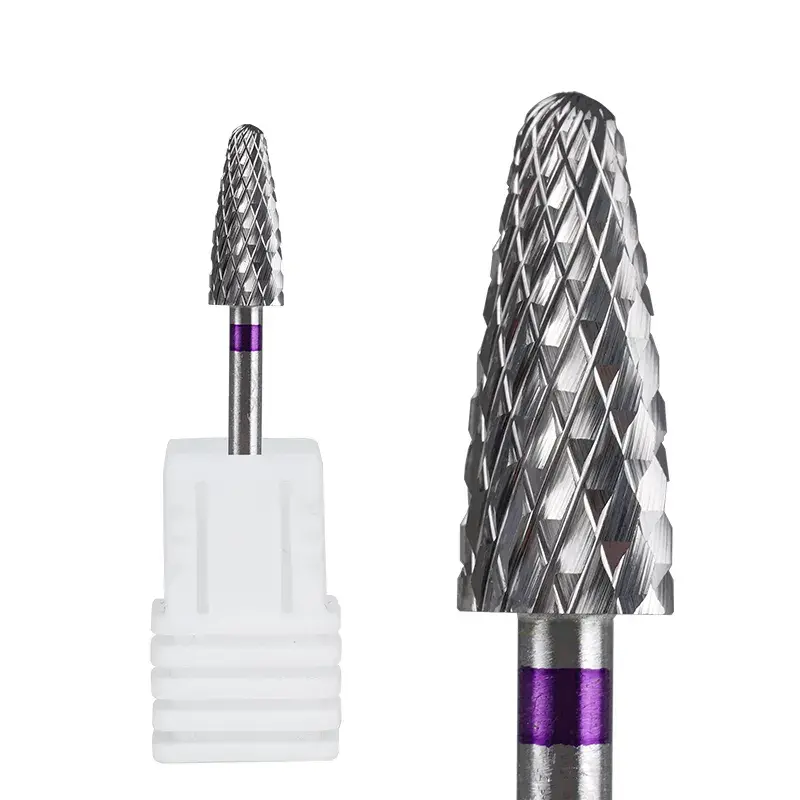
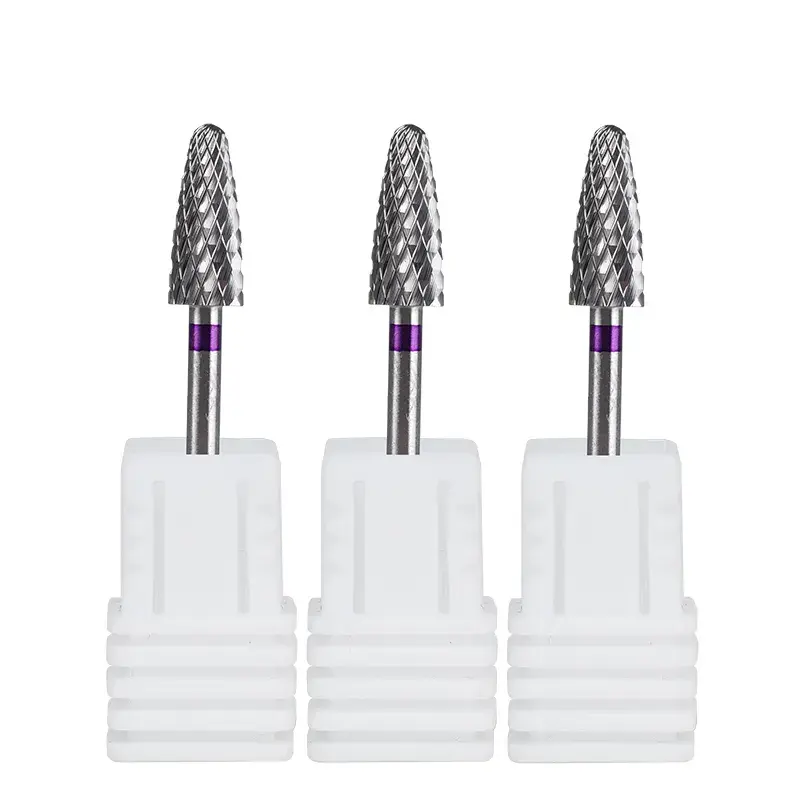
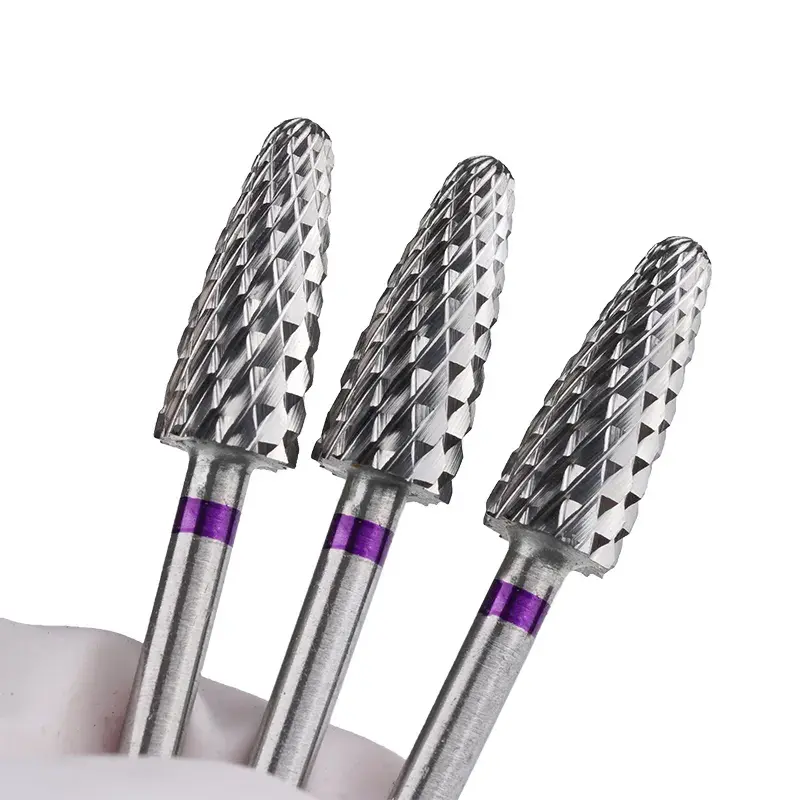
A carbide nail drill bit is a rotating bit engineered for electric nail files and made primarily from tungsten carbide, a hard and wear-resistant material valued for consistent cutting performance. In professional nail services, it is commonly used to remove gel, acrylic, poly gel, and overlay bulk faster than many manual methods while helping technicians control shape and thickness with greater precision.
The term covers multiple geometries, flute patterns, and grit levels rather than one universal tool. A coarse barrel bit for product reduction behaves very differently from a tapered cone for sidewall refinement or a safety-top shape for work near the cuticle area. Because of this, correct selection matters as much as material quality.
In B2B sourcing, buyers usually evaluate a carbide nail drill bit by raw material consistency, concentricity, shank accuracy, cut stability, service life, and compatibility with standard nail drill machines. These factors influence not only finish quality, but also vibration, heat generation, technician comfort, and replacement frequency in high-volume salon environments.
Compared with disposable abrasives, carbide bits are reusable tools that require cleaning, disinfection, and correct speed control. Their value comes from repeatability and efficiency, which is why they are widely used by salons, academies, distributors, private label brands, and professional technicians who need reliable day-to-day performance.
How The Technology Works
The working principle of a carbide nail drill bit is mechanical cutting rather than simple abrasion. Its flutes shave away cured product in controlled increments as the bit rotates, allowing fast material removal with less dragging when speed, pressure, and angle are properly matched. This is one reason carbide is often chosen for debulking and shaping enhancement product.
Heat control depends on several linked variables: carbide grade, flute design, rotational speed, contact duration, and operator technique. A well-manufactured bit with balanced geometry can cut efficiently and reduce unnecessary friction, while poor balance or inconsistent cutting edges may increase vibration and discomfort for both technician and client.
Direction also matters. Some bits are made for right-handed use, some for left-handed use, and some feature cross-cut or dual-direction capability. For distributors and salon groups, matching directional design to technician preference improves adoption and reduces learning time, especially in teams handling different service styles and product systems.
Manufacturing quality influences performance at every stage. Yaqin highlights tungsten carbide, diamond, and ceramic options across its product range, supported by inspection from raw material to packing under an ISO9001:2000 quality management framework. For procurement teams, this kind of process discipline matters because dimensional consistency and finish quality directly affect field reliability.
Main Types And Their Uses
The most common carbide nail drill bit shape is the barrel. Large barrel and safety-top barrel designs are used for surface smoothing, shortening product service time, and removing bulk from acrylic or hard gel overlays. A smooth-top version is often preferred when technicians want more confidence around the upper nail area while still maintaining strong removal efficiency.
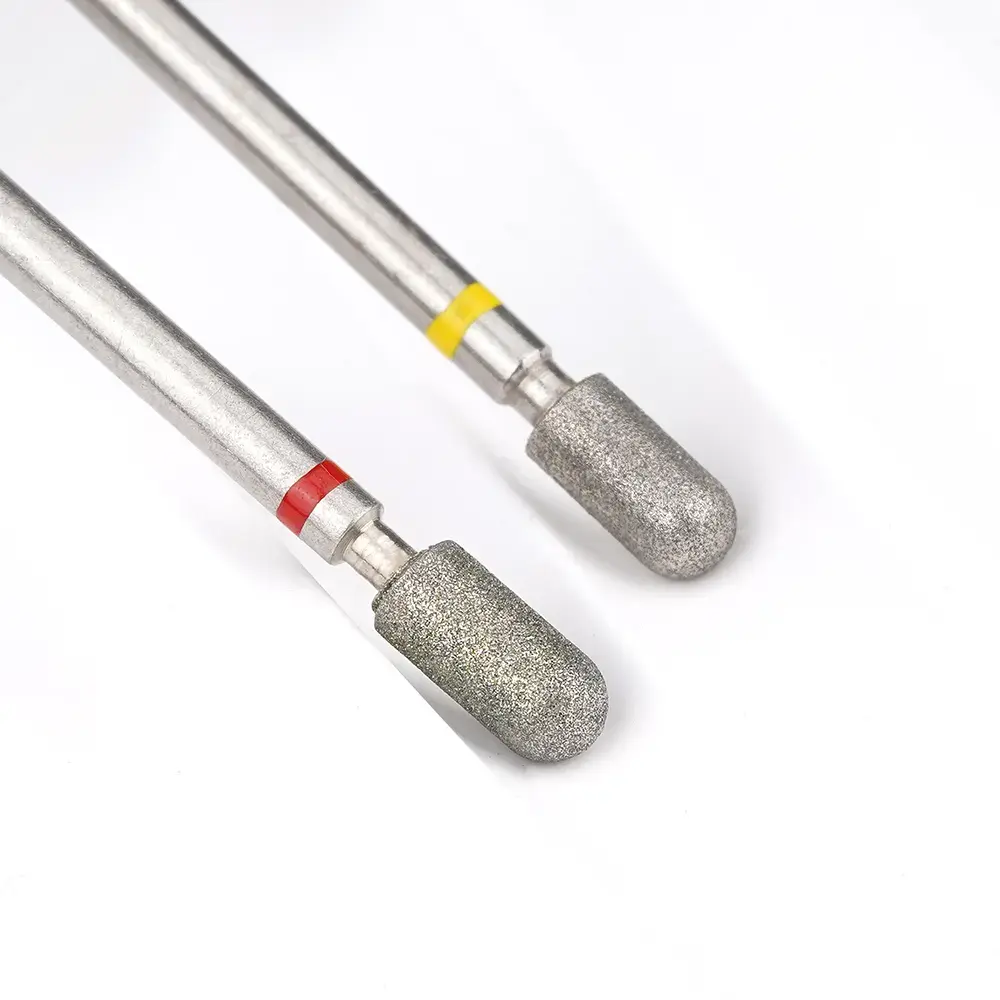
Cone, tapered, and corn-shaped bits are popular for controlled access to sidewalls, backfill zones, and contour refinement. Corn or bullet-inspired cutting heads can remove material quickly, making them suitable for experienced users in refill and reshaping workflows. A 5.0 mm corn bullet shape, for example, fits applications where targeted reduction and maneuverability are both important.
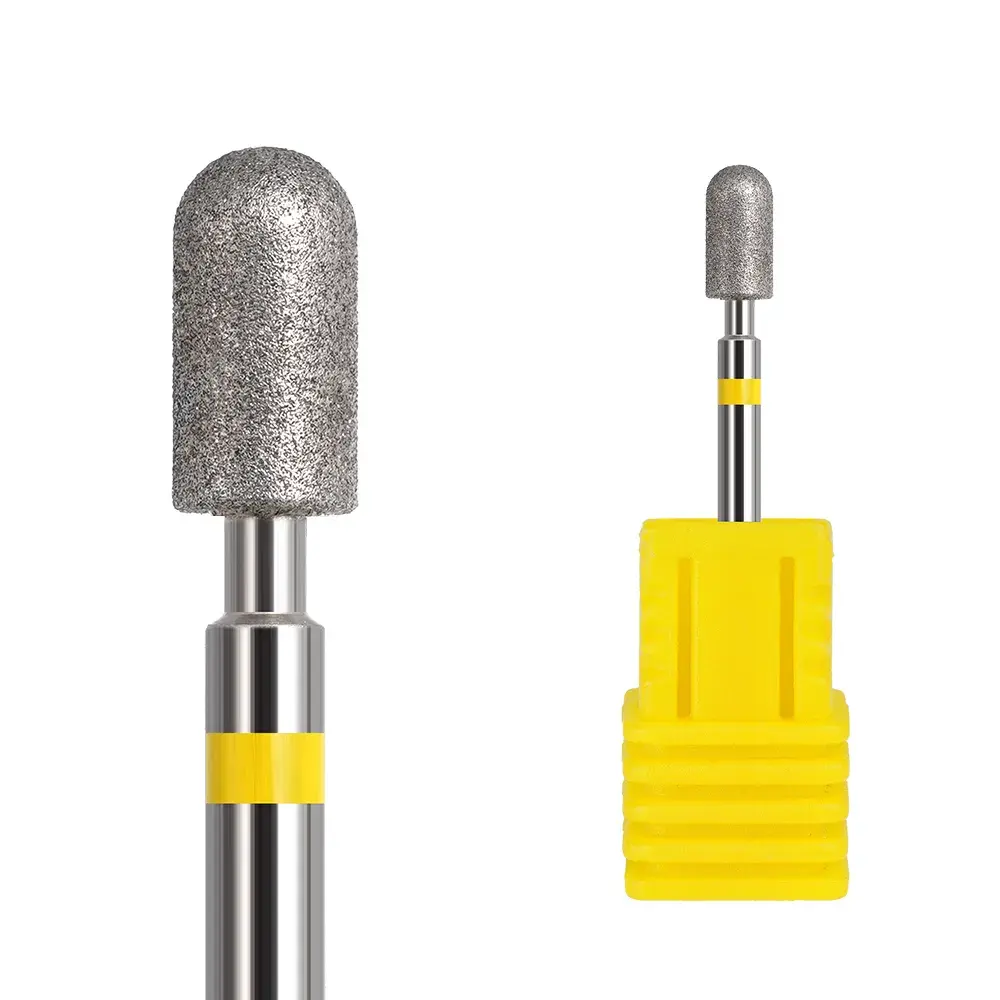
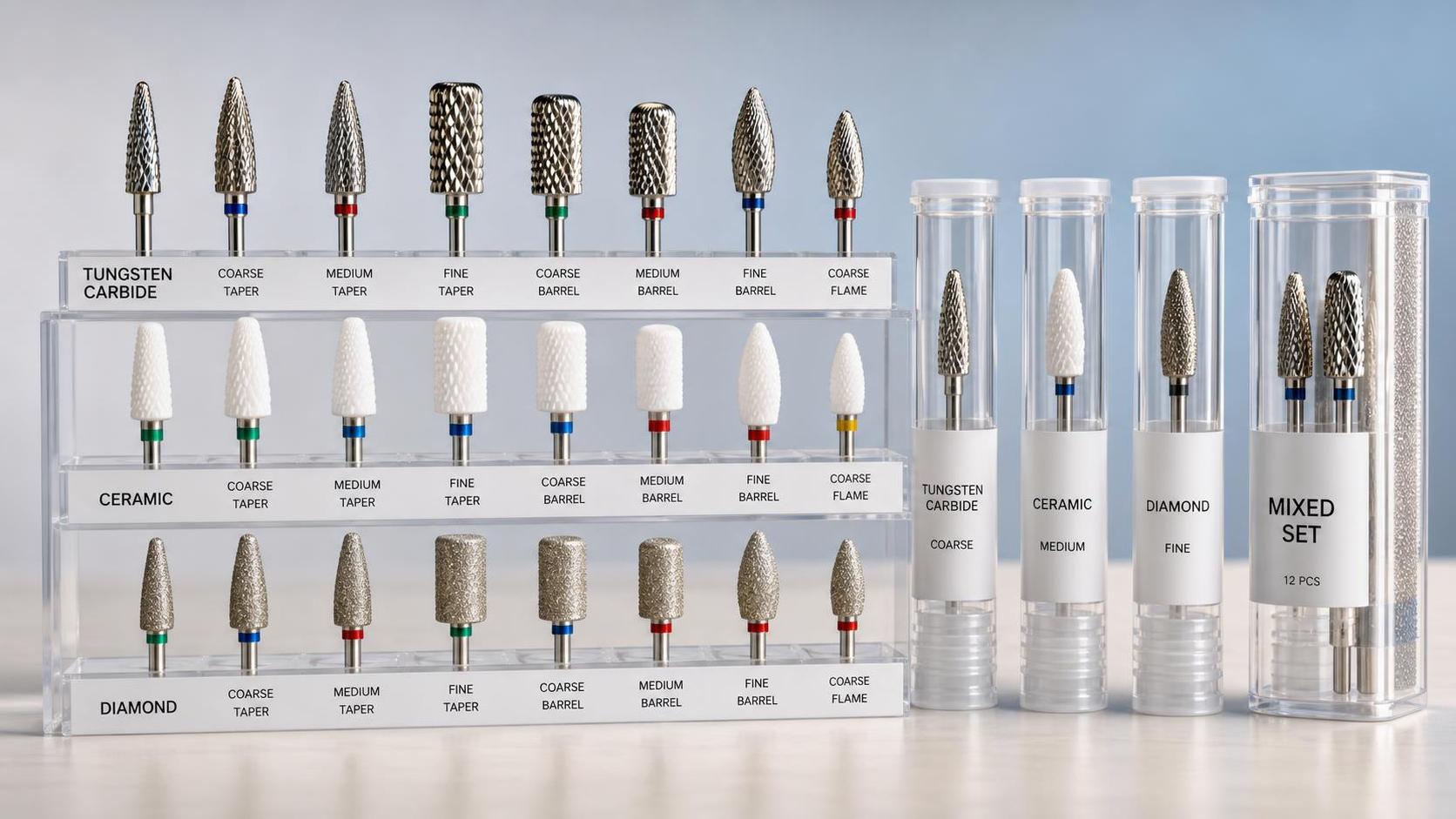
Needle and under-nail styles are used for detailed cleaning, edge access, and precise finishing. These are not usually the first choice for broad debulking, but they are useful in specialist service steps. In mixed product lines, they are often complemented by diamond nail bits for cuticle prep and ceramic bits for clients or technicians who prefer lower perceived heat during removal.
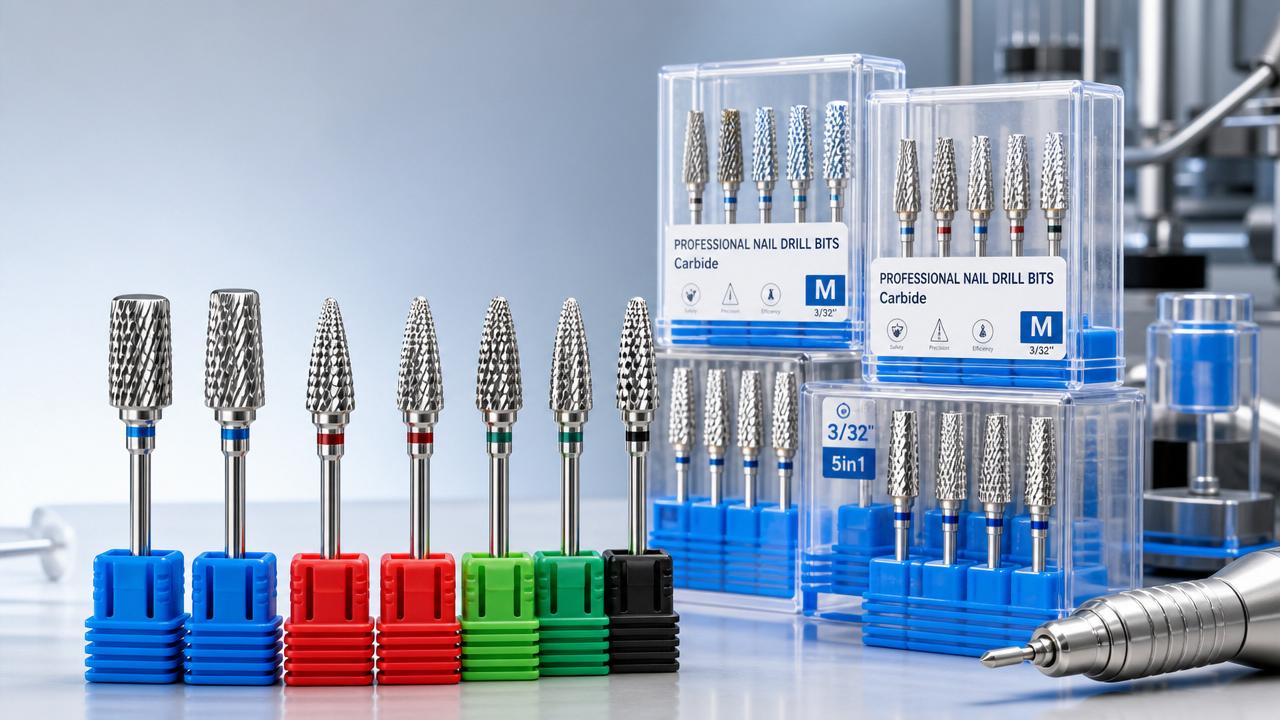
Grit and cut level are equally important. Common ranges such as XF, F, M, C, and XC help buyers map the bit to task intensity, operator skill, and service speed. A full assortment that includes sanding bands, ceramic bits, and carbide nail drill bit options enables distributors to build a complete system instead of selling isolated tools.
Who Uses It And Why It Matters
Professional salons are the most visible users of carbide bits because they need stable performance in repetitive, time-sensitive services. For these businesses, the right carbide nail drill bit helps shorten removal stages, improve consistency between technicians, and support cleaner finishing before color or top coat application.
Independent nail technicians and mobile professionals also value carbide bits because portable efficiency affects how many appointments they can complete in a day. A compact but versatile assortment, such as safety barrel, tapered cone, and detail-cleaning shapes, can cover a wide range of gel and enhancement services without carrying excessive inventory.
Distributors, importers, and private label brands approach the category from a portfolio perspective. They need dependable SKUs, packaging flexibility, and a supplier able to coordinate multiple categories including carbide, diamond, ceramic, sanding bands, and nail drill machines. Yaqin’s OEM, ODM, and private label support is especially relevant in these channels because brand presentation and assortment planning are part of the buying decision.
Training academies and beauty schools are another important group. They often need bits that are easy to categorize by task and skill level, since beginner misuse can damage service quality. Clear grit labeling, stable manufacturing quality, and availability of safer top profiles help create more predictable teaching outcomes.
Selection Standards For Buyers
A practical purchasing decision starts with service type. If the main task is fast removal of hard gel or acrylic, buyers often prioritize coarser cuts and larger working heads. If the goal is refining near sensitive zones or improving finish control, finer cuts and safety-top designs become more appropriate. The best carbide nail drill bit is therefore task-specific rather than universal.
The second criterion is user profile. High-frequency salon teams may favor durable, efficient bits that support quick turnover, while beginner-oriented channels often need forgiving shapes and moderate cutting action. Left- and right-hand compatibility should also be reviewed, especially for chains or distributors serving a broad technician base.
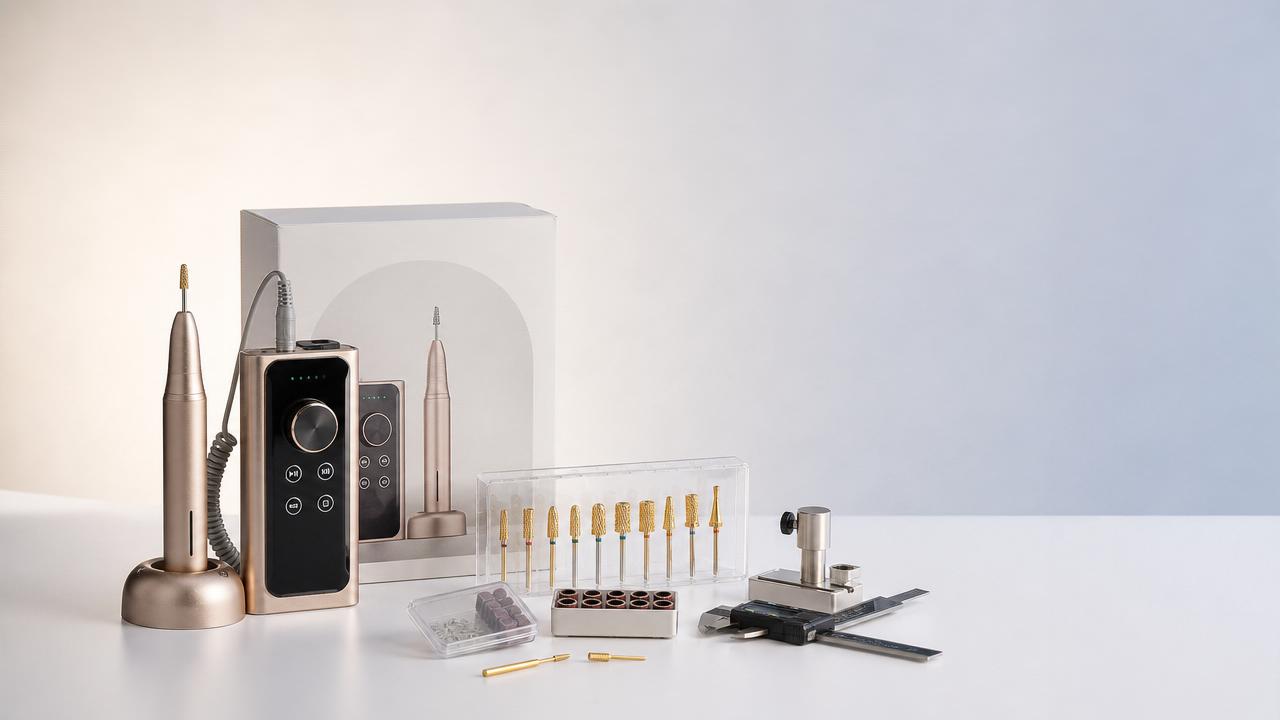
The third criterion is system compatibility and finish consistency. Buyers should confirm standard shank dimensions, machine fit, coating requirements, cleaning tolerance, and packaging quality. This is where a supplier with a full range of shapes, grits, and coatings can reduce sourcing complexity. Yaqin’s catalog breadth supports this need by combining carbide bits with diamond bits, ceramic bits, abrasives, and nail drill machines.
Finally, B2B buyers should assess factory process control. Full inspection from raw material through packing, stable wholesale supply, and customization capability are useful indicators when building repeat orders. These standards do not guarantee the same result for every technician, but they reduce common sourcing risks such as inconsistent finish, unstable quality, and SKU drift across batches.
Safe Application And Maintenance
Safe application starts with matching bit type to task and setting the drill to an appropriate speed range for the product being removed. Excessive pressure should be avoided because a carbide nail drill bit is designed to cut through rotation and edge geometry, not force. Controlled movement reduces heat buildup and helps preserve a smoother working surface.
Technicians should maintain constant motion and avoid holding the bit in one spot, especially over thin or sensitive areas. Safety-top barrel shapes are often selected for added confidence near the cuticle zone, while more aggressive corn or coarse bits are better reserved for bulk removal on enhancement product rather than natural nail work.
After use, cleaning and disinfection are essential for tool longevity and salon hygiene management. Debris should be removed from the flutes before standard salon sanitation steps are performed in accordance with local practice requirements. Proper storage also matters, since dropping or mixing bits loosely can damage the cutting surface and shorten usable life.
Replacement timing depends on use frequency, material processed, cleaning habits, and whether the bit still cuts smoothly without unnecessary friction. In high-volume operations, tracking replacement cycles by service count can be more reliable than waiting for obvious failure. This supports more predictable service quality and helps buyers estimate ongoing consumption more accurately.
Global Applications And Market Signals
Real-world demand for carbide nail drill bit products varies by market structure, service style, and channel strategy. In the United States and Russia, professional salon chains have sourced 5-in-1 tungsten steel grinding heads and diamond pre-treatment bits for gel removal, cuticle cleaning, and nail shaping in high-frequency dry polishing environments. This reflects demand for speed, repeatability, and broad service coverage.
In Germany, the UK, and Italy, distributors have sourced sanding rings, ceramic grinding heads, and nail machine sets for supply to small and medium salons as well as independent technicians. This pattern suggests that multi-category procurement remains important in Europe, where buyers often prefer a complete operating solution with options for localized branding and packaging.
In the Dominican Republic, ORIENTAL NAILS & BEAUTY has sourced rainbow-coated diamond grinding heads, nail lamps, and related items for local salon retail and service use. Although this case is centered on diamond tools, it also signals a broader market reality: visual finish, assortment diversity, and merchandising value can influence order composition alongside pure technical performance.
For buyers entering new regions, practical market access usually depends on stable documentation, consistent product naming, sensible packaging, and a supplier able to support repeat orders. Yaqin’s export experience across 42 countries and cooperation with global distributors makes it relevant for importers seeking both standard carbide items and customized private label programs.
Cost Structure, ROI, And 2026 Trends
The total cost of owning a carbide nail drill bit is not defined by unit price alone. Buyers should consider lifespan, cutting stability, breakage risk, technician efficiency, cleaning time, and the effect of inconsistent bits on service quality. A lower purchase price may not be economical if the bit wears quickly, generates more heat, or requires more passes to complete the same task.
From an ROI perspective, professional users usually benefit when a bit shortens removal time, reduces operator fatigue, and maintains predictable results over repeated services. Distributors benefit when the assortment is easy to explain and reorder, while private label brands gain additional value from customized packaging and a reliable factory supply relationship.
Looking toward 2026, the category is likely to keep moving toward broader kit-based sourcing, clearer task-specific segmentation, and stronger interest in safety-oriented profiles for mixed skill levels. Buyers are also paying more attention to complete workflow matching, combining carbide, diamond, ceramic, sanding bands, and machine compatibility instead of treating each product as an isolated purchase.
Another clear trend is the rise of customization in B2B channels. Private label, custom packaging, and branded assortment building help distributors differentiate without developing manufacturing capacity internally. In this environment, a supplier such as Yaqin that offers factory-direct pricing, broad product coverage, and customization support can help buyers build a more resilient and scalable nail tool program.
 What Makes a Good Nail Drill Bit ManufacturerNail Drill Bit Manufacturer selection affects quality, consistency, and margins. Learn how to identify reliable QC, OEM/ODM support, and export-ready partners for safer sourcing.
 Wholesale Nail Drill Bits Buying Guide: How to Compare Cost, Material, and GritWholesale nail drill bits buying guide: compare cost, material, grit, durability, and supplier QC to source smarter, reduce defects, and choose bits that deliver better salon performance.
 Wholesale Electric Nail File Buying Mistakes to AvoidWholesale electric nail file buying guide: avoid low-price sourcing mistakes, compare specs, QC, compliance, and OEM support to choose reliable suppliers with confidence.
 Cuticle Cleaning Tools: Common Mistakes That Cause DamageCuticle cleaning tools can damage skin fast if used the wrong way. Learn the most common mistakes, safer techniques, and how to choose tools for cleaner, gentler results.
 5.0mm Corn Bullet Shape Universal Carbide Cuticle Dc Nail BitsElectric Tungsten Carbide Nail Drill Bits – Universal Drill Bit Tool for Nail Salons
Enhance your nail salon experience with our Electric Tungsten Carbide Nail Drill Bits, specifically designed for the efficient removal of gel polish, acrylics, and other nail enhancements. Our precision-engineered bits ensure a safe and effective nail care routine for both seasoned professionals and newcomers alike. Peanut-Shaped Universal Electroplating Diamond Cuticle Nail BitRevitalize your skin with our high-quality Diamond Exfoliating Grinding Head, designed for effective dead skin removal and callus smoothing. This versatile peanut-shaped drill bit is perfect for both left-handed and right-handed users, ensuring a comfortable and efficient exfoliating experience.
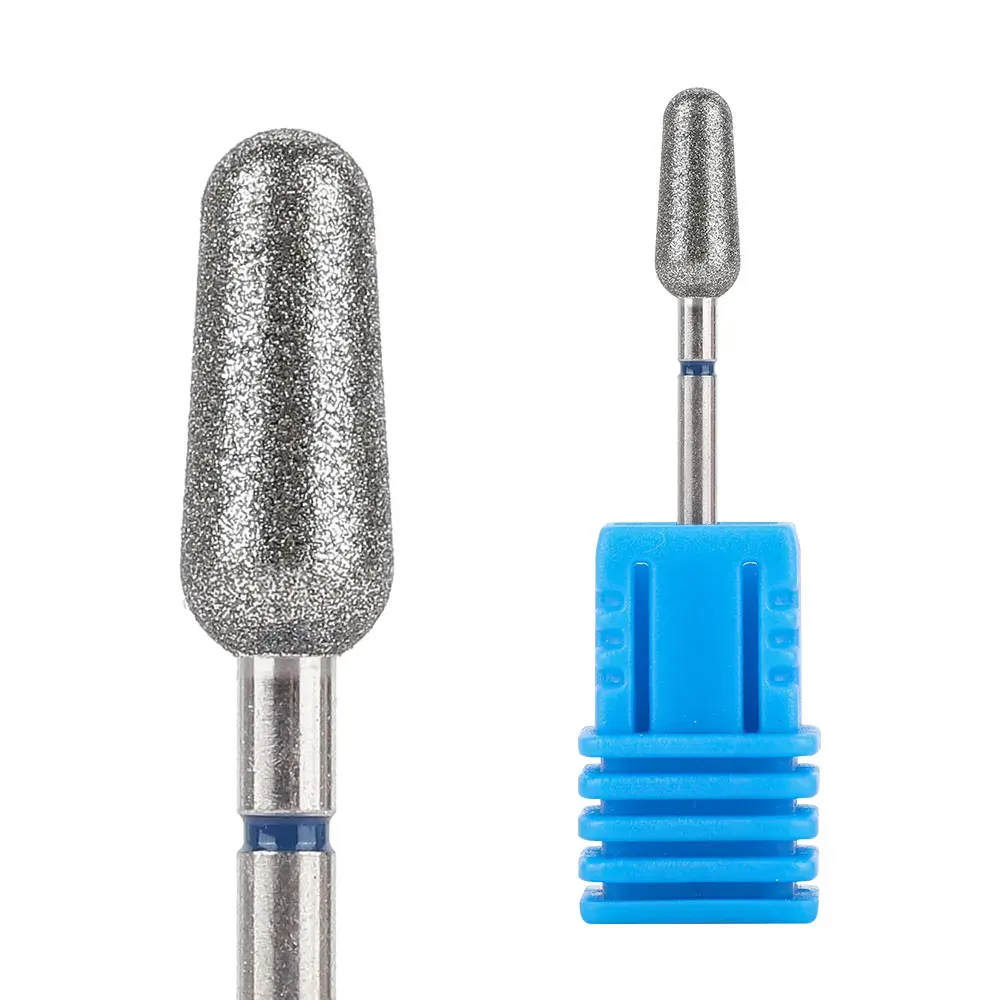
 Smooth Top Barrel Safety E File Wholesale Russian Cuticle Clean Diamond Nail BitsIntroducing our Master-Level Pre-Treatment Grinding Heads, crafted with high-quality diamond grit to meet the needs of professional nail technicians. These indispensable nail care tools are designed for precision and effectiveness, ensuring a flawless manicure experience every time.
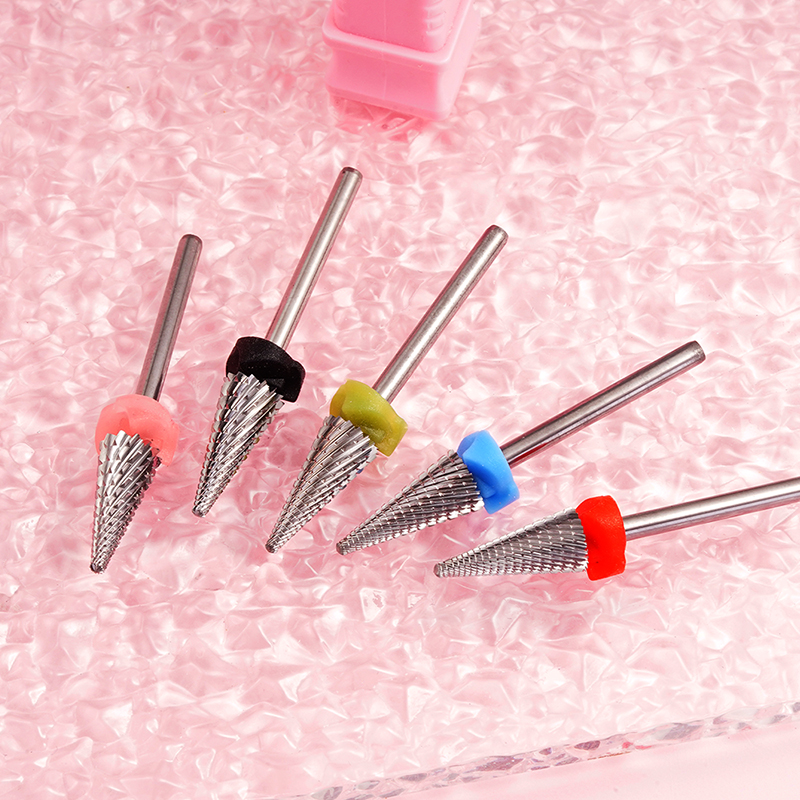
 Carbide Cuticle Cleaning Tool 3/32" Precision Milling Cutter Small Cone Nail Drill BitUpgrade your nail care routine with our versatile Tungsten Steel Nail Drill Bit. Designed for use with electric nail drills, this innovative tool is perfect for filing nails, removing dead skin, and tackling gel polish with ease.
Please give us a message