
What makes a carbide nail drill bit tornado cut more aggressively?
What makes a carbide nail drill bit tornado cut more aggressively?
What Makes a Carbide Nail Drill Bit Tornado Cut More Aggressive?
A carbide nail drill bit tornado cut is designed to remove product quickly, but “aggressive” should not be confused with simply sharp or coarse. In professional nail enhancement work, a bit becomes genuinely aggressive when its cutting geometry engages material efficiently, clears chips before they clog the cutting path, and continues cutting with limited heat buildup. A poorly made coarse bit may feel aggressive for a few seconds, then drag, chatter, or create unnecessary dust. A well-engineered tornado cut should feel more controlled: it removes bulk product decisively while allowing the operator to moderate pressure and direction.
For technical evaluation, the key question is not whether a bit removes gel faster on a fresh sample. It is whether it maintains predictable cutting behavior across hard gel overlays, builder gel, acrylic systems, base coats, nail tips, and areas where product thickness changes. That performance comes from the relationship between flute angle, flute depth, carbide quality, tip design, concentricity, and the compatibility of the bit with the e-file and working technique.
The tornado pattern changes how the cutting edge meets the surface
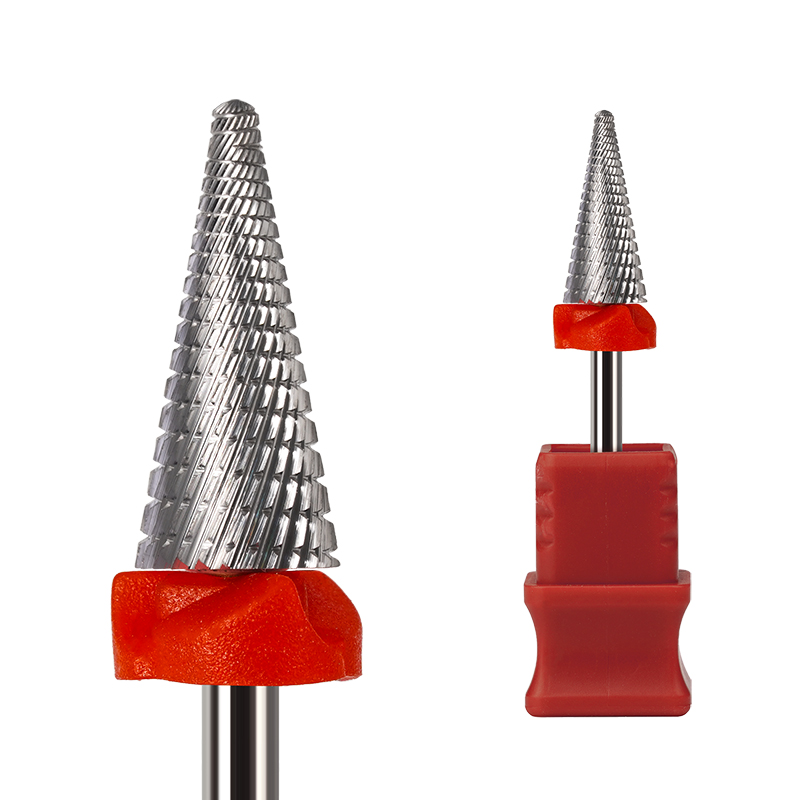
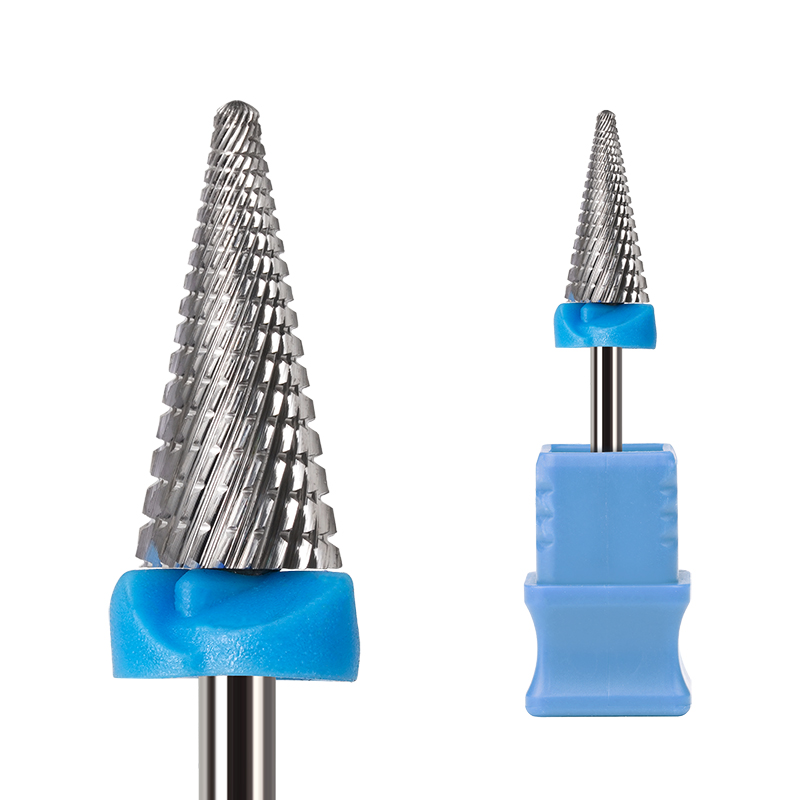
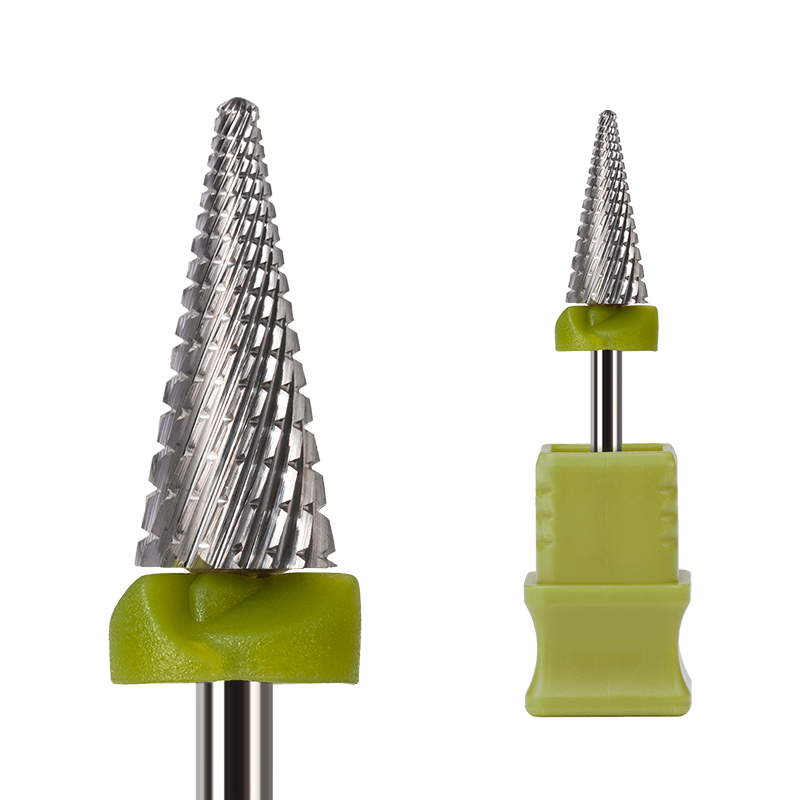
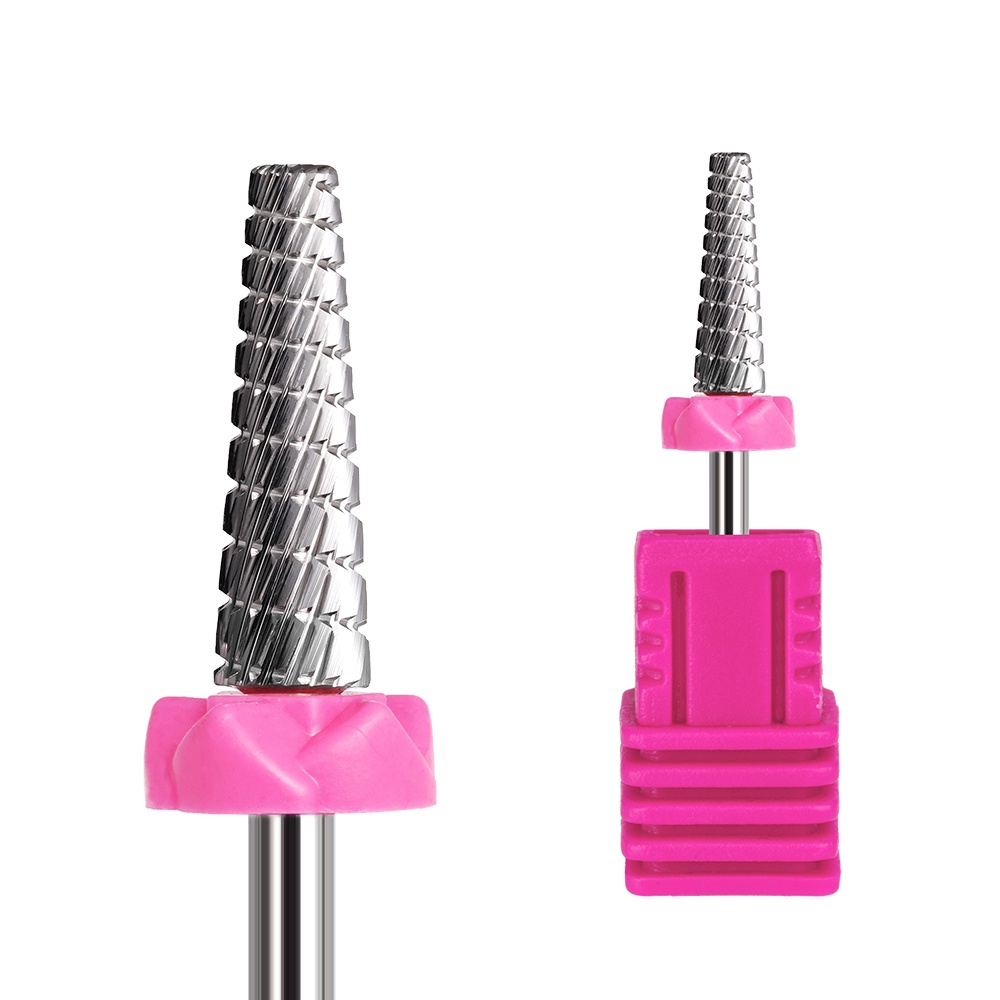
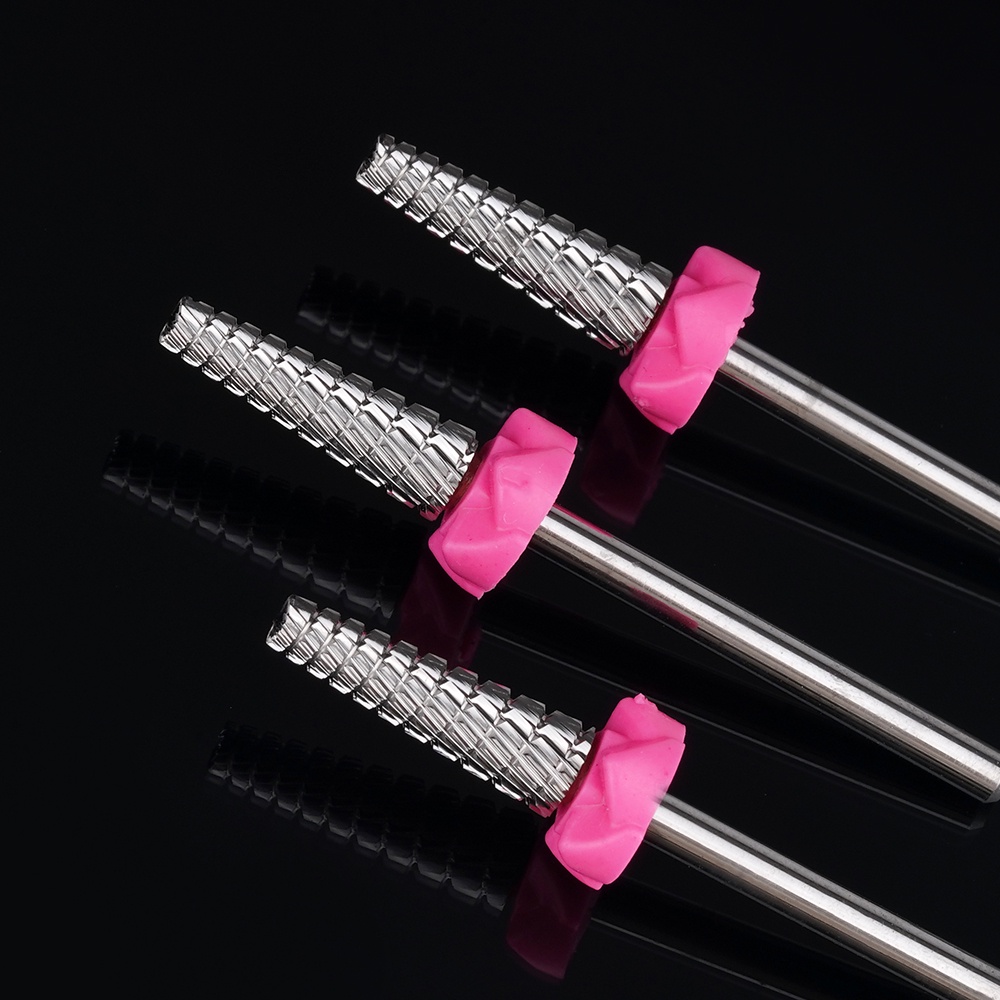
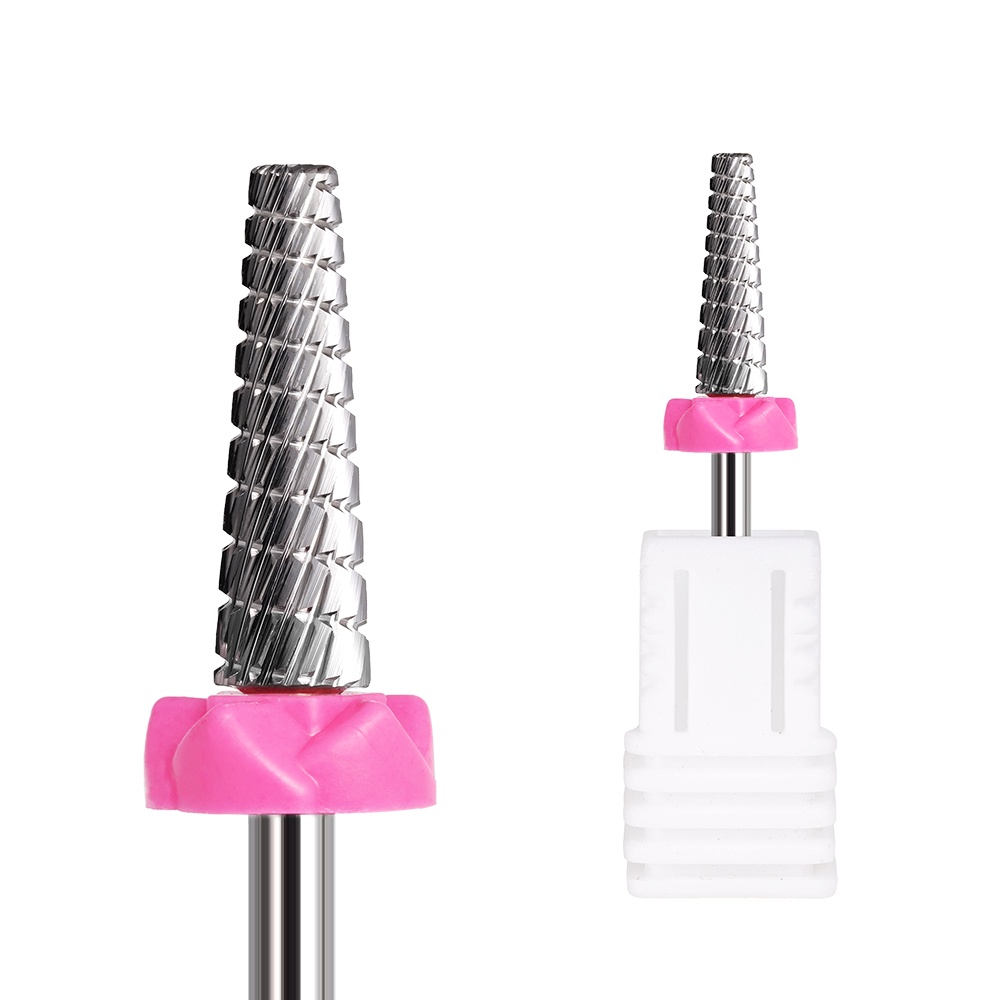
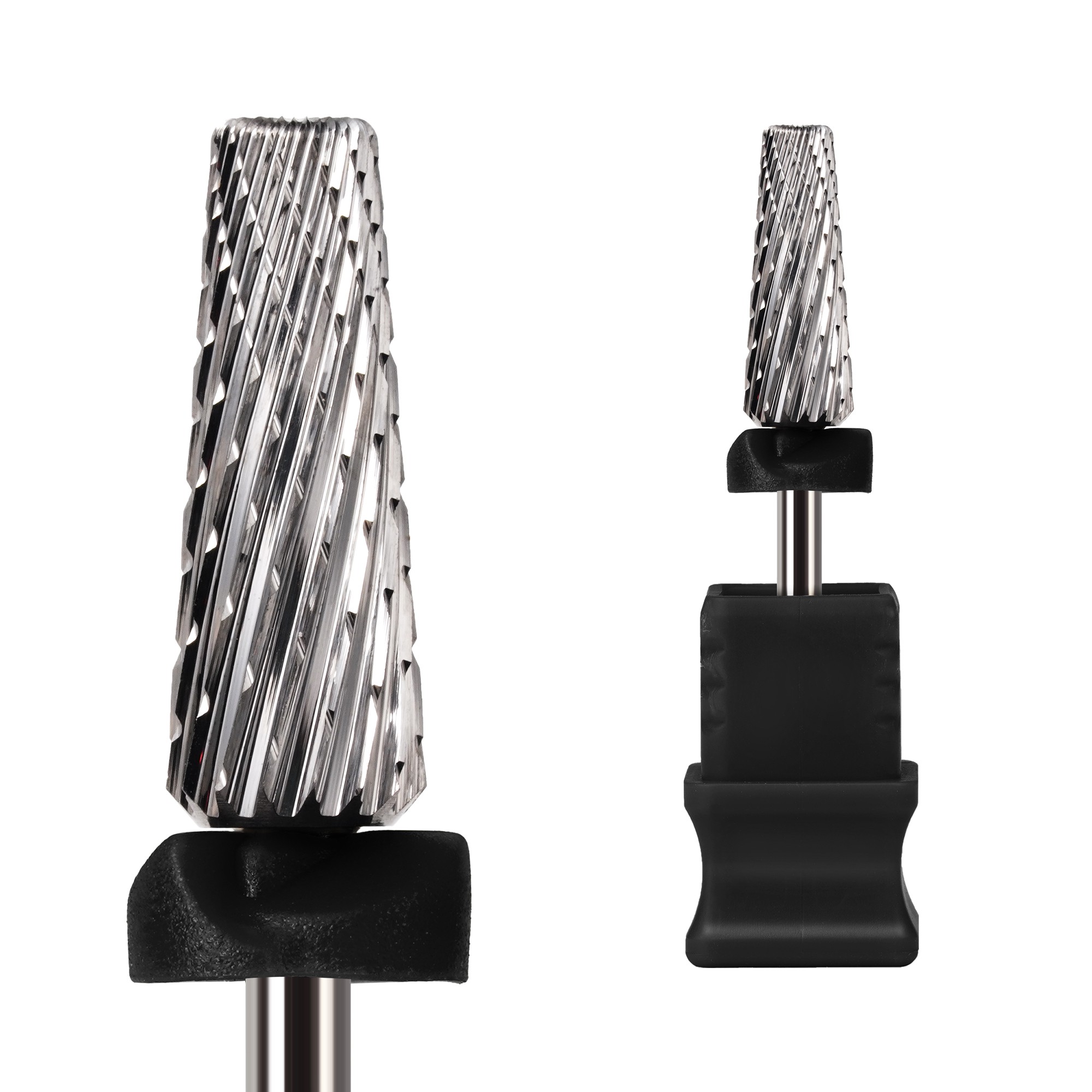
A conventional straight-flute carbide bit cuts in a relatively direct path along the body of the tool. A tornado-cut design uses spiral or helical flutes that wrap around the barrel. This changes the cutting action. Instead of having many cutting edges contact the surface at once in a static-looking pattern, the spiral geometry distributes engagement progressively as the bit rotates.
That progressive engagement is one reason a tornado cut can feel more active at the same handpiece speed. The cutting edges repeatedly enter and exit the coating while guiding removed material along the helical channels. On thick enhancement material, especially cured hard gel or acrylic, this can reduce the tendency for debris to pack between teeth. When chips have somewhere to go, the exposed cutting edge continues to contact the product rather than rubbing over compacted dust.
The important distinction is that a spiral flute is not automatically superior in every task. For controlled refinement near the natural nail, a less aggressive cross-cut or fine carbide may be easier to manage. Tornado geometry earns its place in bulk removal, surface reduction, and rapid debulking where a technician needs speed without constantly stopping to clear product from the bit.
Helix angle and flute depth are practical performance variables
The visible “twist” of a tornado bit is only part of the story. A more open helix can create a stronger evacuation route for larger particles, while a tighter spiral may provide more frequent cutting contacts. Neither configuration should be judged from a product photograph alone. The depth and shape of the gullets between flutes matter just as much. Shallow channels can load up quickly when removing soft, sticky gel. Channels that are too open may sacrifice edge support or leave a rougher surface if the rest of the design is not balanced.
A useful evaluation method is to observe what happens during a sustained pass on the intended material. Does the bit produce clean, directional debris movement, or does residue accumulate around the barrel? Does removal remain even as the operator moves from a thick apex area to a thinner sidewall? A strong tornado design should resist clogging and avoid sudden changes from cutting to skating.
Carbide grade determines whether the geometry stays aggressive
The word “carbide” is often used too broadly in the nail tool market. For a rotary cutting tool, the value is not merely that tungsten carbide is hard. The material also needs enough toughness and structural consistency for the cutting edges to resist premature wear or chipping. Fine flute geometry cannot compensate for weak carbide or inconsistent material preparation. Once edge definition is lost, the bit begins to generate more friction, requiring more operator pressure and increasing the chance of heat.
Premium tungsten steel is commonly selected for nail drill bits because it supports durable, sharply defined cutting features. Yet the material must be assessed together with the manufacturing process. A hard bit that is poorly ground may cut unevenly. Conversely, a cleanly machined profile in suitable carbide can preserve its working character longer under normal professional use. There is no reliable shortcut here: a technical buyer should request material information, inspect representative production samples, and evaluate repeatability from batch to batch.
For suppliers serving multiple export markets, quality control needs to cover more than finished appearance. Wuxi Yaqin Trading Co., Ltd., which produces and exports abrasive products for markets including the United States, Canada, Germany, the United Kingdom, Italy, and Poland, applies QC controls from raw-material purchasing through production and packing. The company states that it operates under ISO9001:2000 quality management certification. For buyers, the practical implication is straightforward: documentation is useful, but it should be paired with a defined incoming inspection and sample-approval process for the exact bit configuration being sourced.
Why deep, clean flute channels remove product faster
Aggressive removal depends on chip clearance. Each cutting edge creates small particles of cured coating. If those particles remain trapped in the flute valleys, the bit loses space for new material. The tool then rubs rather than cuts. Rubbing is inefficient, produces finer airborne dust, and can make the barrel feel hot even when the handpiece setting has not changed.
The tornado pattern encourages debris to travel along the spiral path and away from the immediate cutting zone. This is especially relevant on materials that soften slightly under friction, such as some gel systems. A standard flute may work well initially but become less effective if softened residue bridges between its teeth. With a correctly engineered helical channel, the bit has more opportunity to move debris away before it compacts.
Dust direction also has an operational effect. It will not eliminate dust, and it should never replace a proper extraction system or appropriate personal protection. However, a predictable ejection direction helps the technician position an extractor and adjust working angles. It also reduces the irritating experience of debris scattering unpredictably across the work surface. In production evaluation, consistency matters more than a vague claim of “low dust.”
Aggressiveness must be balanced against heat and surface control
A bit can be technically efficient and still be unsuitable for a particular procedure. Coarse tornado cuts are generally better reserved for reducing artificial material, not for working directly on a natural nail plate or refining delicate cuticle areas. The technician’s pressure, travel speed, e-file RPM, and the condition of the bit all influence heat. An aggressive cutter used with heavy pressure can create heat faster than a medium-cut tool used correctly.
The most common evaluation mistake is to test removal speed while ignoring the finish left behind. A useful bulk-removal bit should reduce product quickly but should not create deep, unpredictable gouges that require excessive follow-up filing. Its bite should be strong enough to reduce bulk efficiently, yet stable enough that an experienced operator can feather the pressure as the remaining product layer becomes thinner.
Tip geometry is part of this balance. A smooth flat tip does not make a barrel bit harmless, but it can reduce the risk of accidental puncture compared with a sharply terminated design. This is relevant when working near sidewalls, under free edges, or around irregular enhancement shapes. A technical specification should therefore identify not only the cut style and grit category, but also the end profile and intended application zone.
Runout and shank accuracy are often overlooked
Even a well-designed carbide nail drill bit tornado profile will perform poorly if it does not run true in the handpiece. Runout causes the cutting edge to strike the surface unevenly. The technician may feel vibration, hear a fluctuating cutting sound, or see inconsistent removal tracks. In severe cases, the apparent aggressiveness comes from impact rather than controlled cutting, which is not a quality advantage.
Technical evaluators should check shank fit, barrel concentricity, visible finish, and rotational stability in the actual e-file model likely to be used. A bit may be manufactured acceptably yet perform differently in a worn chuck or a handpiece with poor bearing condition. Testing should separate those variables. If a sample vibrates, confirm the handpiece condition before attributing the issue solely to the cutter.
It is also worth checking directional behavior. Some carbide bits are designed for a defined rotation direction, while others are made for bidirectional use. The flute orientation must match the operating direction. Running a directional tornado bit in reverse can sharply reduce cutting efficiency and may make the tool feel as if it is grabbing or skipping.
Comparing tornado cuts with other carbide configurations
The best choice is usually a set of complementary bits, not one supposedly universal cutter. For example, a tornado barrel may be appropriate for reducing a thick overlay, while a finer or more protected profile is better for detail work. Products such as Cylinder Cuticle Nail Drill Bits Russian Manicure illustrate this distinction: a smooth flat-tip cylinder design can be selected where controlled work around polish, dead skin, gels, nail tips, or callused areas requires a different contact profile from a high-bite tornado barrel. Its stated consistent dust-ejection direction and compatibility with a dust-proof ring are also features worth reviewing in the context of the complete e-file workflow, not as isolated claims.
A practical acceptance checklist for technical buyers
Before approving a tornado-cut carbide bit for a professional range, test it on the materials it is expected to remove. The sample should be run long enough to reveal clogging, edge wear, vibration, and heat tendencies. A quick visual inspection is not enough, because the important performance difference often appears after repeated passes.
- Confirm the material declaration and inspect whether flute edges are clean and uniform.
- Check barrel diameter, working length, shank fit, and end profile against the intended application.
- Test rotation in the correct direction and, where relevant, verify whether the design supports reverse operation.
- Compare removal behavior on hard gel, soft gel, acrylic, or other target systems rather than using one convenient material.
- Watch for dust packing, abnormal vibration, rough cutting tracks, and a need for increasing pressure.
- Review packing protection, traceability expectations, and batch consistency before moving from samples to volume supply.
For OEM or ODM projects, the cut pattern should be specified clearly rather than described only as “coarse” or “tornado.” Drawings, reference samples, rotation direction, finish expectations, packaging requirements, and inspection criteria prevent later misunderstandings. This is especially important when a product is intended for different markets, where user preferences for bit feel, dust control, and e-file operating habits may not be identical.
The real measure of an aggressive tornado bit
A tornado-cut carbide bit is more aggressive because its spiral cutting edges and flute channels can keep material moving while maintaining repeated, efficient contact with the enhancement surface. But the spiral itself is not the full answer. Carbide quality, edge definition, flute depth, rotational accuracy, tip protection, and correct use determine whether that theoretical advantage becomes reliable salon performance.
The strongest technical decision is to judge a carbide nail drill bit tornado cut by controlled removal, not by how dramatic it looks or how coarse it feels in the hand. If it clears debris, stays stable, cuts predictably, and lets the operator reduce pressure as the product thins, it is doing the job an aggressive professional cutter is meant to do.
News List
- Preventing Gouges and Uneven Filing With Small Barrel Nail Drill BitsSep 20, 2026
- How Diameter and Grit Affect Small Barrel Nail Drill Bit PerformanceSep 20, 2026
- Can Hytos Nail Drill Bits Be Used Safely on Natural Nails and Gel Polish?Sep 20, 2026
- How to Verify Fit Between Hytos Nail Drill Bits and an E-File HandpieceSep 20, 2026
- Safe Speed Settings for Umbrella Nail Drill Bits Around the Nail FoldSep 20, 2026
- Umbrella vs Flame Nail Drill Bits: Which Shape Offers Better Cuticle Control?Sep 20, 2026
Best-Selling Products
 Cross Cut Safety Stainless Steel Tungsten Carbide Nail Drill Bits Salon Foot Use XF-C Grit for Removing Nails
 First-rate Quality Tungsten Carbide Nail Drill Bits Best Coating Manicure Remove Gel Nails Accessories
 Professional Advanced Safety Cuticle Bits Two-Way Rotate 3/32'' Carbide Tungsten 5 in 1 Nail Drill Bits
 Wholesale 5 in 1 Electric Manicure Nail Drill Bits Various Coating Cone Cuticle Bit with Rotary Cross Cut for Nail Art
 New Slant Tooth Tungsten Steel Nail Drill Bits Dead Skin Removal 5-in-1 Universal Grinding Nail Polish Head Tool Nail Drill Bits
 4.0mm Small 5 in 1 Integrated Sharpe Tungsten Nail Drill Bit Straight Teeth Gel Polish Removal
 Flame Sharp XF F M C XC Silver Safety Professional Corn Tungsten Carbide Nail Bit for Drill Machine Accessories
 Factory Direct 5 in 1 Tungsten Carbide Nail Drill Bits 6.8MM Cross Cut Safety Manicure 5 in 1 Nail Drill Bits
Please give us a message