
Why Tungsten Carbide Nail Drill Bits Outperform Standard Carbide in High-Volume Salon Environments
Why Tungsten Carbide Nail Drill Bits Outperform Standard Carbide in High-Volume Salon Environments
When you’re running a high-volume nail salon—30, 40, or more clients a week—the difference between “good enough” and “built for the grind” isn’t theoretical. It’s felt in your wrist at 6 p.m., seen in the finish on client number 12, and measured in how often you reach for a replacement bit before lunch. That’s why many experienced technicians no longer ask *if* they need tungsten carbide; they ask *which kind*, and *how it holds up when pushed*. The real question isn’t about material science—it’s about what happens when heat builds, speed stays high, and consistency can’t slip.
Standard Carbide Bits Aren’t Failing—They’re Just Not Designed for This Workload
Standard carbide (often cobalt-reinforced or sintered tungsten carbide with lower binder content) works fine for occasional use, light shaping, or low-speed polishing. But in a professional setting where drills run continuously for hours, two things happen: rapid micro-fracturing along cutting edges, and accelerated thermal softening. Standard carbide begins to lose structural integrity around 500–600°C—well within the operating range of a busy drill under load. You don’t see smoke, but you *do* feel it: increased drag, inconsistent cut depth, and a telltale “grabbing” sensation as the bit struggles to maintain bite. That’s not user error—it’s material fatigue kicking in.
This isn’t just about wear. It’s about predictability. When a standard carbide bit dulls unevenly, one side may cut deeper than the other. That leads to asymmetrical nail contours, unintentional thinning near the stress point, and more frequent repositioning—slowing down service time and increasing physical strain. In high-volume environments, that adds up fast: extra minutes per client, higher risk of overheating the nail plate, and more post-service smoothing work.
Tungsten Carbide Nail Drill Bit: Hardness Is Only the Starting Point
True tungsten carbide—specifically, high-density, fine-grain tungsten carbide with optimized cobalt or nickel binder ratios—delivers more than just higher Rockwell hardness (typically HRA 90–93 vs. 82–86 for standard grades). Its real advantage lies in how that hardness interacts with thermal stability and grain cohesion.
Under sustained friction, tungsten carbide maintains its edge geometry longer because its crystalline structure resists both plastic deformation and grain pull-out. That means consistent chip removal—not erratic scraping—even after dozens of nails. More importantly, it dissipates heat more evenly across the bit body rather than concentrating it at the tip. Less tip heating = less localized expansion = less vibration and wobble. And less vibration means better control, safer operation, and smoother finishes without excessive pressure.
This isn’t marginal improvement. In practice, it translates to fewer bit changes per day, reduced hand fatigue from compensating for instability, and visibly cleaner transitions between shaping, smoothing, and polishing steps—all without switching bits.
What Actually Breaks Down First? It’s Not the Tip—It’s the Support System
A common misconception is that bit failure starts at the cutting surface. In reality, most premature failures in high-volume use stem from compromised shank integrity or poor collet engagement—issues magnified by vibration and thermal cycling. Standard carbide bits often use softer steel shanks or inconsistent heat treatment. Over time, repeated insertion/removal and torque stress cause microscopic warping or galling at the shank-to-collet interface. That tiny misalignment multiplies vibration, accelerates tip wear, and degrades precision.
Tungsten carbide bits engineered for salon durability address this holistically: hardened alloy shanks (not just the tip), tighter dimensional tolerances (<±0.02 mm), and balanced weight distribution. These aren’t luxury features—they’re functional necessities for maintaining rigidity when the drill spins at 20,000+ RPM for hours straight.
Noise, Vibration, and Operator Comfort Are Performance Metrics—Not Side Effects
If your drill sounds louder or feels “shakier” toward the end of the day, it’s not just fatigue playing tricks. Excessive noise and vibration are measurable indicators of energy loss—energy that should be going into controlled material removal. Standard carbide bits generate more harmonic resonance due to inconsistent mass distribution and micro-irregularities in the grinding surface. That resonance travels up the shank, into the handpiece, and directly into your forearm muscles.
Tungsten carbide bits with precision-ground profiles and uniform density minimize these resonant frequencies. The result? A quieter, more stable nail grinding process—not just for client comfort, but for your own physical sustainability. Technicians who switch consistently report less post-shift tingling, improved fine-motor control during detailed work, and noticeably less effort required to achieve a smooth, perfect nail surface.
Real-World Use: When “One Bit Fits All” Actually Works
High-volume salons benefit most when versatility doesn’t compromise performance. That’s where purpose-built multi-function designs shine—not as marketing gimmicks, but as workflow integrators. A true 5-in-1 design must deliver consistent results across shaping, smoothing, polishing, cuticle work, and surface prep—without requiring recalibration or pressure adjustment between tasks.
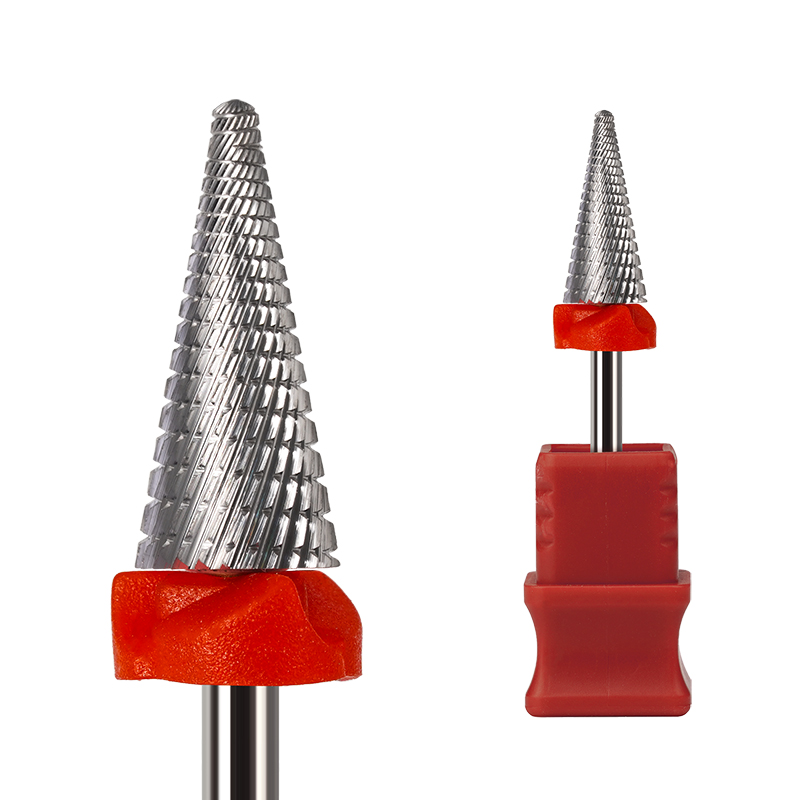
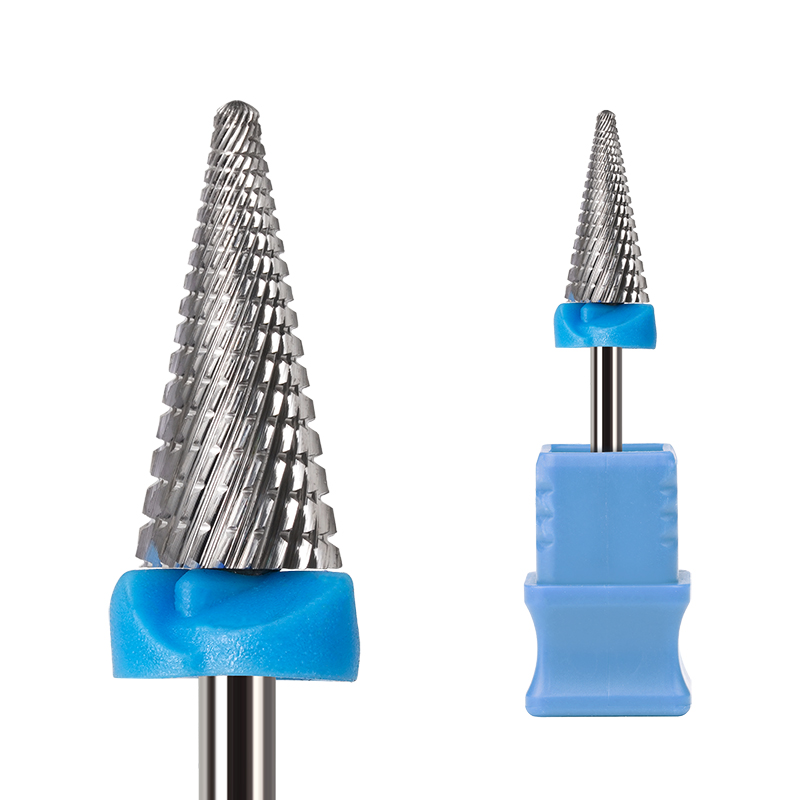
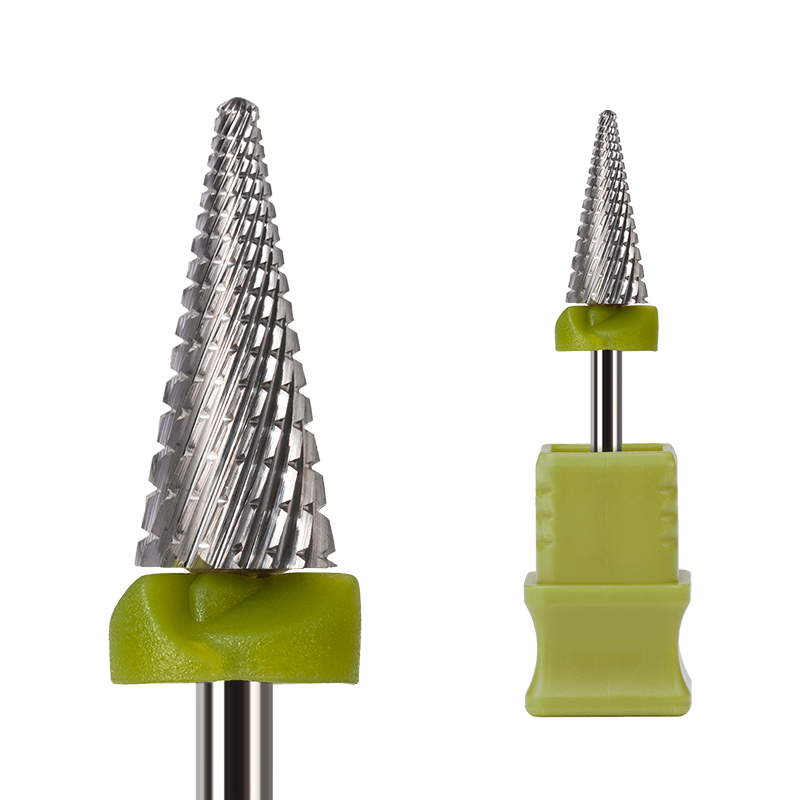
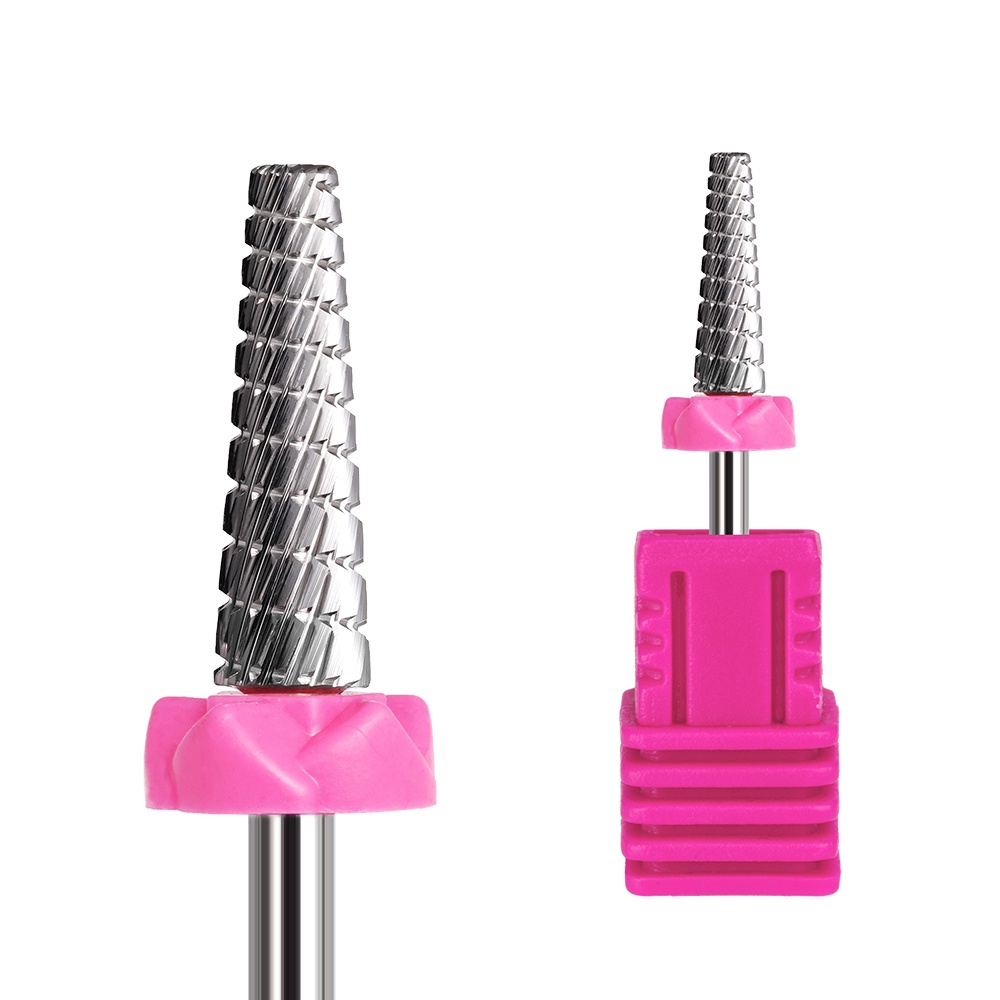
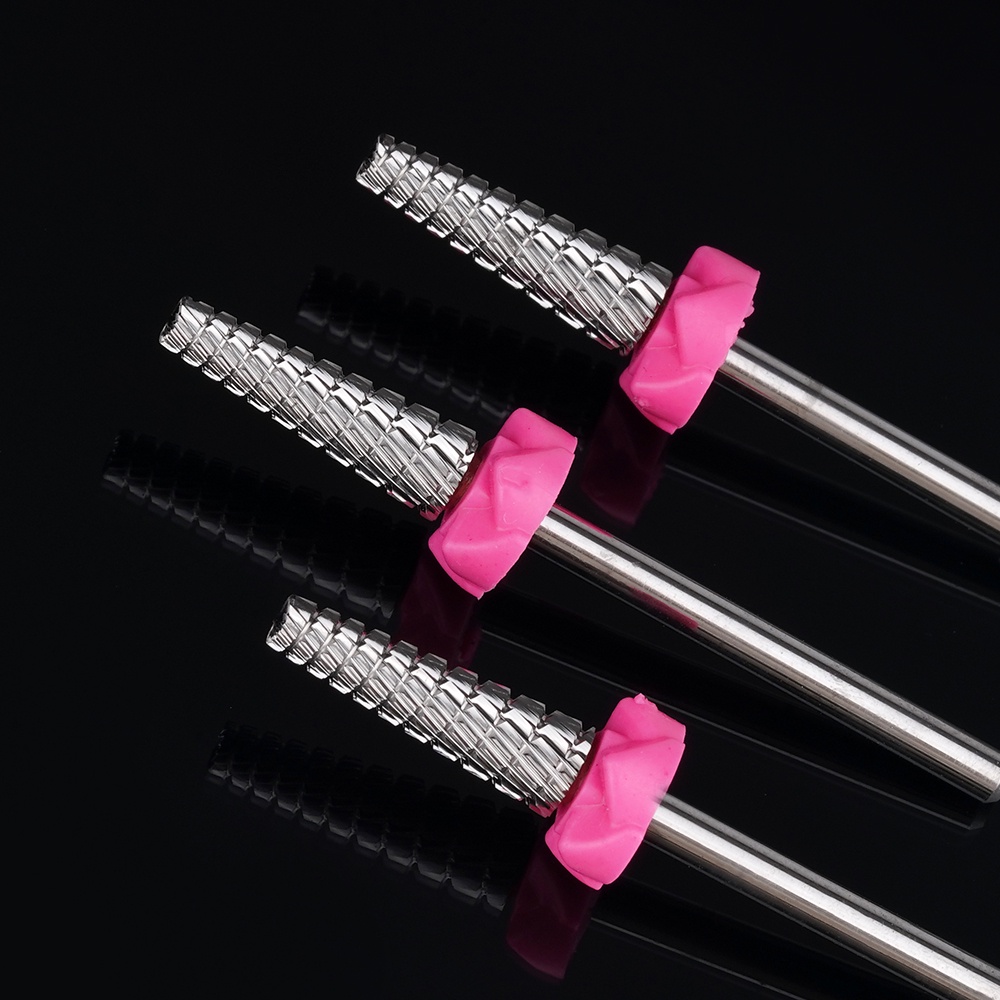
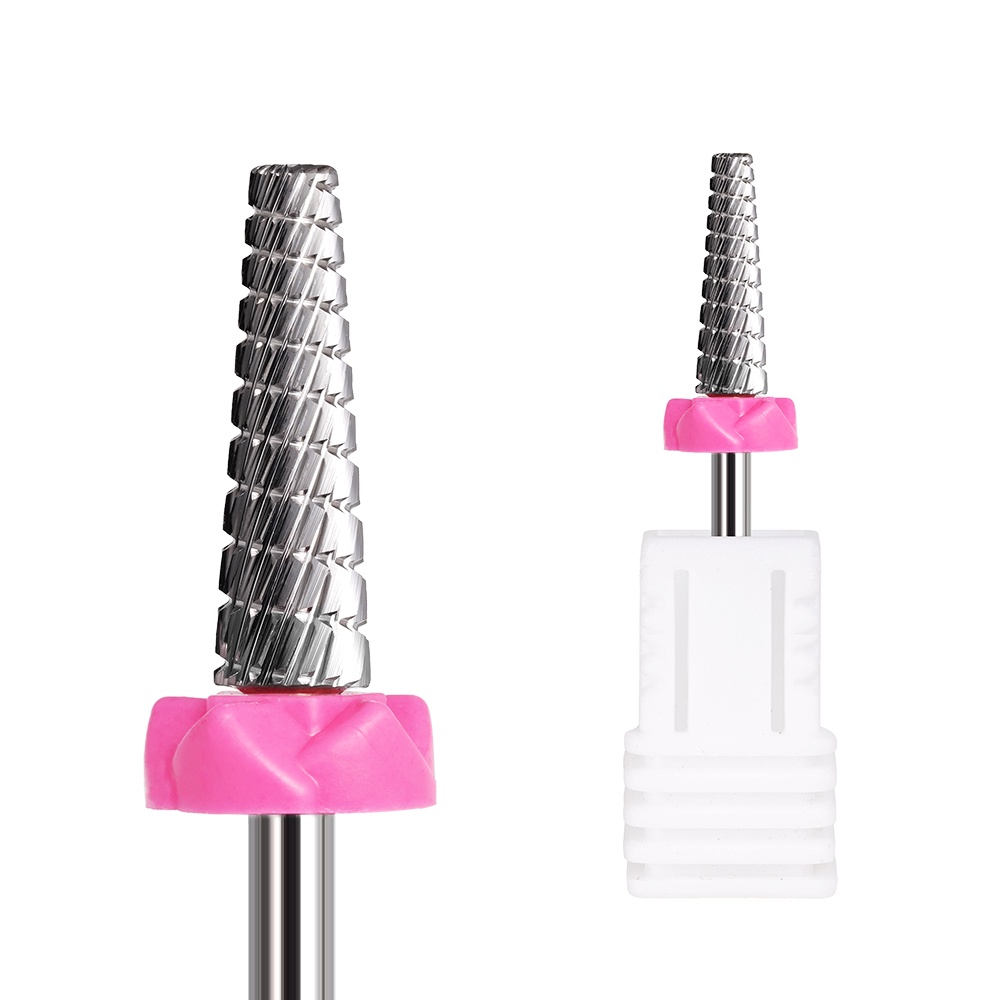
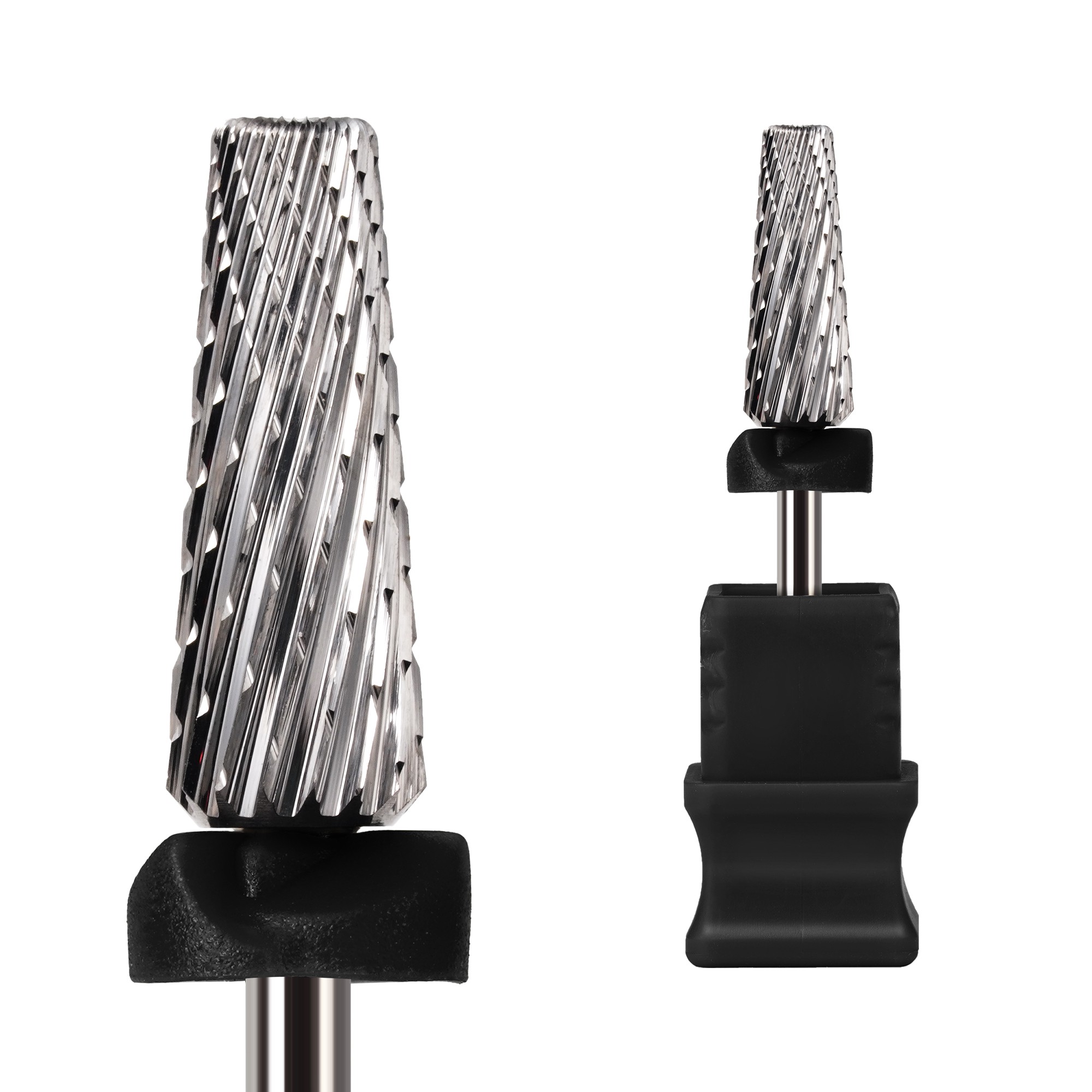
The 5 In 1 Pro Gold Tungsten Carbide Nail Drill Bit exemplifies this principle: its graded grit zones are milled from a single piece of high-hardness tungsten carbide (not layered or bonded coatings), ensuring uniform wear resistance across all functions. Its gold coating isn’t cosmetic—it enhances thermal reflectivity and reduces surface adhesion of acrylic dust, keeping the cutting surface cleaner longer. And because it’s made from high-quality alloy with strict QC at every stage—from raw material sourcing to final packaging—it delivers the stable support system needed for repeatable, minimal-effort results.
For professional nail technicians handling back-to-back appointments, that means less time swapping bits, less mental load tracking which tool does what, and more confidence that “shape, smooth, polish” flows as one continuous motion—not three separate corrections.
Don’t Confuse Longevity With Invincibility
Even the best tungsten carbide nail drill bit won’t last forever—and expecting it to defeats the purpose. Its value isn’t infinite life; it’s predictable, consistent performance across its service life. A well-made tungsten carbide bit will show gradual, even wear—not sudden chipping or edge collapse. If yours fails abruptly, check your technique first: excessive lateral pressure, incorrect RPM settings for the task, or using the wrong bit profile for the material (e.g., aggressive shaping on natural nails) will shorten any bit’s life, regardless of composition.
Also, cleanliness matters. Acrylic residue baked onto the bit surface acts like insulation, trapping heat and accelerating wear. A quick wipe with isopropyl alcohol between clients—and ultrasonic cleaning weekly—preserves performance far more than any coating claim.
Final Judgment: It’s About Sustained Precision, Not Just Initial Sharpness
You don’t choose a tungsten carbide nail drill bit because it cuts faster on the first nail. You choose it because it cuts *just as cleanly* on the 35th—without needing more force, without drifting off contour, and without making your hand ache. In high-volume salon environments, reliability isn’t a bonus. It’s the foundation of speed, safety, and service quality.
That’s why the shift isn’t from “carbide” to “tungsten carbide”—it’s from viewing bits as disposable consumables to treating them as precision tools calibrated for endurance. When every minute counts and every finish reflects your standard, the right bit doesn’t save time. It protects your work.
News List
- Preventing Gouges and Uneven Filing With Small Barrel Nail Drill BitsSep 20, 2026
- How Diameter and Grit Affect Small Barrel Nail Drill Bit PerformanceSep 20, 2026
- Can Hytos Nail Drill Bits Be Used Safely on Natural Nails and Gel Polish?Sep 20, 2026
- How to Verify Fit Between Hytos Nail Drill Bits and an E-File HandpieceSep 20, 2026
- Safe Speed Settings for Umbrella Nail Drill Bits Around the Nail FoldSep 20, 2026
- Umbrella vs Flame Nail Drill Bits: Which Shape Offers Better Cuticle Control?Sep 20, 2026
Best-Selling Products
 Cross Cut Safety Stainless Steel Tungsten Carbide Nail Drill Bits Salon Foot Use XF-C Grit for Removing Nails
 First-rate Quality Tungsten Carbide Nail Drill Bits Best Coating Manicure Remove Gel Nails Accessories
 Professional Advanced Safety Cuticle Bits Two-Way Rotate 3/32'' Carbide Tungsten 5 in 1 Nail Drill Bits
 Wholesale 5 in 1 Electric Manicure Nail Drill Bits Various Coating Cone Cuticle Bit with Rotary Cross Cut for Nail Art
 New Slant Tooth Tungsten Steel Nail Drill Bits Dead Skin Removal 5-in-1 Universal Grinding Nail Polish Head Tool Nail Drill Bits
 4.0mm Small 5 in 1 Integrated Sharpe Tungsten Nail Drill Bit Straight Teeth Gel Polish Removal
 Flame Sharp XF F M C XC Silver Safety Professional Corn Tungsten Carbide Nail Bit for Drill Machine Accessories
 Factory Direct 5 in 1 Tungsten Carbide Nail Drill Bits 6.8MM Cross Cut Safety Manicure 5 in 1 Nail Drill Bits
Please give us a message