
Nail Drill Bits 4XC: How to Check Handpiece Compatibility Before Reordering
Nail Drill Bits 4XC: How to Check Handpiece Compatibility Before Reordering
A reorder of nail drill bits 4xc can look routine on a purchase list: same item description, same grit marking, same supplier category. Yet this is one of the easiest places for a salon group, distributor, or private-label buyer to make an expensive small mistake. A bit may arrive with an aggressive cutting surface but the wrong shank, the wrong rotational design, or a head profile that does not suit the team’s service method. The result is not merely a return request. It can mean unused inventory, interrupted appointments, inconsistent technician feedback, and avoidable replacement spending.
Before issuing a repeat order, purchasing teams should treat handpiece compatibility as a short technical verification rather than an assumption. The goal is simple: confirm that the new bit will seat correctly, rotate safely, perform as expected, and fit the working habits of the people using it.
What “4XC” tells you—and what it does not
In nail drill bit purchasing, 4XC is generally used to indicate an extra-aggressive or very coarse cutting level. It is commonly selected for bulk removal of hard gel, builder gel, acrylic overlays, and other enhancement materials where a fine or medium bit would remove product too slowly. For busy professional environments, that faster bulk reduction can improve service flow when used by trained technicians.
However, 4XC is not a complete compatibility specification. Grit labels are not always standardized in exactly the same way across factories and brands. One supplier’s 4XC carbide flute pattern may feel noticeably different from another supplier’s 4XC version, even when both are intended for rapid removal. The number or letter marking alone does not define shank diameter, flute direction, barrel width, head length, material grade, or recommended operating range.
For procurement purposes, think of the grit label as a performance reference, not an engineering drawing. A complete reorder description should include the bit type, shank size, cutting direction, head dimensions, material, finish, and packaging requirements alongside the 4XC designation.
Start with the handpiece, not the catalog image
The most reliable information is found on the existing e-file handpiece, its instruction manual, or the technical data sheet supplied by the equipment manufacturer. Ask the service manager or lead technician to provide the exact model number of the handpiece currently in use. A photograph of the handpiece label and one of the bit already used successfully can prevent many ordering errors.
Most professional electric nail drill handpieces accept a 3/32 inch (2.35 mm) shank. This is widely considered the standard for professional nail drill bits, but “widely used” should not be confused with “universal.” Certain devices, entry-level tools, specialty systems, or older equipment may have different requirements. Never approve a large order based only on the belief that all e-file bits are interchangeable.
It is also important to separate shank diameter from head diameter. A product described as 5.35 mm may refer to the working head or barrel width, not the shank that enters the handpiece. This distinction matters because the head affects coverage and control during removal, while the shank determines whether the bit fits and locks into the handpiece at all.
A practical fit check before placing the purchase order
- Confirm the handpiece’s required shank diameter from its manual or manufacturer specification.
- Measure a currently approved bit with a caliper if documentation is unavailable.
- Check that the new bit’s usable shank length allows it to seat fully in the chuck without interference.
- Ask whether the handpiece has a twist-lock, push-lock, or other chuck mechanism and whether there are known bit-length limitations.
- Verify that the chuck is maintained and free from wear; a loose chuck can make a correct bit appear incompatible.
Do not use a loose fit as a workaround. A bit that slips, wobbles, or cannot be securely locked may damage the handpiece and creates a safety issue during service. Equally, do not force a shank into a chuck that resists insertion. The immediate saving from using an available bit is rarely worth the cost of equipment downtime.
Match cutting direction to the team’s working setup
Carbide nail drill bits are often produced as right-hand, left-hand, or bidirectional designs. This is a critical check for nail drill bits 4xc because aggressive flutes can behave poorly when run in the wrong direction. Instead of cleanly lifting product away, an incorrectly oriented bit may feel rough, pull at the surface, generate more heat, or leave an uneven finish.
A right-hand bit is typically designed for a technician who operates the drill in forward rotation. A left-hand bit is designed for reverse rotation. Bidirectional designs are intended to work in either direction and can be useful where a salon employs both left- and right-handed technicians or where service routines require frequent changes in hand position.
Buyers should not assume that a handpiece’s forward/reverse button makes every bit bidirectional. The control only changes the motor rotation. The cutting flute geometry still determines whether the bit is suited to that direction.
When reviewing a supplier quotation, request clear confirmation of the cutting direction. A useful internal purchase description might read: “3/32 in shank, 4XC carbide barrel, right-hand cut, gold coating, approved for forward rotation.” This wording gives the receiving team something concrete to inspect when cartons arrive.
Head profile affects both productivity and complaint rates
Even if the shank and rotation direction are correct, a reordered bit may disappoint technicians if the cutting head differs from their existing tool. The profile governs how the bit contacts the enhancement material, how easily it reaches curved areas, and how much care is needed near the cuticle zone and sidewalls.
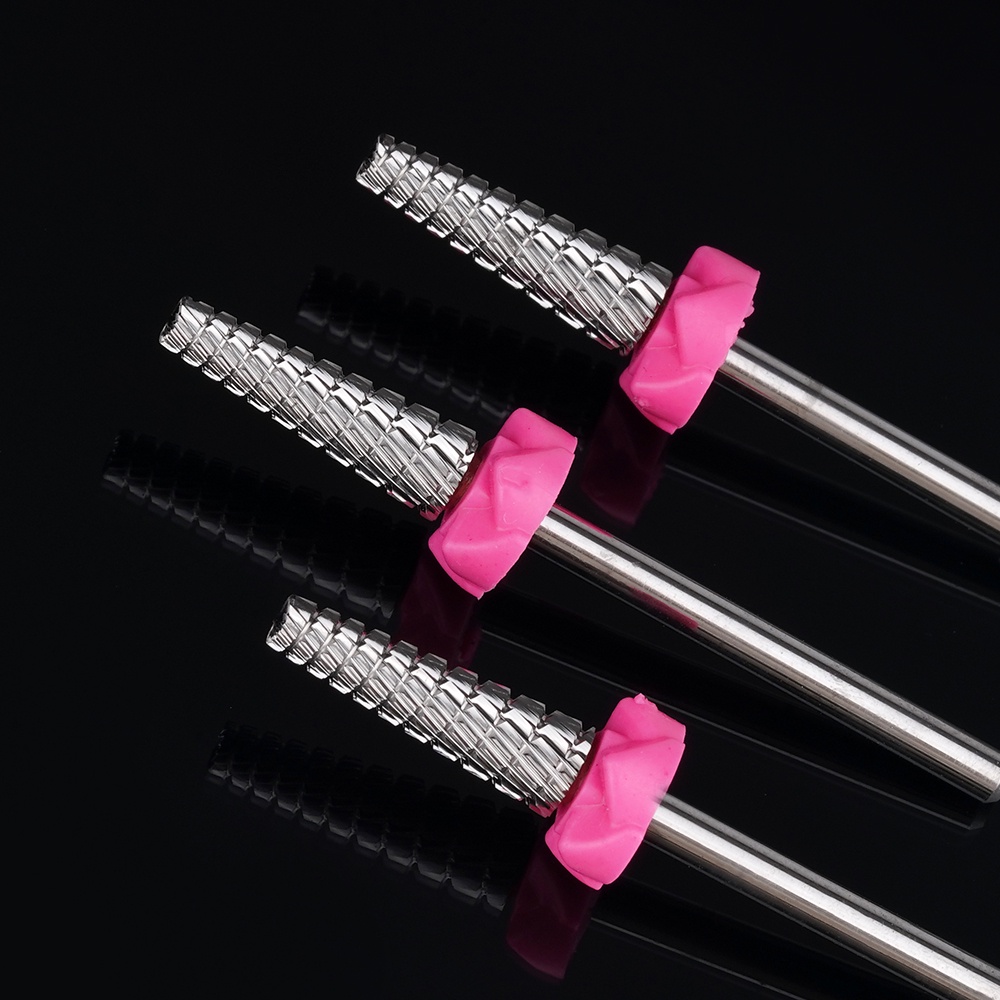
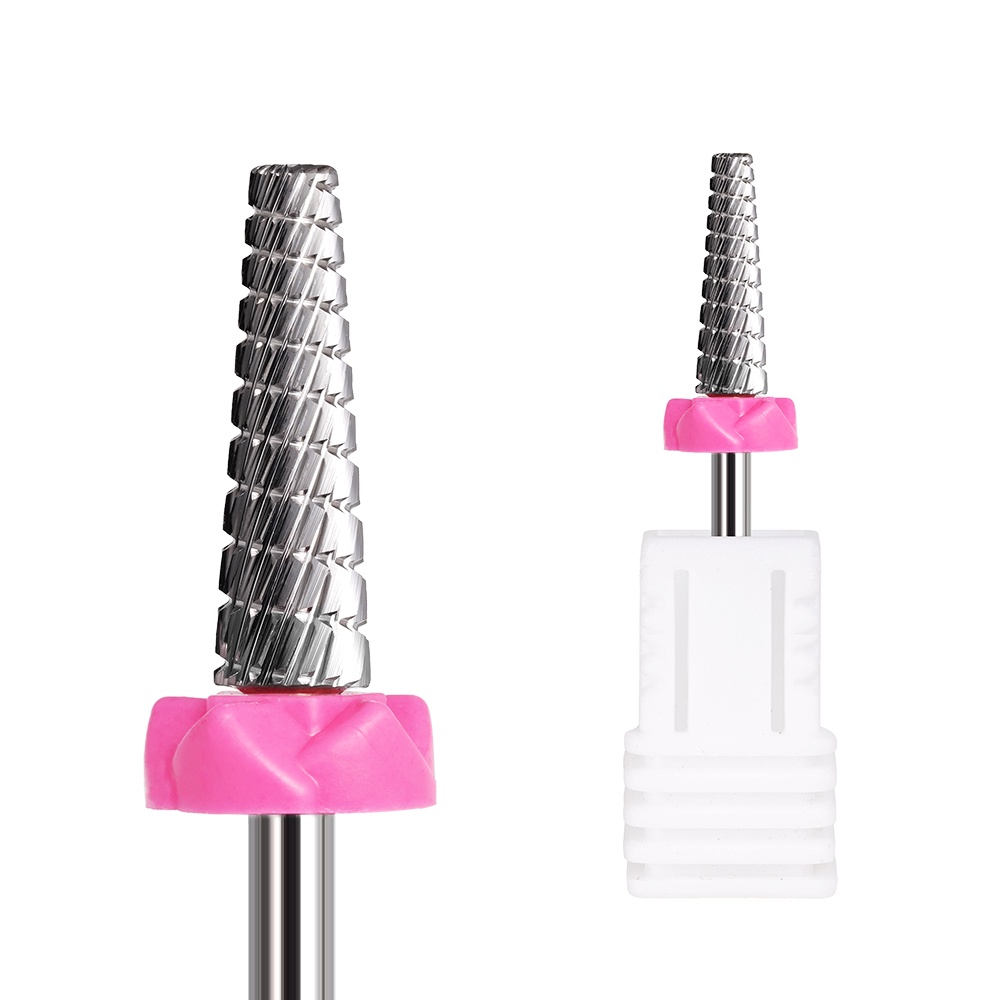
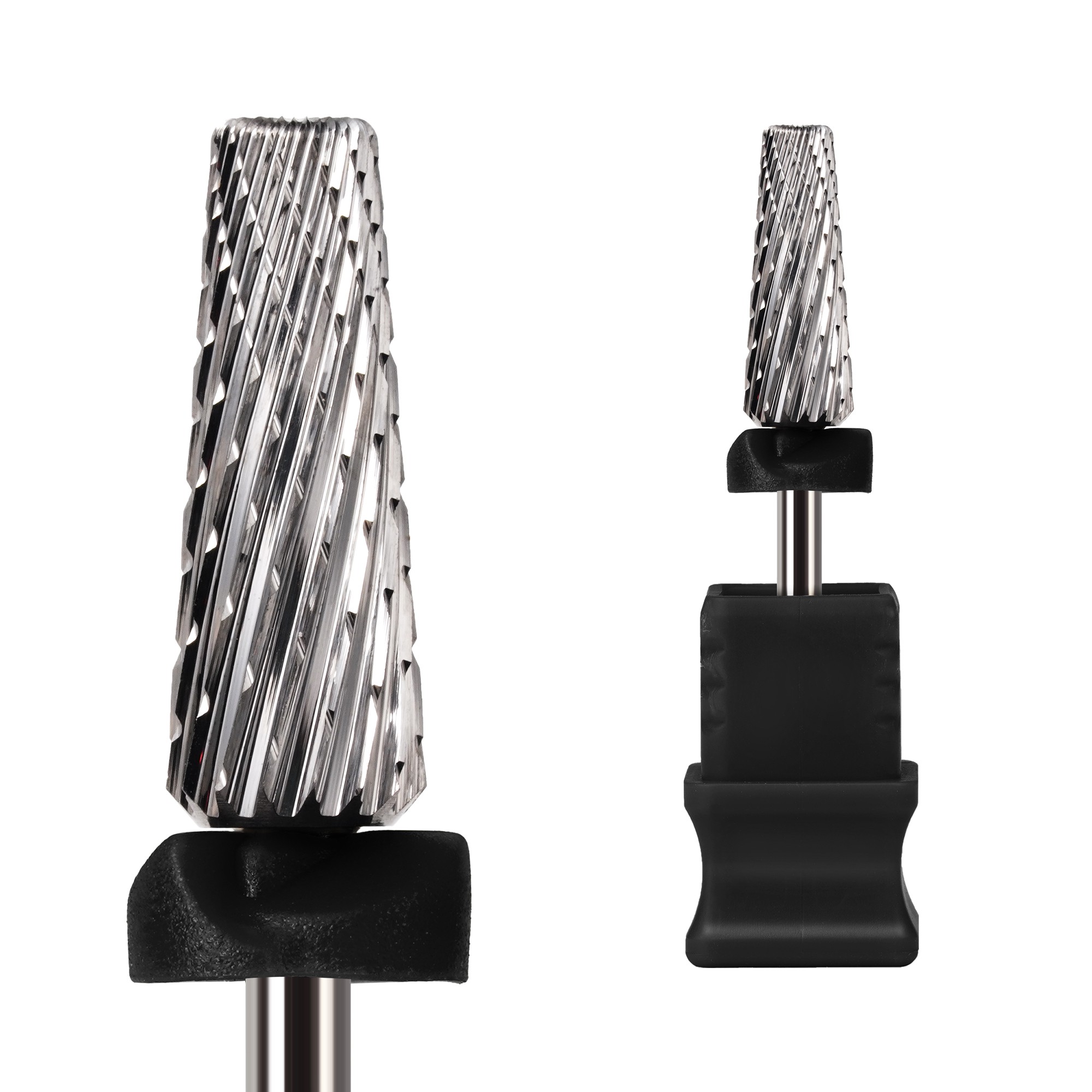
A barrel-shaped bit is widely used for reducing thickness and removing hard gel or acrylic over broader nail areas. A wider barrel can cover more surface per pass, which appeals to high-volume operations. A narrow barrel offers more maneuverability around smaller nails and detailed zones. Round-top barrel shapes are often preferred where users want a more forgiving edge than a sharp, flat-top profile, particularly during general product removal.
For example, the 5.35mm Round Top Barrel Gold Carbide Nail Drill Bit Set Hard Gel Removal is offered in coarse, medium, and fine options, with narrow and wide versions available. For purchasing teams, this type of range can make it easier to build a tiered assortment: aggressive removal tools for trained users, medium options for regular reduction, and finer bits for more controlled finishing work. The 5.35 mm reference relates to the working head specification, so the shank requirement still needs to be separately confirmed against the handpiece.
The lesson is not that one profile suits every operation. It is that an exact visual and dimensional comparison with the currently approved bit is more useful than comparing grit labels alone. Request a product drawing, detailed photos from multiple angles, or a pre-production sample when changing suppliers or changing a factory’s production specification.
Review the speed range as part of compatibility
Handpiece compatibility is mechanical, but operational compatibility is just as important. A bit and drill may physically connect while still being poorly matched in use. Every handpiece has a recommended operating range, and every bit design has a practical speed range based on its material, cutting geometry, and intended task.
For carbide barrel bits used in gel removal, a common working reference is around 15,000–20,000 RPM for hard gel and around 10,000–15,000 RPM for soft gel or base gel removal. These are operating guidelines rather than a substitute for technician training, manufacturer instructions, or professional judgment. Speed should be adjusted according to product thickness, pressure, the condition of the bit, and the client’s nail condition.
Procurement teams should compare the bit supplier’s recommended RPM range with the actual capability of their installed handpieces. A low-power device that struggles to maintain stable rotation under load may not be the right operational match for an extra-coarse carbide bit intended for substantial bulk removal. Conversely, buying highly aggressive bits for teams that primarily perform gentle gel polish removal can increase training needs and may lead to dissatisfaction.
Ask the internal user group one direct question: “What material are you removing most often?” The answer may be hard gel, soft gel, acrylic, builder gel, base gel, or a mixed service menu. That answer should determine the grit mix in the order far more than a preference for the most aggressive option.
A small pilot order is cheaper than a warehouse correction
When a buyer changes a bit specification, adopts a new supplier, or moves into a private-label program, sampling is not a delay—it is a cost-control step. A few samples tested on the actual handpieces in the actual service environment can reveal issues that specification sheets do not show: excessive vibration, unexpected heat generation, poor cutting feel, inconsistent coating appearance, or packaging that is impractical for retail resale.
Create a short approval form for the pilot. It does not need to be complicated. Include the handpiece model, shank fit, rotation direction, stability during use, removal speed, surface finish, technician comments, and any signs of corrosion or coating wear after cleaning. If several locations are involved, test with more than one technician. A bit that one experienced operator enjoys may be unsuitable for a broader team with varied skill levels.
For large orders, retain an approved “golden sample” in the purchasing or quality department. Future deliveries can be checked against it for head shape, flute pattern, shank finish, labeling, and packaging. This makes it easier to identify specification drift before products are distributed across multiple sites.
Look beyond unit price when calculating reorder cost
The lowest quoted price for nail drill bits 4xc is not always the lowest purchasing cost. Consider the usable life of the cutting edge, consistency between batches, reject rate, packaging protection, and the number of service disruptions caused by compatibility problems. A bit that wears prematurely or arrives with uneven shanks may appear inexpensive on the invoice but can increase consumption and technician frustration.
Material selection is part of this calculation. Tungsten carbide and tungsten steel constructions are valued in this category for their hardness and cutting durability. Coatings, including gold-colored finishes, may be selected for corrosion resistance and surface performance, but the buyer should still ask how the product should be cleaned, disinfected, stored, and inspected. No finish removes the need for correct maintenance.
For distributors and branded buyers, packaging deserves equal attention. Individual protection can reduce damage during transport and maintain a cleaner presentation at receiving. Carton labeling should make it easy to distinguish grit, direction, profile, and batch. If coarse and 4XC bits are packed in nearly identical sleeves, warehouse picking errors become much more likely.
Questions worth sending to a supplier before reordering
A capable supplier should be able to answer direct technical questions without relying on vague product language. Use the following checklist in your RFQ or reorder confirmation:
- What is the exact shank diameter and tolerance?
- Is the bit right-hand, left-hand, or bidirectional?
- How is 4XC defined in this product line, and what flute pattern is used?
- What are the head diameter, head length, and overall length?
- Which enhancement materials is the bit intended to remove?
- What RPM range is recommended for typical use?
- What material and coating are used, and what cleaning guidance applies?
- Can the factory provide samples, inspection records, and consistent batch identification?
- Can grit markings, color rings, labels, and retail packaging be customized for OEM or ODM requirements?
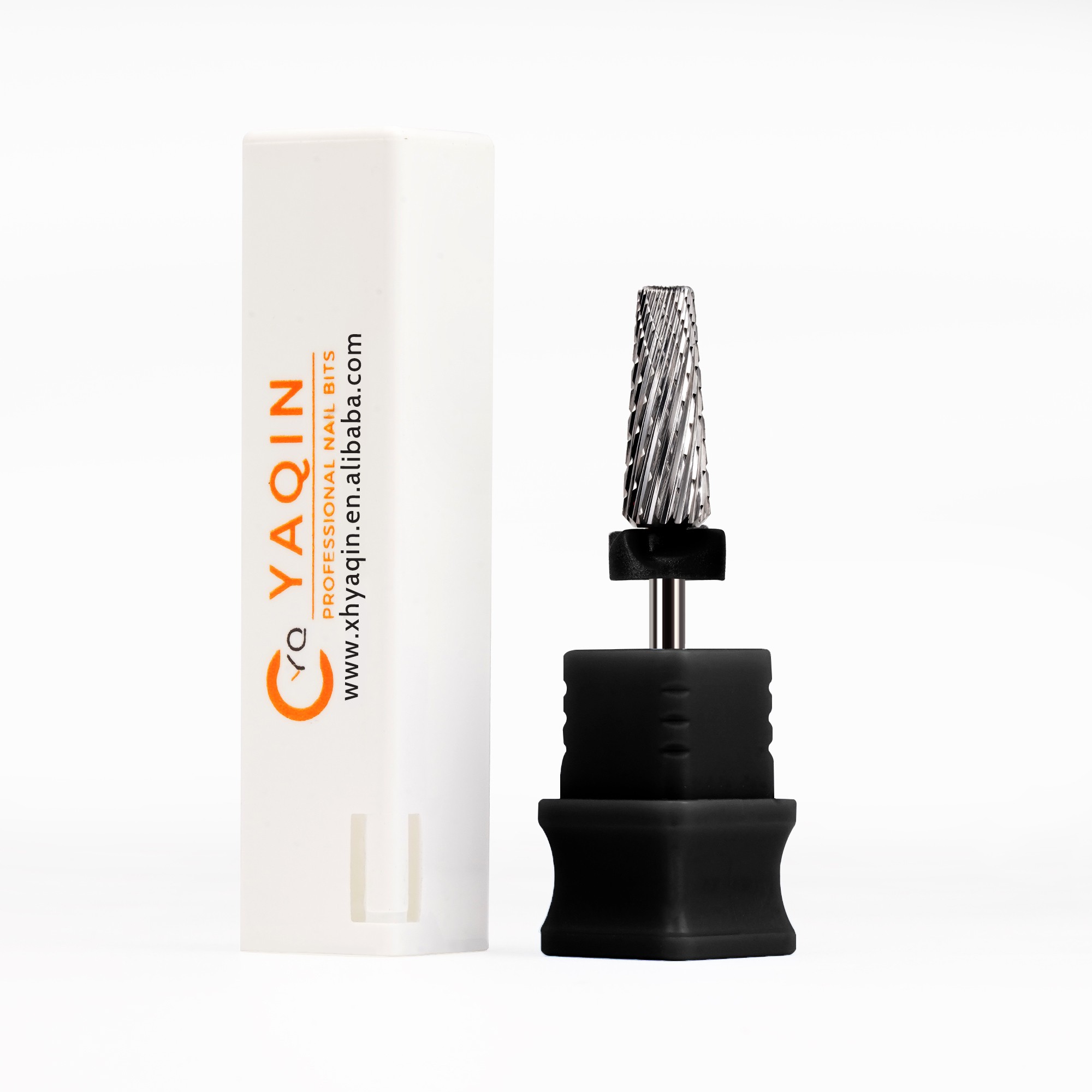
Wuxi Yaqin Trading Co., Ltd. supports abrasive-product production and export for buyers in markets including North America and Europe, with quality controls covering raw material purchasing, production, and packing. For buyers developing repeat programs, that process visibility is valuable: consistency is often more important than making a one-time purchase look attractive. Clear specifications, sample confirmation, and documented quality checks give both sides a firmer basis for long-term ordering.
Make compatibility a line item, not an afterthought
The best reorder process is calm and repeatable. Record the approved handpiece models, keep a reference bit, define the required shank and rotation direction, and note which profiles and grits match each service category. Once this information is built into the purchase order, buyers no longer need to rely on memory or a generic catalog photo.
A 4XC bit can be a useful productivity tool for the right material, the right handpiece, and the right trained user. Its value disappears when it does not lock securely, runs against its intended flute direction, or exceeds the practical needs of the service menu. Verify those points before reordering, and the purchase becomes what it should be: a dependable replenishment decision rather than a costly experiment.
News List
- Preventing Gouges and Uneven Filing With Small Barrel Nail Drill BitsSep 20, 2026
- How Diameter and Grit Affect Small Barrel Nail Drill Bit PerformanceSep 20, 2026
- Can Hytos Nail Drill Bits Be Used Safely on Natural Nails and Gel Polish?Sep 20, 2026
- How to Verify Fit Between Hytos Nail Drill Bits and an E-File HandpieceSep 20, 2026
- Safe Speed Settings for Umbrella Nail Drill Bits Around the Nail FoldSep 20, 2026
- Umbrella vs Flame Nail Drill Bits: Which Shape Offers Better Cuticle Control?Sep 20, 2026
Best-Selling Products
 Cross Cut Safety Stainless Steel Tungsten Carbide Nail Drill Bits Salon Foot Use XF-C Grit for Removing Nails
 First-rate Quality Tungsten Carbide Nail Drill Bits Best Coating Manicure Remove Gel Nails Accessories
 Professional Advanced Safety Cuticle Bits Two-Way Rotate 3/32'' Carbide Tungsten 5 in 1 Nail Drill Bits
 Wholesale 5 in 1 Electric Manicure Nail Drill Bits Various Coating Cone Cuticle Bit with Rotary Cross Cut for Nail Art
 New Slant Tooth Tungsten Steel Nail Drill Bits Dead Skin Removal 5-in-1 Universal Grinding Nail Polish Head Tool Nail Drill Bits
 4.0mm Small 5 in 1 Integrated Sharpe Tungsten Nail Drill Bit Straight Teeth Gel Polish Removal
 Flame Sharp XF F M C XC Silver Safety Professional Corn Tungsten Carbide Nail Bit for Drill Machine Accessories
 Factory Direct 5 in 1 Tungsten Carbide Nail Drill Bits 6.8MM Cross Cut Safety Manicure 5 in 1 Nail Drill Bits
Please give us a message