
Tungsten Carbide Nail Drill Bit Life: What Buyers Should Compare Beyond Unit Price
Tungsten Carbide Nail Drill Bit Life: What Buyers Should Compare Beyond Unit Price
For procurement teams, the real cost of a Tungsten Carbide Nail Drill Bit is rarely visible on the first quotation. A lower unit price can look attractive in a catalog comparison, yet the saving disappears quickly if the bit dulls after limited use, vibrates in the handpiece, produces inconsistent removal, or creates more technician complaints and replacement orders.
In professional nail supply, buyers are not simply purchasing a small rotary tool. They are purchasing predictable performance across many service appointments, product batches, markets, and end-user skill levels. Whether the buyer serves salons, nail academies, distributors, private-label brands, or e-commerce customers, bit life has a direct effect on cost of goods, return rates, inventory planning, and brand reputation.
The smarter question is not “Which Tungsten Carbide Nail Drill Bit is cheapest?” It is: Which option delivers the lowest usable cost over its working life while maintaining safe, consistent removal?
Why unit price is a weak comparison point
A nail drill bit may be inexpensive because of differences that do not appear in a basic product photo: carbide grade, tooth geometry, welding or forming quality, shank concentricity, finish consistency, packaging protection, or the depth of incoming inspection. Two bits with similar shapes may feel very different after repeated contact with hard gel, builder gel, acrylic, polish layers, or callus material.
When a bit loses sharpness early, technicians often compensate by increasing pressure, slowing their movement, raising drill speed, or making extra passes over the same surface. That creates costs beyond the replacement item itself. Service time extends. Client comfort may decline. The natural nail can be exposed to unnecessary heat or abrasion if technique is not adjusted carefully. For a salon-facing buyer, these are commercial risks, not merely technical details.
A more useful purchasing model is:
Lifecycle cost per service = purchase cost + inbound and handling cost + replacement cost + performance-related labor cost + quality-risk cost, divided by the number of acceptable services completed.
This is not meant to turn a straightforward product purchase into an accounting exercise. It simply prevents a familiar mistake: treating every drill bit as interchangeable because the diameter and visible shape appear similar.
Service life starts with the carbide, but does not end there
“Tungsten carbide” is often used broadly in the market, so buyers should ask what the term means in the supplier’s actual production standard. A durable bit depends on a carbide body that can retain a sharp cutting edge while resisting chipping and breakage during normal professional use. Poorly controlled material or processing may leave an edge that feels aggressive at the beginning but deteriorates quickly under repeated workload.
For buyers, the goal is not maximum sharpness in the first few minutes. It is stable cutting behavior over time. A reliable bit should remove product efficiently without a sudden drop in performance after routine cleaning and repeated appointments.
Material performance is also connected to the type of products your customers remove. Hard gel, dense builder systems, acrylic enhancements, and thick overlays impose a different load than light polish removal. If your range is aimed at fast salon turnover, prioritize bits designed for sustained removal work. If your assortment serves home users, controlled cutting and safety-oriented geometry may matter more than maximum aggression.
Tooth design determines how a bit ages in real use
Buyers often compare flute color, barrel shape, and grit description, but the cutting pattern deserves closer attention. Cross-cut, straight-cut, and specially engineered helical patterns handle debris, friction, and removal speed differently. The design should clear dust efficiently instead of allowing buildup between teeth, where clogged material can reduce cutting performance and increase heat.
A well-designed helical pattern can help guide dust away from the working area while keeping the bit engaged more consistently. This is especially relevant for nail technicians who need to remove product smoothly rather than repeatedly stopping to clean the surface. A stable dust ejection direction also helps reduce the scattered mess that can make salon workstations harder to manage.
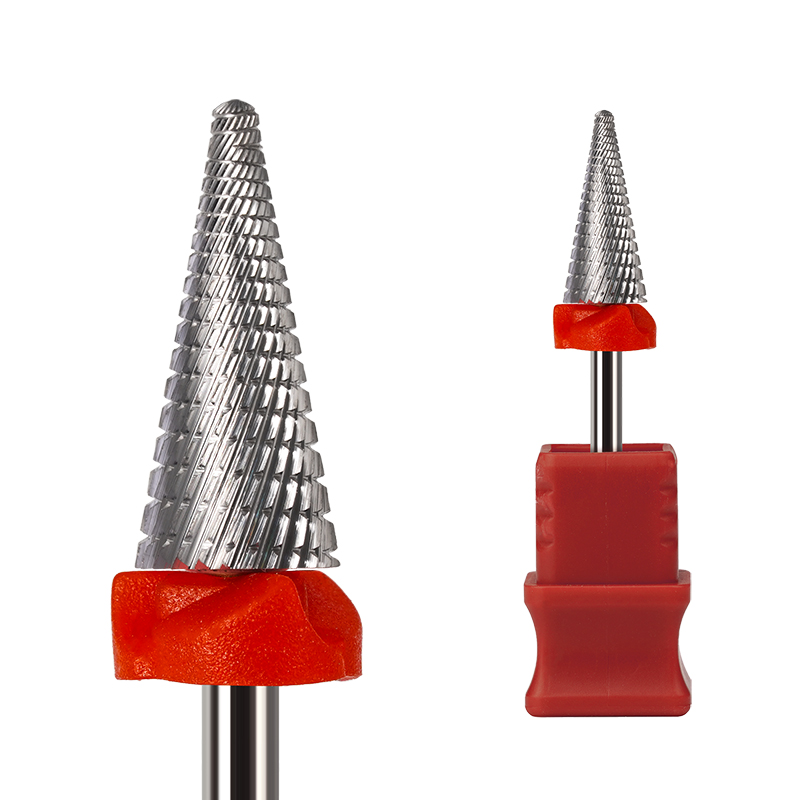
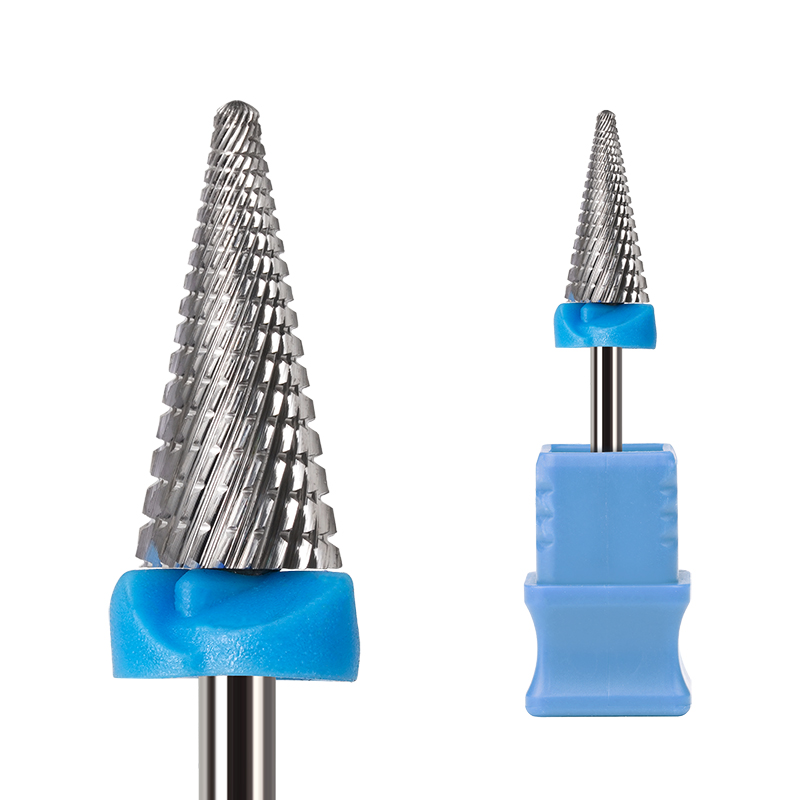
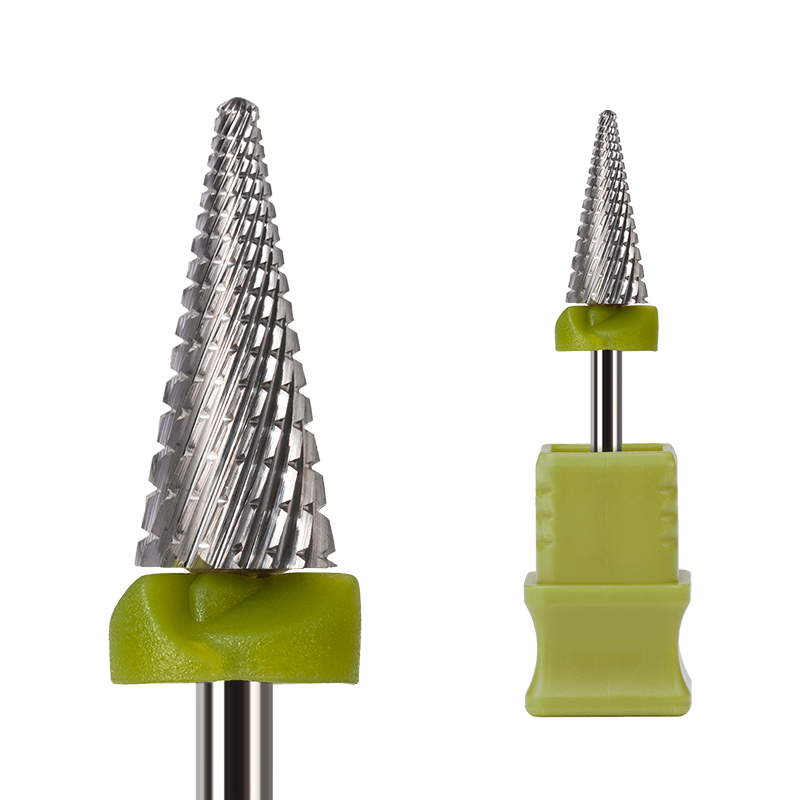
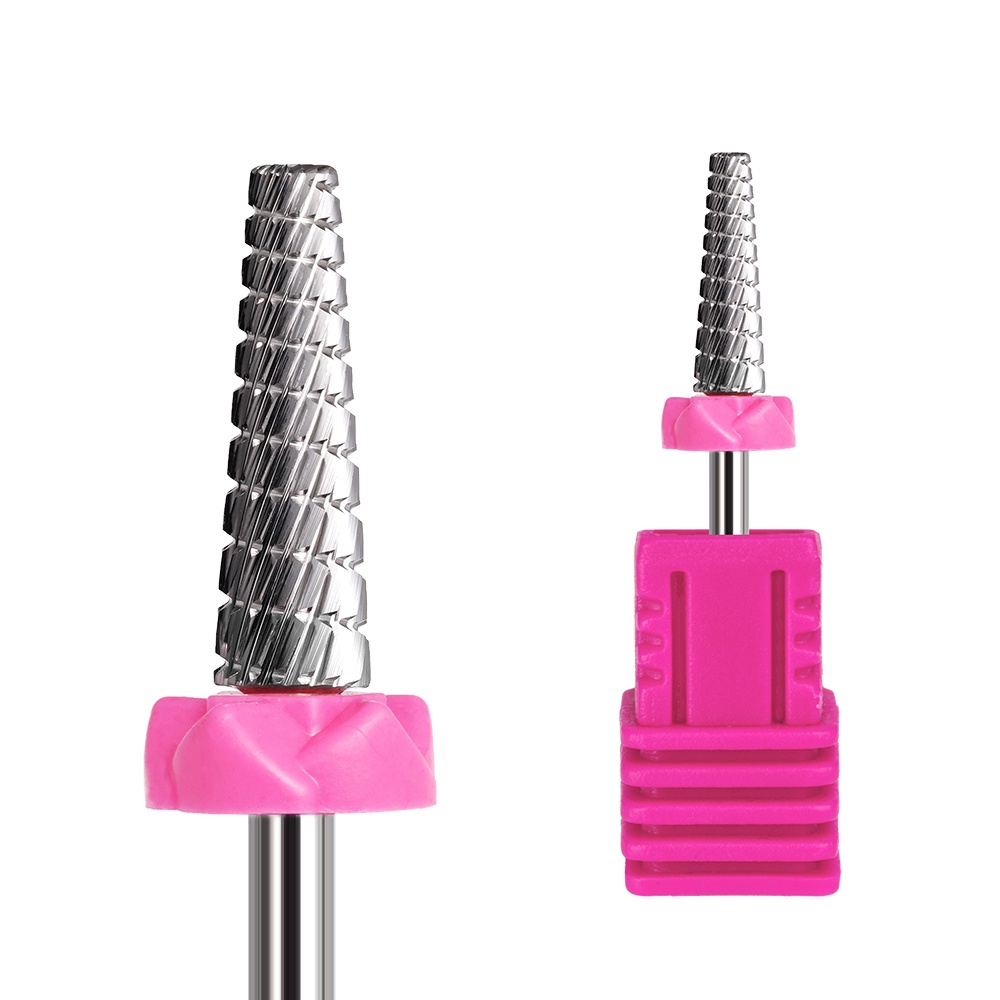
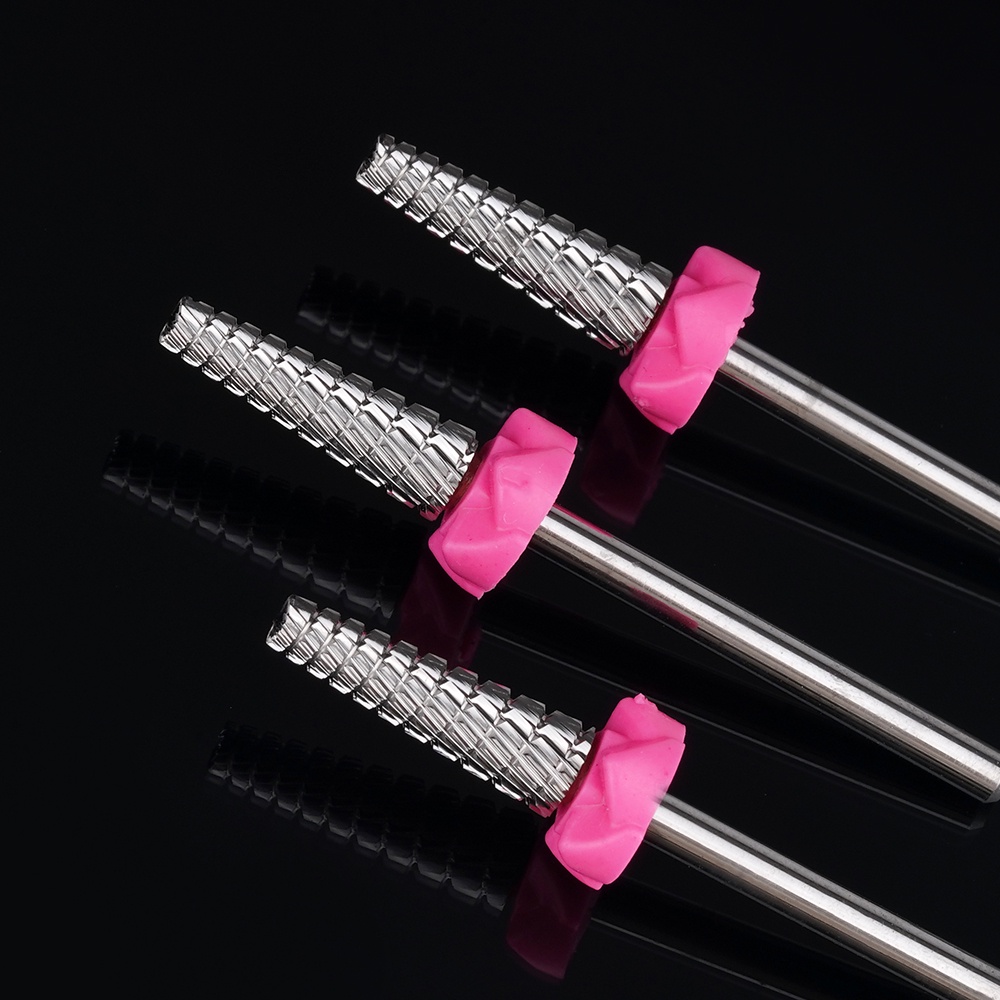
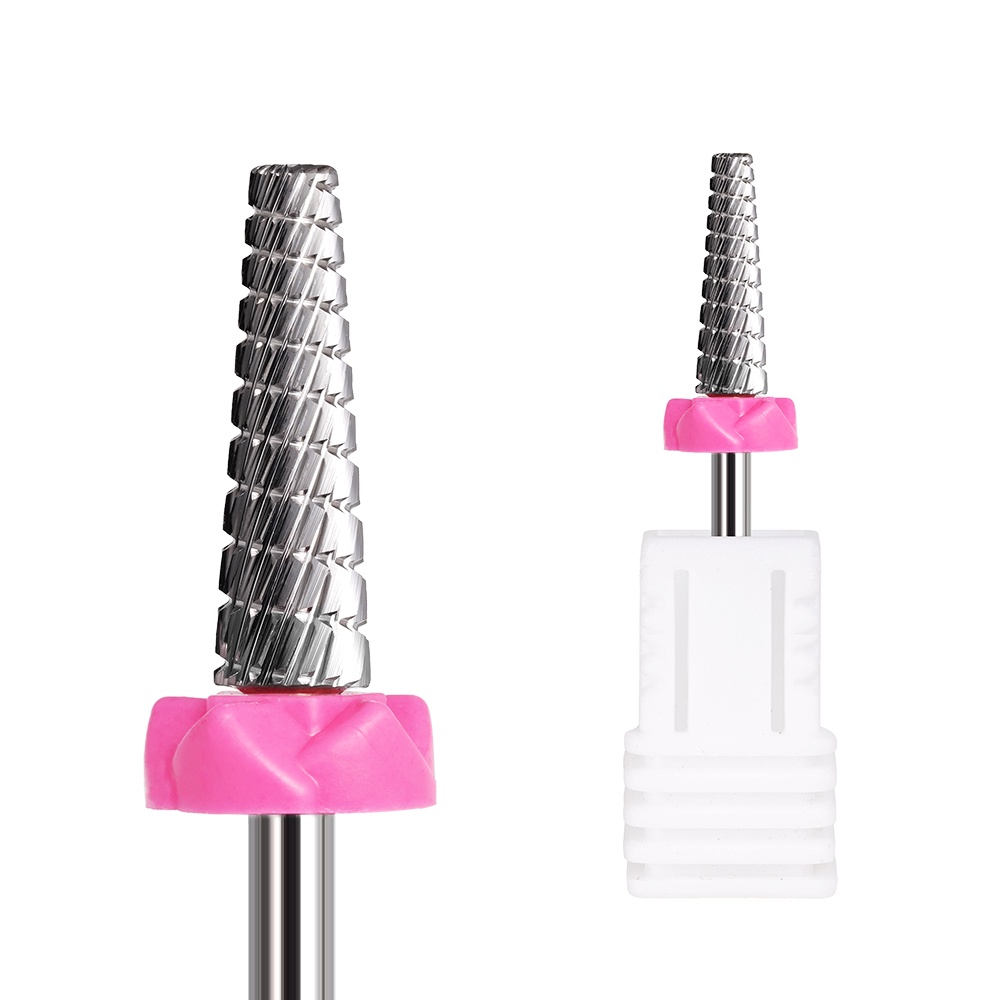
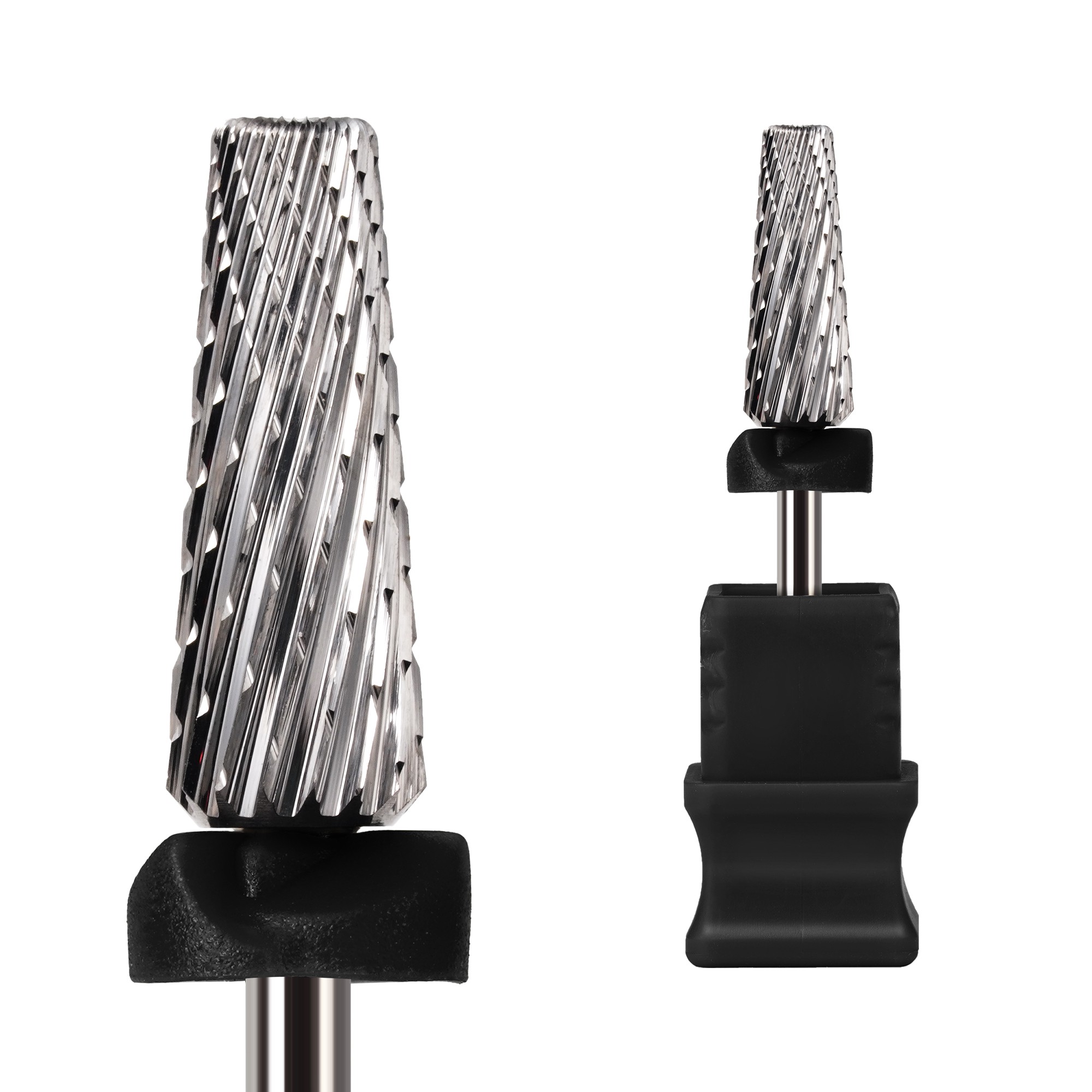
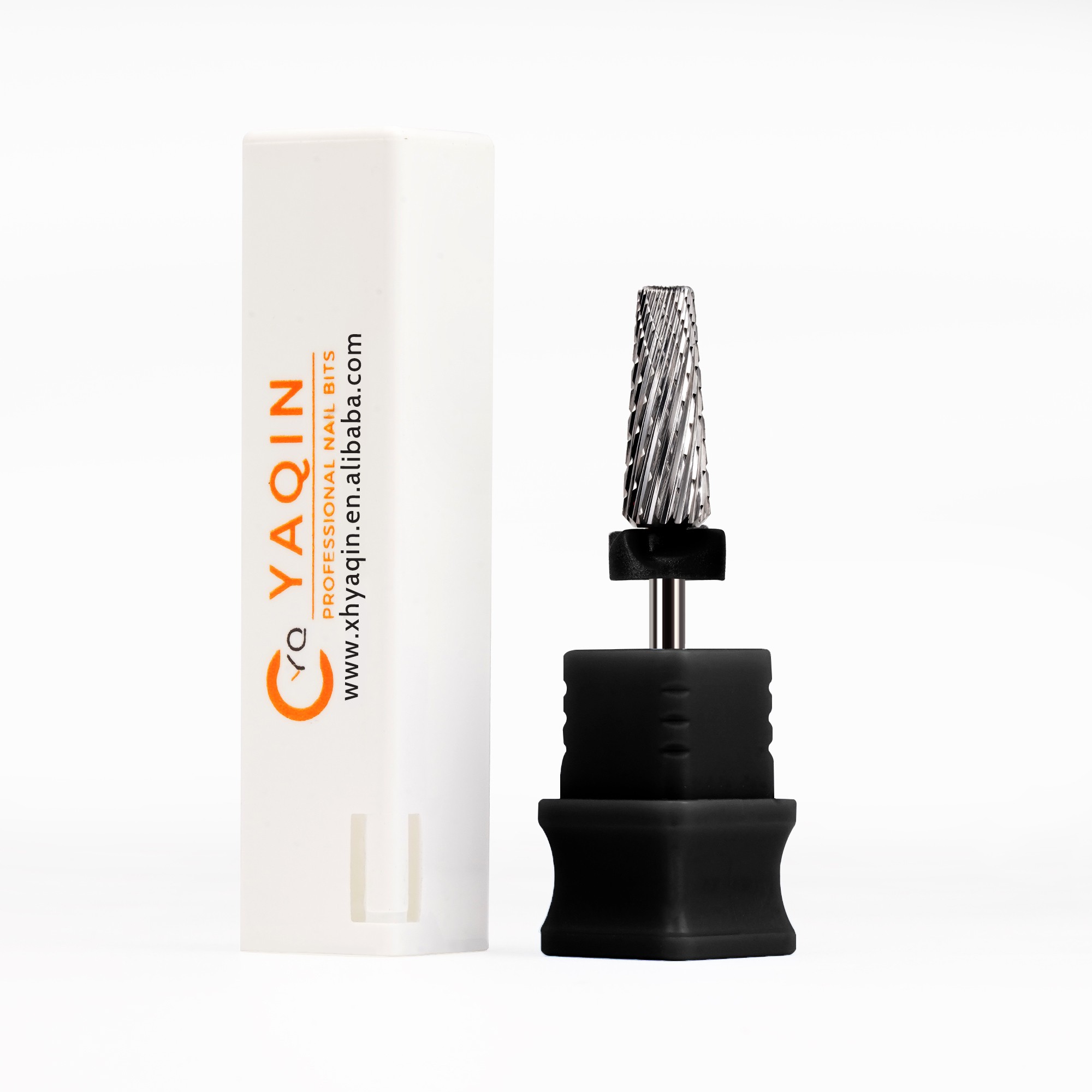
For example, a multipurpose option such as the High Quality Helical Tungsten Carbide Nail Drill Bits 5 in 1 Professional Cross Cut Teeth Fast Remove Nail Gel Nail Drill Bit may be worth reviewing when a buyer wants to consolidate several common removal tasks into one SKU. Its intended applications include hard and soft gel removal, nail preparation, nail tips removal, dead skin work, and work on tougher surfaces. The value of a 5-in-1 format is not only convenience; it can simplify assortment planning when the actual performance range is validated.
However, multipurpose should not mean unspecified. Procurement teams should still request clear information about recommended use, grit behavior, tip profile, rotation suitability, and cleaning guidance. A bit marketed for many tasks must remain controlled and comfortable in each relevant use case.
Shank precision: the overlooked factor behind vibration and returns
The shank is easy to ignore because it does not do the visible cutting. Yet shank accuracy affects how securely the bit sits in the drill handpiece. If concentricity is poor, the bit may wobble or vibrate at operating speed. That can make a seemingly sharp bit feel rough, shorten its practical life, and lead users to blame the nail drill rather than the accessory.
For most professional e-files, the common shank requirement is 3/32 inch. Buyers should confirm not only the nominal size but also dimensional consistency across production lots. Ask suppliers how they control shank diameter, straightness, and runout. If the answer is limited to “fits most machines,” that is not enough for a buyer building a dependable range.
Vibration brings several downstream consequences:
- Less precise work around the cuticle and sidewalls;
- More hand fatigue for technicians during busy service days;
- A greater perception of poor quality even when the carbide material is acceptable;
- Higher likelihood of complaints, exchanges, and negative product reviews.
A small premium for better shank control can therefore be justified long before the bit is technically worn out.
Compare cutting consistency, not only removal speed
Fast removal is valuable, but only when it stays controllable. A bit that removes gel very aggressively may not be the best commercial choice if it requires experienced handling or leaves little margin for error. Buyers supplying mixed customer groups should consider whether the product’s cutting action is suited to the user profile.
A smooth flat tip, for example, can offer an added sense of control around sensitive areas, while a consistent grinding surface supports more even contact. These characteristics can be important to professional technicians who work quickly but still need to protect the natural nail. For DIY-oriented channels, they can reduce the intimidation factor of using an electric nail file.
During sample evaluation, ask testers to look beyond the initial pass. Does the bit continue to cut evenly after multiple removal sessions? Does it pull or skip when the gel layer changes? Does it generate excess heat under normal technique? Does the edge remain clean after cleaning? Notes from real operators will often reveal more than a single bench test.
Coatings and finishes: useful only when their purpose is clear
Decorative finishes can make a nail drill bit more distinctive on a retail shelf, but procurement decisions should not be based on color alone. A coating may be intended to improve surface characteristics, offer corrosion resistance, or support product differentiation. It should not be assumed to compensate for weak carbide, inaccurate machining, or poor edge quality.
Ask practical questions: Is the finish consistent from batch to batch? Does it remain intact through normal cleaning methods? Does the supplier specify whether the coating changes the cutting behavior? Is it used on the working area, the shank, or both? Clear answers help buyers distinguish functional finishing from cosmetic presentation.
For products expected to be cleaned frequently, dust-proof and waterproof compatibility can also support a longer useful life, provided users follow the appropriate sanitation and drying routines. A durable accessory still needs appropriate care; no material is immune to damage from drops, improper chemical exposure, or misuse at unsuitable speeds.
How to evaluate a supplier before placing a larger order
Bit life is closely linked to process discipline. Even a sound product design can become inconsistent when raw material sourcing, machining, inspection, and packing are not controlled from lot to lot. This is where procurement should move from product comparison to supplier assessment.
Useful questions include:
- How are incoming carbide materials inspected before production?
- What controls are used to check tooth formation, edge condition, and shank dimensions?
- How is vibration or runout monitored during quality inspection?
- Are samples taken from each production batch, and what happens when they fail?
- How are bits packed to prevent tooth damage and shank scratches during transport?
- Can the supplier support custom labels, packaging, grit assortments, or OEM/ODM requirements without losing specification control?
These questions are particularly important for distributors selling across several countries, where a single inconsistent batch can create a wider customer-service problem. Wuxi Yaqin Trading Co., Ltd. works with abrasive product production and export, serving markets including the USA, Canada, Germany, the UK, Italy, Poland, and other international destinations. Its quality management approach covers raw material purchasing, production processes, and product packing, with ISO9001:2000 certification and OEM/ODM experience supporting buyers who need a more coordinated route from production to delivery.
For a procurement manager, such capability matters when the order involves more than choosing a standard SKU. Private-label instructions, barcode requirements, multilingual packaging, assortment configurations, and shipment protection should all be discussed before production begins, rather than corrected after goods arrive.
A practical sampling method for Tungsten Carbide Nail Drill Bit purchases
Before committing to a high-volume order, compare samples under conditions that resemble how your customers will use them. Do not rely solely on a quick visual inspection. Establish a simple evaluation sheet and use the same drill model, product-removal materials, operating conditions, and cleaning routine for each candidate.
Score each sample on initial cutting efficiency, performance after repeated cycles, heat perception, vibration, debris clearing, edge condition, tip safety, ease of cleaning, and compatibility with the intended handpiece. If possible, include both an experienced nail technician and a moderately skilled user. Experts may identify efficiency differences, while less experienced testers can reveal whether the bit feels forgiving and stable.
Then convert the results into a buying decision. A product that costs slightly more but stays effective longer, creates fewer user concerns, and needs fewer replacement units may provide substantially better value than a low-price alternative. The same assessment can guide how you position the product: high-volume salon consumable, premium technician tool, starter kit component, or multipurpose retail accessory.
Build the purchase specification around performance expectations
A good purchase order should describe more than “carbide nail drill bit, medium grit.” Include the barrel or cone shape, shank requirement, cutting pattern, tip design, finish, rotation direction where relevant, packaging format, labeling needs, and the intended removal applications. If service life is a deciding factor, define the acceptance criteria used in your sample evaluation rather than leaving durability as a vague expectation.
It is also wise to retain approved samples and production records. When future lots arrive, the purchasing team has a reference point for checking tooth profile, finish, fit, and overall workmanship. This is a simple discipline, but it protects consistency as order volumes increase or custom projects expand.
The best value is predictable usable life
In nail tool procurement, the lowest quotation is not automatically the lowest cost. A dependable Tungsten Carbide Nail Drill Bit earns its place through retained sharpness, controlled removal, precise fit, effective dust clearance, sound packaging, and repeatable manufacturing quality. These factors shape how many acceptable services the bit can complete—and whether users are willing to buy it again.
Buyers who compare lifecycle value rather than unit price make decisions that are easier to defend internally and more sustainable commercially. The result is not just fewer replacement orders. It is a product line that technicians can trust at the worktable, distributors can reorder with confidence, and brands can support without constantly managing avoidable quality issues.
News List
- Preventing Gouges and Uneven Filing With Small Barrel Nail Drill BitsSep 20, 2026
- How Diameter and Grit Affect Small Barrel Nail Drill Bit PerformanceSep 20, 2026
- Can Hytos Nail Drill Bits Be Used Safely on Natural Nails and Gel Polish?Sep 20, 2026
- How to Verify Fit Between Hytos Nail Drill Bits and an E-File HandpieceSep 20, 2026
- Safe Speed Settings for Umbrella Nail Drill Bits Around the Nail FoldSep 20, 2026
- Umbrella vs Flame Nail Drill Bits: Which Shape Offers Better Cuticle Control?Sep 20, 2026
Best-Selling Products
 Cross Cut Safety Stainless Steel Tungsten Carbide Nail Drill Bits Salon Foot Use XF-C Grit for Removing Nails
 First-rate Quality Tungsten Carbide Nail Drill Bits Best Coating Manicure Remove Gel Nails Accessories
 Professional Advanced Safety Cuticle Bits Two-Way Rotate 3/32'' Carbide Tungsten 5 in 1 Nail Drill Bits
 Wholesale 5 in 1 Electric Manicure Nail Drill Bits Various Coating Cone Cuticle Bit with Rotary Cross Cut for Nail Art
 New Slant Tooth Tungsten Steel Nail Drill Bits Dead Skin Removal 5-in-1 Universal Grinding Nail Polish Head Tool Nail Drill Bits
 4.0mm Small 5 in 1 Integrated Sharpe Tungsten Nail Drill Bit Straight Teeth Gel Polish Removal
 Flame Sharp XF F M C XC Silver Safety Professional Corn Tungsten Carbide Nail Bit for Drill Machine Accessories
 Factory Direct 5 in 1 Tungsten Carbide Nail Drill Bits 6.8MM Cross Cut Safety Manicure 5 in 1 Nail Drill Bits
Please give us a message