
Tungsten Carbide Nail Drill Bit Explained: Grit, Cut Design, and Removal Speed
Tungsten Carbide Nail Drill Bit Explained: Grit, Cut Design, and Removal Speed
A reliable assessment of a Tungsten Carbide Nail Drill Bit begins with the cutting surface itself. Grit, flute geometry, and removal speed are closely linked, and a change in one factor usually alters heat generation, chip evacuation, finish quality, and bit wear. In nail applications, that relationship matters because the material being removed is rarely uniform. Hard gel, soft gel, base layers, builder products, and residue near the cuticle each respond differently to the same bit. A bit that removes product rapidly on a full overlay may become overly aggressive during detail work, while a fine bit that leaves a clean surface may slow production if it is used for bulk removal.
Tungsten carbide remains common in this category because it combines high hardness with good edge retention. Compared with softer tool materials, it can hold a defined cutting pattern longer under repeated contact with cured coatings. That does not automatically mean every carbide bit performs the same way. The actual result depends on carbide grade, brazing or joining quality if multiple parts are used, concentricity of the shank, balance at operating speed, and the precision of the cut pattern. A poorly machined bit may still be labeled carbide, yet show vibration, uneven cutting, or premature dulling.
Grit in Nail Bits Is Functional, Not Cosmetic
In this product segment, grit labels such as coarse, medium, and fine are often treated as simple buying terms, but they describe a real change in removal behavior. On a Tungsten Carbide Nail Drill Bit, “grit” usually refers to the aggressiveness of the cutting action rather than a bonded abrasive particle size as seen in coated abrasives. Coarse designs remove more material per pass, medium balances removal and control, and fine options reduce the risk of deep marks while leaving a more even surface for the next step.
Coarse bits are usually selected when cured product thickness is substantial and time pressure is high. They can strip hard gel efficiently, but their margin for error is smaller. If downward pressure increases or the handpiece angle becomes unstable, the bit may dig in, leave visible grooves, or create localized heat. Medium cuts are often a practical benchmark for comparison because they reveal whether the manufacturer achieved a good balance between edge sharpness and controllability. Fine cuts tend to work better for refinement, surface evening, and lighter product removal where preserving the underlying structure matters more than speed.
Grit evaluation should include more than the label stamped on the packaging. Two bits both marked “coarse” may behave differently if one has deeper flutes, sharper land edges, or wider spacing between cutting channels. A technical review should therefore examine the actual surface profile under magnification where possible. If the flute edges appear inconsistent, chipped, or irregularly spaced, the cutting feel is unlikely to remain stable across the full circumference.
Cut Design Governs Chip Flow and Heat
Cut design determines how material breaks away from the nail surface and how efficiently debris exits the contact zone. Straight flute, cross-cut, and variations with safety tops or tapered bodies are not interchangeable details. They affect bite, smoothness, visibility, and the tendency of the bit to clog. Cross-cut geometry is widely used because the intersecting channels can create a more controlled cutting action and help disperse removed gel rather than packing it into long strings. That becomes valuable when working on thicker overlays or when surface loading would otherwise reduce cutting consistency.
A safety top changes the working behavior near sensitive edges. The rounded upper end reduces the chance of catching skin or creating a sharp contact point at the perimeter. This is not simply a comfort feature; it changes how confidently the bit can be brought close to the cuticle area or sidewalls without requiring the same degree of retreat as a fully pointed top. The tradeoff is that a safety top is not intended for the same reach into narrow recesses as a needle-like or highly tapered detail bit.
Body shape also matters. Narrow bits improve line-of-sight and can access tighter zones with less visual obstruction. Wider bits usually create faster filing because the contact patch is larger and the operator can level broader surfaces in fewer passes. In practice, the choice depends on whether the task emphasizes bulk reduction or precise navigation around edges. A 5-in-1 geometry is often used to combine multiple working zones along one body, allowing the upper, middle, and lower sections of the bit to perform slightly different functions according to angle and contact position.
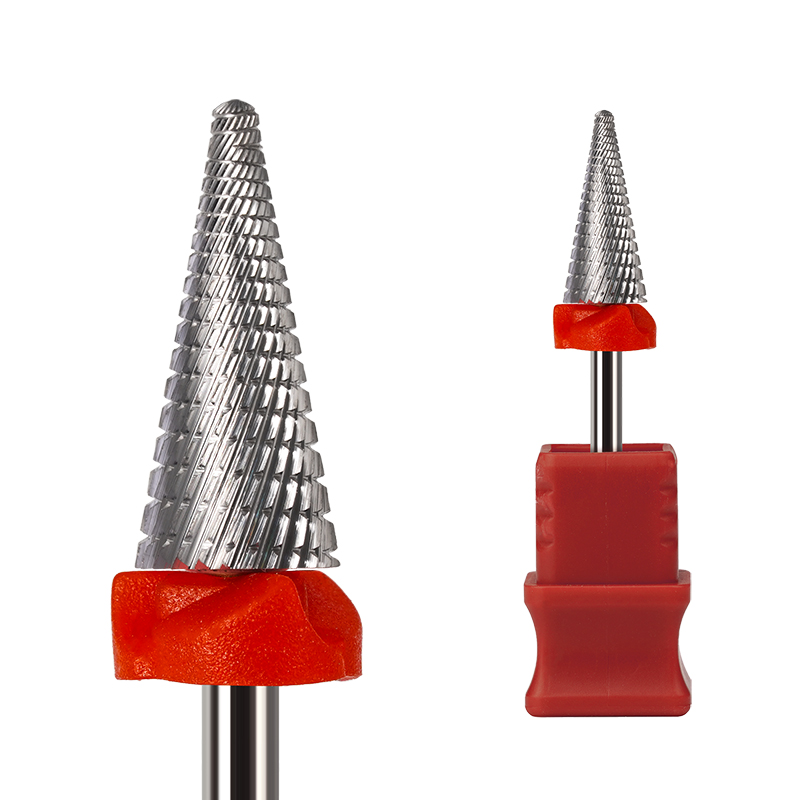
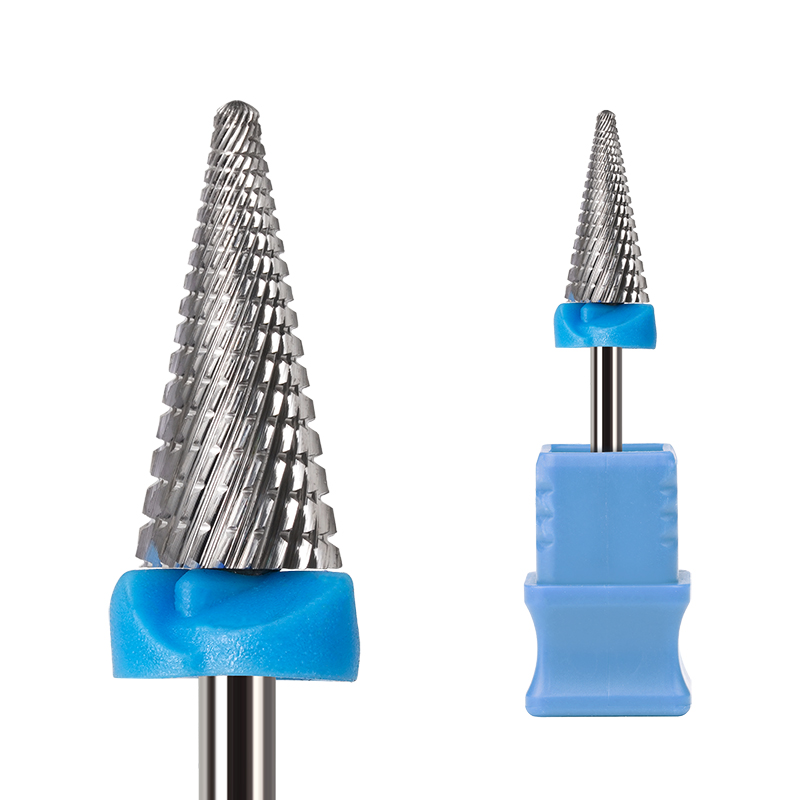
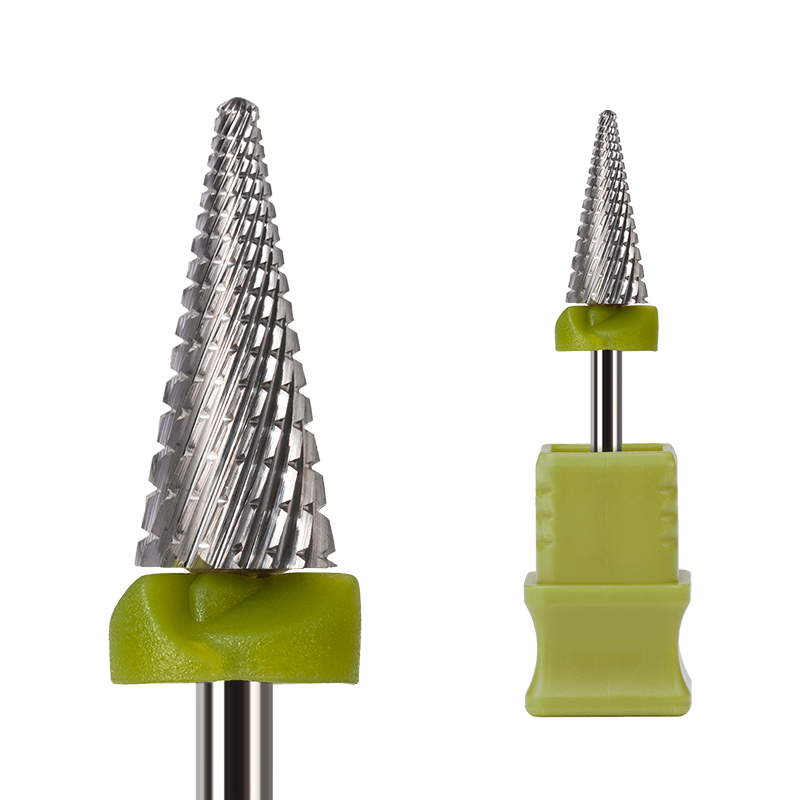
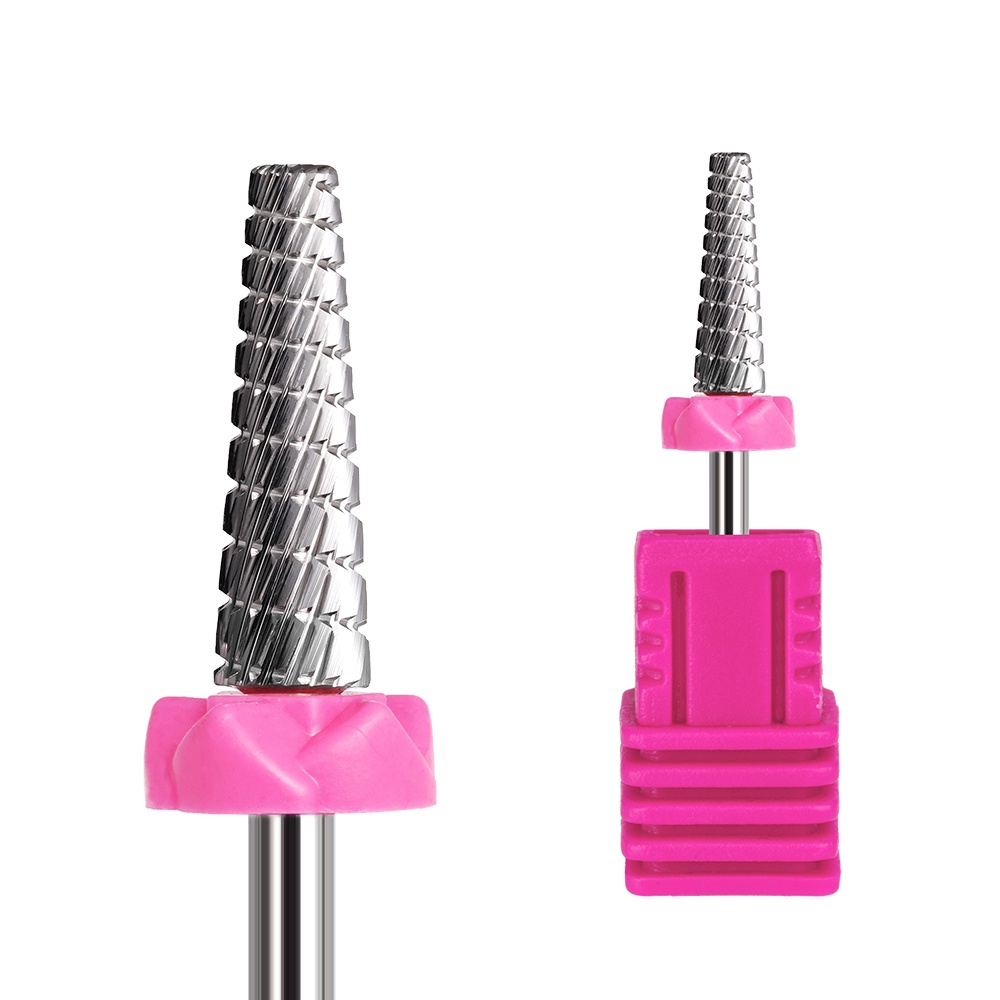
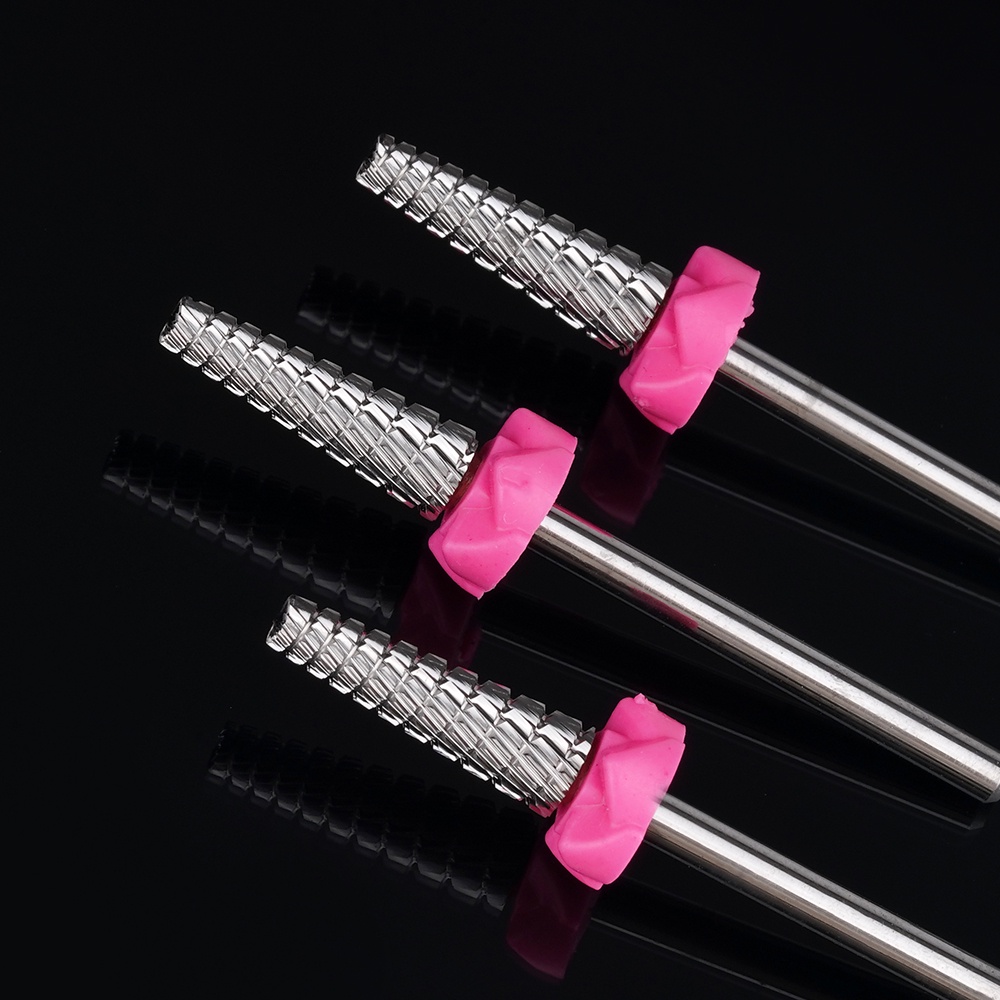
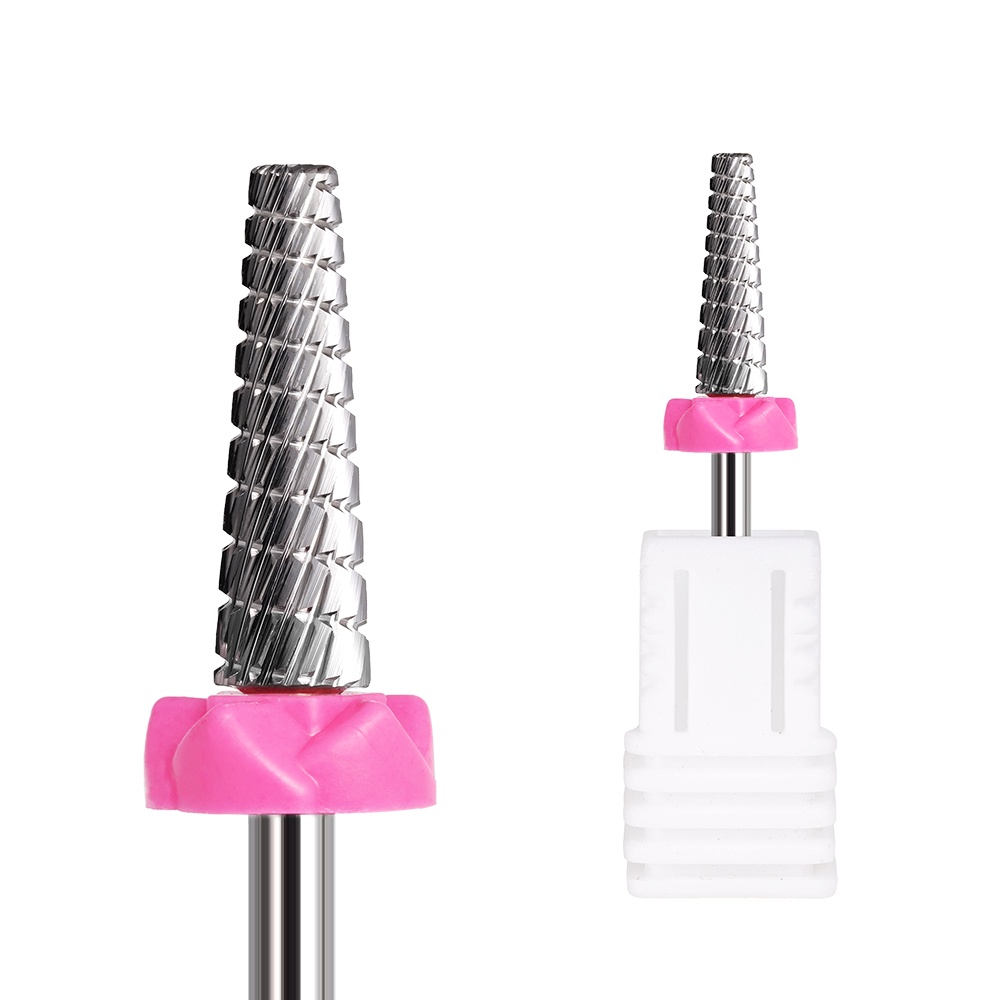
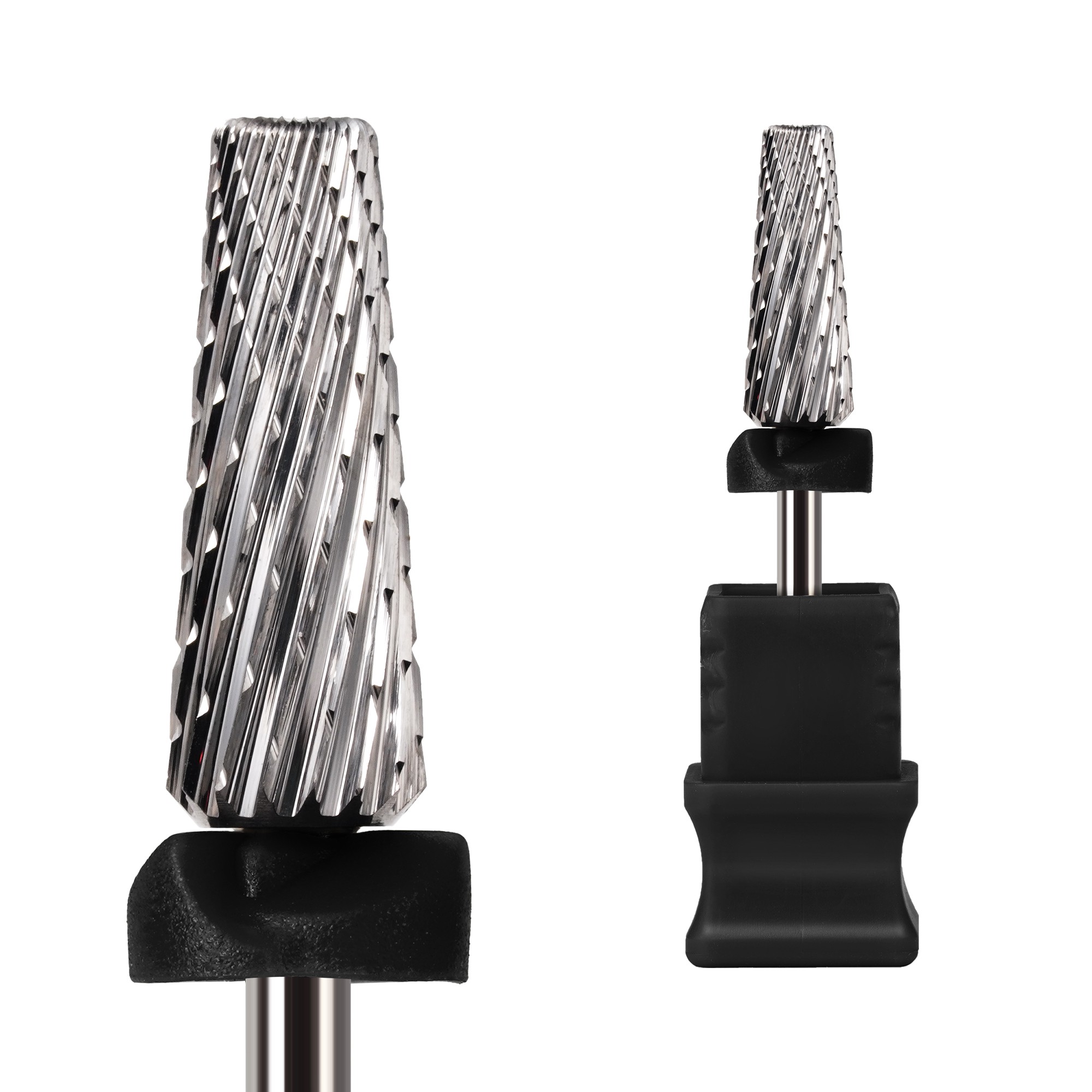
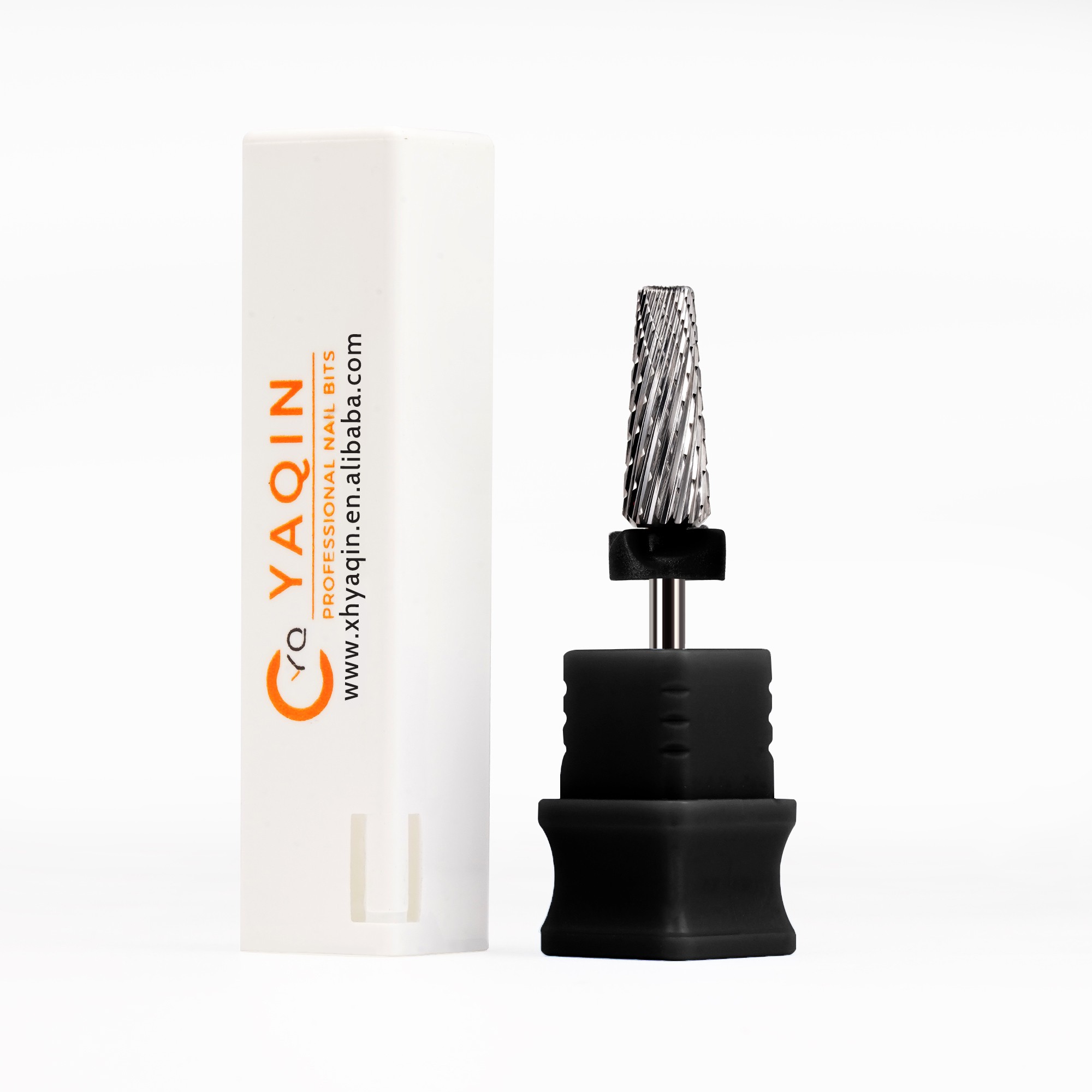
One relevant example is 5 in 1 Tungsten Carbide Nail Drill Bits Cross Cut Safety Manicure 5 in 1 Bit Set, which combines cross-cut geometry with a safety top and includes coarse, medium, and fine options in narrow and wide profiles. In a technical comparison, that type of set is useful because it makes it easier to isolate the effect of cut grade and body width without changing the base material class.
Removal Speed Should Be Judged Alongside Surface Control
Fast removal is often treated as the main sign of a high-performing Tungsten Carbide Nail Drill Bit, yet speed alone can be misleading. A bit that removes gel rapidly during the first few uses may still be a poor choice if it leaves deep furrows, runs hot, or loses sharpness early. The better measure is controlled removal speed: how much product can be taken down within a stable RPM range while maintaining predictable surface finish and acceptable heat.
RPM recommendations help frame that assessment. For example, hard gel removal is often carried out around 15,000 to 20,000 RPM, while soft gel and base gel commonly run around 10,000 to 15,000 RPM. These ranges are not universal settings; they depend on handpiece stability, product hardness, flute design, and contact pressure. If a bit requires unusually high RPM to cut effectively, that may indicate dull edges or a geometry that is inefficient for the coating being tested. If it cuts too aggressively at moderate speed, the flute depth or edge angle may be too severe for refinement work.
Removal speed should be observed over several passes, not only during the first contact. Some bits appear fast at the start but slow down when debris builds in the channels. Others maintain a consistent pace because the cut pattern clears chips effectively. A stable bit produces a steady removal sound, even debris flow, and no abrupt grabbing as the angle shifts slightly. Those are practical indicators of machining quality and balance.
Material and Manufacturing Clues Behind Performance
The term tungsten carbide can hide large differences in quality. In a well-made bit, the cutting edges are crisp, the shank runs true, and the transition between the shank and head is finished cleanly. If the bit wobbles in the handpiece, the issue may come from poor concentricity or shank tolerance rather than operator technique. Even a small deviation becomes more obvious at higher speed, where vibration can affect finish quality and create unnecessary hand fatigue.
Precision in the manufacturing process also affects edge durability. A bit shaped with accurate tooling and proper finishing tends to cut more evenly and wear more gradually. If the edges are too brittle, micro-chipping can appear along the flutes, leading to rougher cutting and a scratchier surface. If they are too blunt from the start, the bit may rub instead of cut, which increases heat. This is one reason evaluation should include both new-condition performance and condition after repeated cleaning cycles and normal service use.
Corrosion resistance is another practical detail. Nail bits are routinely exposed to dust, cleaning fluids, and handling cycles. A carbide head with poor surface finishing or a vulnerable joint area may show staining or degradation earlier than expected. Rust is more commonly associated with lower-grade steels, but any component around the shank or interface can become a weak point if finishing and storage controls are inconsistent.
Common Misreadings During Comparison
One common misreading is to confuse a smoother finish with lower efficiency. In reality, a well-cut medium or fine bit may remove material at a respectable rate because the edges stay engaged consistently instead of bouncing or skating. Another is to assume that heat always comes from excessive RPM. Heat can also come from dull flutes, debris loading, prolonged dwell in one spot, or a bit profile that is too wide for the area being worked.
A third mistake is evaluating the bit on only one product type. Hard gel, soft gel, and base gel do not fracture or shave in the same way. A profile that excels at rapid hard-gel reduction may leave residue on softer coatings or feel less stable during nail prep. That is why mixed-condition testing usually reveals more than single-material trials. When a bit is described as suitable for gel removal and nail prep, the real question is how much adjustment in RPM, angle, and pressure is needed to move between those tasks without losing control.
Left- and right-handed cutting orientation should also be checked where relevant. A bit may be mechanically sound but operationally mismatched if the cutting direction does not align with the intended machine rotation and working habit. Directionality affects debris throw, smoothness, and confidence near edges.
Service Life Depends on Use Pattern, Not Only Hardness
Even a hard-wearing Tungsten Carbide Nail Drill Bit can fail early under poor handling conditions. Dropping the bit may chip the cutting edge. Storing it loose with other metal tools can damage the flute tips. Aggressive chemical exposure followed by inadequate drying can shorten the life of adjacent metal parts. Protective caps and separate holders are practical because they reduce accidental edge damage during transport and routine storage.
Cleaning practice matters as well. Packed gel dust inside cross-cuts changes cutting behavior and can falsely suggest the bit has dulled. A proper cleaning sequence usually removes visible debris first, then follows with suitable disinfection or sterilization according to the applicable procedure for the facility and the bit material. Excessive scraping with hard tools should be avoided because it can nick the cutting edges. After repeated cycles, the bit should still show consistent edge lines and smooth rotation in the handpiece.
When reviewing long-term value, it is more useful to track whether removal feel stays predictable than to rely on an abstract durability claim. A bit with high durability should remain sharp, resist overheating in normal use, and preserve a stable finish quality over time. In practical terms, that means the operator should not need to compensate constantly with extra pressure or higher RPM as the bit ages.
Application Fit Is Usually Decided by a Small Set of Variables
For gel removal, coarse and medium cuts often cover most needs, with the final selection shaped by product hardness and acceptable finish depth. For nail prep, a finer or less aggressive zone is generally preferred to avoid unnecessary abrasion. Sets that combine coarse, medium, and fine grades with narrow and wide profiles can simplify comparison because they reveal how one material and manufacturing standard behaves across several tasks. If the narrow version cuts cleanly but the wide version chatters, the issue may lie in balance or geometry scaling rather than the carbide itself.
A rounded safety design is usually easier to control around margins, while a broader cutting section can accelerate removal on flat, open areas. Cross-cut patterns tend to support smoother gel removal with less residue left behind when compared with simpler patterns that load quickly. Where a bit is promoted as suitable for quick and safe gel removal, the claim should be tested by observing whether the surface remains manageable after bulk reduction, not merely by timing the first pass.
In the end, grit indicates how aggressively the bit cuts, flute design determines how it cuts, and removal speed shows whether those design choices remain efficient under real operating conditions. A sound evaluation of a Tungsten Carbide Nail Drill Bit keeps all three in view at the same time, because a fast bit that runs hot, a smooth bit that cuts too slowly, and a durable bit with poor balance each fail in a different way.
A reliable assessment of a Tungsten Carbide Nail Drill Bit begins with the cutting surface itself. Grit, flute geometry, and removal speed are closely linked, and a change in one factor usually alters heat generation, chip evacuation, finish quality, and bit wear. In nail applications, that relationship matters because the material being removed is rarely uniform. Hard gel, soft gel, base layers, builder products, and residue near the cuticle each respond differently to the same bit. A bit that removes product rapidly on a full overlay may become overly aggressive during detail work, while a fine bit that leaves a clean surface may slow production if it is used for bulk removal.
Tungsten carbide remains common in this category because it combines high hardness with good edge retention. Compared with softer tool materials, it can hold a defined cutting pattern longer under repeated contact with cured coatings. That does not automatically mean every carbide bit performs the same way. The actual result depends on carbide grade, brazing or joining quality if multiple parts are used, concentricity of the shank, balance at operating speed, and the precision of the cut pattern. A poorly machined bit may still be labeled carbide, yet show vibration, uneven cutting, or premature dulling.
Grit in Nail Bits Is Functional, Not Cosmetic
In this product segment, grit labels such as coarse, medium, and fine are often treated as simple buying terms, but they describe a real change in removal behavior. On a Tungsten Carbide Nail Drill Bit, “grit” usually refers to the aggressiveness of the cutting action rather than a bonded abrasive particle size as seen in coated abrasives. Coarse designs remove more material per pass, medium balances removal and control, and fine options reduce the risk of deep marks while leaving a more even surface for the next step.
Coarse bits are usually selected when cured product thickness is substantial and time pressure is high. They can strip hard gel efficiently, but their margin for error is smaller. If downward pressure increases or the handpiece angle becomes unstable, the bit may dig in, leave visible grooves, or create localized heat. Medium cuts are often a practical benchmark for comparison because they reveal whether the manufacturer achieved a good balance between edge sharpness and controllability. Fine cuts tend to work better for refinement, surface evening, and lighter product removal where preserving the underlying structure matters more than speed.
Grit evaluation should include more than the label stamped on the packaging. Two bits both marked “coarse” may behave differently if one has deeper flutes, sharper land edges, or wider spacing between cutting channels. A technical review should therefore examine the actual surface profile under magnification where possible. If the flute edges appear inconsistent, chipped, or irregularly spaced, the cutting feel is unlikely to remain stable across the full circumference.
Cut Design Governs Chip Flow and Heat
Cut design determines how material breaks away from the nail surface and how efficiently debris exits the contact zone. Straight flute, cross-cut, and variations with safety tops or tapered bodies are not interchangeable details. They affect bite, smoothness, visibility, and the tendency of the bit to clog. Cross-cut geometry is widely used because the intersecting channels can create a more controlled cutting action and help disperse removed gel rather than packing it into long strings. That becomes valuable when working on thicker overlays or when surface loading would otherwise reduce cutting consistency.
A safety top changes the working behavior near sensitive edges. The rounded upper end reduces the chance of catching skin or creating a sharp contact point at the perimeter. This is not simply a comfort feature; it changes how confidently the bit can be brought close to the cuticle area or sidewalls without requiring the same degree of retreat as a fully pointed top. The tradeoff is that a safety top is not intended for the same reach into narrow recesses as a needle-like or highly tapered detail bit.
Body shape also matters. Narrow bits improve line-of-sight and can access tighter zones with less visual obstruction. Wider bits usually create faster filing because the contact patch is larger and the operator can level broader surfaces in fewer passes. In practice, the choice depends on whether the task emphasizes bulk reduction or precise navigation around edges. A 5-in-1 geometry is often used to combine multiple working zones along one body, allowing the upper, middle, and lower sections of the bit to perform slightly different functions according to angle and contact position.
One relevant example is 5 in 1 Tungsten Carbide Nail Drill Bits Cross Cut Safety Manicure 5 in 1 Bit Set, which combines cross-cut geometry with a safety top and includes coarse, medium, and fine options in narrow and wide profiles. In a technical comparison, that type of set is useful because it makes it easier to isolate the effect of cut grade and body width without changing the base material class.
Removal Speed Should Be Judged Alongside Surface Control
Fast removal is often treated as the main sign of a high-performing Tungsten Carbide Nail Drill Bit, yet speed alone can be misleading. A bit that removes gel rapidly during the first few uses may still be a poor choice if it leaves deep furrows, runs hot, or loses sharpness early. The better measure is controlled removal speed: how much product can be taken down within a stable RPM range while maintaining predictable surface finish and acceptable heat.
RPM recommendations help frame that assessment. For example, hard gel removal is often carried out around 15,000 to 20,000 RPM, while soft gel and base gel commonly run around 10,000 to 15,000 RPM. These ranges are not universal settings; they depend on handpiece stability, product hardness, flute design, and contact pressure. If a bit requires unusually high RPM to cut effectively, that may indicate dull edges or a geometry that is inefficient for the coating being tested. If it cuts too aggressively at moderate speed, the flute depth or edge angle may be too severe for refinement work.
Removal speed should be observed over several passes, not only during the first contact. Some bits appear fast at the start but slow down when debris builds in the channels. Others maintain a consistent pace because the cut pattern clears chips effectively. A stable bit produces a steady removal sound, even debris flow, and no abrupt grabbing as the angle shifts slightly. Those are practical indicators of machining quality and balance.
Material and Manufacturing Clues Behind Performance
The term tungsten carbide can hide large differences in quality. In a well-made bit, the cutting edges are crisp, the shank runs true, and the transition between the shank and head is finished cleanly. If the bit wobbles in the handpiece, the issue may come from poor concentricity or shank tolerance rather than operator technique. Even a small deviation becomes more obvious at higher speed, where vibration can affect finish quality and create unnecessary hand fatigue.
Precision in the manufacturing process also affects edge durability. A bit shaped with accurate tooling and proper finishing tends to cut more evenly and wear more gradually. If the edges are too brittle, micro-chipping can appear along the flutes, leading to rougher cutting and a scratchier surface. If they are too blunt from the start, the bit may rub instead of cut, which increases heat. This is one reason evaluation should include both new-condition performance and condition after repeated cleaning cycles and normal service use.
Corrosion resistance is another practical detail. Nail bits are routinely exposed to dust, cleaning fluids, and handling cycles. A carbide head with poor surface finishing or a vulnerable joint area may show staining or degradation earlier than expected. Rust is more commonly associated with lower-grade steels, but any component around the shank or interface can become a weak point if finishing and storage controls are inconsistent.
Common Misreadings During Comparison
One common misreading is to confuse a smoother finish with lower efficiency. In reality, a well-cut medium or fine bit may remove material at a respectable rate because the edges stay engaged consistently instead of bouncing or skating. Another is to assume that heat always comes from excessive RPM. Heat can also come from dull flutes, debris loading, prolonged dwell in one spot, or a bit profile that is too wide for the area being worked.
A third mistake is evaluating the bit on only one product type. Hard gel, soft gel, and base gel do not fracture or shave in the same way. A profile that excels at rapid hard-gel reduction may leave residue on softer coatings or feel less stable during nail prep. That is why mixed-condition testing usually reveals more than single-material trials. When a bit is described as suitable for gel removal and nail prep, the real question is how much adjustment in RPM, angle, and pressure is needed to move between those tasks without losing control.
Left- and right-handed cutting orientation should also be checked where relevant. A bit may be mechanically sound but operationally mismatched if the cutting direction does not align with the intended machine rotation and working habit. Directionality affects debris throw, smoothness, and confidence near edges.
Service Life Depends on Use Pattern, Not Only Hardness
Even a hard-wearing Tungsten Carbide Nail Drill Bit can fail early under poor handling conditions. Dropping the bit may chip the cutting edge. Storing it loose with other metal tools can damage the flute tips. Aggressive chemical exposure followed by inadequate drying can shorten the life of adjacent metal parts. Protective caps and separate holders are practical because they reduce accidental edge damage during transport and routine storage.
Cleaning practice matters as well. Packed gel dust inside cross-cuts changes cutting behavior and can falsely suggest the bit has dulled. A proper cleaning sequence usually removes visible debris first, then follows with suitable disinfection or sterilization according to the applicable procedure for the facility and the bit material. Excessive scraping with hard tools should be avoided because it can nick the cutting edges. After repeated cycles, the bit should still show consistent edge lines and smooth rotation in the handpiece.
When reviewing long-term value, it is more useful to track whether removal feel stays predictable than to rely on an abstract durability claim. A bit with high durability should remain sharp, resist overheating in normal use, and preserve a stable finish quality over time. In practical terms, that means the operator should not need to compensate constantly with extra pressure or higher RPM as the bit ages.
Application Fit Is Usually Decided by a Small Set of Variables
For gel removal, coarse and medium cuts often cover most needs, with the final selection shaped by product hardness and acceptable finish depth. For nail prep, a finer or less aggressive zone is generally preferred to avoid unnecessary abrasion. Sets that combine coarse, medium, and fine grades with narrow and wide profiles can simplify comparison because they reveal how one material and manufacturing standard behaves across several tasks. If the narrow version cuts cleanly but the wide version chatters, the issue may lie in balance or geometry scaling rather than the carbide itself.
A rounded safety design is usually easier to control around margins, while a broader cutting section can accelerate removal on flat, open areas. Cross-cut patterns tend to support smoother gel removal with less residue left behind when compared with simpler patterns that load quickly. Where a bit is promoted as suitable for quick and safe gel removal, the claim should be tested by observing whether the surface remains manageable after bulk reduction, not merely by timing the first pass.
In the end, grit indicates how aggressively the bit cuts, flute design determines how it cuts, and removal speed shows whether those design choices remain efficient under real operating conditions. A sound evaluation of a Tungsten Carbide Nail Drill Bit keeps all three in view at the same time, because a fast bit that runs hot, a smooth bit that cuts too slowly, and a durable bit with poor balance each fail in a different way.
News List
- Preventing Gouges and Uneven Filing With Small Barrel Nail Drill BitsSep 20, 2026
- How Diameter and Grit Affect Small Barrel Nail Drill Bit PerformanceSep 20, 2026
- Can Hytos Nail Drill Bits Be Used Safely on Natural Nails and Gel Polish?Sep 20, 2026
- How to Verify Fit Between Hytos Nail Drill Bits and an E-File HandpieceSep 20, 2026
- Safe Speed Settings for Umbrella Nail Drill Bits Around the Nail FoldSep 20, 2026
- Umbrella vs Flame Nail Drill Bits: Which Shape Offers Better Cuticle Control?Sep 20, 2026
Best-Selling Products
 Cross Cut Safety Stainless Steel Tungsten Carbide Nail Drill Bits Salon Foot Use XF-C Grit for Removing Nails
 First-rate Quality Tungsten Carbide Nail Drill Bits Best Coating Manicure Remove Gel Nails Accessories
 Professional Advanced Safety Cuticle Bits Two-Way Rotate 3/32'' Carbide Tungsten 5 in 1 Nail Drill Bits
 Wholesale 5 in 1 Electric Manicure Nail Drill Bits Various Coating Cone Cuticle Bit with Rotary Cross Cut for Nail Art
 New Slant Tooth Tungsten Steel Nail Drill Bits Dead Skin Removal 5-in-1 Universal Grinding Nail Polish Head Tool Nail Drill Bits
 4.0mm Small 5 in 1 Integrated Sharpe Tungsten Nail Drill Bit Straight Teeth Gel Polish Removal
 Flame Sharp XF F M C XC Silver Safety Professional Corn Tungsten Carbide Nail Bit for Drill Machine Accessories
 Factory Direct 5 in 1 Tungsten Carbide Nail Drill Bits 6.8MM Cross Cut Safety Manicure 5 in 1 Nail Drill Bits
Please give us a message