
What Is a Nail Drill Bit and How Do Different Bit Shapes Affect Nail Prep?
What Is a Nail Drill Bit and How Do Different Bit Shapes Affect Nail Prep?
What a Nail Drill Bit Actually Does in Nail Prep
A Nail Drill Bit is the working end of an electric nail file. The handpiece provides the motion, but the bit determines how that motion contacts the nail surface, product layer, sidewall, or cuticle area. That distinction matters more than many beginners expect. People often think the machine speed is the main factor in prep quality. In practice, bit shape, grit, material, and user control usually decide whether prep feels clean and efficient or rough and risky.
In salon use, “nail prep” can mean several different tasks: removing old gel, thinning bulk, cleaning the cuticle zone, refining sidewalls, smoothing the natural nail before product application, or finishing the surface before top coat. No single bit does all of those jobs equally well. A shape that removes hard gel fast may be too aggressive around the proximal nail fold. A fine detail bit that is excellent near the cuticle may be painfully slow on bulk removal.
That is why experienced technicians rarely choose a bit by appearance alone. They read shape as a function. The profile tells them where pressure will concentrate, how visible the contact area will be, and how much margin for error they have if the client moves unexpectedly.
Why bit shape changes performance so much
Bit shape affects three things at the same time: cutting behavior, access, and safety. A wider barrel touches more surface and usually works faster on flat areas. A tapered bit reaches tighter corners. A rounded or smooth-top design reduces the chance of nicking surrounding skin when the angle shifts. This is not just a comfort issue. In repeated salon work, safer geometry helps maintain consistency, especially when different nail lengths, hand positions, and product thicknesses come into play.
Material also matters, but shape still leads the decision. Carbide bits, ceramic bits, diamond bits, and sanding bands all behave differently. Yet even within carbide, a barrel, cone, flame, or needle shape will produce noticeably different results on the same set of nails.
The most common bit shapes and where they make sense
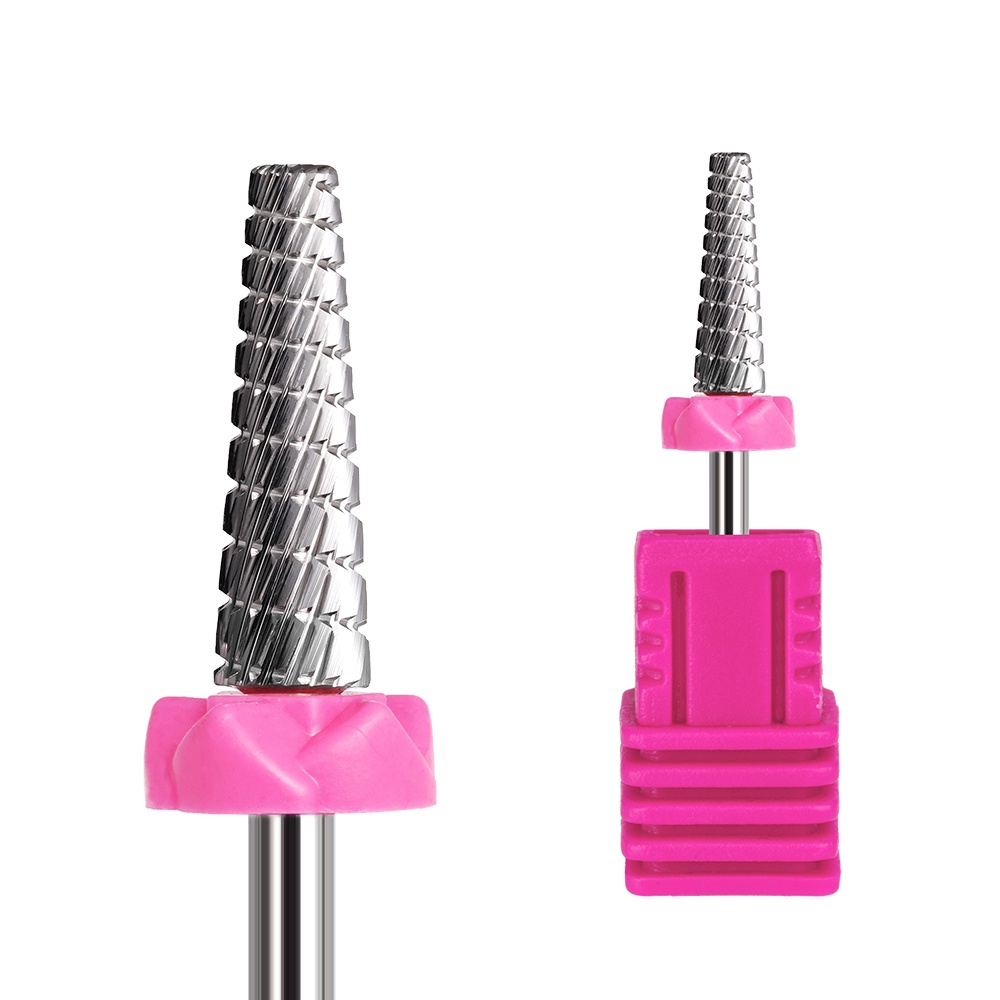
Barrel bits are usually the easiest place to start because their use is straightforward. A large barrel is built for surface work: debulking enhancements, shortening product time, and smoothing broader areas. On acrylic or gel overlays, it gives a stable contact patch and makes it easier to keep the surface level. If the top is smooth rather than sharply edged, the bit is generally more forgiving near the cuticle line, though it still requires control.
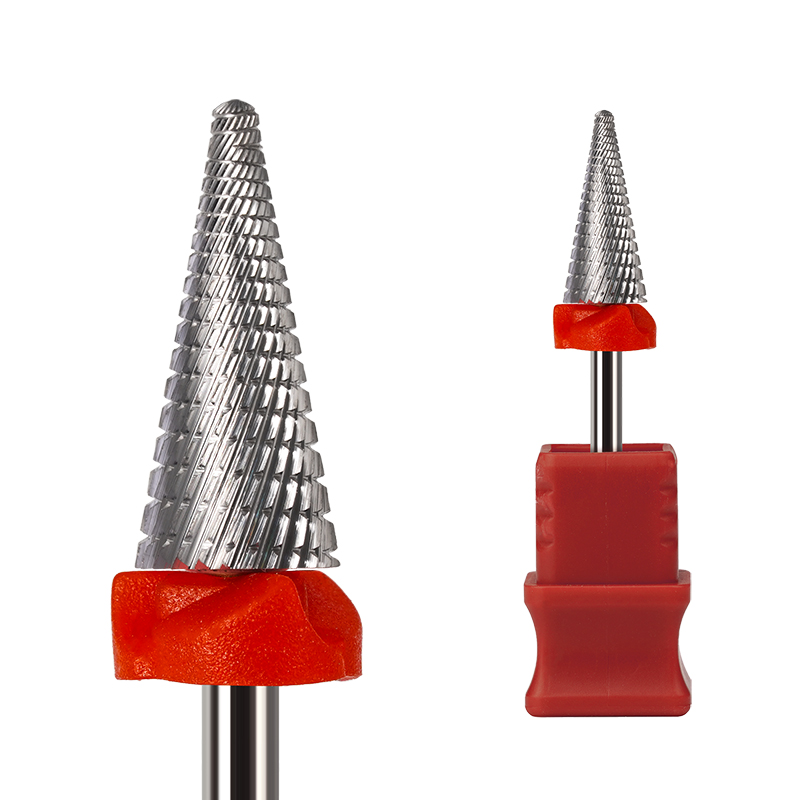
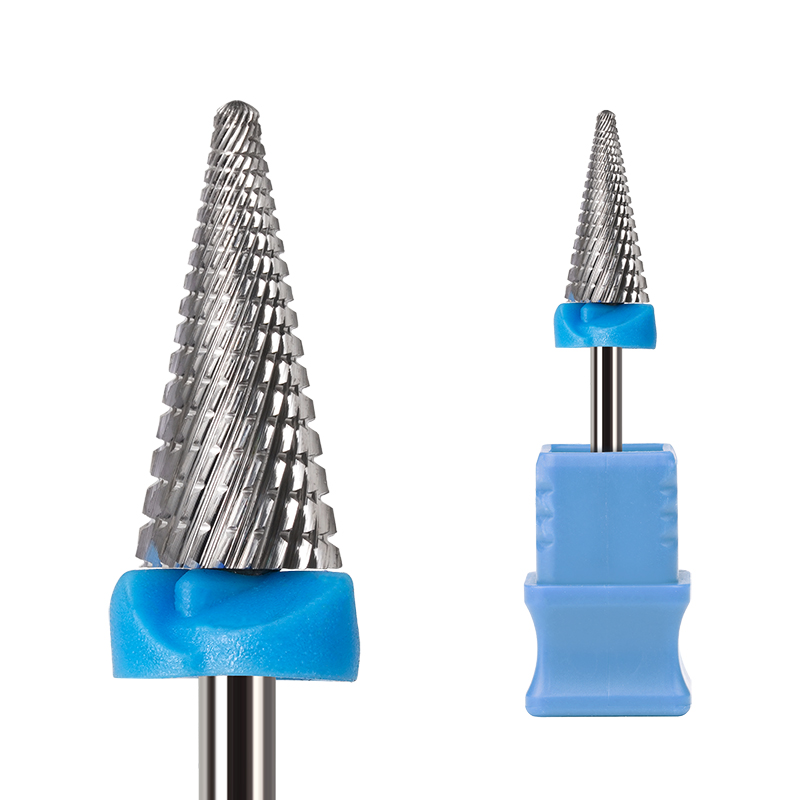
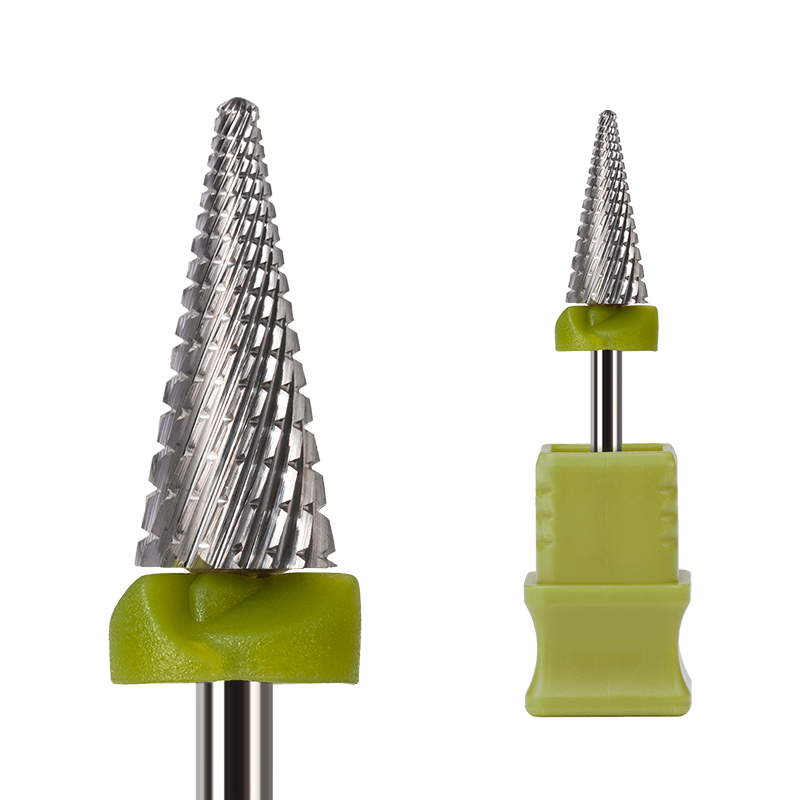
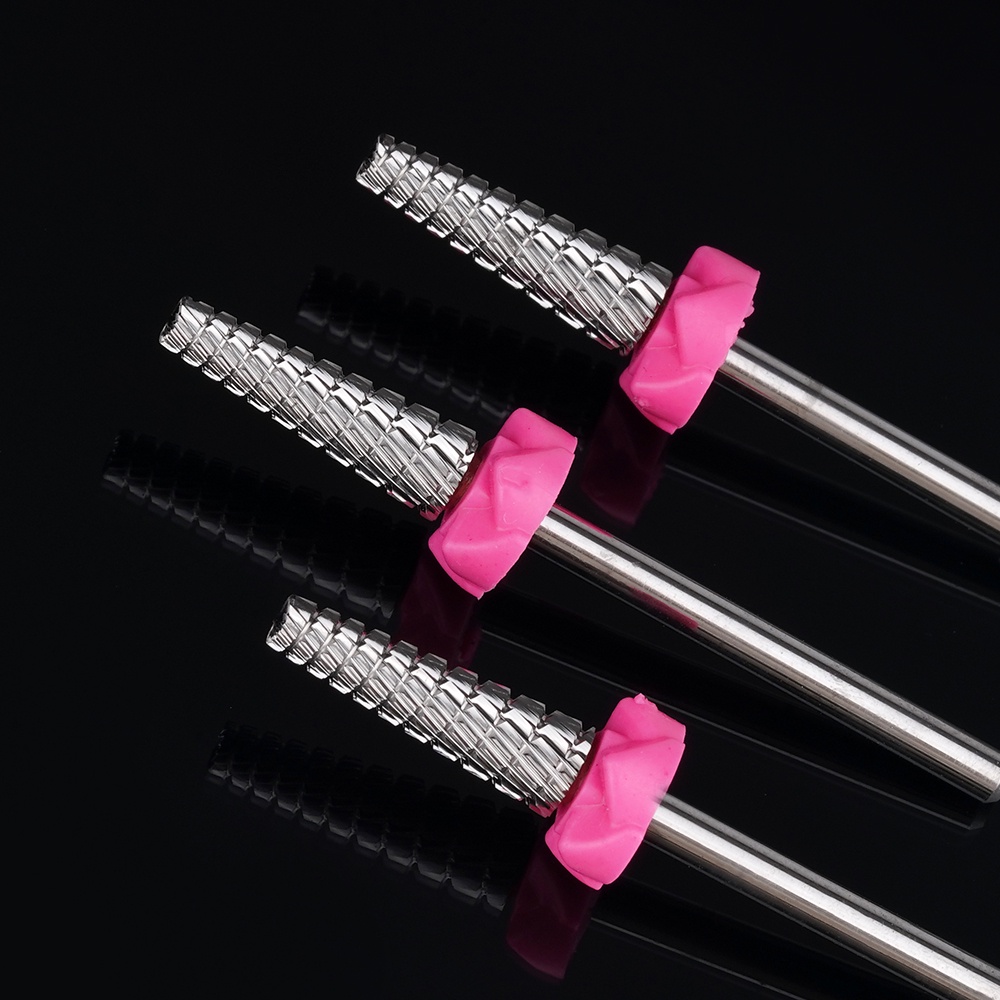
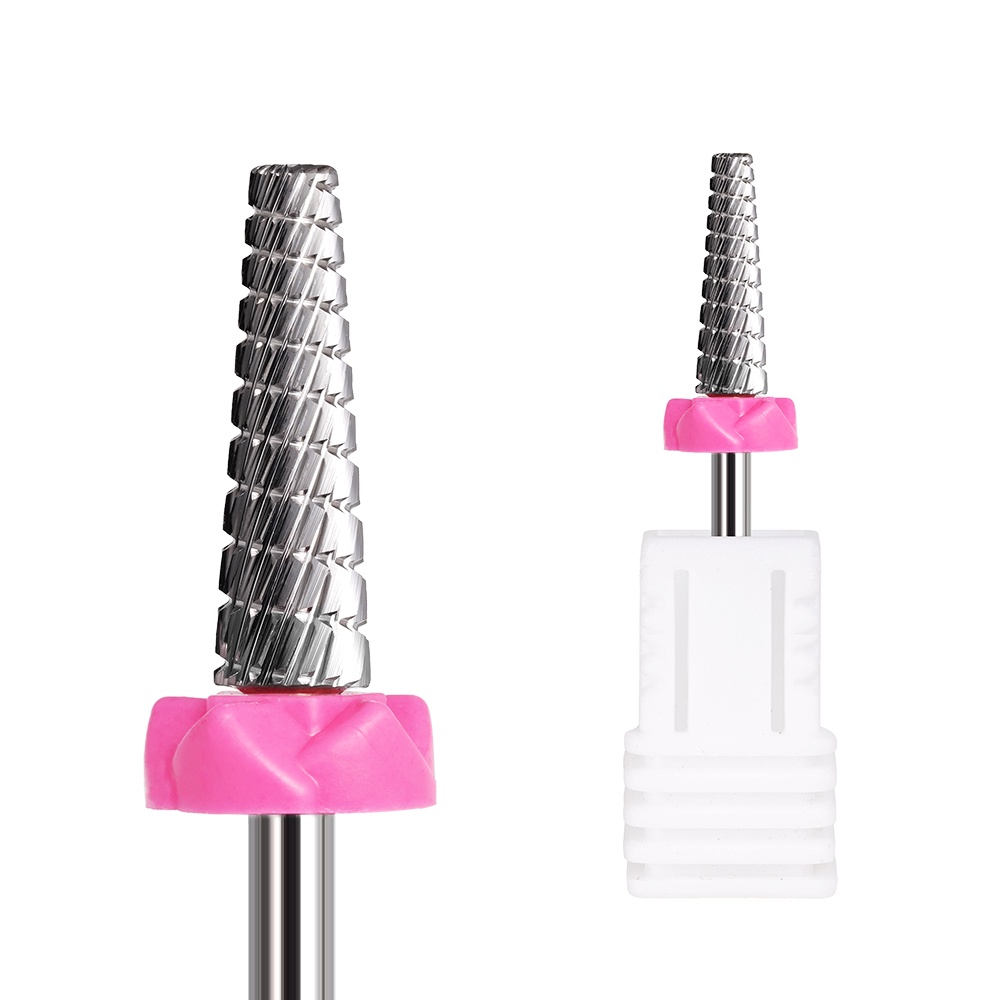
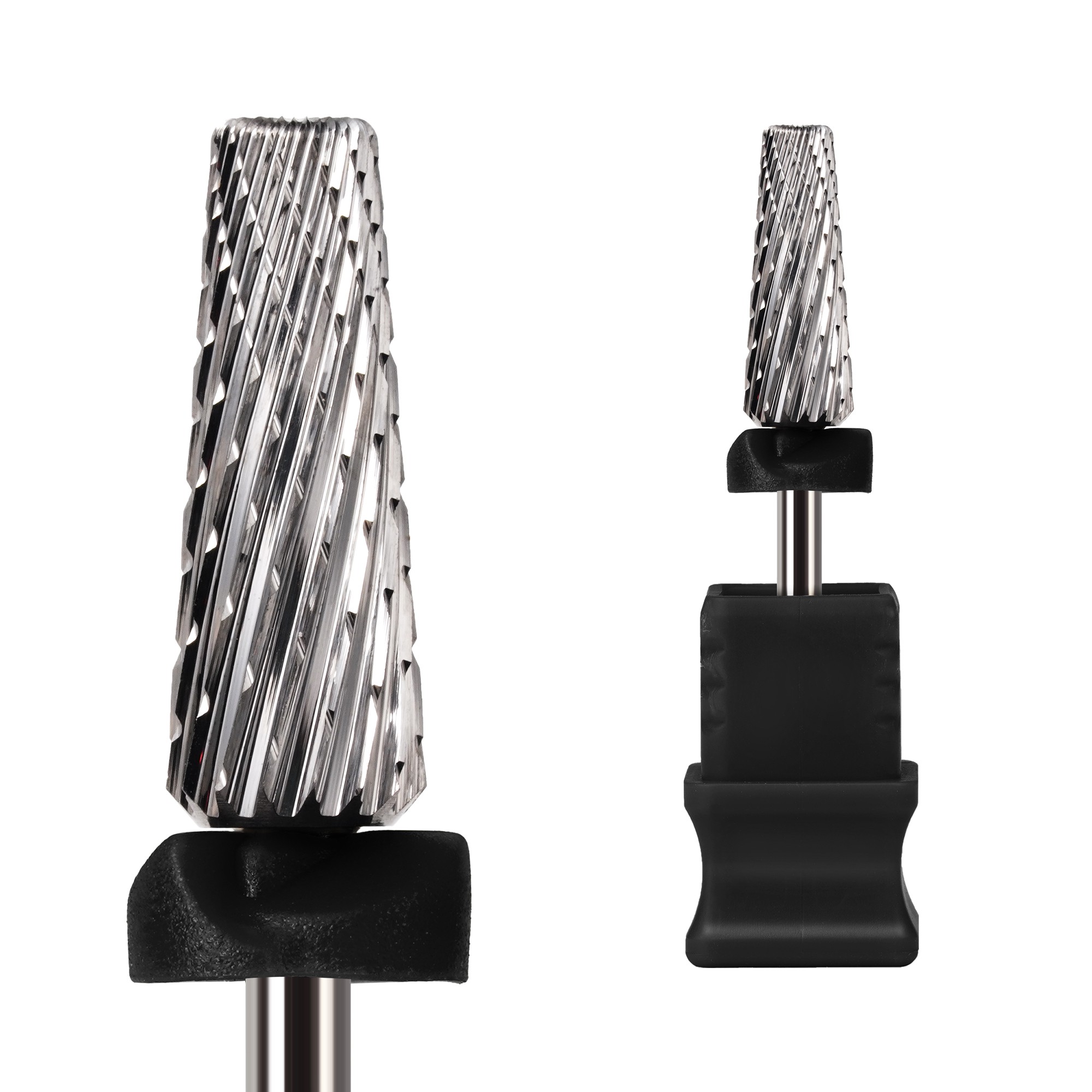
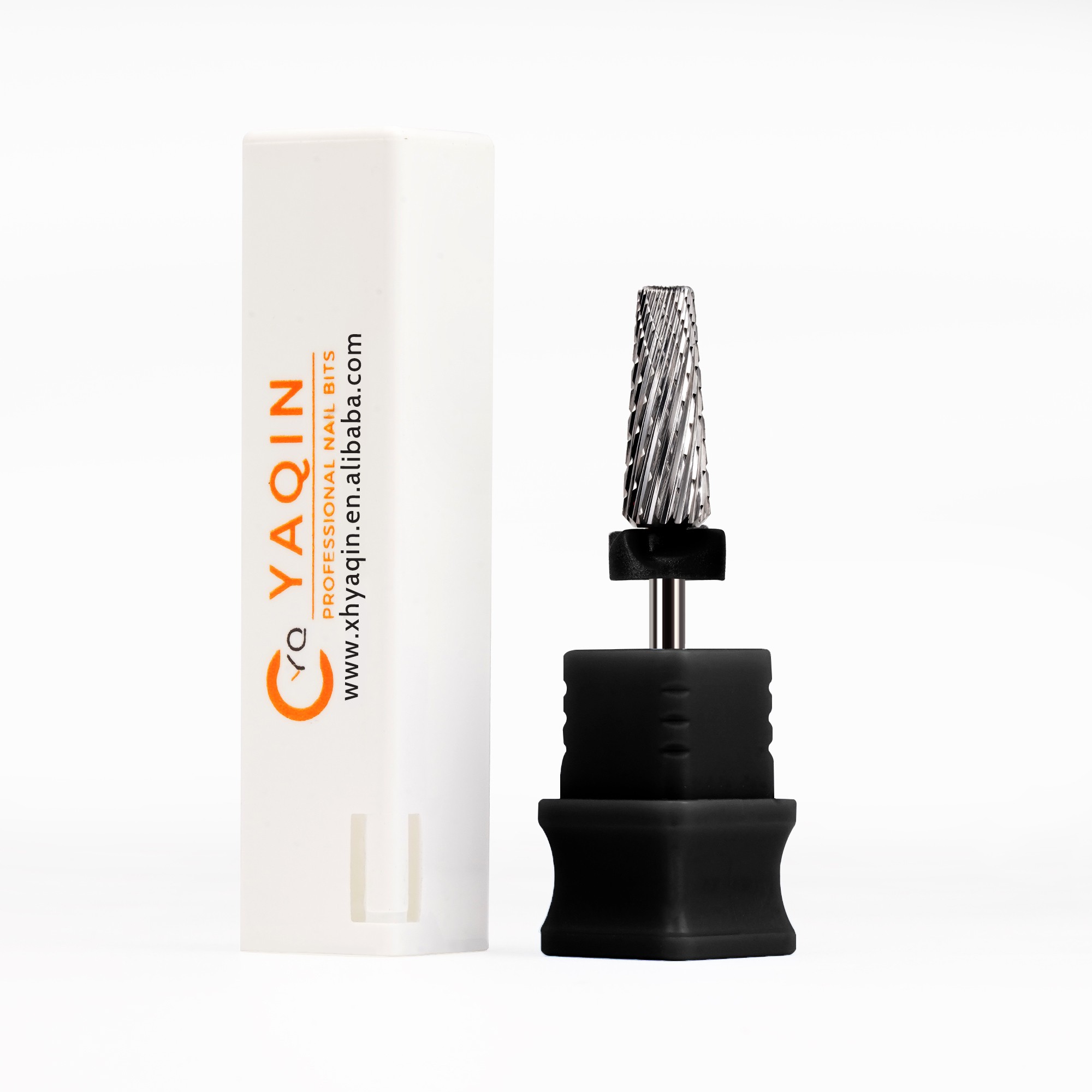
Cone and tapered barrel bits add more reach. They are helpful when product has to be refined closer to sidewalls or under a tighter apex area. They are not automatically better than straight barrels; they just suit narrower approach angles. Some technicians prefer them for backfill preparation because they can blend old and new product more precisely.
Flame bits are closely associated with cuticle work. Their narrow point and fuller midsection allow the operator to lift dead tissue, clean the pocket, and refine the perimeter without needing the broad contact of a barrel. They are useful, but this is also where inexperience shows quickly. A flame bit used with too much pressure or the wrong angle can irritate skin faster than a larger, less concentrated shape.
Needle and point bits are even more specialized. They are used for tiny corners, under-nail cleaning, or detail correction, not for general prep. If someone is trying to do full product removal with a needle bit, that usually signals a mismatch between the tool and the task.
Ball bits are commonly used after lifting cuticle tissue, especially in dry manicure techniques, to exfoliate loosened skin. They are not for flattening gel or shaping overlays. Again, shape defines the role.
The difference between “works fast” and “works safely” is usually geometry plus grit
Many buying mistakes happen because people focus only on grit level. Coarse, medium, and fine do matter, but the same grit behaves differently on different shapes. A coarse large barrel can remove gel quickly on open surface areas. A coarse tapered bit in the wrong hands may feel grabby near edges. Fine grit is often better for finishing, refining, or working on thinner product, but it may be inefficient if there is too much bulk to remove first.
For example, a smooth-top large barrel in tungsten carbide is a practical choice when the goal is quick, controlled gel removal with lower risk around the skin compared with a sharp-top design. This is one reason products such as Tungsten Carbide Large Barrel Smooth Top Nail Drill Bits are often considered by both nail professionals and beginners. The shape is familiar, the top is more forgiving, and the grit can be matched to the service rather than forcing one bit to do everything.
RPM matters, but only after the bit choice makes sense
Speed settings should support the bit and the product type, not compensate for a poor match. In practical terms, hard gel removal usually calls for more cutting efficiency than soft gel or base gel. One commonly referenced operating range for a large carbide barrel is about 15,000 to 20,000 RPM for hard gel removal, and around 10,000 to 15,000 RPM for soft gel or base gel removal. These are useful starting points, not universal rules. Handpiece torque, bit sharpness, product thickness, and user technique all influence the real working speed.
Running too slowly can create skipping and heat because the bit drags instead of cutting cleanly. Running too fast without control can do the opposite kind of damage. In other words, the machine setting is part of the system, but bit shape still determines how the tool behaves when it touches the nail.
How experienced buyers evaluate a bit beyond shape
For research or sourcing, shape is the visible starting point, but repeat performance depends on manufacturing quality. In abrasive products, consistency from batch to batch is a real issue. Cutting edges that are too sharp, poorly balanced shanks, uneven finish quality, or corrosion after cleaning can all turn a suitable design into an unreliable tool.
That is why serious buyers often ask about material, finish, packing control, and inspection process rather than only comparing catalog photos. In export-oriented supply, especially across markets such as the USA, Canada, Germany, the UK, Italy, and Poland, stable quality control becomes more important than flashy naming. Wuxi Yaqin Trading Co., Ltd., for example, has built its abrasive-product business around production and export with a complete QC system covering raw material purchasing, production, and packing, alongside ISO9001:2000 quality management system certification and OEM/ODM experience. For nail bits, that background matters because small dimensional or finishing differences affect actual salon use more than many non-users realize.
A few shape choices that are usually easier to live with
If the goal is basic understanding, here is a practical way to think about selection:
- Large barrel: better for bulk removal, surface leveling, and faster work on overlays.
- Smooth-top barrel: a safer option around the cuticle zone than sharp-top versions, especially for less experienced users.
- Tapered or cone shape: better access near sidewalls and tighter contours.
- Flame shape: more suitable for cuticle-area refinement and dry manicure detail.
- Ball shape: best reserved for polishing away lifted dead skin rather than product removal.
Within any of these, grit selection still needs to match the service. Coarse for faster removal, medium for general refining, fine for finishing or more delicate work is a reasonable guide, but the actual choice depends on product hardness and operator skill.
Common misunderstandings that lead to poor prep
One common mistake is using one bit for every step. It saves time in the tray, but often wastes time in service and increases the chance of over-filing. Another is judging a bit only by whether it removes product quickly. Fast removal is useful, but if the finish is uneven or the skin gets irritated, the tool is not actually efficient.
There is also a tendency to assume that beginner-friendly means low performance. Not always. A well-made, smooth-top carbide barrel with coarse, medium, and fine options can cover a lot of day-to-day prep tasks safely if the user understands its limits. Some versions come in narrow and wide sizes, plus C, M, and F models, which makes it easier to adapt the same general shape to different product loads and comfort levels. That is often a more practical path than jumping straight into highly specialized shapes.
What to look for if you are comparing options
When comparing a Nail Drill Bit for research or future purchase, ask simple but useful questions:
- What exact task is this shape designed for?
- Is the top profile smooth, rounded, or sharp?
- What grit options are available?
- Is the material appropriate for repeated cleaning and long-term use?
- Are recommended RPM ranges provided for different gel types?
- Does the supplier have stable QC and enough production experience to keep the bit consistent over repeat orders?
Those questions tend to reveal more than generic claims about durability or performance. In real use, precision cutting, corrosion resistance, and balance are not marketing extras; they affect fatigue, finish quality, and safety every day.
A good Nail Drill Bit is not just “sharp” or “professional.” It is the right shape, grit, and material for a specific stage of prep, used at a sensible speed and made with enough consistency that the next bit behaves like the last one. If someone is just learning how shapes affect prep, the easiest place to start is with the logic of contact area: broad shapes for broad work, narrow shapes for detail, and smoother top geometry when safety margin matters. That simple rule won’t answer every technical question, but it will prevent a lot of bad tool choices early on.
News List
- Preventing Gouges and Uneven Filing With Small Barrel Nail Drill BitsSep 20, 2026
- How Diameter and Grit Affect Small Barrel Nail Drill Bit PerformanceSep 20, 2026
- Can Hytos Nail Drill Bits Be Used Safely on Natural Nails and Gel Polish?Sep 20, 2026
- How to Verify Fit Between Hytos Nail Drill Bits and an E-File HandpieceSep 20, 2026
- Safe Speed Settings for Umbrella Nail Drill Bits Around the Nail FoldSep 20, 2026
- Umbrella vs Flame Nail Drill Bits: Which Shape Offers Better Cuticle Control?Sep 20, 2026
Best-Selling Products
 Cross Cut Safety Stainless Steel Tungsten Carbide Nail Drill Bits Salon Foot Use XF-C Grit for Removing Nails
 First-rate Quality Tungsten Carbide Nail Drill Bits Best Coating Manicure Remove Gel Nails Accessories
 Professional Advanced Safety Cuticle Bits Two-Way Rotate 3/32'' Carbide Tungsten 5 in 1 Nail Drill Bits
 Wholesale 5 in 1 Electric Manicure Nail Drill Bits Various Coating Cone Cuticle Bit with Rotary Cross Cut for Nail Art
 New Slant Tooth Tungsten Steel Nail Drill Bits Dead Skin Removal 5-in-1 Universal Grinding Nail Polish Head Tool Nail Drill Bits
 4.0mm Small 5 in 1 Integrated Sharpe Tungsten Nail Drill Bit Straight Teeth Gel Polish Removal
 Flame Sharp XF F M C XC Silver Safety Professional Corn Tungsten Carbide Nail Bit for Drill Machine Accessories
 Factory Direct 5 in 1 Tungsten Carbide Nail Drill Bits 6.8MM Cross Cut Safety Manicure 5 in 1 Nail Drill Bits
Please give us a message