
How to Choose a Ceramic Nail Drill Bit for Heat-Sensitive Clients and Fine Dust Control
How to Choose a Ceramic Nail Drill Bit for Heat-Sensitive Clients and Fine Dust Control
Choosing a ceramic nail drill bit sounds simple until you start filtering for two very specific concerns: clients who feel heat quickly, and workspaces where fine dust matters. Those two issues often show up together. A bit that runs too hot can make removal uncomfortable even when the technician is careful, while a bit that creates excessive floating dust can make routine services messier and less pleasant than they need to be.
The good news is that bit selection is not random. Heat, dust, speed, pressure, groove design, grit, and user technique all interact. If you are buying for home use or evaluating what your salon uses on you, the smartest choice is not the “strongest” or “fastest” bit. It is the one that removes product efficiently without forcing the operator to compensate with extra pressure or repeated passes.
For heat-sensitive users especially, the wrong bit often causes a chain reaction: more friction, slower removal, more pressure, more heat, and more discomfort. For dust-conscious users, the same mismatch can produce finer airborne particles instead of controlled debris. That is why material alone does not tell the full story.
Why ceramic is often considered for heat-sensitive nail work
Ceramic bits are commonly chosen because they are associated with smoother cutting and lower heat transfer compared with many metal alternatives in everyday nail service conditions. That does not mean every ceramic bit runs cool, or that ceramic automatically creates less dust in every situation. It means ceramic can be a practical starting point when comfort is a priority.
What many consumers miss is that “cooler” depends on more than the base material. A well-made ceramic bit with clean, consistent flutes can remove gel or overlay product with less dragging. A poor-quality ceramic bit, or one used at the wrong speed, can still create uncomfortable heat. If you have ever felt a sudden burning sensation during e-file removal, it may not have been caused by the e-file itself so much as by the bit design, excessive pressure, dullness, or staying too long in one spot.
In practical terms, ceramic tends to be a strong option for people who want:
- a smoother-feeling removal process,
- less aggressive contact on the nail surface,
- better comfort during gel removal,
- an alternative to very sharp-feeling metal bits.
That said, ceramic is not automatically the best choice for every step of a manicure or pedicure. For heavy product removal, advanced technicians sometimes still prefer carbide because of cutting efficiency and durability. The right question is not “ceramic or not,” but “for this service, this sensitivity level, and this operator, which bit behavior is safer and more predictable?”
Heat sensitivity: what actually causes the burning feeling
Consumers often assume heat comes from speed alone. In reality, heat usually builds from a combination of friction and contact time. A bit may run hot because:
- the grit is too fine for bulk removal, so it skims instead of cutting;
- the grit is too coarse for the operator’s control level;
- the bit is dull or poorly manufactured;
- too much downward pressure is being applied;
- the e-file stays in one place too long;
- the rotational speed does not match the bit type or product being removed.
This matters when selecting a ceramic nail drill bit because a bit that removes material efficiently with light contact usually feels cooler than a bit that technically looks “gentler” but forces repeated passes. For sensitive clients, efficiency and smoothness need to be balanced. A bit that is too aggressive can increase the risk of over-filing; a bit that is too weak can prolong friction.
The most comfortable removal usually comes from a medium approach: a bit sharp enough to cut product cleanly, but not so aggressive that it becomes hard to control near the natural nail.
Dust control is not just about the bit material
Fine dust is a growing concern in nail care, especially for people who receive regular gel, acrylic, or enhancement removal. A common misunderstanding is that one bit material “solves” dust. It does not. Dust behavior depends on several things:
- the material being removed,
- the bit’s flute pattern,
- the direction of debris ejection,
- the e-file speed,
- whether a dust collector is used,
- how close the vacuum intake is to the filing point.
If your main concern is floating fine dust, look beyond the label “ceramic.” A well-designed bit should remove product in a controlled way rather than pulverizing it into excessive airborne particles. Debris direction matters. Some professional bits are valued because they eject dust more consistently instead of spraying residue unpredictably across the table.
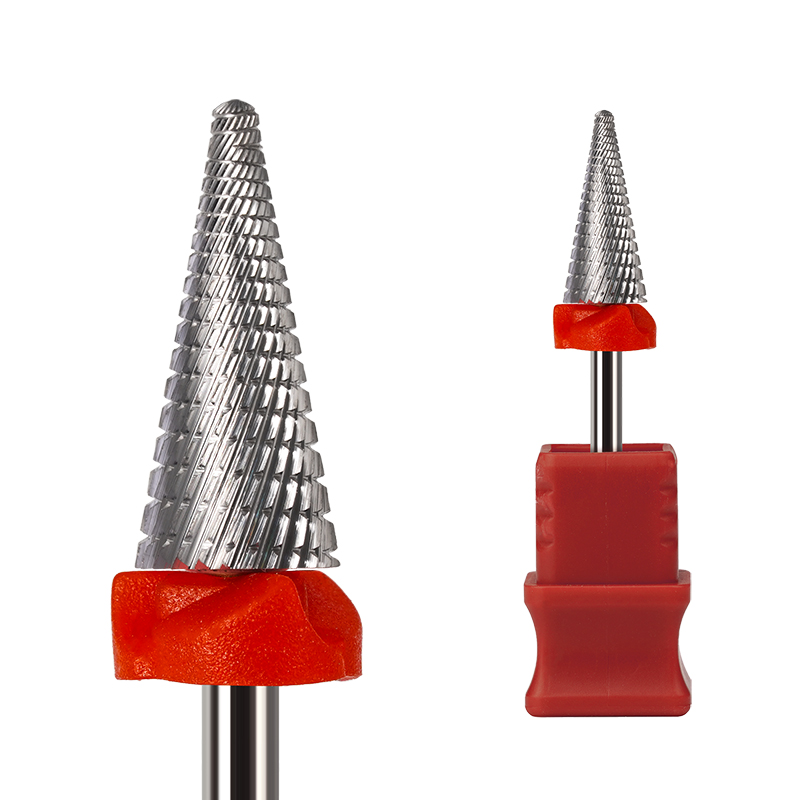
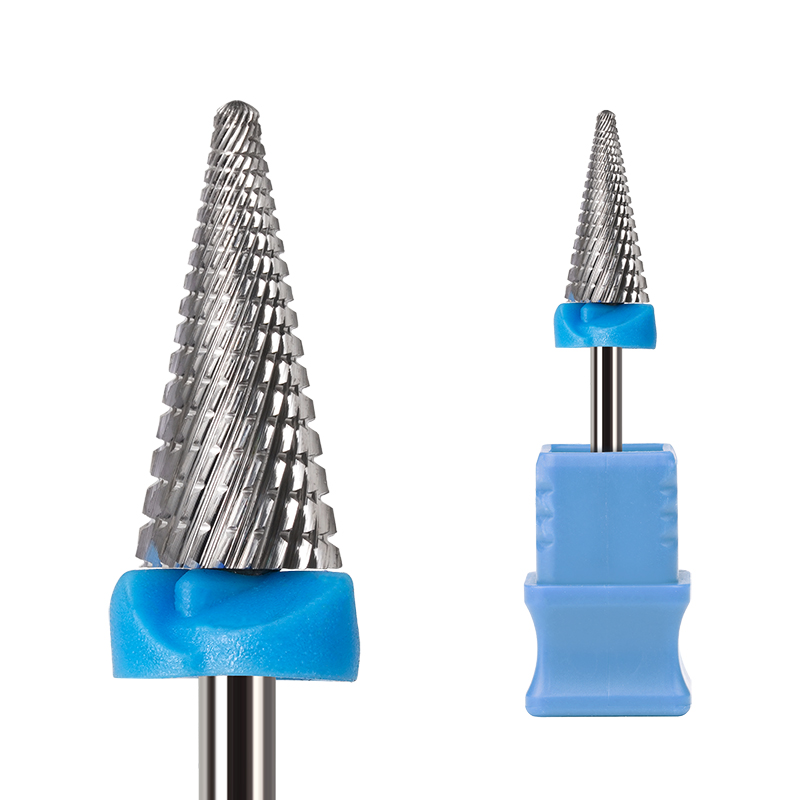
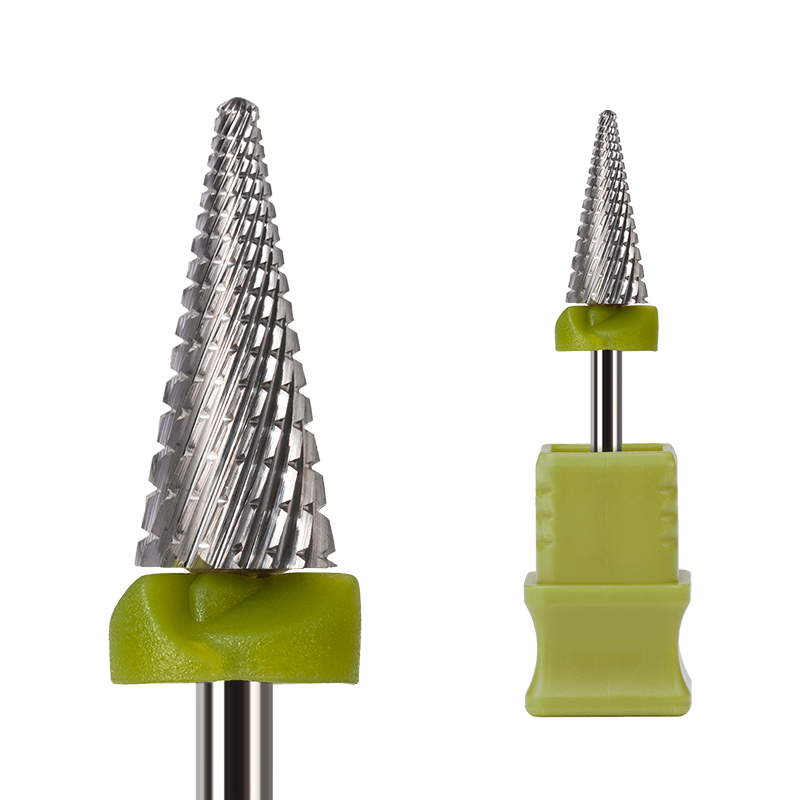
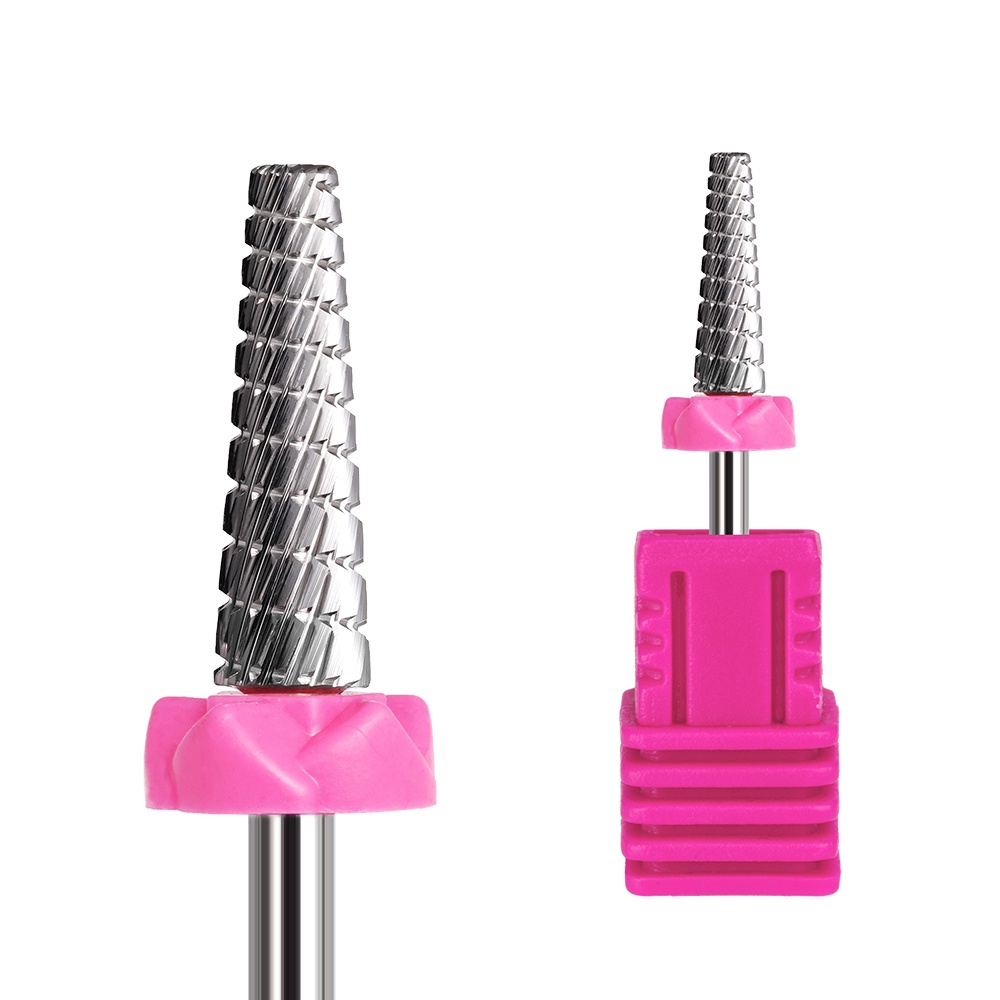
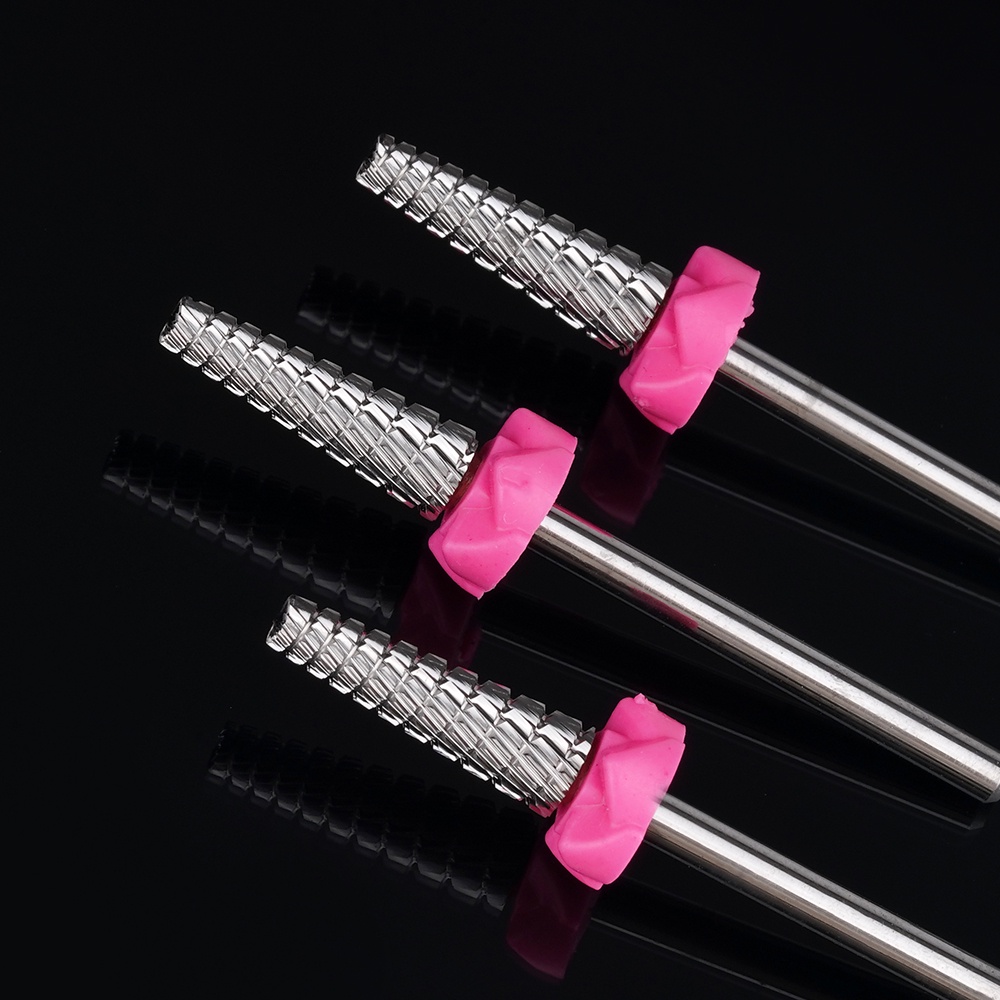
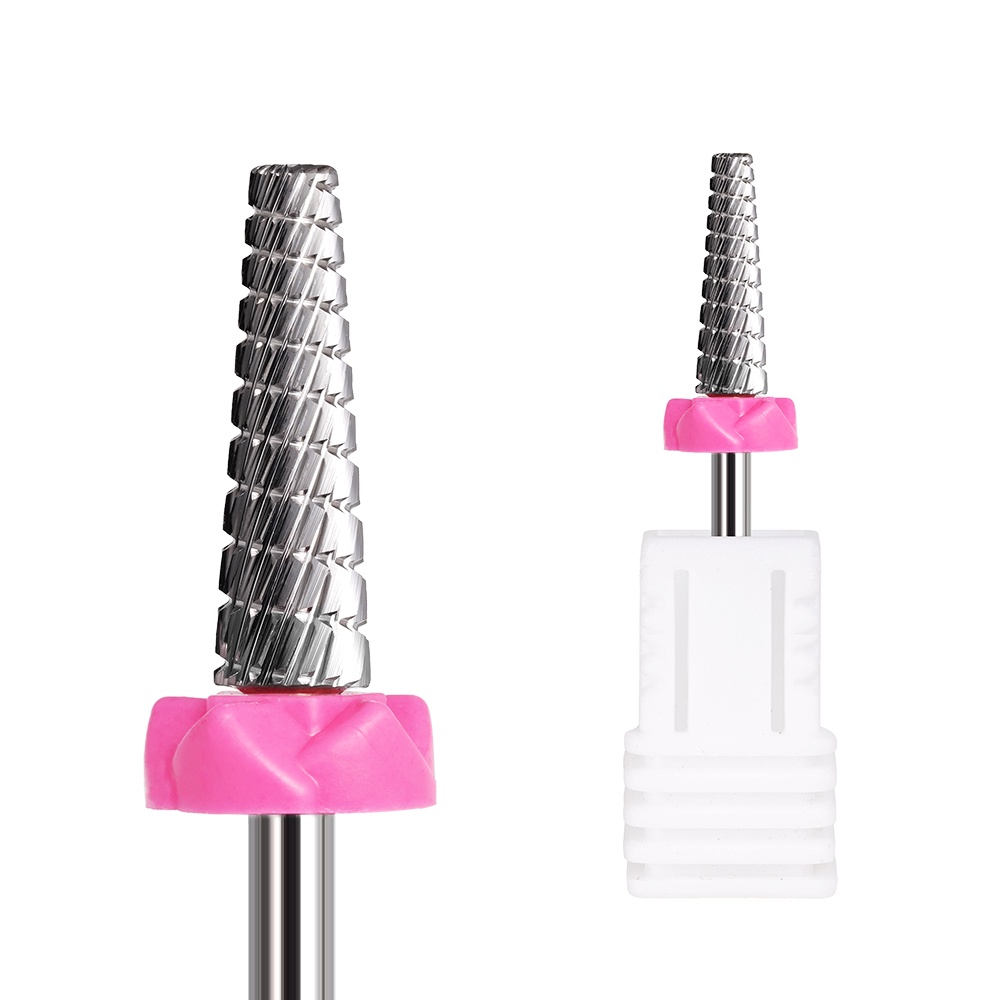
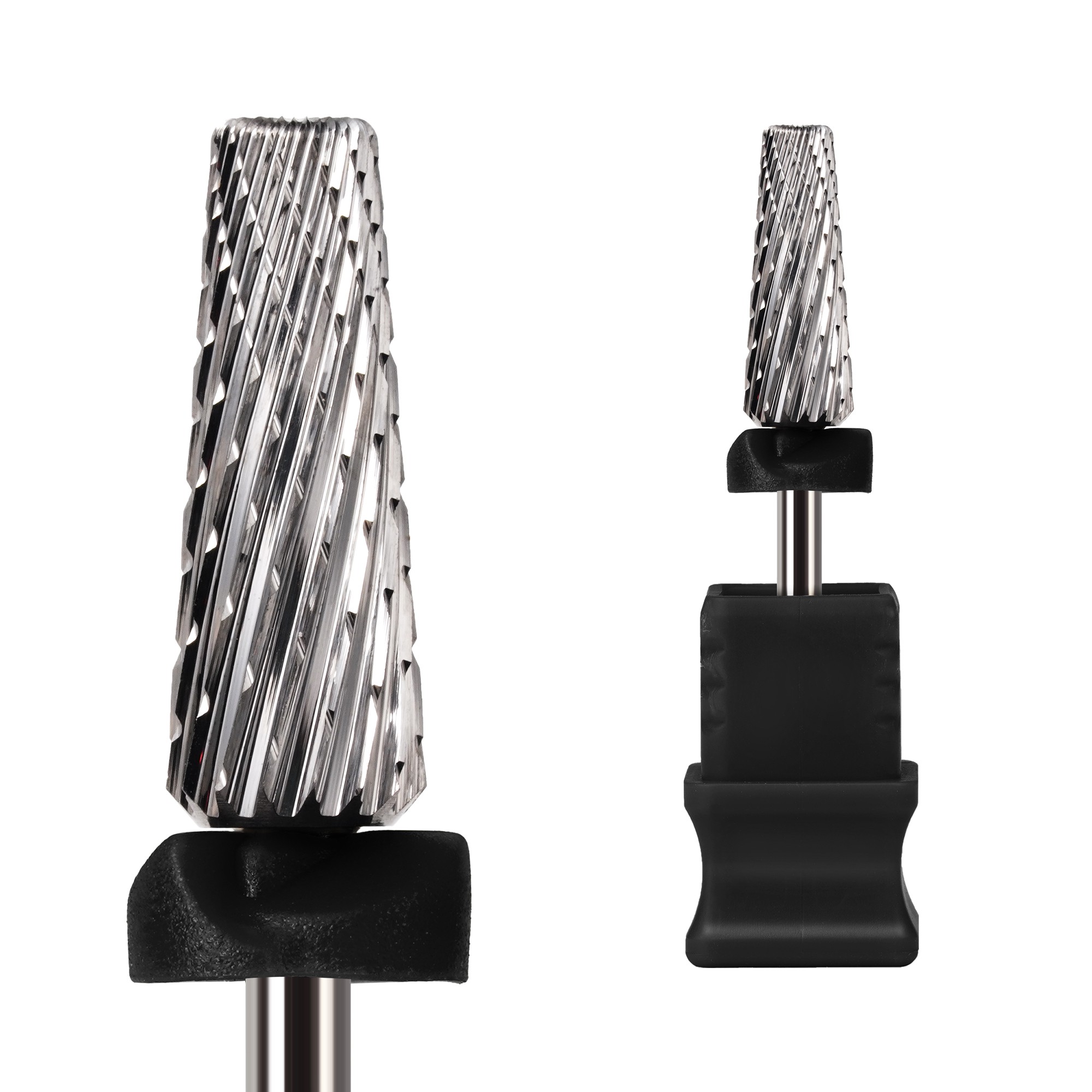
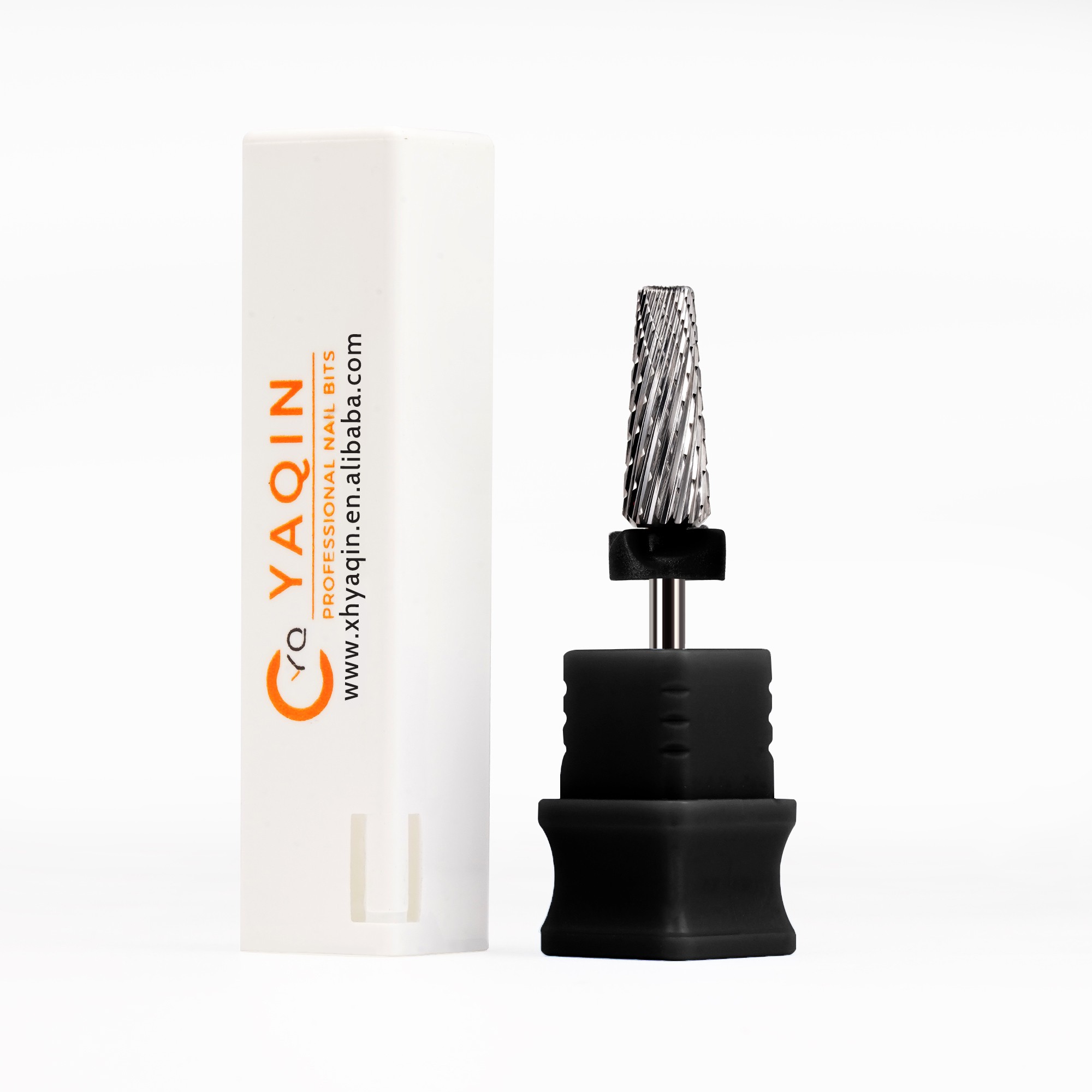
That is one reason some users compare ceramic options with premium carbide models for removal-heavy services. For example, a product such as Hot Sale Professional 3XC Tungsten Carbide Nail Art Drill Bit Burr Milling Cutter for Manicure is positioned around efficient gel removal and controlled dust ejection direction. Even if you are specifically shopping for ceramic, this comparison is useful: it reminds you that dust control is partly a design issue, not only a material decision.
The grit question: coarse is not always harsher
One of the biggest selection mistakes is assuming finer grit is always safer for sensitive clients. On natural nails, yes, overly coarse bits can be risky. But on thick gel or overlay removal, a very fine bit may create more friction because it takes longer to remove product. That longer contact can increase heat.
For most consumers evaluating a ceramic bit for gel removal, these are the usual trade-offs:
- Fine grit: better for refining, smoothing, or lighter work; may be too slow for bulk removal.
- Medium grit: often the most balanced choice for comfort and control.
- Coarse grit: faster product reduction, but requires better technique and more caution near the natural nail.
If you are heat-sensitive, medium grit is often the safest starting point. It usually offers enough cutting action to avoid prolonged friction, without feeling as abrupt as coarse grit. If you are new to e-file services or doing your own nails at home, medium ceramic bits are generally easier to control than very coarse ones.
For natural nail prep, cuticle-area work, or very thin product layers, the answer changes. In those situations, a gentler bit shape and finer working surface are more important than rapid removal speed.
Shape affects comfort more than many buyers realize
The same ceramic composition can behave very differently depending on shape. Barrel, safety barrel, cone, flame, and tapered forms are not interchangeable.
For heat-sensitive clients, shape matters because it influences how much surface area touches the nail at once and how easy it is to keep the bit moving.
- Safety barrel: often a practical choice for removing gel from larger nail surfaces because the rounded top reduces accidental digging.
- Tapered barrel: useful when more access is needed around structure without sacrificing control.
- Cone or flame shapes: better for detail work and edge access, but less ideal for broad bulk removal if comfort is the top priority.
If your concern is both heat and dust, a safety barrel or medium barrel-style ceramic bit is often the most forgiving choice. It allows smoother passes across the nail plate and is easier to use efficiently, which helps reduce overheating caused by hesitation or repeated touch-and-lift motions.
How to tell whether a ceramic bit is actually well made
Consumers are often forced to judge from photos and short product descriptions, which is not ideal. Still, there are a few useful indicators.
Look for consistency in the cutting pattern. The flutes or teeth should appear even, clean, and symmetrical. Irregular edges can lead to vibration, uneven removal, and a rougher feel. Surface finish matters too. High-quality ceramic bits are usually smoother in appearance and more uniform in color and construction.
It also helps to check whether the seller provides realistic information about use cases rather than broad claims like “works for everything.” Good suppliers usually distinguish between gel removal, acrylic reduction, cuticle-area work, and finishing. If a bit is marketed as universal for every task, that is often a sign the listing is built for sales, not informed use.
Another practical quality clue is whether the brand or supplier talks about dust behavior, safety edge design, and balance in rotation. Serious manufacturers understand that user comfort is not just about cutting speed.
When ceramic may not be the best option
Ceramic is widely liked, but there are situations where another bit type may make more sense. If a technician regularly removes very hard overlays, thick acrylic, or stubborn builder gel, a high-quality carbide bit may be more efficient. In those cases, faster removal can actually reduce total heat exposure if the operator is skilled and the bit is sharp.
That is why some professionals keep both ceramic and carbide in rotation: ceramic for smoother-feeling removal and sensitive clients, carbide for heavier-duty work where controlled efficiency matters more. The key is not to treat material choice as a fixed ideology.
A carbide bit such as Hot Sale Professional 3XC Tungsten Carbide Nail Art Drill Bit Burr Milling Cutter for Manicure may be considered when durability, hard gel removal, and directional dust ejection are priorities. For consumers, the takeaway is simple: if ceramic removal always feels slow or warm, the issue may be task mismatch rather than operator error.
Red flags when selecting for home use
Home users often buy based on social media clips showing fast removal, but those videos rarely show the details that matter: pressure, RPM, pass count, or whether the nail underneath was protected.
Be cautious if:
- the bit is extremely cheap with no clear material or grit description;
- the listing does not identify shape, use case, or compatible tasks;
- the bit is described as suitable for beginners but appears very coarse and sharp-edged;
- there is no mention of hygiene, cleaning, or durability;
- reviews repeatedly mention heat, skipping, or vibration.
For heat-sensitive consumers doing DIY removal, comfort usually improves more from choosing the right medium-grit safety shape and using light pressure than from chasing the “fastest” bit online.
The bit alone will not solve a poor dust setup
Even the best ceramic nail drill bit cannot compensate for no dust extraction. If fine dust is a serious concern, especially for frequent users, the e-file setup matters as much as the bit. A close-positioned dust collector, regular filter maintenance, and correct filing angle all influence whether debris becomes airborne.
Some removal systems also use accessory parts intended to reduce dust spread or protect the machine itself. Those features can be useful, but they should be treated as support measures, not substitutes for proper ventilation or extraction. If a seller claims “dust-free” removal, that should be viewed cautiously unless the full collection setup is explained.
What a smart buying decision looks like
If you are choosing for yourself and your main concerns are heat sensitivity and finer dust control, the safest path is usually this:
- choose a ceramic bit from a supplier that clearly identifies grit and intended use;
- start with a medium grit for gel removal rather than jumping to extra coarse or extra fine;
- prefer a safety barrel or similarly forgiving shape for larger nail surfaces;
- avoid assuming that cooler material means zero heat risk;
- pair the bit with proper e-file speed, light pressure, and a working dust collector.
If your usual service involves thick hard gel or heavy enhancement removal, compare ceramic against well-designed carbide options instead of forcing ceramic into every job. In real use, the best bit is the one that removes product cleanly, predictably, and with the least unnecessary friction.
That is the decision framework that matters most. Not whether ceramic is trendy, and not whether one listing promises professional results. For heat-sensitive clients and dust-aware users, the right bit is the one that supports controlled removal, shorter contact time, and a cleaner path for debris. When those conditions are met, comfort and safety tend to improve together.
News List
- Preventing Gouges and Uneven Filing With Small Barrel Nail Drill BitsSep 20, 2026
- How Diameter and Grit Affect Small Barrel Nail Drill Bit PerformanceSep 20, 2026
- Can Hytos Nail Drill Bits Be Used Safely on Natural Nails and Gel Polish?Sep 20, 2026
- How to Verify Fit Between Hytos Nail Drill Bits and an E-File HandpieceSep 20, 2026
- Safe Speed Settings for Umbrella Nail Drill Bits Around the Nail FoldSep 20, 2026
- Umbrella vs Flame Nail Drill Bits: Which Shape Offers Better Cuticle Control?Sep 20, 2026
Best-Selling Products
 Cross Cut Safety Stainless Steel Tungsten Carbide Nail Drill Bits Salon Foot Use XF-C Grit for Removing Nails
 First-rate Quality Tungsten Carbide Nail Drill Bits Best Coating Manicure Remove Gel Nails Accessories
 Professional Advanced Safety Cuticle Bits Two-Way Rotate 3/32'' Carbide Tungsten 5 in 1 Nail Drill Bits
 Wholesale 5 in 1 Electric Manicure Nail Drill Bits Various Coating Cone Cuticle Bit with Rotary Cross Cut for Nail Art
 New Slant Tooth Tungsten Steel Nail Drill Bits Dead Skin Removal 5-in-1 Universal Grinding Nail Polish Head Tool Nail Drill Bits
 4.0mm Small 5 in 1 Integrated Sharpe Tungsten Nail Drill Bit Straight Teeth Gel Polish Removal
 Flame Sharp XF F M C XC Silver Safety Professional Corn Tungsten Carbide Nail Bit for Drill Machine Accessories
 Factory Direct 5 in 1 Tungsten Carbide Nail Drill Bits 6.8MM Cross Cut Safety Manicure 5 in 1 Nail Drill Bits
Please give us a message