
Quartz Nail Drill Bit: When Is It Worth Using?
Quartz Nail Drill Bit: When Is It Worth Using?
For technical evaluators comparing abrasive tools for nail care production or professional salon use, the Quartz Nail Drill Bit deserves a closer look. Known for its refined grinding feel, heat control, and material stability, it can offer practical advantages in specific filing, shaping, and finishing tasks. But is it the right choice for every application? This article examines when a quartz bit is worth using, how it compares with other nail drill bit materials, and what quality factors should guide purchasing decisions.
In nail care manufacturing and salon supply procurement, the bit material directly affects user comfort, service speed, product life, and rework risk. A Quartz Nail Drill Bit should therefore be evaluated by application, not by appearance alone.
Understanding the Quartz Nail Drill Bit in Professional Nail Care
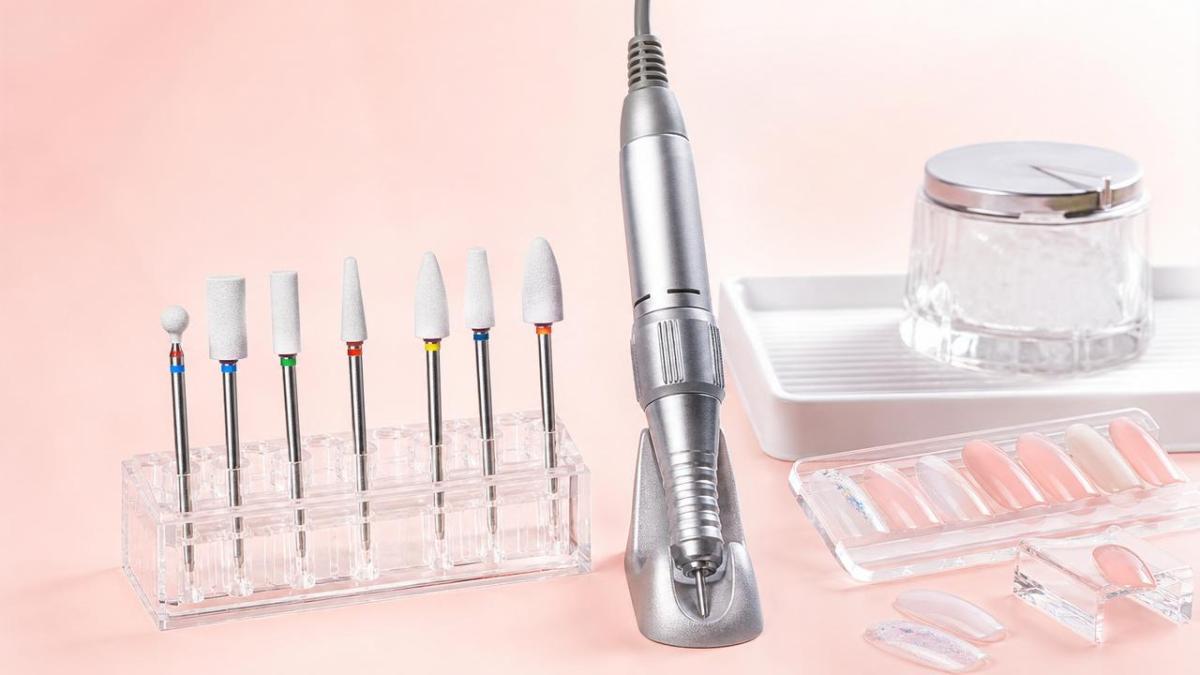
A Quartz Nail Drill Bit is an abrasive rotary tool made with quartz-based grinding surfaces or quartz-like abrasive characteristics. It is generally selected for controlled removal, smooth contact, and stable performance under repeated use.
For technical evaluators, the important question is not whether quartz is “better” in every case. The useful question is whether it supports the required 3 performance goals: precision, comfort, and process consistency.
Where quartz performs differently
Compared with aggressive carbide bits, quartz is often valued where the operator needs a more refined cutting sensation. This can matter during finishing passes, gel smoothing, or sensitive edge work.
Compared with common sanding bands, a Quartz Nail Drill Bit may offer longer usable life and better dimensional stability. This reduces variation when the same process is repeated across 20, 50, or 100 services.
Typical evaluation points
- Grinding feel: whether the bit removes product smoothly without chatter or grabbing.
- Heat behavior: whether temperature rise remains comfortable during 10–30 second contact cycles.
- Surface outcome: whether the finish requires fewer follow-up buffing steps.
- Operator control: whether technicians can maintain predictable pressure at 8,000–18,000 RPM.
These points are especially relevant for buyers supplying professional salons, nail training centers, or light industrial nail care product lines where repeatability is more valuable than maximum removal speed.
When Is a Quartz Nail Drill Bit Worth Using?
A Quartz Nail Drill Bit is worth considering when the process requires controlled abrasion instead of fast cutting. It is most relevant for finishing, surface refinement, and work around sensitive areas.
For procurement teams, the decision usually depends on 4 variables: service type, technician skill level, expected bit life, and the customer’s tolerance for heat or vibration.
Best-fit application scenarios
Quartz bits are commonly useful in gel refinement, acrylic finishing, natural nail smoothing under trained use, and gentle shaping before final buffing. They can reduce the need for multiple abrasive steps.
In Russian manicure preparation or detailed cuticle-adjacent work, evaluators may also compare quartz with fine diamond tools. For example, the Russian Pre-Processing Diamond Grinding Head Nail Bit Cuticle Clean Tool represents another precision-focused option in the assessment set.
The table below summarizes practical use cases for quartz and competing abrasive options. It helps buyers decide where quartz adds value and where other materials may remain more economical.
The key conclusion is that quartz is strongest in controlled finishing workflows. It is not always the fastest option, but it can improve consistency when surface quality matters more than removal speed.
When quartz may not be the first choice
If the priority is removing thick artificial product in the shortest time, a coarse carbide or ceramic bit may be more productive. Quartz may extend the process by 1–3 passes.
If the operator routinely uses excessive pressure, even a stable Quartz Nail Drill Bit can generate discomfort. Proper speed, contact angle, and cleaning frequency remain essential.
Material Comparison: Quartz, Diamond, Ceramic, and Carbide
Technical evaluators rarely assess one material in isolation. A Quartz Nail Drill Bit should be compared with diamond, ceramic, carbide, and disposable abrasive systems under the same operating conditions.
A useful comparison should include at least 5 checkpoints: removal behavior, heat generation, cleaning compatibility, shank accuracy, and expected use cycle before replacement.
Performance comparison by material
The following table gives a practical framework for B2B buyers. Exact results vary with grit, shape, drill quality, pressure, and cleaning procedure.
This comparison shows why many professional assortments include 2–4 material types. Quartz can occupy the finishing role, while carbide or ceramic handles heavier reduction.
How RPM and pressure change the result
A Quartz Nail Drill Bit usually performs best with consistent speed and light pressure. In many salon workflows, 8,000–18,000 RPM is a common working range.
Lower speeds can improve control near sensitive zones, while higher speeds may be used on product surfaces. The evaluator should test 3 speeds before approving a specification.
Suggested test method
- Use the same nail drill handpiece and confirm the shank fits securely.
- Run each sample at low, medium, and high operating speeds.
- Measure vibration by feel and visual runout during a 30-second test.
- Compare surface finish after 1, 2, and 3 passes.
- Record heat perception and technician feedback immediately after use.
This 5-step method helps remove subjective bias. It also makes supplier comparison more reliable when samples come from multiple factories or export channels.
Quality Checks Before Purchasing Quartz Nail Drill Bits
For B2B buyers, quality inspection should begin before price negotiation. A low-cost Quartz Nail Drill Bit can become expensive if it causes vibration, inconsistent grit, or premature wear.
Wuxi Yaqin Trading Co., Ltd. focuses on high-quality abrasive products for export markets including the USA, Canada, Germany, the UK, Italy, Poland, and many other countries.
The company’s QC system covers raw material purchasing, production process control, and product packing. For technical evaluators, this full-chain approach helps reduce shipment-level variation.
Six inspection points that matter
- Shank size consistency, especially for 3/32 inch systems commonly used in professional nail drills.
- Runout control, since visible wobble affects comfort and finishing accuracy.
- Abrasive uniformity, including grit distribution and surface bonding stability.
- Head shape repeatability across production batches and OEM specifications.
- Cleaning and disinfection compatibility according to the customer’s service protocol.
- Packaging protection, labeling clarity, and batch traceability for export distribution.
These 6 checks are practical for sample approval, pre-shipment inspection, and incoming quality control. They also support clear communication between procurement, engineering, and supplier teams.
OEM and ODM considerations
For private-label nail bit programs, buyers should define the working shape, grit grade, color coding, packing style, and instruction content before confirming mass production.
A typical OEM/ODM project may involve 4 stages: sample confirmation, packaging artwork, pilot quantity review, and final production. Each stage should have measurable approval criteria.
Yaqin provides one-stop service from production to delivery and has experience supporting OEM/ODM requirements. This is valuable when buyers need stable assortments for large-scale work.
Packaging and export control
Nail drill bits are small but sensitive to surface contamination and mechanical damage. Inner packaging should prevent head-to-head contact during long-distance transport.
For export orders, evaluators often request labeled cartons, barcode-ready units, or mixed sets. Clear packing rules can reduce warehouse sorting time by 10–20% in typical distribution workflows.
Risk Control, Maintenance, and Supplier Evaluation
A Quartz Nail Drill Bit delivers value only when it is used and maintained correctly. Technical evaluation should include operation guidance, cleaning cycles, and replacement criteria.
For professional settings, a practical maintenance plan usually defines cleaning after every client, inspection after each workday, and replacement when performance noticeably declines.
Common risks during daily use
- Using excessive downward pressure, which increases heat and reduces surface control.
- Selecting the wrong grit for natural nail areas or thin product layers.
- Failing to clean debris from the abrasive surface after repeated services.
- Ignoring shank damage after drops, which may create vibration at higher RPM.
Risk control does not require complicated procedures. It requires repeatable behavior, clear training, and realistic replacement rules based on actual abrasive performance.
Supplier questions before placing an order
Before approving a Quartz Nail Drill Bit supplier, evaluators should ask direct technical questions. Answers should be specific enough to support purchasing records and quality review.
- What shank tolerance and inspection method are used for production batches?
- How is abrasive consistency checked across 3 or more sampled cartons?
- What packaging prevents surface damage during international shipment?
- Can the supplier support mixed shapes, grit grades, and private-label packaging?
- What is the normal sample review and production communication process?
These questions help determine whether the supplier can support stable procurement, not only one-time sample approval. They are also useful when building a multi-SKU nail bit program.
Practical maintenance recommendations
After each service, remove visible dust and residue according to the salon’s hygiene protocol. Avoid storing used bits with clean inventory before the required cleaning cycle is complete.
Inspect the bit under bright light at least once per workday. If the grinding feel becomes uneven or the head shows damage, remove it from professional use.
For buyers comparing detail tools, the Russian Pre-Processing Diamond Grinding Head Nail Bit Cuticle Clean Tool may be included alongside quartz samples to evaluate cuticle-zone preparation performance.
Final Decision: Is Quartz the Right Choice for Your Program?
A Quartz Nail Drill Bit is worth using when your priority is refined control, consistent finishing, and comfortable operation in suitable nail care tasks. It is especially relevant for professional salon assortments and export-ready abrasive product lines.
It may not replace every carbide, ceramic, or diamond bit. Instead, it can strengthen a complete tool range by covering the finishing and controlled-abrasion segment more effectively.
For technical evaluators, the best path is to test quartz under real working conditions, compare at least 3 material alternatives, and review supplier QC capability before scaling orders.
Wuxi Yaqin Trading Co., Ltd. supports abrasive product sourcing with strict quality control, ISO9001:2000 quality management certification, and OEM/ODM service experience for large-scale nail bit requirements.
If you are evaluating a Quartz Nail Drill Bit for your salon supply range, training kit, or private-label program, contact Yaqin to discuss specifications, sample testing, and customized solutions.
News List
- Is It Better to Source All Nail Drill Bits From One Factory?Aug 24, 2026
- How to Spot Fake Diamond Coating on Nail Drill BitsAug 24, 2026
- Are Silicone Nail Drill Bits Reusable After Sterilization?Aug 24, 2026
- Essential tools for manicures that make beginner work more consistentAug 24, 2026
- Which must-have items for nail technicians improve service speed mostAug 24, 2026
- How gel removal bits affect speed and heat during soak-off removalAug 24, 2026
Best-Selling Products
 Cross Cut Safety Stainless Steel Tungsten Carbide Nail Drill Bits Salon Foot Use XF-C Grit for Removing Nails
 First-rate Quality Tungsten Carbide Nail Drill Bits Best Coating Manicure Remove Gel Nails Accessories
 Professional Advanced Safety Cuticle Bits Two-Way Rotate 3/32'' Carbide Tungsten 5 in 1 Nail Drill Bits
 Wholesale 5 in 1 Electric Manicure Nail Drill Bits Various Coating Cone Cuticle Bit with Rotary Cross Cut for Nail Art
 New Slant Tooth Tungsten Steel Nail Drill Bits Dead Skin Removal 5-in-1 Universal Grinding Nail Polish Head Tool Nail Drill Bits
 4.0mm Small 5 in 1 Integrated Sharpe Tungsten Nail Drill Bit Straight Teeth Gel Polish Removal
 Flame Sharp XF F M C XC Silver Safety Professional Corn Tungsten Carbide Nail Bit for Drill Machine Accessories
 Factory Direct 5 in 1 Tungsten Carbide Nail Drill Bits 6.8MM Cross Cut Safety Manicure 5 in 1 Nail Drill Bits
Please give us a message