
Silicone Nail Drill Bit Uses for Safer Finishing
Silicone Nail Drill Bit Uses for Safer Finishing
For quality control and safety teams, finishing performance is no longer only a visual standard.
It now affects service comfort, repeatability, operator fatigue, and rework control across nail care environments.
A silicone nail drill bit supports smoother polishing, gentle edge refinement, and safer surface finishing when used correctly.
As professional nail services become more standardized, safer finishing tools are gaining stronger operational importance.
This article explores how the silicone nail drill bit fits current finishing trends and practical decision-making.
Safer Finishing Is Becoming a Stronger Nail Care Standard
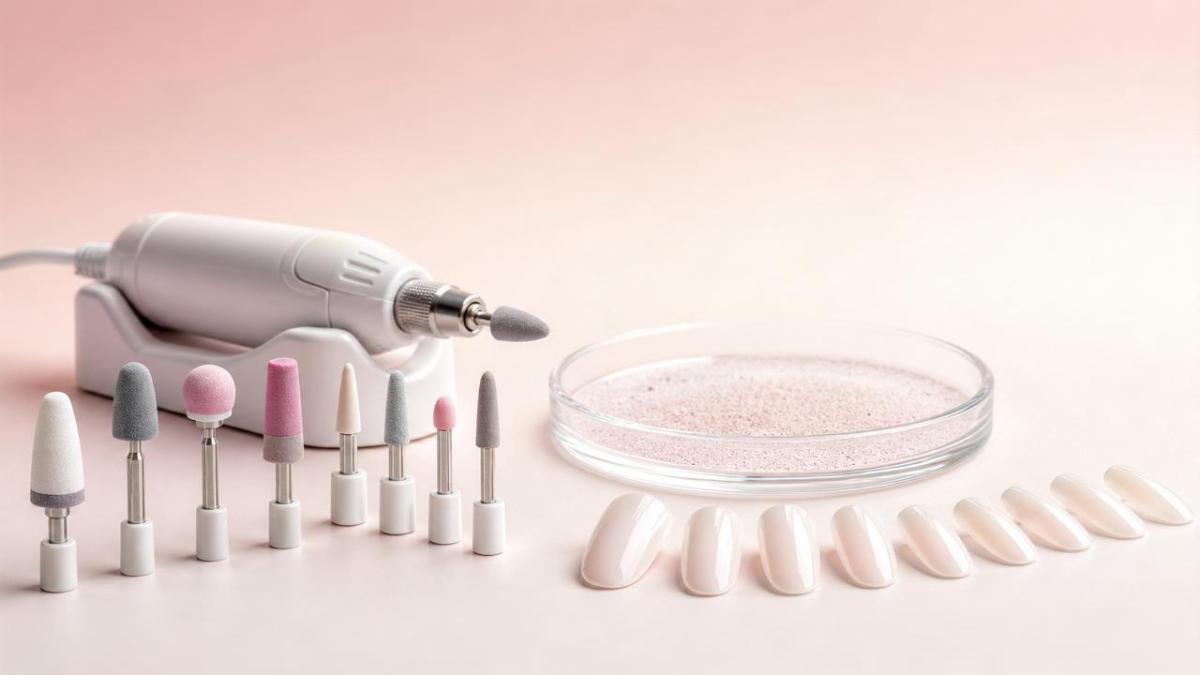
Nail finishing has shifted from speed-focused operation toward controlled, low-risk, and consistent surface preparation.
This shift is visible in salons, training centers, private label production, and manicure accessory supply chains.
The silicone nail drill bit is part of this change because it helps reduce aggressive contact.
Its flexible abrasive behavior makes it useful for finishing zones where hard bits may remove too much material.
Instead of reshaping aggressively, the silicone nail drill bit is often used to refine, smooth, and polish.
This function matches rising expectations for comfort, predictable outcomes, and fewer corrective steps.
Trend Signals Around Silicone Nail Drill Bit Applications
Demand is increasing for abrasive tools that support safer finishing without slowing daily work.
The silicone nail drill bit meets this need in several practical finishing scenarios.
It is commonly used after shaping with harder carbide, ceramic, or diamond-style nail drill tools.
At this stage, the surface needs refinement rather than heavy reduction.
A silicone nail drill bit can help soften edges, remove minor unevenness, and prepare a cleaner final appearance.
This makes it valuable for gel polish finishing, acrylic refinement, artificial nail maintenance, and pedicure detailing.
Key use cases gaining attention
- Smoothing fine scratches left after coarse shaping.
- Refining sidewalls and free edges with softer contact.
- Polishing artificial nail surfaces before final gloss.
- Reducing roughness around thicker enhancement zones.
- Supporting careful pedicure finishing on controlled speed settings.
These uses explain why the silicone nail drill bit is increasingly viewed as a safety-supporting finishing accessory.
Why the Shift Toward Gentler Finishing Tools Is Accelerating
Several business and service factors are pushing teams toward more forgiving abrasive options.
The silicone nail drill bit answers many of these factors by balancing control and finishing quality.
This trend does not replace cutting or shaping bits.
Instead, the silicone nail drill bit expands the finishing stage with safer and more refined control.
How Silicone Nail Drill Bit Design Supports Safer Finishing
The safety value of a silicone nail drill bit comes from its material behavior and abrasive structure.
Silicone-bonded abrasives usually feel less rigid than metal cutting heads.
This softness helps reduce sudden grabbing and harsh surface marks during finishing.
When paired with proper speed and light pressure, the silicone nail drill bit can reduce heat buildup.
Lower heat matters because discomfort often begins before visible product damage appears.
Fine finishing also benefits from different shapes, including cone, bullet, cylinder, and rounded tips.
Each shape changes contact area, pressure distribution, and access around curved nail zones.
Typical finishing advantages
- Gentler touch on artificial nail surfaces.
- Improved control near edges and contour transitions.
- Reduced risk of deep scratches after shaping.
- Better suitability for layered finishing steps.
- Useful support for repeatable manicure and pedicure workflows.
Impact on Service Flow, Quality Control, and Operator Habits
A silicone nail drill bit affects more than the final shine.
It changes how finishing steps are planned, checked, and repeated during routine work.
For service environments, the main impact is smoother sequencing after aggressive shaping.
Harder tools can establish structure, while the silicone nail drill bit improves final comfort and surface feel.
For quality control, it creates a clearer finishing checkpoint before buffing or top coat application.
This checkpoint helps identify scratches, uneven edges, or excessive thickness before final sealing.
For training, the silicone nail drill bit supports safer learning because pressure mistakes are often less severe.
However, it still requires discipline, especially around speed, sanitation, and tool replacement timing.
Business areas affected by finishing quality
- Client satisfaction through smoother touch and cleaner appearance.
- Rework reduction by correcting fine defects earlier.
- Operator confidence through more predictable finishing behavior.
- Tool planning through clear separation of shaping and polishing.
- Brand consistency across multi-location or high-volume service teams.
Selection Standards Are Moving Beyond Price Alone
As finishing expectations rise, tool selection must consider consistency, material quality, and application match.
A silicone nail drill bit should not be chosen only by shape or low cost.
Important factors include abrasive uniformity, shaft stability, heat behavior, and packaging protection.
Reliable production control also matters because small dimensional differences can affect vibration and finishing accuracy.
Wuxi Yaqin Trading Co., Ltd. focuses on high quality abrasive products for global nail care markets.
Its QC system covers raw material purchasing, production processes, and product packing.
The company also provides OEM and ODM service for large-scale nail bit programs.
For broader tool matching, see High Quality Nail Art Tools Nail Drill Bit Steel Grinding Tungsten Carbide Nail Drill Bits Sets Manicure Pedicure.
Combining carbide shaping tools with a silicone nail drill bit can create a more complete finishing system.
Key Points to Watch When Using Silicone Nail Drill Bit Tools
Safe finishing depends on both tool quality and usage control.
Even a well-made silicone nail drill bit can perform poorly under excessive pressure or unsuitable speed.
- Use light pressure and let the abrasive surface do the work.
- Avoid staying too long on one point to reduce heat.
- Select grit level according to the previous shaping mark.
- Match bit shape to the finishing area and nail contour.
- Check wear regularly, because worn silicone can polish unevenly.
- Clean and store bits according to hygiene requirements.
These habits help the silicone nail drill bit deliver safer, more consistent finishing across repeated use.
Practical Response Strategy for Better Finishing Results
The next step is to build a finishing system instead of relying on one tool type.
The silicone nail drill bit should be positioned within a clear workflow.
This approach helps reduce rework and improves confidence in final inspection.
It also makes training easier because each finishing step has a clear purpose.
What the Next Phase of Finishing Tools Will Emphasize
Future finishing demand will likely focus on lower heat, smoother control, and application-specific abrasive designs.
The silicone nail drill bit will remain relevant because it fits this direction naturally.
More teams will compare finishing tools by repeatability, not only by initial sharpness or price.
Documentation, stable QC, and reliable packaging will become more important in purchasing decisions.
Suppliers with experience in abrasive production and export compliance can support this transition better.
For large-scale nail care operations, the silicone nail drill bit should be tested in real workflow conditions.
Evaluation should include heat feel, surface smoothness, vibration, durability, and finishing time.
Action Steps for Safer and More Consistent Finishing
Start by mapping where finishing defects most often appear in the current workflow.
Then test a silicone nail drill bit at those points under controlled speed and pressure settings.
Compare results with existing polishing methods using the same surface, lighting, and inspection criteria.
Build a standard sequence that separates shaping, smoothing, polishing, and final checking.
Choose suppliers that can support stable quality, OEM or ODM needs, and consistent export delivery.
With the right process, a silicone nail drill bit becomes more than a small accessory.
It becomes a practical finishing tool for safer work, better surfaces, and stronger quality control.
News List
- Is It Better to Source All Nail Drill Bits From One Factory?Aug 24, 2026
- How to Spot Fake Diamond Coating on Nail Drill BitsAug 24, 2026
- Are Silicone Nail Drill Bits Reusable After Sterilization?Aug 24, 2026
- Essential tools for manicures that make beginner work more consistentAug 24, 2026
- Which must-have items for nail technicians improve service speed mostAug 24, 2026
- How gel removal bits affect speed and heat during soak-off removalAug 24, 2026
Best-Selling Products
 Cross Cut Safety Stainless Steel Tungsten Carbide Nail Drill Bits Salon Foot Use XF-C Grit for Removing Nails
 First-rate Quality Tungsten Carbide Nail Drill Bits Best Coating Manicure Remove Gel Nails Accessories
 Professional Advanced Safety Cuticle Bits Two-Way Rotate 3/32'' Carbide Tungsten 5 in 1 Nail Drill Bits
 Wholesale 5 in 1 Electric Manicure Nail Drill Bits Various Coating Cone Cuticle Bit with Rotary Cross Cut for Nail Art
 New Slant Tooth Tungsten Steel Nail Drill Bits Dead Skin Removal 5-in-1 Universal Grinding Nail Polish Head Tool Nail Drill Bits
 4.0mm Small 5 in 1 Integrated Sharpe Tungsten Nail Drill Bit Straight Teeth Gel Polish Removal
 Flame Sharp XF F M C XC Silver Safety Professional Corn Tungsten Carbide Nail Bit for Drill Machine Accessories
 Factory Direct 5 in 1 Tungsten Carbide Nail Drill Bits 6.8MM Cross Cut Safety Manicure 5 in 1 Nail Drill Bits
Please give us a message