
One-Way Volcano Nail Drill Bits: Direction, Safety, and Product Control
One-Way Volcano Nail Drill Bits: Direction, Safety, and Product Control
One-Way Volcano Nail Drill Bits: Direction, Safety, and Product Control
A one-way volcano nail drill bit gives operators greater control when refining product, removing gel, or shaping enhancement surfaces. The direction of rotation is not a minor machine setting: it determines how the flutes meet the material, where dust travels, how much pressure the operator feels, and whether the bit cuts smoothly or seems to drag. For technicians searching terms such as “nails drill bit volcano bit one way,” the practical question is usually simple: which way should the bit turn, and how can it be used without compromising nail safety?
The answer depends on the bit’s flute design, the hand position of the operator, and the work being performed. A volcano bit is valued for its aggressive-looking textured cutting surface, but its performance should never be confused with permission to work aggressively on the nail. Good results come from matching the bit, direction, speed, and pressure to the service—not from forcing material off as quickly as possible.
For salon operators, mobile technicians, and training environments, understanding this relationship makes e-file work feel more predictable. It also supports cleaner finishing, more consistent product removal, and a calmer experience for the client in the chair.
What Makes a Volcano Bit Different?
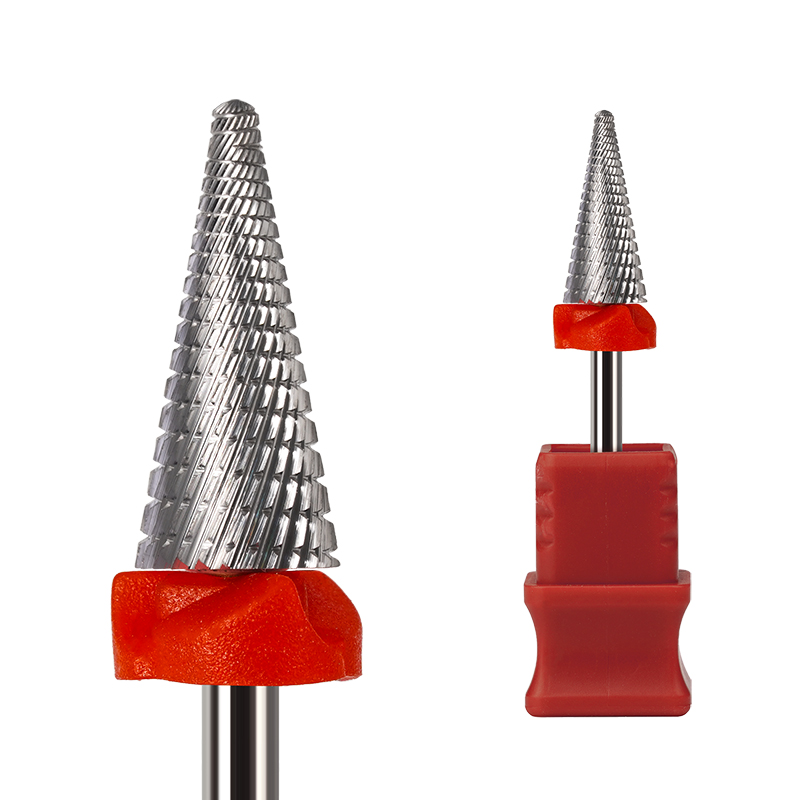
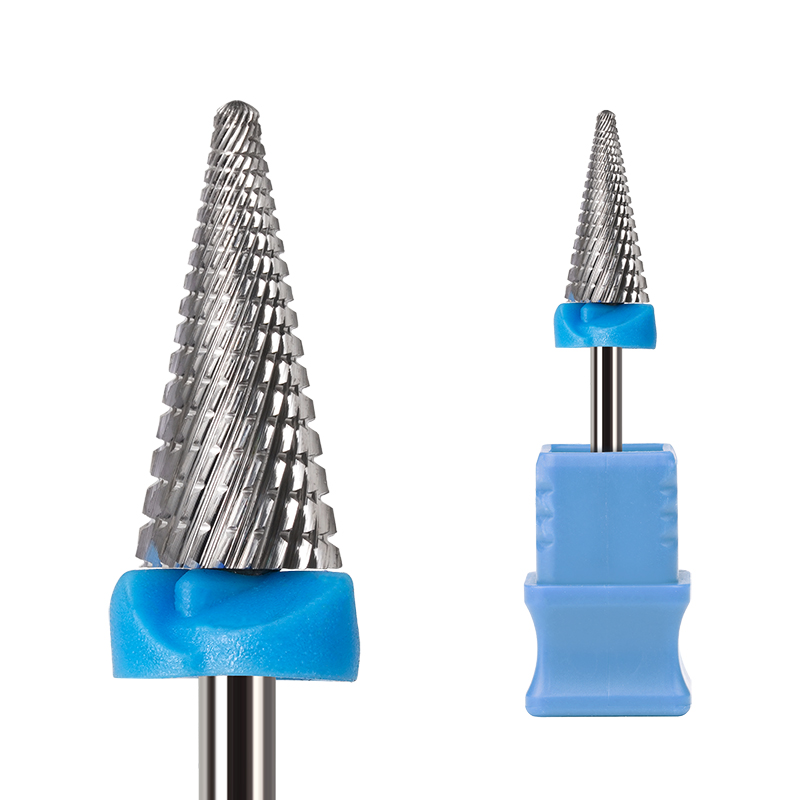
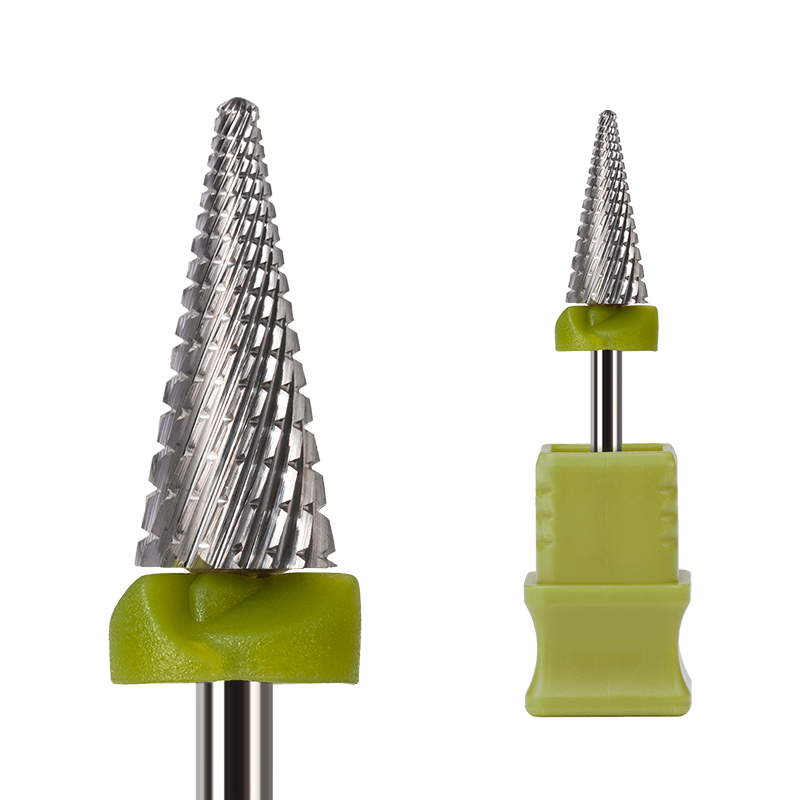
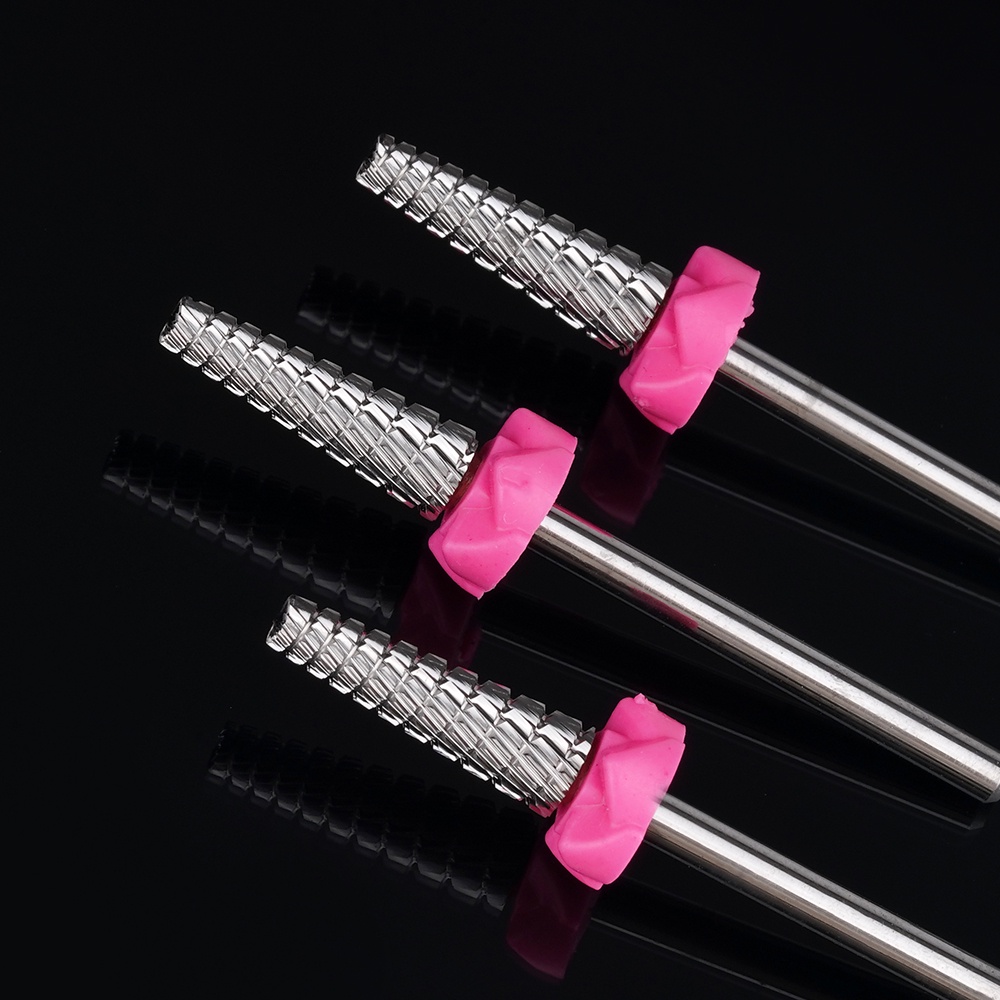
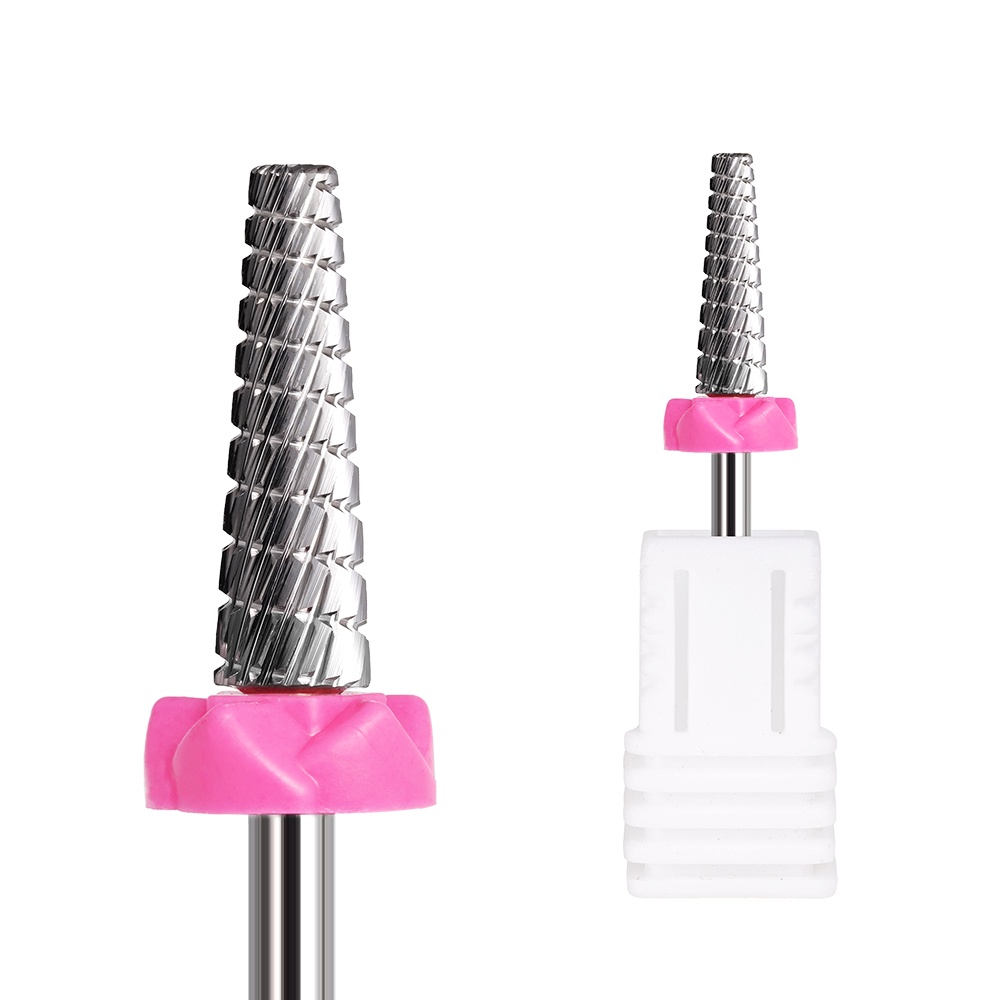
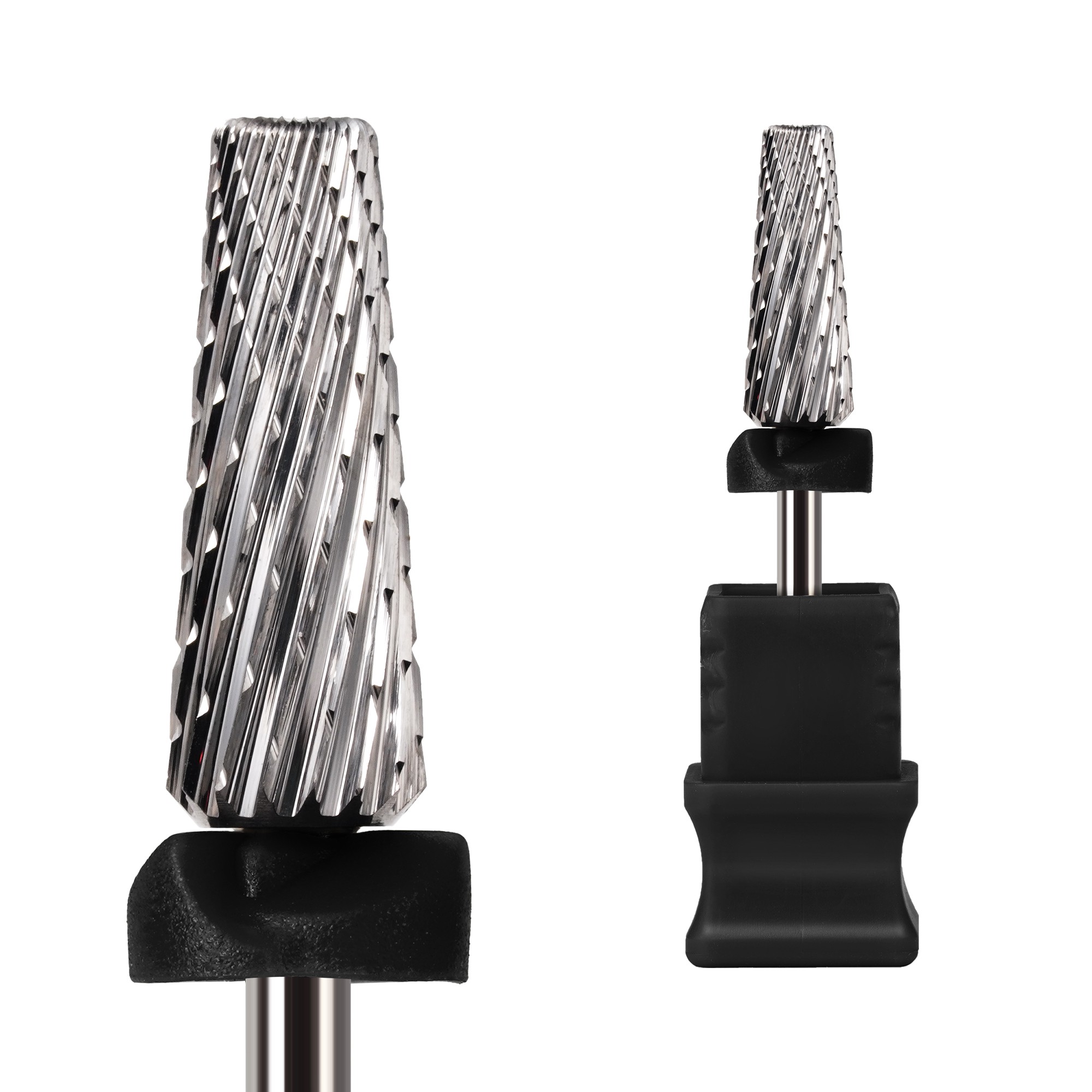
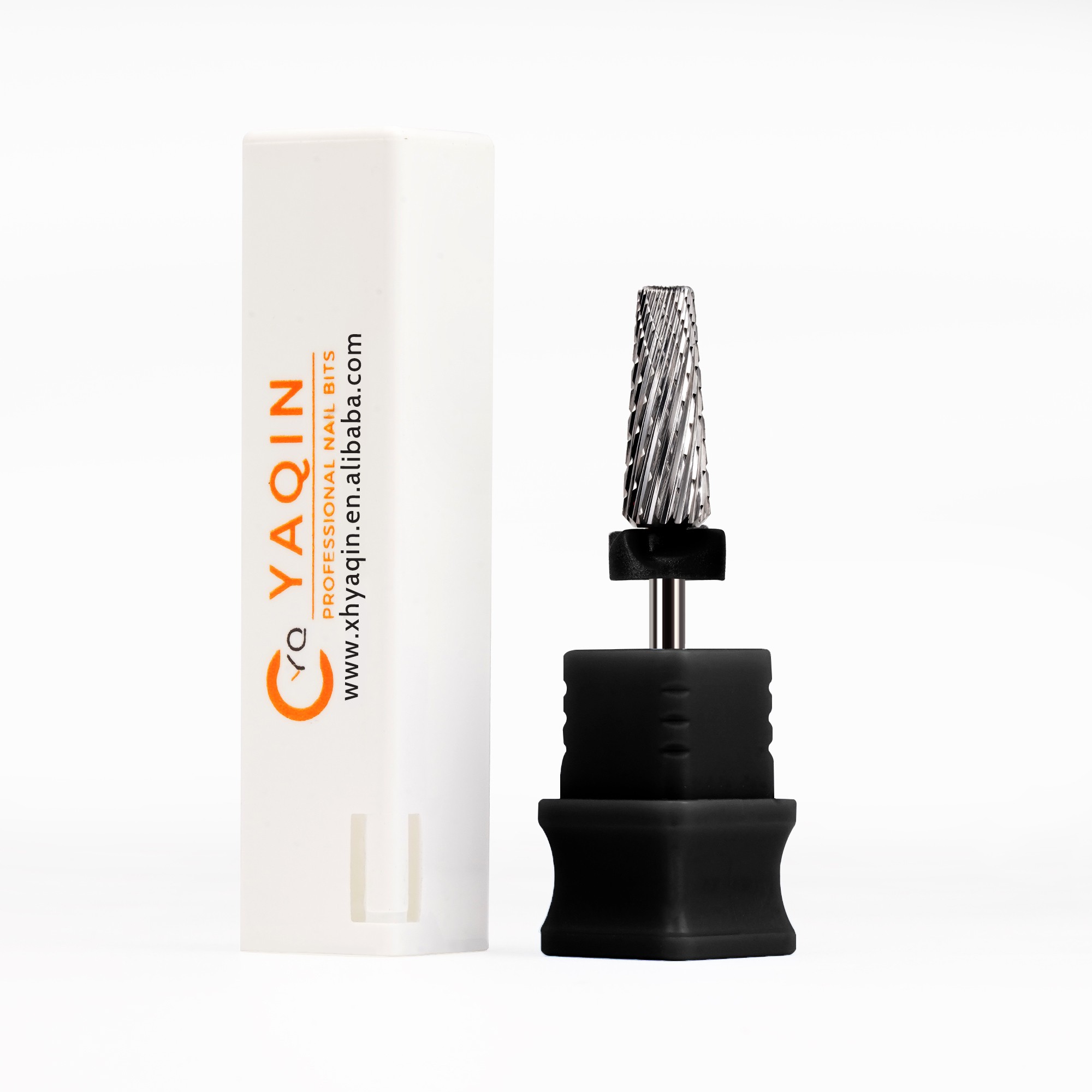
A volcano nail drill bit usually refers to a carbide bit with a raised, textured, or volcano-like cutting pattern across its working surface. Rather than relying on a smooth abrasive coating alone, the cutting geometry is designed to break down product and guide debris away from the contact area. These bits are commonly selected for reducing bulk in builder gel, hard gel, acrylic, overlays, and thick product layers.
The pattern matters because removed material needs somewhere to go. When the flutes clear dust effectively, the operator can see the service area more clearly and is less likely to keep passing over the same spot unnecessarily. A clogged bit, by contrast, may create heat, chatter, or inconsistent removal. It can tempt the operator to press harder—a habit that increases risk rather than improving efficiency.
Not every textured bit is identical. The depth, angle, spacing, and orientation of the flutes all influence cutting behavior. A coarse bit may be appropriate for controlled bulk removal on artificial enhancement material, while a finer option is more suitable for refinement. Neither should be treated as a cuticle tool or used to intentionally remove natural nail plate material.
“One Way” Means the Flutes Have a Preferred Cutting Direction
A one-way bit is engineered for a specific rotational direction, commonly marked for forward or reverse operation. When it turns in its intended direction, the cutting edges engage the product cleanly. In the wrong direction, the same flutes may scrape, skip, pull, or feel unexpectedly rough. The operator may notice increased vibration, uneven dust release, and a need to use more pressure.
This is why the rotation switch on an e-file should never be changed casually while working. Stop the handpiece completely, confirm the bit is secure, then select the intended direction before returning to the nail. Reversing rotation while the tool is spinning can be uncomfortable for the client and may place unnecessary stress on the bit, handpiece, or locking mechanism.
For a right-handed technician, forward rotation is often used when working from the center toward one side of the nail, while reverse rotation may be more natural on the opposite side. However, the correct choice is not based on handedness alone. It must agree with the manufacturer’s flute orientation. A one-way volcano bit cannot simply be “made ambidextrous” by changing technique.
How to recognize the correct direction
- Check the package, product label, or laser marking for an “F,” “R,” arrow, or stated rotation direction.
- Inspect the flute angle under good lighting. Cutting teeth generally lead in the intended direction of travel.
- Test the bit only on an enhancement surface or practice tip, using low pressure and a controlled speed.
- Listen and feel. A correctly oriented bit should remove product with a steady, controlled action rather than a grabbing sensation.
- If no direction is marked, do not assume. Confirm the specification with the supplier before using it in a client service.
A reliable supplier should provide clear product information because direction is part of the tool’s operating standard, not an optional detail. This is particularly important when a salon orders multiple bit styles for several technicians.
Rotation Direction Affects More Than Cutting Speed
The best e-file work is not simply fast. It is controlled. A bit that cuts in the right direction lets the operator maintain a lighter hand, keep the working area visible, and move in deliberate passes. The visual result may be subtle—a more even product reduction, less accidental gouging near sidewalls, and a smoother transition when leaving a thin protective layer of product where appropriate.
Dust movement is another consideration. Volcano-style flute patterns are often chosen because they help eject dust away from the cutting area. When rotation and hand position are aligned, debris is less likely to collect around the working surface. This does not remove the need for dust extraction, personal protective equipment, or routine cleaning, but it contributes to a tidier workflow.
Direction also changes how a bit behaves near the free edge and sidewalls. Approaching a sidewall with the wrong rotational pull can make the bit feel as though it wants to travel into the skin or catch along the product edge. The operator should position the handpiece so the bit glides away from vulnerable skin areas whenever possible. A stable finger rest and a supported client hand make a noticeable difference.
A Safe Operating Routine for a One-Way Volcano Nail Drill Bit
Before inserting any nails drill bit, inspect the shank and cutting surface. Look for bent shanks, chipped teeth, corrosion, packed debris, or signs of wear. A damaged carbide bit should be removed from service. Even a very small defect can cause imbalance at speed, resulting in vibration and reduced control.
Secure the bit fully in a compatible handpiece. Most professional e-files use a standard 3/32-inch shank, but compatibility should always be verified rather than assumed. The bit must be seated correctly and locked according to the handpiece instructions. Never operate with a loose bit or force an incorrectly sized shank into the chuck.
Begin at a conservative speed appropriate for the product density and your own skill level. There is no universal speed that fits every gel formula, enhancement thickness, or e-file model. The important point is to use the lowest effective setting that allows smooth, even movement. If the bit stalls, chatters, or creates heat, do not immediately increase pressure. Pause and review the direction, speed, bit cleanliness, and contact angle.
Keep the bit moving. Long stationary contact in one place can create friction and heat, even when working on artificial material. Work in light, overlapping passes and let the flutes do the cutting. A flat or rounded safety tip may offer more confidence around edges, but it does not eliminate the need for awareness. The bit should not touch surrounding skin, and it should not be used to thin the natural nail plate.
A practical sequence for gel reduction
- Assess the nail before starting. Identify lifting, cracks, sensitivity, damaged skin, or areas where product should not be aggressively reduced.
- Select the correct one-way rotation and confirm that the bit cuts away from the skin in the planned working path.
- Remove surface bulk from the center area first, using light passes and avoiding prolonged contact near the cuticle zone.
- Reduce product gradually toward the sidewalls and free edge, changing the client’s finger position rather than twisting your wrist into an unstable angle.
- Leave an appropriate thin layer when performing a rebalance or follow the removal procedure required for the specific enhancement system.
- Switch to a finer, more suitable tool for detailed refinement. A volcano bit is primarily a product-removal tool, not a finish-polishing tool.
Common Mistakes That Make a Good Bit Feel Unsafe
Using the wrong direction. This is the most direct cause of dragging and poor control with a one-way bit. The tool may still remove some material, but the operation becomes less smooth and less predictable.
Pressing to compensate for a dull or clogged surface. Carbide bits should cut with light pressure. If performance declines, clean and inspect the bit. Continued use of a worn bit can increase heat and compromise service consistency.
Choosing a coarse pattern for fine work. Coarse removal bits are useful for bulk reduction on enhancement material. They are not designed for delicate cuticle detailing or routine natural nail preparation. Match the grit and shape to the job.
Ignoring the client’s feedback. A client may not know technical terminology, but they know when something feels hot, sharp, or uncomfortable. Stop immediately if discomfort is reported. Check contact pressure, rotation, speed, and the condition of the nail before resuming.
Skipping hygiene between services. Nail dust and residue can remain in flute channels. Follow local sanitation requirements and the bit manufacturer’s cleaning and disinfection guidance. A bit must be thoroughly cleaned before any appropriate disinfection or sterilization process; product residue can interfere with effective hygiene procedures.
One-Way Versus Bidirectional: Which Is Better?
Neither design is automatically better. A one-way volcano bit can provide highly consistent cutting behavior when used in its intended rotation. It may be a practical choice for technicians who have a defined working direction and prefer a specialized tool for repeatable bulk removal.
Bidirectional bits are designed to cut in both forward and reverse rotation. They can be especially useful for technicians who work from both sides of the nail, share tools in multi-operator settings, or want greater flexibility for left- and right-handed workflows. Their flute design is made to maintain cutting performance in either direction, reducing the need to change bits when switching hand positions.
For example, High Quality Tungsten Carbide Nail Drill Bits Bidirectional Super Long Gel Nail Polish Cuticle Nail Drill Bits are intended for applications such as gel polish removal, hard and soft gel reduction, base coat removal, nail tip removal, and work on tough product surfaces. A tungsten carbide construction, combined with a smooth flat safety-oriented tip, can support controlled removal when the technician selects the correct bit type and follows appropriate operating practice.
For the operator, the decision should be based on workflow rather than labels alone. Choose a one-way bit when its rotation matches your usual method and you want a clearly defined cut. Choose a bidirectional version when changing rotational direction is part of your regular service technique. In either case, training and bit condition remain more important than the word printed on the package.
Product Control Starts Before the Bit Reaches the Handpiece
Consistent e-file performance begins in manufacturing and continues through packing, transport, inspection, and use. For carbide nail drill bits, the quality of tungsten steel material, cutting geometry, shank straightness, surface finish, and flute consistency all influence how the bit feels in operation. An imbalanced or poorly finished bit may create vibration that the operator mistakes for a technique problem.
For professional buyers and high-volume users, it is worth asking suppliers how they manage incoming materials, production checks, and packing inspection. Wuxi Yaqin Trading Co., Ltd. focuses on the production and export of abrasive products and maintains quality-control procedures covering raw-material purchasing, manufacturing processes, and finished-product packing. With ISO9001:2000 quality management system certification and experience supporting OEM/ODM requirements, the company can help buyers evaluate bit options in relation to application, packaging, and market needs.
That level of product control matters in everyday salon work. When bits arrive consistently marked, cleanly finished, properly packed, and matched to their stated use, technicians can spend less time second-guessing the tool and more time concentrating on the client’s nail condition and service outcome.
Final Checks Before Every Service
A volcano bit should feel like an extension of a trained hand, not a shortcut. Confirm its rotation direction, inspect its condition, lock it securely into the handpiece, and choose a speed that supports light-pressure control. Use it on the enhancement material it is intended to remove, maintain movement, and change tools when the service moves from bulk reduction to detail work.
For one-way designs, the simplest rule is also the most important: let the flute direction lead the work. When the bit rotates as designed, dust clears more consistently, cutting feels smoother, and the technician has a better chance of delivering a careful, repeatable result without unnecessary stress on the natural nail or surrounding skin.
News List
- Preventing Gouges and Uneven Filing With Small Barrel Nail Drill BitsSep 20, 2026
- How Diameter and Grit Affect Small Barrel Nail Drill Bit PerformanceSep 20, 2026
- Can Hytos Nail Drill Bits Be Used Safely on Natural Nails and Gel Polish?Sep 20, 2026
- How to Verify Fit Between Hytos Nail Drill Bits and an E-File HandpieceSep 20, 2026
- Safe Speed Settings for Umbrella Nail Drill Bits Around the Nail FoldSep 20, 2026
- Umbrella vs Flame Nail Drill Bits: Which Shape Offers Better Cuticle Control?Sep 20, 2026
Best-Selling Products
 Cross Cut Safety Stainless Steel Tungsten Carbide Nail Drill Bits Salon Foot Use XF-C Grit for Removing Nails
 First-rate Quality Tungsten Carbide Nail Drill Bits Best Coating Manicure Remove Gel Nails Accessories
 Professional Advanced Safety Cuticle Bits Two-Way Rotate 3/32'' Carbide Tungsten 5 in 1 Nail Drill Bits
 Wholesale 5 in 1 Electric Manicure Nail Drill Bits Various Coating Cone Cuticle Bit with Rotary Cross Cut for Nail Art
 New Slant Tooth Tungsten Steel Nail Drill Bits Dead Skin Removal 5-in-1 Universal Grinding Nail Polish Head Tool Nail Drill Bits
 4.0mm Small 5 in 1 Integrated Sharpe Tungsten Nail Drill Bit Straight Teeth Gel Polish Removal
 Flame Sharp XF F M C XC Silver Safety Professional Corn Tungsten Carbide Nail Bit for Drill Machine Accessories
 Factory Direct 5 in 1 Tungsten Carbide Nail Drill Bits 6.8MM Cross Cut Safety Manicure 5 in 1 Nail Drill Bits
Please give us a message