
Small Barrel Nail Drill Bits: Which Grit Works Best for Sidewall Refinement?
Small Barrel Nail Drill Bits: Which Grit Works Best for Sidewall Refinement?
Small Barrel Nail Drill Bits: Which Grit Works Best for Sidewall Refinement?
Sidewall refinement is one of those e-file steps that looks simple until the bit is too aggressive, the angle is slightly wrong, or the natural nail is thinner than expected. The working area is narrow, curved, and close to living skin. A bit that removes product efficiently across the center of an enhancement can feel completely different when it reaches the lateral nail folds.
For most refinement work, small barrel nails drill bits give better visibility and more controlled contact than a wider barrel. Their compact head makes it easier to work close to the sidewall without rolling across too much of the nail plate. Still, size alone does not determine whether a bit is appropriate. Grit, tooth pattern, product thickness, nail condition, and the operator’s pressure all matter. In practical salon use, fine grit is usually the safer default for sidewall finishing, while medium and coarse options have narrower, more deliberate roles.
Why the Sidewall Needs a Different Bit Choice
The sidewall is not a flat, open surface. Product often gathers near this area after application, particularly with builder gel, overlays, extensions, and repairs. The technician may need to remove a small ridge, blend an old infill line, refine thickness near the perimeter, or clean cured product that has drifted toward the sidewall. None of these tasks requires the same level of removal as taking down a full hard-gel enhancement.
That distinction is important. When operators reach for a coarse bit simply because the product is hard, they may remove material quickly but lose the subtle control needed at the edge. A sidewall can end up too thin, uneven, or over-filed before the technician notices. The objective is not to “dig out” the sidewall. It is to make the transition from enhancement to natural nail look smooth, balanced, and comfortable.
A small barrel is particularly useful where the technician needs to maintain a stable visual reference. It can refine the lower side of an apex, reduce bulk near a sculpted extension, and clean the product line without the broad contact patch of a large barrel. It should still be moved continuously. Pausing in one spot creates heat and leaves unwanted grooves, even with a fine cut.
Fine Grit: Usually the Best Starting Point for Refinement
A fine small barrel bit is generally the most versatile option for sidewall refinement. It is well suited to smoothing thin product near the lateral edge, blending a filled area, refining soft gel overlays, and preparing a surface before a fresh application. Fine grit does not mean risk-free; speed, pressure, and technique still determine the result. But it gives the operator more time to assess the surface before too much material comes away.
This is often the sensible choice when the natural nail is flexible, thin, previously over-filed, or otherwise not a good candidate for aggressive work. It is also a practical finish bit after medium-grit removal. Rather than forcing one bit to perform every stage, many experienced operators remove bulk with a more efficient tool and switch to fine grit when they approach the sidewalls and perimeter.
Fine grit is especially useful for controlled finishing on gel systems because it can soften visible ledges without stripping the surrounding structure. If a technician is unsure whether the remaining layer is product or natural nail, that is a reason to slow down, reduce pressure, and use a finer cut—not a reason to increase speed.
When Medium Grit Makes More Sense
Medium grit is often the working choice for sidewalls with noticeable product buildup. It can handle denser builder gel, acrylic, or a substantial infill line more efficiently than fine grit, provided there is still enough distance from the natural nail and skin. For a technician who performs backfill work repeatedly, a medium small barrel can be a useful bridge between bulk reduction and final smoothing.
The catch is that medium grit asks for more discipline. It is easy to let the bit’s cutting action do the work, but operators often compensate with hand pressure when a bit is dull, clogged, or poorly matched to the material. That is where heat and chatter begin. A fresh, well-made medium bit should cut predictably with light contact. If it needs to be pushed, inspect the bit, the drill speed, and the material buildup before continuing.
Coarse Grit Has a Place—Just Not at the Final Edge
Coarse grit small barrel bits can be useful on thick acrylic, dense hard gel, and old enhancement material that needs to be reduced before detailed work starts. In some cases, the narrower barrel helps reach the product mass near a sidewall that a larger barrel cannot access comfortably. Yet this is a reduction step, not a refinement step.
The practical rule is simple: use coarse grit to create clearance, then change bits before the natural nail edge becomes the working surface. A coarse barrel near a thin perimeter leaves little margin for error. It is also more likely to produce a visible trench that later has to be corrected with hand filing or a fine bit. Faster is only faster if it does not create repair work.
Do not rely only on color bands when choosing grit. Color coding is common in the nail industry, but it is not a universal measurement system across every supplier and tooth design. Read the listed grit or cut description, then test the bit’s behavior on the intended material. The same color label can feel different when flute depth, tooth direction, coating, and manufacturing quality change.
Tooth Design, Direction, and Material Change the Feel of the Bit
A small barrel’s grit is only part of the decision. Carbide and tungsten-steel drill bits are valued because their cutting teeth can remove cured product efficiently and remain serviceable through regular use when properly cleaned and handled. A smooth or safety-oriented tip can be helpful around tight areas, but it does not replace careful positioning. The tip may reduce the likelihood of a sharp point catching skin, while the barrel itself can still cut if it is angled carelessly.
For right-handed and left-handed use, check whether the bit is designed for one rotational direction or has a dual-direction cutting pattern. Switching the e-file direction without checking bit compatibility can make a normally smooth bit feel grabby. This is particularly noticeable near sidewalls, where the technician has less room to correct a sudden pull.
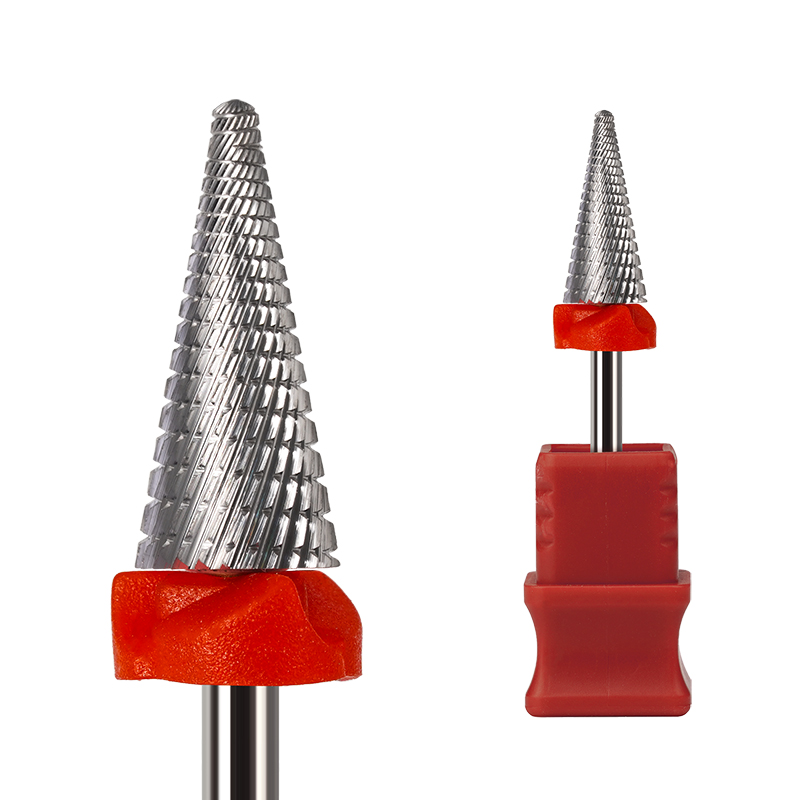
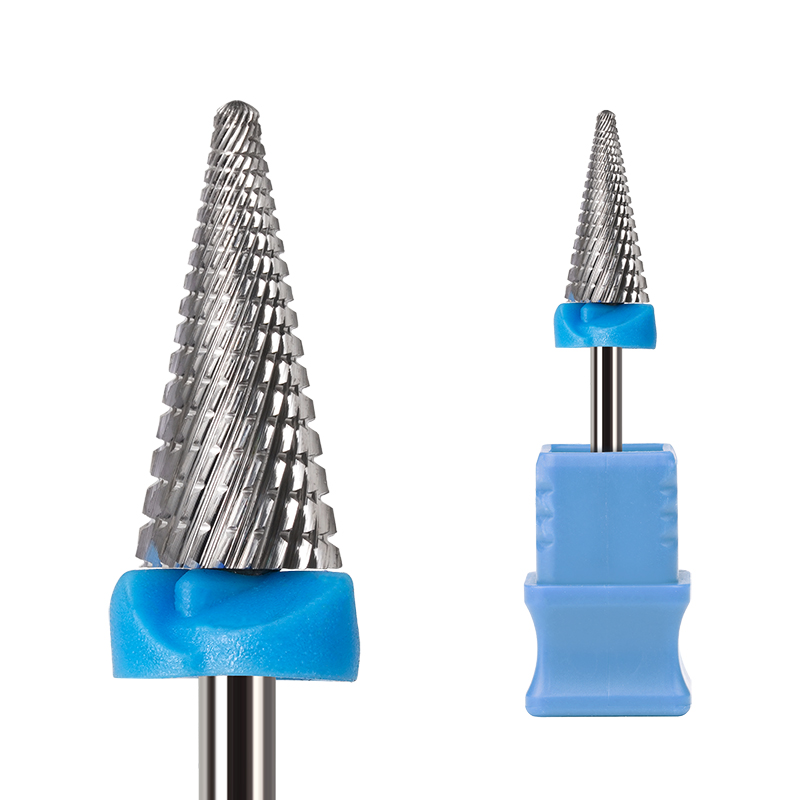
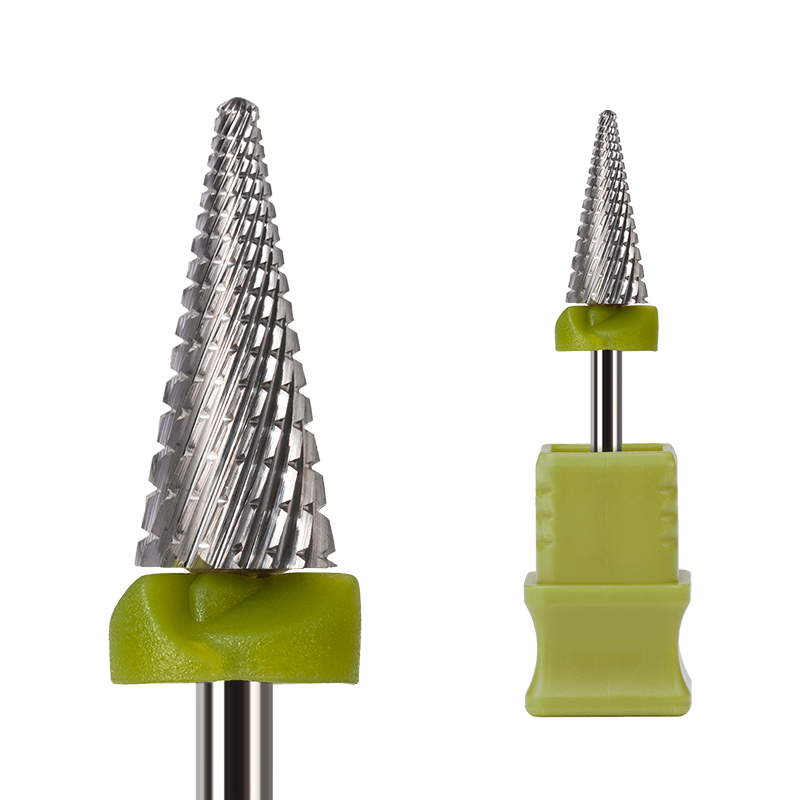
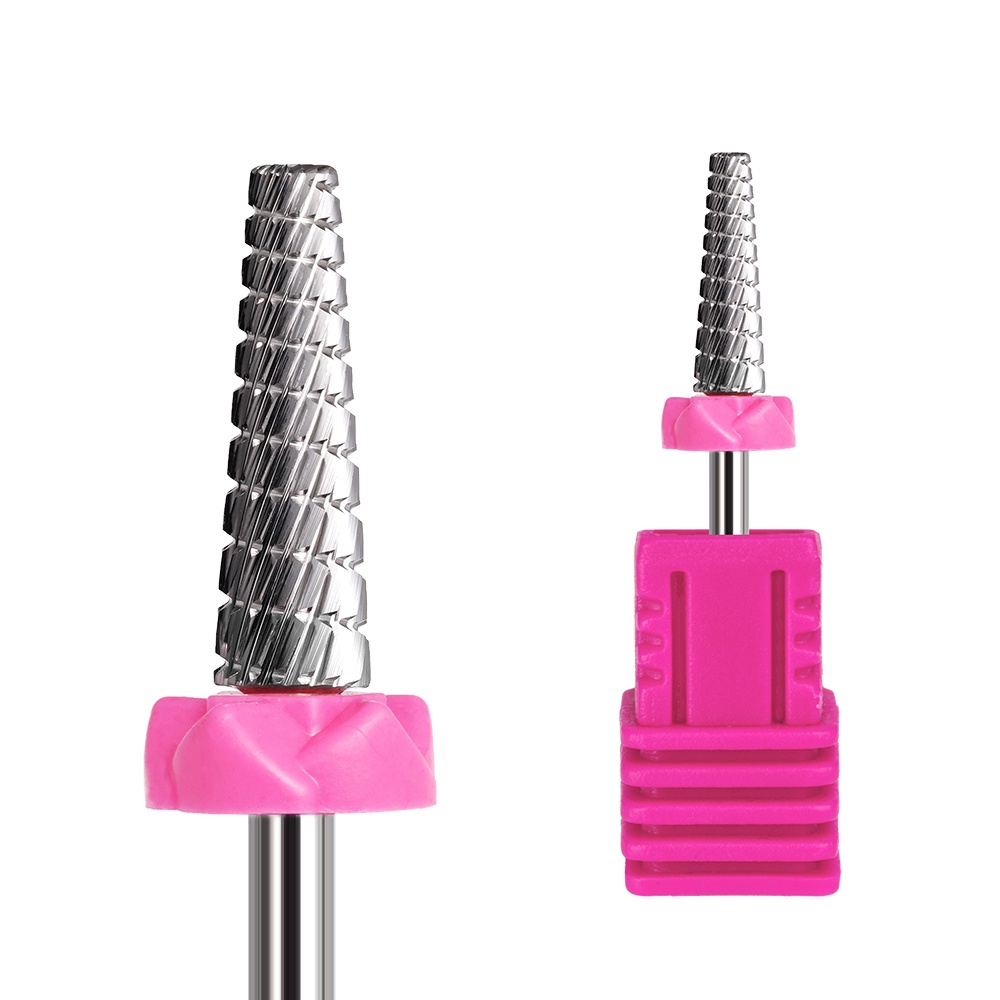
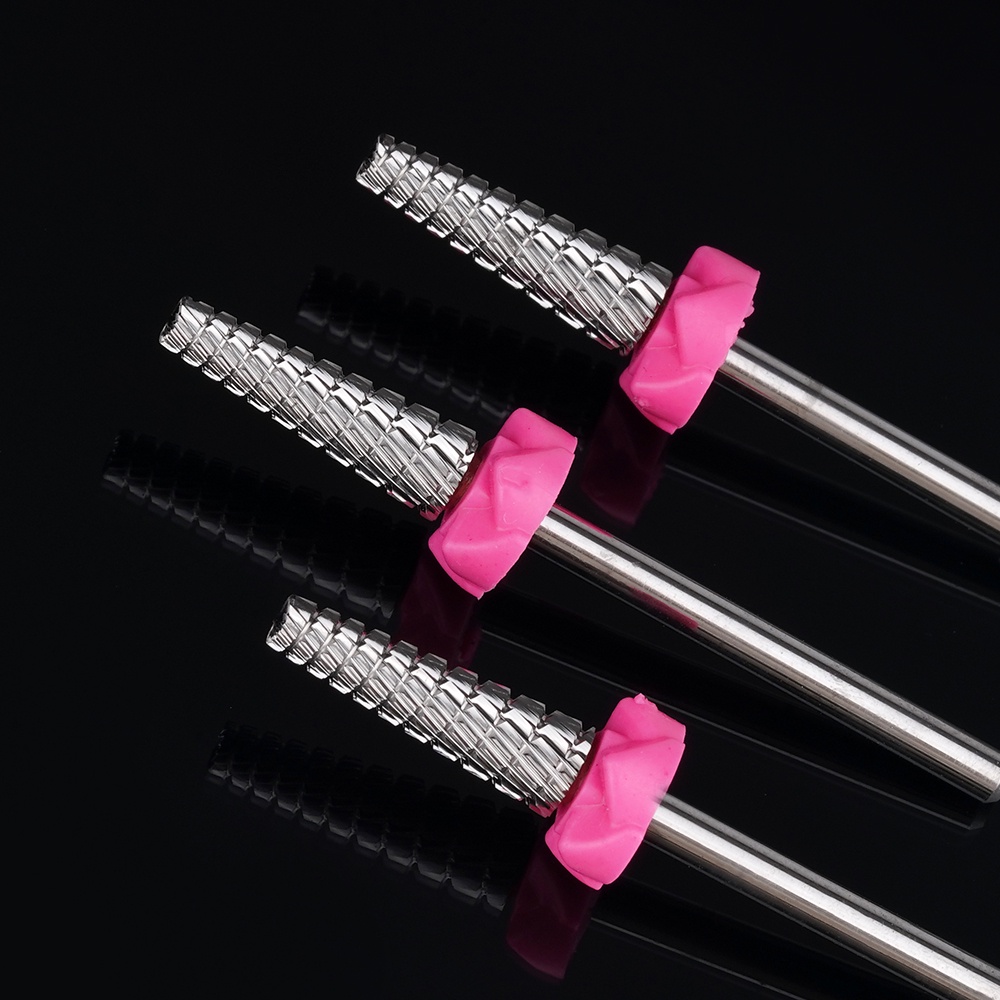
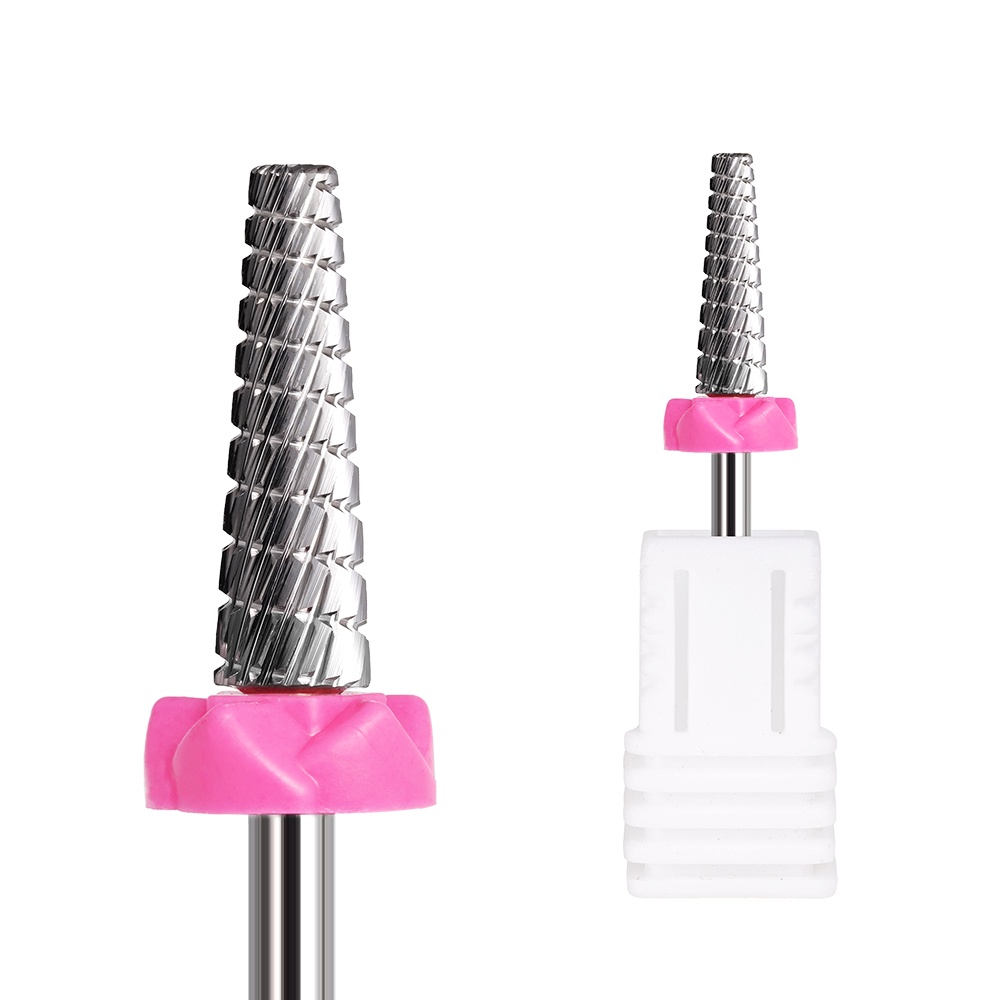
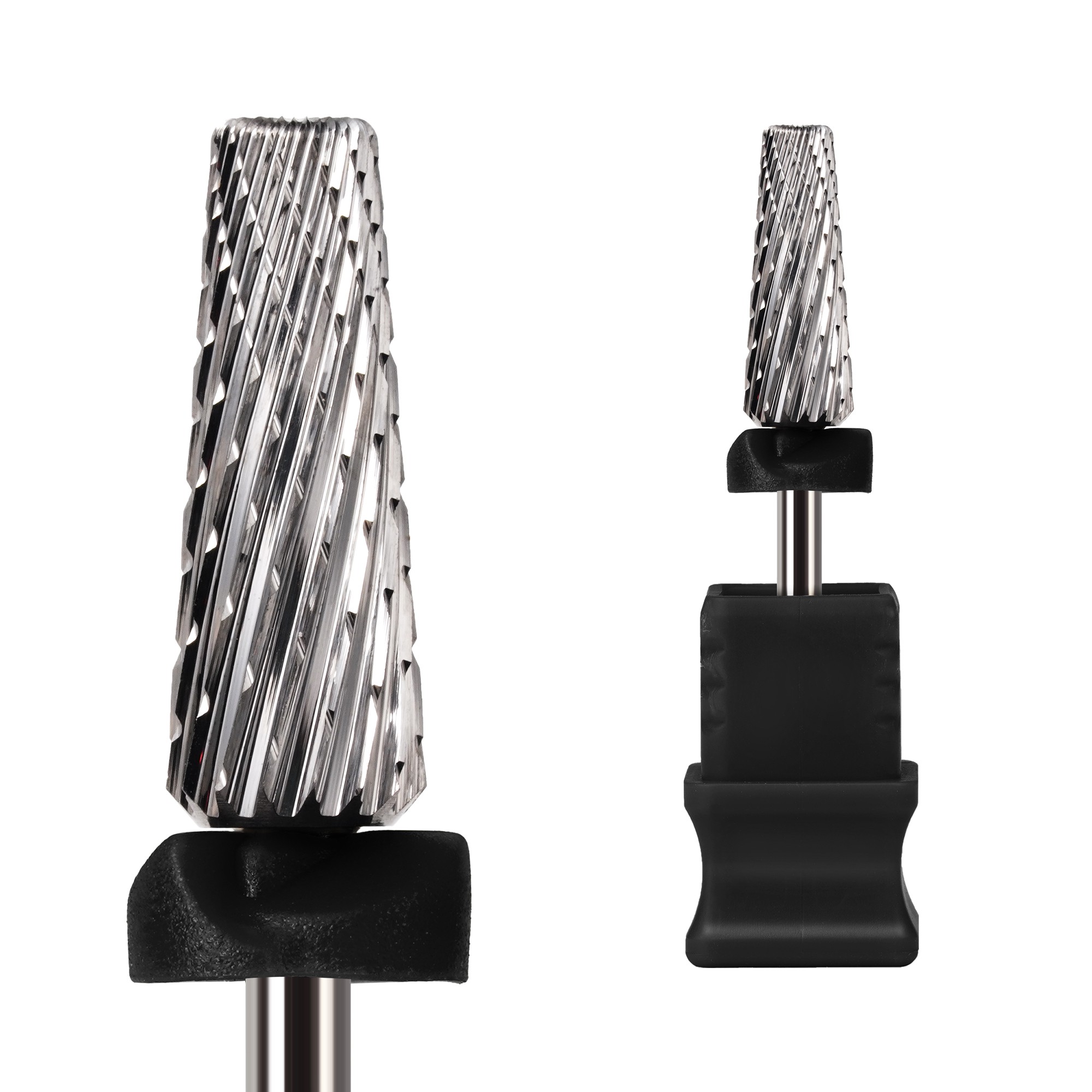
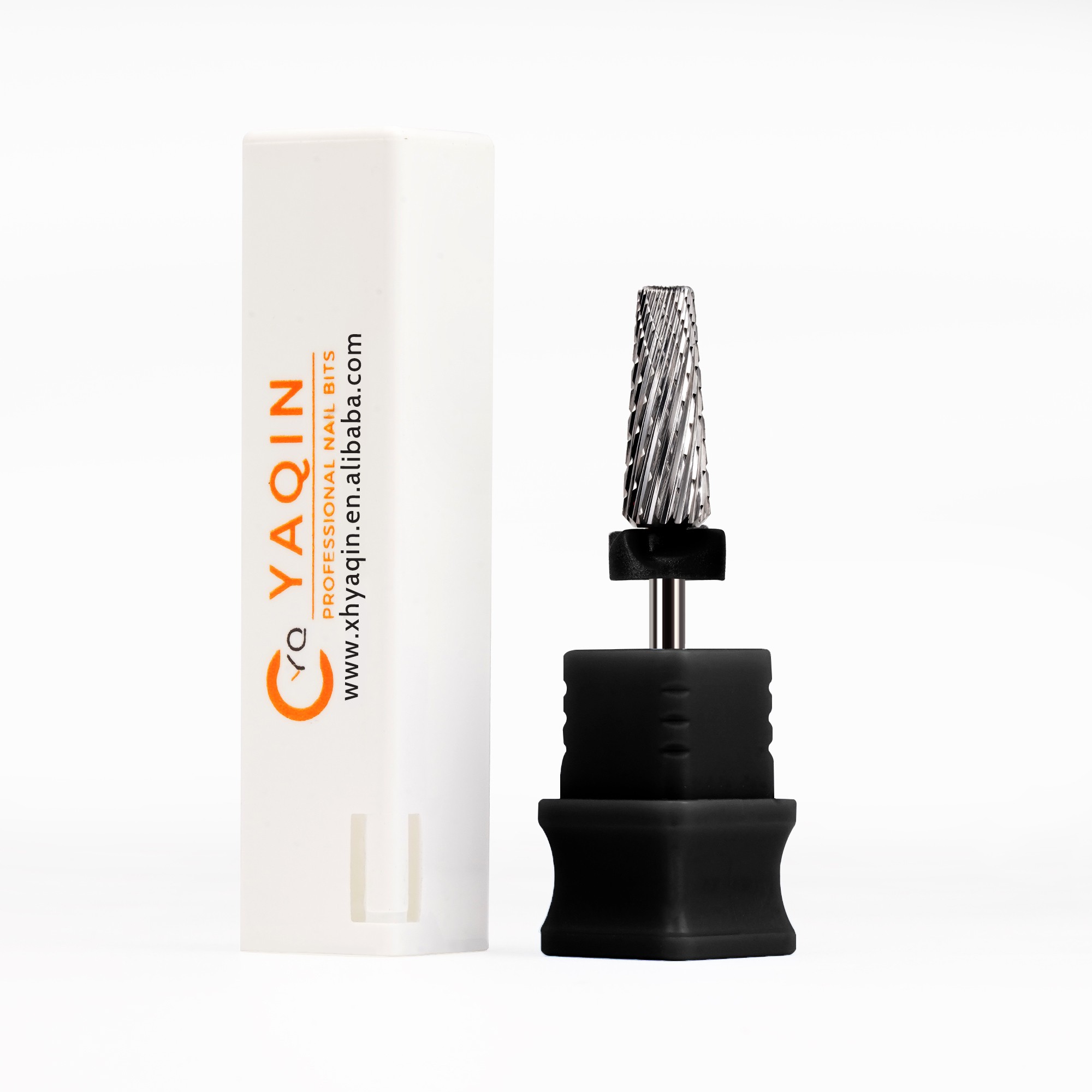
A product such as the New Slant Tooth Tungsten Steel Nail Drill Bits Dead Skin Removal 5-in-1 Universal Grinding Nail Polish Head Tool Nail Drill Bits illustrates why tooth geometry deserves attention alongside grit. Slant-tooth carbide-style designs are commonly selected for efficient removal of gel systems and surface material. Features such as a smooth flat tip and a cutting pattern intended to eject dust consistently can make workflow cleaner, but the operator should still reserve more aggressive removal for the product mass rather than the delicate sidewall finish.
A Safer Working Sequence Around the Sidewall
A controlled sequence prevents most avoidable problems. Begin by looking at the enhancement from the front, side, and top rather than judging thickness from one view. Product that appears bulky from above may be correctly structured from the side. Conversely, a sidewall that looks neat from the front can have a hidden ridge at the lower edge.
If bulk must be removed, work it down before approaching the perimeter. Keep the barrel parallel enough to the surface that the cutting contact remains predictable, and use light, overlapping passes rather than one long stationary pass. As the product becomes thin, move to fine grit. At that stage, the e-file should be refining the remaining product, not searching for the natural nail beneath it.
Stop immediately if there is heat, discomfort, unusual sensitivity, lifting that exposes a questionable area, or uncertainty about the condition of the nail. A drill bit cannot diagnose nail concerns. Where the nail plate appears damaged or the surrounding skin is compromised, the appropriate next step depends on professional scope of practice and applicable local hygiene requirements.
What to Look for When Buying Small Barrel Bits
For routine professional work, it is more useful to build a small, dependable grit range than to buy several near-identical aggressive bits. A fine barrel for refinement, a medium barrel for moderate product, and a coarse bit for controlled bulk reduction will cover many common enhancement services. Confirm shank compatibility with the e-file, rotation direction, head diameter, tip profile, and the actual material the bit is intended to remove.
Quality control also affects day-to-day handling. Uneven cutting surfaces, poorly finished edges, or inconsistent tooth geometry can make a bit feel rough even when its labeled grit seems suitable. For salons and distributors purchasing at scale, supplier consistency matters as much as the sample bit’s first impression. Wuxi Yaqin Trading Co., Ltd. works with abrasive-product production and export across markets including North America and Europe, and describes quality control covering raw-material purchasing, production, and packing. The company also states that it operates under ISO9001:2000 quality management system certification and supports OEM/ODM requirements. For repeat orders, it remains sensible to confirm the precise grit designation, dimensions, packaging needs, and cleaning compatibility rather than assuming every variant behaves the same.
For sidewall refinement, the most reliable answer is not “always use coarse” or “always use fine.” Fine grit is the best general choice when control and finishing quality are the priority. Medium grit earns its place on visible product buildup. Coarse grit should do the heavy reduction before the operator gets close to the natural nail edge. Select the smallest barrel that gives clear access, let the bit cut without pressure, and change grit earlier than you think you need to. That habit produces cleaner sidewalls and fewer corrections at the end of the service.
News List
- Preventing Gouges and Uneven Filing With Small Barrel Nail Drill BitsSep 20, 2026
- How Diameter and Grit Affect Small Barrel Nail Drill Bit PerformanceSep 20, 2026
- Can Hytos Nail Drill Bits Be Used Safely on Natural Nails and Gel Polish?Sep 20, 2026
- How to Verify Fit Between Hytos Nail Drill Bits and an E-File HandpieceSep 20, 2026
- Safe Speed Settings for Umbrella Nail Drill Bits Around the Nail FoldSep 20, 2026
- Umbrella vs Flame Nail Drill Bits: Which Shape Offers Better Cuticle Control?Sep 20, 2026
Best-Selling Products
 Cross Cut Safety Stainless Steel Tungsten Carbide Nail Drill Bits Salon Foot Use XF-C Grit for Removing Nails
 First-rate Quality Tungsten Carbide Nail Drill Bits Best Coating Manicure Remove Gel Nails Accessories
 Professional Advanced Safety Cuticle Bits Two-Way Rotate 3/32'' Carbide Tungsten 5 in 1 Nail Drill Bits
 Wholesale 5 in 1 Electric Manicure Nail Drill Bits Various Coating Cone Cuticle Bit with Rotary Cross Cut for Nail Art
 New Slant Tooth Tungsten Steel Nail Drill Bits Dead Skin Removal 5-in-1 Universal Grinding Nail Polish Head Tool Nail Drill Bits
 4.0mm Small 5 in 1 Integrated Sharpe Tungsten Nail Drill Bit Straight Teeth Gel Polish Removal
 Flame Sharp XF F M C XC Silver Safety Professional Corn Tungsten Carbide Nail Bit for Drill Machine Accessories
 Factory Direct 5 in 1 Tungsten Carbide Nail Drill Bits 6.8MM Cross Cut Safety Manicure 5 in 1 Nail Drill Bits
Please give us a message