
Nail Drill Bits M: How to Confirm Size and Use Before Buying
Nail Drill Bits M: How to Confirm Size and Use Before Buying
“M” is one of the least reliable labels in nail drill bit purchasing when it appears without a drawing, dimensional table, or defined product range. It may refer to a medium head size, a medium abrasive grade, a manufacturer’s internal series, or a shorthand used in a listing title. For a procurement team, treating nail drill bits M as a complete specification can lead to mismatched machines, inconsistent salon results, and stock that is difficult to standardize across markets.
Before placing a bulk order, buyers should confirm four things in writing: the shank diameter, the actual working-head dimensions, the cutter or abrasive geometry, and the intended removal task. The letter “M” can remain useful as an internal ordering label, but it should never replace those measurable details.
Start by clarifying what “M” describes
In nail tools, a size label can describe more than one physical characteristic. That is why two bits sold as “M” may look similar in a catalog yet perform very differently at the salon table.
- Head diameter: Some suppliers use M to indicate a medium-width barrel, cone, flame, or safety bit. This affects how much surface area contacts the nail and how easily the technician can work around sidewalls and cuticles.
- Head length: A medium designation may refer to the length of the cutting section rather than its diameter. A longer working area can speed up gel removal on broad surfaces, while a shorter one offers tighter control.
- Grit or cut level: In some product lines, M means medium grit or medium-cut teeth. This has a direct effect on removal speed, heat generation, and the risk of over-filing.
- Internal product series: “M” can simply be a supplier’s SKU classification. It may have no consistent meaning outside that factory’s range.
The first purchasing question should therefore be simple: “What exact dimension or performance characteristic does M represent in this item?” Ask for the answer alongside a technical drawing or a specification sheet. A verbal confirmation such as “standard medium size” does not provide enough control for repeat purchasing.
Confirm fit before evaluating cutting performance
A high-quality bit is of little value if it does not fit the intended e-file correctly. The shank is the first physical checkpoint because it determines whether the bit can be used in the salon equipment already in service. Procurement teams should request the shank diameter and tolerance, then compare it with the manufacturer specification of the drill handpiece.
Many professional e-files use a common shank format, but “common” should not be assumed to mean universal. Handpiece collets vary in condition and grip strength, and a shank that is slightly undersized, poorly finished, or inconsistent between production batches may wobble during use. Wobble affects technician control, increases vibration, and can produce uneven filing marks even when the bit itself has good cutting geometry.
Ask suppliers to identify the following before approving nail drill bits M:
- Nominal shank diameter and permitted production tolerance
- Total bit length
- Working-head diameter and cutting length
- Head shape, including whether the tip is rounded, flat, tapered, or safety-finished
- Rotation suitability: left-hand, right-hand, or dual-direction use
- Recommended machine speed range, where available
A pre-production sample is particularly valuable when the buyer is consolidating several models under a private label. The sample should be inserted into the actual handpieces used by the target customer, rather than checked only by visual comparison. Fit, concentricity, and the feel of the collet engagement are operational issues that catalog dimensions alone may not reveal.
Match the working size to the removal task
Size selection should follow the work being done, not just the preference for a larger or more aggressive-looking bit. A wider barrel can remove product quickly from a flat nail surface, but it gives up access around the cuticle area and sidewalls. A small bit provides more precision, though using it for every removal step may slow the service and increase technician fatigue.
For bulk purchasing, it helps to divide the expected use into a few practical tasks.
The description “small” can be more meaningful than “M” when the head diameter is explicitly stated. For example, a 4.0 mm integrated carbide bit gives a buyer a measurable basis for judging access and contact area. A compact working head may suit technicians who need controlled removal near the nail edge while still handling gel overlays and product buildup.
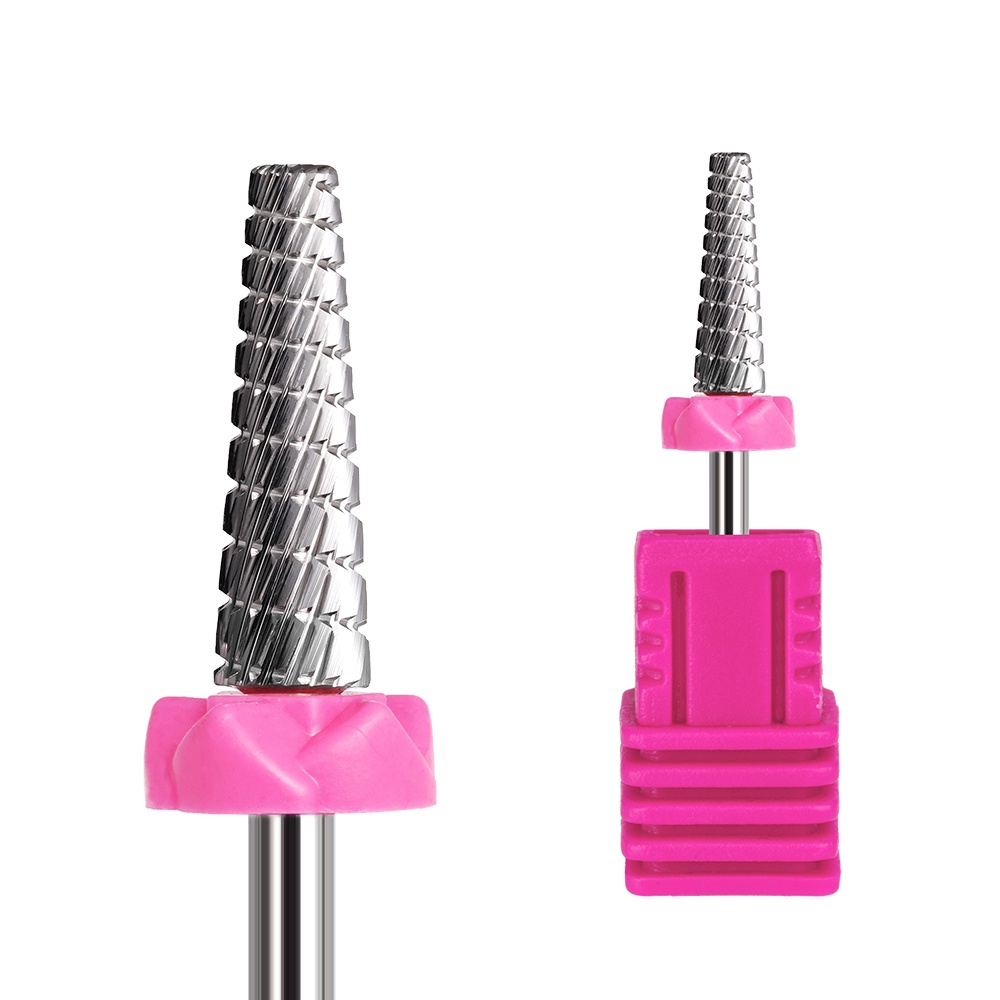
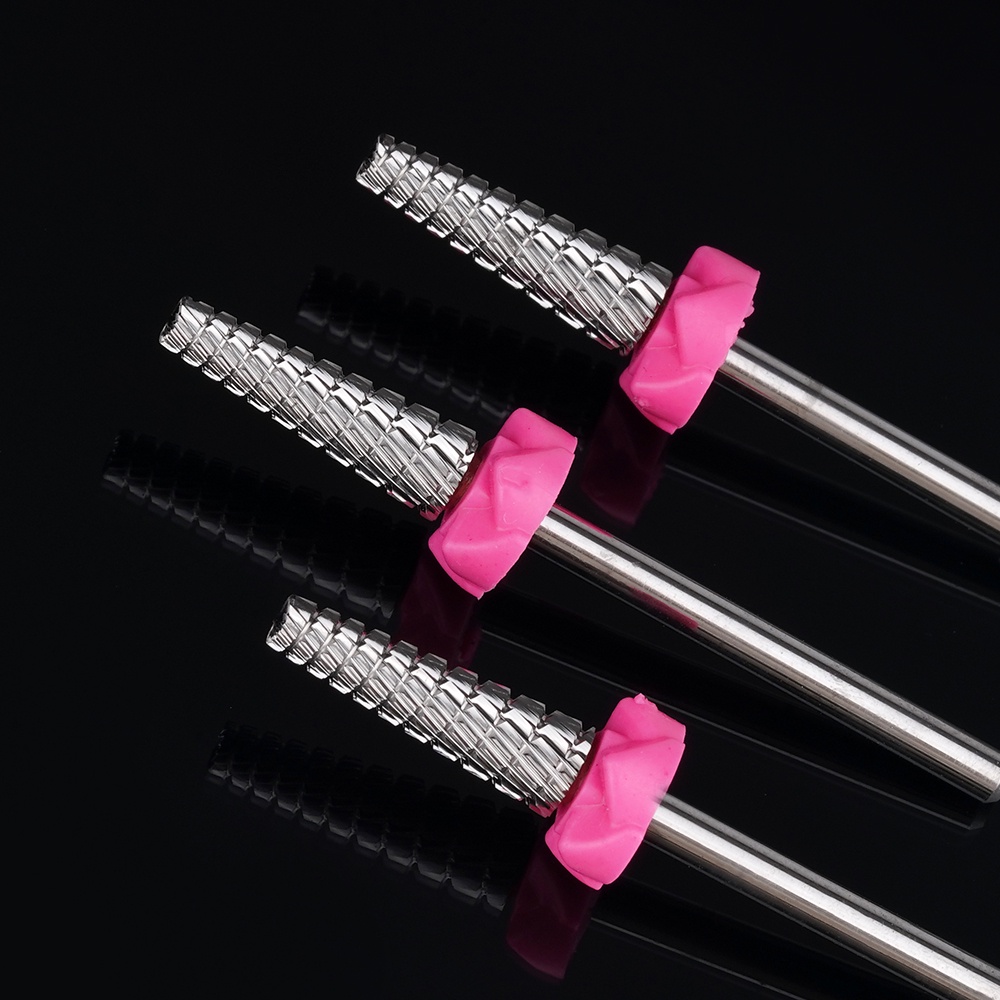
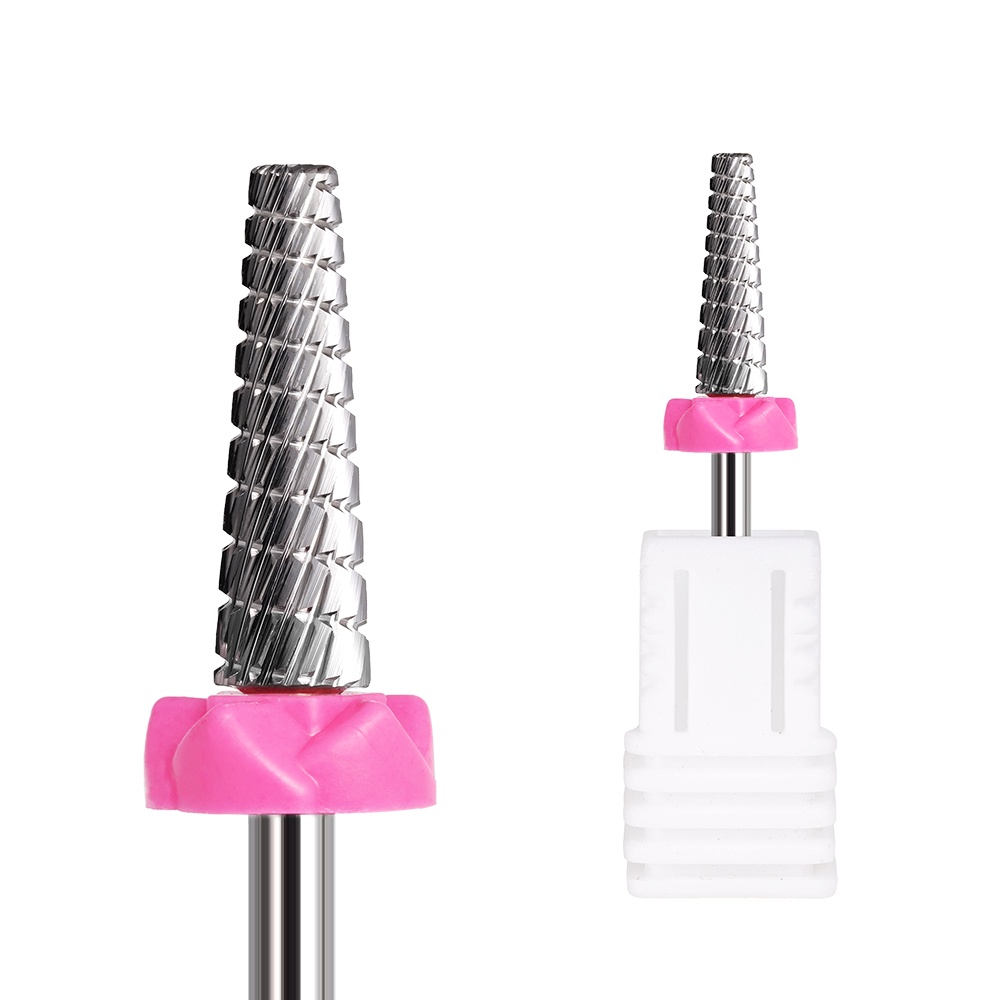
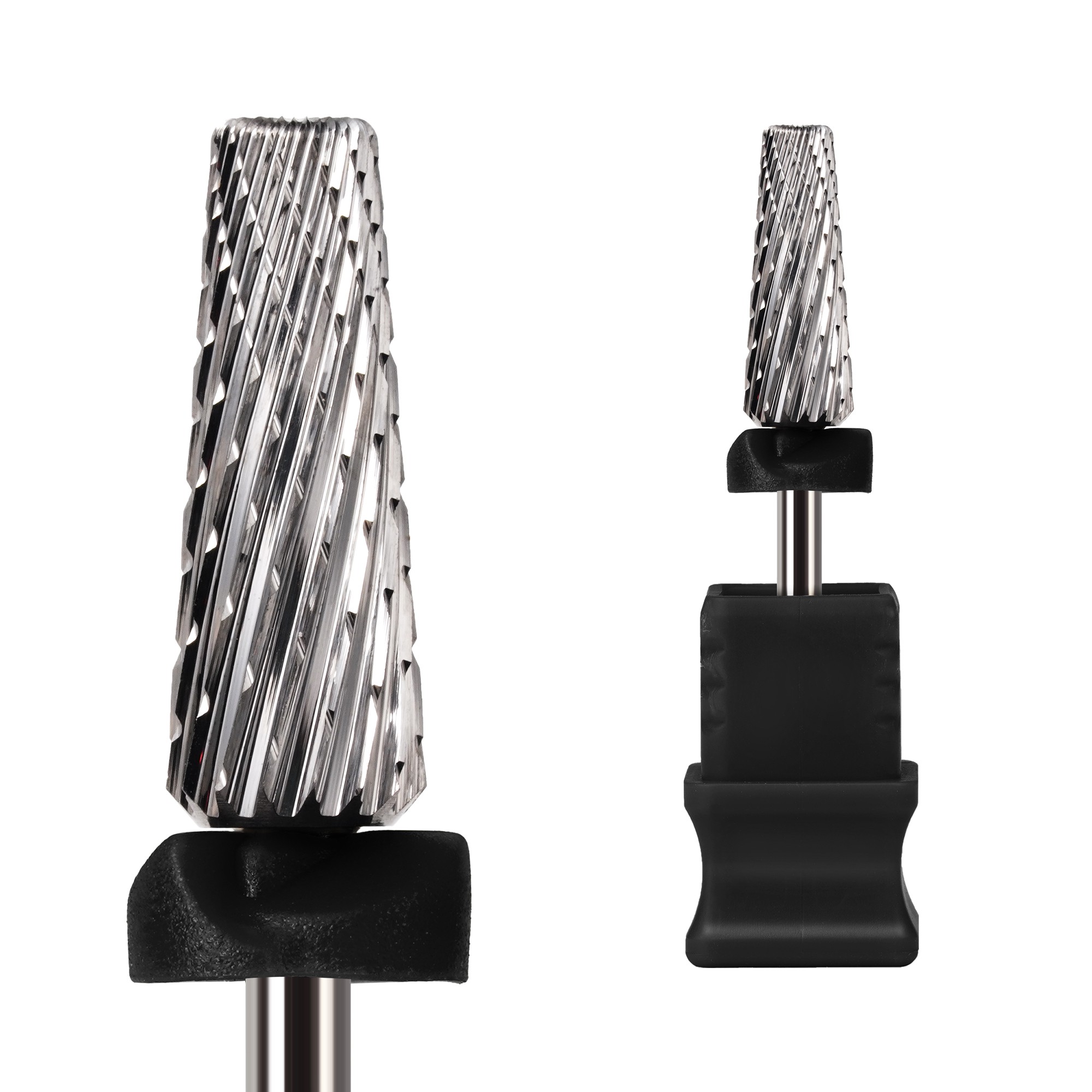
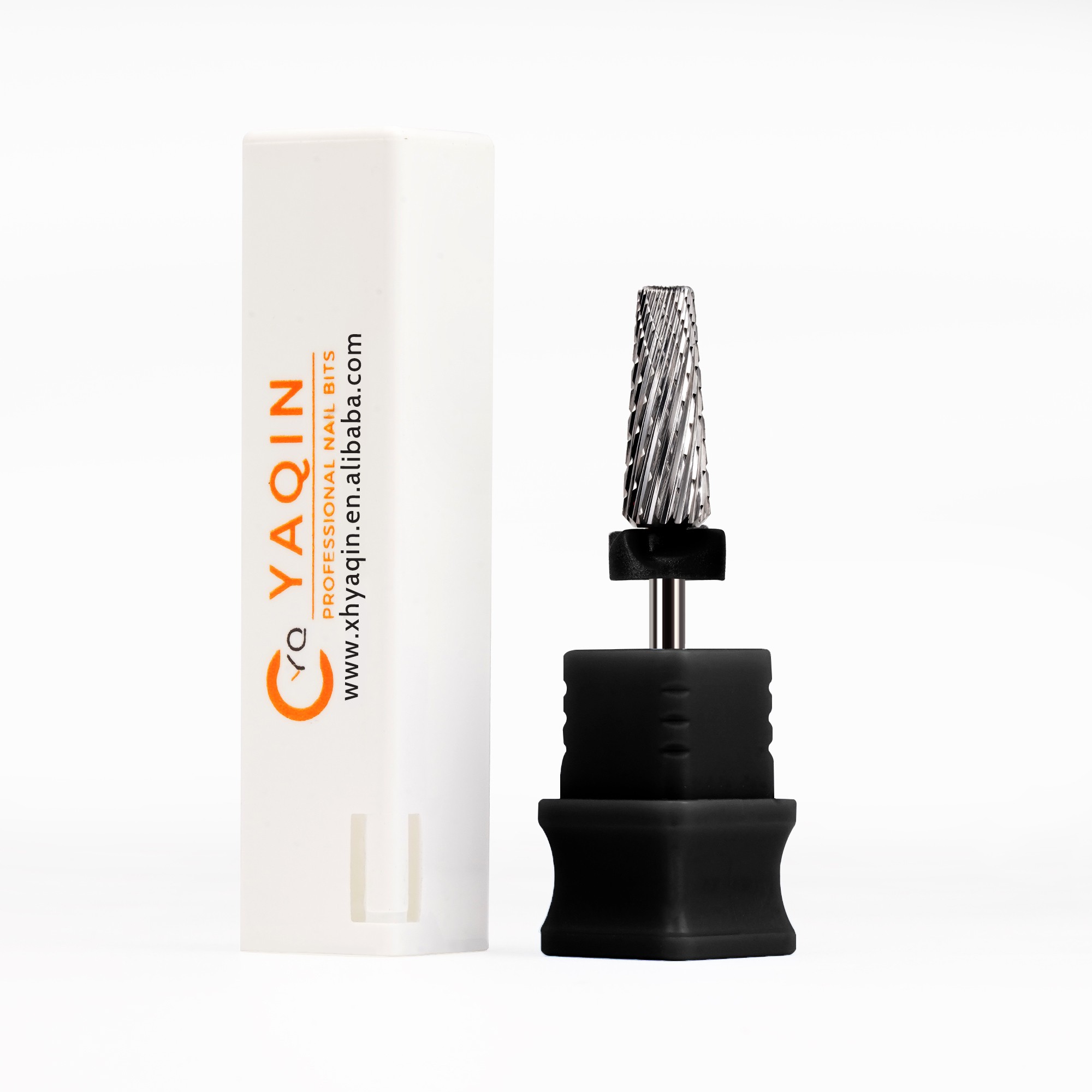
A relevant example is the 4.0mm Small 5 in 1 Integrated Sharpe Tungsten Nail Drill Bit Straight Teeth Gel Polish Removal. Its stated 4.0 mm size, straight-tooth configuration, smooth flat tip, and intended hard- and soft-gel removal make it easier to assess than a listing that uses only a broad size grade. For buyers, the useful point is not that one shape replaces every other bit, but that the physical size and cutting design are specified together.
Material and tooth design determine whether the size performs as expected
A bit with the same outside dimensions can have a very different service profile depending on its material and cutting pattern. Tungsten carbide or tungsten steel bits are commonly selected for product removal because their hard cutting surfaces can retain a defined tooth profile over repeated use. However, the material name alone does not establish quality.
Buyers should inspect or request close product images that show tooth consistency, flute depth, tip finishing, and transitions between the shank and working head. Uneven teeth may produce a rough filing action. Poorly finished edges can catch product unpredictably. A bit that appears sharp in a static image may still create excessive friction if its flute pattern does not clear removed material effectively.
Dust ejection is part of this performance question. During gel removal, debris needs a controlled path away from the working surface. A tooth pattern designed to move dust consistently can improve visibility and reduce buildup around the cutter. That does not remove the need for proper extraction and cleaning, but it helps maintain a more stable cutting action during service.
Procurement specifications should distinguish between sharpness and controllability. Extremely aggressive teeth may appeal in a product description, yet they are not always suitable for a mixed technician base. Salons that employ users with varying experience levels may place greater value on a stable cutting surface, a smooth safety area, and repeatable behavior across batches.
Do not use grit labels as a substitute for a usage protocol
“Medium” is often interpreted as a safe middle option. That assumption can create problems. A medium-cut bit may be appropriate for reducing bulk product, but it can still be unsuitable for natural-nail contact, delicate finishing, or inexperienced use at high speed. Speed, pressure, angle, product thickness, and technician technique all influence the result.
For that reason, purchase documentation should state the intended application in operational terms. Instead of recording only “M carbide bit,” record a use case such as “gel removal, broad surface, professional use, safety tip, 4.0 mm head,” followed by the confirmed shank size and cut direction. This gives the purchasing team a usable standard when comparing quotations or investigating a quality complaint.
It also reduces a common inventory issue: ordering several bits with overlapping names but no distinct purpose. When products are grouped by actual task, a distributor can create clearer assortment tiers. One group may cover bulk removal, another precision work, and another skin-related pedicure applications. Technicians can then select a bit based on the service step rather than trial and error.
What to request from a supplier before bulk approval
For nail drill bits M, the most useful supplier documents are usually straightforward. A detailed specification sheet, dimensional confirmation, material declaration, sample approval process, and packaging standard will do more for purchasing accuracy than a long promotional description.
- Dimensional drawing: Include shank diameter, head diameter, working length, total length, and tip profile.
- Material and construction: Confirm whether the cutter is solid carbide, tungsten steel, coated, bonded, or made through another construction method.
- Cutting pattern: Identify straight, cross-cut, fine, medium, coarse, left-hand, right-hand, or dual-direction configurations as applicable.
- Sample consistency: Check several units, not a single display sample, for shank fit, visible tooth uniformity, and finish.
- Packaging protection: Bits should be separated or secured to avoid edge damage in transit. Packaging also needs enough product identification to prevent mix-ups in warehouse handling.
- Batch traceability: For recurring orders, use a lot or batch reference so differences in finish, dimensions, or packaging can be isolated.
Where private-label packaging or customized assortments are involved, lock the technical specification before approving artwork. A frequent mistake is to finalize the retail label using broad descriptions such as “medium nail drill bit,” then discover that the production item has a different head width or tooth direction from the approved sample. The label should describe the confirmed item, not the other way around.
A practical buying decision
Buy nail drill bits M only after converting the label into dimensions and a defined job. For a professional gel-removal range, that usually means confirming the shank fit, measuring the head, reviewing the cutter geometry, and deciding whether the bit will be used for bulk removal, precision work, or both. A 4.0 mm carbide option with a smooth safety-oriented tip may be appropriate where controlled gel removal is required, while a larger barrel may make more sense for high-volume surface reduction.
The final purchase order should preserve those distinctions. When the specification identifies the size, shape, material, tooth pattern, rotation direction, intended use, and packaging requirement, “M” becomes a useful shorthand rather than a source of ambiguity.
News List
- Preventing Gouges and Uneven Filing With Small Barrel Nail Drill BitsSep 20, 2026
- How Diameter and Grit Affect Small Barrel Nail Drill Bit PerformanceSep 20, 2026
- Can Hytos Nail Drill Bits Be Used Safely on Natural Nails and Gel Polish?Sep 20, 2026
- How to Verify Fit Between Hytos Nail Drill Bits and an E-File HandpieceSep 20, 2026
- Safe Speed Settings for Umbrella Nail Drill Bits Around the Nail FoldSep 20, 2026
- Umbrella vs Flame Nail Drill Bits: Which Shape Offers Better Cuticle Control?Sep 20, 2026
Best-Selling Products
 Cross Cut Safety Stainless Steel Tungsten Carbide Nail Drill Bits Salon Foot Use XF-C Grit for Removing Nails
 First-rate Quality Tungsten Carbide Nail Drill Bits Best Coating Manicure Remove Gel Nails Accessories
 Professional Advanced Safety Cuticle Bits Two-Way Rotate 3/32'' Carbide Tungsten 5 in 1 Nail Drill Bits
 Wholesale 5 in 1 Electric Manicure Nail Drill Bits Various Coating Cone Cuticle Bit with Rotary Cross Cut for Nail Art
 New Slant Tooth Tungsten Steel Nail Drill Bits Dead Skin Removal 5-in-1 Universal Grinding Nail Polish Head Tool Nail Drill Bits
 4.0mm Small 5 in 1 Integrated Sharpe Tungsten Nail Drill Bit Straight Teeth Gel Polish Removal
 Flame Sharp XF F M C XC Silver Safety Professional Corn Tungsten Carbide Nail Bit for Drill Machine Accessories
 Factory Direct 5 in 1 Tungsten Carbide Nail Drill Bits 6.8MM Cross Cut Safety Manicure 5 in 1 Nail Drill Bits
Please give us a message