
How Do Carbide Nail Drill Bits Cut Product? Flutes, Grit, and Heat Control
How Do Carbide Nail Drill Bits Cut Product? Flutes, Grit, and Heat Control
For technical evaluators, understanding how carbide nail drill bits remove product is central to judging cutting efficiency, operator safety, and expected working life. A carbide bit does not “sand” enhancement material in the same way as a traditional abrasive band. Its flutes act as miniature cutting tools, shearing away gel, acrylic, builder gel, or product bulk in controlled chips. The quality of that action depends on flute geometry, cut grade, rotational speed, contact pressure, and the bit’s ability to manage heat while clearing debris.
When these variables are balanced, removal feels smooth and deliberate: the bit tracks predictably, product comes away evenly, and the technician does not need to press excessively. When they are poorly matched, the same operation can produce drag, heat spikes, dust packing, chatter, uneven removal, and avoidable risk near the natural nail or surrounding skin.
Carbide removal is a cutting process, not simply abrasion
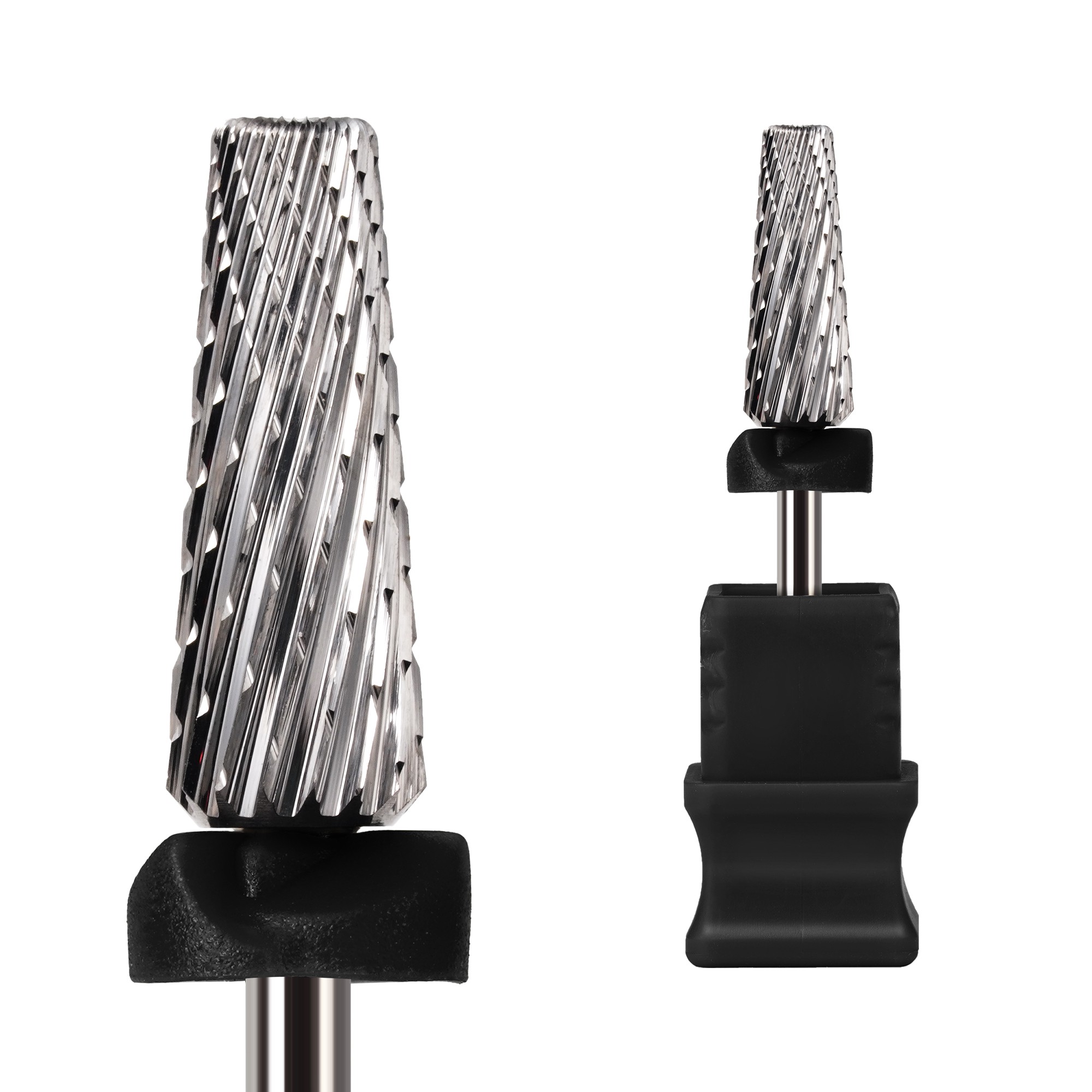
Tungsten carbide is used in nail drill bits because it is hard enough to retain sharp cutting edges against cured enhancement materials. In a properly made carbide bit, the body contains engineered grooves known as flutes. As the handpiece rotates, each flute edge engages the surface and removes a small amount of material. The resulting chips and dust are carried through the open flute channels rather than being trapped continuously at the point of contact.
This is the important difference between a fluted carbide bit and a diamond bit. Diamond tools rely on bonded abrasive particles to grind material away. Carbide tools use defined edges to cut. Neither approach is automatically better; they serve different tasks. Carbide is generally preferred where faster debulking and enhancement removal are needed, while diamond bits are often selected for finer work around cuticles, sidewalls, and natural-nail preparation.
For evaluators, the practical question is not whether a bit is described as “sharp.” It is whether its cutting edge, flute depth, relief angles, and surface finish support consistent material evacuation without creating an overly aggressive bite. A bit that removes product quickly but loads easily or generates heat is not necessarily an efficient bit in real salon conditions.
What flute design changes during gel and acrylic removal
Flutes determine how a carbide bit enters the product, how much material it takes per pass, and where the removed material goes. Their number, direction, depth, and edge profile all affect performance.
Flute count and chip space
A lower flute count usually creates larger chip channels. This can support rapid bulk removal because there is more room for acrylic or hard-gel debris to escape. However, a more open design may feel more assertive on contact and demands good operator control.
A higher flute count divides the cutting action across more edges. This often produces a smoother feel and finer debris, which can be useful when reducing product close to the natural nail. Yet if the spaces between flutes are too narrow for the material and working conditions, heat and loading may increase. The best configuration depends on the intended task, not on flute count alone.
Cross-cut versus single-cut patterns
Many nail carbide bits use cross-cut flute patterns. Intersecting grooves break material into smaller particles and can reduce the tendency for the bit to pull or grab. This makes cross-cut designs especially relevant for controlled removal of hard gel, acrylic overlays, and structured builder systems.
Single-cut geometries may evacuate larger chips efficiently, but their cutting feel can be more directional. For technical purchasing teams, it is useful to assess whether the flute pattern matches the expected end user: an experienced nail professional may value faster bulk reduction, while a beginner often benefits from a more forgiving, stable cutting response.
Flute direction and handpiece rotation
Carbide bits are commonly made for a specified rotational direction. A right-hand cut is typically intended for use in forward rotation, while a left-hand cut is intended for reverse rotation. Using a directional bit against its designed cutting orientation can reduce cutting efficiency and create skipping, excess friction, or a less controlled feel.
This should be checked at the product-specification stage rather than assumed from the bit’s outer appearance. Ambidextrous or safety-oriented designs may suit mixed-use environments, but the declared rotation compatibility should still be verified with the handpiece and the planned operating procedure.
“Grit” on carbide nail drill bits: what it actually means
In nail drill terminology, carbide grades are often described as extra fine, fine, medium, coarse, or extra coarse. Although users commonly call this “grit,” the term does not mean the same thing as it does for a coated abrasive. On a carbide bit, the grade primarily reflects the aggressiveness of the flute geometry: edge spacing, flute depth, and cutting profile influence how much material is removed with each pass.
There is no universal color-band standard that guarantees the same cut grade across every manufacturer. Color coding can be helpful for identification within one product line, but technical evaluators should not rely on band color alone when comparing suppliers. Request the stated cut grade, bit diameter, flute configuration, rotational direction, material specification, and intended application. If samples are available, compare actual cutting behavior on representative cured products rather than making a decision from appearance alone.
Why heat develops—and why speed is only part of the answer
Heat is produced when cutting energy is converted into friction and deformation at the contact point. In nail enhancement removal, excessive heat is rarely caused by RPM alone. It is usually the combined result of an inappropriate bit grade, too much pressure, prolonged dwell in one area, dull cutting edges, clogged flutes, or poor alignment between the bit and the product surface.
A sharp, clean carbide bit can often remove product with relatively light pressure. A dull or loaded bit requires the user to push harder, which increases friction and makes heat more likely. This is why an evaluation protocol should include repeated-use testing, not just an initial cutting test. A sample may feel fast when new but lose its practical advantage if its edges wear prematurely or its surface retains product residue.
For the stated application range, hard gel removal is commonly performed at approximately 15,000–20,000 RPM. Soft gel and base gel removal may be performed around 10,000–15,000 RPM. These ranges are operating references, not universal prescriptions. The actual setting should reflect the bit diameter, cut grade, handpiece stability, product hardness, technician skill, and the nail area being worked.
Higher speed does not compensate for a poor cutting design. In fact, a bit that is too aggressive, poorly balanced, or used with excessive pressure may become less controllable as speed rises. The preferred technique is a light, continuous sweeping motion, keeping the bit moving across the enhancement rather than holding it in one spot. This allows brief cutting contact, gives debris a chance to clear, and reduces localized thermal buildup.
Heat-control checkpoints during product testing
- Does the bit remove material with light pressure, or does it need to be forced?
- Do flutes remain visibly open during a typical removal cycle?
- Does the handpiece feel stable, with minimal vibration or runout?
- Can the operator maintain a sweeping motion without the bit catching at product edges?
- After cleaning and repeated use, does the cut remain consistent?
Vibration deserves particular attention. A carbide bit may have good flute geometry yet perform poorly if concentricity is inconsistent. Runout increases intermittent contact, which can feel like chatter and encourages the user to apply more pressure. For a product intended for drill-machine accessories, shank straightness, head-to-shank alignment, and overall manufacturing consistency are therefore as relevant as the visible cutting pattern.
Safety flute design has a specific purpose
“Safety” should describe a design feature, not be treated as a blanket promise. A safety-top or rounded-top carbide bit is designed to reduce the likelihood of accidental puncture when working near the cuticle area, sidewalls, or free edge. It does not eliminate the need for proper angle, speed, pressure, and training.
Flame and corn-shaped profiles address different working positions. A narrow flame profile can provide access in tighter areas and around structured product contours. A corn-shaped body offers a broader working surface for debulking and smoothing larger enhancement areas. The decision should be based on geometry and workflow: narrow profiles support access, while wider profiles can cover more surface per pass.
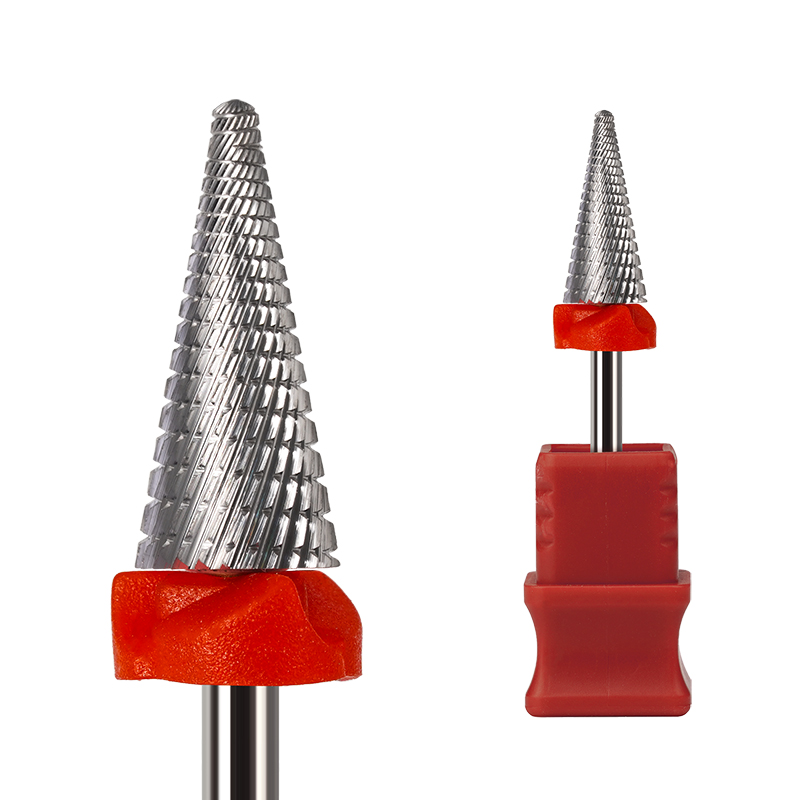
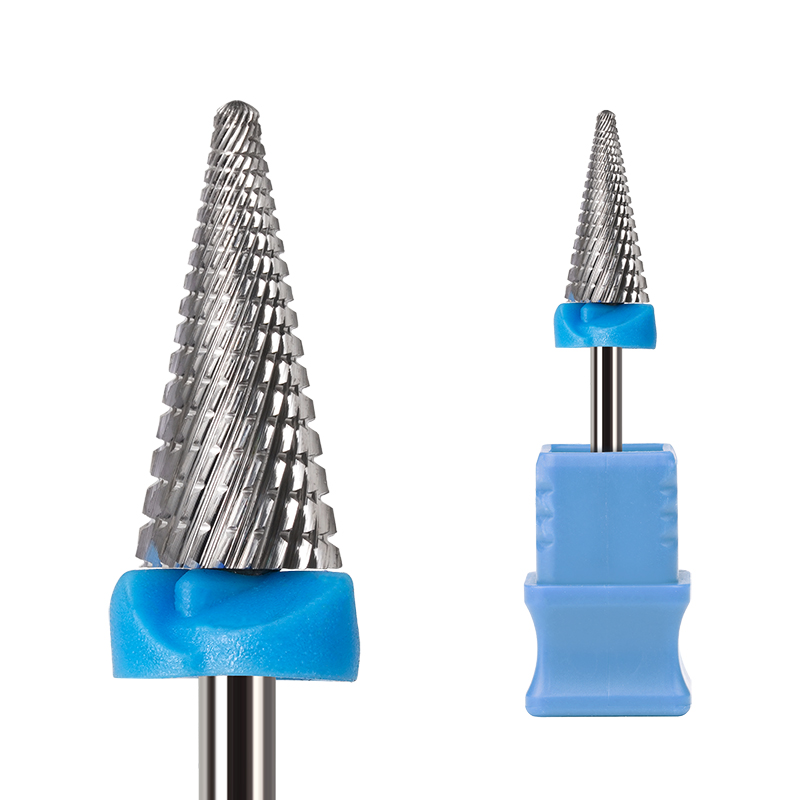
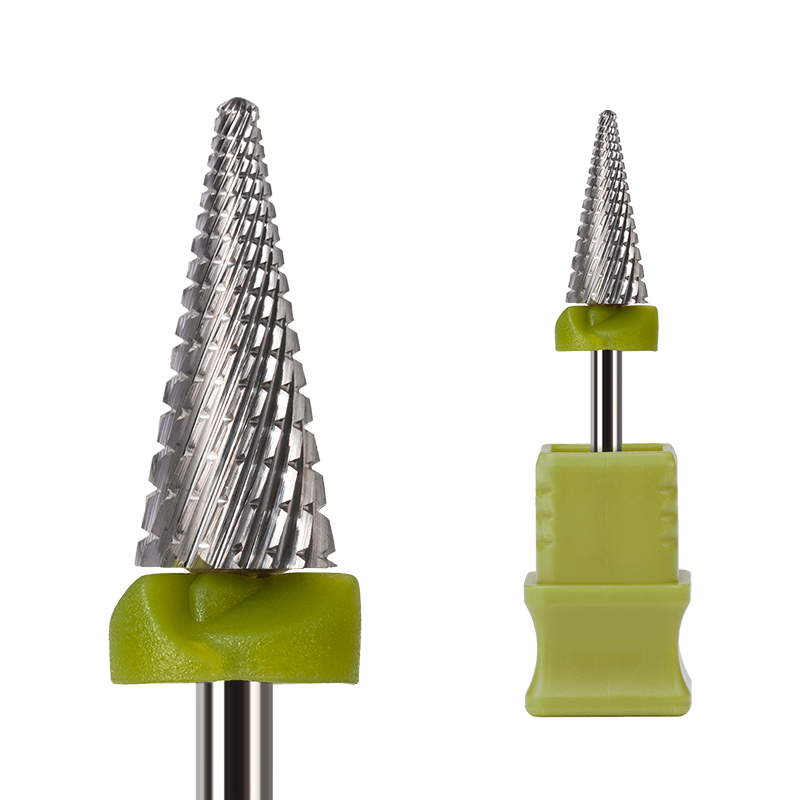
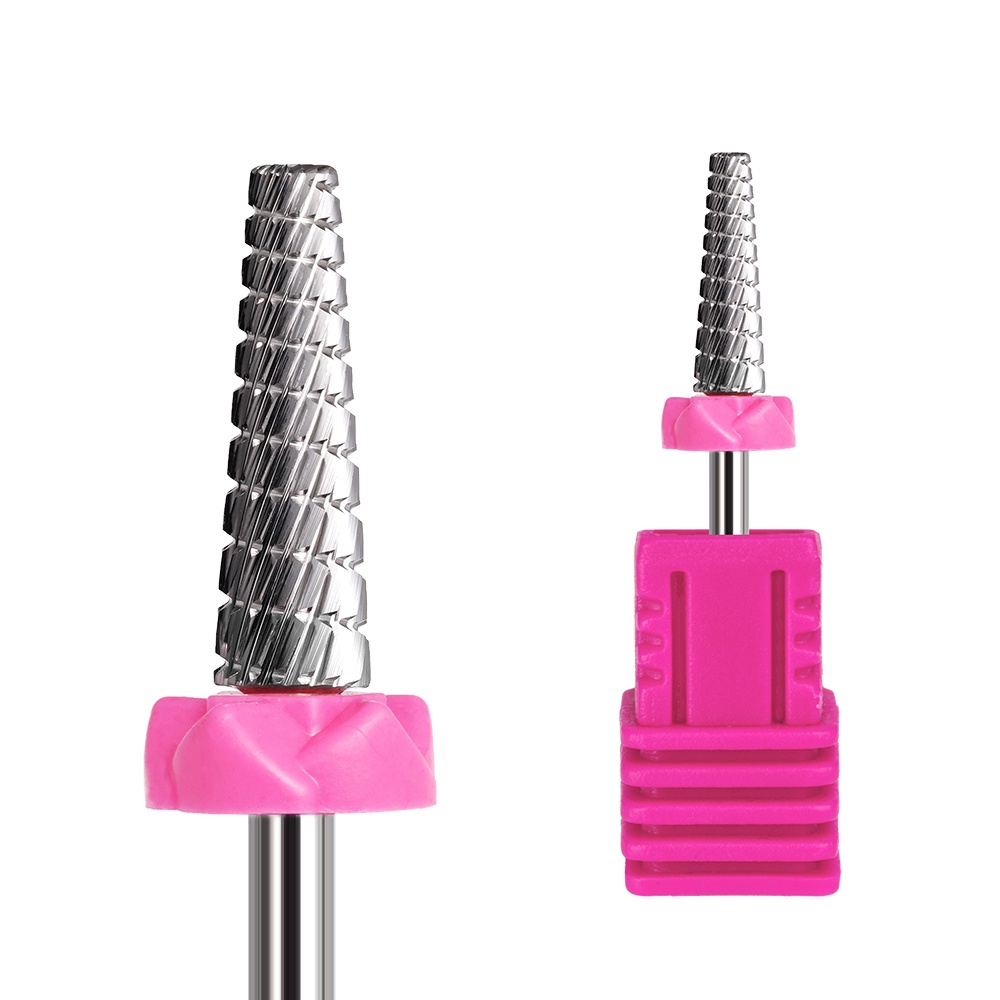
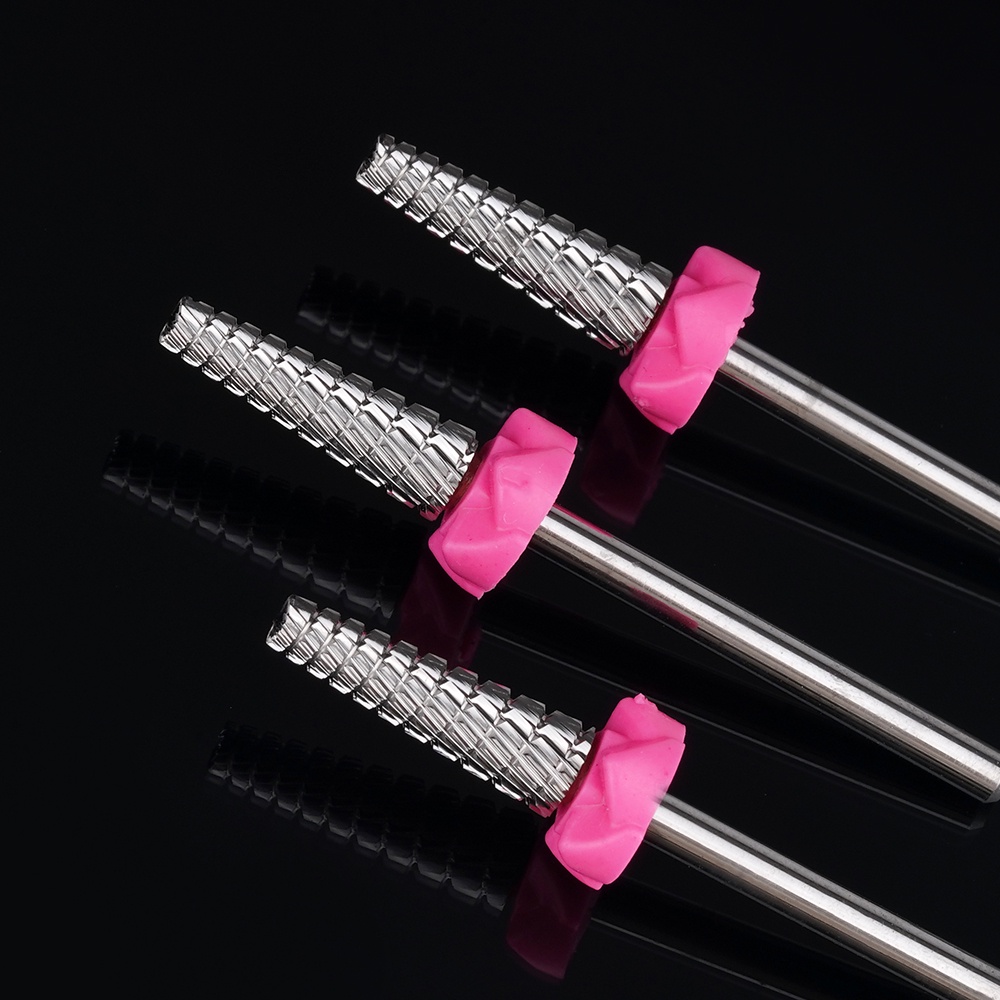
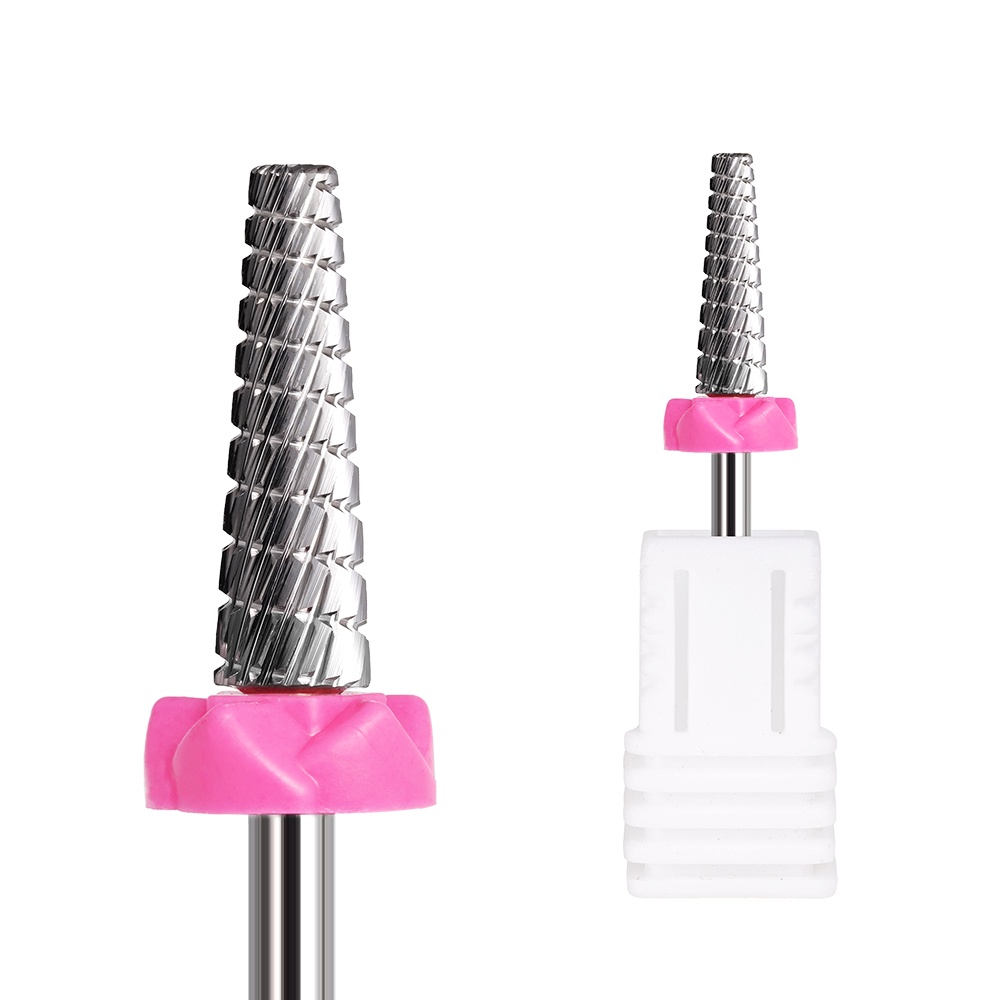
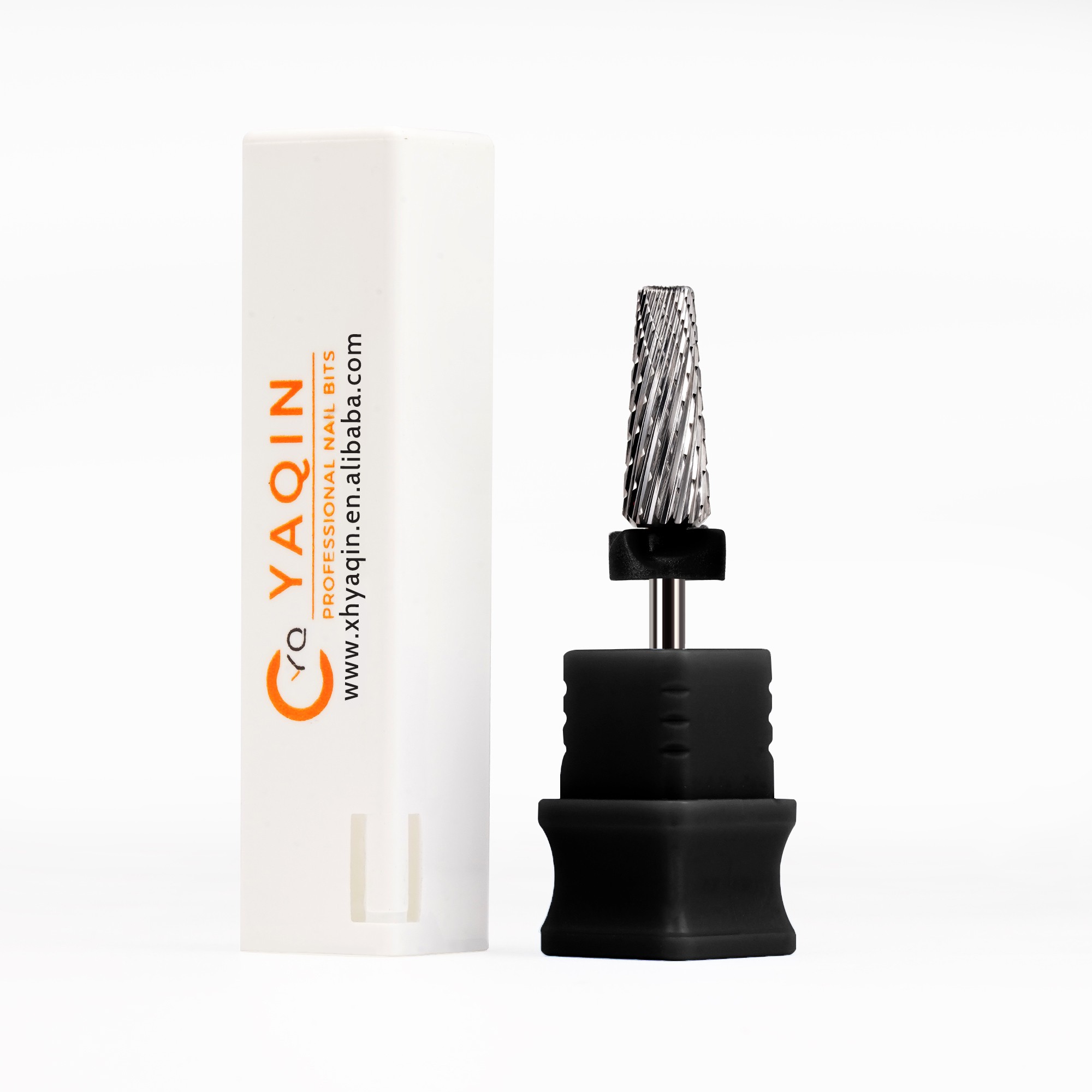
One example is the Flame Sharp XF F M C XC Silver Safety Professional Corn Tungsten Carbide Nail Bit for Drill Machine Accessories. Available across extra-fine through extra-coarse cut options, with narrow and wide specifications, it illustrates how a supplier can offer different removal behaviors within a related carbide range. For technical review, the key is to align each grade and profile with a defined removal step rather than expecting one bit to manage every material and every proximity-to-skin task.
How to assess carbide bit quality beyond the catalog description
A sound procurement evaluation combines dimensional inspection, functional trials, and quality-system review. Visual checks should look for clean flute formation, burr-free edges, a uniform finish, clear grade identification, and no obvious distortion at the head or shank. The bit should seat correctly in the intended handpiece collet, and the stated shank size should be checked against the relevant equipment requirements.
Functional tests should use more than one material condition. A bit that performs well on a soft gel polish may behave differently on dense hard gel or acrylic. Observe the removal rate, dust flow, surface finish left behind, tendency to grab, and heat sensation under a controlled technique. Testing should also include cleaning cycles, because product residue can conceal whether the flute design truly clears material effectively.
Material and corrosion resistance matter in daily professional use. Tungsten carbide provides the cutting body’s hardness, while surface condition and cleaning compatibility influence long-term usability. Buyers should confirm recommended cleaning and disinfection procedures with the supplier. Aggressive cleaning chemicals or unsuitable handling can affect the bit’s appearance and service condition even when the underlying carbide remains hard.
Supplier process control is another part of the technical picture. Wuxi Yaqin Trading Co., Ltd. supports abrasive-product production and export with quality controls spanning raw-material purchasing, manufacturing processes, and packing inspection. For buyers managing OEM or ODM programs, this type of process visibility is valuable because consistent labeling, packaging protection, grade differentiation, and batch discipline can affect the usability of a carbide bit range as much as the cutting head itself.
A practical selection rule: match removal force to the job
The most suitable carbide nail drill bit is not always the fastest one. It is the one that removes the required amount of product with a predictable cutting response, manageable heat, and an appropriate safety margin for the intended user. Coarser cuts belong where bulk needs to come down efficiently. Fine cuts belong where precision matters more than speed. A rounded safety top can be valuable near sensitive areas, while a wider cutting surface may reduce working time on broad overlays.
For technical evaluators, the strongest comparison method is to define the application before evaluating the sample: hard-gel debulking, soft-gel removal, base-gel reduction, refinement near the natural nail, or detailed work around contours. Then assess flute geometry, grade, directional compatibility, operating RPM, debris clearance, vibration, and repeated-use performance against that use case.
That approach turns carbide nail drill bits from a visually similar catalog item into a measurable cutting tool. Once flutes, cut grade, and heat control are evaluated together, it becomes much easier to identify a bit that delivers controlled product removal without asking the technician—or the natural nail—to absorb the cost of poor design.
News List
- Preventing Gouges and Uneven Filing With Small Barrel Nail Drill BitsSep 20, 2026
- How Diameter and Grit Affect Small Barrel Nail Drill Bit PerformanceSep 20, 2026
- Can Hytos Nail Drill Bits Be Used Safely on Natural Nails and Gel Polish?Sep 20, 2026
- How to Verify Fit Between Hytos Nail Drill Bits and an E-File HandpieceSep 20, 2026
- Safe Speed Settings for Umbrella Nail Drill Bits Around the Nail FoldSep 20, 2026
- Umbrella vs Flame Nail Drill Bits: Which Shape Offers Better Cuticle Control?Sep 20, 2026
Best-Selling Products
 Cross Cut Safety Stainless Steel Tungsten Carbide Nail Drill Bits Salon Foot Use XF-C Grit for Removing Nails
 First-rate Quality Tungsten Carbide Nail Drill Bits Best Coating Manicure Remove Gel Nails Accessories
 Professional Advanced Safety Cuticle Bits Two-Way Rotate 3/32'' Carbide Tungsten 5 in 1 Nail Drill Bits
 Wholesale 5 in 1 Electric Manicure Nail Drill Bits Various Coating Cone Cuticle Bit with Rotary Cross Cut for Nail Art
 New Slant Tooth Tungsten Steel Nail Drill Bits Dead Skin Removal 5-in-1 Universal Grinding Nail Polish Head Tool Nail Drill Bits
 4.0mm Small 5 in 1 Integrated Sharpe Tungsten Nail Drill Bit Straight Teeth Gel Polish Removal
 Flame Sharp XF F M C XC Silver Safety Professional Corn Tungsten Carbide Nail Bit for Drill Machine Accessories
 Factory Direct 5 in 1 Tungsten Carbide Nail Drill Bits 6.8MM Cross Cut Safety Manicure 5 in 1 Nail Drill Bits
Please give us a message