
What Is a Nail Drill Bit? Uses, Shapes, and Salon Applications
What Is a Nail Drill Bit? Uses, Shapes, and Salon Applications
A nail drill bit is a task-specific abrasive attachment, not a universal cutting tool
A Nail Drill Bit is the removable working end of an electric nail file, often called an e-file. It rotates inside the drill handpiece and performs controlled filing, smoothing, refining, or cleaning work that would otherwise be done with manual files, buffers, nippers, or curettes. The important point is that a bit does not simply “remove product.” Its material, grit, shape, diameter, and operating direction determine what it can safely do.
In salon work, the wrong bit can create heat, leave uneven product, catch the skin, thin the natural nail plate, or make detailed work unnecessarily slow. The right bit, used with light pressure and an appropriate speed, improves precision in enhancement removal, cuticle-area preparation, pedicure work, and finishing. A bit should therefore be chosen by the surface being worked on and the intended result, rather than by how aggressive it appears.
How a Nail Drill Bit works
An e-file handpiece spins the bit around its central shaft. Most professional bits use a 3/32-inch shank, although compatibility should always be confirmed with the handpiece before use. During operation, the abrasive surface contacts the nail or product in a small, moving area. Material is removed through abrasion rather than through forceful cutting.
This explains why pressure matters so much. A properly selected bit requires only a light touch. Pressing hard does not make removal more controlled; it increases friction, which can create heat and reduce the technician’s ability to feel the surface. On a natural nail, excessive pressure can cause rings, thinning, or sensitivity. On acrylic or hard gel, it can produce uneven valleys that require additional correction.
Speed must be considered together with bit type and pressure. A coarse carbide used at a speed suitable for bulk enhancement reduction may be unsuitable near the natural nail or sidewall. Conversely, a very fine diamond bit can be effective for cuticle exfoliation but inefficient for reducing a thick acrylic overlay. Good operation comes from matching all three variables: bit, speed, and contact pressure.
Materials: what the abrasive surface is designed to handle
The material of a bit has a direct effect on its cutting action, durability, cleaning needs, and intended application.
Carbide bits
Carbide bits have machined flutes rather than a rough abrasive coating. Their cutting edges lift and remove enhancement material in small shavings. They are commonly used for reducing acrylic, hard gel, builder gel, and some gel-polish bulk. Because they remove material efficiently, they are not the usual first choice for exposed natural nails or delicate cuticle work.
Flute direction matters. A bit marked for right-handed operation is designed to cut smoothly when the handpiece rotates in the corresponding direction. Left-handed or bidirectional bits are available for technicians who need a different rotation setup. Using a directional carbide in the wrong rotation can cause dragging, chatter, reduced control, and extra heat.
Diamond bits
Diamond bits are coated with fine abrasive particles and are widely used for surface-level detailing. Their roughness is more evenly distributed than the flutes of a carbide bit, making them suitable for refining the cuticle zone, removing non-living tissue from the nail folds, smoothing callused skin, and cleaning selected areas around the nail.
Diamond does not automatically mean harsh. A fine or extra-fine diamond bit can be gentle when used correctly, while a coarser diamond surface can still abrade skin quickly if it remains in one place. Bit geometry is especially important in this category because the same grit behaves differently on a broad barrel, a narrow flame, or a rounded ball.
Ceramic bits
Ceramic bits are generally used for enhancement removal and surface refinement. Their fluted structure resembles carbide, but ceramic can feel less heat-conductive during extended product removal. They are available in several grits and shapes. Ceramic bits remain abrasive tools: reduced heat sensation should never be treated as permission to apply more pressure or work too close to the natural nail.
Silicone, rubber, and polishing bits
Polishing bits use embedded abrasive particles in a flexible silicone or rubber-like matrix. They are intended for finishing rather than significant removal. Depending on the grade, they may smooth the natural nail surface, refine a product edge, or add a soft sheen after other filing steps. Their flexibility helps them follow curved surfaces, but it also means that they can generate friction if held in one place.
Mandrels and sanding bands
A mandrel is a reusable metal holder that accepts a disposable sanding band. Sanding bands are practical for general shaping, shortening, product removal, and some pedicure services. They are available in different grits, but their use requires care because the broad cylindrical surface can remove material rapidly. Disposable bands should not be reused between clients.
Grit describes aggressiveness, but it is only part of the selection
Grit indicates the relative coarseness of the working surface. In broad terms, coarse grits remove material quickly, medium grits support shaping and refinement, and fine grits are used for controlled finishing or delicate prep work. However, grit labels vary by manufacturer and bit category, so labels should be read in the context of the tool rather than compared blindly across every product.
A coarse carbide barrel and a coarse diamond cylinder do not perform the same task. The former removes enhancement through cutting flutes; the latter abrades a larger surface. Likewise, an extra-fine diamond flame may be appropriate for lifting dry, non-living cuticle from a tight lateral fold, while an extra-fine sanding band may still be too broad or abrasive for that area.
For natural nail preparation, the practical goal is not to create a rough surface. It is to remove surface shine only where the chosen enhancement system requires it, without reducing nail thickness. A fine abrasive and limited passes are usually more controllable than a coarse bit used with minimal contact. For product debulking, the goal is to leave a controlled layer rather than file until the natural nail is exposed.
Bit shapes and the salon tasks they support
Shape is often the fastest way to understand a Nail Drill Bit’s role. It determines how much surface area contacts the work, how close the bit can move to a nail fold, and whether its end is suitable for curved or flat areas.
Barrel and safety barrel
Barrel bits are cylindrical and are primarily used on broad surfaces. They are common for reducing acrylic or hard gel, shortening extensions, shaping the upper arch, and refining the surface before a fill or rebalance. A standard barrel has a relatively squared working end and should be kept away from skin. A safety barrel has a rounded top that reduces the risk of accidental gouging near the cuticle area, though it still requires controlled movement.
Barrels work best when kept moving in long, overlapping passes. Digging the edge into one point can create grooves, especially over softer gels. They are generally not the best tools for sidewalls, under-nail detailing, or close cuticle work.
Flame bits
Flame bits taper toward a pointed tip and are designed for detailed work around the proximal nail fold and sidewalls. Fine diamond flame bits are often used to lift and exfoliate non-living cuticle tissue, clean narrow areas, and refine product close to the cuticle line. The pointed end should not be pushed into the skin fold. The safe technique uses the side of the flame, with the bit moving continuously and the handpiece angle adjusted to the contour of the nail.
Needle and tapered bits
Needle-shaped bits provide access to very narrow areas, including sidewall corners and detail zones beneath free edges. Their precision is useful, but so is their risk: the narrow tip concentrates contact in a small area. They should be used for brief, intentional detailing rather than broad filing. A needle bit is not a substitute for a flame bit when the aim is gentle, surface-level cuticle exfoliation.
Ball bits
Ball bits are commonly used after a flame or tapered bit has lifted dry cuticle. A fine diamond ball can remove detached, non-living tissue from the nail fold and soften small rough areas. It should skim the surface rather than press into it. If tissue is still attached, forcing removal with a ball bit can irritate the eponychium and lead to redness or breaks in the skin.
Cone, tapered barrel, and under-nail bits
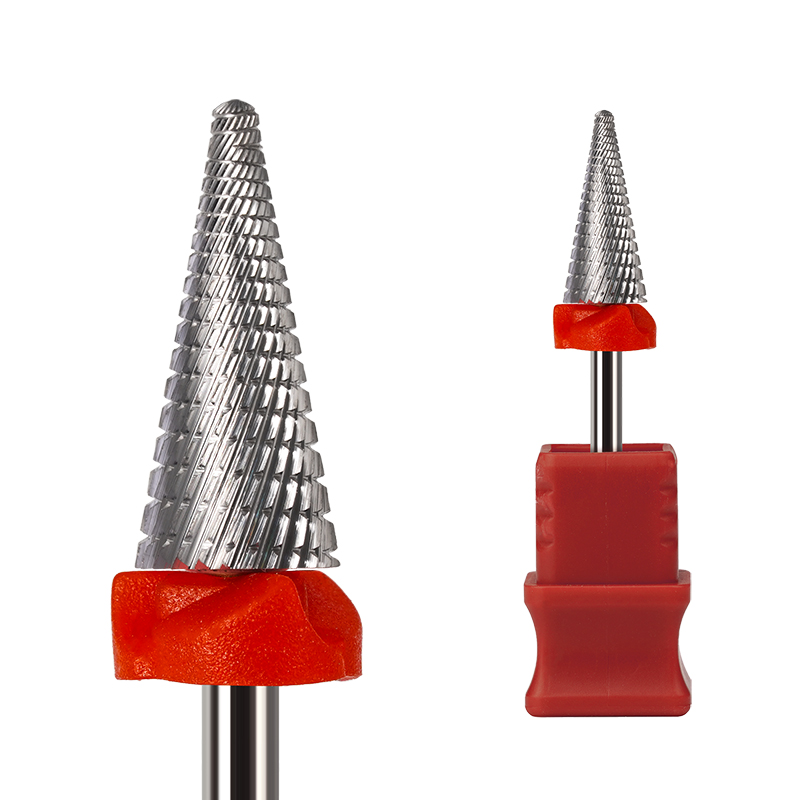
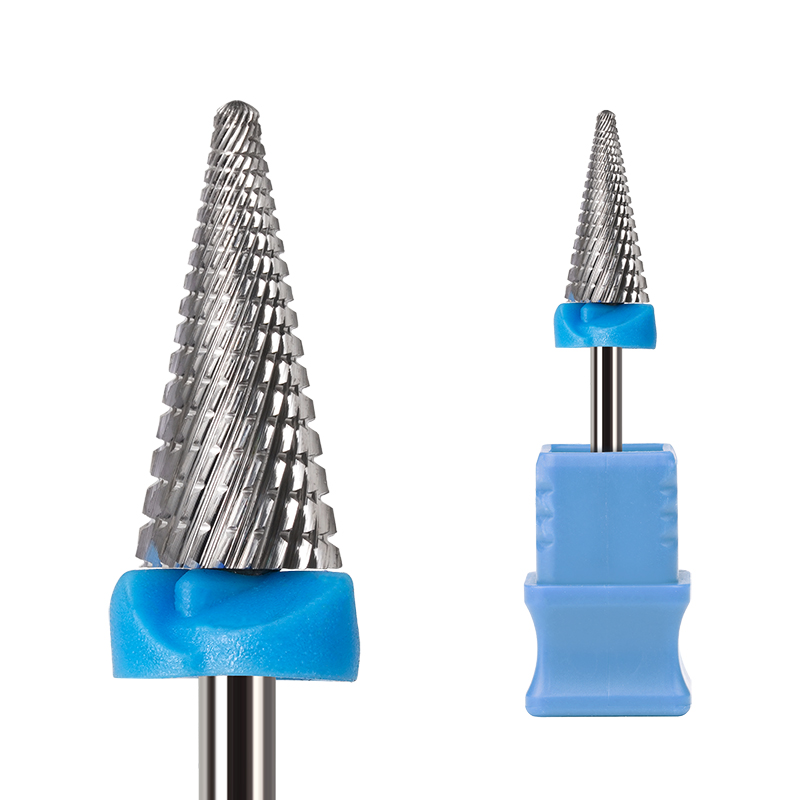
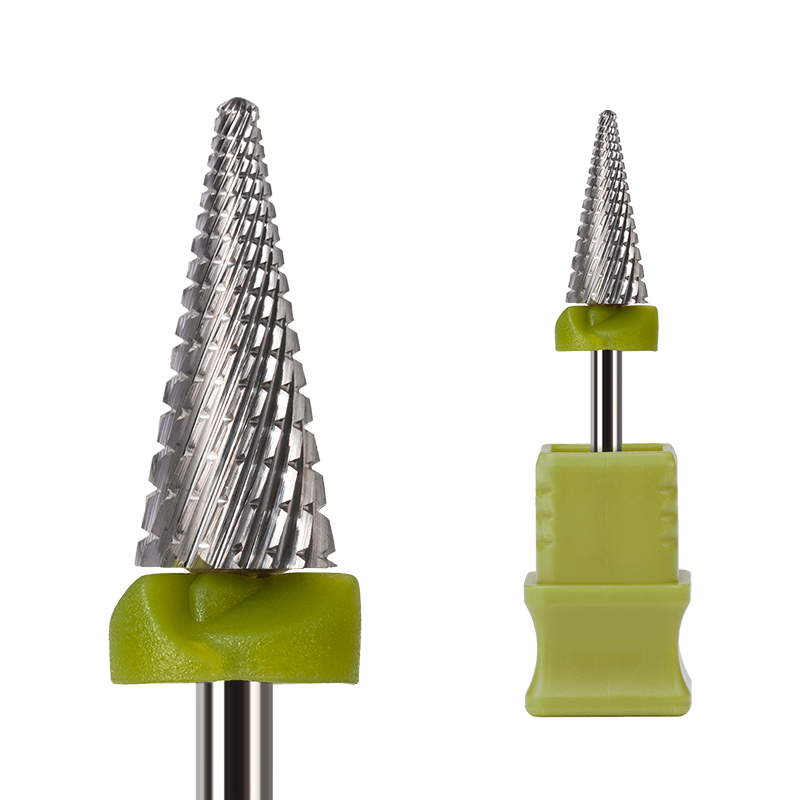
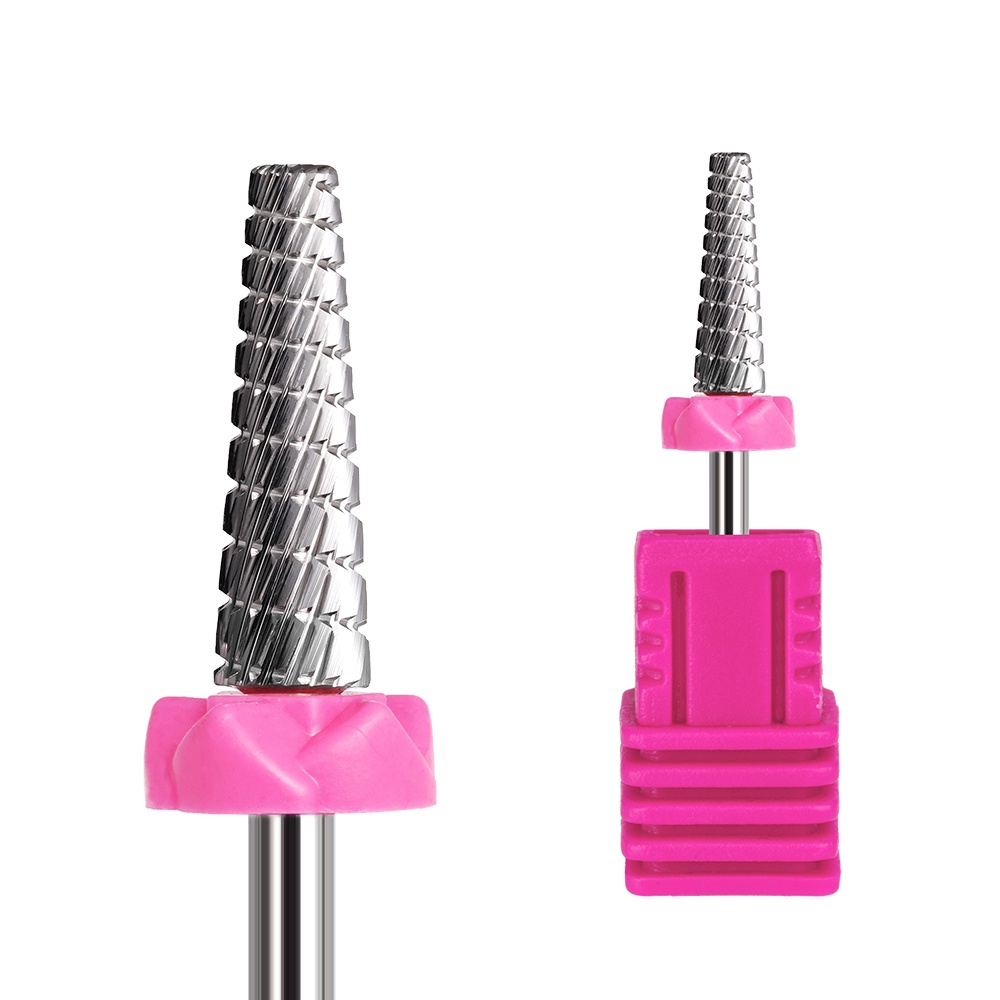
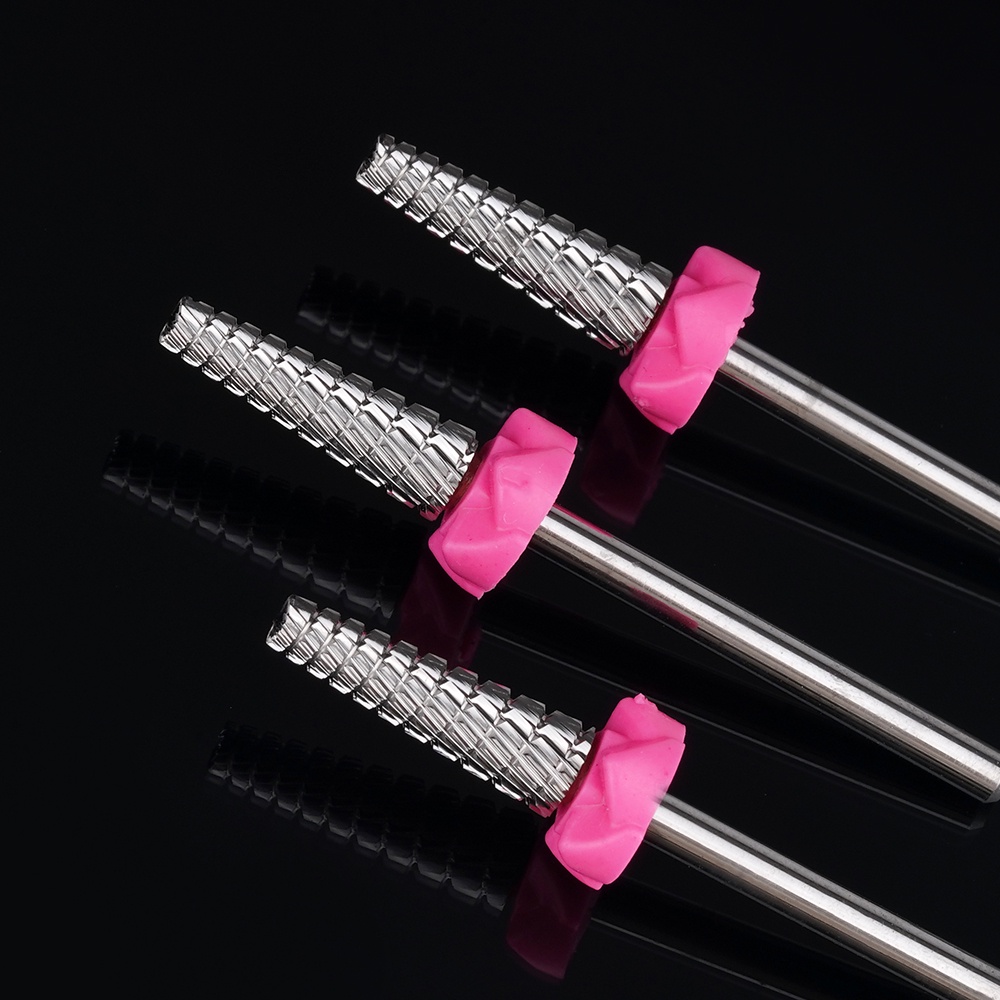
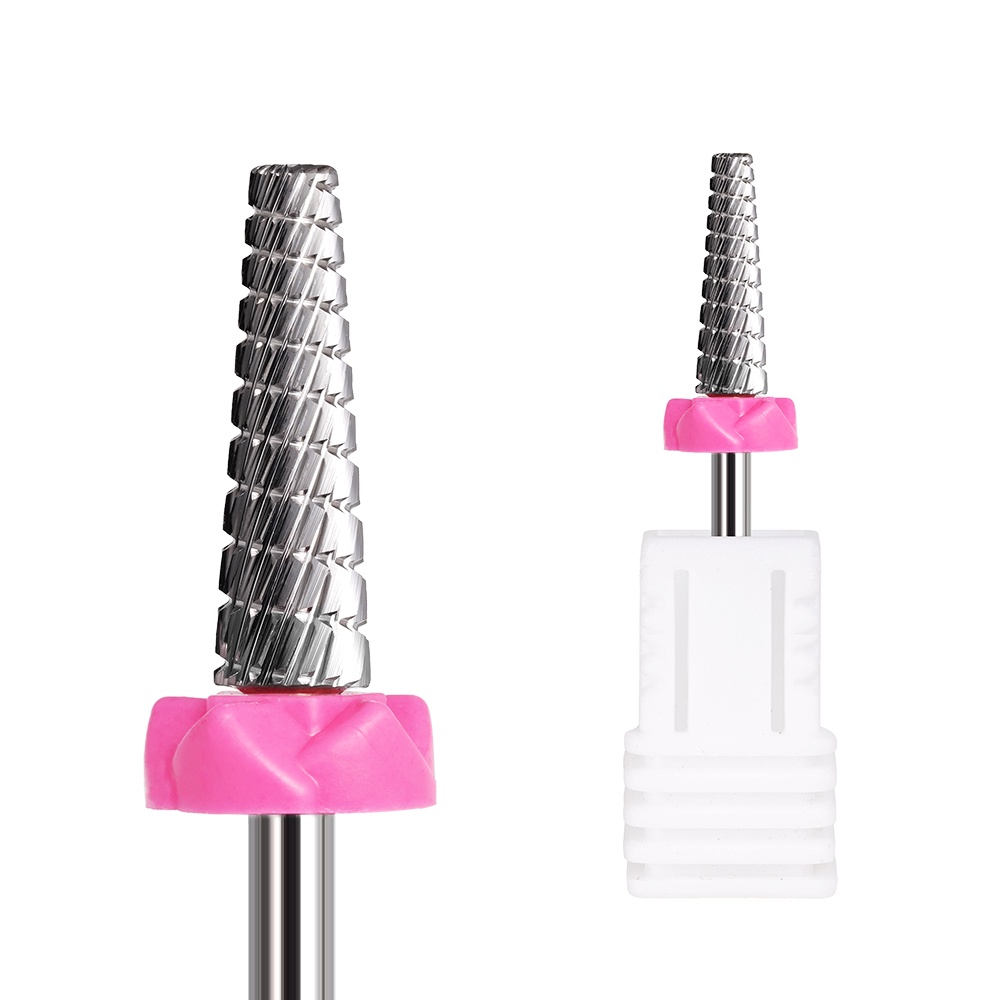
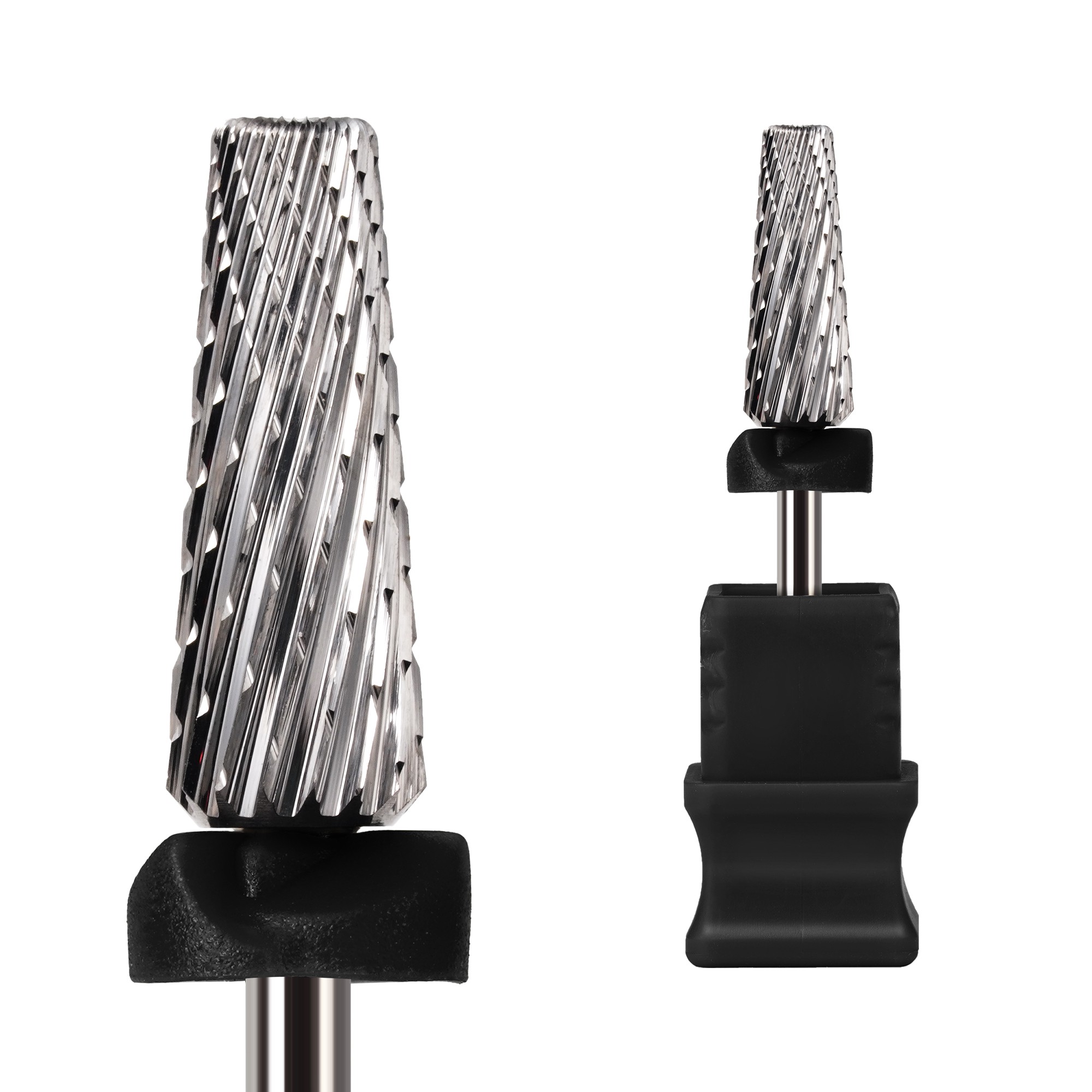
Cones and tapered barrels combine wider working surfaces with a narrowed end. They can refine enhancement product near the cuticle, shape the underside of extensions, and improve access to curved areas. Their versatility does not make them universal: the same taper that helps reach a tight area can also catch the sidewall when operated too aggressively.
Peanut and rounded detail shapes
Peanut-shaped bits have rounded ends with a fuller middle section. This geometry can make them useful for controlled work around curved nail folds and for gentle skin-smoothing tasks where a sharp edge would be undesirable. For example, a Peanut-Shaped Universal Electroplating Diamond Cuticle Nail Bit is offered in 2XF ultra-fine, F fine, and XF extra-fine grades. In this type of bit, the fine electroplated diamond surface and rounded profile are relevant to dead-skin removal, light exfoliation, and callus smoothing rather than bulk enhancement reduction.
Its usefulness depends on technique. A rounded detail bit should glide over dry, non-living tissue or hardened skin with minimal pressure. It should not be used to remove living cuticle, to cut skin, or to compensate for inadequate preparation.
Where bits fit into manicure, enhancement, and pedicure services
In a manicure or gel service, e-file bits may help remove residual product, refine the cuticle zone, clean sidewalls, and prepare the surface according to the product system being applied. The drill should support preparation, not replace judgment about nail condition. Peeling, splitting, thin nails, inflamed skin, or unexplained discoloration require a more conservative approach and may mean that filing should be reduced or deferred.
During an enhancement fill, a carbide or ceramic barrel may remove lifted material and reduce bulk. A finer bit can then refine the remaining product closer to the cuticle. The natural nail should not be aggressively filed once the enhancement layer has become thin. Leaving a controlled base layer is often safer than trying to remove every trace of product mechanically.
Pedicure applications require a separate level of caution. Diamond and silicone bits can help smooth localized callus and rough skin, but aggressive drilling on the sole or heel can create heat and over-thinning. Work should stay within cosmetic surface care. Broken skin, infection signs, significant fissures, circulation concerns, or conditions that affect sensation require appropriate professional assessment rather than routine e-file treatment.
Common operating errors are usually selection errors
One frequent mistake is treating a bit as “for nails” without defining whether the task concerns natural nail, cured product, non-living cuticle, or hardened foot skin. These surfaces differ substantially. A bit that is effective on acrylic may be inappropriate on a natural nail, while a cuticle bit may be too fine and inefficient for product removal.
Another mistake is working at high speed to overcome a dull, clogged, or unsuitable bit. If a bit drags, skips, or generates heat, increasing speed or pressure may worsen the problem. The better response is to check the grit, the rotation direction, the cleanliness of the bit, and whether the selected shape matches the area.
Holding the bit still is equally problematic. Heat develops when abrasive contact remains concentrated in one spot. Controlled, light, continuous movement is safer than short, forceful scrubbing motions. The handpiece should also be held steadily, with the bit contacting the surface at a shallow, deliberate angle rather than perpendicular to the nail.
Cleaning, inspection, and replacement affect both performance and hygiene
Bits accumulate filing dust, product residue, and skin debris. Cleaning should remove visible debris before the chosen disinfection or sterilization process, following local requirements and the bit manufacturer’s care instructions. Disposable sanding bands are single-use items. Reusable metal, carbide, ceramic, and diamond bits should be inspected after cleaning for corrosion, worn abrasive coating, damaged flutes, bent shanks, or trapped residue.
A visibly smooth diamond bit, a chipped ceramic bit, or a carbide with damaged cutting edges should be removed from service. Worn tools encourage extra pressure and extend treatment time, which raises the likelihood of heat and inconsistent results. Storage also matters: dry, organized storage helps prevent damage to fine tips and avoids cross-contamination after processing.
A nail drill bit becomes effective not because it is coarse, expensive, or multi-purpose, but because it is matched to one defined task. Broad barrels manage product surfaces; flame and tapered shapes handle controlled detail work; balls refine lifted dry tissue; rounded diamond shapes support gentle exfoliation; polishing tools finish rather than remove. That distinction is what turns an e-file from a fast mechanical device into a precise salon tool.
News List
- Preventing Gouges and Uneven Filing With Small Barrel Nail Drill BitsSep 20, 2026
- How Diameter and Grit Affect Small Barrel Nail Drill Bit PerformanceSep 20, 2026
- Can Hytos Nail Drill Bits Be Used Safely on Natural Nails and Gel Polish?Sep 20, 2026
- How to Verify Fit Between Hytos Nail Drill Bits and an E-File HandpieceSep 20, 2026
- Safe Speed Settings for Umbrella Nail Drill Bits Around the Nail FoldSep 20, 2026
- Umbrella vs Flame Nail Drill Bits: Which Shape Offers Better Cuticle Control?Sep 20, 2026
Best-Selling Products
 Cross Cut Safety Stainless Steel Tungsten Carbide Nail Drill Bits Salon Foot Use XF-C Grit for Removing Nails
 First-rate Quality Tungsten Carbide Nail Drill Bits Best Coating Manicure Remove Gel Nails Accessories
 Professional Advanced Safety Cuticle Bits Two-Way Rotate 3/32'' Carbide Tungsten 5 in 1 Nail Drill Bits
 Wholesale 5 in 1 Electric Manicure Nail Drill Bits Various Coating Cone Cuticle Bit with Rotary Cross Cut for Nail Art
 New Slant Tooth Tungsten Steel Nail Drill Bits Dead Skin Removal 5-in-1 Universal Grinding Nail Polish Head Tool Nail Drill Bits
 4.0mm Small 5 in 1 Integrated Sharpe Tungsten Nail Drill Bit Straight Teeth Gel Polish Removal
 Flame Sharp XF F M C XC Silver Safety Professional Corn Tungsten Carbide Nail Bit for Drill Machine Accessories
 Factory Direct 5 in 1 Tungsten Carbide Nail Drill Bits 6.8MM Cross Cut Safety Manicure 5 in 1 Nail Drill Bits
Please give us a message