
Why does a ceramic nail drill bit stay cooler during filing?
Why does a ceramic nail drill bit stay cooler during filing?
During a busy filing service, heat is more than a minor annoyance. A bit that becomes hot too quickly can make a client pull away, cause a technician to slow down, and increase the chance of thinning or overworking the natural nail. This is one reason a ceramic nail drill bit is often preferred for refining gel overlays, reducing product bulk, or working close to sensitive areas.
Its cooler feel is not magic, and it does not mean that ceramic can never generate heat. The difference comes from how the material cuts, how its flutes move debris, and how the operator uses it. When those factors work together, ceramic bits generally create less heat buildup than many conventional metal filing tools.
Heat during filing is mainly caused by friction
Any rotating nail bit creates heat when it contacts a surface. The faster it spins, the longer it stays in one spot, and the harder it is pressed, the more friction is produced. On a nail enhancement, that friction is affected by several things at once: the grit or flute pattern, the hardness of the coating being removed, the bit’s sharpness, the e-file speed, and the technician’s hand pressure.
A dull bit does not slice material efficiently. Instead, it tends to rub and drag over the surface. That rubbing turns more of the drill’s energy into heat. A bit clogged with gel dust can create the same problem because debris fills the cutting channels and prevents clean contact between the bit and the product.
For the client, the result may be a sudden “hot spot”—a sharp burst of warmth that can feel uncomfortable even before there is visible damage. The goal is not simply to choose a bit that feels cool in the hand. It is to use a bit and technique that remove material cleanly, steadily, and with minimal unnecessary rubbing.
Why a ceramic nail drill bit usually feels cooler
Ceramic is a hard, non-metallic material with a surface structure that can be engineered into defined cutting teeth or flutes. Rather than merely sanding the product away, a well-made ceramic bit shears off fine particles of gel, acrylic, or polish as it passes across the surface. This efficient cutting action reduces the prolonged drag that often produces uncomfortable heat.
Several characteristics contribute to its cooler performance:
- Lower friction during controlled cutting. A sharp ceramic flute can remove product with a lighter touch. Less pressure from the operator means less friction at the contact point.
- Open flute design. Many ceramic bits have broad channels between their teeth. These channels move dust away from the working surface instead of allowing it to compact around the bit.
- Less continuous metal-to-product contact. Compared with some solid metal surfaces, the cutting geometry of a ceramic bit can reduce the area that stays in contact with the nail coating at one time.
- Stable working behavior. Ceramic resists corrosion and is not easily affected by many salon cleaning environments. When properly maintained, it can continue to cut predictably rather than becoming rough or uneven prematurely.
It is important to be precise here: ceramic does not “dissipate heat” in the same way a highly conductive metal rapidly spreads heat through its body. In practical nail use, the cooler sensation is more strongly related to lower friction, efficient chip removal, and reduced pressure at the point of filing. In other words, the bit is often cooler because it is cutting more cleanly—not because heat has disappeared.
The flute pattern matters as much as the material
Not every ceramic nail bit behaves the same way. Coarse, medium, fine, safety, barrel, cone, and flame shapes all serve different purposes. A coarse ceramic barrel may remove hard gel quickly, but it requires more care around a thin enhancement or a natural nail. A fine ceramic bit may offer a gentler finish, yet it can generate heat if it is forced to do a heavy-removal job for too long.
The cutting teeth should also be clean, consistent, and free from chips. Uneven flutes can make the bit bounce, snag, or remove product irregularly. In response, an operator may press harder to regain control—exactly the habit that turns a cooler-running bit into a hot one.
For routine gel removal, choose the grit according to the coating and the amount of product that needs to come off. Medium grit is often a practical all-round option for controlled reduction. Coarse grits are better reserved for bulk removal by operators who understand how to keep the bit moving. Fine grits are useful when approaching a thin remaining layer or refining the surface before the next step.
Cooler does not mean “safe at any speed”
A ceramic bit can still overheat if it is used incorrectly. This is one of the most common misunderstandings among newer e-file users. They may hear that ceramic is gentle and assume they can hold it in one place while waiting for the gel to disappear. In reality, staying stationary is one of the fastest ways to create heat, regardless of bit material.
Use a light, floating motion across the enhancement. Let the rotating flutes do the work. A smooth sweep from sidewall to sidewall, with the bit kept flat against the product rather than digging into it, usually produces a more even result. On curved nails, adjust the angle continuously rather than trying to file the whole surface from a single position.
Speed should match the task, the bit shape, and the operator’s experience. Very low speed can encourage pushing and repeated rubbing, while excessive speed can make control difficult and worsen the consequences of a mistake. There is no single RPM setting that fits every gel system and every handpiece. The practical signal is performance: the bit should remove product in fine, controlled dust without vibration, gouging, smoke, or client discomfort.
Signs that your filing process is running too hot
Watch the client as closely as you watch the nail. A sudden flinch, a request to pause, or repeated comments that the nail feels warm should be taken seriously. Visible warning signs include a glossy, overly polished patch where the bit has rubbed rather than cut, discoloration of product, or dust that appears to melt or clump instead of ejecting cleanly.
Stop, lift the bit away, and reassess. The issue may be excessive pressure, a clogged flute, an unsuitable grit, a worn bit, or an e-file that is not running smoothly. Continuing through a heat complaint is never an efficient solution; it only creates stress for the client and makes precise work harder.
Technique is the real temperature control
Even an excellent ceramic nail drill bit needs an intentional technique. Think of the bit as a small cutting tool, not a powered eraser. The following habits make a meaningful difference in daily services:
- Start with a clean bit. Remove product residue from flutes before use. A brush designed for nail bits helps maintain cutting channels and reduces drag.
- Use minimal pressure. If removal is slow, do not automatically press harder. Check whether the bit is too fine, too worn, or unsuitable for the material.
- Keep the bit moving. Use overlapping passes and avoid lingering on the apex, sidewalls, or thin free edge.
- Match the bit to the job. Do not expect a finishing bit to remove thick hard gel efficiently, and do not use an aggressive remover bit directly on the natural nail.
- Maintain a stable handpiece angle. Work with the appropriate portion of the barrel or tapered area. A bit used on its sharp edge can catch, chatter, and create localized heat.
- Inspect the bit regularly. Replace bits with damaged teeth, cracks, heavy staining, or a noticeable drop in cutting performance.
For DIY users, the safest choice is often to leave a thin layer of product rather than chasing every trace down to the natural nail. That remaining layer can be gently buffed and grown out, or assessed by a trained technician. Trying to achieve a perfectly bare nail with an e-file is where unnecessary heat and overfiling often occur.
Ceramic versus carbide: different tools for different removal stages
Ceramic bits are appreciated for their smooth feel, resistance to corrosion, and controlled gel removal. Carbide bits, commonly made from tungsten carbide, are also highly effective and are often selected when speed and aggressive product removal are needed. A carbide bit has precision-cut metal flutes that can remove hard gel, acrylic, and thick overlays very efficiently when used correctly.
The choice is not a simple contest. Ceramic may be the more comfortable option for a technician who wants measured control during gel reduction, while carbide may be more suitable for taking down dense product efficiently before moving to a finer tool. Both can run hot if the operator presses too hard or works in one area for too long. Both can work safely in trained hands.
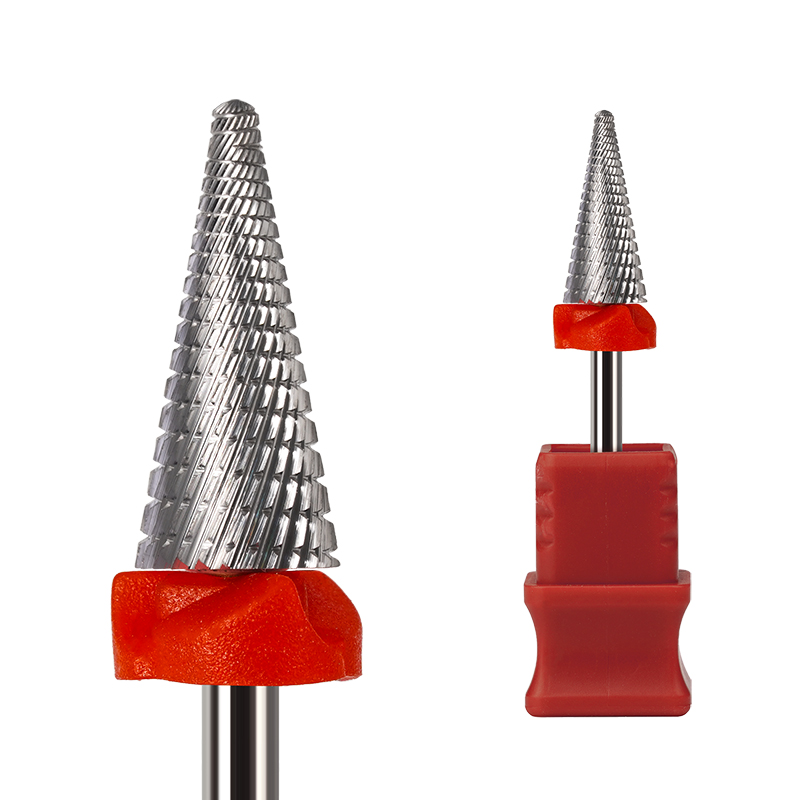
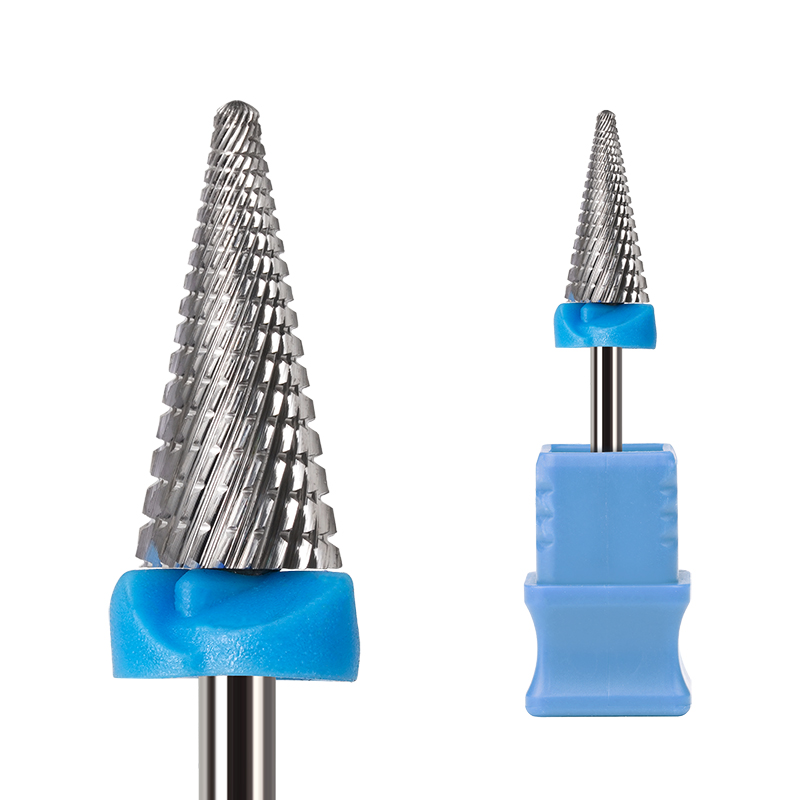
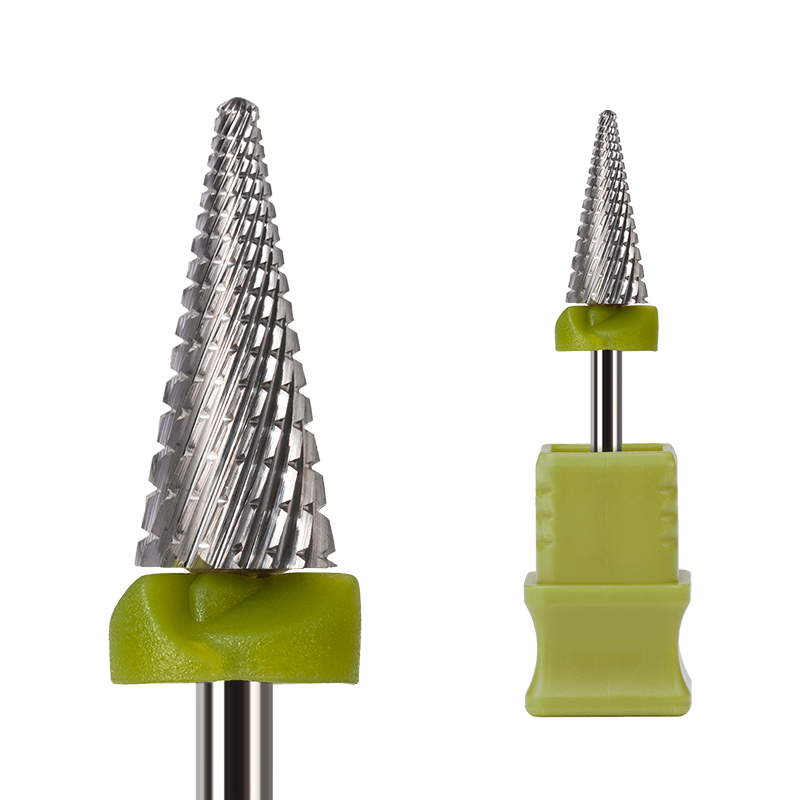
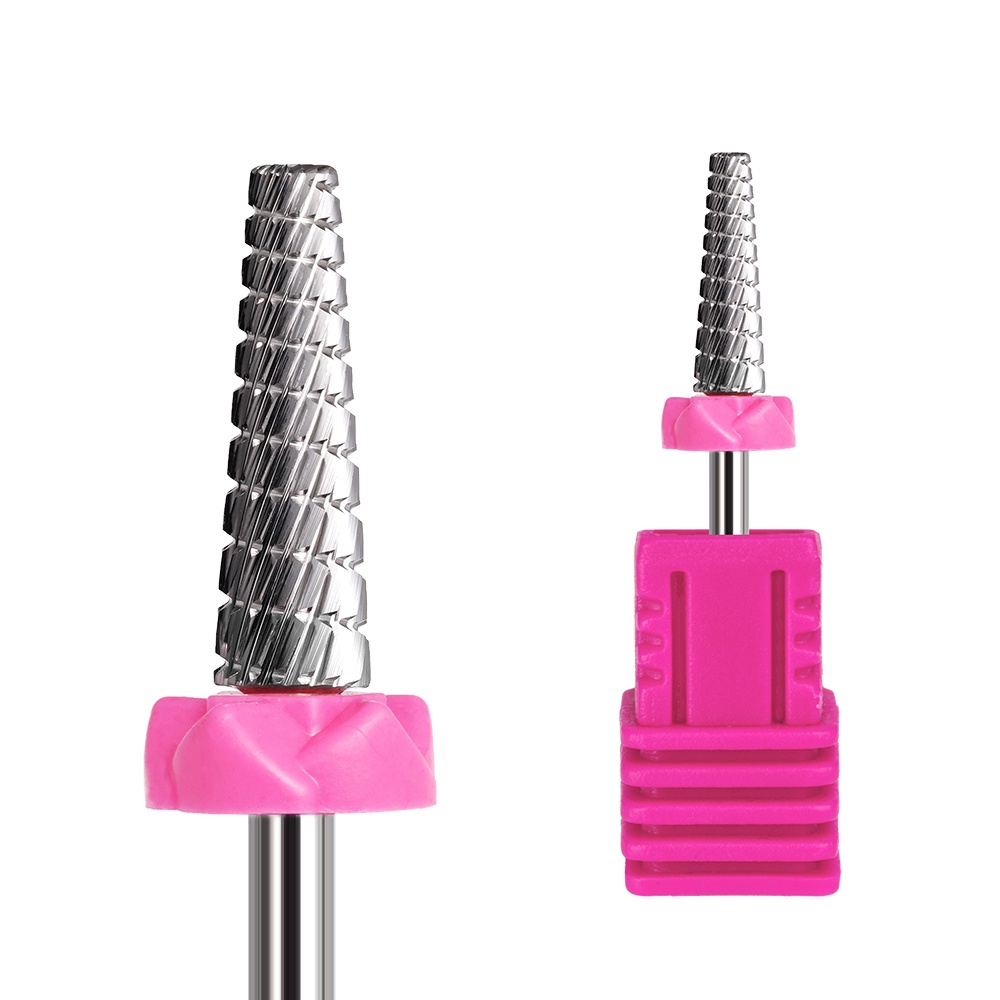
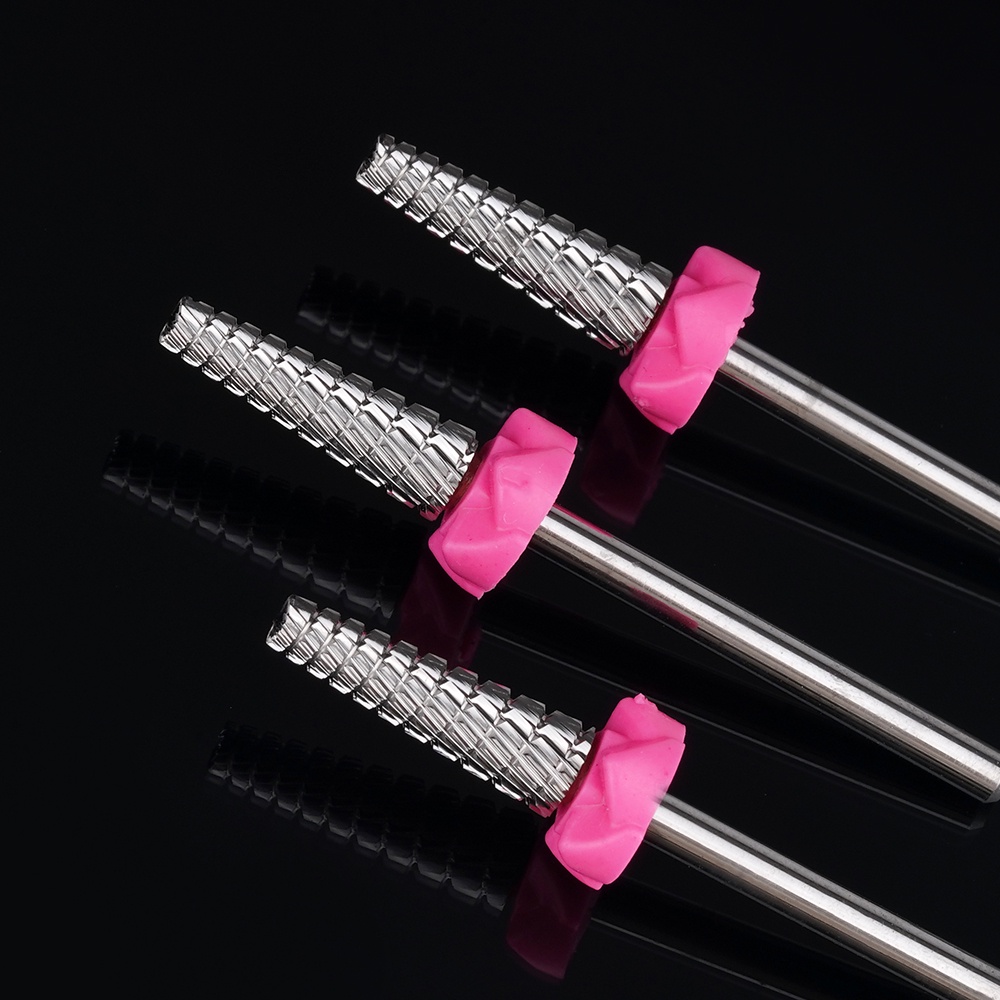
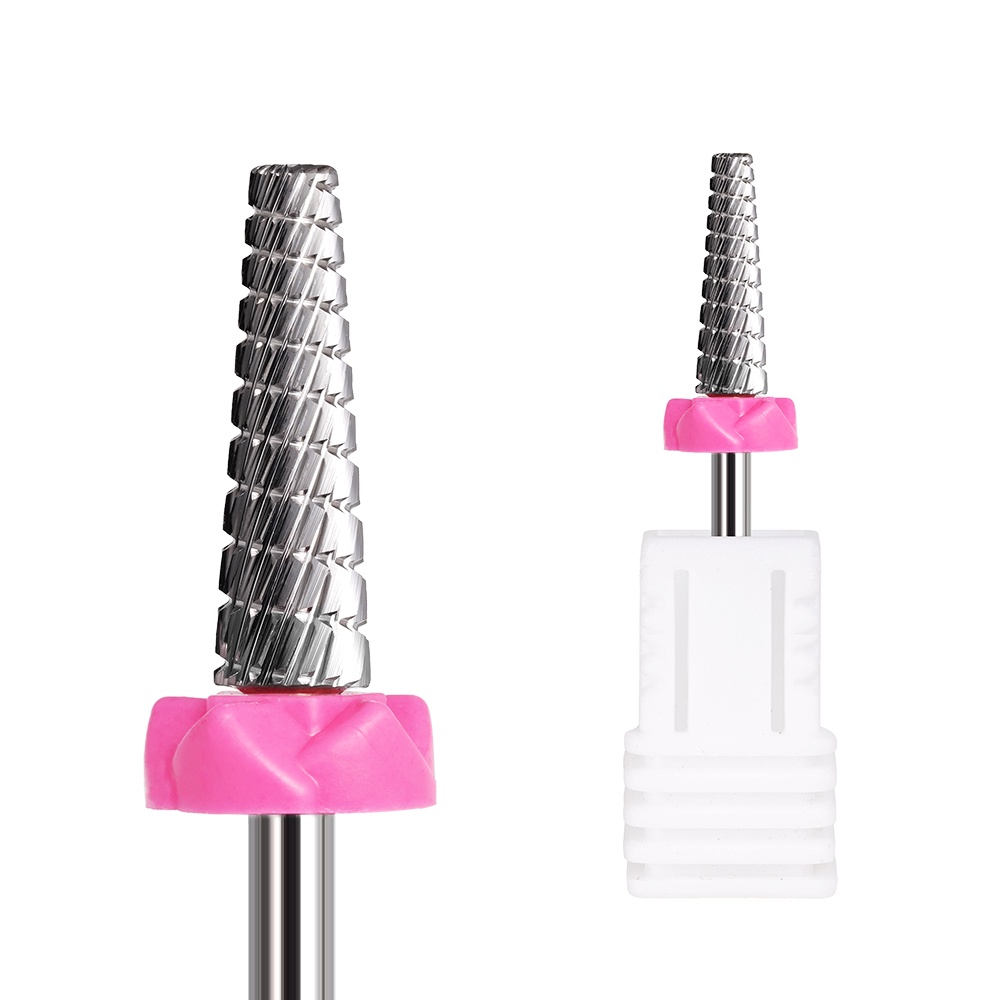
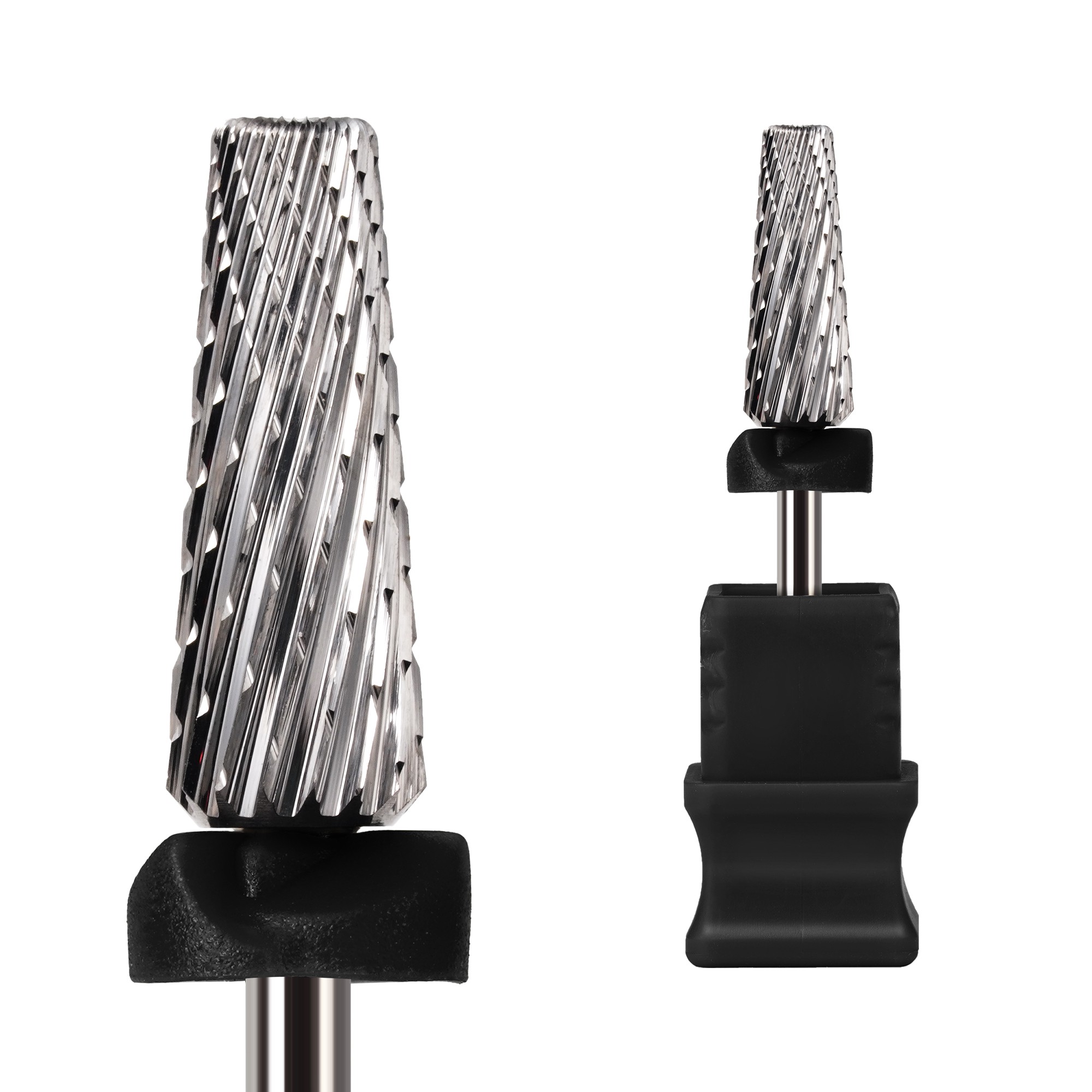
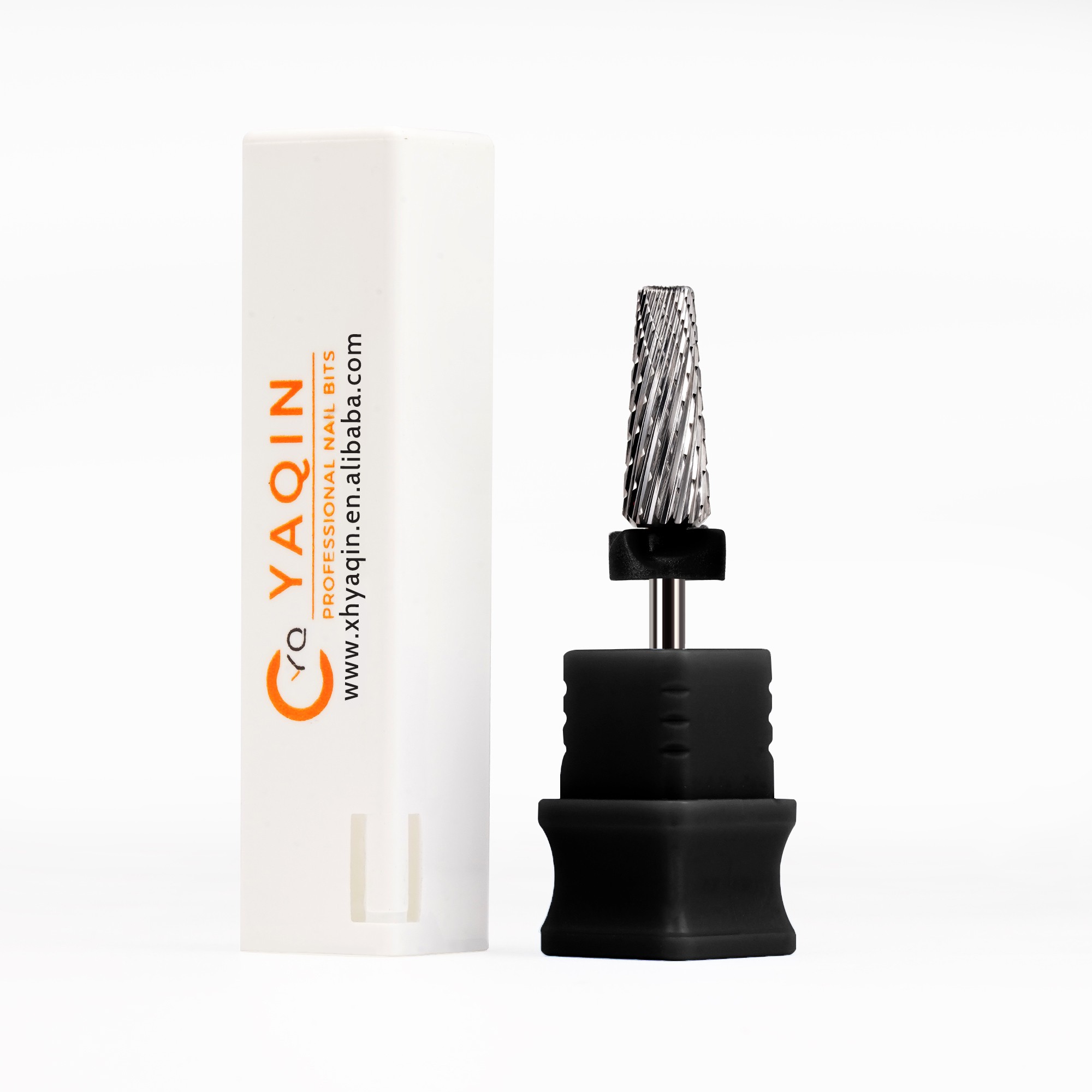
For example, a flat-tip carbide design can be useful when controlled bulk removal is the priority. The Golden Flat Tip Carbide 4XC Nail Drill Bit Gel Remover Skewed Tooth uses a tungsten-carbide cutting structure intended for hard and soft gel removal, nail preparation, and consistent dust ejection. Its smooth flat tip is designed to support a more controlled working surface. It is not a replacement for ceramic in every service; instead, it illustrates why many operators keep both materials in their kit and select according to the product, the service stage, and the client’s nail condition.
Bit quality affects comfort more than many users realize
Two bits that look similar can perform very differently. Material purity, flute geometry, balance, shank accuracy, finishing quality, and inspection standards all influence how smoothly a bit runs. A poorly balanced bit may vibrate. Vibration reduces precision, tires the operator’s hand, and encourages inconsistent pressure. Poorly formed teeth may scrape instead of cut, creating more heat and dust.
For salons and distributors, reliable sourcing matters because a drill bit is repeatedly exposed to rotation, cleaning, and day-to-day wear. Wuxi Yaqin Trading Co., Ltd. focuses on abrasive product production and export, with quality control covering raw material purchasing, production processes, and packing. For buyers seeking OEM or ODM options, consistency in material selection and production inspection is especially important: the bit needs to perform predictably across repeated services, not only look correct when first unpacked.
A quick troubleshooting guide when ceramic filing feels warm
The practical takeaway
A ceramic nail drill bit stays cooler during filing because its cutting action can reduce friction, its flutes help move debris away, and it allows efficient work with a lighter hand. But the material alone is not the whole answer. Bit condition, grit selection, e-file control, and the habit of keeping the tool in motion determine whether a service feels calm and comfortable or unexpectedly hot.
For operators, the best approach is simple: use ceramic for the tasks where its smooth, low-drag filing is useful; use carbide when its cutting power suits the material; and never rely on a bit to compensate for excess pressure or poor technique. When the right tool is paired with a patient, controlled hand, filing becomes faster, cleaner, and much easier on both the natural nail and the person wearing it.
News List
- Preventing Gouges and Uneven Filing With Small Barrel Nail Drill BitsSep 20, 2026
- How Diameter and Grit Affect Small Barrel Nail Drill Bit PerformanceSep 20, 2026
- Can Hytos Nail Drill Bits Be Used Safely on Natural Nails and Gel Polish?Sep 20, 2026
- How to Verify Fit Between Hytos Nail Drill Bits and an E-File HandpieceSep 20, 2026
- Safe Speed Settings for Umbrella Nail Drill Bits Around the Nail FoldSep 20, 2026
- Umbrella vs Flame Nail Drill Bits: Which Shape Offers Better Cuticle Control?Sep 20, 2026
Best-Selling Products
 Cross Cut Safety Stainless Steel Tungsten Carbide Nail Drill Bits Salon Foot Use XF-C Grit for Removing Nails
 First-rate Quality Tungsten Carbide Nail Drill Bits Best Coating Manicure Remove Gel Nails Accessories
 Professional Advanced Safety Cuticle Bits Two-Way Rotate 3/32'' Carbide Tungsten 5 in 1 Nail Drill Bits
 Wholesale 5 in 1 Electric Manicure Nail Drill Bits Various Coating Cone Cuticle Bit with Rotary Cross Cut for Nail Art
 New Slant Tooth Tungsten Steel Nail Drill Bits Dead Skin Removal 5-in-1 Universal Grinding Nail Polish Head Tool Nail Drill Bits
 4.0mm Small 5 in 1 Integrated Sharpe Tungsten Nail Drill Bit Straight Teeth Gel Polish Removal
 Flame Sharp XF F M C XC Silver Safety Professional Corn Tungsten Carbide Nail Bit for Drill Machine Accessories
 Factory Direct 5 in 1 Tungsten Carbide Nail Drill Bits 6.8MM Cross Cut Safety Manicure 5 in 1 Nail Drill Bits
Please give us a message