
What should distributors verify before choosing a Nail Drill Bit Factory?
What should distributors verify before choosing a Nail Drill Bit Factory?
What Should Distributors Verify Before Choosing a Nail Drill Bit Factory?
A low quotation can make one Nail Drill Bit Factory look attractive, especially when a distributor is building a broad catalog or testing a new market. Yet nail drill bits are not simple commodities. They are high-contact abrasive tools used near the natural nail and skin, and their real commercial value depends on consistency: consistent material, tooth geometry, shank fit, sharpness, packaging, and repeatability from one batch to the next.
For distributors, the sourcing decision is therefore not only about the unit price. A bit that wears prematurely, vibrates in the handpiece, sheds coating, or arrives with mixed specifications can generate returns, complaints, damaged salon relationships, and expensive stock replacement. The right factory should help make product quality predictable enough for resale—not merely provide a sample that performs well once.
Before placing a substantial order, it is worth verifying the supplier’s manufacturing controls, product understanding, customization process, export readiness, and total landed-cost logic. These checks take more effort than comparing a price list, but they usually reveal whether a supplier can support a distributor’s business after the first shipment.
Start with the abrasive material and the working design
“Carbide bit” is often used as a broad product label, but distributors should ask what the factory means by it. Tungsten carbide and tungsten steel products may be positioned differently depending on the construction, intended application, and manufacturing process. More importantly, the material claim should match the bit’s actual use. A tool intended for rapid hard-gel removal faces different demands from a fine finishing bit or a diamond bit used around cuticles.
The cutting pattern deserves the same attention. Straight teeth, cross-cut teeth, ceramic flutes, and diamond abrasive surfaces each influence cutting speed, heat generation, dust behavior, and the user’s level of control. A distributor should not accept vague descriptions such as “professional quality” in place of clear details on the intended material removal, recommended direction of use, grit or coarseness category, head shape, and shank dimensions.
Request physical samples from the actual proposed configuration, not a generic showroom assortment. Test them with the target audience in mind. Salon professionals may prioritize removal speed and sustained cutting performance during repeated appointments. DIY users may value smoother control and a lower perceived risk of catching the skin. Both groups need secure fitting and stable rotation in compatible e-files.
A practical sample review should include visual finish, burr-free edges, concentricity during rotation, surface uniformity, dust evacuation, and post-use sharpness. It should also consider whether the factory gives clear handling guidance. No drill bit can eliminate risk when used incorrectly; however, a well-designed and correctly described bit helps distributors sell responsibly.
Verify quality control as a process, not a promise
The strongest question to ask a Nail Drill Bit Factory is not “Do you inspect quality?” Nearly every supplier will say yes. Ask instead where inspection happens, what is checked, how nonconforming goods are handled, and whether the same controls apply to repeat orders. A reliable answer should cover incoming materials, in-process production checks, finished-product inspection, and packing verification.
For rotary nail tools, small production variations can be commercially significant. Uneven flute formation, inconsistent abrasive coverage, bent shanks, poorly finished tips, or mixed grit labels may not be obvious in a catalog photo. They become obvious to the end user. Distributors should ask for the factory’s inspection criteria for dimensions, visual finish, rotation stability, labeling, and quantity per inner pack. If tolerance requirements matter for a particular product, they should be agreed in writing before production rather than debated after receipt.
Certification can be a useful signal, but it should be interpreted correctly. Wuxi Yaqin Trading Co., Ltd. states that it has passed ISO9001:2000 quality management system certification and operates a QC system covering raw-material purchasing, production, and product packing. For a buyer, the next sensible step is to review the relevant certificate details and confirm their applicability to the order at hand. A certificate does not replace batch-level checks, but documented quality management can make the supplier’s controls easier to evaluate.
Consider arranging pre-shipment inspection for early orders, particularly when launching private-label packaging or importing a new category. This is not a sign of distrust. It is an efficient way to establish a shared standard for acceptable appearance, assortment accuracy, barcode placement, and carton condition before the goods begin their journey.
Look beyond unit price to the cost of a sellable product
A distributor’s real cost is the cost of inventory that can be received, stored, marketed, and resold without unnecessary claims. The cheapest ex-factory bit may become the most expensive option if it requires additional sorting, has a high defect rate, arrives in unsuitable packaging, or forces frequent replacements. Cost evaluation should include sample charges, tooling or artwork fees where applicable, minimum order quantities, packaging cost, transport mode, duties, inspection, payment terms, and the cash tied up in slow-moving stock.
There is also an assortment cost. Offering too many nearly identical shapes and grits can confuse customers and dilute reorder volume. A thoughtful opening range usually covers the applications customers request most often: removal of hard gel or soft gel, product reduction, surface refining, cuticle-area work where suitable, and replacement accessories for popular e-file systems. The factory should be able to explain the role of each item rather than simply offering an overwhelming list of SKUs.
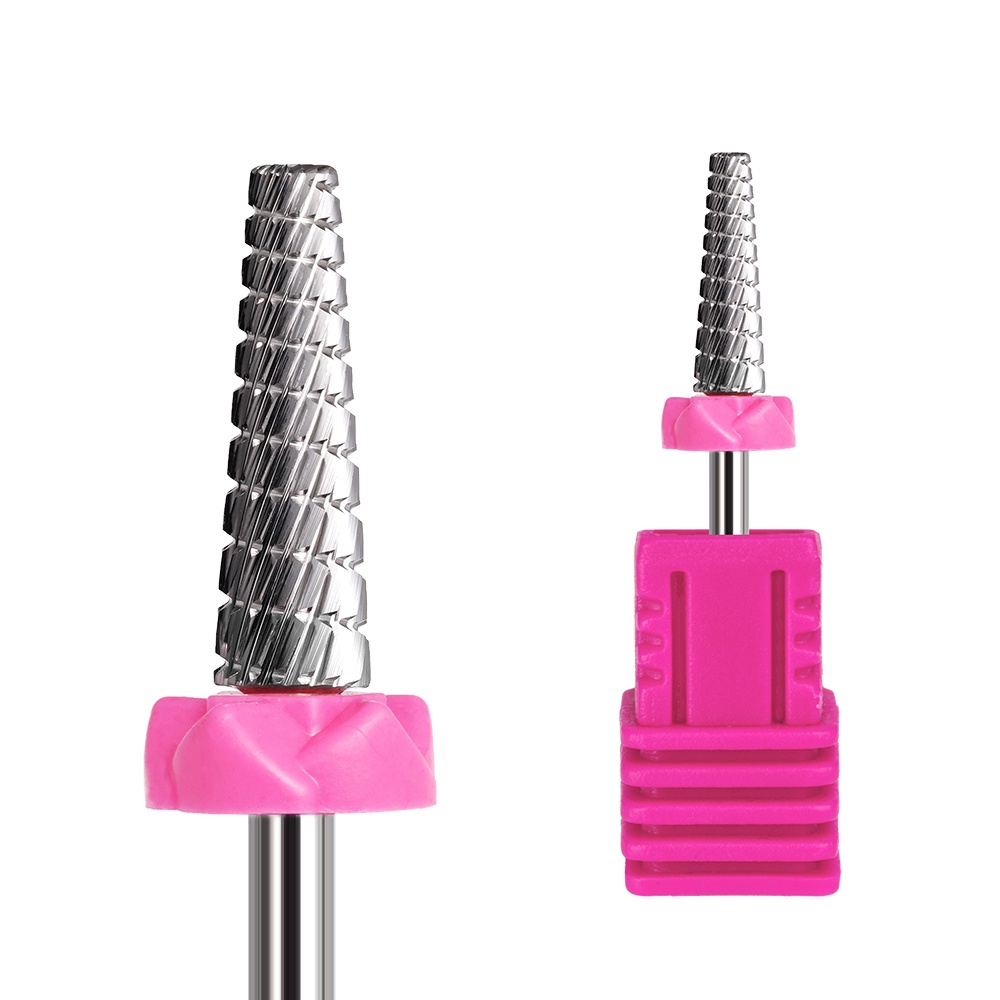
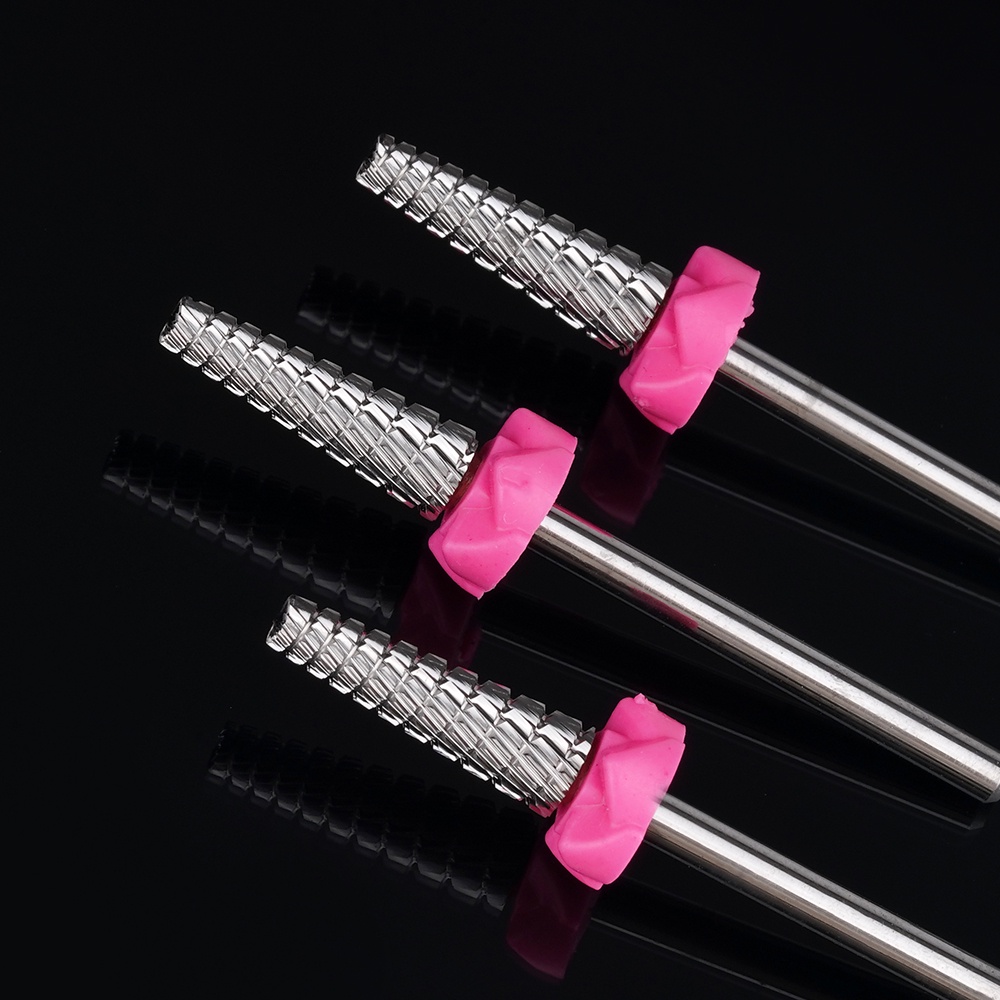
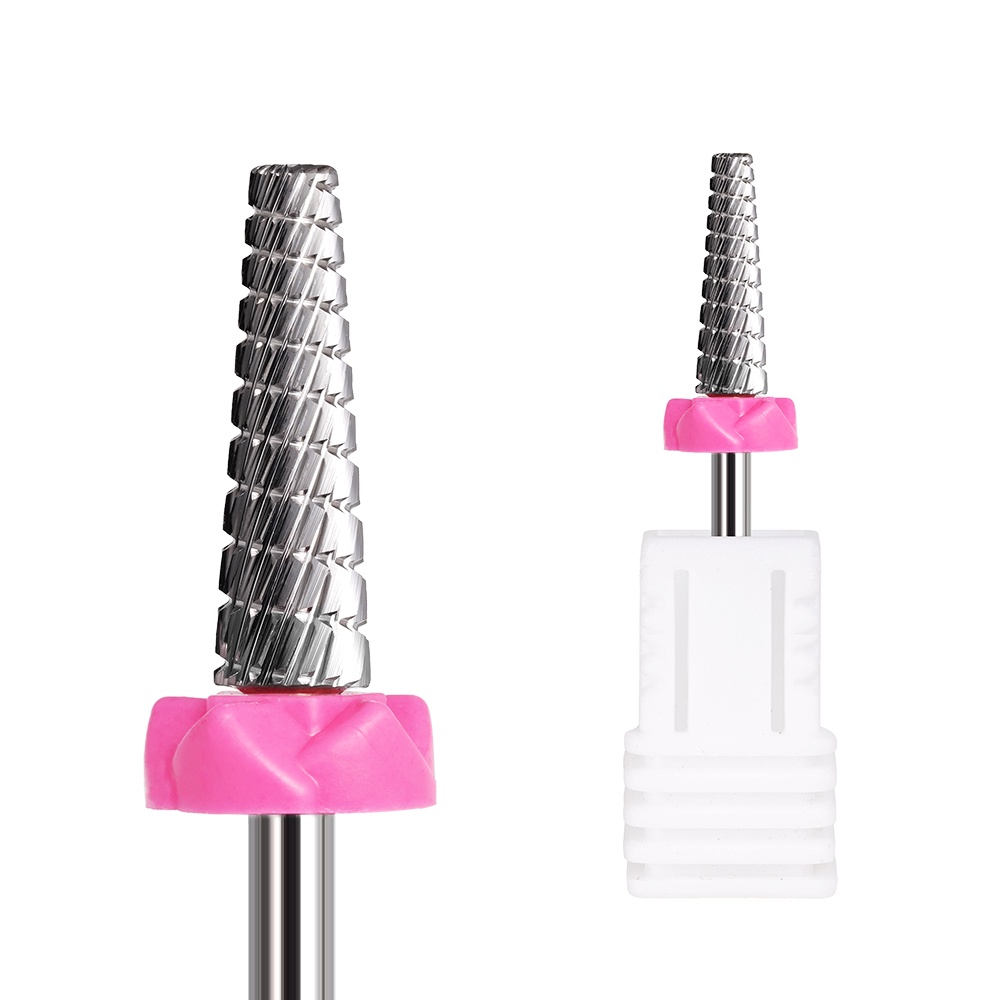
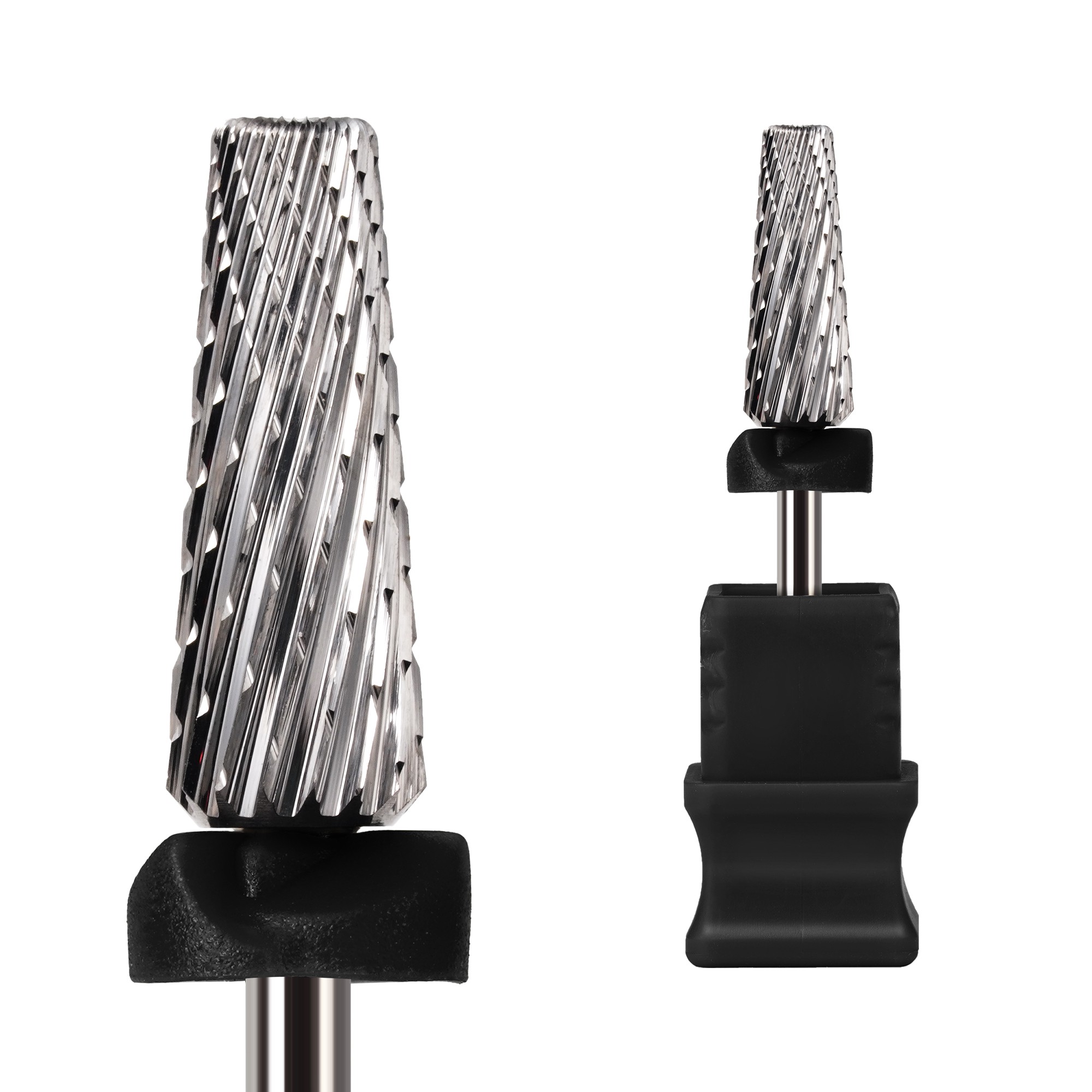
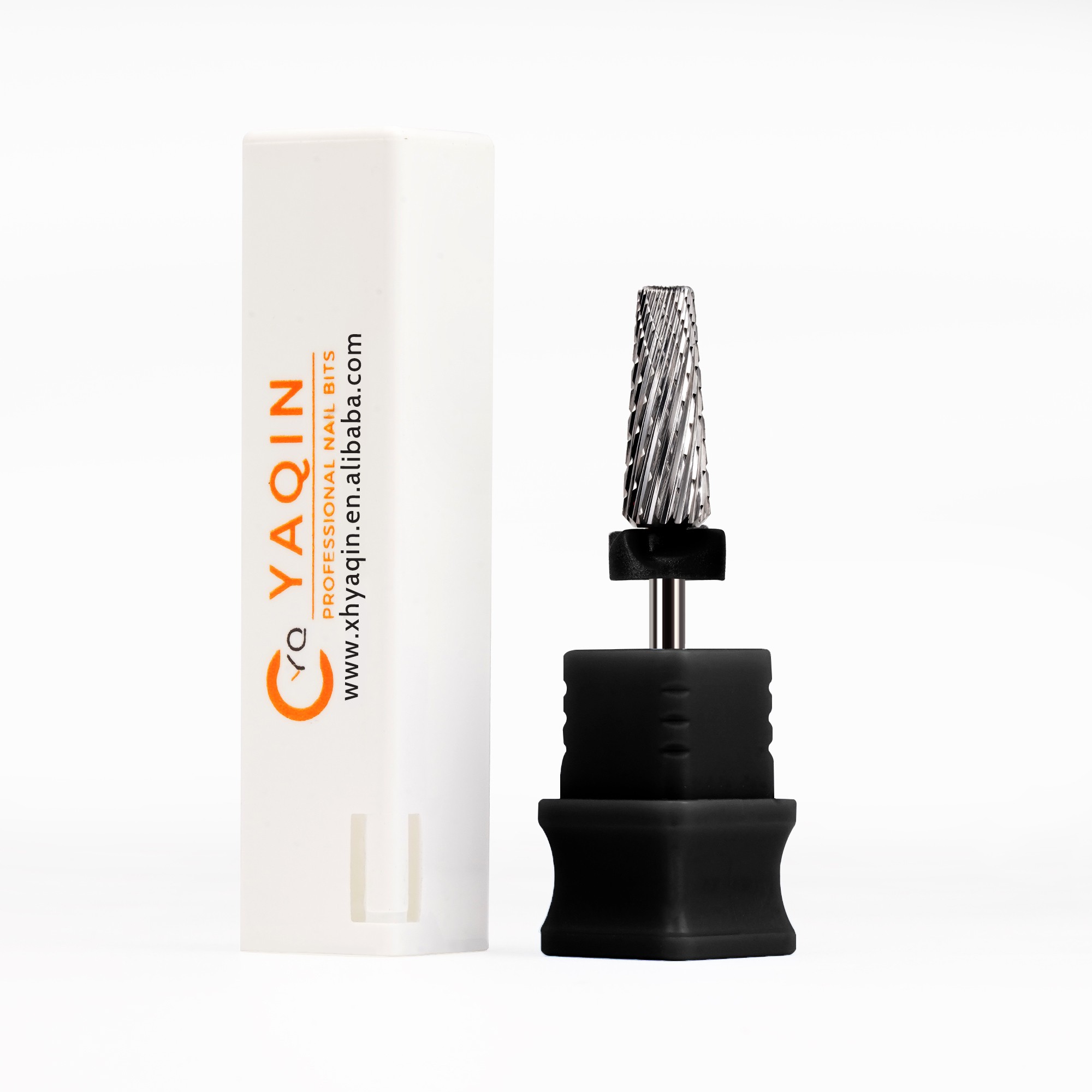
For example, a 4.0 mm 5-in-1 bit with a smooth flat tip and straight teeth may be assessed as a multipurpose removal option, provided its actual finish and intended use match the distributor’s market positioning. The 4.0mm Small 5 in 1 Integrated Sharpe Tungsten Nail Drill Bit Straight Teeth Gel Polish Removal is described as using premium tungsten steel with a precision-engineered grinding surface, consistent dust ejection direction, and dust-proof and waterproof compatibility. Those features are relevant, but a distributor should still verify sample behavior, product instructions, and packaging claims before presenting them to customers as part of a private-label range.
Pricing comparisons should therefore be made on a like-for-like basis. Confirm the same head size, material, cut pattern, finish, individual protection, labeling, and carton configuration. A quoted price without those details is not yet a meaningful comparison.
Check OEM and packaging capability before promising a private label
Private-label nail tools are often judged first by what a buyer can see: the retail sleeve, label, color system, product naming, and instructions. The factory’s OEM/ODM capability should be tested early, because packaging development can create more delays than the bit itself. Ask whether the supplier can work from finished artwork, assist with layout requirements, provide packaging samples, and confirm approval points before mass production.
Clear communication matters particularly when the distributor sells across several markets. Product terminology, warnings, language requirements, barcode standards, and importer information may differ by destination and product channel. The supplier should provide accurate product specifications and packing information, while the distributor remains responsible for determining the legal and labeling requirements that apply in its own market. Neither party benefits when market-specific obligations are discovered only after goods are packed.
It is also useful to ask whether artwork, molds, custom colors, or special pack formats are controlled separately for each customer. This protects brand consistency and reduces the chance of a later reorder being produced from an outdated version. A factory that has handled OEM/ODM projects should have a defined approval trail: artwork confirmation, pre-production sample where needed, packing confirmation, and final shipment documentation.
Assess export experience through operational questions
Export experience is valuable because overseas distribution depends on details that are easy to underestimate: carton markings, packing lists, invoice consistency, lead-time communication, freight coordination, and response when an order changes. It is reasonable to ask where the supplier has shipped, but operational questions are more revealing. Can it provide product and packing specifications before booking? Does it confirm the production timeline after artwork approval? Who coordinates delivery to the nominated forwarder? How are shortages or transit-damage claims documented?
Wuxi Yaqin Trading Co., Ltd. describes itself as a trading factory focused on manufacturing and exporting abrasive products, with markets including the USA, Canada, Germany, the UK, Italy, Poland, and 42 other countries. It also offers one-stop service from production through delivery. That international footprint can be useful for distributors seeking a supplier familiar with cross-border order flow, but it should be converted into practical order-level confirmation: the agreed Incoterm, production lead time, packaging plan, document set, and communication contact.
A dependable supplier does not need to promise that every shipping event will be problem-free. It should be able to explain what it controls, what the freight partner controls, and how it communicates when the original plan changes. That distinction is particularly important when stock availability affects salon distributors, online retailers, and seasonal promotional calendars.
Build a supplier decision around repeatability
The first order is a qualification exercise, not the final proof of a partnership. Before choosing a factory, set a short list of non-negotiables: approved sample standard, exact SKU specifications, pack count, label content, acceptance criteria, lead time, payment terms, and the procedure for handling quality discrepancies. Keep these records with the purchase order. They make reorder discussions faster and reduce ambiguity when staff or production schedules change.
The best sourcing choice may not be the factory with the lowest initial quote. It is the one that can repeatedly supply a well-defined product, make quality information visible, support the packaging level your channel requires, and communicate honestly about capacity and delivery. For distributors, that is what protects margin: fewer surprises after the container, courier shipment, or replenishment order has already been committed.
Before moving from samples to volume, compare suppliers using the same brief and request written confirmation of every point that affects resale. If the factory can answer technical questions clearly, demonstrate control from materials through packing, and support the intended market without overpromising, it is in a far stronger position to become a dependable source of nail drill bits rather than simply another name on a quotation sheet.
News List
- Preventing Gouges and Uneven Filing With Small Barrel Nail Drill BitsSep 20, 2026
- How Diameter and Grit Affect Small Barrel Nail Drill Bit PerformanceSep 20, 2026
- Can Hytos Nail Drill Bits Be Used Safely on Natural Nails and Gel Polish?Sep 20, 2026
- How to Verify Fit Between Hytos Nail Drill Bits and an E-File HandpieceSep 20, 2026
- Safe Speed Settings for Umbrella Nail Drill Bits Around the Nail FoldSep 20, 2026
- Umbrella vs Flame Nail Drill Bits: Which Shape Offers Better Cuticle Control?Sep 20, 2026
Best-Selling Products
 Cross Cut Safety Stainless Steel Tungsten Carbide Nail Drill Bits Salon Foot Use XF-C Grit for Removing Nails
 First-rate Quality Tungsten Carbide Nail Drill Bits Best Coating Manicure Remove Gel Nails Accessories
 Professional Advanced Safety Cuticle Bits Two-Way Rotate 3/32'' Carbide Tungsten 5 in 1 Nail Drill Bits
 Wholesale 5 in 1 Electric Manicure Nail Drill Bits Various Coating Cone Cuticle Bit with Rotary Cross Cut for Nail Art
 New Slant Tooth Tungsten Steel Nail Drill Bits Dead Skin Removal 5-in-1 Universal Grinding Nail Polish Head Tool Nail Drill Bits
 4.0mm Small 5 in 1 Integrated Sharpe Tungsten Nail Drill Bit Straight Teeth Gel Polish Removal
 Flame Sharp XF F M C XC Silver Safety Professional Corn Tungsten Carbide Nail Bit for Drill Machine Accessories
 Factory Direct 5 in 1 Tungsten Carbide Nail Drill Bits 6.8MM Cross Cut Safety Manicure 5 in 1 Nail Drill Bits
Please give us a message