
Why Does a Diamond Nail Drill Bit Overheat or Stop Working Effectively?
Why Does a Diamond Nail Drill Bit Overheat or Stop Working Effectively?
A diamond nail drill bit should deliver smooth, controlled performance, but overheating, vibration, or reduced cutting efficiency can quickly affect service quality and operator comfort. When a bit suddenly feels hot, starts dragging across the surface, or seems to stop removing product as it once did, the cause is rarely just “a bad bit.” Speed, pressure, debris buildup, handpiece condition, preparation, and bit selection all influence the result.
For nail technicians and regular e-file users, the concern is understandable. A hot bit can make a client pull away, create unnecessary dust, leave an uneven finish, and increase the risk of over-filing. Understanding why a diamond nail drill bit overheats or loses effectiveness makes troubleshooting much faster—and helps protect both the natural nail and the tool investment.
Heat Is Usually a Friction Problem
Heat develops when the abrasive surface meets resistance for too long. In practical terms, a diamond bit becomes hot when it is rubbing rather than cutting or refining efficiently. Diamond particles are designed to abrade the nail surface gradually, making these bits especially useful for cuticle-area work, smoothing, refining sidewalls, and gentle surface preparation. However, their fine abrasive action also means they need a controlled touch.
The most common source of excess friction is pressing too hard. It can be tempting to apply pressure when the bit seems slow, particularly around stubborn product residue or thickened skin. Yet added pressure often makes the situation worse: the bit cannot rotate freely, heat rises at the contact point, and the operator may instinctively hold the bit in one place longer.
A better approach is to let the e-file and abrasive surface do the work. Use light contact, keep the bit moving, and make repeated controlled passes rather than one aggressive pass. If the task still feels slow, change the speed, reassess the bit’s grit, or select a bit made for the material being removed.
Speed Matters, but “Faster” Is Not Always Better
An incorrect RPM setting is one of the first things to check when a diamond nail drill bit becomes uncomfortable to use. At too low a speed, the bit may drag rather than glide. The operator then compensates with more pressure, creating heat. At too high a speed, especially near delicate skin or on a thin natural nail, even light contact can generate friction very quickly.
There is no single speed that suits every e-file, bit diameter, skill level, and treatment step. The right setting depends on what is being worked on:
- Cuticle and sidewall refinement generally calls for a low-to-moderate, carefully controlled speed.
- Surface smoothing requires a stable speed and almost no pressure.
- Dead-skin removal may need a different grit and a slightly adjusted speed depending on skin condition.
- Product removal is often better handled with a purpose-built carbide or ceramic bit instead of forcing a fine diamond bit to do heavy work.
Watch the client’s comfort as closely as the surface you are filing. A sudden warm sensation is feedback, not something to work through. Lift the bit, reduce pressure, check the rotation speed, and return with short, flowing movements. Avoid stopping on one point, even for a moment, because concentrated contact is where heat develops fastest.
A Clogged Bit Can Feel Dull Even When the Abrasive Is Still Intact
Diamond bits have a textured surface coated with abrasive particles. During use, nail dust, gel residue, skin oils, and fine product particles can pack into that texture. Once the working surface becomes clogged, it no longer contacts the nail as intended. The bit may skid, vibrate, or require more pressure to create the same effect—all warning signs that cleaning is overdue.
This issue is especially common after detailed cuticle work and after contact with softened gel or sticky residue. The bit might appear clean from a distance, yet its abrasive channels can still be filled with compacted debris. Cleaning should therefore be treated as performance maintenance, not just a hygiene step.
After use, remove visible dust with an appropriate cleaning brush. Follow the bit manufacturer’s cleaning and disinfection guidance, and make sure the bit is completely dry before storage. Moisture left around the shank or inside storage containers can contribute to corrosion and contamination over time. A clean diamond nail drill bit cuts more predictably, feels smoother in use, and is less likely to tempt the operator into applying excess pressure.
Signs that debris is affecting performance
- The bit feels less sharp than it did at the beginning of the service.
- Fine dust is no longer produced evenly during surface refinement.
- You need to press harder to achieve a modest result.
- The bit seems to grab intermittently rather than move smoothly.
- Heat occurs sooner than usual despite using the same speed and technique.
Do not try to restore a clogged or worn bit by increasing RPM dramatically. This may hide the problem briefly, but it raises the chance of heat, discomfort, and uncontrolled filing.
Using the Wrong Bit for the Job Creates Unnecessary Heat
Diamond-coated bits are valued for precision, but they are not the universal answer for every removal step. A fine or medium diamond bit excels at controlled detailing and gentle refinement. It is not necessarily the best choice for quickly reducing a thick builder-gel overlay, removing a dense acrylic enhancement, or stripping a large amount of UV gel polish.
When an operator uses a diamond bit beyond its intended task, the bit can seem ineffective even when it is new. The result is longer contact time, higher hand pressure, more heat, and fatigue in both the handpiece and the technician’s wrist.
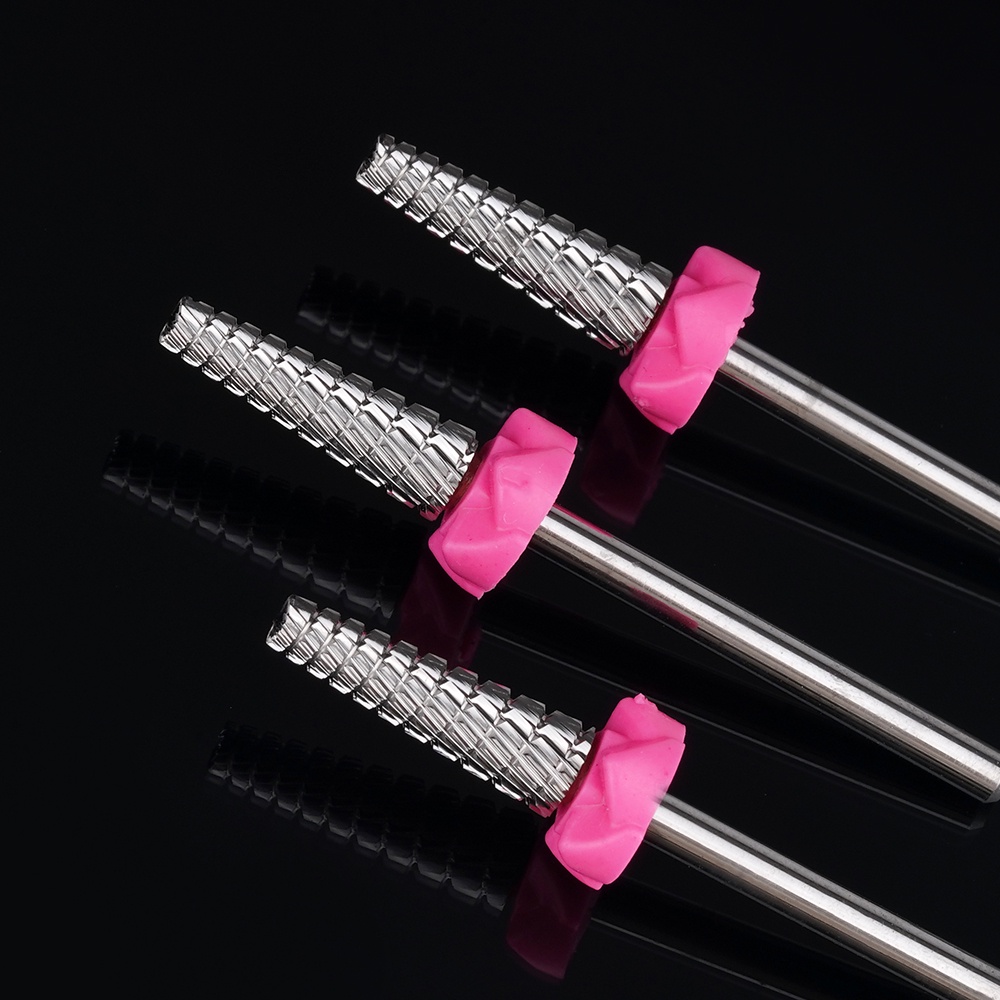
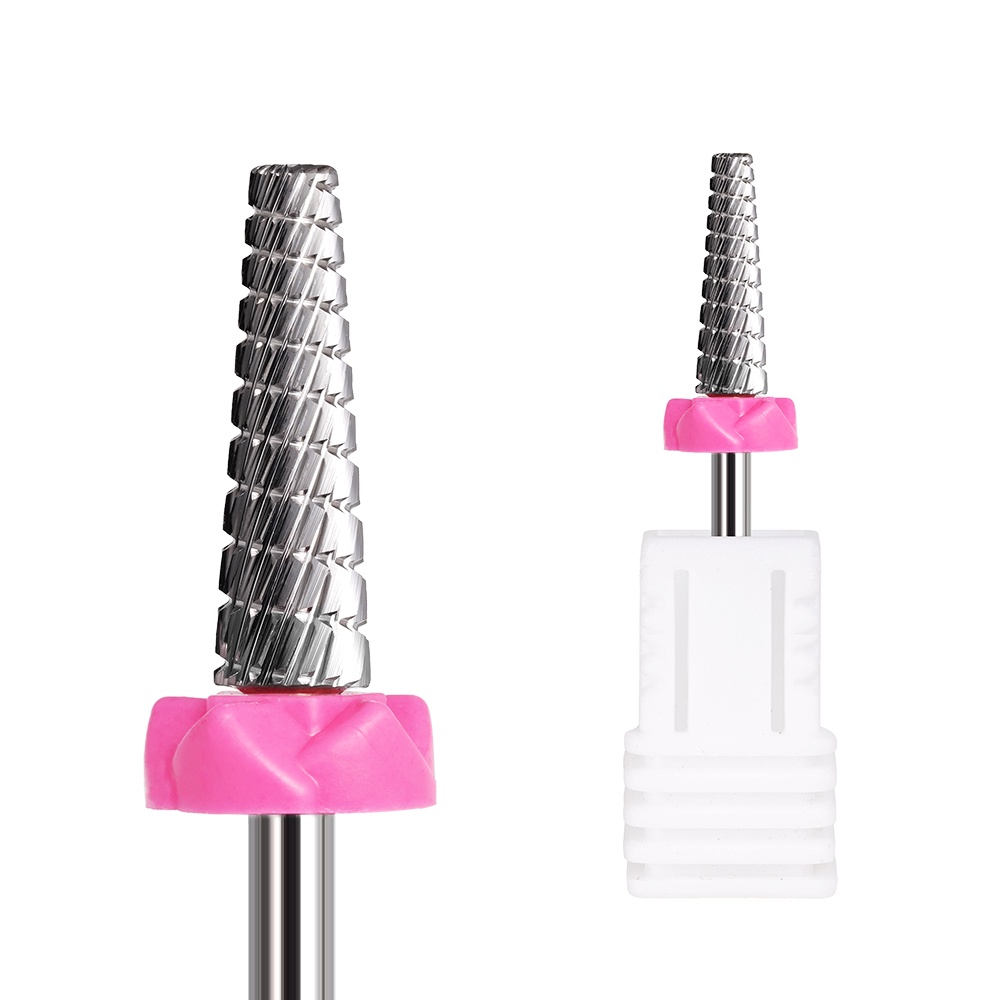
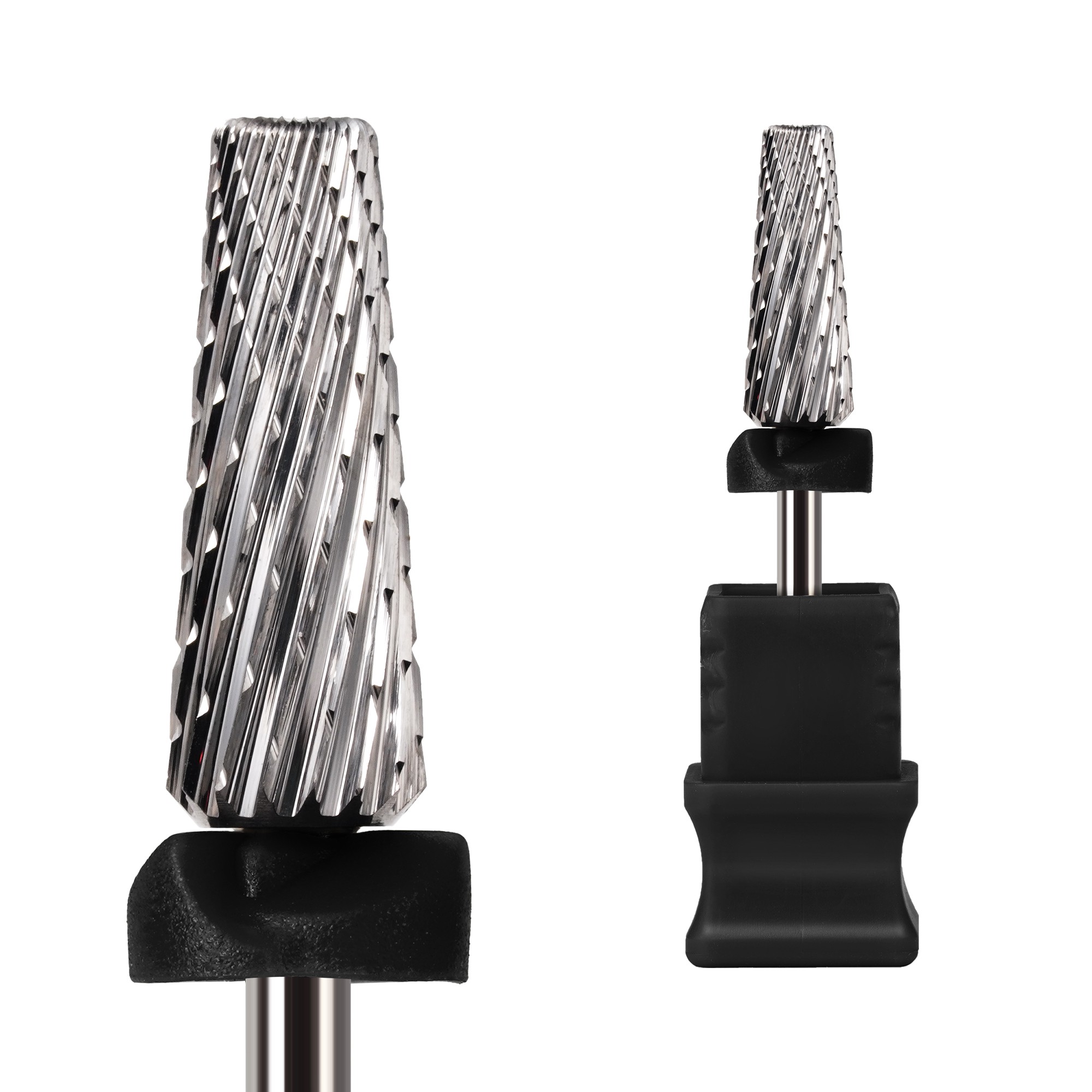
For bulk product removal, many professionals prefer carbide bits because their cutting geometry removes artificial material efficiently with a light touch. For example, Tungsten Carbide Nail Drill Bits for Safe Removal of UV Gel Polish Electric Manicure Tool are designed for tasks such as tackling gel polish, shaping, smoothing, and nail filing. With high-hardness tungsten steel and high-quality alloy construction, a properly selected carbide bit can support a quieter, steadier grinding process when used with the correct e-file settings.
This does not make one material “better” in every situation. It means bit selection should follow the service step. Use a diamond bit where fine abrasion and maneuverability are needed; use a suitable removal bit when the job involves thicker artificial material. Matching the tool to the task reduces heat before it starts.
Check the Bit, Then Check the Handpiece
If several bits suddenly perform poorly in the same machine, the e-file handpiece may be part of the problem. A drill bit that is not fully inserted, a worn chuck, accumulated dust in the collet, or bearing wear can produce wobble. Even a small amount of runout—the side-to-side movement of a rotating bit—creates uneven contact with the nail. That uneven contact feels like vibration, reduces control, and creates localized friction.
Before each service, insert the bit fully according to the handpiece design and make sure the locking mechanism is secured. Never force a shank that does not fit correctly. Most professional nail drill systems use a standard shank size, but compatibility should still be confirmed. A bent shank, damaged bit head, or visibly uneven rotation means the bit should be removed from service.
Listen to the handpiece as well. A change in sound can be useful information. A smooth, stable motor sound is different from rattling, scraping, pulsing, or a high-pitched strain. If the handpiece becomes hot even without heavy filing, stop using it and inspect it according to the equipment supplier’s maintenance instructions.
Technique Around the Cuticle Zone Needs Extra Restraint
Many overheating complaints occur during manicure preparation rather than product removal. The cuticle area is small, curved, and sensitive. It is easy to angle a diamond nail drill bit too sharply or stay in one area while trying to remove a stubborn section of dry skin. The skin may feel heat almost immediately, while the natural nail plate beneath can become over-refined if the operator is not careful.
Keep the working end moving in a gentle, deliberate path. Use the least aggressive grit that can perform the task, and avoid pushing the bit into the skin. The goal is to lift and refine non-living tissue, not to grind aggressively around the nail fold. A light grip on the handpiece also helps: when the hand is tense, pressure often increases without the operator noticing.
For newer technicians, it is useful to practice movement patterns on a training hand before attempting detailed work on clients. Confidence should come from control, not from higher speed or stronger pressure.
Why a Bit May “Stop Working” Before It Actually Wears Out
Not every performance drop means the diamond coating has worn away. Often, the cause is a combination of factors: residue in the abrasive surface, an unsuitable grit, low-quality coating consistency, improper cleaning, or a task that demands a different bit type.
That said, abrasive tools are consumable items. Over time, repeated contact gradually reduces the sharpness and uniformity of the working surface. If a thoroughly cleaned bit still glides without refining, needs repeated pressure, or has visible smooth patches, it may be at the end of its useful service life. Continuing to use it will not save money; it often costs more in service time and creates a less comfortable experience.
Quality control matters here. Consistent raw-material selection, coating quality, shank accuracy, and final inspection all influence whether a bit rotates smoothly and wears in a predictable way. Manufacturers and suppliers serving professional users should pay attention not only to appearance but also to practical factors such as balance, surface consistency, packing protection, and traceable quality processes. For salons purchasing at scale or developing private-label ranges, OEM/ODM capability and a reliable inspection system can be just as important as choosing the right grit.
A Practical Troubleshooting Sequence
When a bit starts overheating or feels ineffective, avoid guessing. Pause and work through a short sequence:
- Stop contact immediately if heat or discomfort is reported.
- Remove dust and residue from the bit, then inspect the abrasive surface.
- Check the fit of the shank in the handpiece and look for wobble.
- Lower pressure and test with light, moving contact.
- Adjust speed moderately rather than making an extreme change.
- Reconsider the task: is this a detailed refinement job or a bulk-removal job?
- Replace the bit if it remains dull, uneven, damaged, or difficult to control after cleaning.
This process takes only a few moments, but it prevents the common cycle of “bit feels slow, apply more pressure, create more heat.” In nail care, a comfortable result is usually produced by better tool matching and gentler technique—not force.
Build a Routine That Keeps Performance Consistent
A small bit-maintenance routine can make daily work feel noticeably more controlled. Separate clean bits from used bits, clean them promptly, dry them thoroughly, and store them so their working surfaces do not knock against each other. Keep different grit levels and bit types organized by purpose. When the right tool is within reach, there is less temptation to make one bit do every job.
For operators, the essential lesson is simple: a diamond nail drill bit should feel responsive, not resistant. If it gets hot, vibrates, drags, or demands pressure, treat that as a signal to pause. Check cleanliness, speed, technique, fit, and bit suitability before continuing. That habit protects the nail plate, improves client comfort, and makes every e-file service more composed and precise.
News List
- Preventing Gouges and Uneven Filing With Small Barrel Nail Drill BitsSep 20, 2026
- How Diameter and Grit Affect Small Barrel Nail Drill Bit PerformanceSep 20, 2026
- Can Hytos Nail Drill Bits Be Used Safely on Natural Nails and Gel Polish?Sep 20, 2026
- How to Verify Fit Between Hytos Nail Drill Bits and an E-File HandpieceSep 20, 2026
- Safe Speed Settings for Umbrella Nail Drill Bits Around the Nail FoldSep 20, 2026
- Umbrella vs Flame Nail Drill Bits: Which Shape Offers Better Cuticle Control?Sep 20, 2026
Best-Selling Products
 Cross Cut Safety Stainless Steel Tungsten Carbide Nail Drill Bits Salon Foot Use XF-C Grit for Removing Nails
 First-rate Quality Tungsten Carbide Nail Drill Bits Best Coating Manicure Remove Gel Nails Accessories
 Professional Advanced Safety Cuticle Bits Two-Way Rotate 3/32'' Carbide Tungsten 5 in 1 Nail Drill Bits
 Wholesale 5 in 1 Electric Manicure Nail Drill Bits Various Coating Cone Cuticle Bit with Rotary Cross Cut for Nail Art
 New Slant Tooth Tungsten Steel Nail Drill Bits Dead Skin Removal 5-in-1 Universal Grinding Nail Polish Head Tool Nail Drill Bits
 4.0mm Small 5 in 1 Integrated Sharpe Tungsten Nail Drill Bit Straight Teeth Gel Polish Removal
 Flame Sharp XF F M C XC Silver Safety Professional Corn Tungsten Carbide Nail Bit for Drill Machine Accessories
 Factory Direct 5 in 1 Tungsten Carbide Nail Drill Bits 6.8MM Cross Cut Safety Manicure 5 in 1 Nail Drill Bits
Please give us a message