
Diamond vs Carbide Nail Drill Bits: Which Option Suits Your Salon?
Diamond vs Carbide Nail Drill Bits: Which Option Suits Your Salon?
Diamond vs Carbide Nail Drill Bits: Which Option Suits Your Salon?
Choosing a nail drill bit is not simply a matter of buying the “strongest” material. In a working salon, the right bit must match the service menu, technician skill level, product systems being removed, cleaning routine, and the level of finish expected before the next step. A diamond nail drill bit and a carbide bit can both be essential tools, but they solve different problems. Confusing their roles usually leads to slow appointments, unnecessary bit wear, rough finishing, or—more seriously—damage to the natural nail.
For technical evaluators, the practical question is not which material is universally better. It is whether the salon needs controlled abrasion, aggressive material removal, or a balanced inventory that lets technicians move safely between both. The answer often depends on what happens at the table every day: cuticle preparation, gel polish removal, acrylic debulking, hard-gel infills, callus work, or detailed finishing around sidewalls.
The Basic Difference Is in How the Surface Cuts
A diamond nail drill bit works through an abrasive surface. Fine industrial diamond particles are bonded to the working area of the bit, creating a textured grinding surface rather than distinct cutting blades. The action is gradual and controlled. This makes diamond bits particularly useful where the technician needs tactile feedback and does not want the tool to remove product too aggressively in one pass.
A carbide bit, generally made from tungsten carbide or described in the market as tungsten steel, has machined flutes or teeth. Instead of grinding material away particle by particle, it cuts and lifts product in small chips. That difference is immediately noticeable when removing acrylic, builder gel, hard gel, or thick overlays. A well-made carbide bit can remove bulk much faster than a diamond bit, but that speed also narrows the margin for poor technique.
This is why material alone is an incomplete specification. Grit, tooth pattern, head shape, flute direction, tip design, rotation direction, and the technician’s hand pressure all affect the outcome. A coarse diamond barrel can still be too abrasive for a delicate service, while a fine carbide bit may be inefficient for thick enhancement removal. The bit must be assessed as a complete cutting system.
Where Diamond Bits Earn Their Place
Diamond bits are usually chosen for precision work near the natural nail and surrounding skin. Flame, ball, needle, cone, and small barrel shapes are common in dry manicure preparation, cuticle lifting, removal of non-living cuticle residue, sidewall cleaning, and surface refinement. Their controlled abrasion is useful when the goal is to clean and smooth rather than rapidly strip away a large volume of enhancement material.
In practical salon use, a fine or medium diamond bit is often the safer starting point for technicians handling natural nails or clients with thin, flexible plates. The bit can still create friction and heat if used incorrectly, of course. “Gentle” does not mean risk-free. Excessive speed, a stationary hand position, or pressure applied at the same point can overheat the nail plate or irritate the skin. The advantage is that diamond surfaces tend to provide more gradual removal, allowing a trained technician to make smaller corrections.
Diamond is also valuable when a salon wants a consistent finishing workflow. After bulk removal with a carbide barrel, a technician may switch to a finer diamond bit for controlled work around the cuticle zone or for refining residual product. This two-stage approach is often more efficient than asking one coarse bit to complete every task.
Limitations to Recognize Before Standardizing on Diamond
A diamond nail drill bit is not the most productive choice for removing thick acrylic or a dense hard-gel overlay across a full salon schedule. It can do the job, but slowly, and the abrasive surface may load with dust and product residue. When technicians compensate by pressing harder, the risk of heat rises and the finish becomes less predictable. In other words, a diamond bit is precise, but it should not be forced into the role of a heavy-removal tool.
Durability also depends heavily on the quality of the abrasive bonding and on cleaning practice. If a low-quality bit sheds abrasive particles early or becomes difficult to clean, it may lose cutting consistency long before the shank appears worn. Procurement teams should evaluate surface coverage, uniformity, corrosion resistance where relevant, and whether the bit remains easy to disinfect according to the salon’s established hygiene procedure.
Why Carbide Bits Dominate Product Removal
Carbide bits are designed for efficiency. Their fluted teeth remove material by cutting it away, making them the usual choice for reducing acrylic length and thickness, taking down bulky builder gel, removing hard gel, shaping enhancement surfaces, and preparing an infill. A suitable barrel bit can shorten the time spent on bulk removal without asking a technician to use excessive pressure.
For a salon processing a high volume of extension maintenance appointments, that difference matters. Product removal is often the slowest part of the service, especially when clients arrive with several layers of material or a heavy apex. A carbide bit allows the technician to work more efficiently, provided the bit’s grit and tooth geometry are appropriate for the material. A very coarse flute pattern may be suitable for rapid reduction but unnecessary for a thin overlay; a finer pattern offers more control during refinement.
The common mistake is to assume that faster removal automatically means better salon economics. If technicians are not trained to leave a thin protective layer above the natural nail during enhancement removal, a carbide bit can turn an efficient step into a corrective service. The goal is normally to remove the enhancement material, not to chase every trace of product with a coarse cutter. Fine detail work belongs to a different bit and a different level of control.
Tooth Direction and Tip Shape Matter More Than Many Buyers Expect
For carbide selection, left-handed and right-handed operation should be addressed early in the specification process. A bit designed for forward rotation will perform differently if used in reverse. Some dual-direction designs are intended to work in either rotation, which can simplify inventory for salons with mixed technician preferences. Still, the supplier should clearly state the intended rotation and cutting behavior rather than relying on product photography alone.
Tip geometry deserves the same attention. A sharp-edged barrel can be effective on broad enhancement surfaces, but it is less forgiving near the cuticle area or sidewalls. A smooth-top or safety-top design reduces the chance of accidental gouging when the technician is working close to sensitive zones. It does not replace correct technique, yet it is a sensible risk-control feature for busy teams and for standardized service protocols.
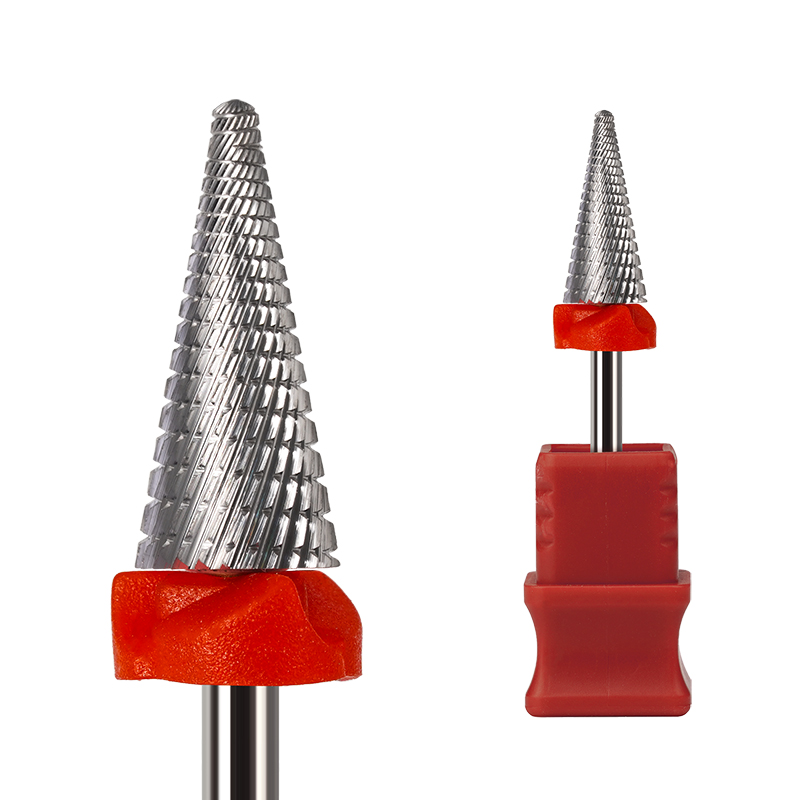
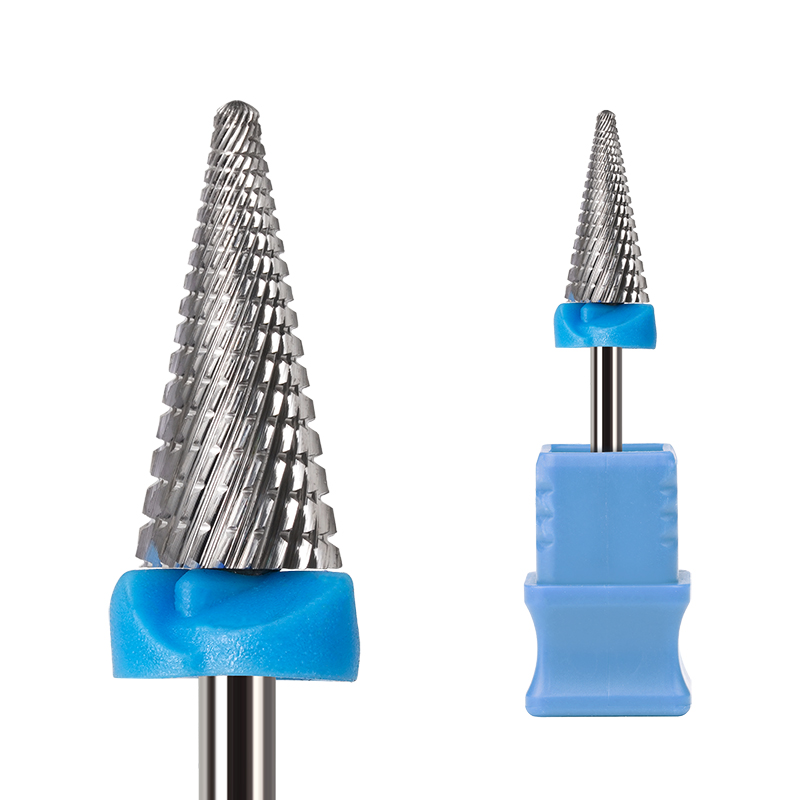
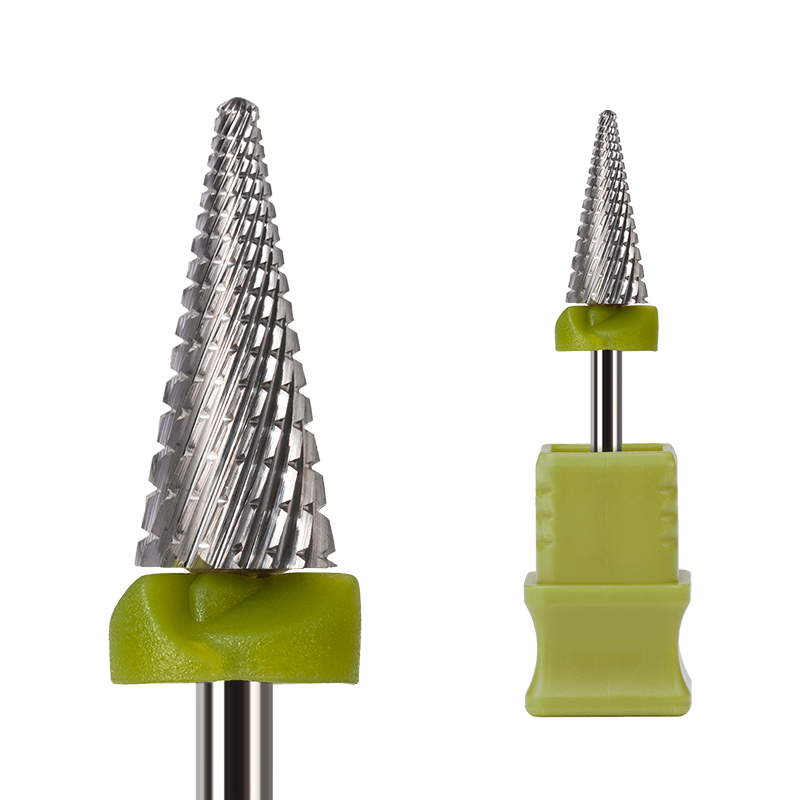
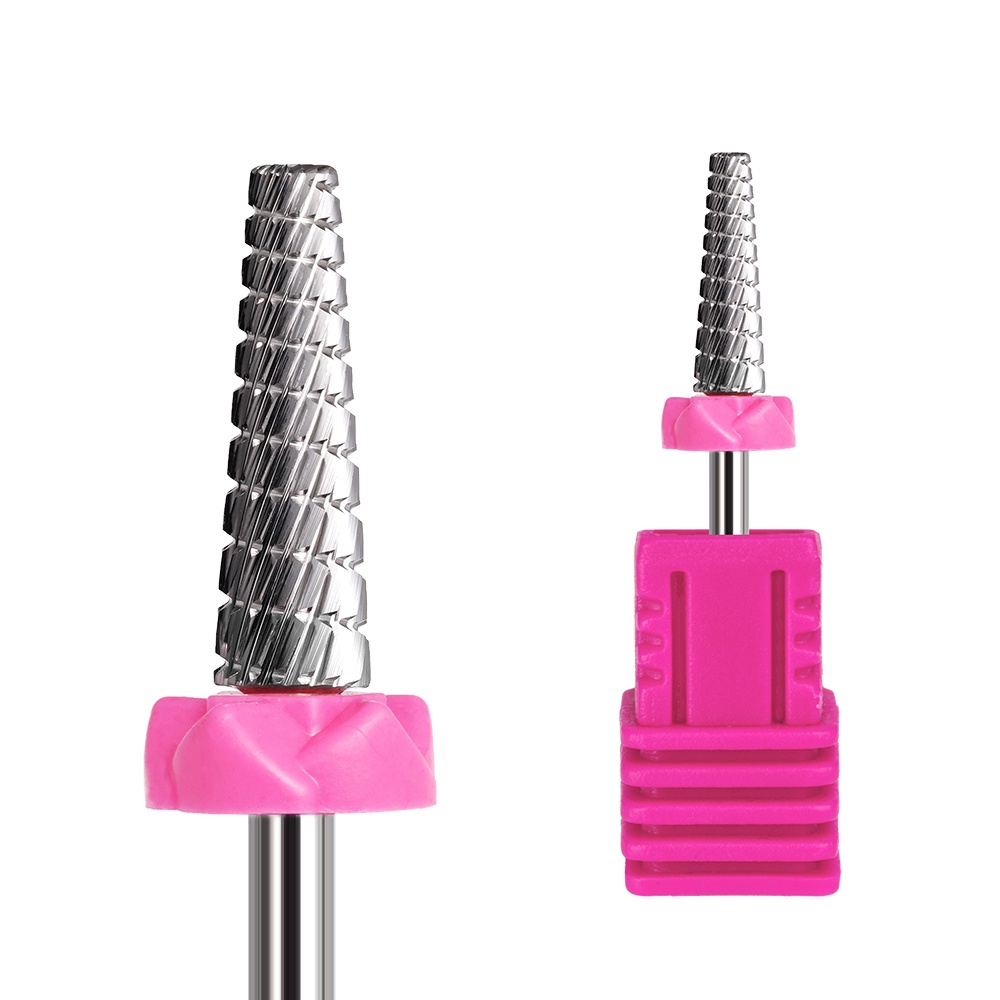
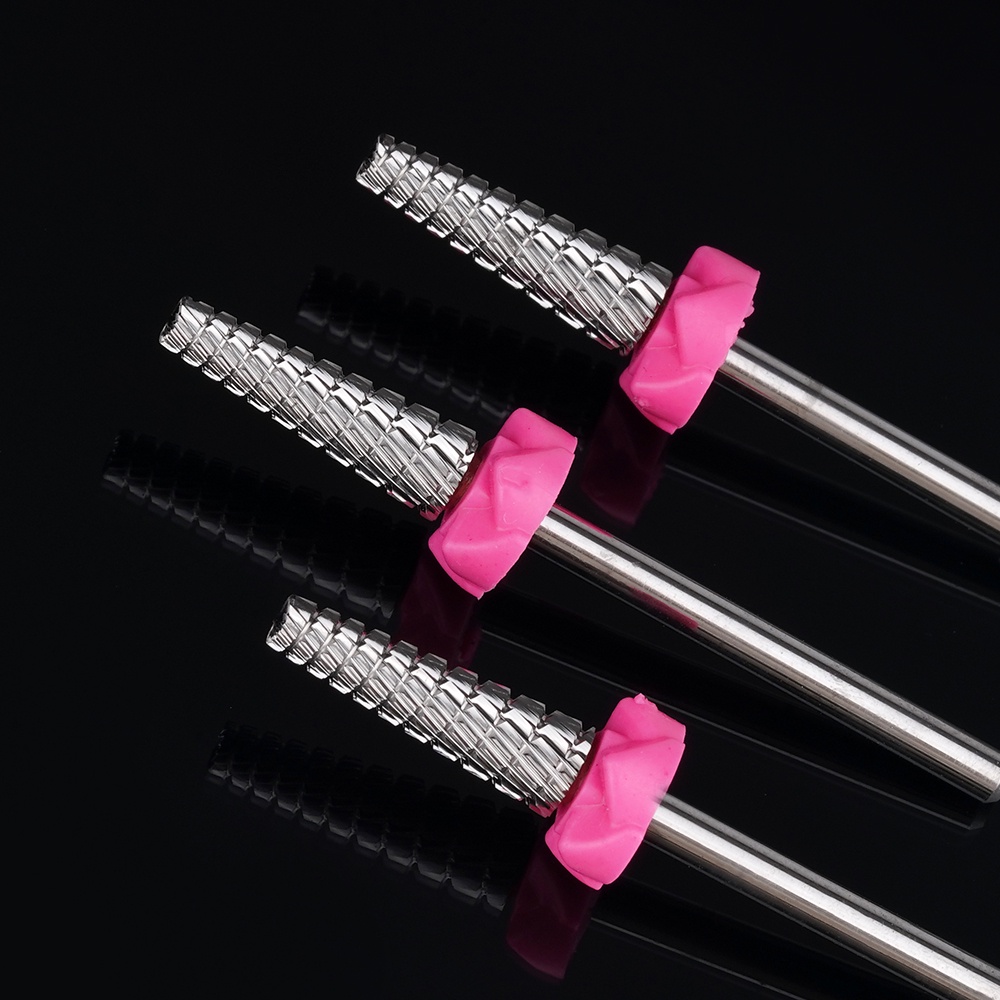
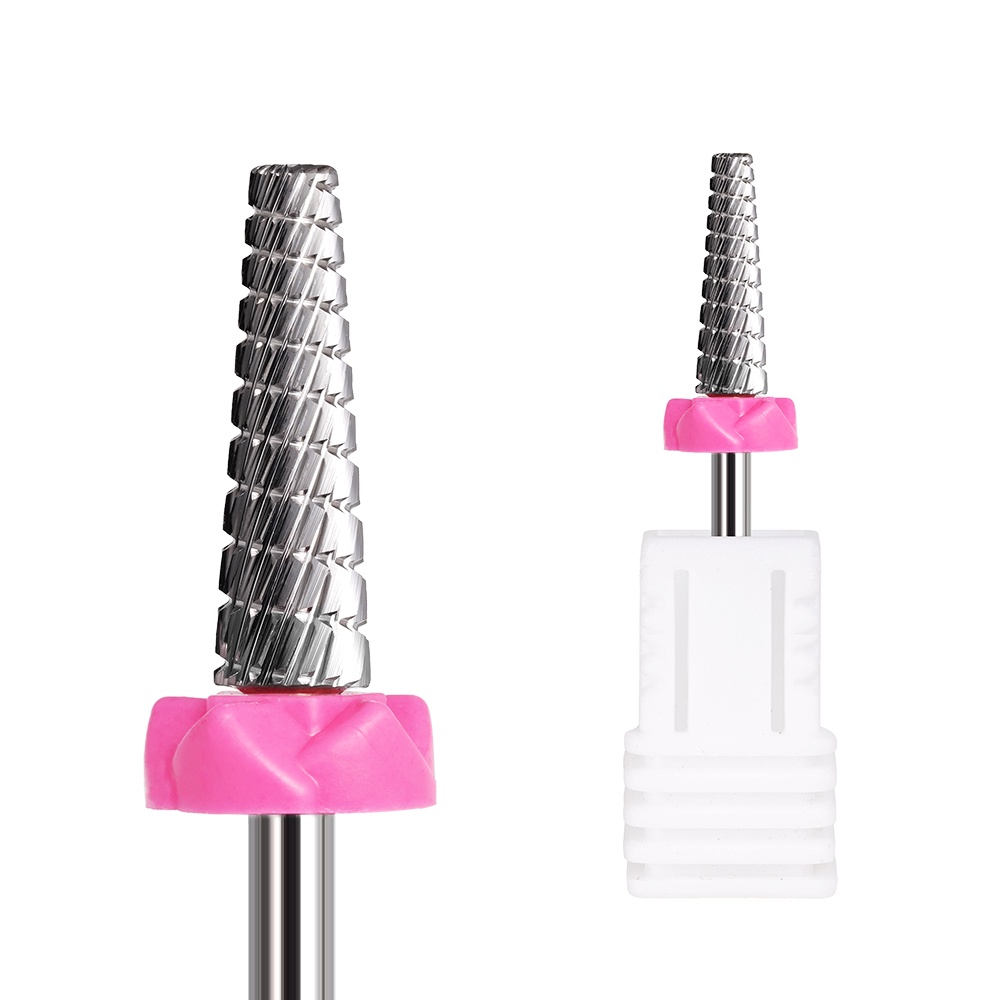
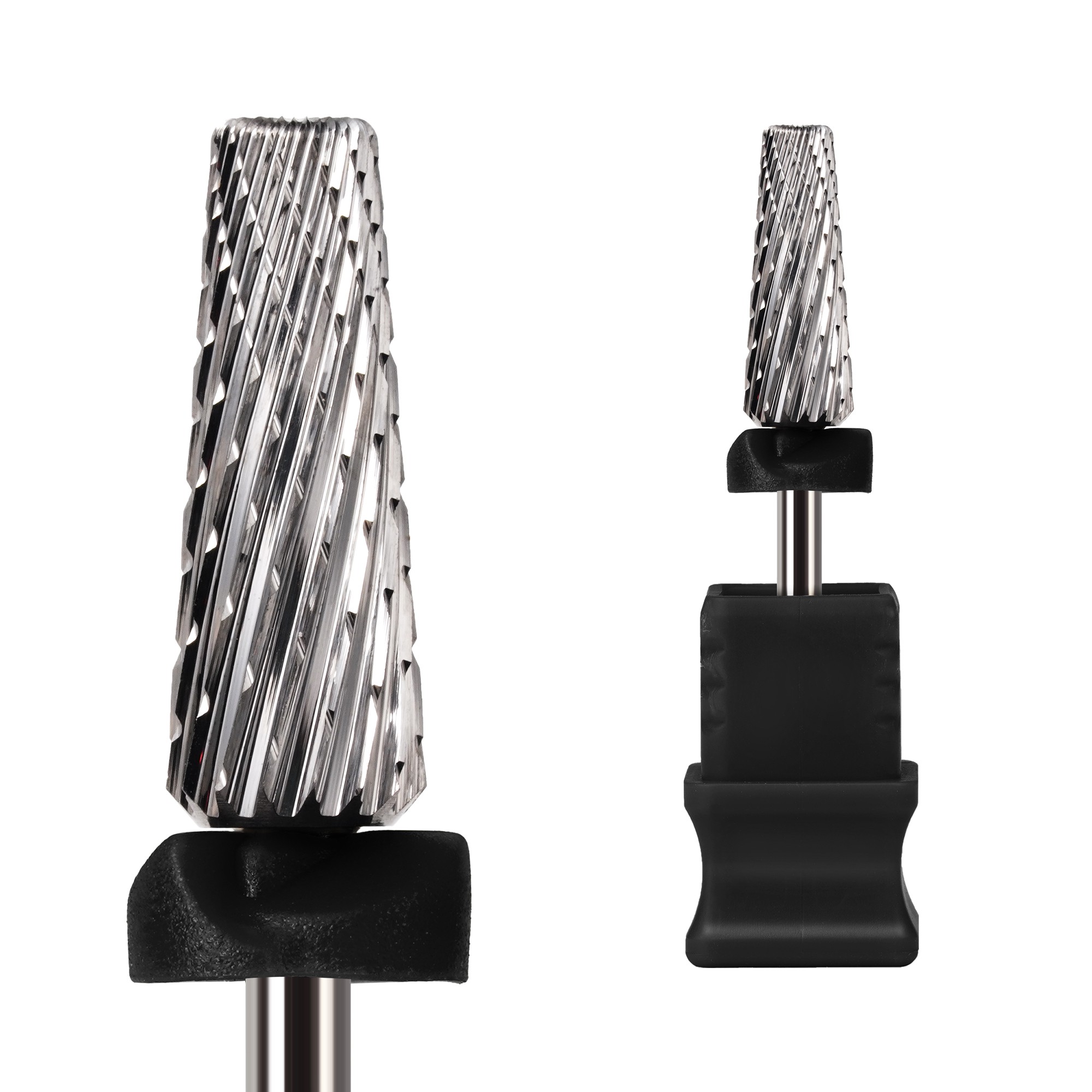
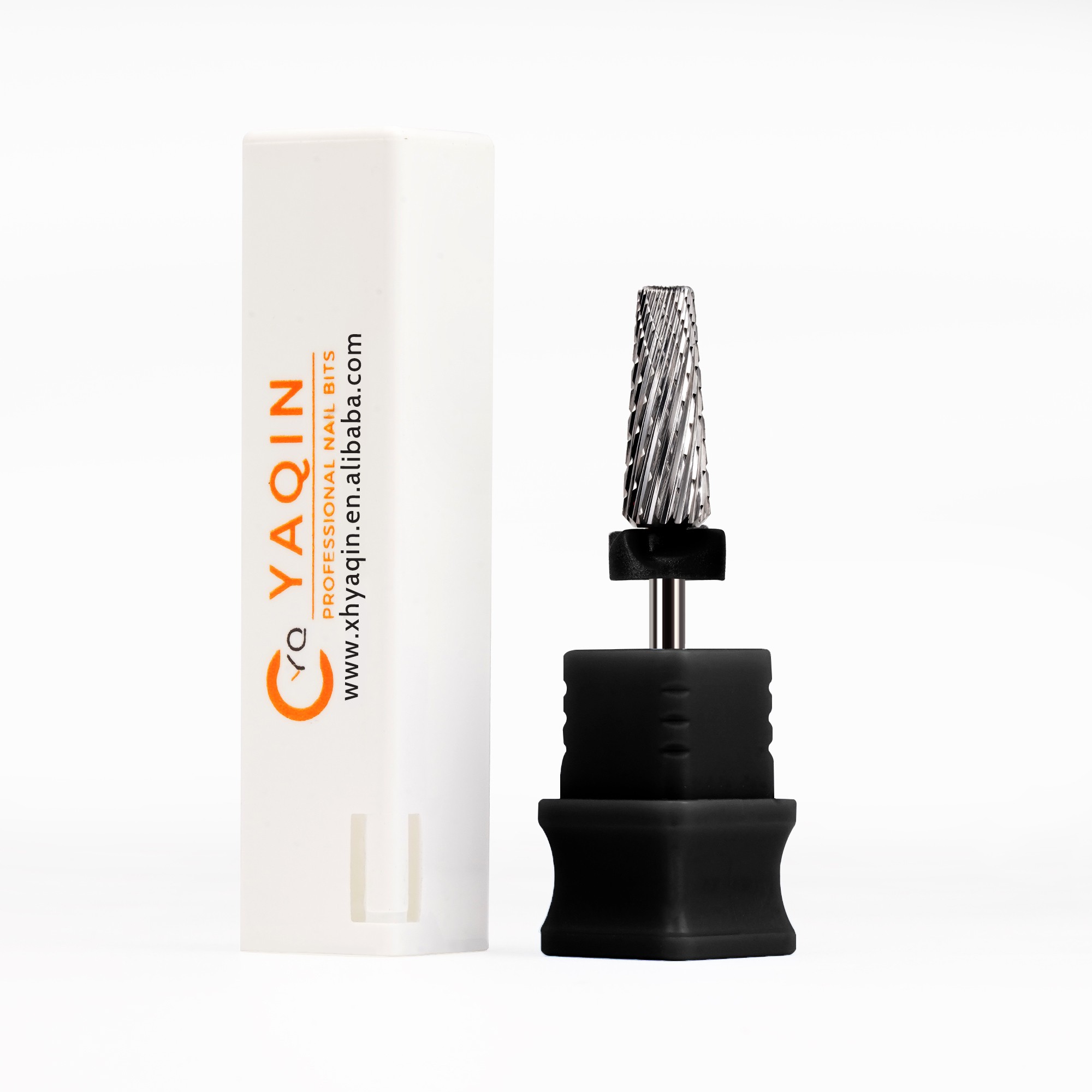
One example is the New Slant Tooth Tungsten Steel Nail Drill Bits Dead Skin Removal 5-in-1 Universal Grinding Nail Polish Head Tool Nail Drill Bits. Its slant-tooth, dual-action concept and smooth flat tip are relevant to salons seeking one carbide-style tool for routine product removal and controlled work around less accessible areas. The stated tungsten steel/tungsten carbide construction is intended for high hardness and daily-use durability, while the tooth design is also positioned to direct dust more consistently. These are useful features to evaluate, but a technical buyer should still confirm the available grit, shank compatibility, rotation behavior, and cleaning guidance against the salon’s actual drill machines and service procedures.
Build a Bit System, Not a Single-Bit Solution
Most professional salons are best served by a small, deliberate system rather than a large mixed assortment. A practical core may include a carbide barrel for bulk acrylic or hard-gel reduction, a finer carbide or sanding option for controlled surface work, and several diamond shapes for cuticle preparation and finishing. The exact mix should reflect the salon’s most frequent services, not the broadest possible product catalogue.
Consider the service mix honestly. A salon focused on gel polish manicures may need more fine diamond options than carbide barrels. A studio specializing in long acrylic extensions will usually benefit from durable carbide bits with several tooth patterns and safety-top variants. A technician working mainly with soft gel may find an aggressive coarse cutter excessive. Selecting too much cutting power is a surprisingly common purchasing error because it looks efficient during a short product demonstration.
Compatibility is another quiet but important issue. The shank diameter must match the handpiece specification, and the bit should run true without noticeable wobble. Vibration affects comfort, control, and bit life. Before placing a larger order, it is sensible to test samples across the drills used in the salon, including older handpieces that may have more wear in the chuck. A bit that performs well in one machine may feel very different in another.
Quality Control Is Part of the Selection Decision
For recurring professional use, purchasing should look beyond initial sharpness. Inspect the shank finish, concentricity, cutting surface consistency, coating or flute quality, packaging protection, and batch traceability where the supplier provides it. The bit must also tolerate the salon’s cleaning and disinfection process. Claims such as waterproof or dust-resistant compatibility should be understood in the context of the supplier’s care instructions; they do not eliminate the need to remove debris thoroughly before disinfection.
Supplier process matters when the salon is purchasing at scale or developing private-label assortments. Wuxi Yaqin Trading Co., Ltd. describes a quality-control system covering raw-material purchasing, production, and packaging, and states that it has passed ISO9001:2000 quality management system certification. With export experience across the USA, Canada, Germany, the UK, Italy, Poland, and other markets, the company also offers production-to-delivery and OEM/ODM support. For evaluators, the useful next step is not to treat those statements as a substitute for validation, but to request the relevant specifications, sample review process, packing details, and documentation needed for the intended market.
A Practical Decision Rule
Choose diamond bits when controlled preparation, cuticle-area detail, natural-nail refinement, and gentle finishing are the priority. Choose carbide bits when the work repeatedly involves acrylic, hard gel, thick base layers, tips, or substantial bulk removal. For most full-service salons, the strongest decision is not diamond versus carbide; it is defining where each belongs in the technician’s sequence.
If a salon has to choose only one material for a limited initial kit, the service menu should decide it. For natural nail and manicure-led services, begin with a carefully selected diamond range. For extension-heavy maintenance work, begin with a safety-oriented carbide barrel and add diamond bits for finishing as soon as possible. In either case, avoid treating the bit as a shortcut around technique. The right tool improves consistency, but only when its shape, grit, rotation, hygiene process, and intended task are all aligned.
News List
- Preventing Gouges and Uneven Filing With Small Barrel Nail Drill BitsSep 20, 2026
- How Diameter and Grit Affect Small Barrel Nail Drill Bit PerformanceSep 20, 2026
- Can Hytos Nail Drill Bits Be Used Safely on Natural Nails and Gel Polish?Sep 20, 2026
- How to Verify Fit Between Hytos Nail Drill Bits and an E-File HandpieceSep 20, 2026
- Safe Speed Settings for Umbrella Nail Drill Bits Around the Nail FoldSep 20, 2026
- Umbrella vs Flame Nail Drill Bits: Which Shape Offers Better Cuticle Control?Sep 20, 2026
Best-Selling Products
 Cross Cut Safety Stainless Steel Tungsten Carbide Nail Drill Bits Salon Foot Use XF-C Grit for Removing Nails
 First-rate Quality Tungsten Carbide Nail Drill Bits Best Coating Manicure Remove Gel Nails Accessories
 Professional Advanced Safety Cuticle Bits Two-Way Rotate 3/32'' Carbide Tungsten 5 in 1 Nail Drill Bits
 Wholesale 5 in 1 Electric Manicure Nail Drill Bits Various Coating Cone Cuticle Bit with Rotary Cross Cut for Nail Art
 New Slant Tooth Tungsten Steel Nail Drill Bits Dead Skin Removal 5-in-1 Universal Grinding Nail Polish Head Tool Nail Drill Bits
 4.0mm Small 5 in 1 Integrated Sharpe Tungsten Nail Drill Bit Straight Teeth Gel Polish Removal
 Flame Sharp XF F M C XC Silver Safety Professional Corn Tungsten Carbide Nail Bit for Drill Machine Accessories
 Factory Direct 5 in 1 Tungsten Carbide Nail Drill Bits 6.8MM Cross Cut Safety Manicure 5 in 1 Nail Drill Bits
Please give us a message