
Why Choose a Ceramic Nail Drill Bit for Nail Shaping in High-Volume Salon Work?
Why Choose a Ceramic Nail Drill Bit for Nail Shaping in High-Volume Salon Work?
Why Choose a Ceramic Nail Drill Bit for Nail Shaping in High-Volume Salon Work?
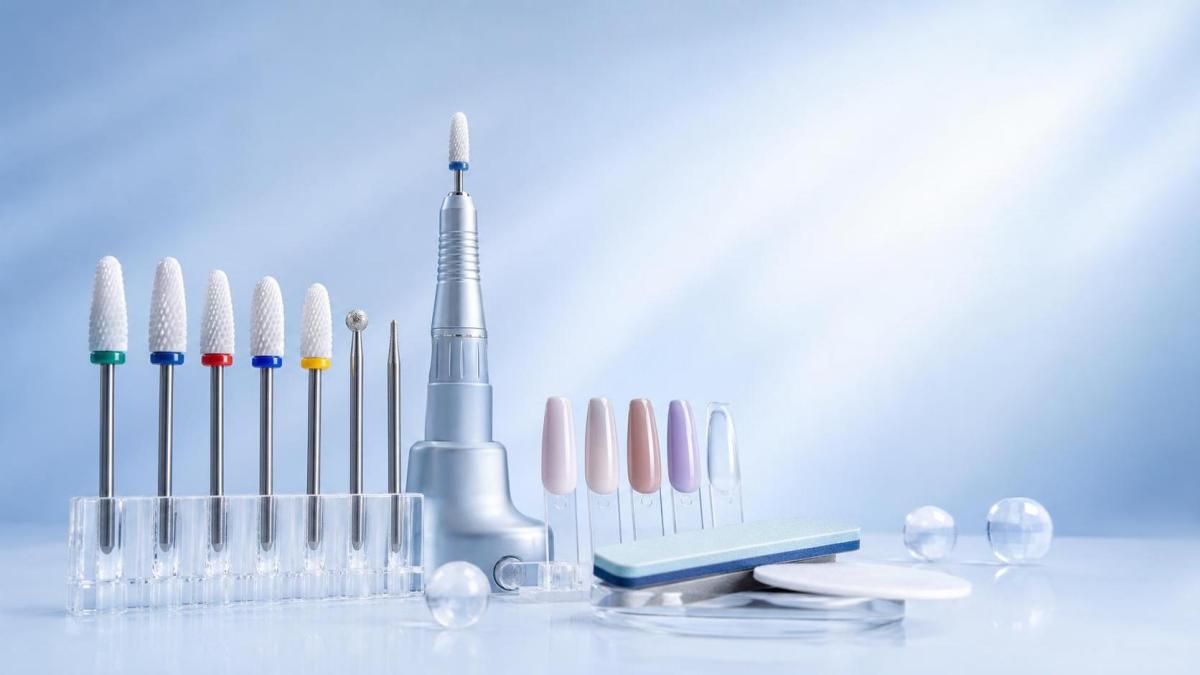
In busy salons where speed, precision, and client comfort matter every day, choosing the right tool can directly affect work quality and efficiency. A ceramic nail drill bit for nail shaping stands out for its smooth performance, lower heat generation, and reliable control during repeated use. For operators handling high-volume appointments, it offers a practical balance of durability, comfort, and consistent shaping results.
If you shape nails all day, the question is usually not whether a bit can remove product once. The real question is whether it still feels stable on the tenth, twentieth, or thirtieth client. That is where tool choice starts to show. A bit that cuts too aggressively, loads up with dust, or runs hot may seem fine in a quick demo, but it becomes a problem fast in high-volume work.
For operators trying to decide whether ceramic is the right fit, this checklist is the practical version. Not theory. The points below are the things worth checking before you standardize bits across a salon station or place a repeat order.
Check how much heat builds up during continuous shaping
This is usually the first reason technicians move toward ceramic. In repeated shaping work, especially when refining overlays or shortening and smoothing enhancement edges, lower heat matters. Clients feel it immediately. So do operators. When a bit stays cooler, you spend less time lifting away to avoid heat spikes, and that helps workflow stay steady.
A ceramic nail drill bit for nail shaping is often preferred because it tends to run smoother and generate less friction heat than some metal options in similar salon settings. That does not mean every ceramic bit is automatically cool-running. Grit, flute design, hand speed, RPM, pressure, and product type all matter. But if your team keeps hearing, “That feels hot,” the bit material is one of the first things to review.
Simple check: after several back-to-back clients, ask whether the bit still feels predictable without needing constant pressure adjustment. If the answer is no, the issue may be the bit, not the technician.
Look at dust behavior, not just cutting speed
Fast removal looks impressive, but in a full salon day, dust handling becomes just as important. A bit that throws debris unpredictably or clogs easily slows down cleaning, affects visibility, and makes stations feel messier than they need to be. For shaping work, control matters more than flashy removal.
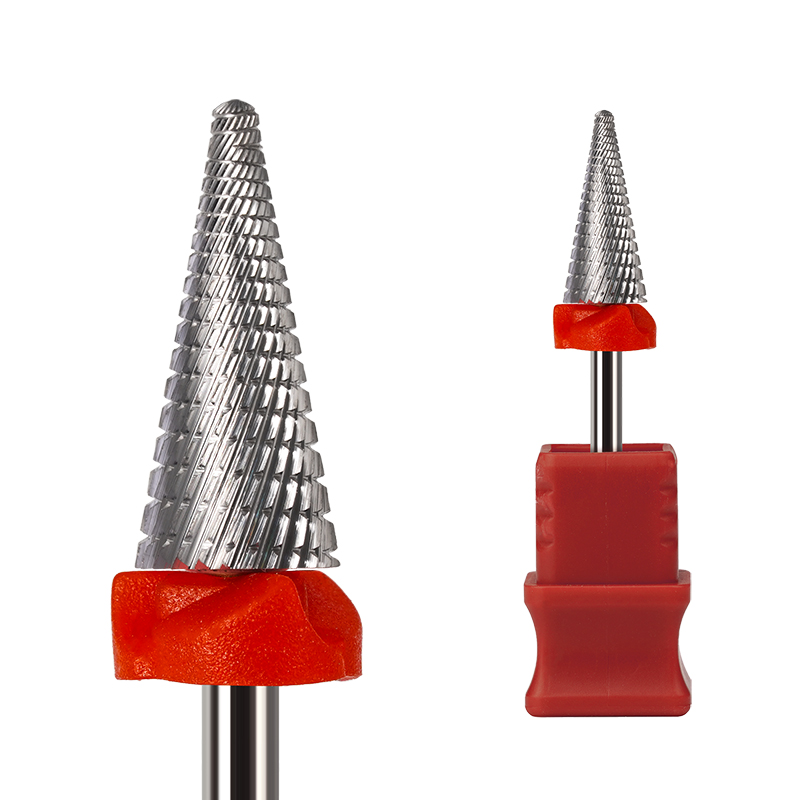
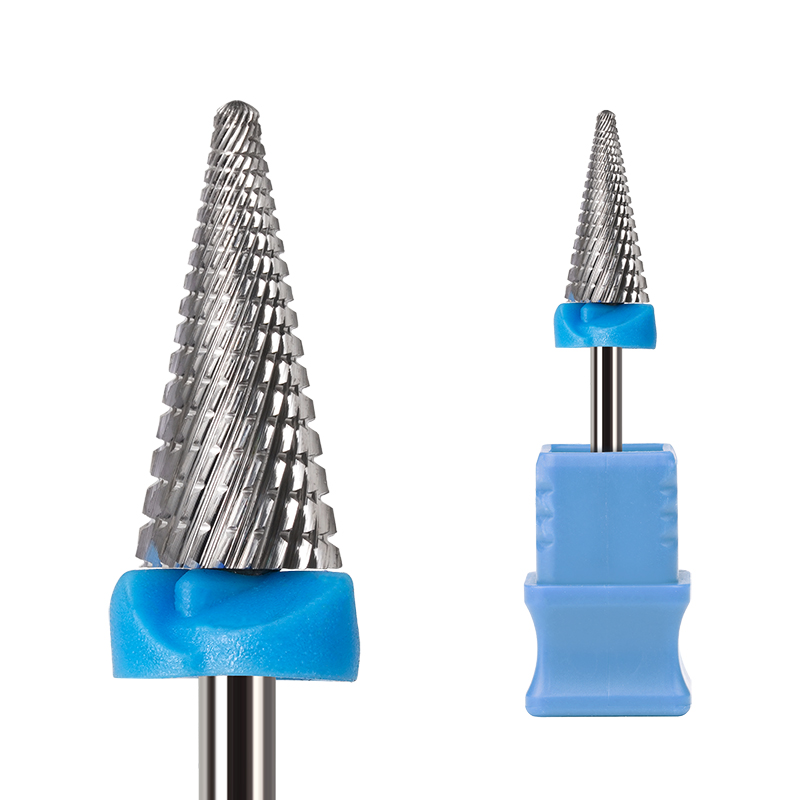
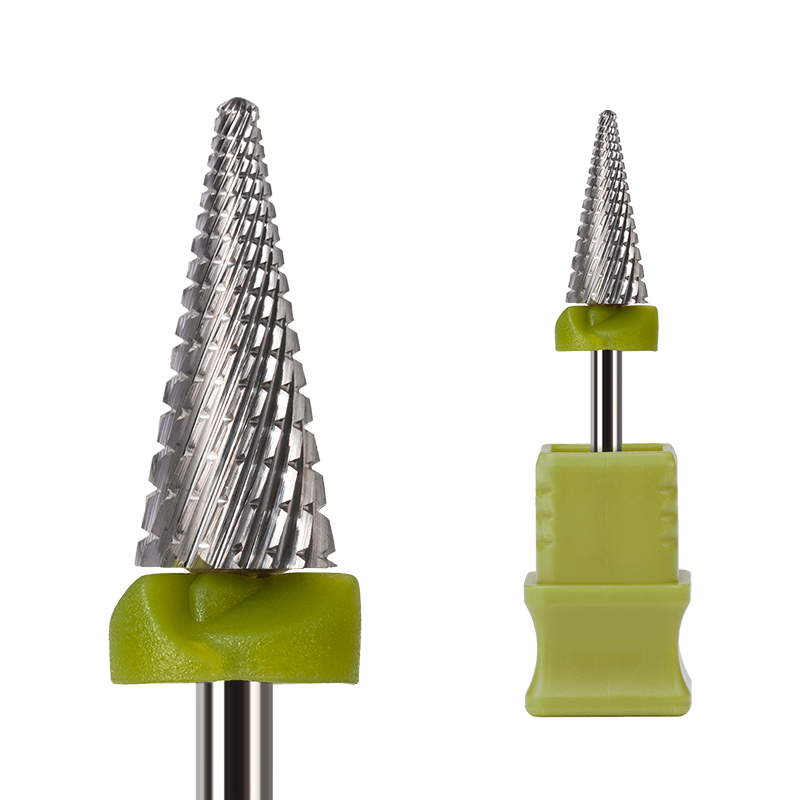
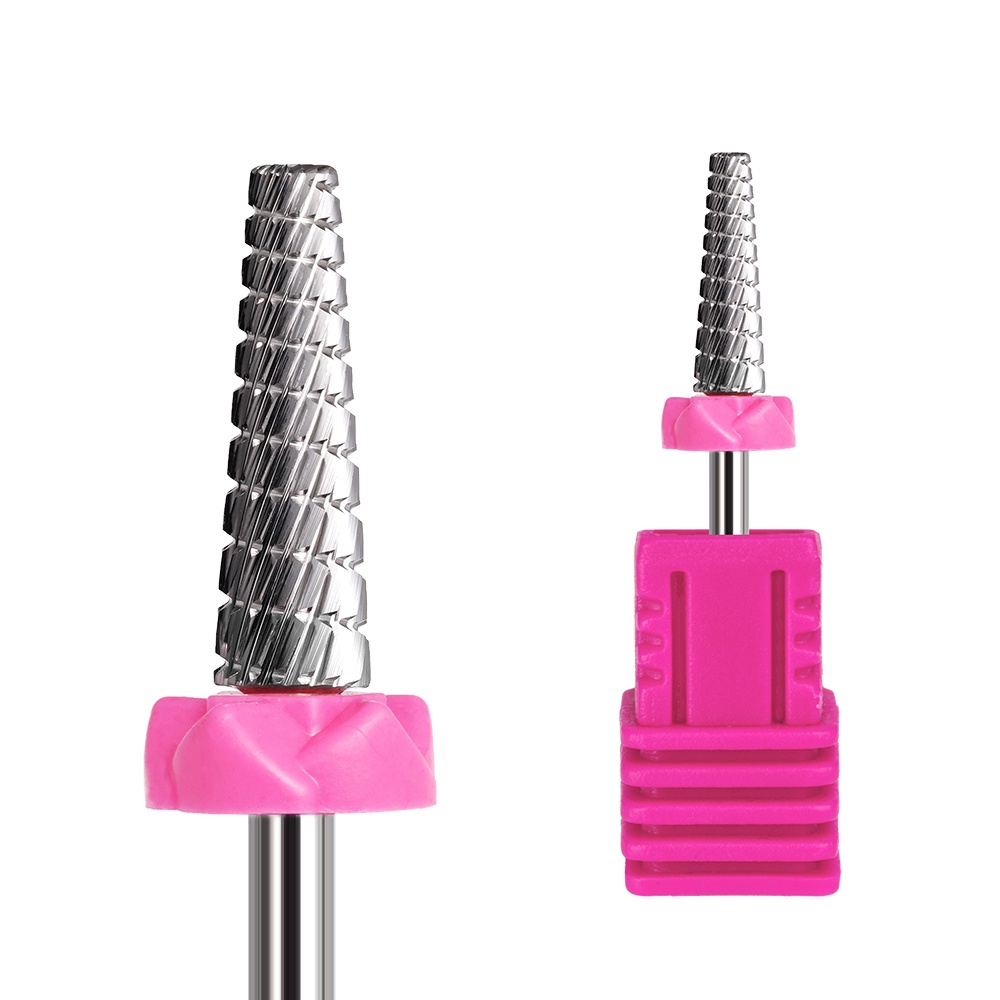
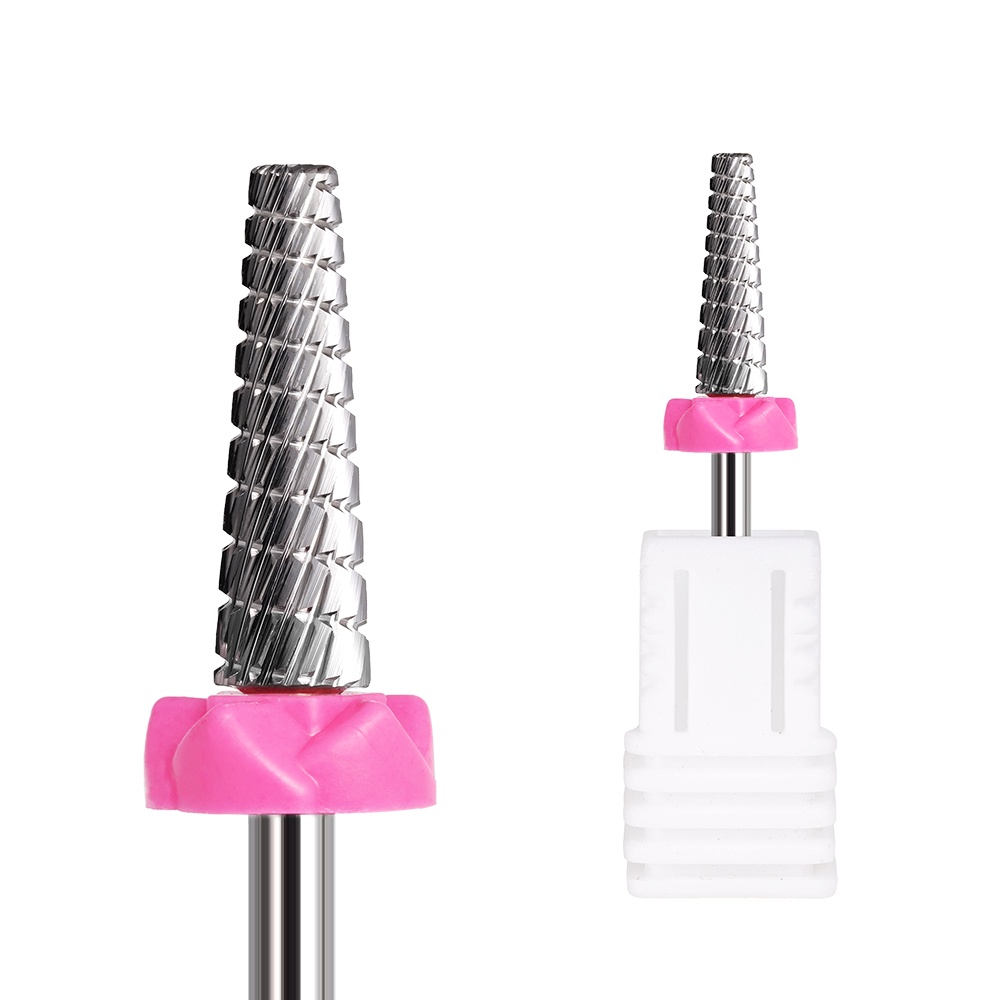
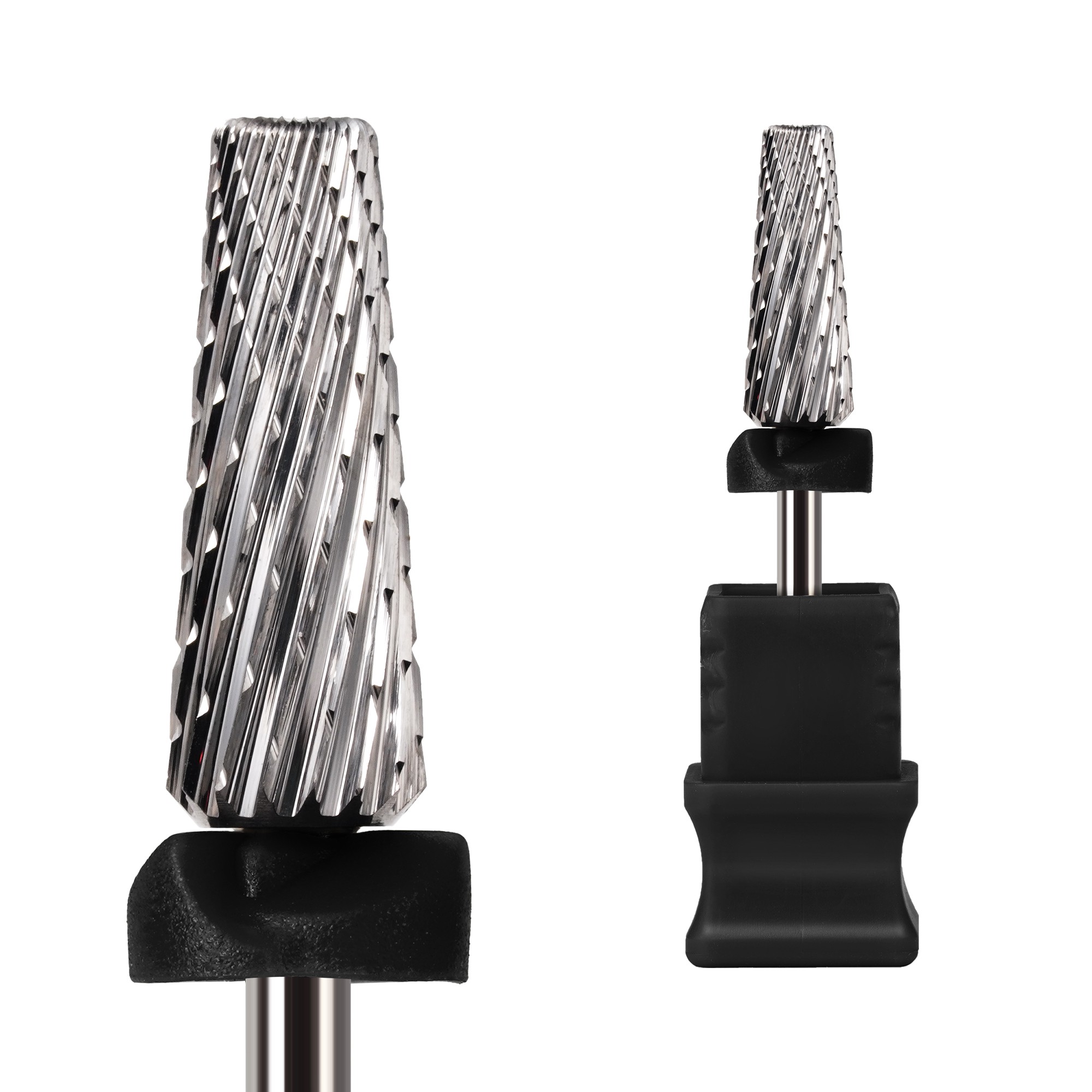
Ceramic bits are often chosen because many technicians find that they cut with a more even feel and leave less dragging on the surface when used correctly. That can help with cleaner refinement passes. Still, the exact dust pattern depends on groove design and machine setup. If you also handle gel removal at the same station, some operators keep a separate carbide option ready for heavier product breakdown, such as Golden Flat Tip Carbide 4XC Nail Drill Bit Gel Remover Skewed Tooth, then switch back to ceramic for shaping and finish control. That kind of pairing is common because shaping and bulk removal do not always demand the same cutting behavior.
Pay attention to the finish quality on the nail surface
In high-volume work, small surface inconsistencies create extra steps. If a bit leaves deep tracks, chatter marks, or uneven pressure points, the operator has to correct them later. That correction time adds up across a day.
A good ceramic nail drill bit for nail shaping should allow controlled refining without a jumpy feel. You want clean sidewall work, smooth apex balancing, and a surface that does not demand too much follow-up buffing. This matters even more when different technicians share similar service menus. Standardized finish quality is easier to maintain when the bit response is consistent and forgiving.
A quick station-level test helps: use the same bit model across natural nail prep for enhancements, gel contour refinement, and shortening tasks. If the bit performs well only in one narrow use and becomes rough in the others, it may not be the best choice for volume service.
Do not ignore client comfort on repeat appointments
Clients may not know bit materials, but they absolutely notice vibration, heat, pulling, and scraping. In a busy salon, repeat business often depends on comfort as much as visual results. A tool that helps the operator stay gentle while moving efficiently has real value.
Ceramic is often chosen for this reason. Many technicians describe the contact feel as smoother, especially during shaping and refinement rather than aggressive debulking. That said, comfort is not only a material issue. Poor bearing stability in the handpiece, worn collets, incorrect RPM, or a damaged shank can cancel out the benefit of a good bit. If a salon upgrades bits without checking machine condition, the result may be disappointing.
- If clients mention heat, test pressure and RPM before blaming the material alone.
- If the bit skips on the surface, inspect handpiece grip and shank fit.
- If shaping feels slow, confirm grit choice. A bit that is too fine often wastes time in salon traffic.
Match the bit to the real service mix
This is where many purchasing decisions go off track. A salon says it needs shaping bits, but the daily workload may actually include hard gel removal, base reduction, sidewall cleaning, cuticle-area refinement, and callus work in the same room. One bit will not be best at everything.
Ceramic works well when shaping control and reduced heat are priorities. But if your station also spends a lot of time removing dense product layers, a carbide bit may still belong in the tray. That does not weaken the case for ceramic. It simply means operators should choose by task, not by trend.
Check durability in a realistic cleaning routine
A bit can look good in fresh condition and still fail your workflow if it does not hold up to normal salon cleaning and disinfection procedures. The exact reprocessing method should always follow local regulatory requirements, machine guidance, and your salon protocol. If those are not clearly documented, that process needs review first.
What operators should check is simpler: after repeated use and cleaning, does the bit keep a stable cutting feel, or does performance drop quickly? Does it show visible chipping, roughening, imbalance, or drag? In a high-volume environment, replacing bits too often can erase any savings from a lower purchase price.
This is also where supplier discipline matters. Wuxi Yaqin Trading Co., Ltd. states that its abrasive products are supported by a complete QC system covering raw material purchasing, production process, and packing, and that the company has passed ISO9001:2000 quality management system certification. That does not replace your own incoming inspection, but it is relevant when you are choosing a long-term source for salon consumables and rotary tools.
Make sure the bit is easy for different technicians to control
One of the less discussed reasons to choose ceramic is training consistency. In many salons, not every operator has the same hand speed, pressure habits, or confidence level. A bit that feels too sharp or too unforgiving can produce uneven results across the team. A smoother, more predictable bit often helps standardize shaping quality.
If you supervise multiple stations, ask a practical question: can a mid-level technician use this bit for three services in a row without over-filing, heat complaints, or excessive cleanup? If yes, that bit is doing useful work. If only your strongest technician can make it behave well, it may not scale in a high-volume setting.
Review bit geometry, not just material name
“Ceramic” by itself is not enough information. Shape, barrel size, tip design, flute depth, and grit all change the result. Operators sometimes buy a ceramic bit expecting a universal solution, then find it either too mild or too bulky for the services they perform most.
For nail shaping, a bit should let you work the surface and structure without feeling blind near edges. If the barrel is too wide for your common nail lengths or sidewall angles, precision drops. If the tip profile feels risky near the natural nail, technicians will slow down. That is another reason many stations keep specialized removal bits in reserve. For example, when heavy product has to come off efficiently before refinement, some operators rotate in Golden Flat Tip Carbide 4XC Nail Drill Bit Gel Remover Skewed Tooth because its flat tip and skewed tooth design are intended for controlled removal tasks, then switch back to a ceramic shaping bit for finish work.
Watch for the common mistakes that make a good bit seem bad
A few problems come up again and again:
- Using too much pressure and assuming slow cutting means poor quality.
- Using one bit for every service type, including tasks it was not selected for.
- Ignoring machine runout or a worn handpiece.
- Choosing based on online appearance rather than how the bit behaves across repeated appointments.
- Skipping a trial period with multiple technicians.
If you are evaluating bits for salon-wide use, do not test with one technician for one afternoon and call it done. Run the trial through real service volume, mixed skill levels, and normal cleaning cycles. That gives you a far better read on whether ceramic is actually solving the shaping problem.
What usually makes ceramic the better shaping choice
In high-volume salon work, a ceramic nail drill bit for nail shaping is usually worth choosing when the station needs steady control, lower heat, client comfort, and repeatable finish quality. It is especially useful when shaping is a frequent task rather than an occasional one. The benefit shows up over a full day: fewer heat complaints, less hesitation during refinement, and more predictable results from technician to technician.
That said, the best setup is often a working combination. Ceramic for shaping and surface refinement. Carbide for heavier removal when needed. Operators who think in tasks instead of single-tool solutions usually build faster, cleaner stations.
If you are making the call for a busy salon, judge the bit by what happens after hours of use, not the first few passes. Check heat, finish, dust behavior, team control, and cleaning durability. When those boxes are covered, ceramic stops being a trend choice and becomes a practical one.
News List
- Preventing Gouges and Uneven Filing With Small Barrel Nail Drill BitsSep 20, 2026
- How Diameter and Grit Affect Small Barrel Nail Drill Bit PerformanceSep 20, 2026
- Can Hytos Nail Drill Bits Be Used Safely on Natural Nails and Gel Polish?Sep 20, 2026
- How to Verify Fit Between Hytos Nail Drill Bits and an E-File HandpieceSep 20, 2026
- Safe Speed Settings for Umbrella Nail Drill Bits Around the Nail FoldSep 20, 2026
- Umbrella vs Flame Nail Drill Bits: Which Shape Offers Better Cuticle Control?Sep 20, 2026
Best-Selling Products
 Cross Cut Safety Stainless Steel Tungsten Carbide Nail Drill Bits Salon Foot Use XF-C Grit for Removing Nails
 First-rate Quality Tungsten Carbide Nail Drill Bits Best Coating Manicure Remove Gel Nails Accessories
 Professional Advanced Safety Cuticle Bits Two-Way Rotate 3/32'' Carbide Tungsten 5 in 1 Nail Drill Bits
 Wholesale 5 in 1 Electric Manicure Nail Drill Bits Various Coating Cone Cuticle Bit with Rotary Cross Cut for Nail Art
 New Slant Tooth Tungsten Steel Nail Drill Bits Dead Skin Removal 5-in-1 Universal Grinding Nail Polish Head Tool Nail Drill Bits
 4.0mm Small 5 in 1 Integrated Sharpe Tungsten Nail Drill Bit Straight Teeth Gel Polish Removal
 Flame Sharp XF F M C XC Silver Safety Professional Corn Tungsten Carbide Nail Bit for Drill Machine Accessories
 Factory Direct 5 in 1 Tungsten Carbide Nail Drill Bits 6.8MM Cross Cut Safety Manicure 5 in 1 Nail Drill Bits
Please give us a message