
When umbrella nail drill bits are better for refining acrylic nails
When umbrella nail drill bits are better for refining acrylic nails
Acrylic refinishing is rarely about removing as much product as possible. More often, it is about making a controlled series of small corrections: softening a bulky apex, blending a grown-out area, refining sidewalls, and restoring a clean transition near the cuticle. In these moments, umbrella nail drill bits can be a more suitable choice than a wide, flat barrel bit.
Their rounded, tapered profile gives the operator a forgiving working edge. Instead of placing a broad cutting surface against a curved enhancement, the bit follows the contours of the nail with more precision. For technicians who want to reduce hand-filing time without sacrificing a natural-looking finish, this shape can make a noticeable difference.
That does not mean an umbrella bit replaces every other carbide or ceramic bit in the kit. It has a specific role. Knowing where that role begins—and where it ends—helps prevent over-filing, uneven thickness, heat discomfort, and unnecessary stress on the natural nail.
Why the “umbrella” shape suits acrylic refinement
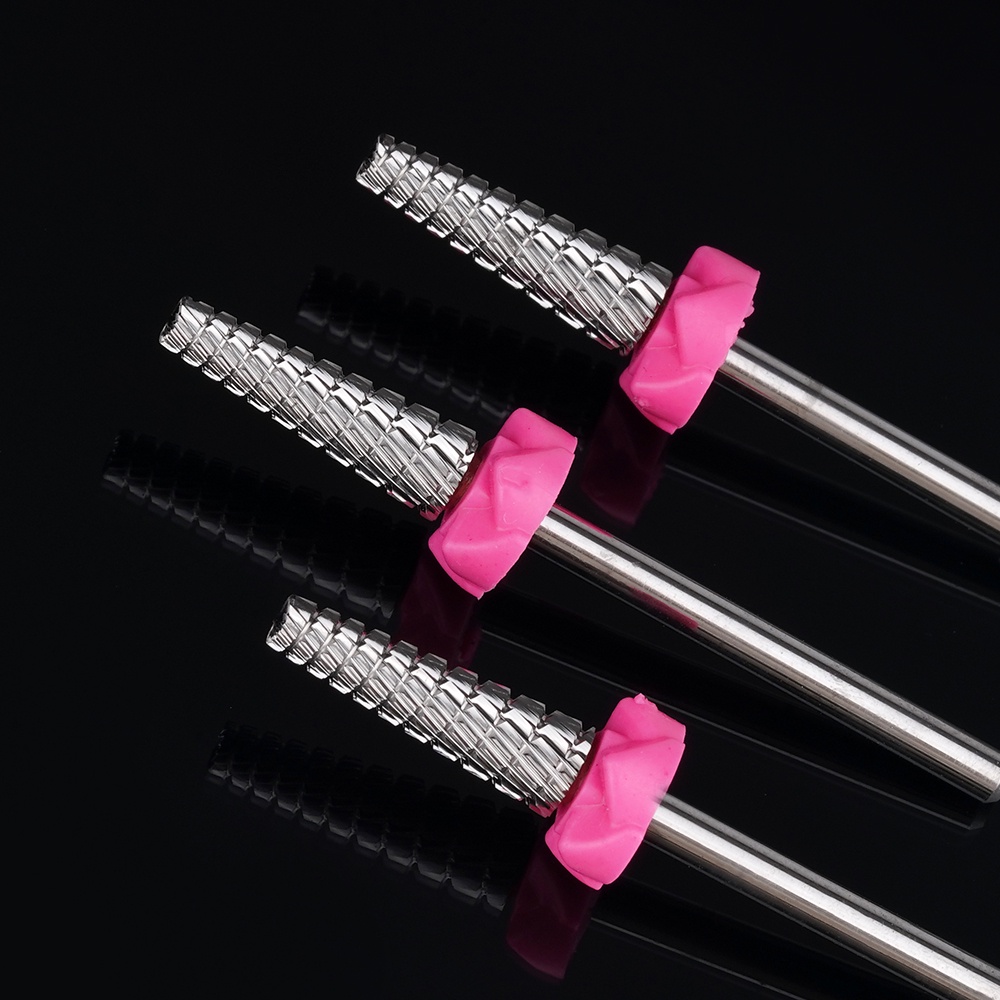
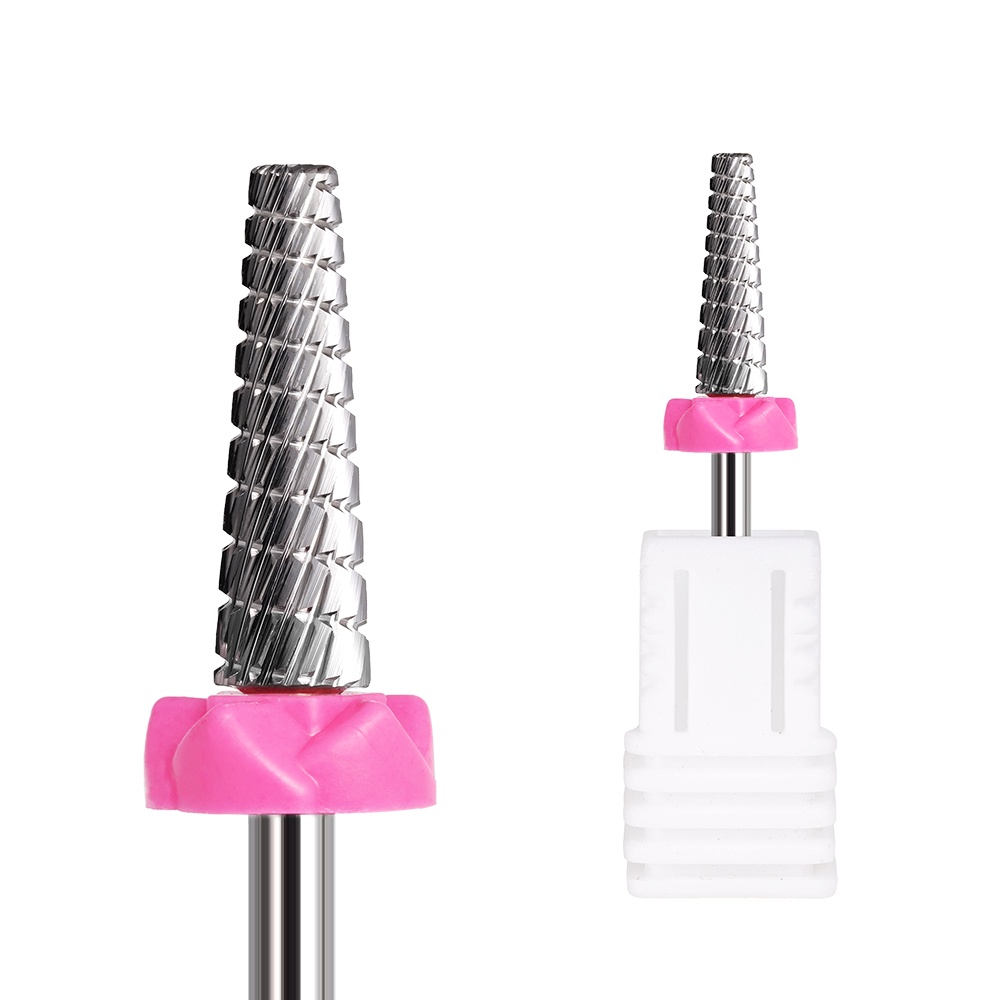
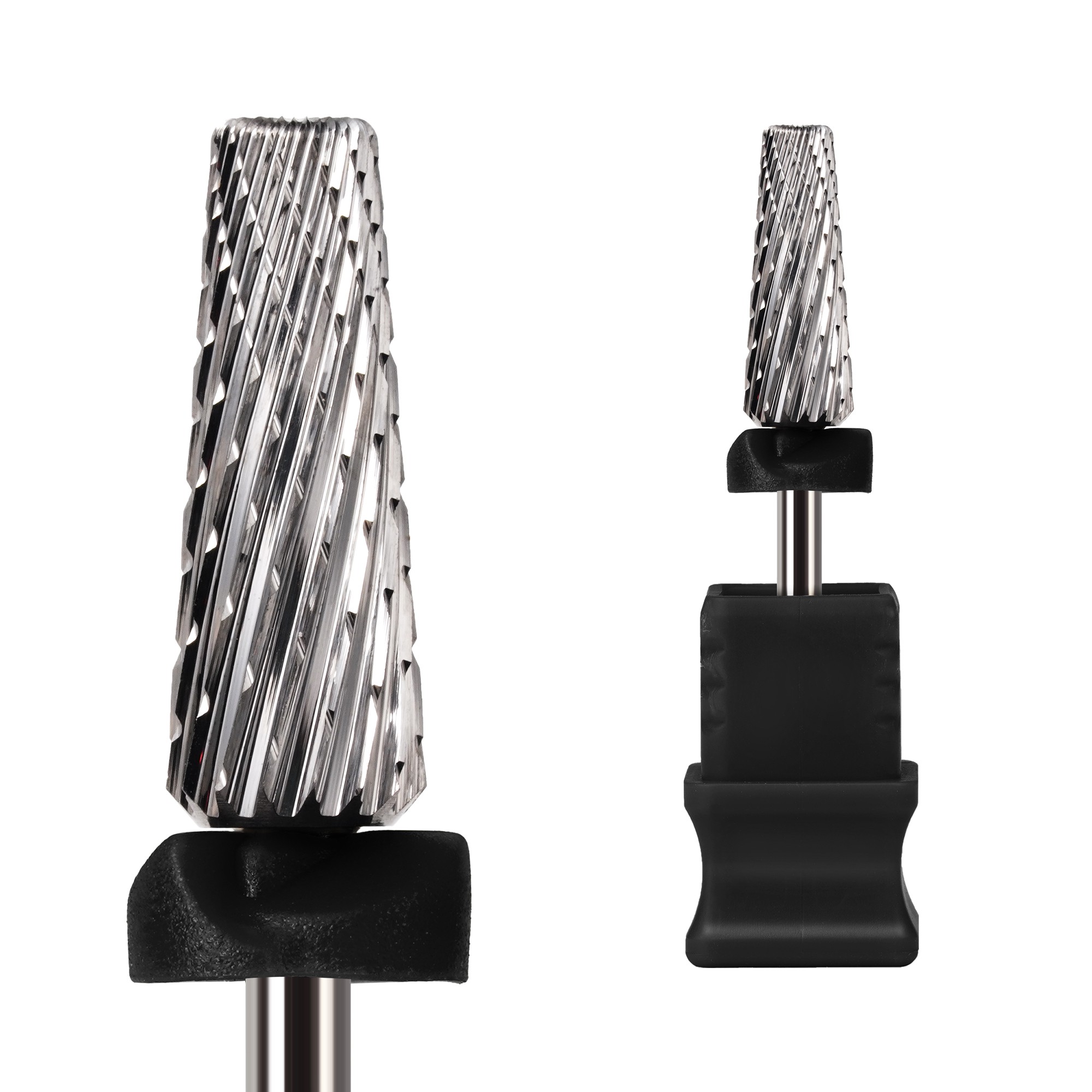
Umbrella nail drill bits are recognized by a rounded top that gradually widens into a curved working area. Depending on the manufacturer and grit, the profile may look like a small dome, a softened cone, or a short umbrella. What matters in daily use is that there are no sharp, aggressive corners meeting the nail surface.
Acrylic enhancements are not flat panels. The surface curves from sidewall to apex, then slopes toward the cuticle. A traditional barrel bit can remove material quickly across broad areas, but its straight sides may feel less adaptable when the operator works around curved zones. If held at an inconsistent angle, it can create flat spots or leave visible ledges.
An umbrella profile makes it easier to refine those transitions. The rounded edge allows the technician to skim rather than dig. This is especially valuable when a set is structurally sound but visually heavy, when only selected areas need reducing, or when the goal is to preserve as much product as possible during a fill.
The situations where umbrella nail drill bits are usually the better option
1. Blending product near the cuticle during a rebalance
As an acrylic enhancement grows out, a step can develop between the natural nail and the existing product. This area needs careful blending before fresh acrylic is applied. A sharp-edged bit may remove the old product efficiently, but it can also make a nervous operator reluctant to work close enough to the cuticle line.
With a fine or medium umbrella bit, the rounded top offers more confidence for controlled surface blending. It should still be kept off the skin and used with light pressure, but its shape supports a gentler approach to the upper third of the nail. The aim is not to thin the nail plate. It is to feather the existing acrylic so the new application sits smoothly.
2. Refining a bulky apex without flattening the nail
A strong apex is essential, but an apex that is too tall or too far forward can make the enhancement look heavy. This is common after a client has worn a set for several weeks, especially when the nail has grown and the balance point has shifted.
Umbrella nail drill bits are useful here because they can reduce volume gradually across a curved area. Rather than pressing down in one spot, use long, floating passes from the central surface outward. The bit’s contour encourages a softer blend into the surrounding acrylic, helping preserve the intended architecture instead of turning the nail into a flat plane.
For a technician, this often feels less like “filing down a bump” and more like reshaping a smooth slope. That distinction matters. Acrylic nails should look refined from the front, side, and client’s-eye view—not merely feel smooth when touched.
3. Softening sidewall transitions on almond, oval, and tapered shapes
Narrower shapes can quickly lose their balance when product builds up around the sidewalls. A wide barrel bit may be too large for precise work near these edges, particularly on petite nail beds or slim almond designs. The technician may then compensate by switching repeatedly between an e-file and a hand file.
An appropriately sized umbrella bit can make that transition more fluid. Its curved profile reaches close to the sidewall without forcing a flat cutting edge into a tight space. It is helpful for removing excess thickness and blending the acrylic into the side profile, provided the bit is moved continuously and the side skin is protected.
4. Smoothing after bulk reduction with a more aggressive bit
There is a practical reason many experienced operators keep more than one bit shape on the table. One bit removes bulk; another improves the surface; a third may be reserved for detail work. The umbrella bit belongs most naturally in the middle-to-late stage of that sequence.
For example, a carbide barrel bit may be used to reduce substantial length, remove a thick gel overlay, or take down excess acrylic on the main surface. Once the enhancement is close to the desired thickness, an umbrella bit can refine the cuticle zone, apex transition, and sidewalls with more control.
For bulk gel removal before detailed acrylic refinement, a round-top carbide option such as the 5.35mm Round Top Barrel Gold Carbide Nail Drill Bit Set Hard Gel Removal can be considered as part of a multi-bit workflow. Available in coarse, medium, and fine grit options, this type of rounded-top barrel is designed for broad but controlled removal. It is not the same profile as a dedicated umbrella bit, yet its softened top can be useful when moving from surface reduction into safer work around curved nail areas.
When an umbrella bit is not the best answer
Choosing a gentler shape does not automatically make it the most efficient tool for every job. An umbrella bit is generally not the first choice when there is a large amount of old product to remove. Trying to strip a very thick acrylic set with a fine umbrella bit can waste time, generate friction, and wear the bit prematurely.
It may also be too delicate for major shortening or for rapidly breaking down dense product at the free edge. In these cases, select a suitable coarse or medium carbide bit for controlled bulk removal, then switch to the umbrella shape when the nail has reached a manageable thickness.
Another limitation is intricate under-nail cleaning. The umbrella head is intended for surface refinement; it is not designed to replace a slim safety bit or a specialized bit for working beneath the free edge. Matching the bit to the task is safer than forcing one shape to do everything.
Grit selection changes the result more than many operators expect
The same umbrella shape can behave very differently in coarse, medium, and fine grit. The correct choice depends on the amount of product present, the condition of the enhancement, the technician’s control, and the exact stage of the service.
- Coarse grit: Best reserved for reducing thicker acrylic in experienced hands. It can be effective, but it demands a light touch and continuous movement. It is generally not the preferred option for close cuticle blending.
- Medium grit: A versatile choice for rebalancing, surface refining, and correcting moderate bulk. Many operators find medium grit practical for routine fills when the product is neither extremely thick nor heavily damaged.
- Fine grit: Well suited to final smoothing, gentle transition work, and refinement near sensitive areas. It removes less material per pass, which can be an advantage when precision matters more than speed.
Beginners often assume a coarser bit will make every service easier. In practice, it can make errors happen faster. A finer bit may require more patience, but it provides more time to observe the changing surface and stop before the acrylic becomes too thin.
A practical refinement sequence for acrylic fills
A consistent sequence helps the operator avoid jumping randomly between areas. Before turning on the e-file, inspect the enhancement from the side. Locate the old apex, look for lifting, and identify whether the sidewalls have become heavy. A visual check takes only a moment, yet it determines where material should be removed and where it should be preserved.
- Shorten and reduce only if needed. If the free edge is overly long or thick, use an appropriate bit or hand file to bring it closer to the intended shape. Do not begin detailed cuticle work while the rest of the nail remains excessively bulky.
- Remove surface bulk across the central zone. Use controlled passes with a bit appropriate for the product volume. Keep the bit moving, avoiding pressure in one area.
- Switch to the umbrella bit for transition work. Refine the upper third near the cuticle, soften the apex, and blend the sidewalls. Work in light strokes rather than attempting to complete the area in a single pass.
- Pause and reassess from multiple angles. Dust can hide unevenness. Brush the nail clean and look at the profile before making further reductions.
- Finish with hand filing or a buffer where necessary. E-file refinement should reduce manual work, not eliminate thoughtful finishing. A hand file remains valuable for sharpening the shape and checking symmetry.
This sequence can be adapted to salon speed, but it should never become rushed. The safest technicians are often the ones who are willing to stop for two seconds and assess the surface instead of continuing out of habit.
Speed, pressure, and movement: the three variables behind comfort
Even the right bit can perform poorly if the operating technique is wrong. Client discomfort is often caused not by the bit shape alone, but by excessive pressure, a stationary contact point, or an unsuitable RPM range.
For acrylic surface refinement, begin at a controlled speed appropriate to the bit manufacturer’s guidance and your own level of experience. Do not treat speed recommendations as a substitute for technique. A lower speed with heavy pressure can still create heat; a faster speed with a feather-light, moving touch may feel more controlled in skilled hands.
Keep the bit nearly parallel to the acrylic surface rather than aiming the top directly downward. Use smooth passes, lifting off at the end of each stroke. If the client reports heat, stop immediately, dust away the debris, and reassess pressure and speed. Heat is feedback, not something to work through.
The e-file should be held securely but without tension in the hand. A stiff grip often leads to abrupt movements, while a relaxed, supported grip makes it easier to maintain consistent contact. For left and right sidewalls, adjust the handpiece angle instead of twisting the client’s finger into an uncomfortable position.
Common mistakes that make refined acrylic look over-filed
One frequent mistake is thinning the cuticle area so much that it becomes weak before the next appointment. The product should blend seamlessly, but it still needs enough substance to support the enhancement. A smooth transition does not mean filing until the acrylic disappears.
Another issue is focusing only on the top view. A nail can look symmetrical from above but reveal a flat apex or uneven side profile from the side. Check the nail at eye level periodically, especially after using umbrella nail drill bits around the central structure.
Operators also sometimes use the rounded edge as if it were completely risk-free. Rounded does not mean harmless. The natural nail, lateral folds, and cuticle area still require care. Never use a bit on broken skin, inflamed tissue, or a nail with signs of infection. When lifting is present, address it properly rather than sealing loose product under a new layer.
Building a better bit setup for daily services
A thoughtful e-file setup does not need to be excessive. It needs to reflect the actual services being performed. A technician who routinely handles hard gel removal may need a durable carbide bit for the first stage, while someone specializing in acrylic rebalances may rely more heavily on medium and fine refinement shapes.
Rounded-top barrel bits, safety bits, umbrella bits, and detail bits each solve a different handling problem. The goal is not to collect every available shape. It is to create a progression that lets the operator move from bulk removal to detailed finishing without using one tool beyond its intended purpose.
For hard gel removal, carbide bits made from tungsten steel or tungsten carbide are commonly selected for their durability and defined cutting performance. Products designed for this category may recommend roughly 15,000–20,000 RPM for hard gel, while soft gel and base gel are often handled in lower recommended ranges of 10,000–15,000 RPM. These figures should always be treated as product-specific guidance, with technique and client comfort remaining the final control points.
Reliable tool quality also affects the service experience. Consistent cutting surfaces, corrosion resistance, proper cleaning, and careful storage all help a bit behave predictably over time. For salons, distributors, and private-label buyers, this is why a dependable supply partner matters as much as the initial bit selection. Wuxi Yaqin Trading Co., Ltd. supports abrasive product production and export with quality-control processes covering raw materials, production, and packaging, alongside OEM/ODM experience for businesses that need a more tailored bit assortment.
The real advantage is controlled correction
Umbrella nail drill bits are better for refining acrylic nails when the work calls for subtle shaping rather than aggressive removal. They shine around the cuticle transition, across a bulky apex, and along curved sidewalls where a blunt or sharply edged tool may feel harder to control.
Use them after bulk reduction, choose the grit according to the amount of product and your experience level, and keep every pass light and deliberate. When used with an understanding of acrylic structure, the umbrella profile supports what clients notice most at the end of the appointment: nails that look balanced, feel smooth, and grow out more gracefully.
News List
- Preventing Gouges and Uneven Filing With Small Barrel Nail Drill BitsSep 20, 2026
- How Diameter and Grit Affect Small Barrel Nail Drill Bit PerformanceSep 20, 2026
- Can Hytos Nail Drill Bits Be Used Safely on Natural Nails and Gel Polish?Sep 20, 2026
- How to Verify Fit Between Hytos Nail Drill Bits and an E-File HandpieceSep 20, 2026
- Safe Speed Settings for Umbrella Nail Drill Bits Around the Nail FoldSep 20, 2026
- Umbrella vs Flame Nail Drill Bits: Which Shape Offers Better Cuticle Control?Sep 20, 2026
Best-Selling Products
 Cross Cut Safety Stainless Steel Tungsten Carbide Nail Drill Bits Salon Foot Use XF-C Grit for Removing Nails
 First-rate Quality Tungsten Carbide Nail Drill Bits Best Coating Manicure Remove Gel Nails Accessories
 Professional Advanced Safety Cuticle Bits Two-Way Rotate 3/32'' Carbide Tungsten 5 in 1 Nail Drill Bits
 Wholesale 5 in 1 Electric Manicure Nail Drill Bits Various Coating Cone Cuticle Bit with Rotary Cross Cut for Nail Art
 New Slant Tooth Tungsten Steel Nail Drill Bits Dead Skin Removal 5-in-1 Universal Grinding Nail Polish Head Tool Nail Drill Bits
 4.0mm Small 5 in 1 Integrated Sharpe Tungsten Nail Drill Bit Straight Teeth Gel Polish Removal
 Flame Sharp XF F M C XC Silver Safety Professional Corn Tungsten Carbide Nail Bit for Drill Machine Accessories
 Factory Direct 5 in 1 Tungsten Carbide Nail Drill Bits 6.8MM Cross Cut Safety Manicure 5 in 1 Nail Drill Bits
Please give us a message