
What to verify before sourcing Hytos nail drill bits in bulk
What to verify before sourcing Hytos nail drill bits in bulk
Before committing to a bulk order of hytos nail drill bits, buyers need more than an attractive unit price and a catalogue image. Nail bits are small consumables, but they directly affect service speed, technician comfort, client safety, machine wear, and the reputation of a salon-supply brand. A shipment with inconsistent cutting performance or poorly finished shanks can turn a low purchase price into returns, complaints, and unnecessary replacement costs.
The practical sourcing question is not simply whether a bit can remove gel or shape an enhancement. It is whether every production lot will perform in a predictable way under professional use. That requires procurement teams to verify the product itself, the factory controls behind it, and the commercial details that determine the true landed cost.
Start by defining the application, not the bit name
Names used in the nail-drill market are not always standardized. A description such as “ceramic barrel,” “safety carbide,” or “cross-cut bit” may indicate a broad product family rather than one identical geometry. When sourcing hytos nail drill bits, ask the supplier to identify the intended task for each SKU: bulk removal of gel product, refining acrylic, cleaning under the free edge, cuticle-area work, smoothing, pedicure treatment, or polishing.
This matters because an aggressive bit selected for fast product removal is not automatically appropriate around natural nails or sensitive skin. Likewise, a foot-care assortment may need a different balance of cutting efficiency, heat control, and safety-edge design than a set intended primarily for nail-art studios. The buyer should turn the selling description into a usable specification sheet before comparing quotations.
For each item, confirm the head shape, cutting pattern, grit or cut designation, working length, head diameter, shank diameter, shank length, coating if any, and recommended use. If the supplier cannot provide stable drawings, dimensional tolerances, or clearly labelled samples, a large order carries avoidable risk.
Verify material claims and the construction behind them
Material language is often simplified in product listings. “Carbide,” “stainless steel,” and “alloy” are useful starting points, but they should not end the technical discussion. For a tungsten-carbide nail bit, buyers should establish which component is carbide, how the cutting head is produced, and what material is used for the shank or body. This helps prevent confusion between a carbide cutting tool and a lower-cost item merely described with carbide-related terminology.
High hardness is valuable only when it is matched with sound manufacturing. A brittle cutting head, poor joining, uneven fluting, or inadequate finishing may fail long before its nominal material advantage is realized. Ask for samples from the intended production route, not just a display sample. Inspect cutting edges under magnification where possible, check for burrs, and run the bits in the e-file models used by the target market.
For coated or coloured items, clarify whether colour is decorative, functional, or both. Customizable colours can support private-label ranges, but the coating process should not obscure cutting edges, alter fit, or flake during normal cleaning and use. A colour sample is not enough; request confirmation of the base specification beneath it.
Grit labels are useful, but sample performance decides the order
Coarse, medium, fine, extra-fine, and similar labels help technicians select tools, yet they can be interpreted differently from one supplier to another. For bulk purchasing, grit consistency is usually more important than the wording printed on the package. If an XF-C designation is expected to support controlled finishing, every carton should feel and cut within the agreed range. A noticeably sharper replacement can change a technician’s handling and create dissatisfaction even if the packaging looks identical.
Build a simple sample evaluation around actual salon tasks. Test removal rate on the relevant artificial material, smoothness after filing, dust-clearing behaviour, vibration, heat build-up, and the condition of the cutting surface after repeated cleaning. The purpose is not to claim a universal service-life number; it is to compare candidate lots under the same working conditions.
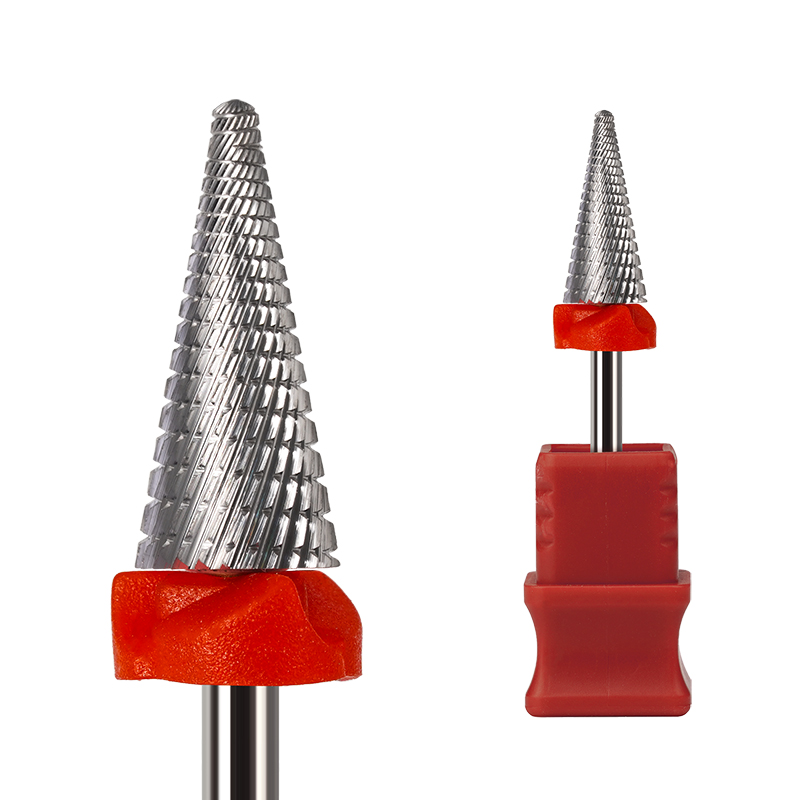
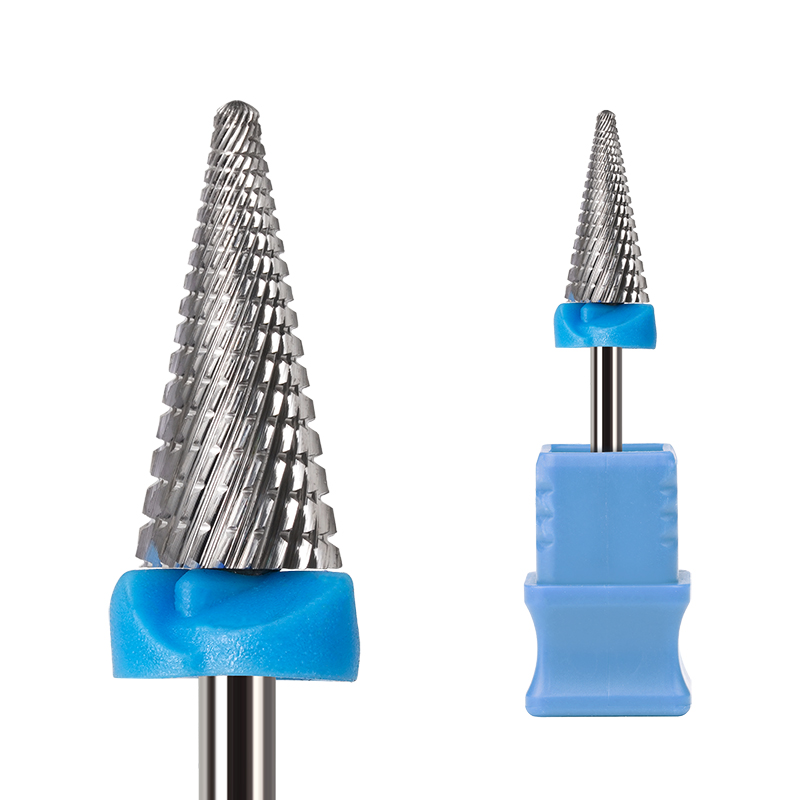
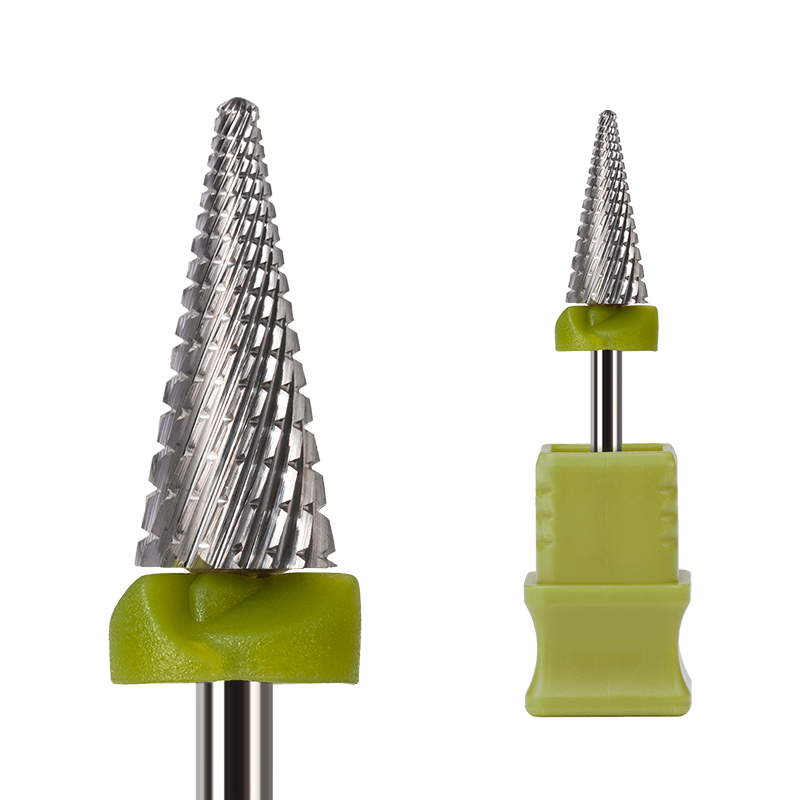
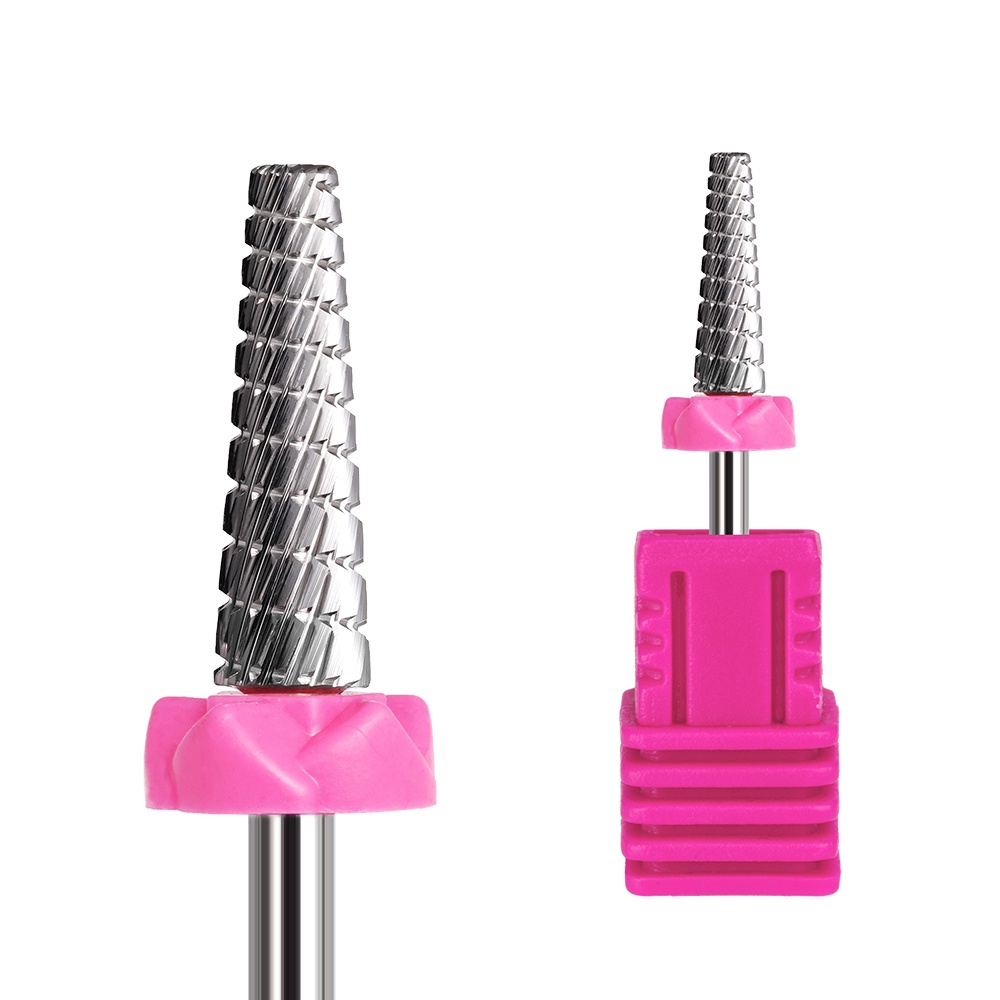
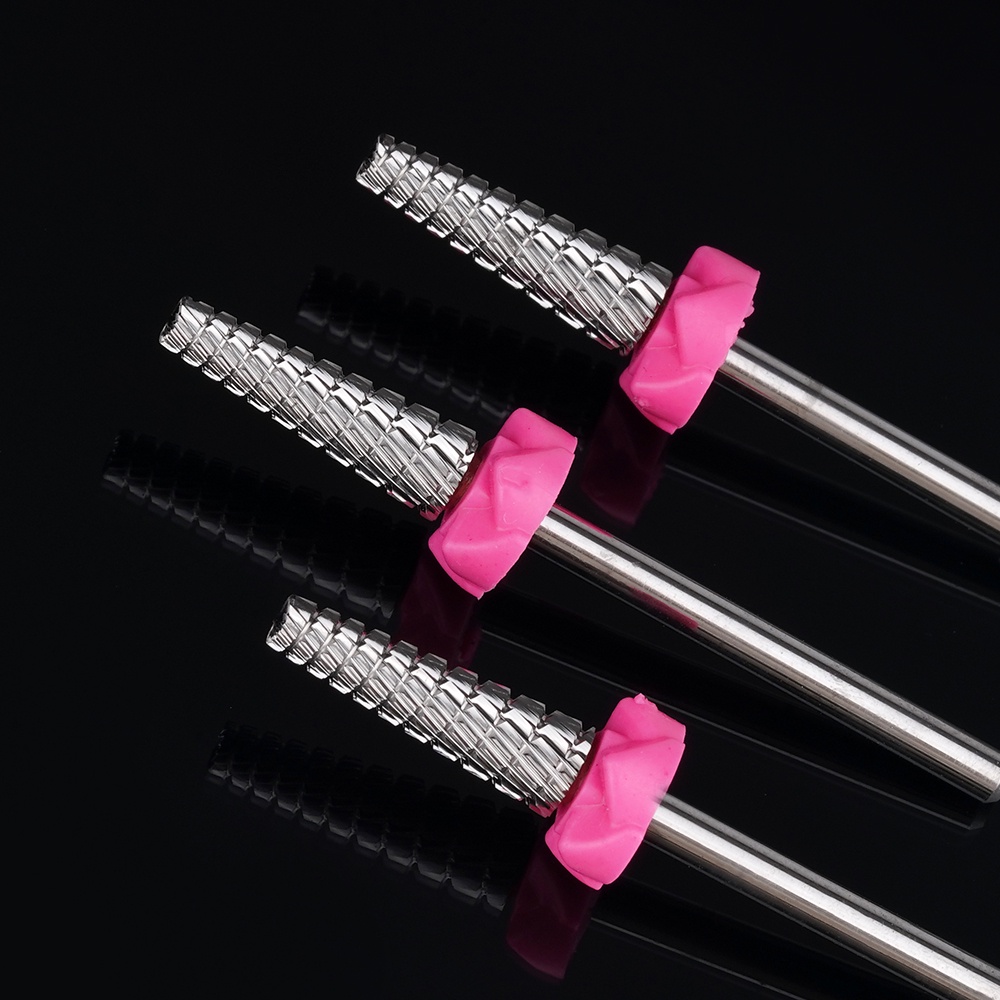
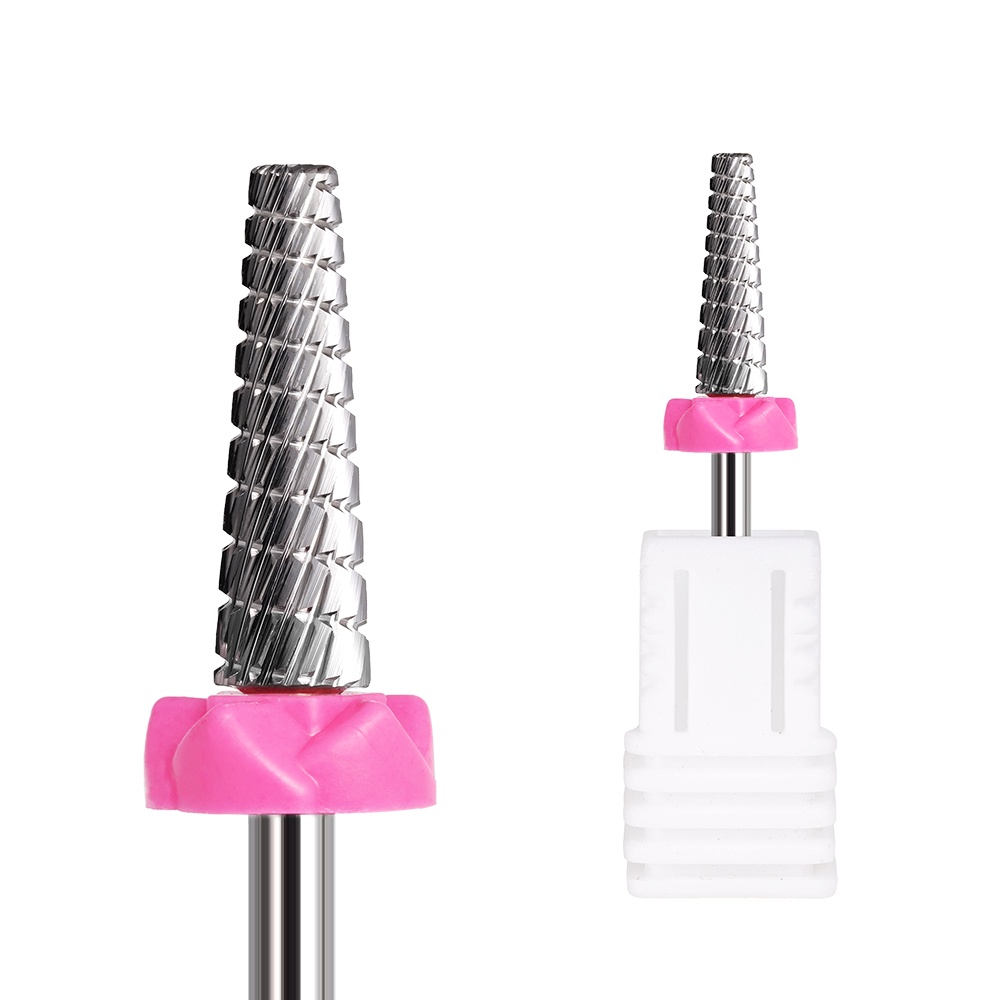
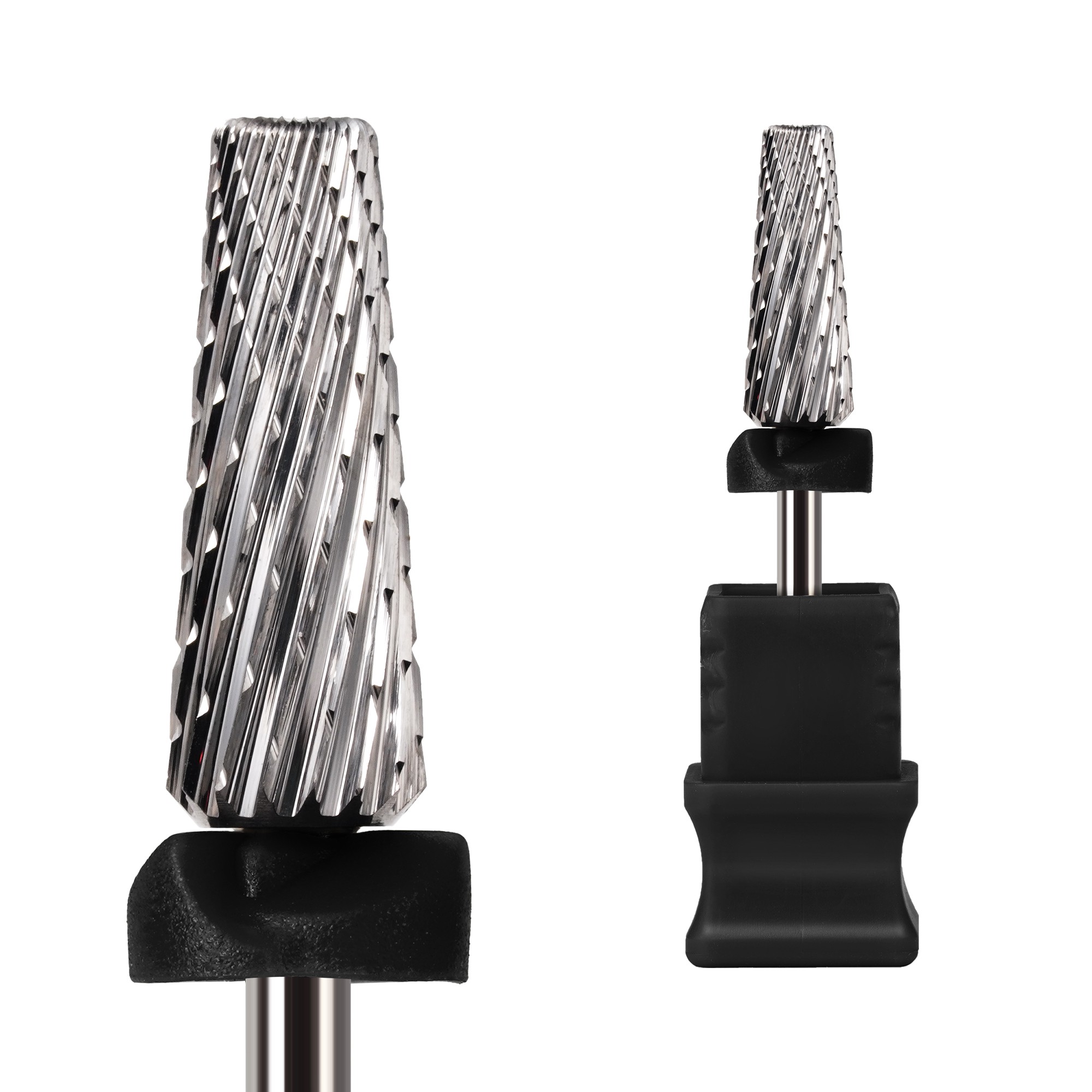
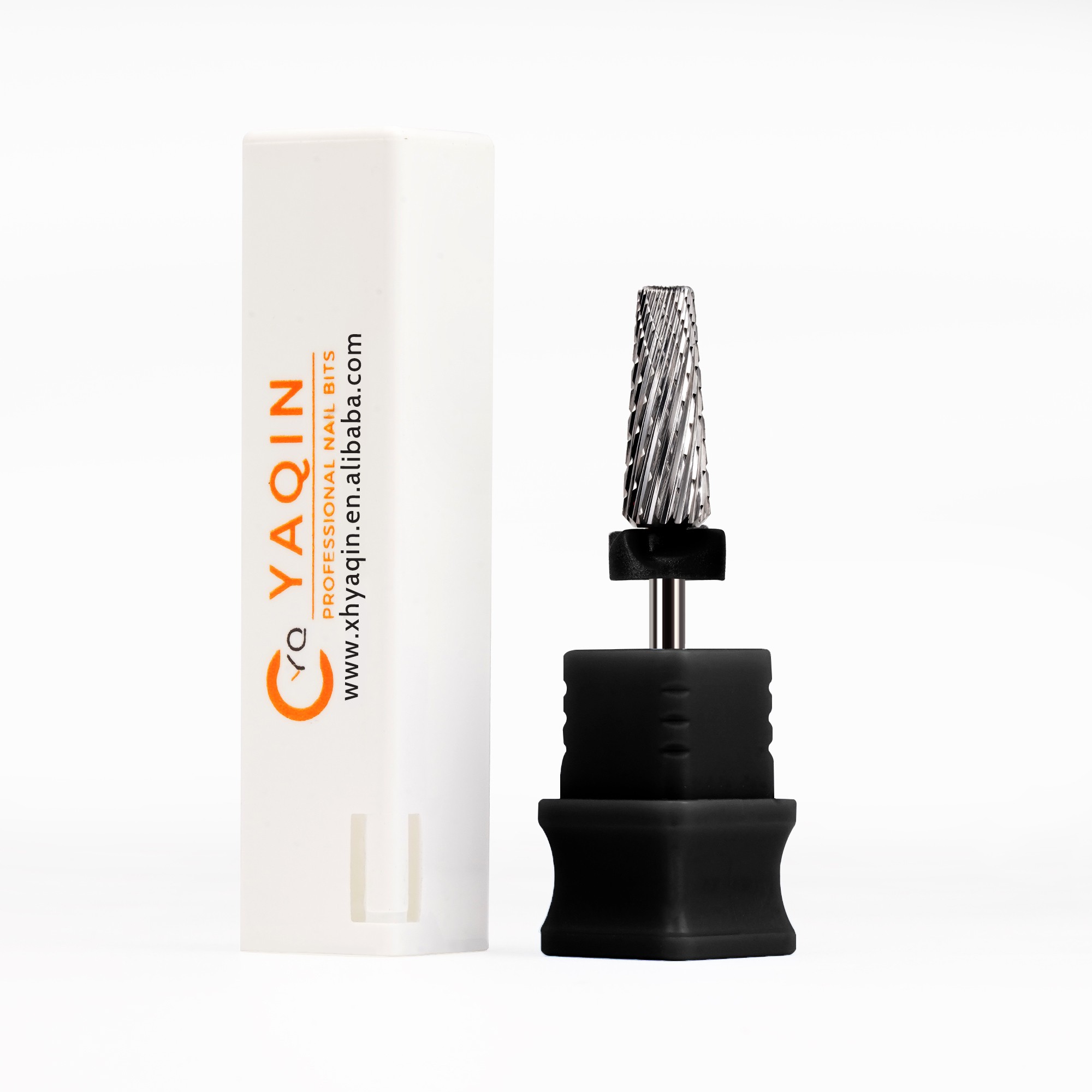
A cross-cut safety style can be a sensible choice where buyers want removal capability with a less sharp tip profile. One example is the Cross Cut Safety Stainless Steel Tungsten Carbide Nail Drill Bits Salon Foot Use XF-C Grit for Removing Nails. Its stated 5-in-1 use concept covers filing, shaping, smoothing, gel-polish removal, dead-skin work, and polishing-related tasks. That versatility can reduce the number of SKUs in an entry assortment, but it should still be validated against the training level and procedures of the users who will receive it.
Check shank compatibility as a separate quality issue
A drill bit can have good cutting geometry and still be commercially unusable if it does not fit reliably in the customer’s handpiece. Buyers should confirm the required shank specification with their machine range rather than assuming that all electric files accept the same format. The important point is not only nominal diameter, but also straightness, surface finish, length, and consistency across the shipment.
Runout is particularly worth checking. A bit that appears straight when held by hand may vibrate at operating speed because of small alignment issues. This can make a tool feel noisy, reduce precise control, and accelerate wear on the handpiece chuck. Ask the supplier how shank straightness and concentricity are checked, then include a practical rotation test in your incoming inspection plan.
Safety-end geometry deserves the same attention. “Safety” should correspond to a visibly rounded or carefully finished end, not simply a claim on a label. Compare the production sample to the approved reference sample and document the feature in the purchase specification.
Look beyond inspection reports: examine the QC route
A supplier’s quality system is most useful when buyers understand where checks occur. Raw-material control, in-process inspection, final sorting, and packing inspection address different risks. A final inspection alone may identify defective pieces, but it does not necessarily show whether the process can keep cut depth, dimensions, and appearance stable over a long production run.
Wuxi Yaqin Trading Co., Ltd. describes itself as a trading factory focused on producing and exporting abrasive products, with quality controls covering raw-material purchasing, production, and packaging. The company states that it has passed ISO9001:2000 quality management system certification and offers one-stop coordination from production to delivery, including OEM/ODM experience. For a buyer, those statements are most meaningful when supported by current documentation relevant to the order, an agreed inspection standard, and traceable production or packing records.
Useful questions include: What defects are screened out before packing? How are mixed grits prevented? Is there an approved master sample? Can cartons and inner boxes be traced to a production lot? Who approves substitutions if a specified material, colour, or package component is unavailable? Clear answers reduce disputes when the order is already on the water.
Calculate cost by usable units, not quotation price alone
The cheapest hytos nail drill bits are not necessarily the lowest-cost option after delivery. Procurement teams should compare the full commercial picture: product price, sample charges, custom tooling or artwork where applicable, packaging cost, inspection expense, freight, duties and taxes, payment terms, expected defect handling, and the cost of holding inventory.
Packaging deserves more attention than it usually receives. Individual protective tubes, labels, sealed pouches, retail cards, and barcode placement all affect warehouse handling and resale. Inconsistent labels can create costly picking errors, while insufficient protection may lead to bent or scratched items even when the bit itself left the factory in acceptable condition. Request a packed sample and assess it as your receiving team and end customer would.
For private-label programmes, define ownership and approval of artwork early. Confirm the print language, product naming, grit marks, warnings required by the destination market, carton marks, and acceptable colour variation. Do not assume that a supplier’s export packaging is automatically ready for retail distribution in every country.
Capacity and lead time should be tested before demand rises
A supplier may make excellent samples yet struggle to maintain the same standard during peak demand. Ask what quantity can be produced within the required lead time, whether the quoted lead time includes custom packaging, and what happens if an approved order needs a repeat run. It is also reasonable to ask whether capacity is based on in-house operations, partner factories, or a combination of both.
For distributors serving multiple markets, delivery coordination matters as much as factory output. Wuxi Yaqin reports supplying the United States, Canada, Germany, the UK, Italy, Poland, and other international markets. That export exposure may help with routine shipping communication, but buyers should still specify their own Incoterms, required documents, freight responsibilities, delivery point, and inspection release process in the contract.
Where demand is uncertain, an initial controlled order is often more informative than negotiating a very large first purchase. It allows the buyer to verify product consistency, packaging durability, document accuracy, and actual transit performance. A repeat order can then be based on evidence rather than optimism.
Turn verification into an approval file
Before releasing a bulk PO, keep one approval file containing the final SKU list, signed sample reference, dimensions and cut designation, material description, colour standard if relevant, packaging artwork, inspection criteria, carton configuration, delivery terms, and defect-resolution procedure. This is not bureaucracy for its own sake. It prevents a purchasing conversation from being interpreted differently by sales, production, quality control, and receiving teams.
The best sourcing decision is usually the one that makes future reorders predictable. Verify how the bit cuts, how it fits, how it is protected, and how deviations will be managed. Once those points are clear, buyers can judge a bulk offer on its real cost and operational reliability—not just on the lowest number in the first quotation.
News List
- Preventing Gouges and Uneven Filing With Small Barrel Nail Drill BitsSep 20, 2026
- How Diameter and Grit Affect Small Barrel Nail Drill Bit PerformanceSep 20, 2026
- Can Hytos Nail Drill Bits Be Used Safely on Natural Nails and Gel Polish?Sep 20, 2026
- How to Verify Fit Between Hytos Nail Drill Bits and an E-File HandpieceSep 20, 2026
- Safe Speed Settings for Umbrella Nail Drill Bits Around the Nail FoldSep 20, 2026
- Umbrella vs Flame Nail Drill Bits: Which Shape Offers Better Cuticle Control?Sep 20, 2026
Best-Selling Products
 Cross Cut Safety Stainless Steel Tungsten Carbide Nail Drill Bits Salon Foot Use XF-C Grit for Removing Nails
 First-rate Quality Tungsten Carbide Nail Drill Bits Best Coating Manicure Remove Gel Nails Accessories
 Professional Advanced Safety Cuticle Bits Two-Way Rotate 3/32'' Carbide Tungsten 5 in 1 Nail Drill Bits
 Wholesale 5 in 1 Electric Manicure Nail Drill Bits Various Coating Cone Cuticle Bit with Rotary Cross Cut for Nail Art
 New Slant Tooth Tungsten Steel Nail Drill Bits Dead Skin Removal 5-in-1 Universal Grinding Nail Polish Head Tool Nail Drill Bits
 4.0mm Small 5 in 1 Integrated Sharpe Tungsten Nail Drill Bit Straight Teeth Gel Polish Removal
 Flame Sharp XF F M C XC Silver Safety Professional Corn Tungsten Carbide Nail Bit for Drill Machine Accessories
 Factory Direct 5 in 1 Tungsten Carbide Nail Drill Bits 6.8MM Cross Cut Safety Manicure 5 in 1 Nail Drill Bits
Please give us a message