
When carbide nail drill bits outperform ceramic bits for acrylics
When carbide nail drill bits outperform ceramic bits for acrylics
The short answer: carbide wins when removal rate and repeatability matter
For acrylic enhancements, carbide bits generally outperform ceramic bits when the task involves bulk removal, backfill preparation, shortening length, correcting excess product, or processing a high number of sets in a working day. A properly selected carbide bit cuts acrylic rather than gradually abrading it. That difference is most visible on dense, cured product where a ceramic bit may still feel controlled but requires more passes and more contact time.
That does not make ceramic the weaker material in every procedure. Ceramic bits can be useful for technicians who prefer a lighter cutting feel, need visible dust during removal, or work cautiously near thinner product areas. The practical decision is less about which material is “best” and more about whether the bit must remove substantial acrylic efficiently without creating unnecessary heat, vibration, or inconsistency between operators.
For technical evaluators, carbide is usually the stronger choice when the operation has a defined removal target and the drill, bit geometry, speed range, and user technique are matched. Ceramic is more likely to remain competitive when removal is deliberately slow, product thickness varies widely, or operator control takes priority over throughput.
Why acrylic changes the comparison
Acrylic is hard enough to expose weaknesses in bit design. It is not removed in the same way as a thin gel-polish layer, and it does not behave like natural nail keratin. A bit must deal with a relatively thick, rigid coating that can load its cutting surface, create fine airborne dust, and generate heat when the operator remains in one area too long.
Carbide nail drill bits use machined flutes or teeth to shear away material. With the correct flute pattern, the cutting edges take small, controlled portions of acrylic away from the surface and move debris outward. Ceramic bits rely on an abrasive ceramic cutting surface. Their texture can produce a smooth feel, but it tends to remove material through sustained abrasion. On thick acrylic, that approach can require more dwell time, especially when the bit becomes partially loaded with residue.
The distinction matters most when evaluating a full service workflow. A difference of a few seconds on one nail is rarely decisive. Across a full set, repeated removals, and several technicians using the same specification, lower cutting efficiency can become a capacity issue. Longer contact time also gives more opportunity for avoidable heat, even if the ceramic bit itself is perceived as less aggressive.
Situations where carbide has a clear operational advantage
Carbide should be the first material considered when the procedure requires rapid, predictable removal of a significant acrylic volume. This includes reducing bulk before a soak-off process, debulking an old enhancement before a rebalance, reshaping an overly thick extension, and shortening reinforced tips. In each case, the goal is to remove product efficiently while leaving a controlled safety margin above the natural nail.
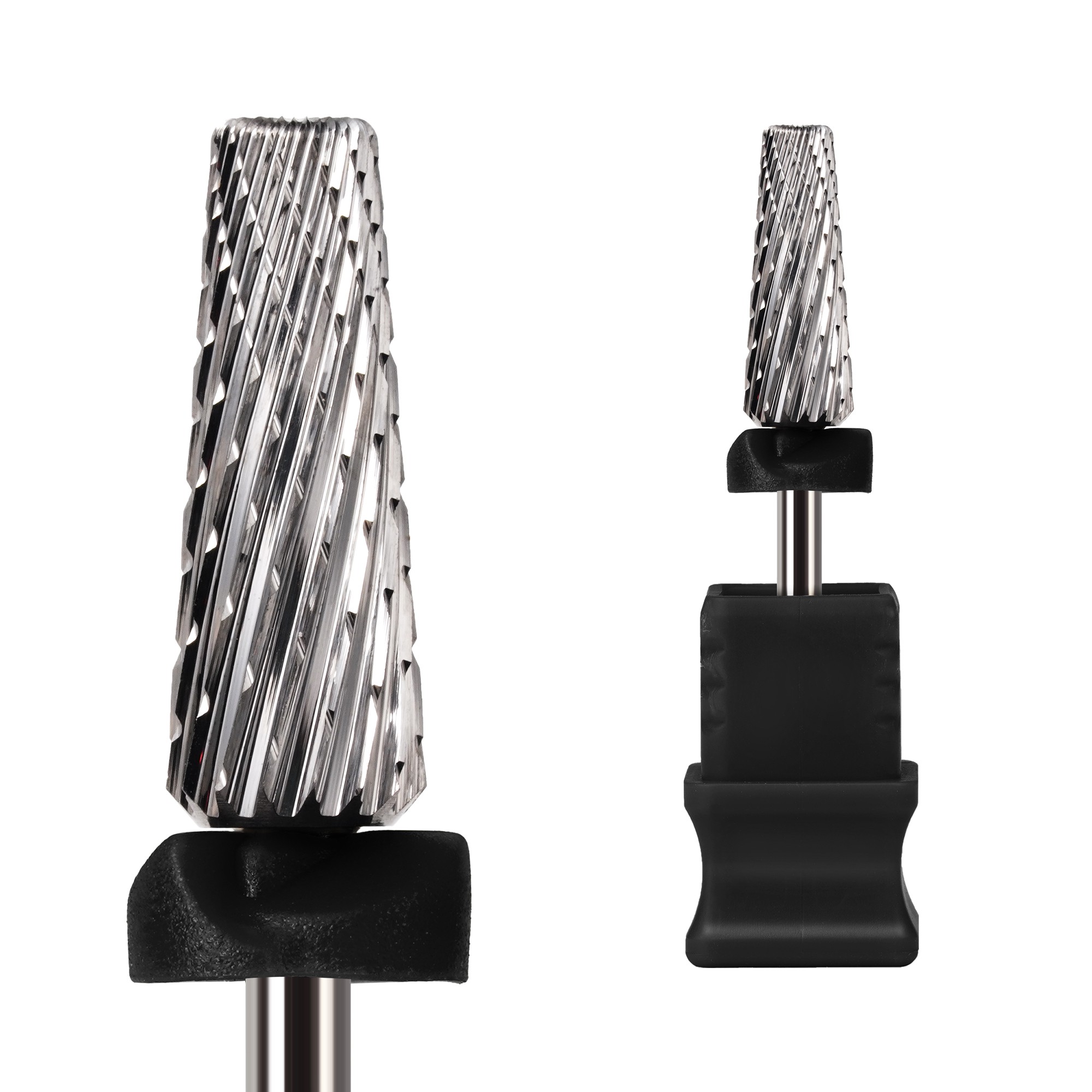
A carbide barrel with a medium or coarse cut is usually more productive than ceramic for these operations because its flute geometry provides a defined path for acrylic chips and dust. A cross-cut pattern can improve bite and material evacuation, particularly when the product is thick or contains a mix of acrylic and gel layers. The second direction of cut also helps distribute the work across more cutting edges, reducing the tendency for a single flute edge to carry the entire load.
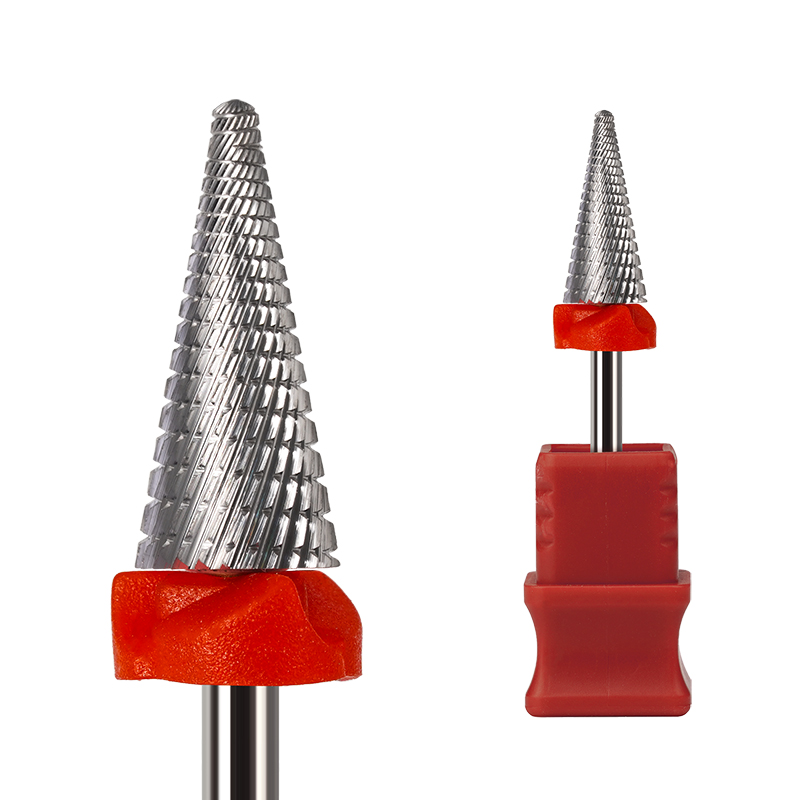
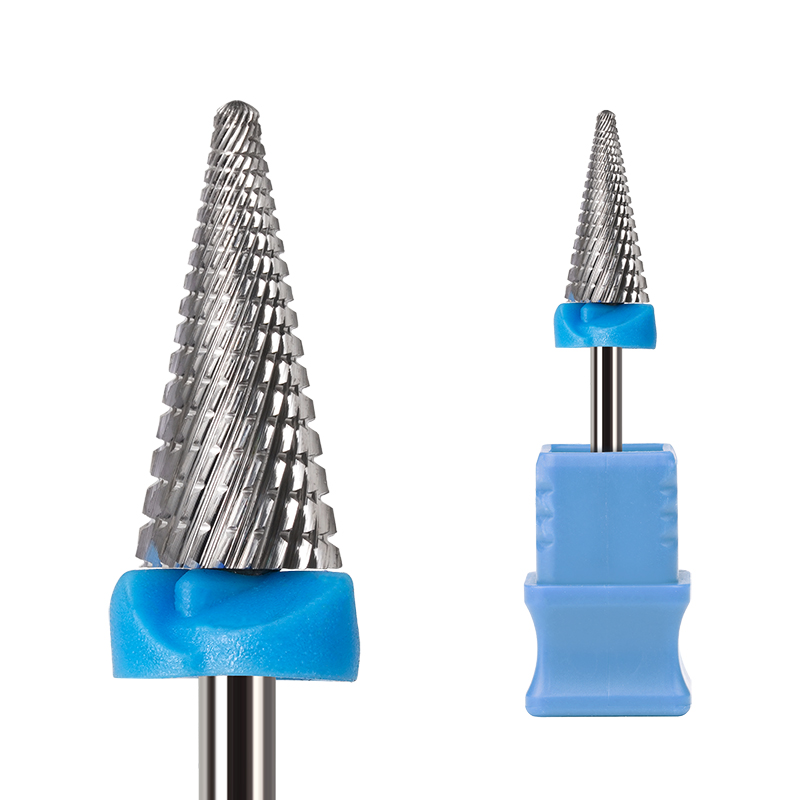
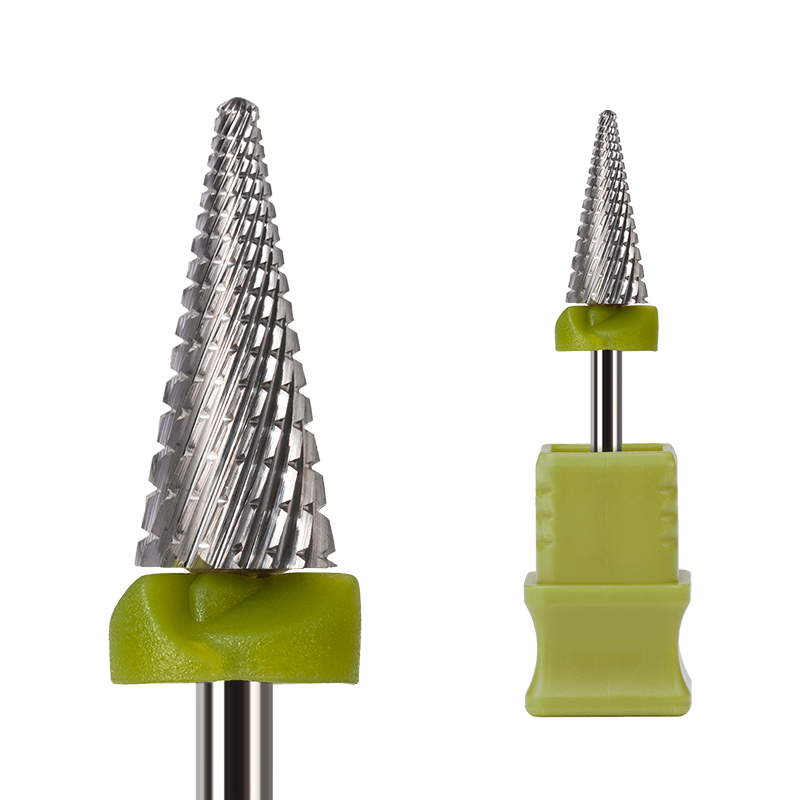
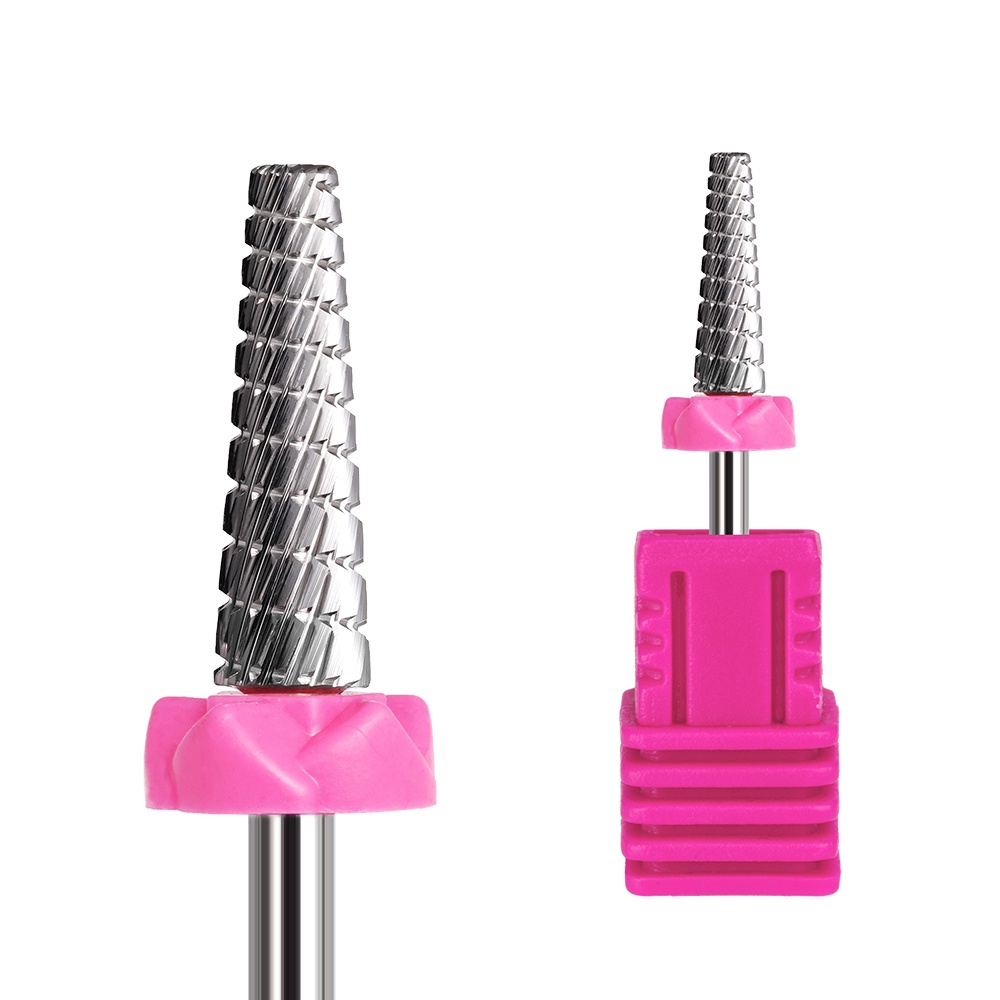
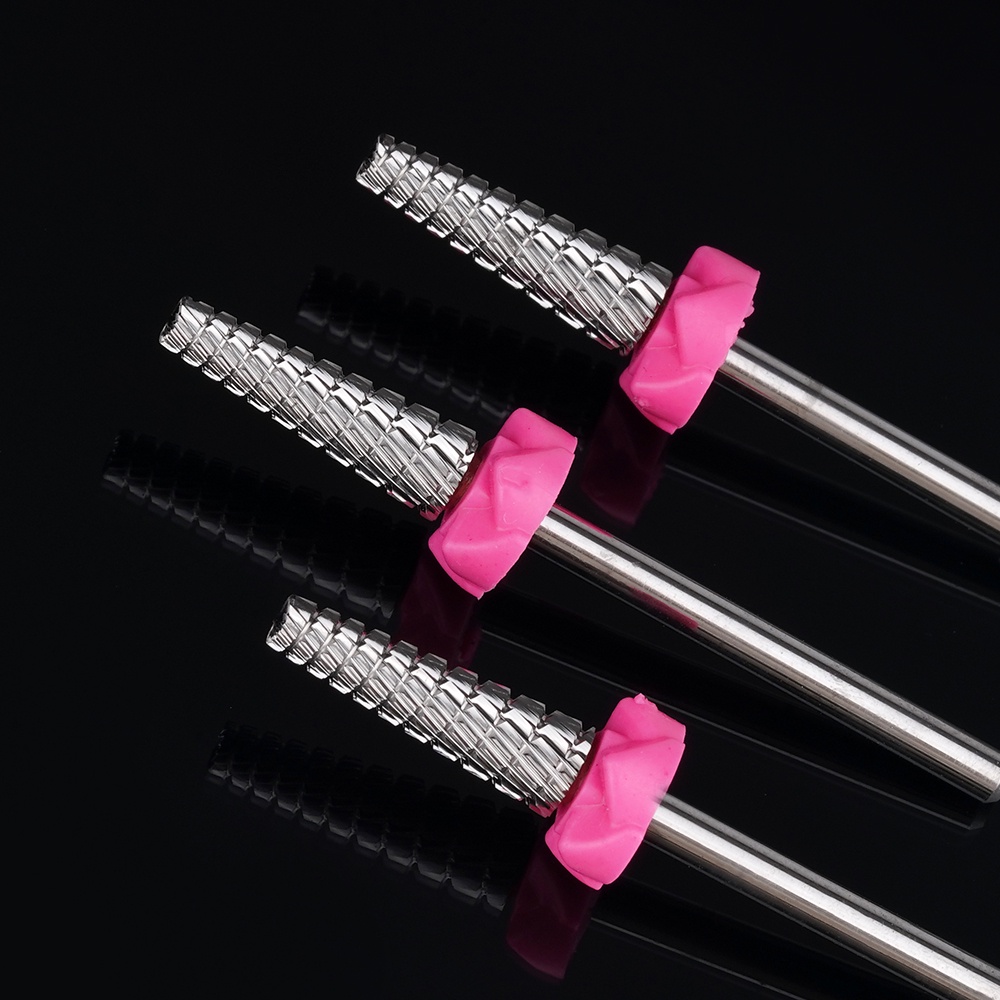
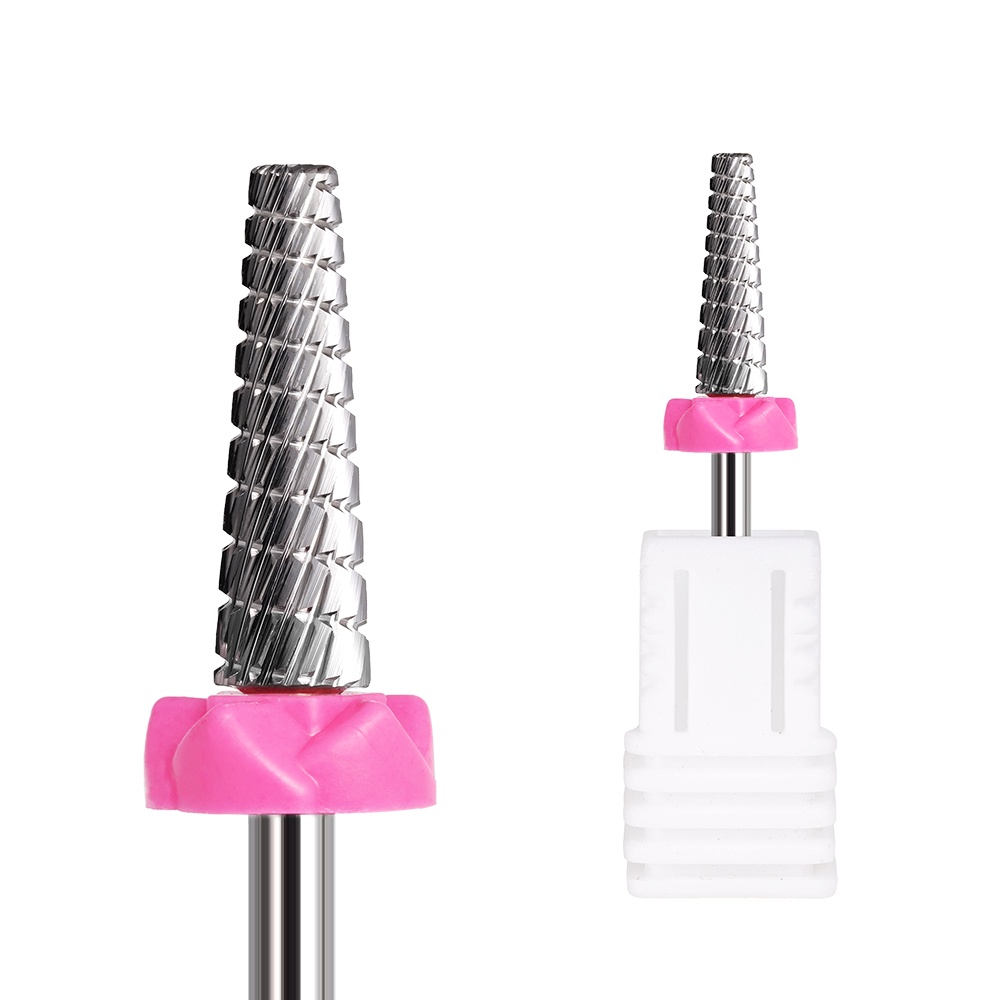
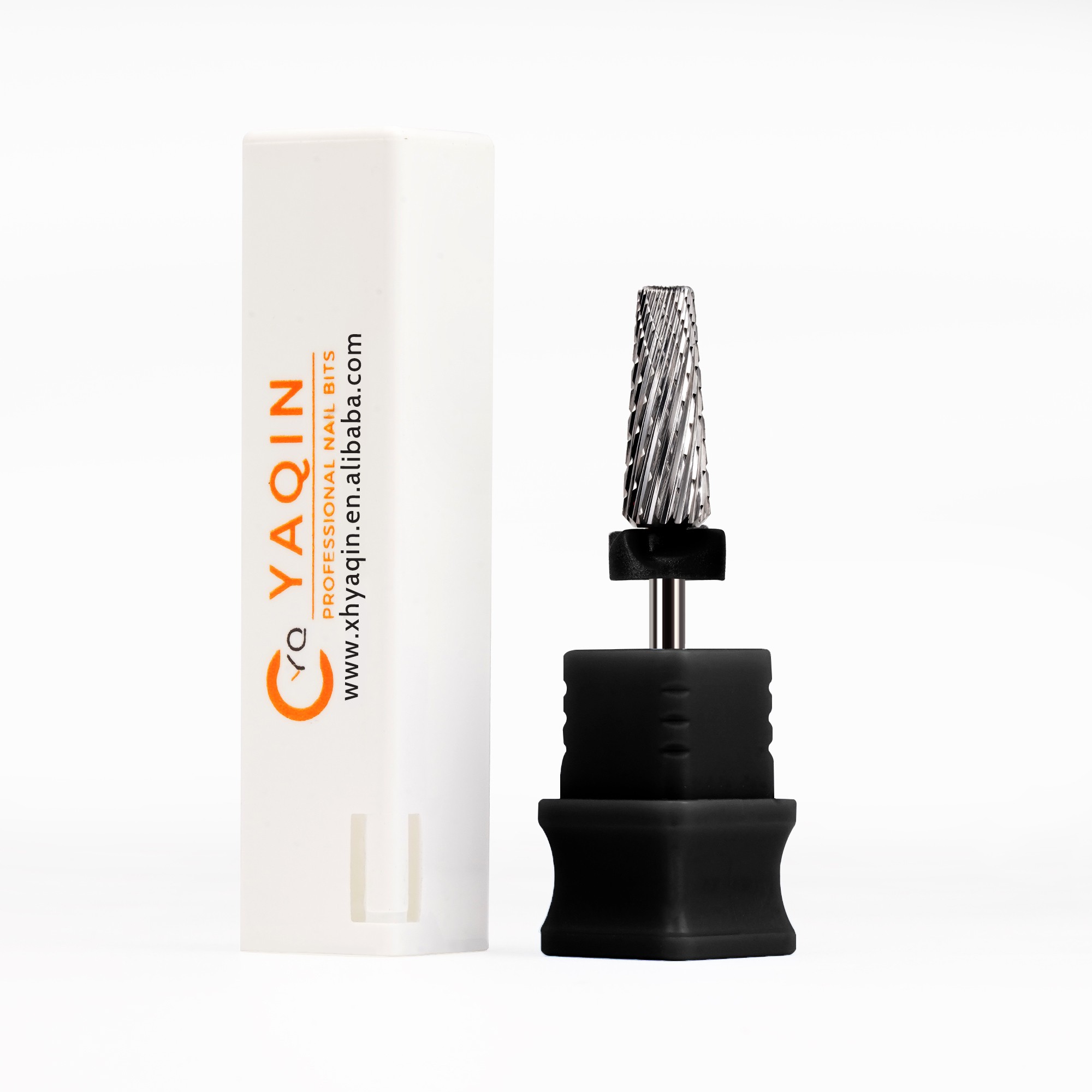
A representative option is a Whole Tungsten Carbide Material Nail Drill Bit Cross Cut Teeth Fast Remove Nail Gel Professional Nail Use. The relevant feature in a technical comparison is not the product name itself, but the use of whole tungsten carbide and cross-cut teeth: that combination is suited to high-hardness product removal when consistent cutting action is required. It should still be evaluated by shank accuracy, flute finish, balance, and the intended grit before being added to a standard kit.
Carbide also tends to have an advantage where bit replacement frequency is a concern. Acrylic removal wears any cutting surface, but high-quality tungsten carbide maintains defined flute edges longer than a ceramic abrasive surface under repeated professional use. Service life depends on cleaning, impact damage, sterilization practice, drill speed, and the materials being removed, so it should not be treated as a fixed specification. Even so, carbide usually provides a more stable cutting profile over its usable life when used for its intended workload.
Heat control depends on process, not material alone
“Ceramic runs cooler” is a common shorthand, but it is incomplete. Heat is generated by friction, pressure, bit speed, dwell time, bit loading, and the amount of material being removed. A slow-cutting bit can feel mild at first yet produce heat if the technician must press harder or remain over the same area. A carbide bit can remove product rapidly with low pressure, but it can also become uncomfortable if used at excessive speed or held stationary.
For acrylic, a carbide bit often improves heat control when it reduces the number of passes needed to reach the desired thickness. The operator should use a light, moving contact rather than allowing the bit to sit on the surface. The appropriate speed depends on the drill handpiece, bit diameter, grit, and technician control. A purchasing specification should therefore avoid treating RPM as an isolated number. The useful question is whether the selected bit produces controlled removal at the speed range technicians can reliably maintain.
Flute cleanliness has an equally important role. Acrylic dust can pack into cutting channels and turn a sharp bit into a rubbing surface. A bit that begins to skid, polish, or require extra pressure should be cleaned and inspected rather than simply run faster. Cross-cut carbide designs can support dust movement, but no flute geometry eliminates the need for routine cleaning between services.
Grit and flute geometry determine whether carbide feels efficient or harsh
Material selection is only the first decision. A carbide bit with the wrong cut can be inefficient, difficult to control, or too aggressive for the intended stage of work. Technical evaluators should map bit geometry to the service step rather than asking for one universal acrylic bit.
Coarse carbide cuts quickly, but speed should not be confused with suitability. It is best reserved for trained users working on thick product where there is adequate clearance from the natural nail. For a technician who performs more rebalance work than full removals, a medium cut may deliver better control and a more forgiving finish. Fine carbide bits can be valuable for refinement, although they may not provide enough productivity for initial debulking.
Flute direction must also match the drill rotation and the operator’s hand orientation. A bit that cuts well for a right-handed technician in forward rotation may behave differently for left-handed use or reverse rotation. Inconsistent direction selection can lead to chatter, pulling, or a sensation that the bit is not cutting despite adequate speed. A supplier evaluation should confirm whether the line includes left-hand, right-hand, or bidirectional options and whether markings remain legible through cleaning cycles.
Where ceramic may still be the better specification
Ceramic should not be excluded from an acrylic service range simply because carbide removes faster. It can be a rational choice where technicians need a softer initial contact, where the removal stage is limited to a thin remaining layer, or where training protocols deliberately prioritize a lower-aggression tool. Ceramic can also be easier to visually inspect for residue because its light-colored body makes product buildup more apparent.
There are situations where a carbide bit’s cutting efficiency creates a training risk. An inexperienced user may remove acrylic quickly but fail to recognize the transition from enhancement product to a thin protective layer. A ceramic bit can offer a slower response in that specific context. The appropriate response is not necessarily to specify ceramic for every user, but to separate tools by task: carbide for controlled bulk reduction and a finer, less aggressive tool for work close to the natural nail.
Ceramic may also be preferable where operators have a strong established technique and the service menu does not reward faster bulk removal. Changing material without changing training, speed guidance, cleaning practice, and bit selection can produce inconsistent results. Any transition to carbide should include a controlled trial with the actual acrylic systems, e-file models, and service steps used in the operation.
What to inspect before approving a carbide bit
A carbide bit that looks similar in a catalog may perform very differently in a handpiece. The material claim alone does not establish quality. Whole tungsten carbide construction is generally more appropriate for sustained cutting than a thin abrasive coating, but manufacturing accuracy determines whether that material delivers a usable result.
- Shank concentricity: A 3/32-inch shank must run true in the intended handpiece. Visible wobble increases vibration, reduces precision, and can accelerate handpiece wear.
- Flute uniformity: Teeth should be consistently machined, free from rough burrs, blocked channels, or visibly uneven cutting lands.
- Edge finishing: Barrel edges, tops, and safety profiles need a finish appropriate to their intended proximity to skin and sidewalls.
- Balance at working speed: A bit may fit the chuck yet still create vibration when rotating. This is both an operator-comfort and control issue.
- Cleaning compatibility: Residue must be removable from the flute geometry without damaging the cutting surfaces or leaving contamination trapped in narrow channels.
- Lot consistency: For a professional or private-label program, sample approval should be followed by checks on repeated production lots, not only the first sample.
Color, logo customization, and packaging can matter for product differentiation, but they should come after functional approval. For private-label buyers, a personalized finish is valuable only if the selected geometry, runout control, and cutting performance remain consistent across the order. The most attractive coating or color cannot compensate for a bit that vibrates, dulls early, or produces an unpredictable cut.
A practical selection rule for acrylic workflows
Choose carbide when the acrylic service requires controlled bulk removal, repeatable speed, and durable cutting performance. Start with a medium or medium-coarse cross-cut geometry for general professional use, then add a coarser option only where technicians routinely handle thick overlays or major length reduction. Reserve fine cuts and safety-shaped tools for refinement rather than expecting them to perform the entire removal process.
Choose ceramic when the work is close to the natural nail, the operator needs a deliberately gentler cutting response, or the workflow favors gradual reduction over throughput. In many professional kits, the strongest setup is not an all-carbide or all-ceramic decision. It is a clear division of labor: carbide for the product mass, followed by a finer tool selected for the remaining layer and the sensitive areas of the nail.
That division gives technical evaluators a more useful approval standard. The bit should not merely remove acrylic quickly. It should remove the right amount of acrylic, at a controllable rate, with stable rotation and predictable behavior throughout its service life.
News List
- Preventing Gouges and Uneven Filing With Small Barrel Nail Drill BitsSep 20, 2026
- How Diameter and Grit Affect Small Barrel Nail Drill Bit PerformanceSep 20, 2026
- Can Hytos Nail Drill Bits Be Used Safely on Natural Nails and Gel Polish?Sep 20, 2026
- How to Verify Fit Between Hytos Nail Drill Bits and an E-File HandpieceSep 20, 2026
- Safe Speed Settings for Umbrella Nail Drill Bits Around the Nail FoldSep 20, 2026
- Umbrella vs Flame Nail Drill Bits: Which Shape Offers Better Cuticle Control?Sep 20, 2026
Best-Selling Products
 Cross Cut Safety Stainless Steel Tungsten Carbide Nail Drill Bits Salon Foot Use XF-C Grit for Removing Nails
 First-rate Quality Tungsten Carbide Nail Drill Bits Best Coating Manicure Remove Gel Nails Accessories
 Professional Advanced Safety Cuticle Bits Two-Way Rotate 3/32'' Carbide Tungsten 5 in 1 Nail Drill Bits
 Wholesale 5 in 1 Electric Manicure Nail Drill Bits Various Coating Cone Cuticle Bit with Rotary Cross Cut for Nail Art
 New Slant Tooth Tungsten Steel Nail Drill Bits Dead Skin Removal 5-in-1 Universal Grinding Nail Polish Head Tool Nail Drill Bits
 4.0mm Small 5 in 1 Integrated Sharpe Tungsten Nail Drill Bit Straight Teeth Gel Polish Removal
 Flame Sharp XF F M C XC Silver Safety Professional Corn Tungsten Carbide Nail Bit for Drill Machine Accessories
 Factory Direct 5 in 1 Tungsten Carbide Nail Drill Bits 6.8MM Cross Cut Safety Manicure 5 in 1 Nail Drill Bits
Please give us a message