
Selecting Nail Drill Bits for a Salon: Grit, Material, and Bit Shape
Selecting Nail Drill Bits for a Salon: Grit, Material, and Bit Shape
A salon does not need every available bit shape or every abrasive grade. It needs a controlled working assortment that lets technicians remove product efficiently, refine the nail safely, prepare the cuticle area, and finish consistently across different service types. For purchasing teams, the strongest starting point is to select bits by task and technician skill level, then assess grit, material, shank compatibility, cleaning requirements, and replacement patterns.
The wrong Nail Drill Bit can create problems that are more expensive than the unit price suggests: slower appointments, excess heat, premature wear, inconsistent results between technicians, or discomfort that damages client confidence. A bit that is technically capable of removing gel or acrylic may still be a poor salon choice if it is too aggressive for routine use, difficult to sanitize, or unsuitable for left-handed staff.
Build the assortment around the services actually performed
Procurement should begin with the salon's service mix rather than with a catalog of shapes. A studio focused on natural nail care and gel polish needs a different assortment from a high-volume acrylic extension salon. Purchasing a large quantity of coarse carbide bits for a salon that mainly performs gel manicures creates unnecessary safety and training pressure. Conversely, relying only on fine bits in an acrylic-heavy operation makes removal slow and encourages technicians to apply more pressure.
A practical core assortment usually covers four separate jobs:
- Product removal for gel polish, builder gel, acrylic, or hard gel.
- Surface refining and shaping before application or during fills.
- Cuticle-area preparation and removal of non-living skin from the nail plate.
- Finishing and smoothing, including work close to the natural nail.
These categories overlap, but they should not be treated as interchangeable. A barrel designed for bulk removal is efficient on enhancements but may be too broad around sidewalls. A small flame or tapered bit can work precisely around the proximal nail fold, but it is inefficient and overly delicate for product removal. When a supplier presents a multi-purpose bit, buyers should still define the acceptable uses in the salon's own operating procedure.
Grit selection should reflect product hardness and technician control
Grit determines how quickly a bit cuts or abrades. Coarser surfaces remove material faster, while finer surfaces allow more controlled refinement. The common mistake is to interpret faster removal as better productivity. Removal speed matters, but an overly coarse bit can increase friction, vibration, heat, and the likelihood of accidental contact with the natural nail or surrounding skin.
Fine grit is generally the most useful choice for finishing, smoothing, work on natural nails, and services where only a thin layer of product needs refining. It is also a sensible option for technicians who are still developing e-file control. The trade-off is time: a fine bit may be inefficient when removing dense acrylic or thick hard gel.
Medium grit is often the most flexible stock item for a professional salon. It can support routine gel removal, product reduction during fills, shaping, and controlled surface work. For buyers building a first bulk order, medium grit usually deserves the deepest inventory because it can cover more daily tasks without being excessively aggressive.
Coarse grit has a defined role in removing substantial product volume, particularly for hard gel and acrylic overlays. It should be assigned to trained users and used with a clear understanding of where it belongs in the service sequence. It is not a universal productivity upgrade. If technicians compensate for a dull bit by pressing harder, moving too slowly, or running at an unsuitable speed, the salon loses the benefit that coarse grit was intended to provide.
Grit markings can vary between suppliers, especially where the abrasive pattern, flute depth, or coating construction differs. Procurement teams should avoid treating labels alone as a complete specification. Before committing to a large order, compare sample bits on the same type of enhancement material, with the same handpiece and a consistent operating procedure. The purpose is not to establish a universal speed setting; it is to check whether the bit removes product predictably without loading, excessive heat, or erratic cutting.
Material determines durability, cleaning behavior, and the tasks a bit can handle
Bit material affects both the cutting action and the ownership cost. Lower-priced bits may look similar in photographs while performing very differently after repeated cleaning cycles and normal salon use. The most useful material choice depends on whether the bit is meant to cut enhancement product, abrade gently, polish, or work near the cuticle area.
Carbide and tungsten steel bits are commonly selected for efficient removal and shaping of acrylic, hard gel, and other firm artificial materials. Their fluted cutting surfaces remove product by cutting rather than simply sanding it away. A well-made bit in this category should retain its cutting performance, resist corrosion, and run with minimal vibration when properly seated in the handpiece. Poor balance, inconsistent flute edges, or weak finishing can cause uncomfortable movement even before the bit appears worn.
Diamond-coated bits are more appropriate for detail work, cuticle preparation, and controlled abrasion. They are available in many shapes and are useful where precision matters more than fast product removal. Their service life depends heavily on coating quality and cleaning practice. When debris remains trapped in the abrasive surface, cutting performance drops and technicians may begin using unnecessary pressure.
Ceramic bits are frequently considered for product removal because they can feel smoother and may carry heat differently from metal cutting bits. Their suitability should be judged against the salon's handling and storage conditions as well as removal performance. They can be damaged by drops or impacts that would not affect a metal bit in the same way. For high-turnover salons, the replacement cost should be considered alongside client comfort and technician preference.
Silicone, rubber, and polishing bits serve finishing functions. They should be purchased as consumable tools with a defined replacement routine, rather than expected to last like carbide or diamond bits. Their value lies in producing a refined surface and supporting a controlled final step, not in replacing a removal bit.
Material claims should be tied to an inspection process. Buyers should ask how raw materials are controlled, how shank dimensions are checked, whether the working surface is inspected for damage, and how bits are protected in packaging. In bulk purchasing, a bit that performs well in a single sample but arrives with inconsistent shank fit or uneven finishing can disrupt an entire technician team.
Choose shapes by access and working area, not appearance
Bit shape changes how the technician approaches the nail. The same grit and material can behave very differently when presented as a barrel, cone, flame, safety barrel, needle, or ball shape. This makes shape selection one of the main controls for efficiency and risk.
Barrel shapes offer a broad contact area and are commonly used for reduction, shaping, and surface leveling. A standard barrel can be highly productive on larger enhancement surfaces, while a safety barrel with a rounded top reduces the chance of a sharp edge contacting skin near the cuticle. For salons with technicians of mixed experience, rounded or safety-top options are often more appropriate for general inventory.
Cones and tapered barrels help technicians reach sidewalls and refine product closer to the cuticle area. Their narrower profile improves access, but it also concentrates contact. They should be selected carefully for the intended material and level of technician control. A pointed shape may be useful for specialist detail work but does not need to be the default choice for every workstation.
Flame-shaped and small tapered diamond bits are commonly used for cuticle-area preparation. Their job is precision: lifting non-living cuticle tissue, cleaning the nail plate area, and improving product adhesion when used correctly. Purchasing teams should avoid treating these as interchangeable with larger shaping bits. Their required abrasive level, cleaning attention, and training needs are different.
Ball bits are typically used after cuticle lifting to remove remaining non-living skin in a localized area. They are a specialist support tool, not a high-consumption removal item. Needle and very narrow bits should be stocked only where the salon has a genuine technical need and staff who can use them safely.
A useful way to control range complexity is to specify a small number of preferred shapes per task. For example, a salon may standardize on a safety barrel for general reduction, a tapered bit for sidewall access, a flame-shaped diamond bit for preparation, and a polishing bit for finishing. This creates easier technician training and makes reorder planning more predictable.
Multi-functional bits can reduce SKU count, but they do not remove the need for process control
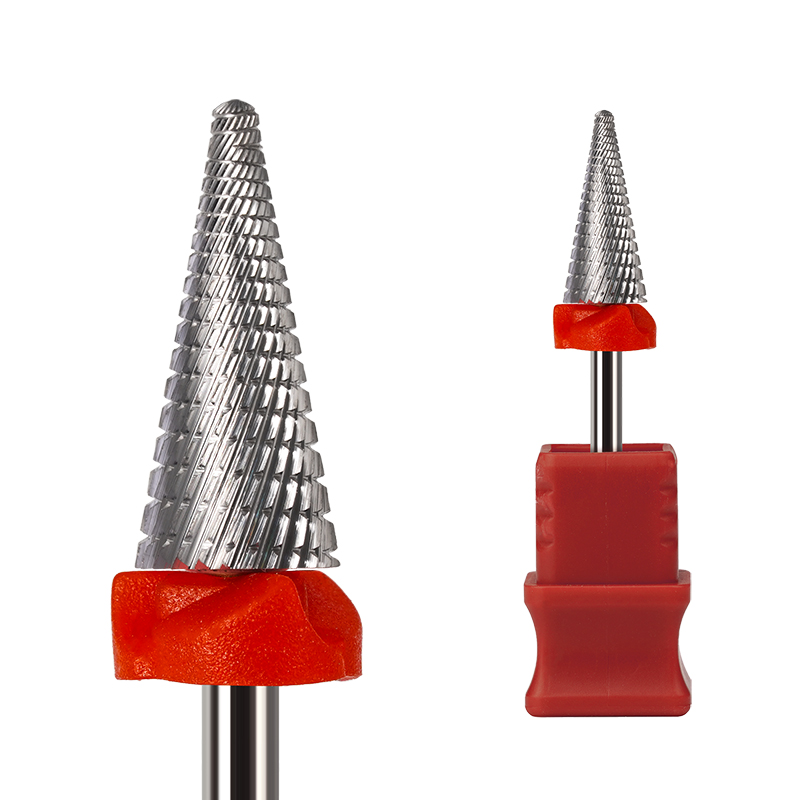
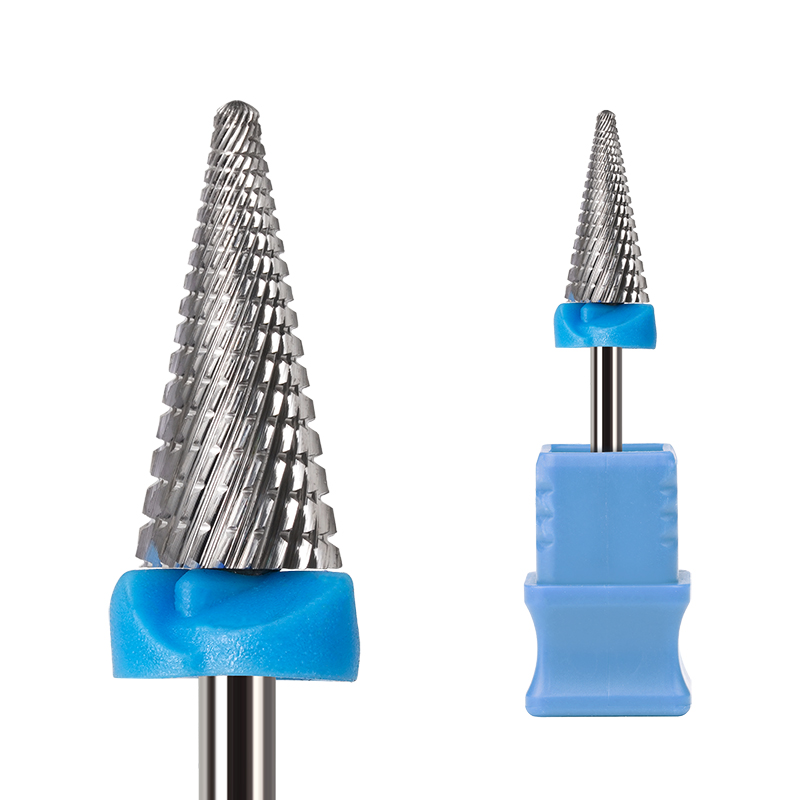
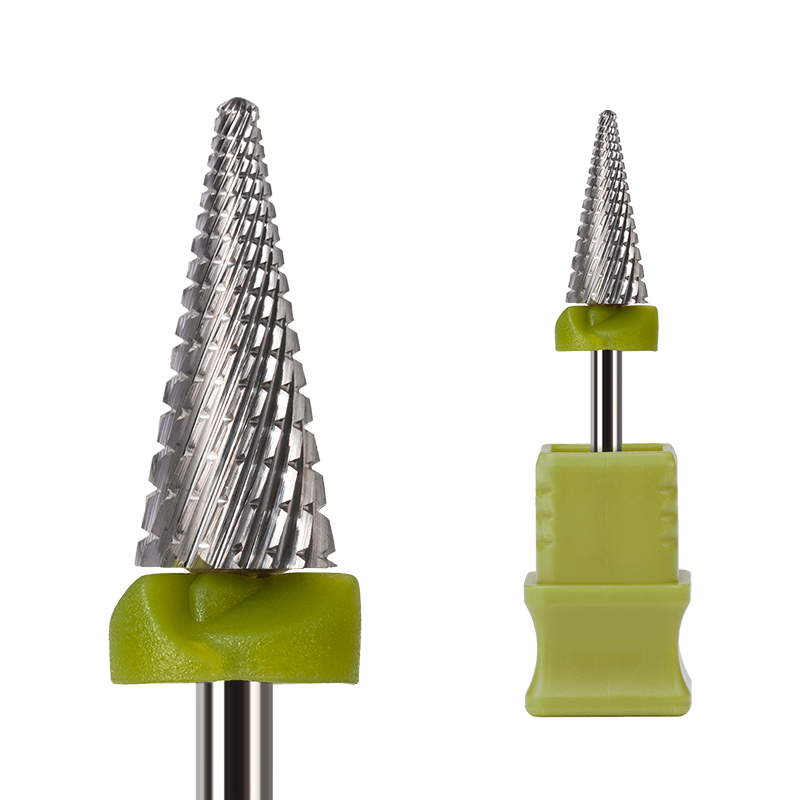
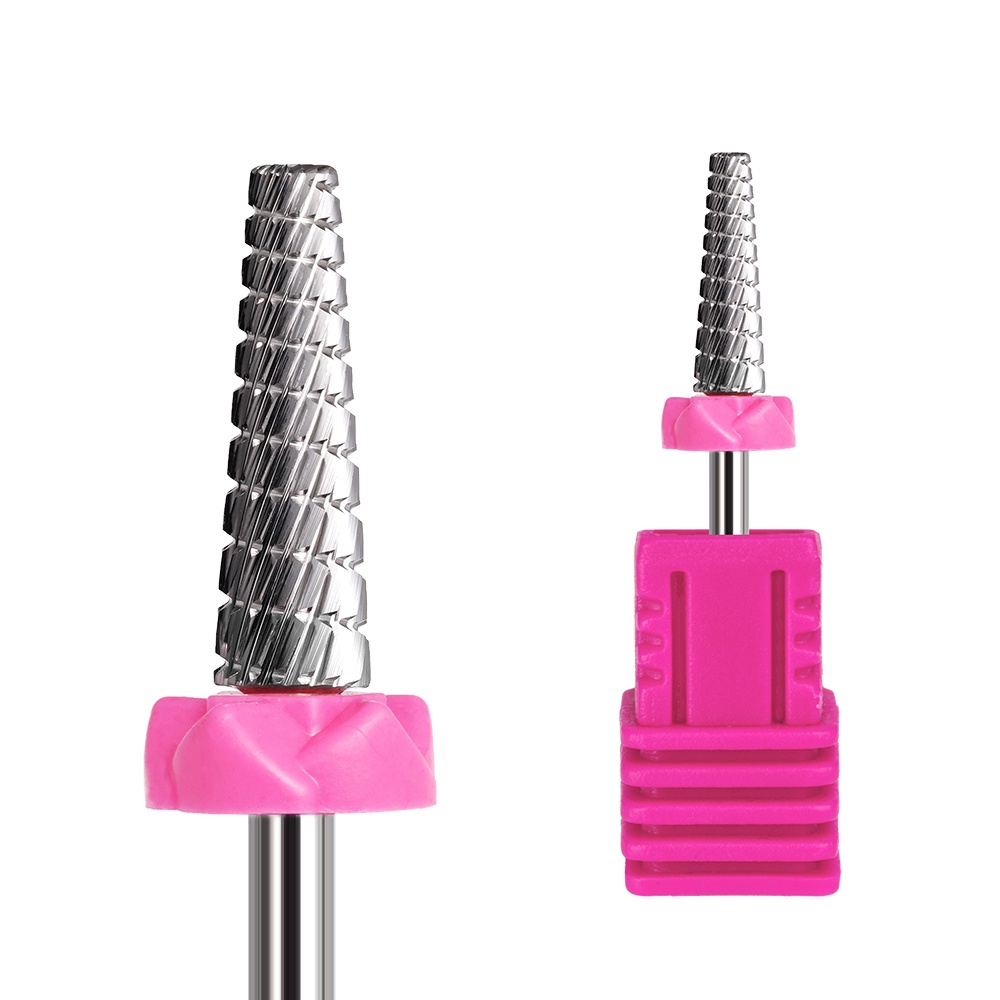
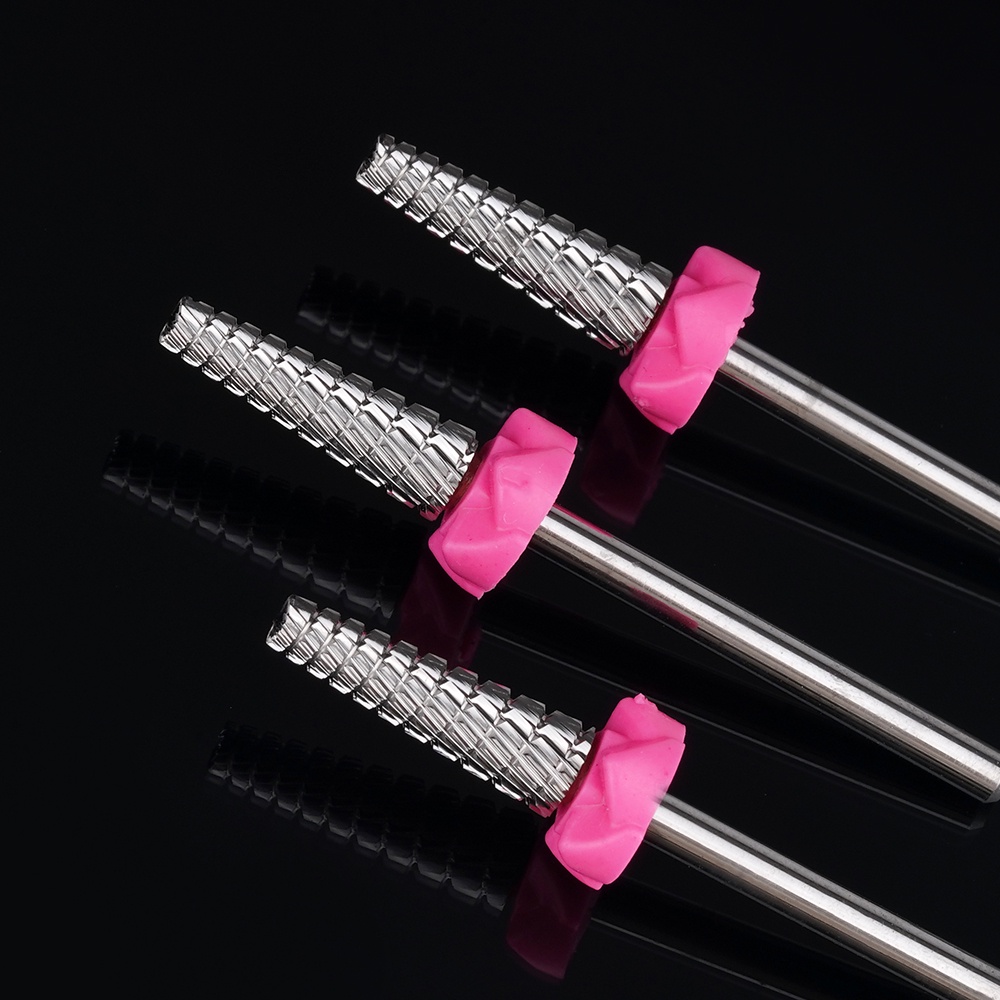
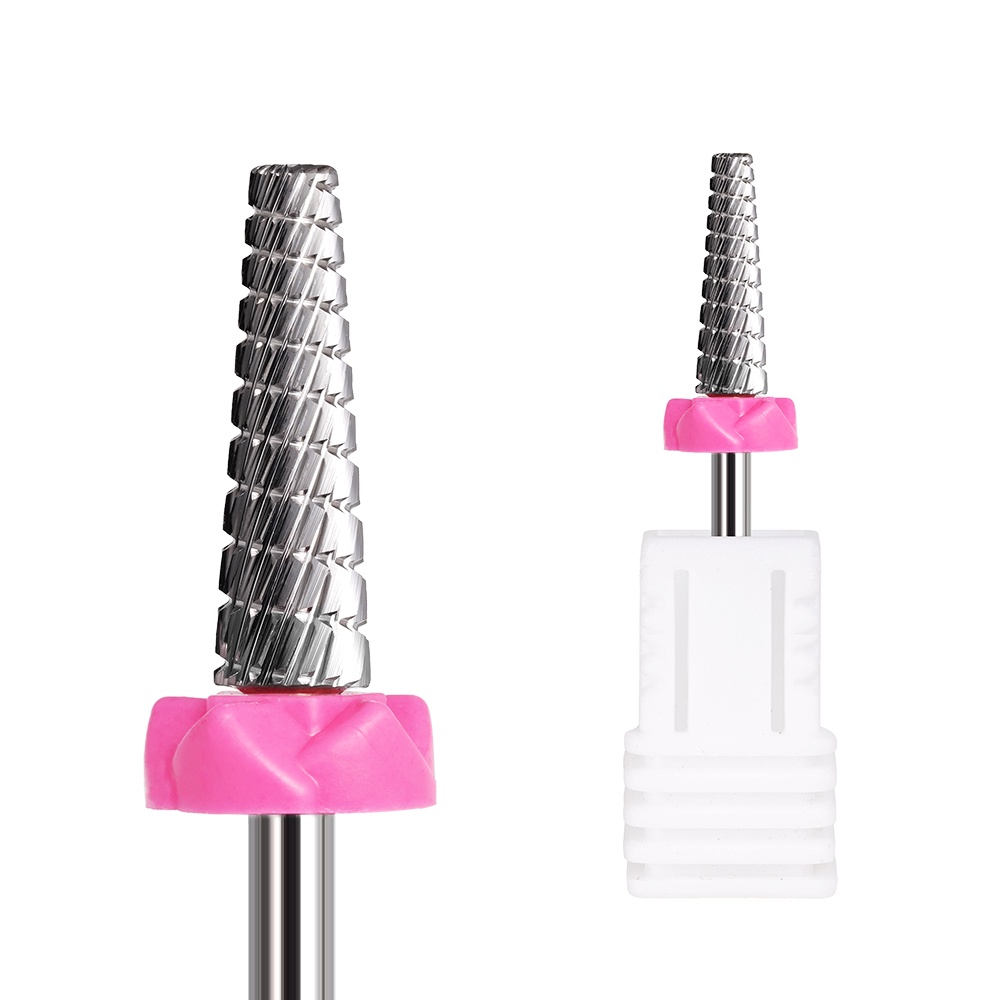
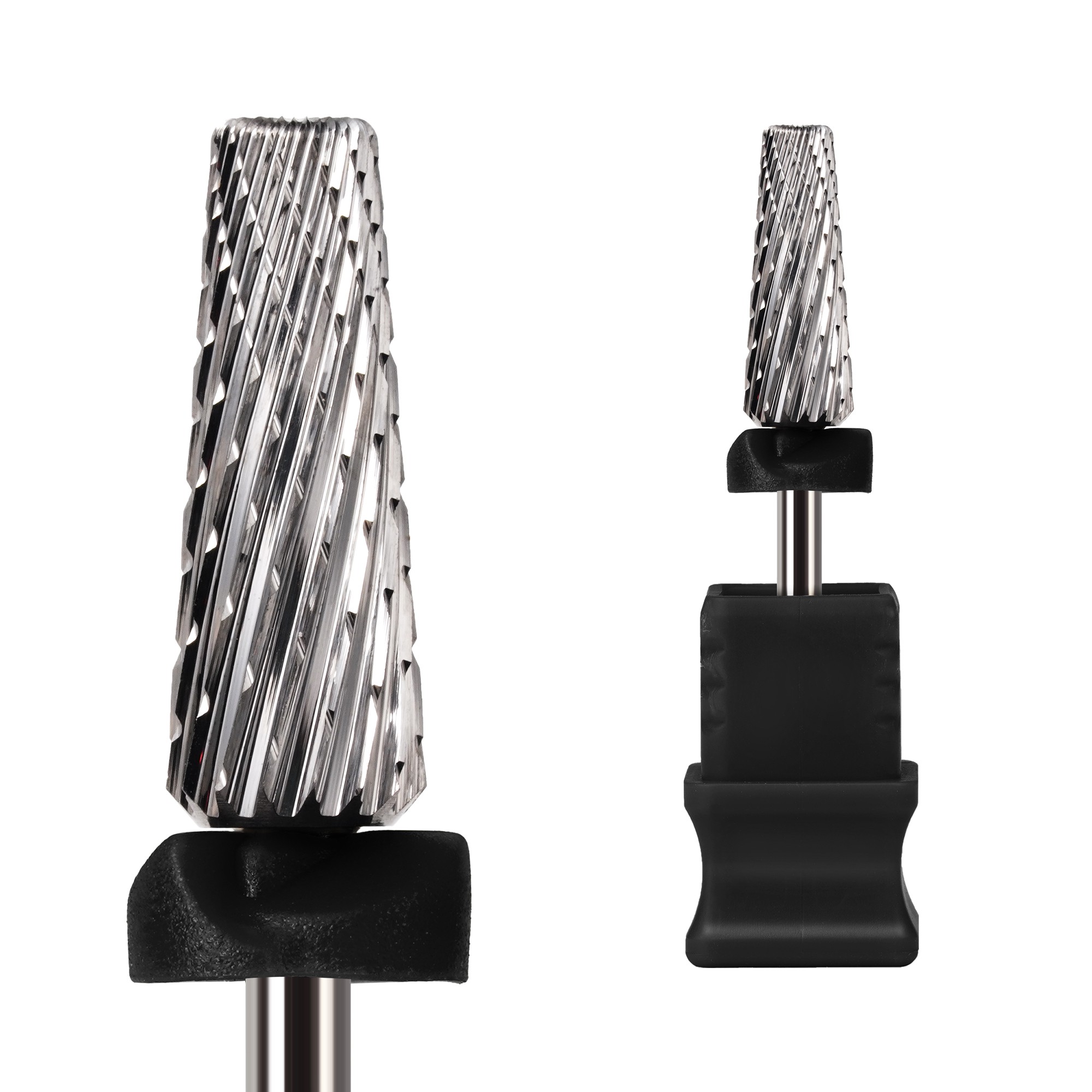
Graduated bits can be useful when workstation space is limited or when a technician needs to move from refining to removal without changing tools repeatedly. A tungsten steel bit with a surface that transitions from fine to coarse can support several stages of enhancement work, provided technicians understand which section of the bit is intended for each task.
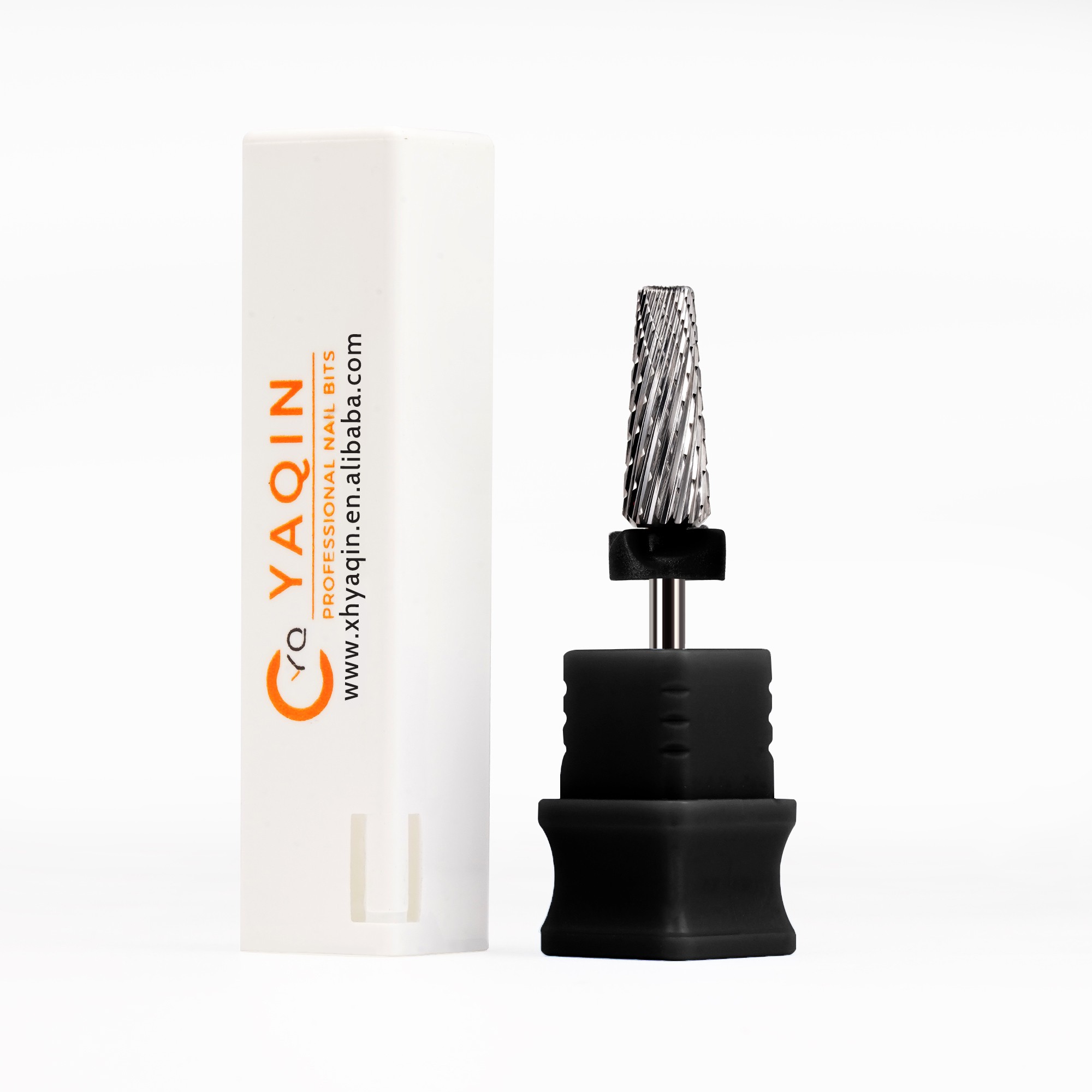
For example, a 5-in-1 Multi-Functional bit with a 3/32-inch shank combines graduated abrasiveness with bidirectional use. This type of design can be relevant for salons employing both left- and right-handed technicians, since clockwise and counterclockwise compatibility reduces the need to purchase mirrored cutting configurations. Corrosion resistance and easy brush cleaning also matter in a shared workstation environment.
However, a multi-functional design should be assessed as a workflow tool, not treated as a replacement for every specialist bit. It may reduce the number of products needed for filing, shaping, smoothing, and gel reduction, but it will not necessarily provide the same precision as a dedicated cuticle-preparation bit or the same finishing result as a purpose-designed polisher. The right question for procurement is whether it removes enough tool changes in the salon's most common services to justify its place in the assortment.
Check compatibility and hygiene before placing a bulk order
The 3/32-inch shank is widely used in professional electric nail drill handpieces, but buyers should still verify compatibility with their installed equipment. A bit that is nominally the correct diameter can perform poorly if its shank is uneven, insufficiently straight, or poorly finished. Signs of a problem include wobble, vibration, difficulty inserting the bit, or inconsistent rotation. These are quality-control concerns, not issues technicians should be expected to work around.
Cleaning and disinfection requirements deserve equal attention. Bits used on different clients need a defined cleaning process that removes visible debris before the salon's chosen disinfection or sterilization procedure. Abrasive surfaces, flutes, and narrow shapes can retain product and dust if cleaning is rushed. Buyers should consider whether the bit can be brushed effectively, whether its material tolerates the salon's cleaning method, and whether it can be stored without contact damage after processing.
It is also useful to separate reusable metal or diamond bits from items intended for limited use or regular replacement. A low unit cost can be misleading when a bit loses cutting performance quickly, cannot be adequately cleaned, or has to be removed from use after only limited services. Purchasing records should track replacement frequency by bit category, not just total spend.
A practical evaluation method for salon purchasing
Before moving to volume purchasing, request a representative sample set rather than one example of a single bit. Include the grit levels, shapes, and materials that will be used most often. Evaluate them against the service menu, not on an isolated demonstration nail.
- Confirm that shank size and fit are consistent across the sample set.
- Assess removal efficiency on the product systems used by the salon.
- Check for vibration, rough rotation, overheating, loading, and loss of cutting performance after cleaning.
- Compare technician handling across different experience levels and dominant hands.
- Review packaging protection, labeling clarity, and batch consistency before scaling the order.
- Set reorder levels separately for high-use removal bits, preparation bits, and finishing consumables.
The most dependable salon range is usually a focused one: medium-grit general-use bits supported by fine finishing options, coarse removal tools for defined applications, precision diamond shapes for preparation, and a limited number of multi-functional tools where they genuinely simplify service flow. That approach gives technicians enough choice to work well without turning every workstation into an uncontrolled collection of bits.
News List
- Preventing Gouges and Uneven Filing With Small Barrel Nail Drill BitsSep 20, 2026
- How Diameter and Grit Affect Small Barrel Nail Drill Bit PerformanceSep 20, 2026
- Can Hytos Nail Drill Bits Be Used Safely on Natural Nails and Gel Polish?Sep 20, 2026
- How to Verify Fit Between Hytos Nail Drill Bits and an E-File HandpieceSep 20, 2026
- Safe Speed Settings for Umbrella Nail Drill Bits Around the Nail FoldSep 20, 2026
- Umbrella vs Flame Nail Drill Bits: Which Shape Offers Better Cuticle Control?Sep 20, 2026
Best-Selling Products
 Cross Cut Safety Stainless Steel Tungsten Carbide Nail Drill Bits Salon Foot Use XF-C Grit for Removing Nails
 First-rate Quality Tungsten Carbide Nail Drill Bits Best Coating Manicure Remove Gel Nails Accessories
 Professional Advanced Safety Cuticle Bits Two-Way Rotate 3/32'' Carbide Tungsten 5 in 1 Nail Drill Bits
 Wholesale 5 in 1 Electric Manicure Nail Drill Bits Various Coating Cone Cuticle Bit with Rotary Cross Cut for Nail Art
 New Slant Tooth Tungsten Steel Nail Drill Bits Dead Skin Removal 5-in-1 Universal Grinding Nail Polish Head Tool Nail Drill Bits
 4.0mm Small 5 in 1 Integrated Sharpe Tungsten Nail Drill Bit Straight Teeth Gel Polish Removal
 Flame Sharp XF F M C XC Silver Safety Professional Corn Tungsten Carbide Nail Bit for Drill Machine Accessories
 Factory Direct 5 in 1 Tungsten Carbide Nail Drill Bits 6.8MM Cross Cut Safety Manicure 5 in 1 Nail Drill Bits
Please give us a message