
How cuticle cleaning tools help prevent overworking the nail plate
How cuticle cleaning tools help prevent overworking the nail plate
A natural nail can be damaged long before it looks visibly thin. A technician may notice a chalky patch, a warm sensation under the client’s fingers, or a surface that suddenly seems too flexible after polish removal. These are often signs that the nail plate has been worked beyond what the service required. The issue is not simply “using an e-file too much.” In many cases, it begins with incomplete cuticle-area preparation.
Cuticle cleaning tools create a clear boundary between non-living tissue, product residue, and the natural nail plate. When that boundary is visible and properly cleaned, the operator does not need to keep filing in search of adhesion or a smoother finish. The result is more controlled preparation, less repeated contact with the nail surface, and a more comfortable service for the client.
Why cuticle preparation affects the nail plate
The proximal nail area is small, but it has a major influence on the whole service. Dead cuticle tissue can adhere tightly to the nail plate and may look similar to the surrounding skin. Fine dust, oil, old product, and loosened keratin can also collect around the sidewalls and near the eponychium. If these materials remain in place, gel or polish may lift early. A technician trying to correct that lifting risk may respond by buffing more of the nail plate.
That is where unnecessary abrasion begins. The operator may repeatedly use a sanding band, buffer, or coarse bit across the same area, even though the real obstacle is still attached cuticle or trapped debris. A clean preparation zone makes the working surface easier to read. It allows the technician to remove only what is necessary rather than treating the entire nail plate as if it were the problem.
In practical terms, cuticle cleaning is not an extra decorative step. It is a precision step that protects the natural nail from compensatory filing.
What “overworking” actually looks like
Overworking does not always mean obvious grooves. It can be subtle, especially during a busy salon day when small amounts of extra pressure are repeated over several appointments. Common warning signs include:
- white, dull, or overly matte areas after preparation;
- localized thinning around the cuticle zone or sidewalls;
- heat felt by the client during e-file use;
- redness or tenderness caused by friction near the surrounding skin;
- small rings, scratches, or uneven texture that require more smoothing later;
- clients reporting sensitivity when washing hands or removing product.
Not every surface mark means the nail has been severely damaged, but every mark should prompt a technique check. The aim of nail preparation is not to grind the nail into a completely uniform, rough-looking surface. It is to remove only the shine or residue required by the chosen system while preserving as much healthy nail material as possible.
The tools that make precise cleaning possible
A well-organized workstation usually combines manual tools with appropriately selected e-file attachments. Each tool has a different role, and using one tool for every task is a frequent cause of over-preparation.
Manual pushers and curettes
A stainless-steel pusher, orangewood stick, or gentle curette can lift non-living cuticle from the nail plate before any rotary tool is introduced. This step is valuable because it reveals where the adhered tissue ends. The tool should glide with light pressure, following the curve of the proximal nail fold rather than pressing down into the plate.
When using a pusher, the goal is not to scrape aggressively until the nail appears dry or pale. A clean, controlled pass is usually more useful than repeated hard strokes. If resistance is high, forcing the tool can scratch the plate and irritate the surrounding skin.
Fine flame, needle, or tapered bits
Fine diamond or ceramic bits are commonly chosen for detailing around the cuticle pocket and sidewalls. Their narrow shape helps the operator reach close to the cuticle line without broad contact across the center of the nail. A flame-shaped bit, for example, can gently lift and remove dead tissue when held at the correct angle and moved continuously.
The bit should work on the residue, not dig into the nail. Keeping the tool moving, using low to moderate speed according to the bit type and technique, and maintaining a light hand are more important than trying to finish the area in one fast pass. A bit that pauses in one spot can create friction quickly, particularly on thin or flexible nails.
Ball bits for finishing loose tissue
After lifting and removing adhered cuticle, a small ball bit may be used to refine loose dead skin around the proximal fold. This is a finishing action, not an invitation to remove healthy living tissue. If the client experiences discomfort, if skin begins to look shiny or inflamed, or if the operator must push hard to see a result, the tool should be stopped and reassessed.
In other words, the best cuticle cleaning tools do not replace judgment. They make good judgment easier to apply.
A preparation sequence that reduces unnecessary filing
The following working order helps technicians avoid the common cycle of “file, discover residue, and file again.” It can be adapted for natural nail services, gel polish applications, structured overlays, and enhancement maintenance.
- Inspect before touching the nail. Look for thin free edges, peeling layers, existing trauma, lifting product, or skin sensitivity. A fragile nail requires a lighter plan from the beginning.
- Remove old product with the correct tool. Bulk removal should be separated from cuticle cleaning. Do not use a fine detailing bit to force through thick gel, and do not use a coarse removal bit close to the cuticle pocket.
- Lift adhered non-living cuticle gently. Use a manual pusher or a suitable fine bit with minimal pressure. Work in small sections so the edge of the residue is visible.
- Clean sidewalls and the proximal area. Remove dust and loose material as you work. A brush or dry wipe helps reveal whether the surface is actually clean.
- Refine only where needed. If shine reduction is required for adhesion, use the least abrasive method compatible with the product system. Avoid repeatedly passing over areas that are already prepared.
- Check the nail under clear lighting. Before applying product, confirm that no thin, chalky, or over-filed patches have been created. A clean surface should not look aggressively abraded.
This sequence may feel slower during training, yet it often saves time in the full appointment. There is less cleanup, less corrective buffing, and less risk of lifting caused by hidden cuticle residue.
Speed, pressure, and angle: the three controls operators cannot ignore
Tool selection matters, but technique determines whether a tool is protective or harmful. Even a fine bit can overwork the nail plate when used with excessive speed, pressure, or a flat angle.
Speed should match the task, material, bit design, and operator skill. Higher speed does not automatically mean faster preparation. Around delicate cuticle areas, excessive rotation can create heat, skip across the surface, or cause the technician to lose precision. Start conservatively and increase only when control remains stable.
Pressure should be light enough that the bit or hand tool does the work. A useful practical cue is to watch the client’s skin and nail movement. If the finger is being pushed away by the tool, pressure is probably too high. Heavy pressure also reduces the operator’s ability to feel changes in texture between residue and natural nail.
Angle determines where the abrasive surface contacts. A narrow detailing bit should approach the cuticle zone with the working area—not the tip—engaged. Holding it too flat can widen contact with the nail plate; holding it too upright may make it catch or concentrate friction. Technicians should practice on tips or training hands until the movement becomes controlled and natural.
Choose abrasiveness by task, not by habit
One of the most important professional standards in nail work is using the least aggressive tool that can complete the task effectively. A bit intended for rapid hard-gel reduction should not be treated as a universal preparation tool. Likewise, an ultra-fine bit may not be efficient for bulk removal and may tempt the operator to press harder than necessary.
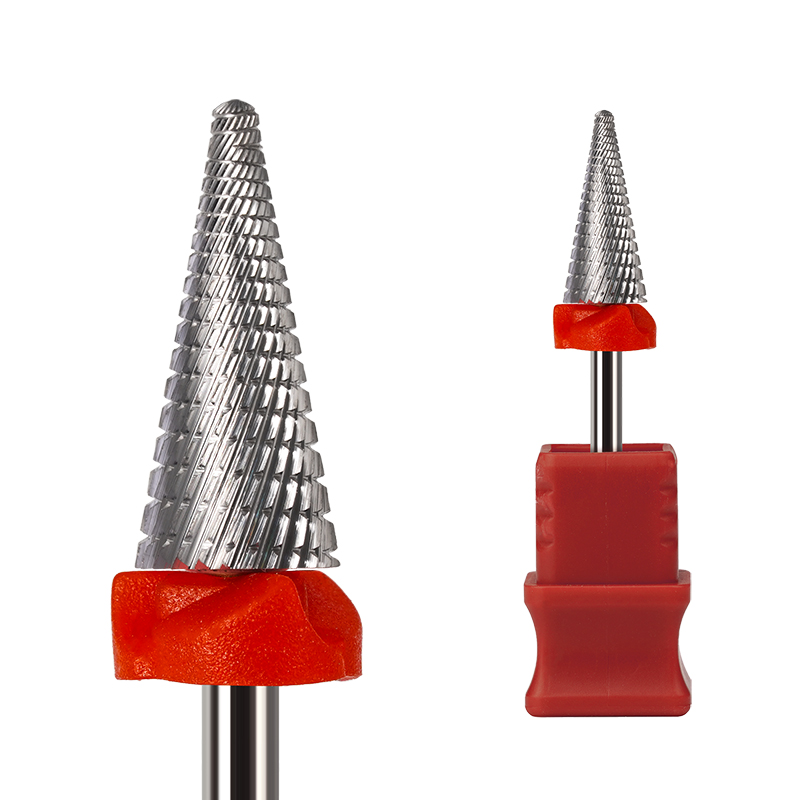
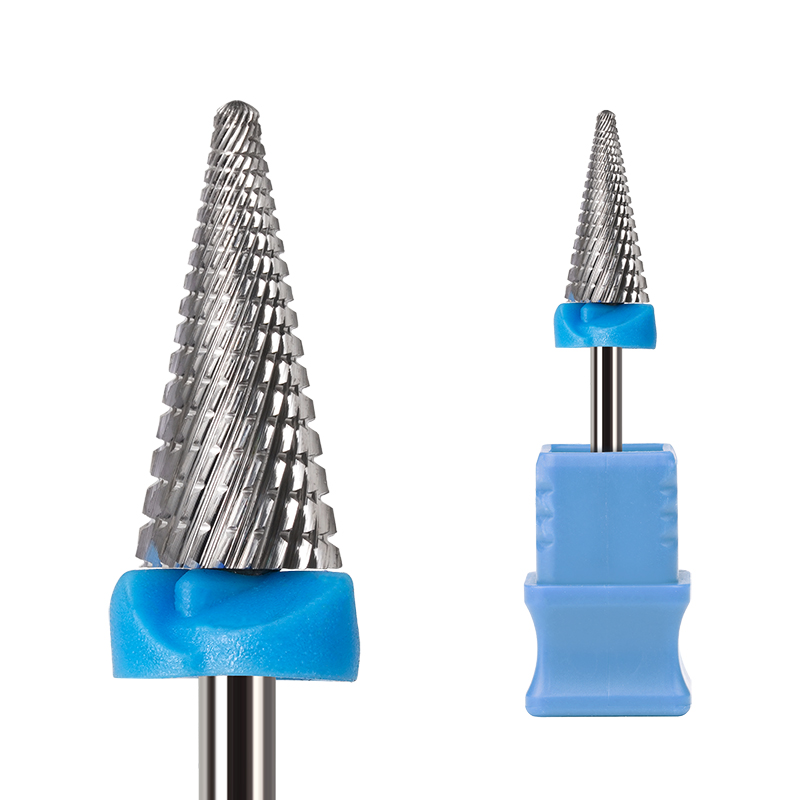
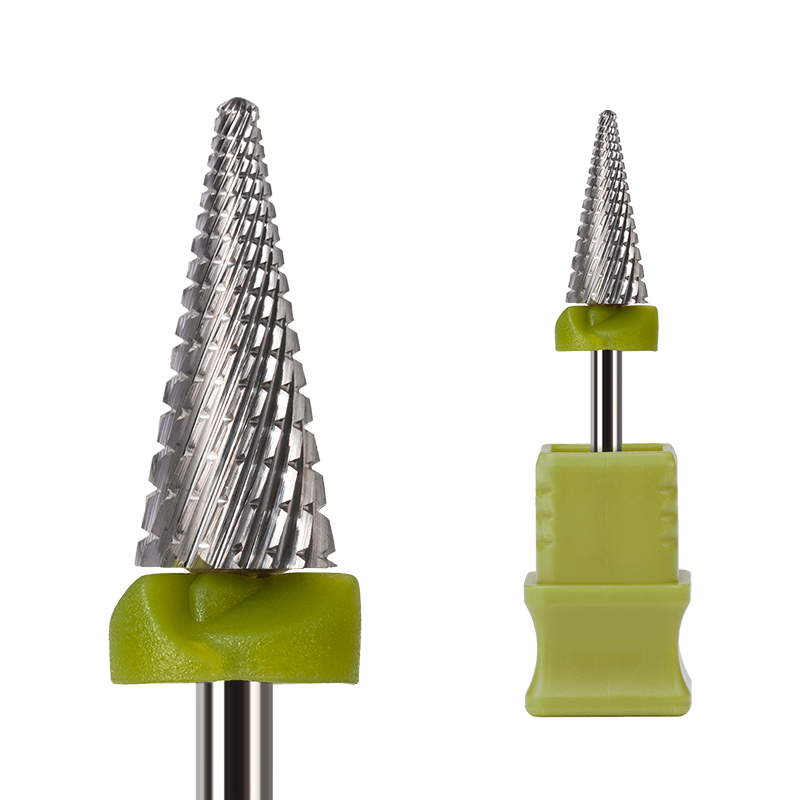
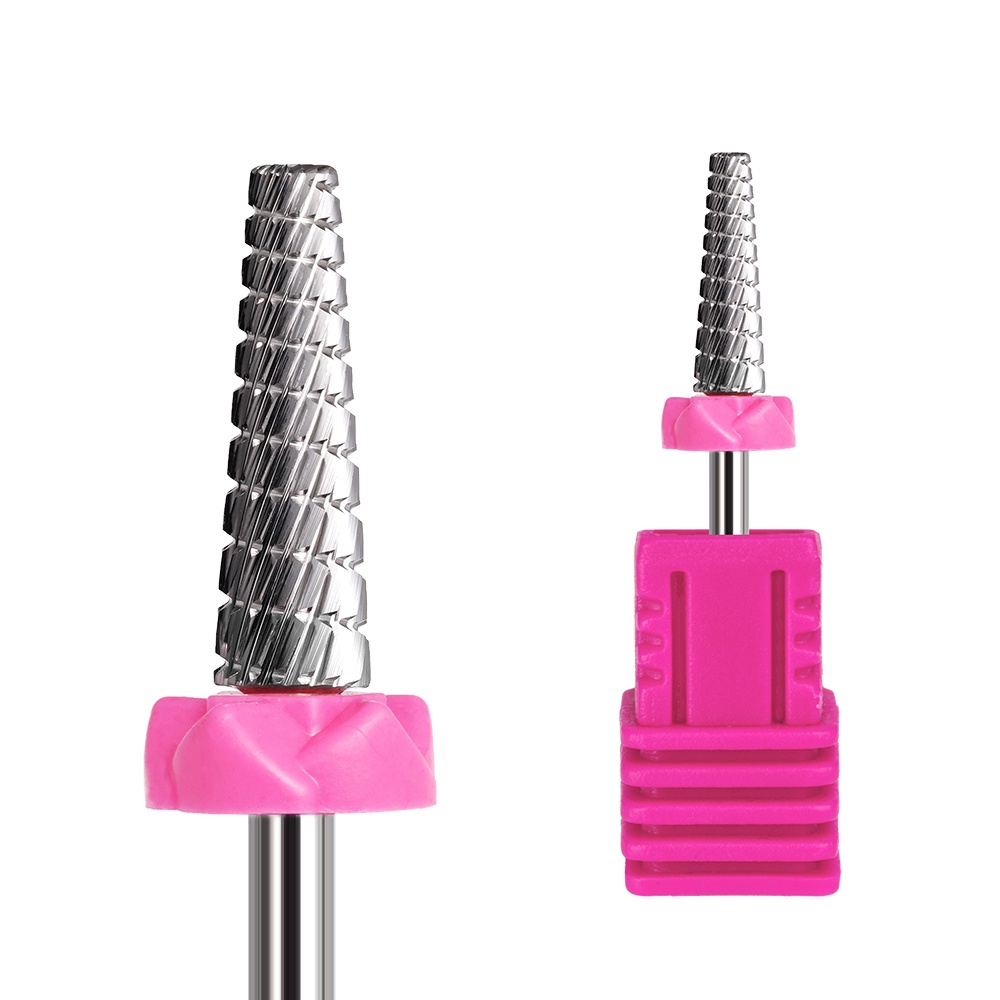
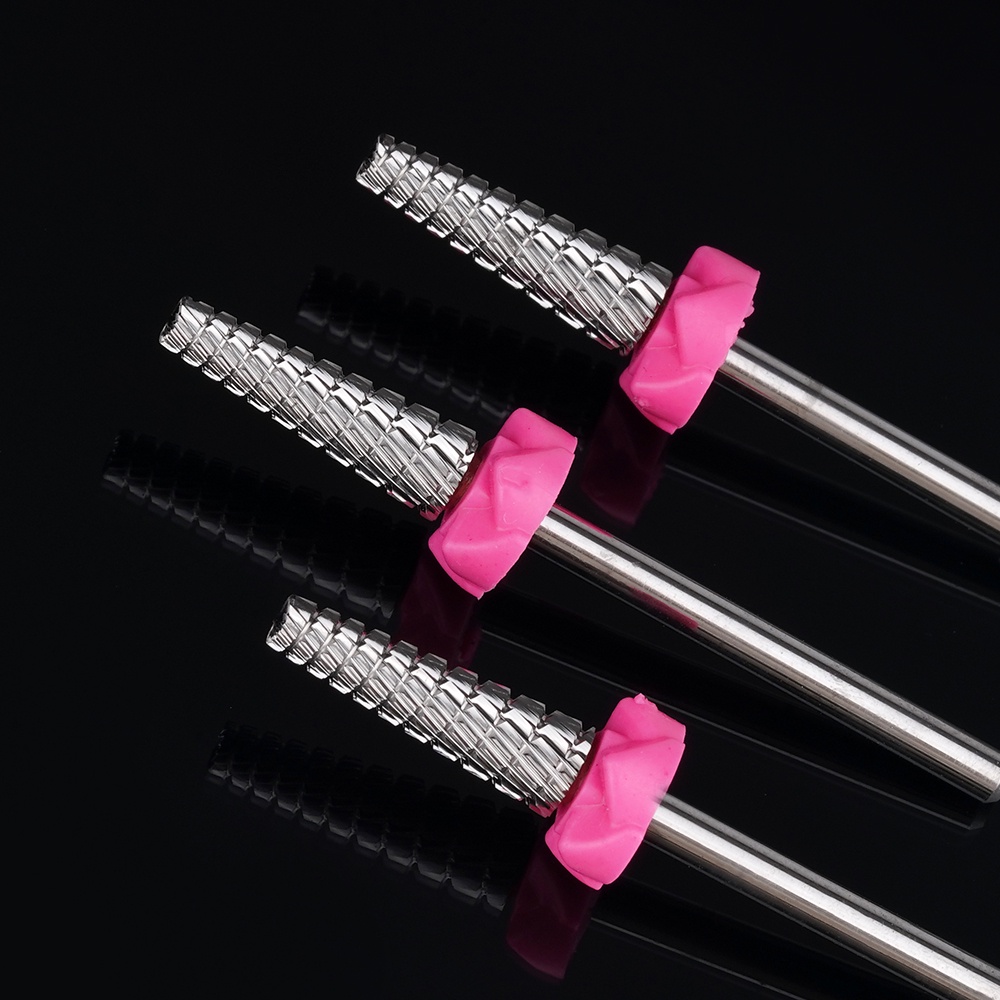
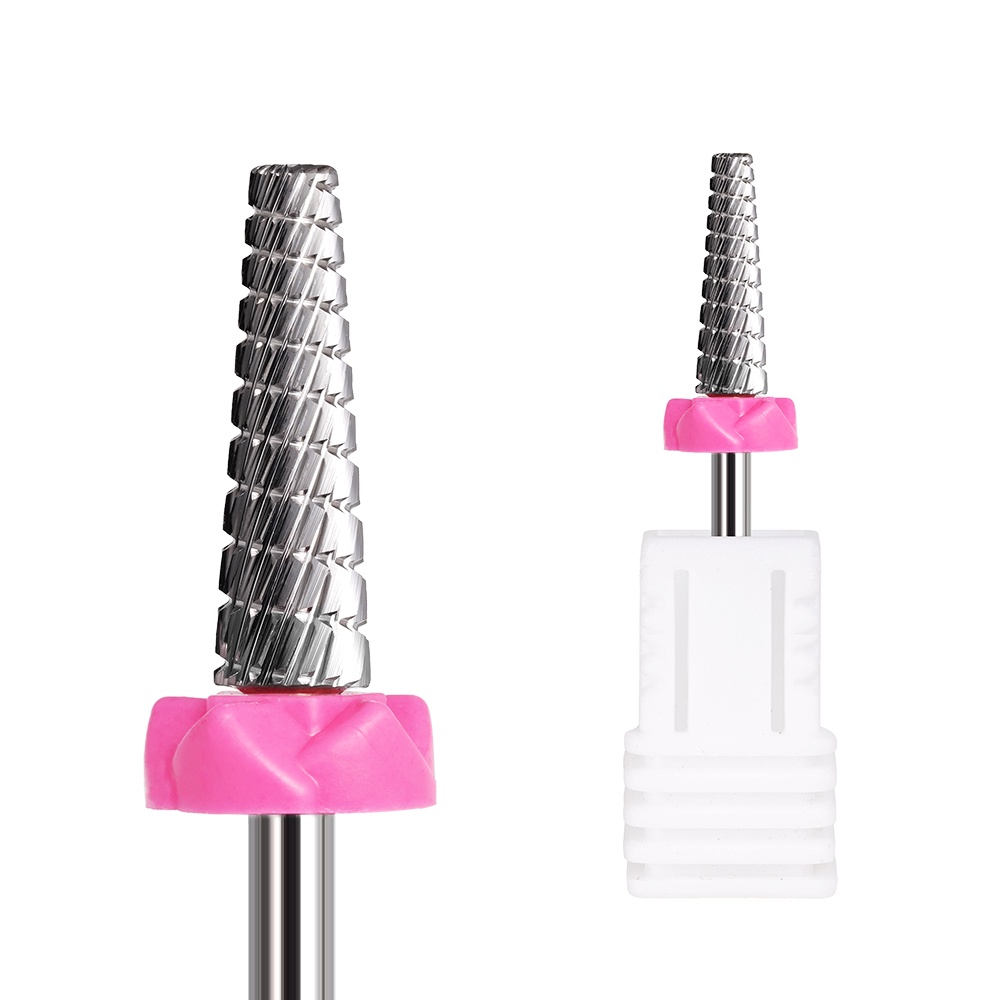
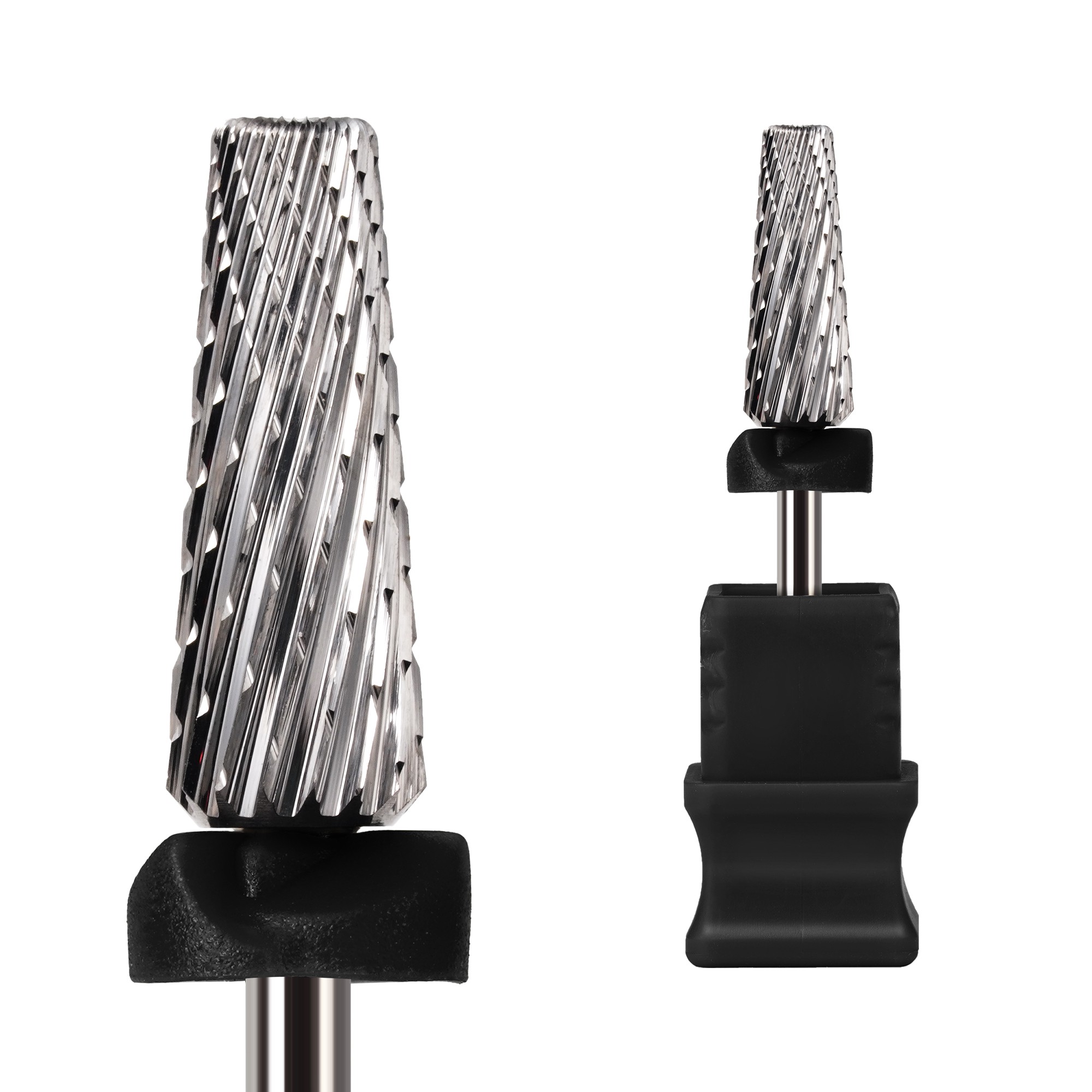
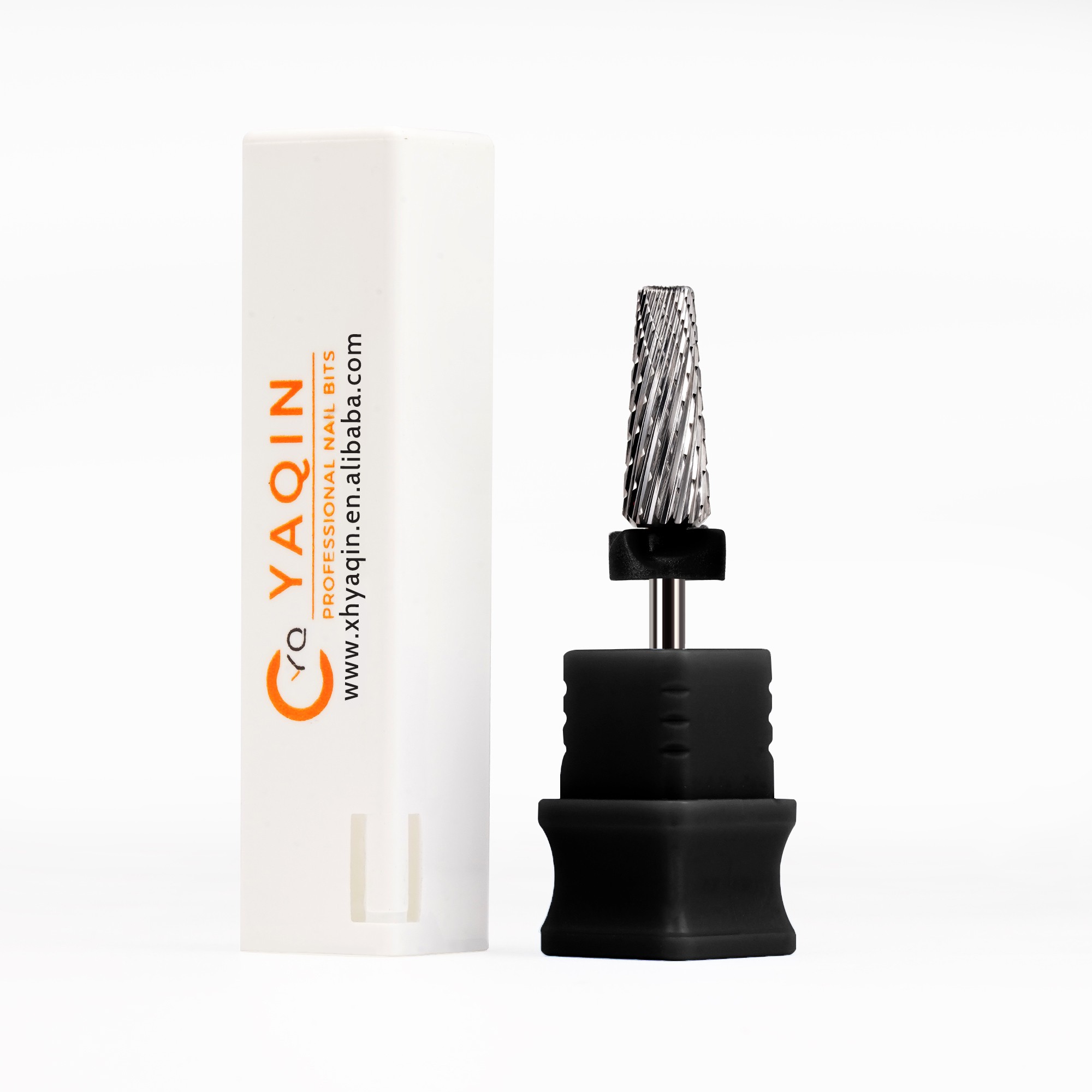
For example, a tungsten carbide bit with cross-cut teeth is generally more appropriate for reducing enhancement material, removing gel product, or managing thicker surfaces than for detailed work directly at a delicate cuticle line. Products such as the High Quality Helical Tungsten Carbide Nail Drill Bits 5 in 1 Professional Cross Cut Teeth Fast Remove Nail Gel Nail Drill Bit can support efficient gel removal and nail-preparation workflows when the operator assigns the bit to its intended role. Its helical cutting design supports dust ejection and material removal, while a smooth flat tip can provide an added measure of safety during controlled use. It should still be kept away from direct aggressive contact with the natural nail plate and surrounding living skin.
That distinction is important. Faster product removal can indirectly protect the nail by reducing prolonged filing, but only when the technician stops at the appropriate layer, switches to a finer tool when needed, and avoids chasing every trace of product with a coarse abrasive.
Common mistakes that make cuticle cleaning less safe
Confusing the eponychium with cuticle. The eponychium is living skin; the cuticle is non-living tissue attached to the nail plate. Cutting or aggressively sanding living tissue can lead to soreness, inflammation, and a compromised barrier. Clean what is detached and non-living; do not pursue an unnaturally “deep” cuticle line.
Using a dry, clogged, or worn bit. Accumulated dust changes how a bit contacts the surface and can cause dragging rather than clean cutting. Worn abrasives may encourage more pressure. Tools should be cleaned, disinfected or sterilized according to their material and local hygiene requirements, inspected regularly, and replaced when performance becomes inconsistent.
Working without removing dust. Dust hides the line between product, cuticle, and nail plate. Brief pauses to brush the surface are not wasted motion; they are visual quality control.
Trying to correct lifting by roughening everything. Lifting may result from incomplete cuticle removal, product application issues, contamination, curing variables, or client lifestyle factors. More abrasion is not a universal solution and may create a second problem while failing to solve the first.
How to adjust for thin, damaged, or sensitive nails
Clients with previously over-filed nails need a different pace. Their nail plates may flex more, generate heat more quickly, and show abrasion sooner. In these cases, manual cuticle cleaning and a very fine, controlled e-file technique are often preferable to broad sanding. Keep the preparation area small, avoid repeated passes, and use product systems that do not require unnecessary surface removal.
It is also wise to explain what the client may feel. Gentle vibration is normal with an e-file; burning, sharp discomfort, or persistent tenderness is not. Inviting immediate feedback helps technicians stop before a minor sensation becomes an injury. This small communication habit builds trust and improves technical outcomes.
Build a safer tool routine
Reliable nail services come from repeatable habits: clean tools, clear task separation, appropriate abrasiveness, and a willingness to slow down near delicate areas. For salons and operators sourcing e-file accessories, consistency in material quality, cutting geometry, packing, and inspection also matters. Wuxi Yaqin Trading Co., Ltd. supports professional abrasive-product supply with quality-control processes covering raw material purchasing, production, and packing, alongside OEM/ODM experience for businesses that need more tailored tool programs.
Ultimately, cuticle cleaning tools help prevent overworking the nail plate because they improve visibility and precision. They allow the technician to address dead tissue and debris where it actually sits instead of compensating with broad, repeated filing. When the right tool is paired with a light touch and a clear understanding of nail anatomy, preparation becomes cleaner, faster to assess, and far kinder to the natural nail.
News List
- Preventing Gouges and Uneven Filing With Small Barrel Nail Drill BitsSep 20, 2026
- How Diameter and Grit Affect Small Barrel Nail Drill Bit PerformanceSep 20, 2026
- Can Hytos Nail Drill Bits Be Used Safely on Natural Nails and Gel Polish?Sep 20, 2026
- How to Verify Fit Between Hytos Nail Drill Bits and an E-File HandpieceSep 20, 2026
- Safe Speed Settings for Umbrella Nail Drill Bits Around the Nail FoldSep 20, 2026
- Umbrella vs Flame Nail Drill Bits: Which Shape Offers Better Cuticle Control?Sep 20, 2026
Best-Selling Products
 Cross Cut Safety Stainless Steel Tungsten Carbide Nail Drill Bits Salon Foot Use XF-C Grit for Removing Nails
 First-rate Quality Tungsten Carbide Nail Drill Bits Best Coating Manicure Remove Gel Nails Accessories
 Professional Advanced Safety Cuticle Bits Two-Way Rotate 3/32'' Carbide Tungsten 5 in 1 Nail Drill Bits
 Wholesale 5 in 1 Electric Manicure Nail Drill Bits Various Coating Cone Cuticle Bit with Rotary Cross Cut for Nail Art
 New Slant Tooth Tungsten Steel Nail Drill Bits Dead Skin Removal 5-in-1 Universal Grinding Nail Polish Head Tool Nail Drill Bits
 4.0mm Small 5 in 1 Integrated Sharpe Tungsten Nail Drill Bit Straight Teeth Gel Polish Removal
 Flame Sharp XF F M C XC Silver Safety Professional Corn Tungsten Carbide Nail Bit for Drill Machine Accessories
 Factory Direct 5 in 1 Tungsten Carbide Nail Drill Bits 6.8MM Cross Cut Safety Manicure 5 in 1 Nail Drill Bits
Please give us a message