
When a 3/32 two-way nail drill bit improves filing control
When a 3/32 two-way nail drill bit improves filing control
When a 3/32 Two-Way Nail Drill Bit Improves Filing Control
A 3/32 two-way nail drill bit improves filing control when the work requires frequent changes in hand position, balanced cutting in both rotational directions, or a cleaner approach around curved nail architecture. The 3/32 dimension refers to the shank diameter, which must match the handpiece chuck. “Two-way” refers to a cutting pattern designed to work in both forward and reverse rotation, rather than a bit whose flutes are optimized for only one direction.
This distinction matters because filing control is affected by more than grit. Rotation direction changes the way the cutter engages product, the direction in which dust exits the work area, and the amount of lateral pull felt at the nail surface. A bit that cuts cleanly only in one direction can force repeated wrist repositioning when working from the opposite side of a nail. A properly made two-way bit reduces that interruption while retaining a predictable cutting response.
The benefit is most visible during structured gel removal, surface refining, product thinning near sidewalls, and transitions between an enhancement and the natural nail. It is less meaningful when the task is limited to one broad, flat area and the handpiece remains in one direction throughout the service.
What the Two-Way Cutting Pattern Changes
Conventional directional carbide flutes are shaped to remove material efficiently when the bit turns in a designated direction. Reversing the handpiece with a directional bit can make removal feel slower, less smooth, or more grabby. The operator may compensate by increasing pressure, raising speed, or holding the bit in one area longer. Those reactions can create heat and uneven thinning even when the bit itself is still sharp.
A two-way design uses a flute arrangement that can engage cured product from either rotational direction. It does not remove the need to control angle, pressure, and speed. Instead, it gives the same working end greater flexibility when the hand position changes. This is particularly useful when alternating between the left and right sidewalls, refining the product near the cuticle area, or working with a reverse handpiece setting.
The result is often a more continuous filing path. Rather than crossing over the nail or twisting the wrist to preserve the preferred rotation direction, the handpiece direction can be changed while the bit remains suitable for the task. Less repositioning can improve consistency because the contact point and viewing angle remain easier to manage.
Why the 3/32 Shank Still Needs Attention
A 3/32-inch shank is a common nail drill bit size, but compatibility should be confirmed before use. The shank must seat fully and securely in the handpiece. A loose or partially inserted bit can create vibration that resembles a dull cutter, excessive speed, or poor technique. In reality, the problem may begin at the connection between the bit and chuck.
Before filing, inspect the shank for bends, corrosion, residue, or damage near the insertion end. A clean shank supports secure clamping. Product dust or disinfectant residue left inside the chuck can also interfere with stable seating. If vibration appears only after changing bits, stop and inspect the fit instead of continuing with more pressure.
Shank size does not determine the cutting width. A narrow barrel with a 3/32 shank behaves differently from a wide barrel using the same shank. The working profile, flute geometry, tip shape, and grit determine how the bit behaves on the nail. Treating all 3/32 bits as interchangeable leads to poor selection decisions.
Filing Situations Where Bidirectional Control Is Noticeable
Two-way cutting is especially useful where the direction of travel must change around the nail. On a curved enhancement, a straight pass across the center can be controlled with several bit types. The sidewall transition is more demanding because the surface curves away from the bit and the available working area becomes narrow. A reversible cutting pattern allows the handpiece direction to match the approach without forcing a strained hand angle.
During debulking, the bit should remain in motion and follow a deliberate path. A two-way cutter can support a left-to-right pass in one handpiece direction and a right-to-left pass in the other, provided the contact angle remains shallow. This is useful when reducing bulk while preserving a thin layer of product over the natural nail for a rebalance or removal process.
It can also improve control when refining a grown-out enhancement. The old product, the lifted transition, and the natural nail do not respond to abrasion in the same way. A broad aggressive pass may remove bulk quickly but can leave a visible ridge or thin the natural nail near the regrowth zone. Switching direction to maintain a better line of sight can make it easier to feather the edge rather than cutting directly into it.
A two-way bit is not automatically appropriate for all detail work. Very close cuticle refinement, work at the lateral folds, and cleanup in tight corners require a suitable head profile and a controlled touch. The ability to run in reverse does not make a wide barrel safe in a restricted area. Tool geometry must still match the area being filed.
Direction, Pressure, and Contact Angle Work Together
Filing control comes from the relationship between the bit and the surface, not from speed alone. A carbide barrel is normally used with its side rather than its end pressed into the nail. The bit should make light, moving contact. Holding the same point in place increases friction and can produce heat before the material is visibly removed.
When changing forward to reverse, reassess the travel direction. The bit should be guided so that the flutes cut smoothly rather than pull toward a sidewall or catch an edge of product. If the tool starts to skip, chatter, or leave uneven tracks, reduce pressure first. Increasing RPM to overcome chatter can make a positioning problem harder to detect.
Heat is often misread as a grit problem. A coarse bit can generate little heat when it is sharp, moving steadily, and used with light pressure. A fine bit can feel hot when it is clogged, held too long in one spot, or applied at an unsuitable angle. Product type also changes the response: a flexible soft gel, a hard structured gel, and a thick base layer each offer different resistance to the cutter.
Grit Selection Is a Control Decision
The term “two-way” should not be confused with “universal grit.” A reversible cutter still needs a grit selected for the material and stage of work. Coarse carbide flutes remove hard gel and substantial bulk efficiently, but they leave less margin for correction near thin product areas. Medium grit is often easier to control for routine thinning and surface leveling. Fine grit supports finishing, soft gel removal, and controlled refinement where aggressive removal is unnecessary.
The condition of the enhancement matters as much as its material. A thick, intact hard gel overlay calls for a different approach than a lifting overlay with a weak perimeter. Filing directly across a lifted edge can cause the bit to catch under the product. Reduce the surrounding bulk first, approach the transition gradually, and avoid using rotation or pressure to force material away from the nail plate.
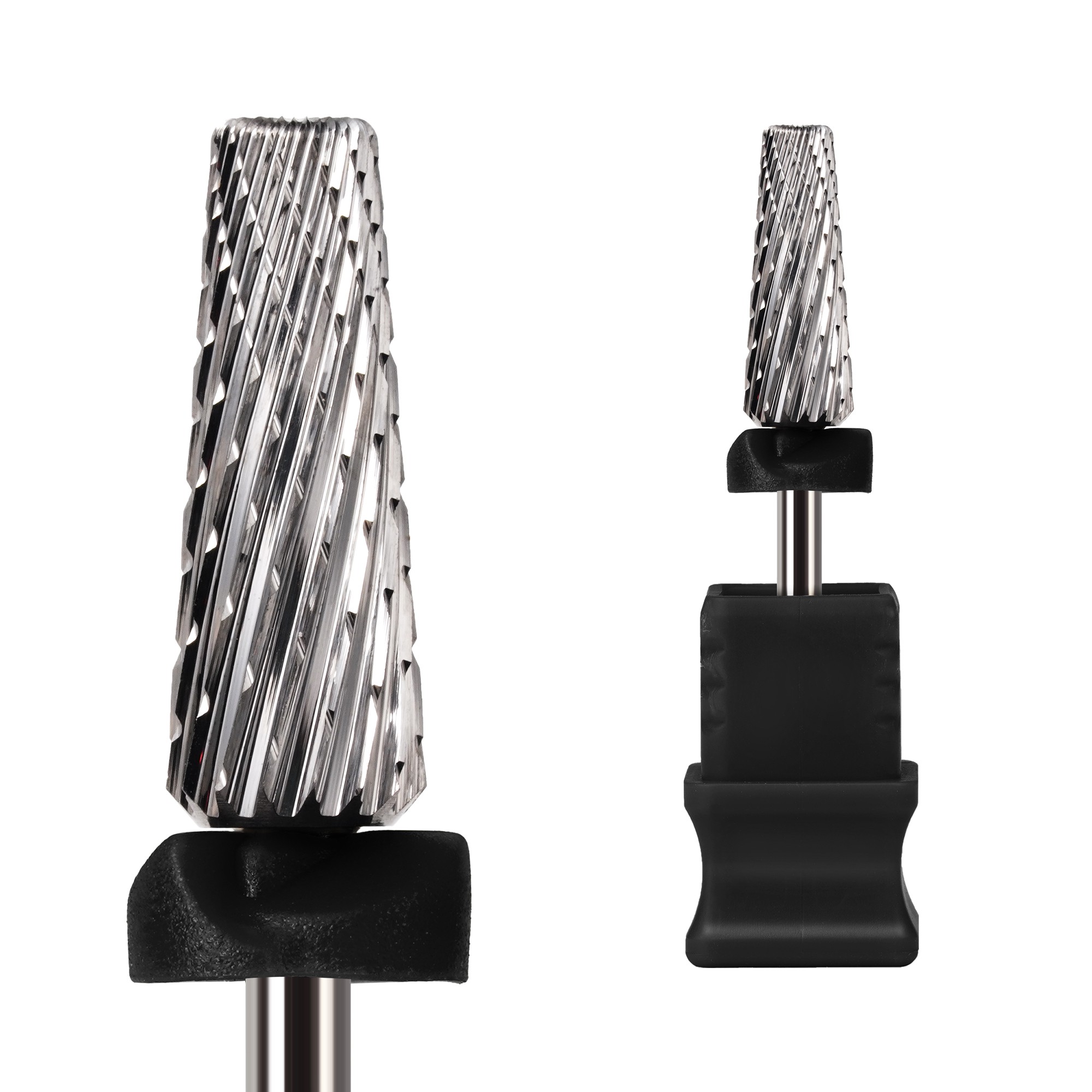
Cross-cut carbide patterns are often selected when efficient removal and a smoother cutting feel are both needed. On a 6.8 mm working head, the larger surface can shorten broad removal passes, while a rounded safety tip can reduce accidental contact risk at the end of the barrel. It remains important to keep the barrel away from sensitive folds and to choose a narrower profile where the available clearance is limited.
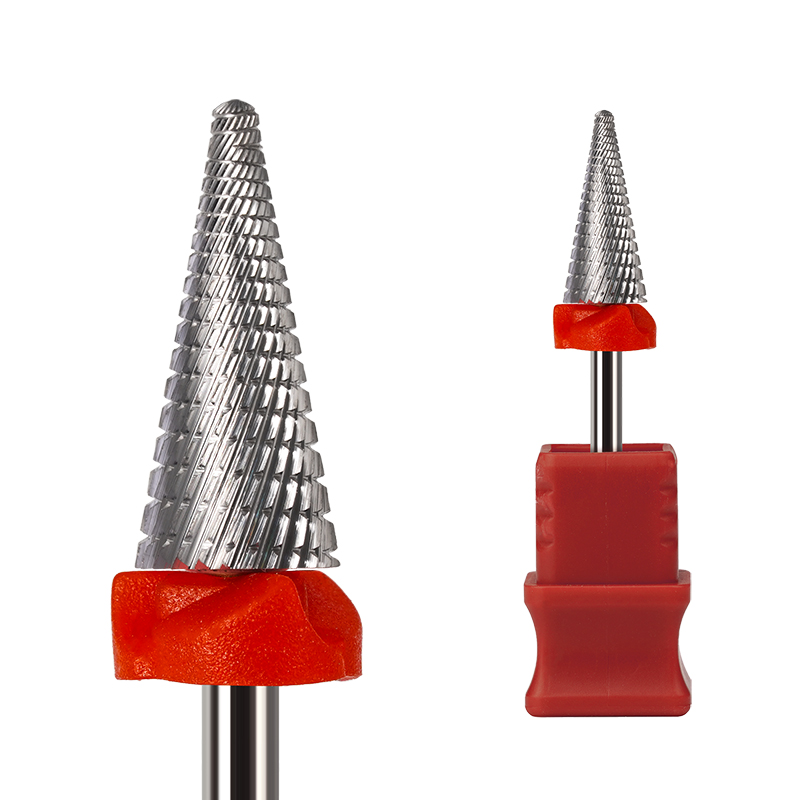
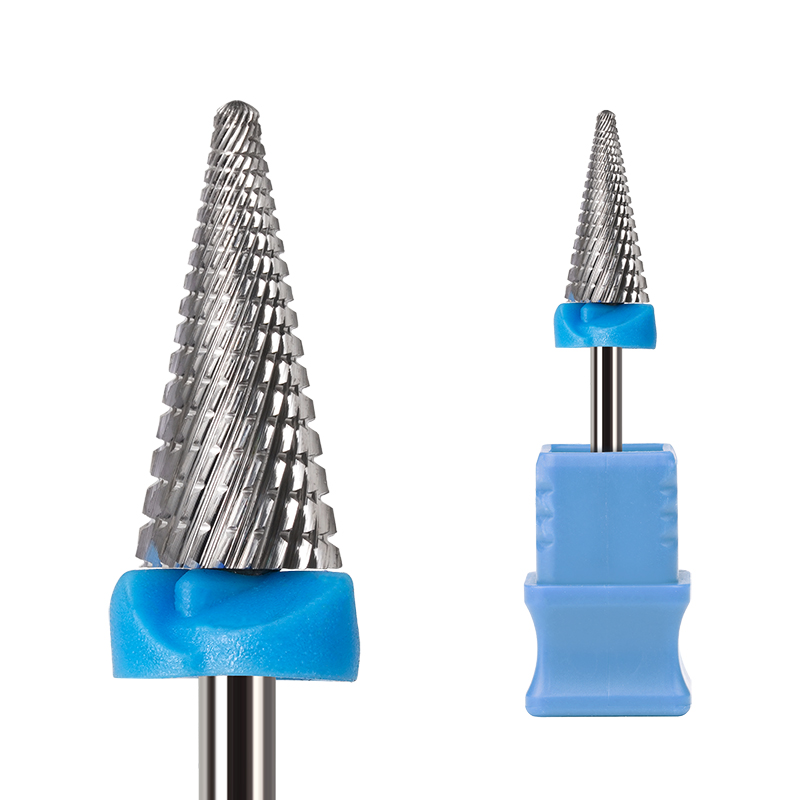
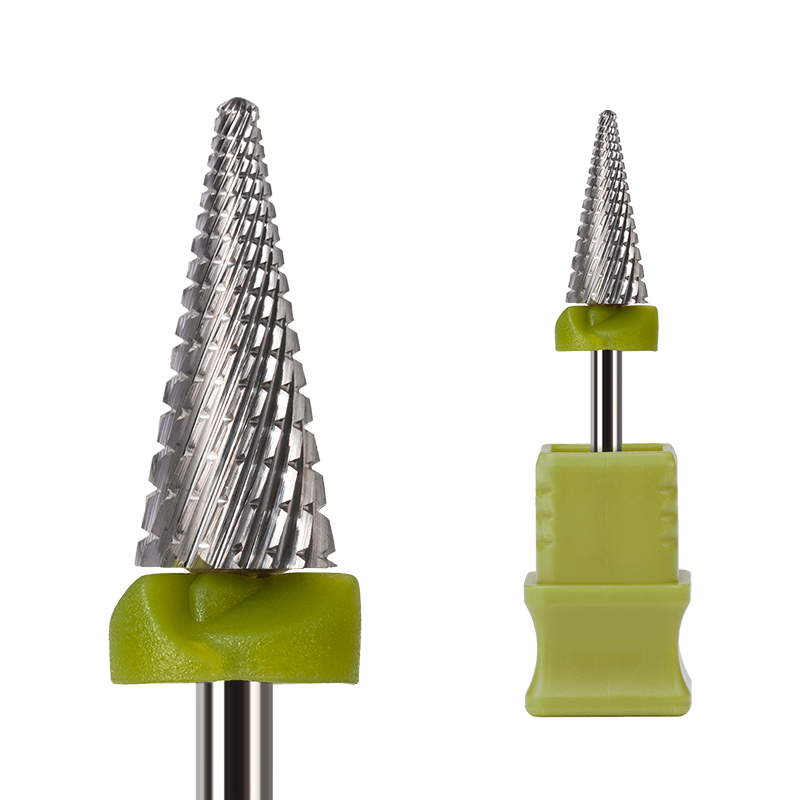
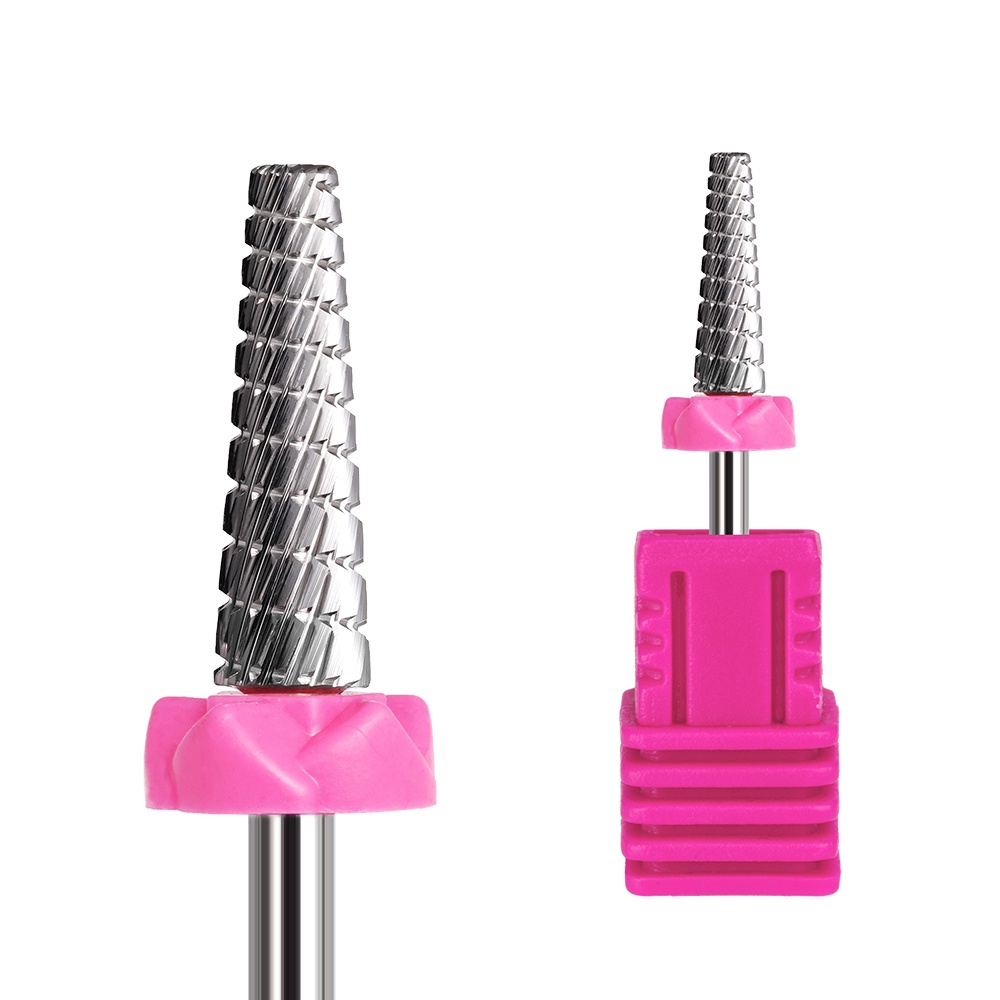
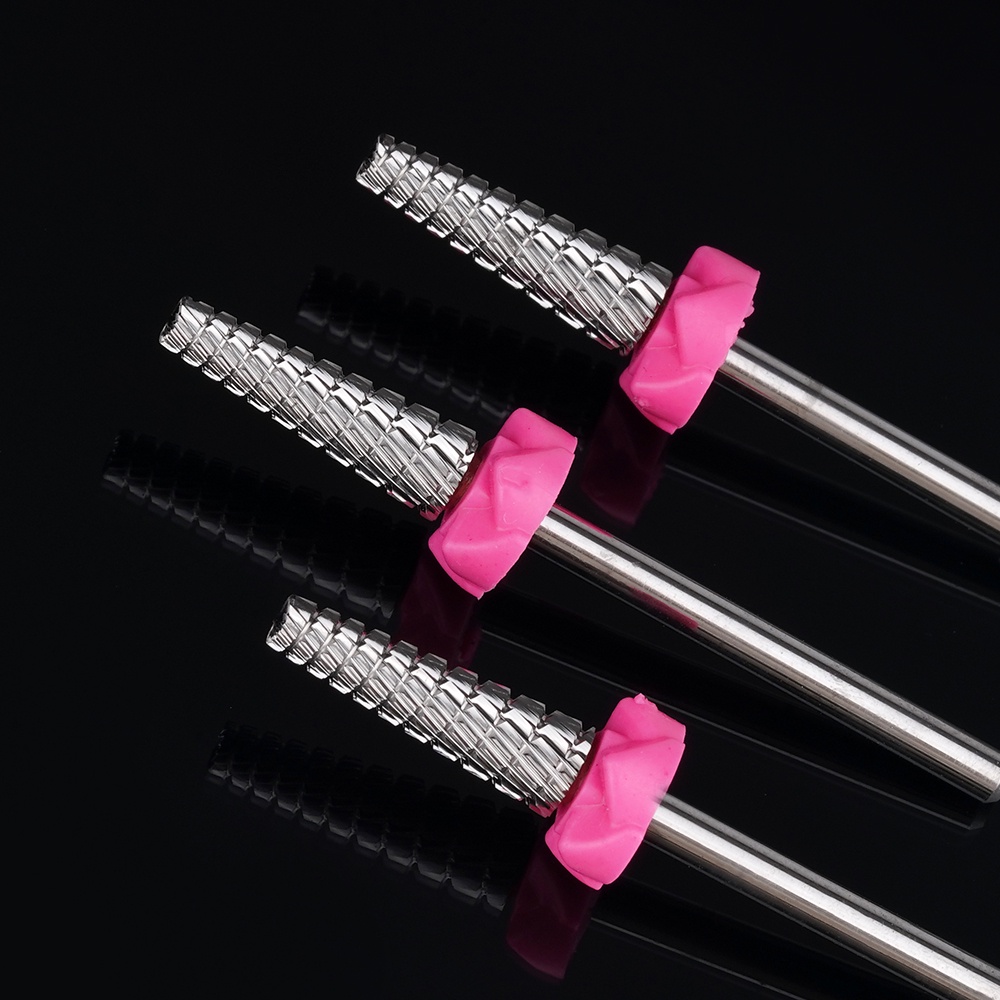
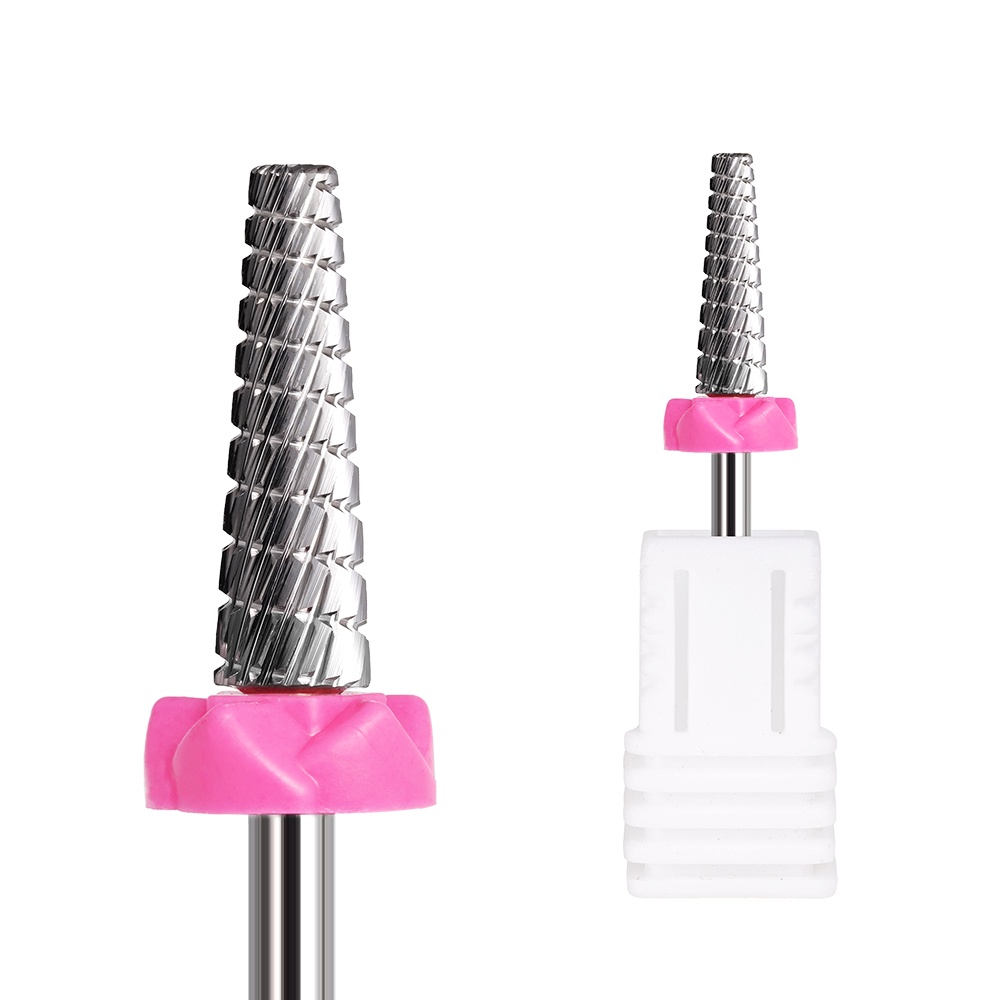
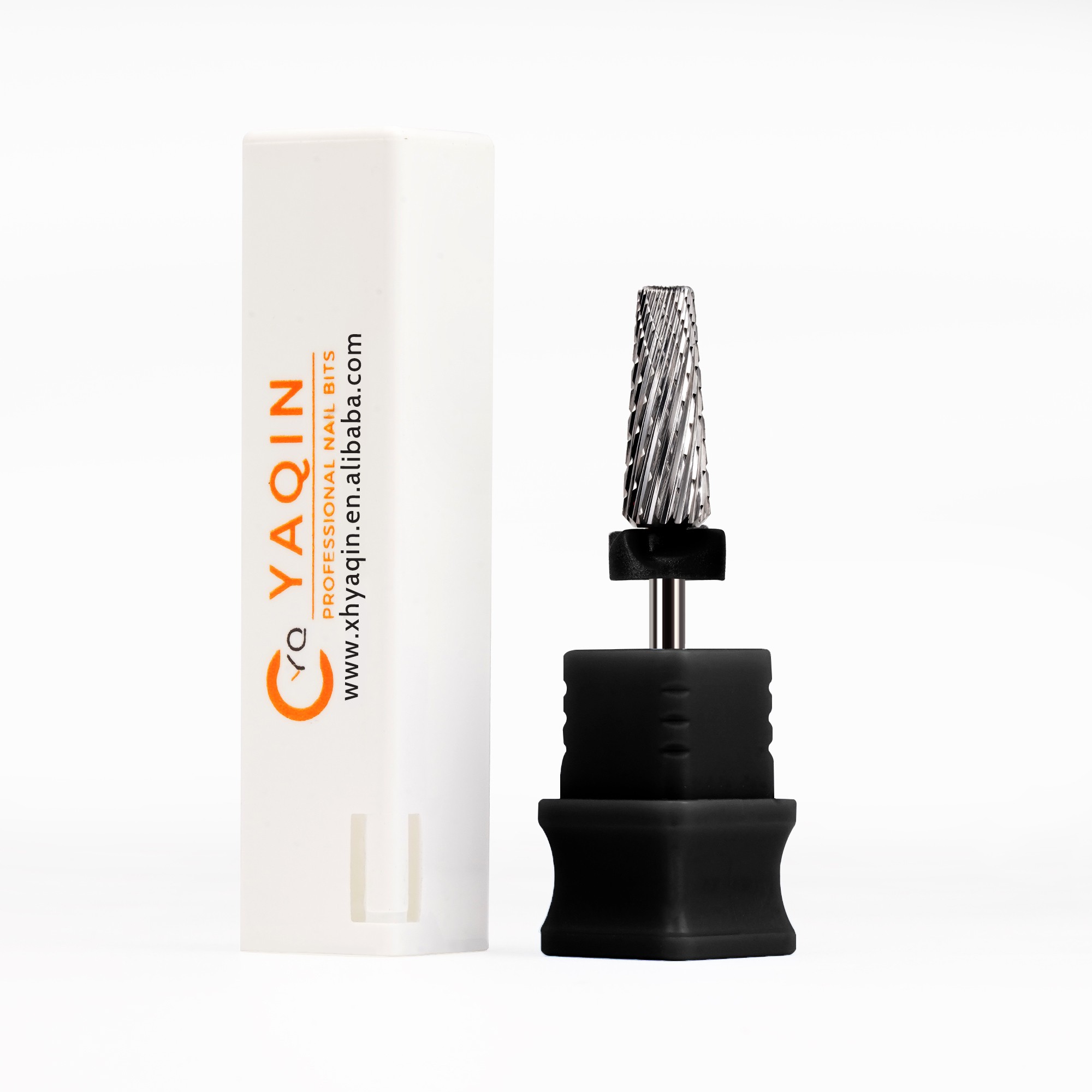
For example, a cross-cut, rounded-tip option such as Factory Direct 5 in 1 Tungsten Carbide Nail Drill Bits 6.8MM Cross Cut Safety Manicure 5 in 1 Nail Drill Bits combines coarse, medium, and fine grit choices with a two-direction working context. Its stated working-speed ranges distinguish between hard gel removal at 15,000 to 20,000 RPM and soft gel or base gel removal at 10,000 to 15,000 RPM. Those ranges are starting references rather than a substitute for observing heat, product response, and handpiece stability.
Where a Two-Way Bit Does Not Solve the Problem
Changing to a bidirectional bit will not correct poor handpiece balance, worn bearings, a bent shank, or an unstable chuck. Mechanical vibration transfers directly to the working end and makes controlled filing difficult. It can also cause irregular marks that look like aggressive grit tracks. Test the handpiece with the bit seated correctly before beginning detailed work.
It also cannot compensate for a dull cutting surface. Carbide bits wear gradually. A worn bit often creates finer dust, requires more pressure, and encourages longer dwell time. The temptation is to increase speed, but a sharper properly maintained bit is usually the better correction. Replacing worn bits preserves predictable contact and reduces unnecessary friction.
Another common error is using the two-way feature as permission to reverse direction mid-pass without considering where the cutting edge is touching. Stop the motion briefly, change the handpiece direction, re-establish a shallow contact angle, then continue. This small pause is preferable to allowing the bit to grab at a sidewall or product edge.
Maintaining Repeatable Filing Performance
After use, remove visible dust from the flutes with an appropriate cleaning brush before disinfection or sterilization according to the applicable product instructions and workplace procedure. Residue packed between carbide cuts reduces cutting efficiency and hides wear. Do not strike the working end against hard surfaces to remove debris; that can damage the flute edges or distort the shank.
Store each bit so that the cutting head does not contact other metal tools. A protective cap can reduce accidental damage during transport, but it should be used only after the bit is fully dry. Moisture retained beneath a cap can affect the storage condition of metal components over time.
Reliable filing control is therefore a combined result: a securely fitted 3/32 shank, a two-way flute pattern when direction changes are useful, a profile suited to the filing zone, and a grit matched to the amount and type of product being removed. When those conditions align, the bit supports smoother direction changes without asking the hand to compensate for a one-direction cutting pattern.
News List
- Preventing Gouges and Uneven Filing With Small Barrel Nail Drill BitsSep 20, 2026
- How Diameter and Grit Affect Small Barrel Nail Drill Bit PerformanceSep 20, 2026
- Can Hytos Nail Drill Bits Be Used Safely on Natural Nails and Gel Polish?Sep 20, 2026
- How to Verify Fit Between Hytos Nail Drill Bits and an E-File HandpieceSep 20, 2026
- Safe Speed Settings for Umbrella Nail Drill Bits Around the Nail FoldSep 20, 2026
- Umbrella vs Flame Nail Drill Bits: Which Shape Offers Better Cuticle Control?Sep 20, 2026
Best-Selling Products
 Cross Cut Safety Stainless Steel Tungsten Carbide Nail Drill Bits Salon Foot Use XF-C Grit for Removing Nails
 First-rate Quality Tungsten Carbide Nail Drill Bits Best Coating Manicure Remove Gel Nails Accessories
 Professional Advanced Safety Cuticle Bits Two-Way Rotate 3/32'' Carbide Tungsten 5 in 1 Nail Drill Bits
 Wholesale 5 in 1 Electric Manicure Nail Drill Bits Various Coating Cone Cuticle Bit with Rotary Cross Cut for Nail Art
 New Slant Tooth Tungsten Steel Nail Drill Bits Dead Skin Removal 5-in-1 Universal Grinding Nail Polish Head Tool Nail Drill Bits
 4.0mm Small 5 in 1 Integrated Sharpe Tungsten Nail Drill Bit Straight Teeth Gel Polish Removal
 Flame Sharp XF F M C XC Silver Safety Professional Corn Tungsten Carbide Nail Bit for Drill Machine Accessories
 Factory Direct 5 in 1 Tungsten Carbide Nail Drill Bits 6.8MM Cross Cut Safety Manicure 5 in 1 Nail Drill Bits
Please give us a message