
Can electric drills remove thick gel manicure without nail damage?
Can electric drills remove thick gel manicure without nail damage?
Yes. An electric nail drill can remove a thick gel manicure without damaging the natural nail, but only when the gel is reduced in controlled layers rather than filed all the way down to the nail plate. The tool itself is not automatically harmful. Damage comes from excessive pressure, a bit that is too aggressive for the remaining product, staying in one spot, or mistaking the base layer for natural nail.
Thick gel systems are difficult to remove with a hand file alone because they may include a structured base, builder gel, several color coats, glitter, and a glossy top coat. An electric file removes this bulk faster and with more even pressure. The safe objective is to remove most of the enhancement, leave a very thin protective layer when appropriate, and then finish the remaining material gently. Trying to expose bare natural nail with a coarse drill bit is where over-filing becomes likely.
Why thick gel needs a different approach
“Thick gel” is not a single material. A flexible soak-off gel polish, a rubber base, a builder gel, and a hard gel can look similar once cured, yet they respond differently to abrasion and solvents. Soft gel polish usually files away in fine dust and may soften after acetone exposure. Hard gel remains rigid and normally must be filed down. Builder gel sits between those two patterns: some formulas soak off, while others are intended to be reduced mechanically.
This distinction changes the removal plan. A hard, reinforced overlay can tolerate bulk removal with a carbide bit when the drill is kept moving. A thin natural nail covered with soft gel needs a lighter touch, because the product layer may disappear sooner than expected. Glitter is another source of confusion. The sparkling particles can make the surface appear uneven even after much of the gel has been removed, tempting unnecessary filing near the nail plate.
Thickness is also uneven across the nail. The apex, often positioned through the center area, may contain much more product than the sidewalls and free edge. Filing every area with the same time, pressure, and angle removes material unevenly. The sidewalls can become exposed while the center still looks bulky. Safe removal follows the actual product thickness, not a fixed number of passes.
What protects the natural nail
The natural nail plate is made of compact keratin layers. It is firm but not a hard plastic surface, and its thickness varies from nail to nail. Repeated aggressive filing can thin those layers, leaving nails flexible, rough, sensitive to pressure, or prone to splitting at the edge. A drill bit should cut cured gel efficiently enough that the hand does not need to push down. Pressure is not a substitute for a suitable bit.
Heat is an equally important warning sign. Friction builds when the bit stops moving, when the rotation speed is poorly matched to the material, or when the bit is clogged with product dust. A brief warm sensation should prompt an immediate pause and repositioning. Sharp or burning heat should never be ignored. Heat can occur even at modest speed if the bit is pressed into one small area, especially near the cuticle where the nail plate is often thinner.
Direction matters as well. Drill bits have cutting flutes designed to work in a particular rotation direction. A right-handed bit used in the wrong direction may scrape rather than cut cleanly. This can cause skipping, chatter marks, and extra heat. Before touching the nail, confirm whether the bit is made for forward rotation, reverse rotation, or both. The handpiece should be stable, and the supporting finger should rest against the working hand to reduce sudden movement.
Bit choice changes the result
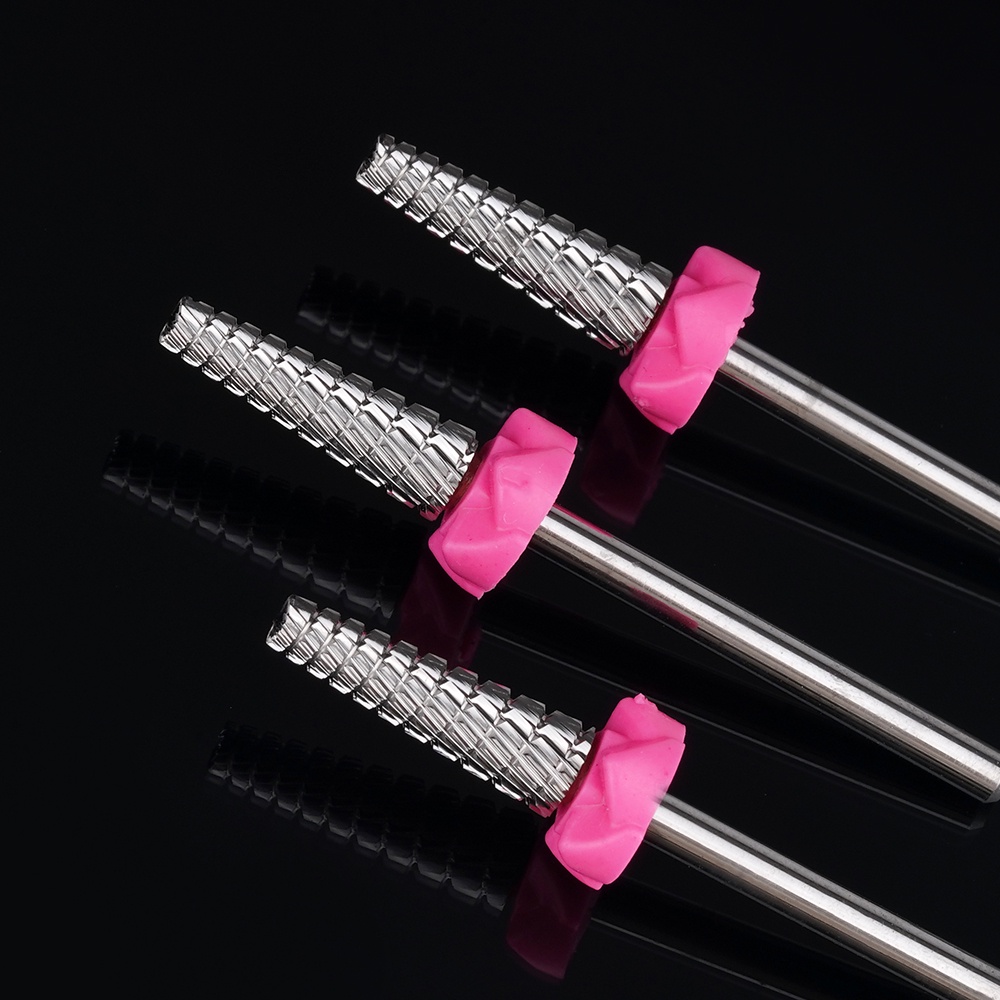
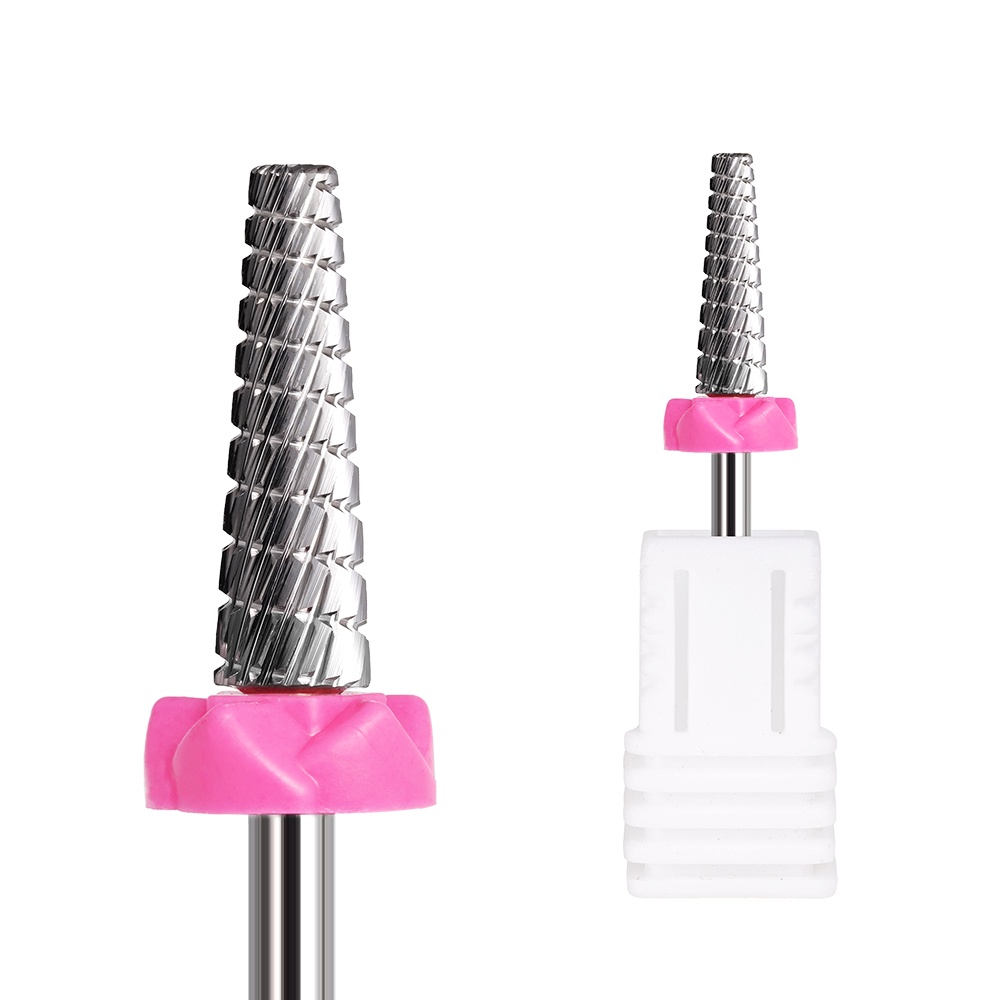
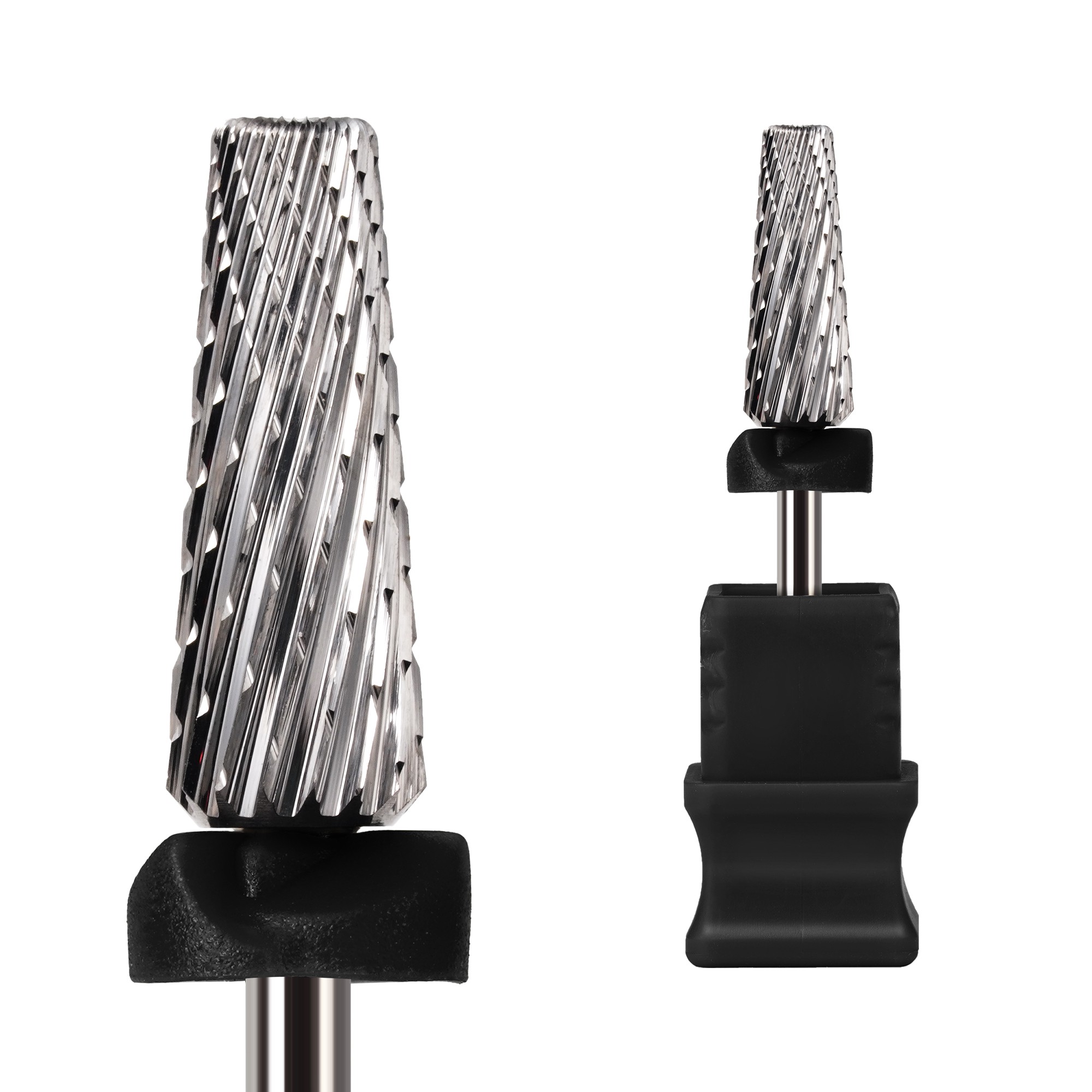
Tungsten carbide bits are commonly selected for reducing cured gel because their fluted surface cuts product rather than merely sanding it. The grade and shape still matter. Coarse carbide removes bulk quickly, medium carbide offers more control as the gel becomes thinner, and fine carbide is better suited to refining a remaining layer. A rounded safety top reduces the chance of catching skin near the cuticle, but it does not make it safe to press the bit into the nail plate.
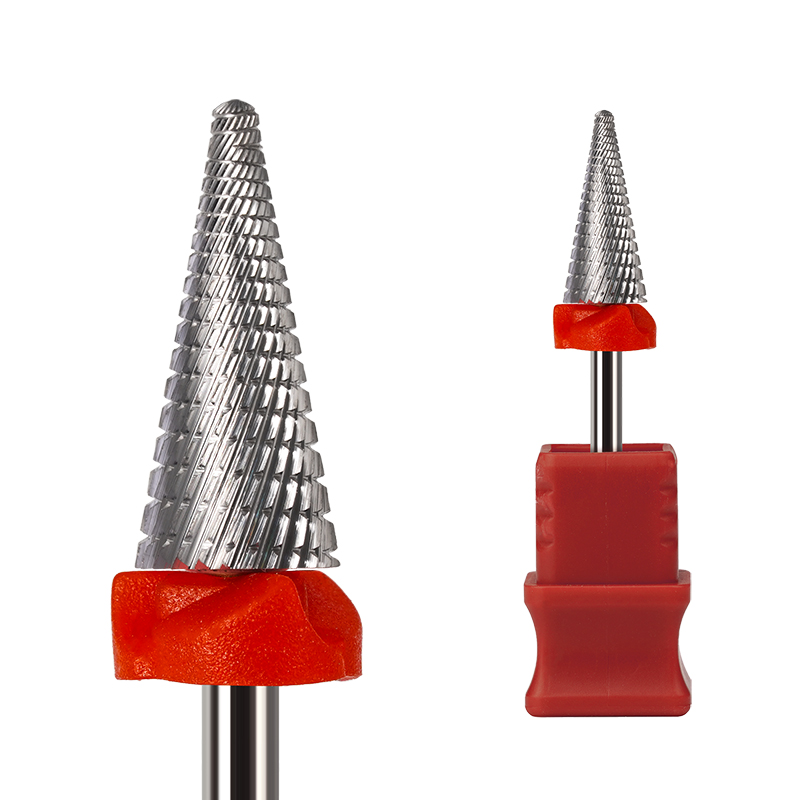
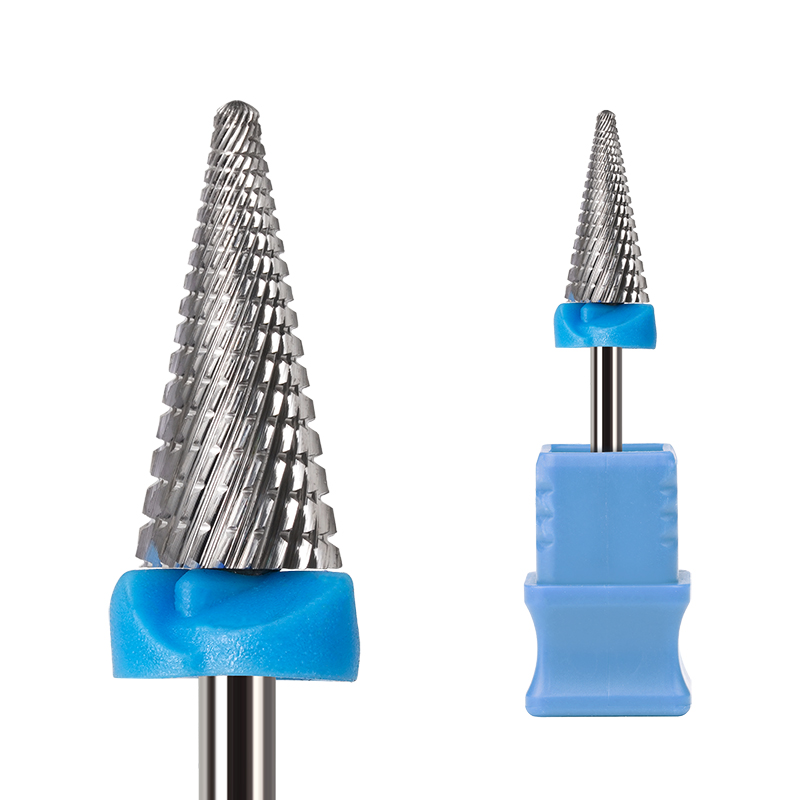
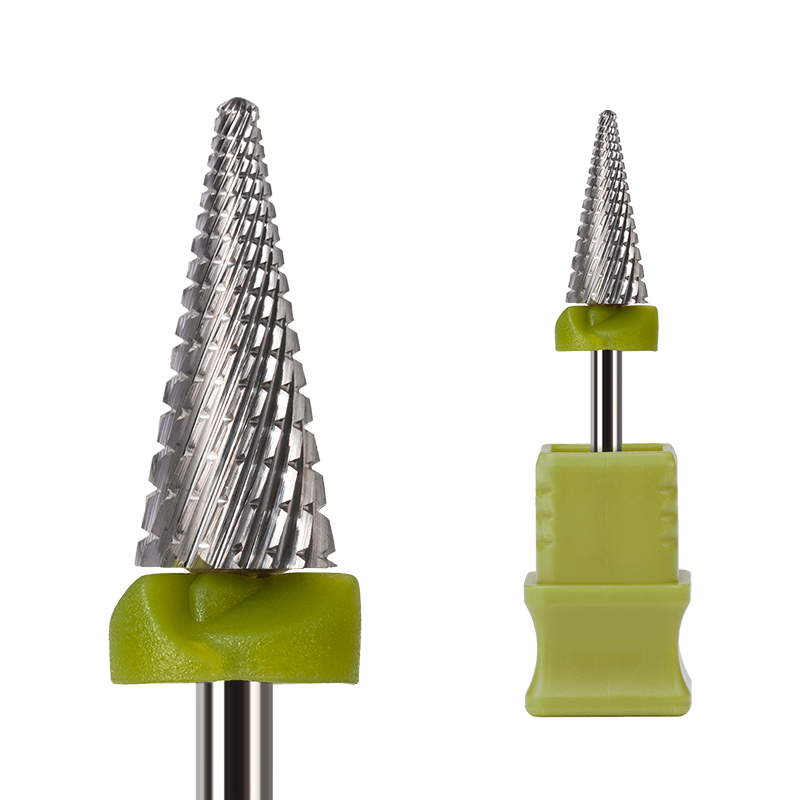
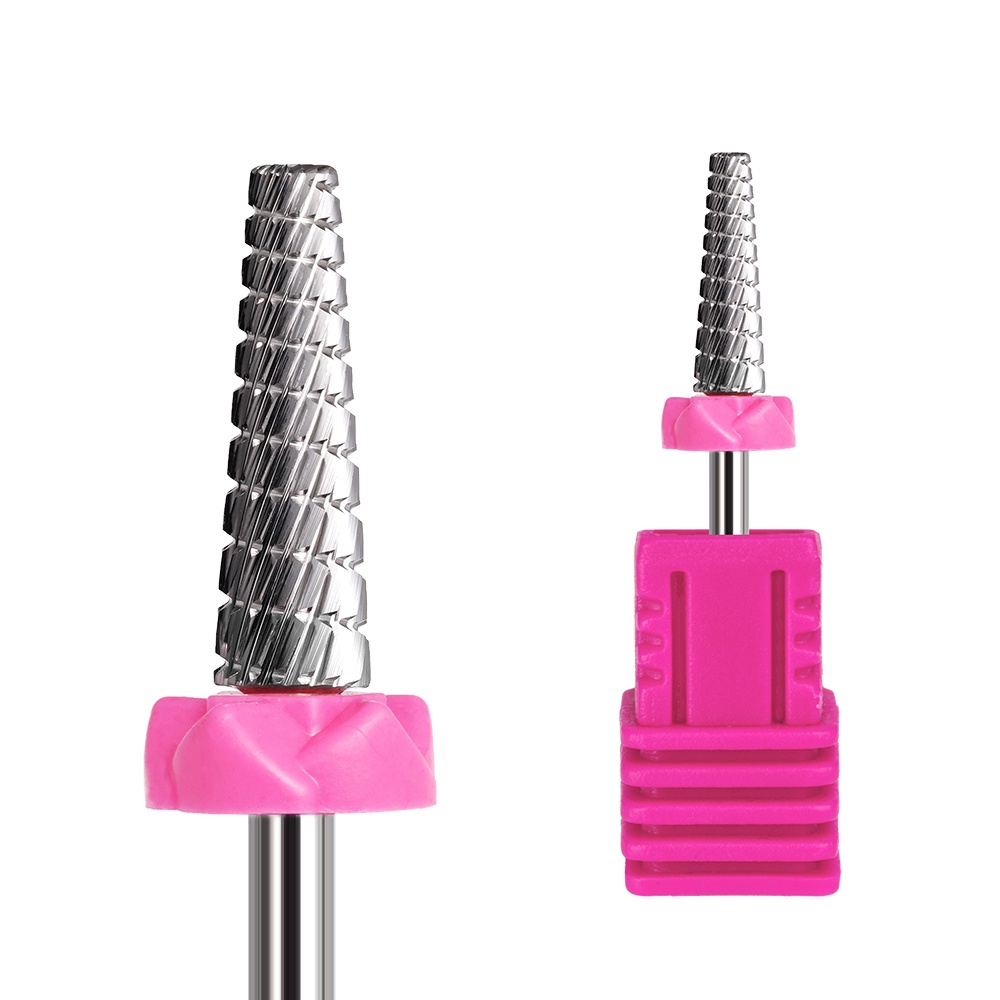
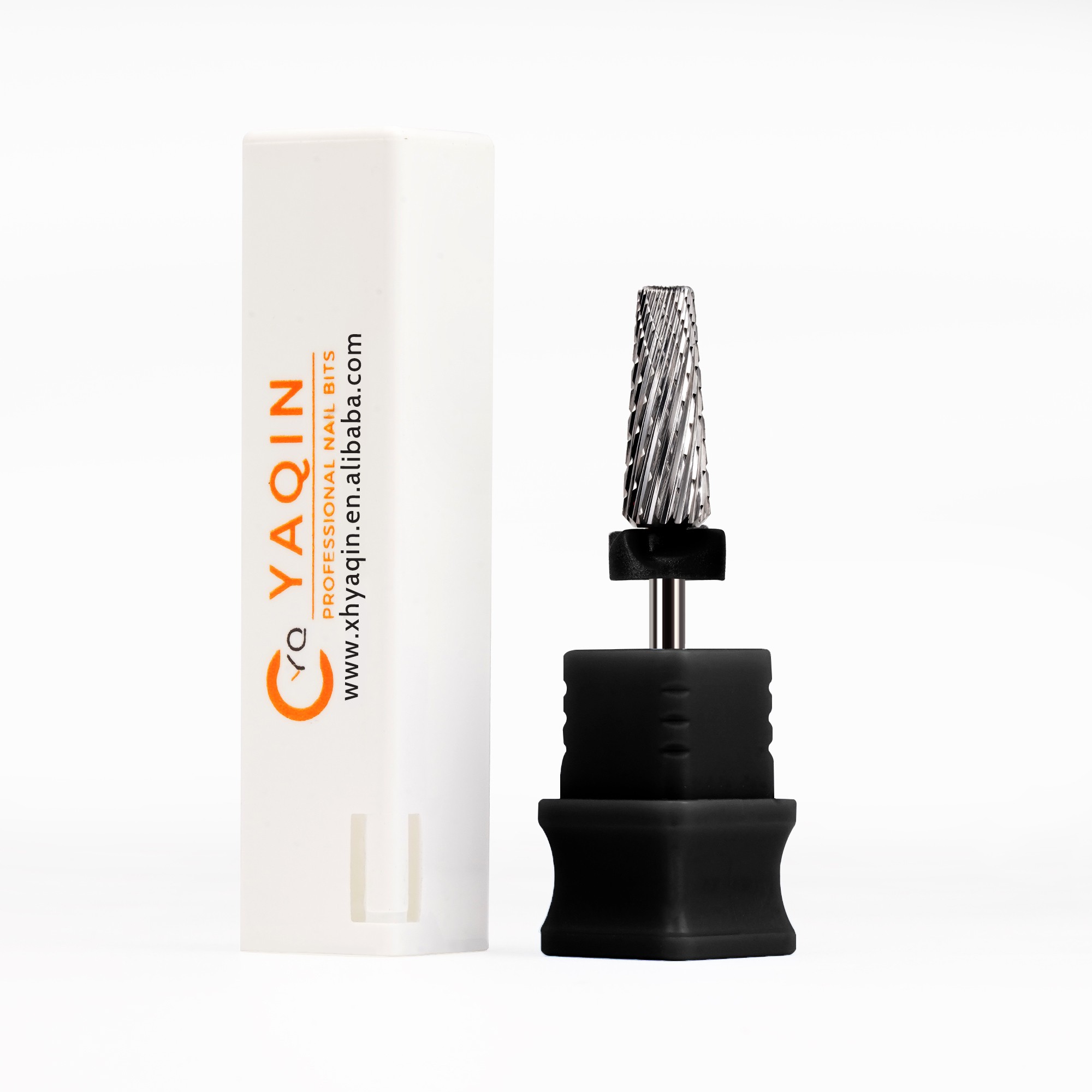
A useful example is the High Quality Safety3/32" Tungsten Carbide Nail Drill Bits Electric Nail File Drill Bit for Gel Removal Tools. Its coarse, medium, and fine options illustrate why one bit is not ideal for every stage: coarser cutting surfaces suit hard-gel bulk reduction, while medium or fine options allow closer work when only a thin layer remains. Narrow bits can be easier to guide around sidewalls and curved areas. Wider bits cover the central nail more efficiently but require a flatter, steadier contact angle.
Bit material alone does not define safety. A dull carbide bit often causes more trouble than a sharp one because it rubs rather than cuts. The result can be heat, extra pressure, and uneven filing. Bits should be inspected for packed debris, damaged flutes, corrosion, or wobble at the shank. A bit that does not sit securely in the handpiece can vibrate, creating gouges even when the speed setting is reasonable.
Speed is a range, not a safety guarantee
For hard gel removal, a working range around 15,000 to 20,000 RPM is often used for controlled bulk reduction. Soft gel and base gel are generally approached more gently, often around 10,000 to 15,000 RPM. These figures are starting ranges, not a command to set the drill at the highest listed value. The right setting depends on bit sharpness, gel hardness, nail shape, hand control, and the amount of product still present.
A lower speed is not always gentler. If rotation is too slow for a hard gel, the bit may grab or bounce across the surface. That encourages extra pressure and leaves ridges. Conversely, a high speed combined with heavy pressure and poor movement creates heat rapidly. The practical sign of a good setting is a smooth, predictable removal pattern with fine dust and no dragging sensation. Large chips, sudden catches, or a vibrating handpiece suggest that the angle, direction, speed, or bit selection needs attention.
Keep the bit in light, continuous contact and make overlapping passes from the center toward the free edge. Contact should be broad along the cutting surface rather than concentrated at a single point. Near the sidewalls, reduce pressure and use the narrower area of the bit only as needed. The cuticle zone should be treated as a finishing area, not a place for fast bulk removal.
A controlled removal sequence
Start by examining the manicure before turning on the drill. Lifting, cracks, greenish discoloration, tenderness, bleeding, or a nail that has partly detached from the bed are not routine removal conditions. Filing over a damaged or suspicious nail can make the condition harder to assess and may worsen irritation. A nail with significant pain or a possible infection should be evaluated by an appropriate health professional rather than aggressively drilled.
- Shorten excess free edge if the overlay extends beyond the natural nail. Reducing length first makes the nail less likely to flex while product is being removed.
- Break the shine and reduce the thickest gel using a suitable carbide bit. Work across the surface in passes; do not drill a hollow into the center to chase thickness quickly.
- Stop before reaching bare nail. A thin, even film of base product is often easier to identify than a patchy surface where some areas have already been exposed.
- Switch to a finer abrasive, hand file, or soak-off method according to the remaining product. If the remaining layer is a soak-off base, acetone may be more appropriate than additional e-filing.
- Remove loose residue gently and assess the nail plate under good light. Fine surface marks may be product residue, while irregular pale patches or tender areas call for a pause rather than more filing.
This sequence avoids a common mistake: treating every visible layer as something that must be drilled away. The final base layer is often hard to distinguish from natural nail because both can look matte after filing. A deliberate change in tool, pressure, and removal method creates a margin of safety at precisely the point where the material boundary becomes uncertain.
How to tell gel residue from nail damage
Residual gel often appears as a smooth, slightly translucent film with a different sheen or color from the surrounding nail. It may be especially visible around the apex or along the sidewalls. Natural nail that has been over-filed often looks chalky, patchy, or unusually thin, and it may flex more than the surrounding area. A rough surface alone does not prove damage; it can be leftover base gel or fine filing dust. Wipe the nail clean before deciding whether more removal is needed.
White spots are frequently misunderstood. They are not always evidence that a drill “burned” the nail. They can result from dehydration after acetone, surface abrasion, or leftover product reflecting light differently. Heat discomfort during drilling is a separate signal and should be addressed immediately by lifting the bit away, cleaning it, reducing pressure, or changing the working angle.
A nail plate cannot be restored by coating it immediately after over-filing. Products can improve appearance and reduce snagging, but they do not replace removed keratin layers. Keeping the nail short, limiting further abrasion, and avoiding forceful peeling while it grows out are more sensible responses than repeatedly buffing the surface smooth.
Situations where a drill is the wrong tool
An electric drill is efficient for thick, cured product, but it should not be used as a universal solution. Peeling gel from a nail with the drill tip, forcing a bit under lifted product, or attempting to clean deep beneath the free edge can tear or thin the nail. Cuticle removal with a carbide gel-removal bit is also inappropriate; the cutting surface and intended task are different.
When a soft gel system is designed to soak off, filing only the top layer and then using the recommended remover can reduce mechanical stress. When the overlay is hard gel, filing it down to a thin, stable layer may be preferable to trying to dissolve material that will not soften properly. The label or service record matters here. Two glossy manicures can require different removal methods.
Electric drills remove thick gel safely when material recognition, bit selection, speed, pressure, and movement are treated as one process. Fast removal is useful only while the drill remains controlled. The closer the work gets to the natural nail, the less aggressive the abrasive action should become.
News List
- Preventing Gouges and Uneven Filing With Small Barrel Nail Drill BitsSep 20, 2026
- How Diameter and Grit Affect Small Barrel Nail Drill Bit PerformanceSep 20, 2026
- Can Hytos Nail Drill Bits Be Used Safely on Natural Nails and Gel Polish?Sep 20, 2026
- How to Verify Fit Between Hytos Nail Drill Bits and an E-File HandpieceSep 20, 2026
- Safe Speed Settings for Umbrella Nail Drill Bits Around the Nail FoldSep 20, 2026
- Umbrella vs Flame Nail Drill Bits: Which Shape Offers Better Cuticle Control?Sep 20, 2026
Best-Selling Products
 Cross Cut Safety Stainless Steel Tungsten Carbide Nail Drill Bits Salon Foot Use XF-C Grit for Removing Nails
 First-rate Quality Tungsten Carbide Nail Drill Bits Best Coating Manicure Remove Gel Nails Accessories
 Professional Advanced Safety Cuticle Bits Two-Way Rotate 3/32'' Carbide Tungsten 5 in 1 Nail Drill Bits
 Wholesale 5 in 1 Electric Manicure Nail Drill Bits Various Coating Cone Cuticle Bit with Rotary Cross Cut for Nail Art
 New Slant Tooth Tungsten Steel Nail Drill Bits Dead Skin Removal 5-in-1 Universal Grinding Nail Polish Head Tool Nail Drill Bits
 4.0mm Small 5 in 1 Integrated Sharpe Tungsten Nail Drill Bit Straight Teeth Gel Polish Removal
 Flame Sharp XF F M C XC Silver Safety Professional Corn Tungsten Carbide Nail Bit for Drill Machine Accessories
 Factory Direct 5 in 1 Tungsten Carbide Nail Drill Bits 6.8MM Cross Cut Safety Manicure 5 in 1 Nail Drill Bits
Please give us a message