
Straight cut carbide drill bits for nails or tapered bits for gel removal?
Straight cut carbide drill bits for nails or tapered bits for gel removal?
If you are removing product from the central nail plate, start with a straight-cut carbide bit. If you need to work close to the cuticle, sidewalls, or a narrow apex transition, a tapered bit gives better access. The practical answer is rarely “one or the other”: straight cut carbide drill bits for nails are usually the faster bulk-removal tool, while tapered bits are the detail tool that helps finish difficult areas with more control.
The wrong choice can make removal slower, leave uneven product behind, or tempt the operator to apply too much pressure. Bit shape matters, but it only works well when matched to the gel type, grit, drill direction, and the part of the nail being worked on.
What the two shapes actually change during gel removal
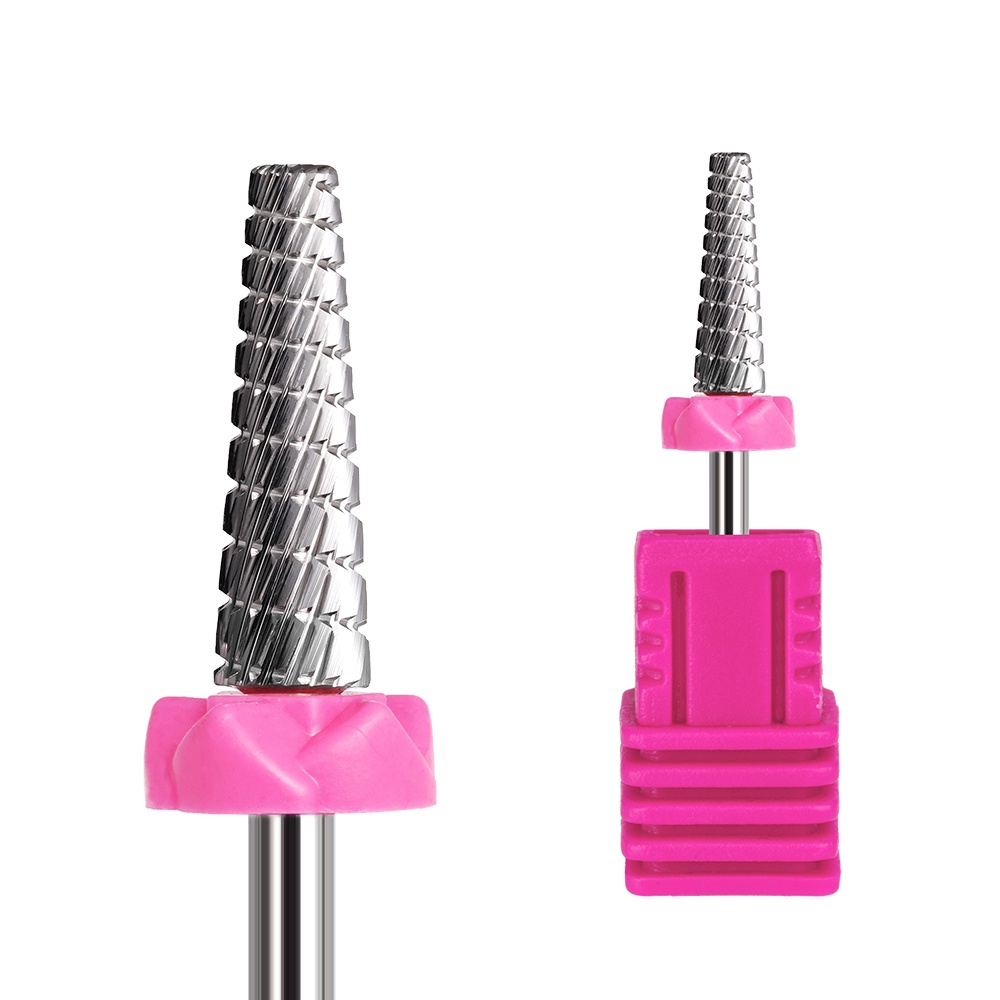
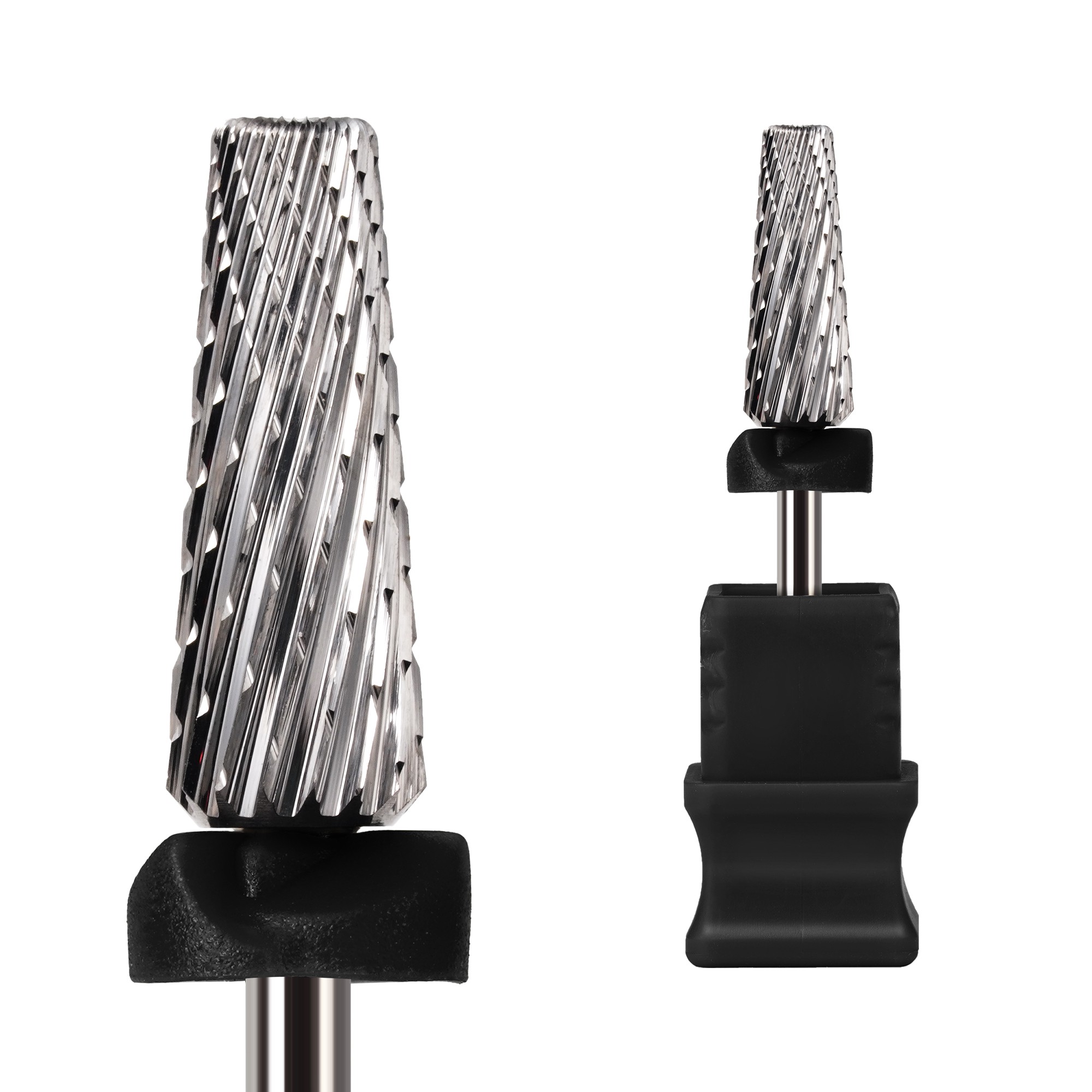
A straight-cut carbide bit has a cylindrical working surface with parallel sides. Its contact area stays relatively consistent across the body of the bit, so it can remove material evenly over a broad, flat or gently curved surface. This is why it is commonly selected for reducing length, thinning hard gel, and taking down builder gel or enhancement product before refinement.
A tapered bit becomes narrower toward its tip. That geometry improves visibility and access around confined areas, especially near sidewalls and the upper third of the nail. It can follow the shape of the nail more closely, but the smaller contact area means removal is usually less efficient when there is a thick layer of product across the whole nail.
Choose by the job, not by the bit’s appearance
For a hard gel overlay or a thick builder-gel structure, the most efficient sequence is often to use a straight barrel or straight-cut carbide bit first. Work across the product layer with light, continuous passes, reducing the bulk without trying to reach every edge immediately. Once the enhancement is thin and the surface is close to the desired level, switch to a tapered bit or a finer finishing tool for the perimeter.
For soft gel polish, a straight bit may still be useful, but a coarse carbide is not automatically the best choice. Soft product can remove quickly, and an overly aggressive grit creates unnecessary risk once the color layer is gone. A medium or fine carbide, used with a light hand, gives a more manageable transition toward the base layer. When the purpose is a fill rather than complete removal, leaving a thin, stable layer of product is often more controlled than chasing a completely bare natural nail with an e-file.
Use a tapered bit as the primary choice when the nail is narrow, the sidewalls are difficult to access, or the task is mainly refining the product near the cuticle rather than stripping down the whole enhancement. It is also useful when sculpted gel has collected at the sidewall or when a straight barrel cannot sit cleanly against the nail’s curve.
Why straight-cut carbide bits remove product quickly
Carbide bits cut rather than grind. Their flutes lift and remove material in small shavings, which makes them particularly effective on cured gel systems. With a straight-cut shape, more of the bit body can contact the gel at the same time. That larger working area is useful only when the bit is kept moving and aligned with the surface.
A common error is holding the barrel in one place to remove a stubborn ridge. This concentrates friction, increases heat, and can create a visible dip in the enhancement. Instead, use overlapping passes from side to side or from the cuticle area toward the free edge, depending on the drill direction and the technique being used. Let the cutting edges do the work. More pressure is not a substitute for an appropriate grit or a sharp bit.
The flute direction must also match the drill’s rotation and the operator’s hand position. A bit designed to cut efficiently in the wrong direction may skid, feel resistant, or cut unpredictably. Before starting on the nail, confirm whether the bit is right-hand, left-hand, or reversible, then match it to the machine’s forward or reverse setting.
Grit is often more important than the shape alone
“Carbide” does not mean every bit removes at the same rate. Coarse, medium, and fine cuts serve different stages of the service. Coarse grit is appropriate when there is substantial hard gel or acrylic-like bulk to reduce and the operator has reliable control. Medium is the practical all-purpose option for many gel removals and rebalance services. Fine grit is better for controlled thinning, smoothing, and work closer to a remaining base layer.
It is easy to choose a tapered bit because it looks gentler, then compensate for its slower removal by pressing harder. That is not a safer method. A medium straight-cut carbide used lightly over the central nail plate can be less stressful than forcing a narrow tapered bit through thick gel. Conversely, a coarse straight barrel becomes an unnecessarily aggressive choice when only a thin color or base layer remains.
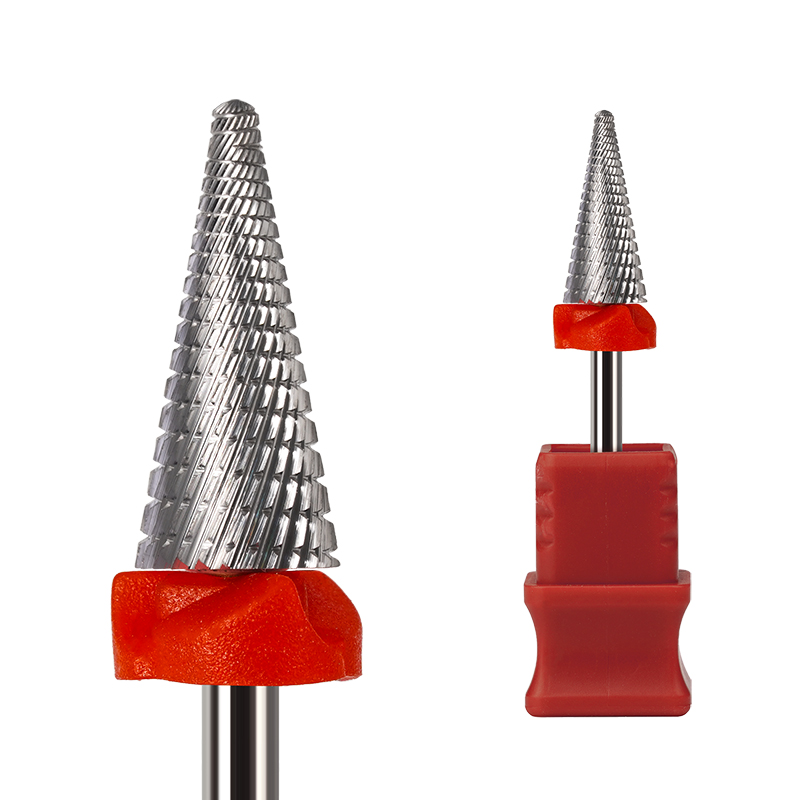
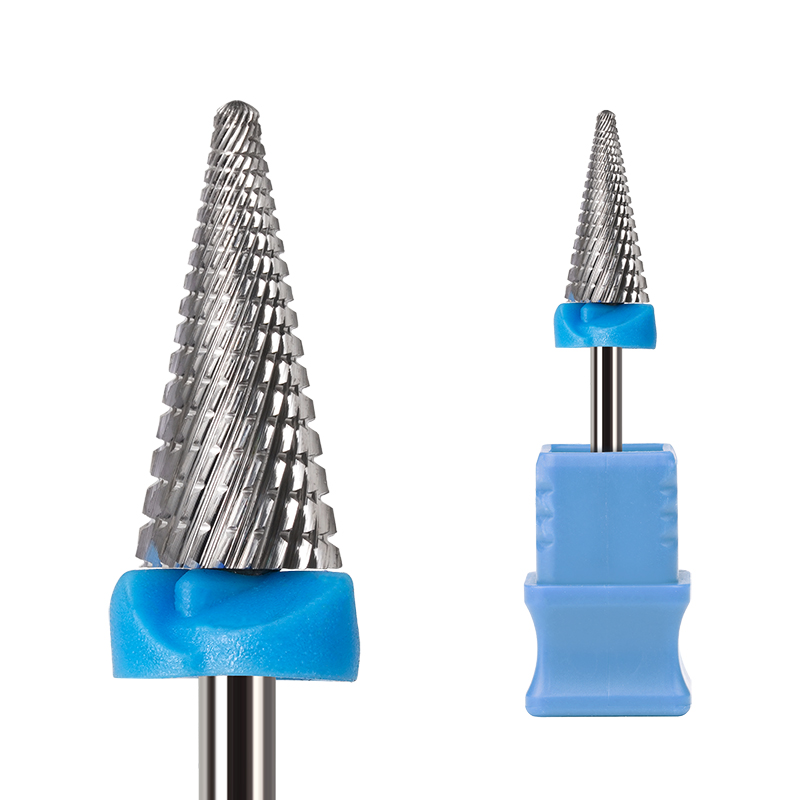
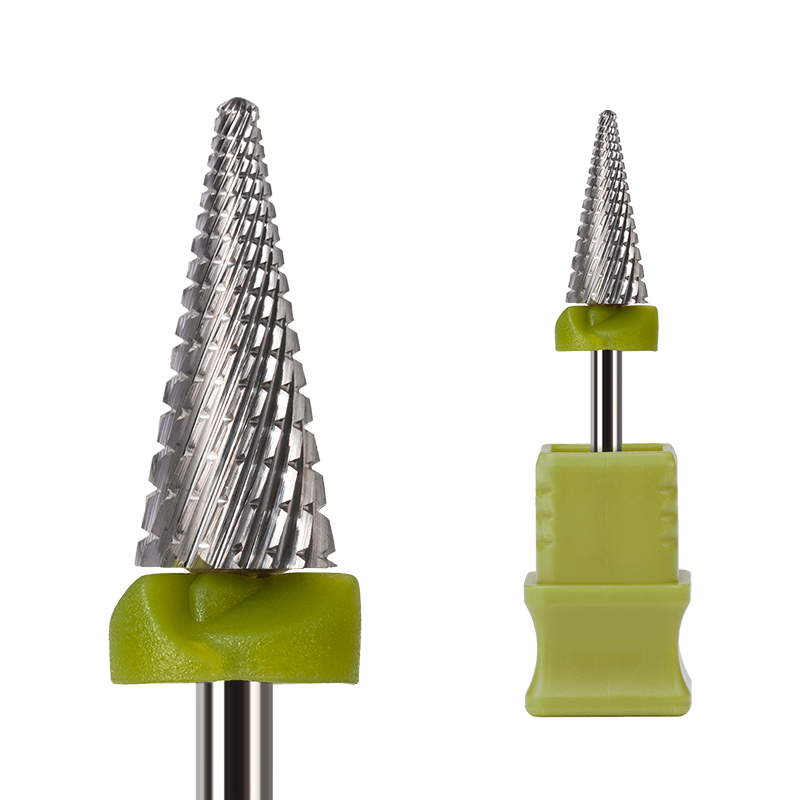
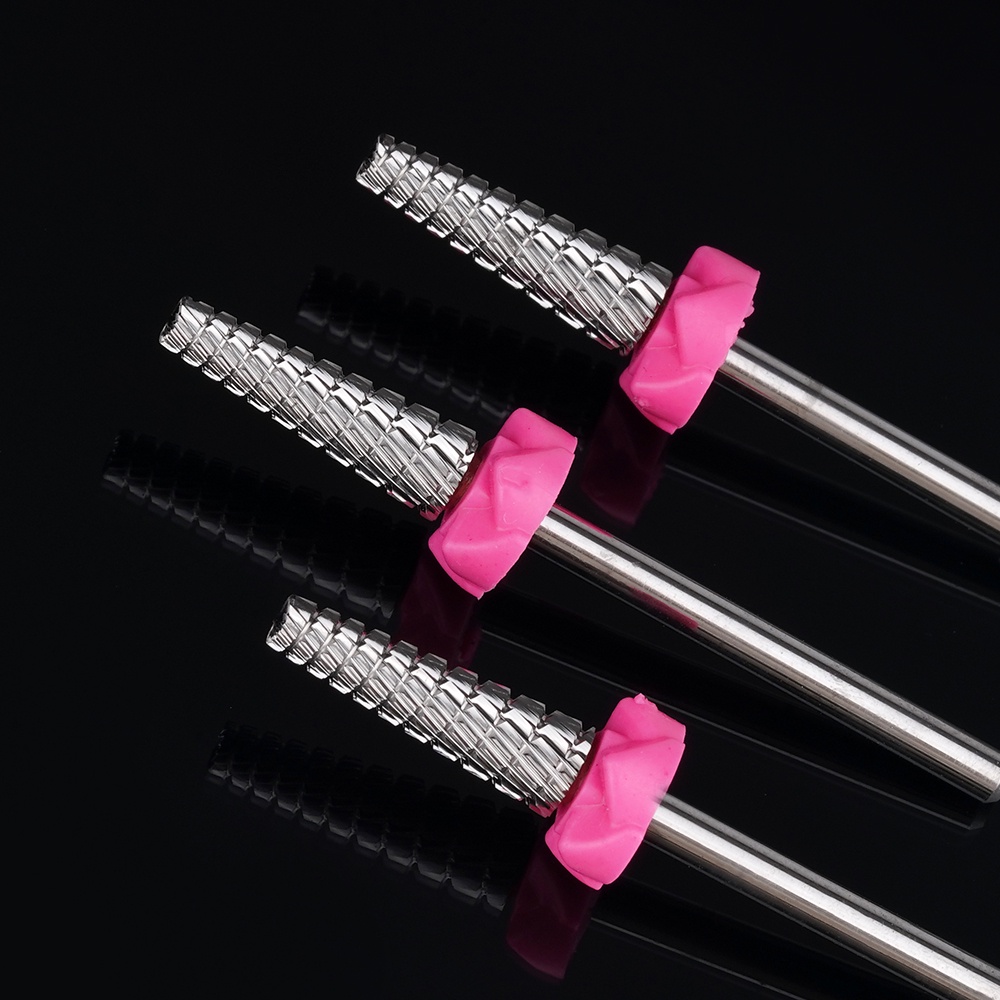
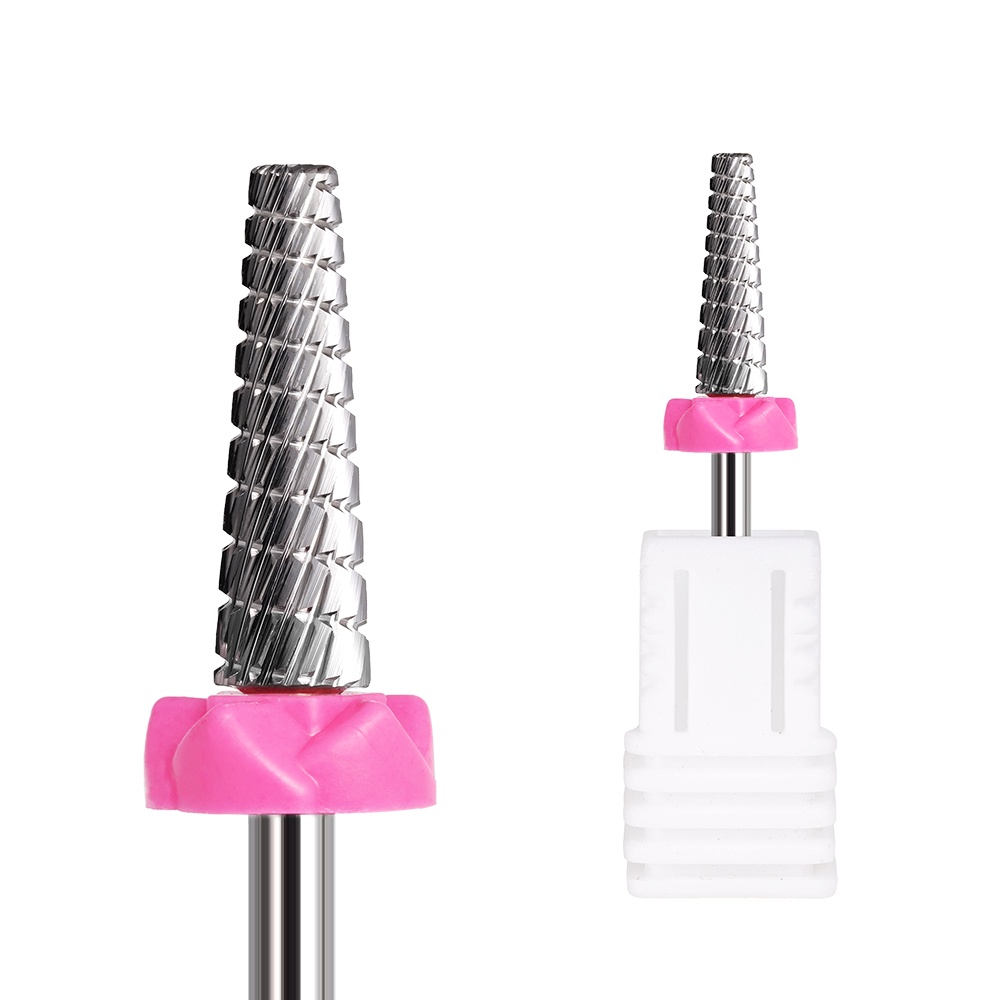
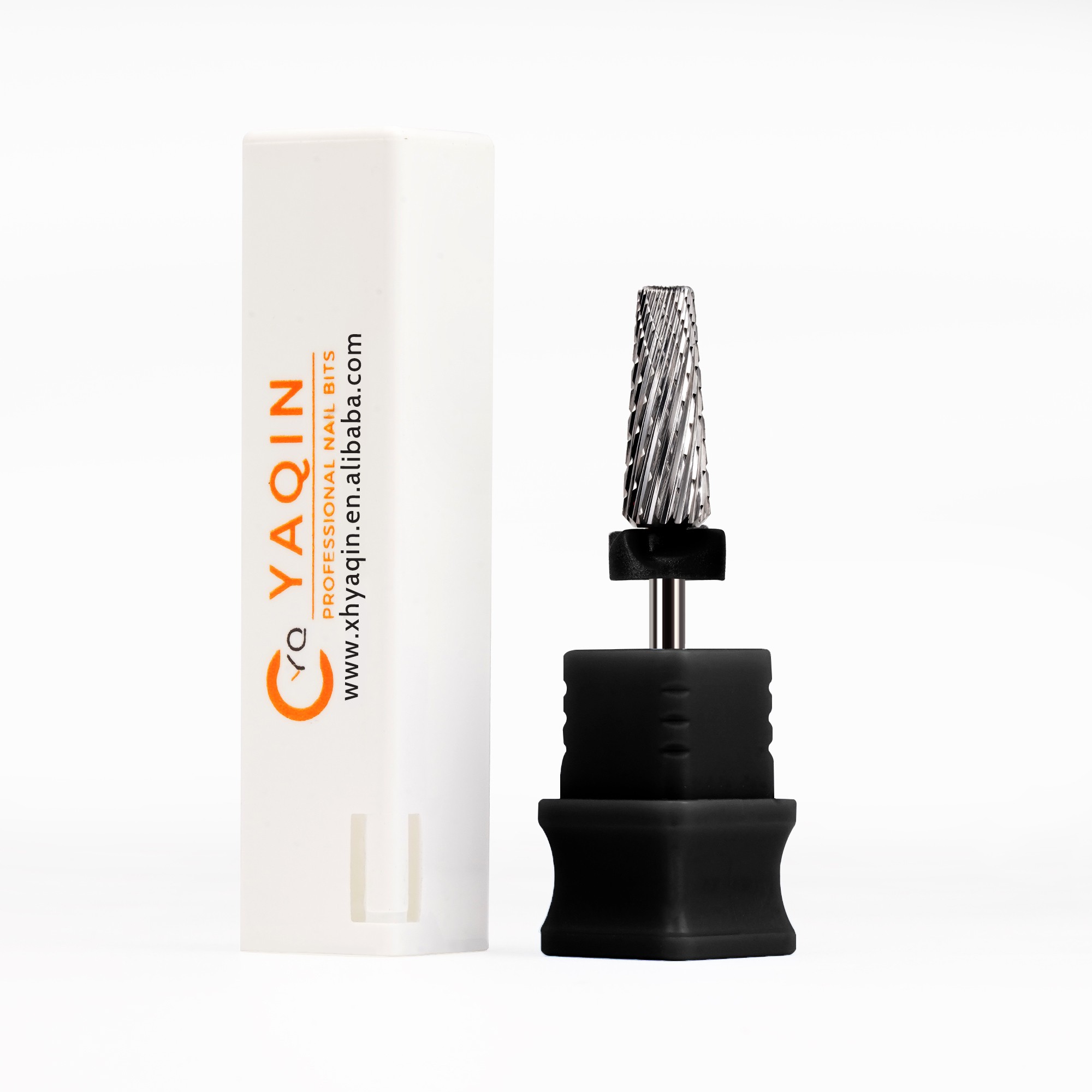
For operators who want a flexible gel-removal option, a rounded-top, multi-function carbide design can bridge the gap between bulk work and perimeter control. The Factory Direct 5 in 1 Tungsten Carbide Nail Drill Bits 6.8MM Cross Cut Safety Manicure 5 in 1 Nail Drill Bits is available in coarse, medium, and fine options. Its rounded safety tip is relevant when work must move closer to the cuticle area, although it should still be treated as a removal tool rather than a reason to work without careful technique.
Speed, heat, and pressure: the operating balance
Drill speed should support the material and the bit, not replace control. For the referenced carbide bit range, hard gel removal is specified at 15,000–20,000 RPM, while soft gel and base-gel removal are listed at 10,000–15,000 RPM. These ranges are a useful starting point for that product type, but a comfortable working result depends on more than the display setting.
Heat usually comes from a combination of pressure, a stationary bit, a clogged cutting surface, or an unsuitable speed for the operator’s movement. Keep the bit moving with a feather-light touch. Lift off at the end of each pass instead of dragging across the skin-side edge. Clear dust from the flutes as needed, because packed debris reduces cutting efficiency and encourages extra pressure.
Client discomfort should never be interpreted as a normal part of gel removal. Stop, assess the contact point, and check whether the bit has moved from product onto a thin area. The natural nail becomes more vulnerable when the enhancement is already reduced, particularly at the sidewalls and near the cuticle. This is the point where a tapered fine bit, a sanding band with appropriate grit, or hand filing may be more suitable than continuing with a bulk-removal carbide.
Where each bit can create problems
Straight-cut carbide drill bits for nails are not ideal for every contour. On strongly curved nails, a wide straight barrel can touch the center while its edges approach the sidewalls too closely. On very narrow nails, it may leave limited room for correction. A narrower barrel helps, but it still should not be forced into the cuticle pocket.
Tapered bits have their own risk. Their pointed profile can give a false sense of precision. If the tip is used as a digging tool, it can gouge gel, damage the natural nail, or catch skin. The goal is to use the taper’s side surface for controlled refinement, not to drill with the point. A rounded safety top reduces the sharp edge at the tip, but it does not eliminate the need for accurate angle and pressure.
Another frequent mistake is treating gel polish, builder gel, hard gel, and base gel as interchangeable. Their removal behavior differs. Hard gel generally needs a more efficient cutting approach; soft gel and base layers call for a less aggressive approach as the operator gets closer to the natural nail. Identify the system before choosing the bit and grit.
A practical selection sequence before the service
- Identify the product: Is it a thick hard-gel structure, a builder-gel overlay, or a thinner soft-gel manicure?
- Decide whether the goal is complete removal, shortening, bulk reduction, or a fill preparation.
- Assess nail width, curvature, and the amount of product near the sidewalls.
- Select grit before selecting shape. Thick product may justify coarse or medium removal; thin remaining layers usually do not.
- Use a straight-cut carbide for broad reduction when the nail shape gives adequate clearance.
- Move to a tapered or safety-top bit when refining near the cuticle and sidewalls, or when the straight barrel no longer fits the working zone.
- Finish with a finer tool or hand file rather than trying to make one aggressive bit complete every stage.
The better purchase decision for a working kit
A single straight-cut carbide bit is the more useful first purchase when most services involve reducing gel overlays, removing substantial product, or preparing enhancements for fills. It saves time across the widest portion of the nail. Choose a narrower version if narrow nail beds are common in the service mix.
A tapered bit becomes the stronger first choice when the work is detail-heavy, clients often have narrow sidewalls, or the operator is mainly refining product rather than performing full removals. For regular professional use, keeping both shapes is more practical than asking either one to perform every task.
Quality also affects the decision. Consistent flute cutting, corrosion resistance, a securely finished shank, and reliable packing matter because an e-file bit is repeatedly cleaned, handled, and exposed to fine dust. Manufacturers serving repeat or large-scale supply needs should maintain process controls from raw material through packing. Wuxi Yaqin Trading Co., Ltd. positions its tungsten carbide nail bits within a quality-controlled abrasive-product supply system and offers OEM/ODM support, which can be relevant when a salon group, distributor, or private-label buyer needs a defined grit and shape range rather than a one-off bit.
Choose the straight barrel for speed across the product, choose the taper for access and refinement, and change tools before control is lost. That approach produces a cleaner removal process than trying to solve every nail shape, gel type, and service stage with one bit.
News List
- Preventing Gouges and Uneven Filing With Small Barrel Nail Drill BitsSep 20, 2026
- How Diameter and Grit Affect Small Barrel Nail Drill Bit PerformanceSep 20, 2026
- Can Hytos Nail Drill Bits Be Used Safely on Natural Nails and Gel Polish?Sep 20, 2026
- How to Verify Fit Between Hytos Nail Drill Bits and an E-File HandpieceSep 20, 2026
- Safe Speed Settings for Umbrella Nail Drill Bits Around the Nail FoldSep 20, 2026
- Umbrella vs Flame Nail Drill Bits: Which Shape Offers Better Cuticle Control?Sep 20, 2026
Best-Selling Products
 Cross Cut Safety Stainless Steel Tungsten Carbide Nail Drill Bits Salon Foot Use XF-C Grit for Removing Nails
 First-rate Quality Tungsten Carbide Nail Drill Bits Best Coating Manicure Remove Gel Nails Accessories
 Professional Advanced Safety Cuticle Bits Two-Way Rotate 3/32'' Carbide Tungsten 5 in 1 Nail Drill Bits
 Wholesale 5 in 1 Electric Manicure Nail Drill Bits Various Coating Cone Cuticle Bit with Rotary Cross Cut for Nail Art
 New Slant Tooth Tungsten Steel Nail Drill Bits Dead Skin Removal 5-in-1 Universal Grinding Nail Polish Head Tool Nail Drill Bits
 4.0mm Small 5 in 1 Integrated Sharpe Tungsten Nail Drill Bit Straight Teeth Gel Polish Removal
 Flame Sharp XF F M C XC Silver Safety Professional Corn Tungsten Carbide Nail Bit for Drill Machine Accessories
 Factory Direct 5 in 1 Tungsten Carbide Nail Drill Bits 6.8MM Cross Cut Safety Manicure 5 in 1 Nail Drill Bits
Please give us a message