
What to check before choosing a nail drill bit manufacturer
What to check before choosing a nail drill bit manufacturer
For procurement teams, choosing a Nail Drill Bit Manufacturer is rarely just a product decision. It is a supply chain decision, a quality decision, and in many cases, a brand protection decision. If the bits wear out too quickly, cut unevenly, create too much heat, or arrive with inconsistent sizing, the problem does not stay in the warehouse. It shows up in salon performance, customer complaints, return rates, and pressure on your purchasing team.
That is why experienced buyers usually look beyond catalogs and price lists. A manufacturer may offer an attractive unit cost, but if they cannot maintain stable quality, support customization, or ship reliably across borders, the total cost of ownership quickly rises. Before you commit to a supplier, it helps to examine a few practical checkpoints that reveal whether the factory can support your business not just for one order, but over time.
Start with manufacturing reality, not sales language
Many suppliers can present polished product photos and broad claims about quality. What matters more is whether they actually control the production process. In the nail tools segment, drill bits are precision items. Small differences in raw material quality, cutting geometry, coating consistency, and finishing can change performance significantly.
When evaluating a manufacturer, ask how much of the process is managed in-house and how much is outsourced. A supplier with stronger factory involvement usually has better control over lead time, consistency, and corrective action when issues appear. For buyers handling repeat orders or private label programs, this becomes especially important. If production is fragmented across too many subcontractors, quality variation is harder to control and problem tracing becomes slow.
You should also ask practical questions: What is their monthly output? How do they handle peak-season orders? Can they maintain the same specifications over multiple production runs? A serious manufacturer should be able to explain capacity in a clear way without giving vague answers.
Raw materials tell you more than a brochure ever will
The performance of a nail drill bit begins with its material. Carbide bits, ceramic bits, diamond bits, and sanding accessories all have different use cases, but within each category, the quality of the base material still makes a major difference. For carbide drill bits in particular, buyers should pay attention to tungsten carbide grade, hardness, durability, and resistance to breakage.
A reliable supplier should be able to explain why a specific material is chosen for a specific application. If you are sourcing bits for professional salons, daily high-frequency use requires better wear resistance and edge retention than products intended for casual retail use. Without that distinction, you may end up buying a bit that looks acceptable on arrival but performs poorly under real working conditions.
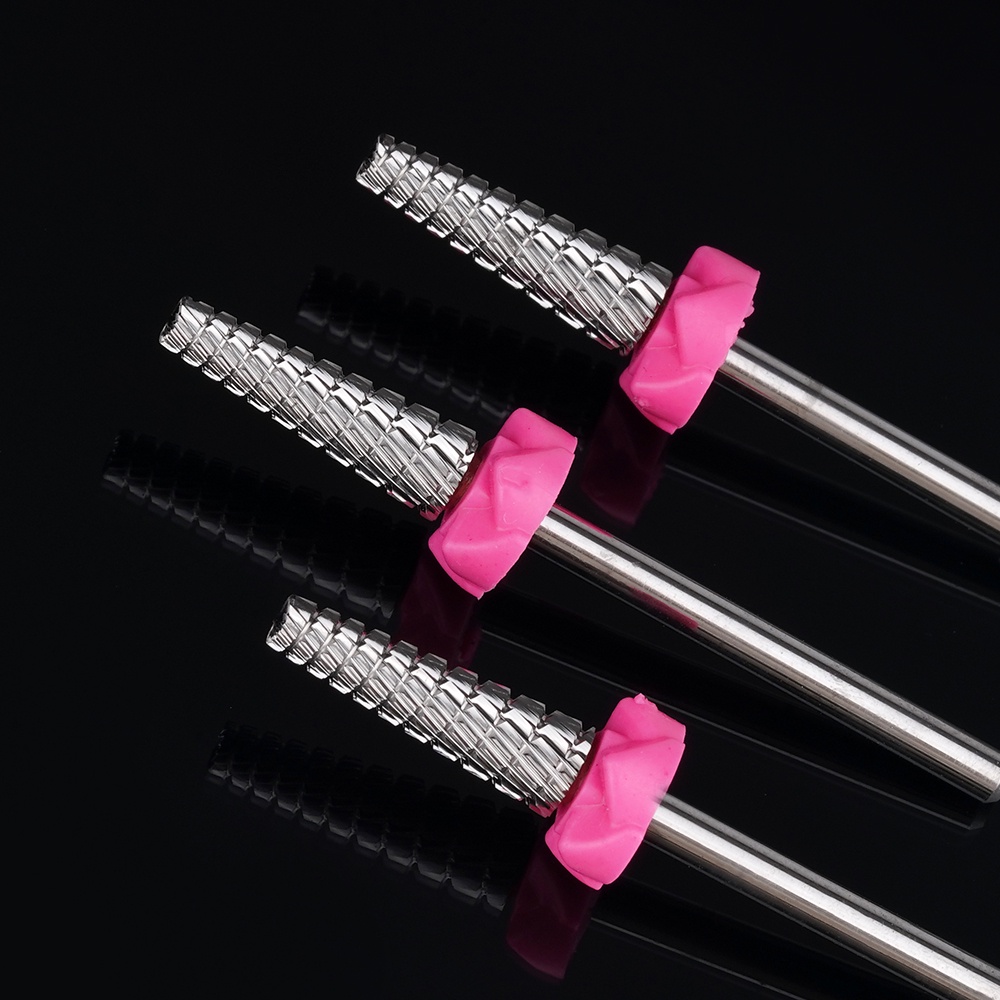
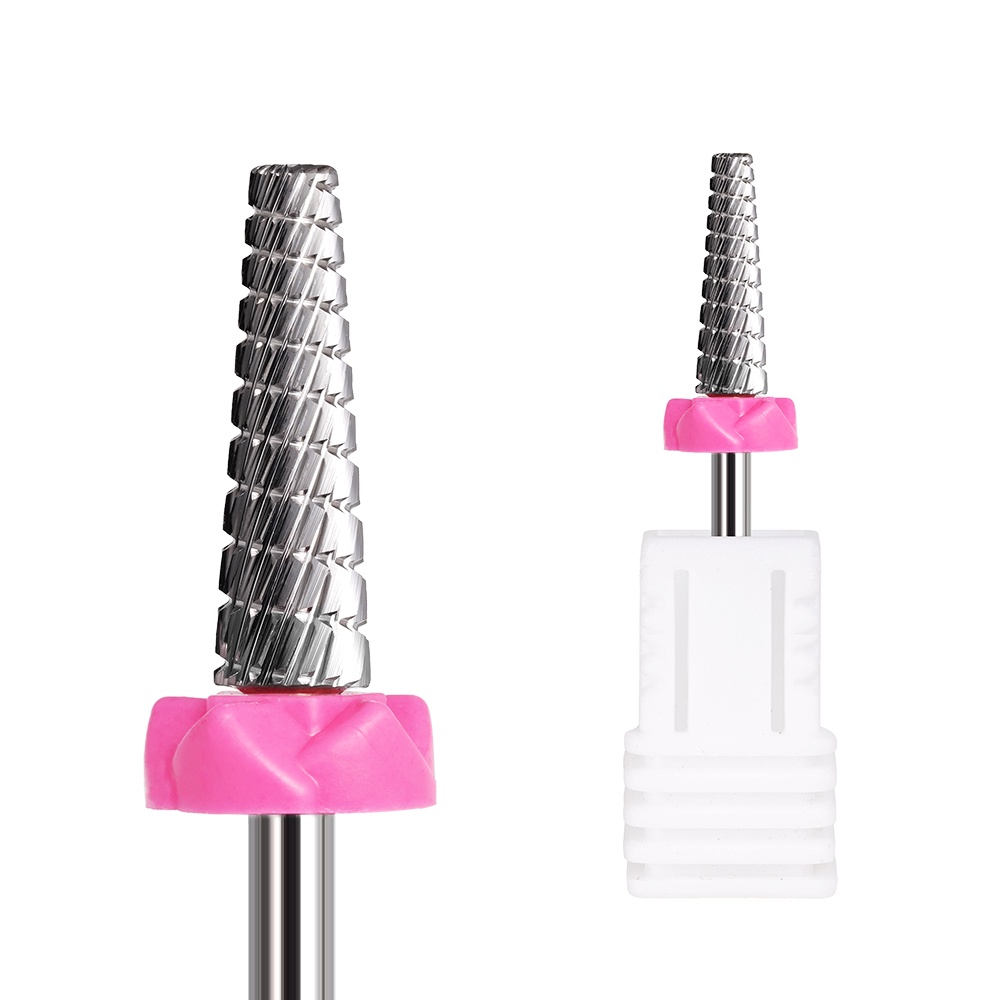
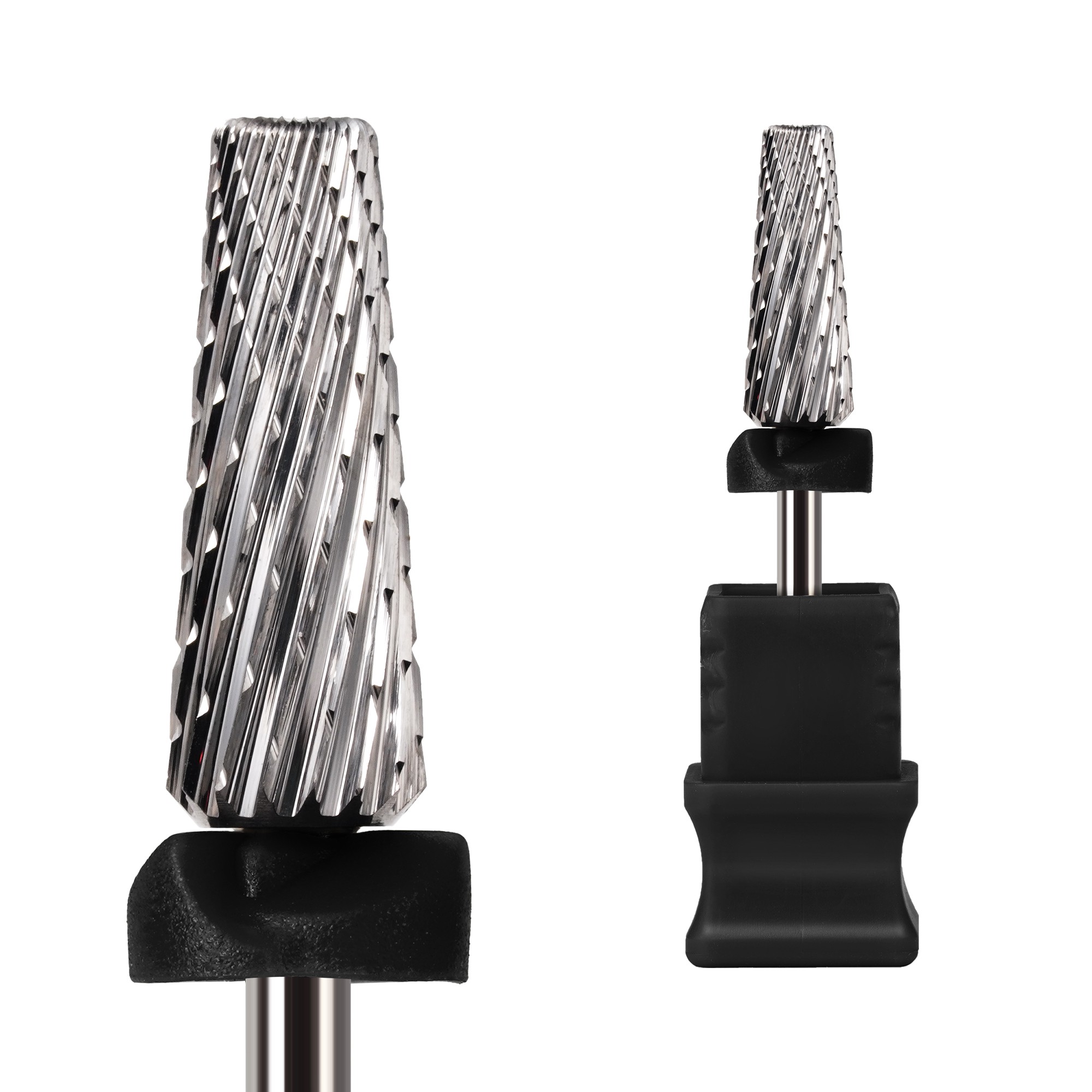
For example, when reviewing salon-focused removal bits, details such as high hardness material, long-term durability, and safe tip design matter more than generic descriptions like “good quality.” A product like Golden Flat Tip Carbide 4XC Nail Drill Bit Gel Remover Skewed Tooth reflects the kind of specification-based discussion procurement teams should have with a supplier: What carbide grade is used? How is sharpness maintained? Is the tip profile designed to balance removal speed and user safety? These are the questions that separate commercial buying from simple trading.
Quality control should be visible, not implied
One of the most overlooked checks when choosing a Nail Drill Bit Manufacturer is the strength of its quality control system. Buyers often ask whether a supplier has QC, but that question alone is too general. Almost every supplier will say yes. What you need to know is how QC is built into the workflow.
Look for a manufacturer that monitors raw material purchasing, production stages, and packaging, not just final inspection. Incoming material checks help reduce defects before production even starts. In-process inspections matter because they catch dimensional or tooth-pattern issues before thousands of pieces are completed. Final inspection is important too, but by that point, poor process control has already created waste and delay.
If a supplier mentions a complete and strict QC system, ask what that means in practical terms. Do they inspect shank diameter consistency? Do they verify cutting pattern accuracy? Do they check coating adhesion where relevant? Do they inspect packaging integrity for export shipments? Procurement teams do not need every internal document, but they do need enough clarity to judge whether quality management is procedural or merely promotional.
Certifications can support confidence, but they should not replace direct evaluation. A quality management certification is useful because it suggests a structured approach, yet buyers should still ask for product-specific quality standards and inspection logic.
Check OEM/ODM ability if your business is brand-driven
Not every buyer needs OEM or ODM support, but if you sell under your own brand, this becomes a major screening factor. Nail drill bits may seem straightforward, yet brand differentiation often comes from details: packaging style, color treatment, labeling, grit or tooth variations, usage sets, or market-specific positioning.
An experienced manufacturer should be able to support these needs without creating confusion in production. Ask whether they have handled customized packaging, branded engraving, color finishing, or mixed-model assortments before. More importantly, ask how they prevent errors between standard orders and custom orders. OEM capability is not just about saying yes to customization; it is about executing it consistently.
This is where a supplier with export and OEM/ODM experience often stands out. Companies serving multiple international markets usually understand that private label orders come with tighter expectations around appearance consistency, labeling compliance, and shipping coordination. For a buyer, that reduces friction and saves time.
Export reliability matters more than many first-time buyers expect
In cross-border procurement, an acceptable product can still become a bad purchasing decision if delivery performance is unstable. Nail drill bits are often part of larger beauty tool assortments, promotional launches, or replenishment schedules. Delays can disrupt retail planning and salon distribution, even when the actual goods are fine.
That is why you should review the manufacturer’s export track record. Which markets do they regularly serve? Are they familiar with shipping to North America and Europe? Do they understand the packaging and documentation discipline required for international orders?
A manufacturer with established export experience across markets such as the USA, Canada, Germany, the UK, Italy, and Poland is often better prepared for communication rhythm, packaging protection, and shipment coordination than a supplier only beginning to export. This does not guarantee perfection, but it usually signals operational maturity.
It is also worth asking how they handle issues after shipment. If there is a discrepancy in packing quantity, product mix, or labeling, who responds, and how quickly? Buyers do not just need a factory that can ship; they need a partner that can resolve problems without creating a long chain of excuses.
Product consistency should be tested in the context of actual use
Procurement teams sometimes focus heavily on sample appearance and overlook use-performance consistency. A nail drill bit can look polished in a sample box but behave differently in actual salon conditions. Heat generation, cutting smoothness, dust direction, vibration, and wear speed all affect the end-user experience.
When possible, assess samples through realistic usage scenarios. For gel removal bits, test whether the bit removes material efficiently without excessive pressure. For preparation bits, observe whether the surface finish feels controlled rather than aggressive. For safety-tip designs, check whether they support work near the cuticle area with better confidence.
Features like skewed tooth design, smooth flat tips, or dual-direction usability should not be treated as marketing phrases alone. They need to be connected to real functional value. In the professional nail market, one useful sign is whether a supplier can clearly explain the intended use of each bit shape and cut type. Factories that understand application logic tend to produce better products than those that only repeat specifications.
In some cases, a bit designed for hard gel and soft gel removal may also support dead skin cleaning, nail preparation, and even tougher surface grinding, but buyers should still verify whether one design truly performs across those tasks or whether separate models are the smarter option for their market.
Do not ignore packaging and presentation
For many distributors and brand owners, packaging is not a minor detail. A well-made bit can lose value if packaging fails during shipping, creates identification errors in the warehouse, or looks inconsistent on retail shelves. Procurement teams should ask whether the manufacturer checks packaging as part of final quality control and whether they can support unit packs, barcode labeling, and carton organization that fit your downstream process.
This matters even more for high-mix orders. If you source several models or cuts at once, poor packaging discipline can create mix-ups that are costly to sort later. A supplier with a strict process from production to packing is generally easier to work with when order complexity increases.
Communication quality is an early warning signal
One of the simplest ways to assess a Nail Drill Bit Manufacturer is to pay attention to how they communicate before the order is placed. Do they answer technical questions clearly? Can they explain differences between materials and bit types? Do they provide organized information, or do they rely on short, generic replies?
Weak communication during quotation and sampling often turns into larger problems during production. By contrast, suppliers that respond with precision usually manage internal processes with similar discipline. Procurement teams do not need polished language; they need accurate, timely, decision-useful information.
A dependable supplier should also be willing to discuss limitations honestly. If a coating option affects lead time, if a custom package requires a minimum order quantity, or if a certain bit geometry is better suited to professional channels than beginner users, transparent guidance is far more valuable than saying yes to everything.
Think in terms of long-term purchasing risk
The right supplier is not always the one with the lowest initial quote. It is the one that reduces risk across the life of the relationship. That includes fewer quality complaints, better repeatability, smoother customization, and more predictable delivery.
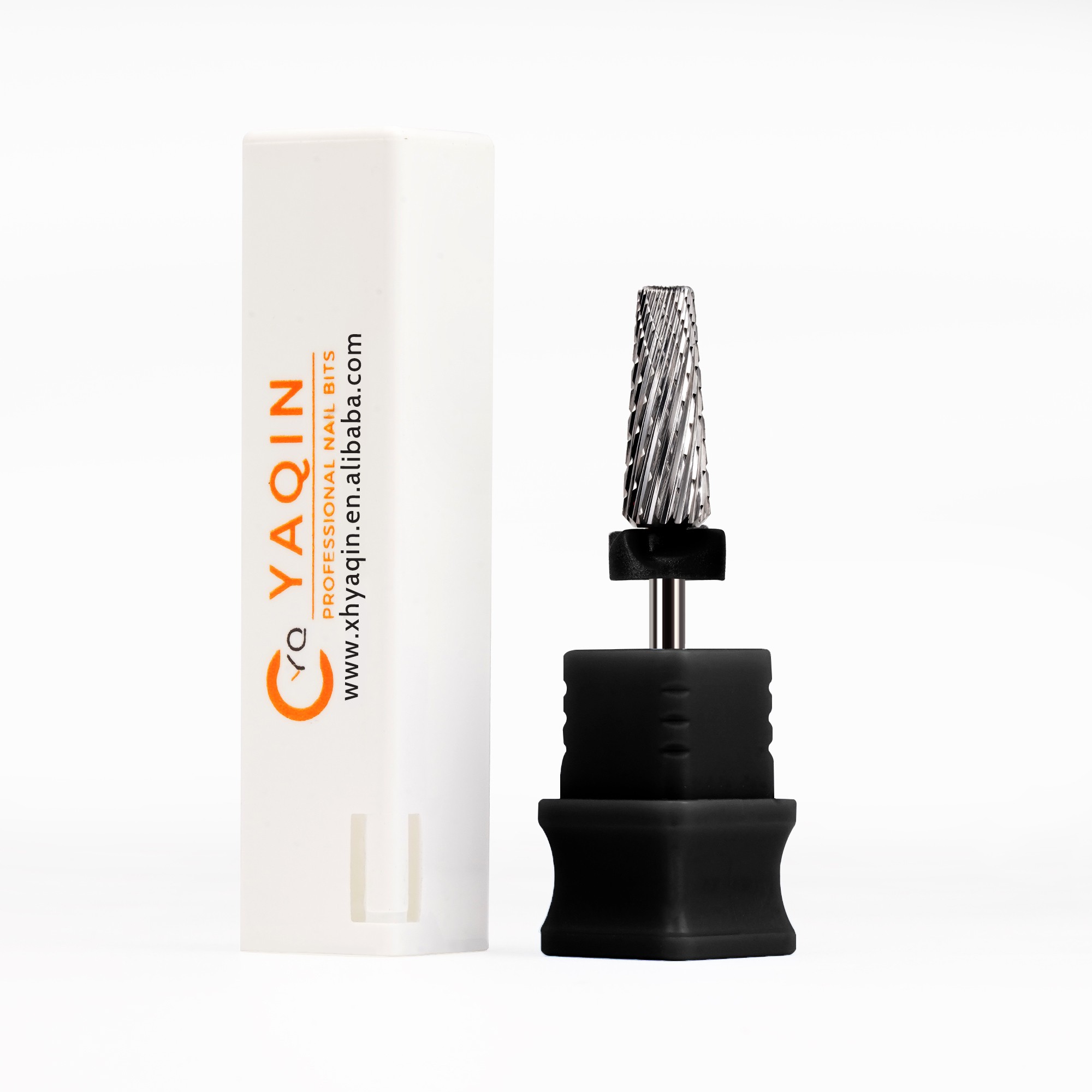
For buyers sourcing at scale, a manufacturer with a stable operating model can make a real difference. Wuxi Yaqin Trading Co., Ltd., for instance, positions itself as a trading factory focused on the production and export of abrasive products, with a complete QC system covering raw material purchasing, production process, and product packing. Combined with ISO9001:2000 quality management system certification and one-stop service from production to delivery, this kind of setup aligns well with what many procurement teams look for: control, accountability, and export readiness rather than just a product list.
That does not mean buyers should skip evaluation. It means the right questions become easier to answer when a supplier has real structure behind its operations.
A practical shortlist before you decide
Before choosing your supplier, step back and review your shortlist against a few grounded criteria: Can the manufacturer explain material choices and application fit? Is quality control active throughout production? Do they have proven OEM/ODM experience if you need customization? Can they support export requirements reliably? Are samples consistent in real use, not just in appearance? And perhaps most importantly, do they communicate like a partner you can depend on when things become urgent?
In the nail tools business, a drill bit is small, but the procurement decision around it is not. The better your evaluation process, the more likely you are to secure stable product performance, smoother replenishment, and a supplier relationship that supports growth rather than interrupts it.
News List
- Are China nail drill bit suppliers a good fit for private label linesAug 26, 2026
- What to check before choosing a nail drill bit manufacturerAug 26, 2026
- How the USA nail drill bit supplier market is changing for private label buyersAug 25, 2026
- Are German nail drill bit suppliers better for premium salon product linesAug 25, 2026
- What certifications matter when reviewing a nail drill bit supplier in the UKAug 25, 2026
- How shipping costs affect bulk orders from a nail drill bit supplier in CanadaAug 25, 2026
Best-Selling Products
 Cross Cut Safety Stainless Steel Tungsten Carbide Nail Drill Bits Salon Foot Use XF-C Grit for Removing Nails
 First-rate Quality Tungsten Carbide Nail Drill Bits Best Coating Manicure Remove Gel Nails Accessories
 Professional Advanced Safety Cuticle Bits Two-Way Rotate 3/32'' Carbide Tungsten 5 in 1 Nail Drill Bits
 Wholesale 5 in 1 Electric Manicure Nail Drill Bits Various Coating Cone Cuticle Bit with Rotary Cross Cut for Nail Art
 New Slant Tooth Tungsten Steel Nail Drill Bits Dead Skin Removal 5-in-1 Universal Grinding Nail Polish Head Tool Nail Drill Bits
 4.0mm Small 5 in 1 Integrated Sharpe Tungsten Nail Drill Bit Straight Teeth Gel Polish Removal
 Flame Sharp XF F M C XC Silver Safety Professional Corn Tungsten Carbide Nail Bit for Drill Machine Accessories
 Factory Direct 5 in 1 Tungsten Carbide Nail Drill Bits 6.8MM Cross Cut Safety Manicure 5 in 1 Nail Drill Bits
Please give us a message