
What Is a Diamond Nail Drill Bit Used for in Professional Nail Care?
What Is a Diamond Nail Drill Bit Used for in Professional Nail Care?
What Is a Diamond Nail Drill Bit Used for in Professional Nail Care?
A diamond nail drill bit is a fine abrasive attachment used with an electric nail drill, often called an e-file. In professional nail care, it is primarily used for detailed surface work: cleaning around the cuticle area, removing non-living tissue from the nail plate, refining sidewalls, smoothing small imperfections, and preparing the natural nail before a manicure or enhancement service.
Its purpose is not usually aggressive product removal. That distinction matters. A diamond bit works through a roughened surface covered with fine diamond particles, so it gives the technician a controlled, sanding-like action rather than the cutting action of a carbide or tungsten bit. When used with the correct grit, speed, angle, and pressure, it can make detailed preparation more consistent without unnecessarily thinning the natural nail.
For salons offering dry manicures, Russian-style manicure techniques, structured gel services, or regular cuticle-focused maintenance, the diamond nail drill bit is often one of the most frequently used bits on the workstation. It is small, versatile, and easy to underestimate. In reality, bit selection at this stage can influence both the finished appearance of the manicure and the client’s comfort during the service.
Where Diamond Bits Fit in a Professional Service
The most common use is cuticle-area preparation. After pushing back the proximal nail fold, a technician may use a fine or medium diamond bit to lift and remove dry, attached cuticle from the nail plate. This creates a cleaner perimeter for gel polish, builder gel, or acrylic application. When product is applied over residue near the cuticle, premature lifting is more likely; when the area is over-filed, the client may experience sensitivity. Good prep sits between those two mistakes.
Diamond bits are also useful around lateral folds and sidewalls, where manual files or buffers can feel awkward. A flame-shaped or tapered diamond bit can reach narrow areas without requiring the technician to force a larger tool into the skin. Ball-shaped diamond bits are commonly used to remove loosened dead skin after the cuticle has been lifted. Small cylinder or barrel forms may be used for controlled refinement, although their size means they demand especially careful handling around the nail fold.
Another practical use is light surface texturing before product application. This should be subtle. The goal is to remove shine and create an even surface, not to cut grooves into the nail plate. A fine diamond bit can help when a technician needs more precision than a hand buffer offers, particularly around corners and close to the cuticle line. It should not replace sound technique: pressure must remain light, and the bit should continue moving rather than resting in one place.
In pedicure work, diamond bits may be selected for detailed work around toenail folds or for gentle smoothing of localized dry skin. They are not generally the first choice for heavy callus reduction. Coarse sanding caps or purpose-designed pedicure abrasives are more suitable for broad, thickened areas. Trying to make one small diamond bit do every job is slow, uncomfortable, and likely to shorten the bit’s useful life.
Why the Abrasive Surface Feels Different from a Cutting Bit
A diamond nail drill bit is coated or embedded with abrasive diamond particles. The particles create friction over the whole working surface. Carbide and tungsten steel bits, by comparison, have machined flutes that cut and channel away material. Neither design is automatically “better”; they are designed for different tasks.
For close cuticle work, a properly selected diamond surface gives a technician useful feedback. It removes dry tissue gradually, which can be more forgiving than using an aggressive cutting bit near delicate skin. For removing bulk hard gel, thick acrylic, nail tips, or large amounts of gel polish, a carbide or tungsten bit is usually more efficient. The technician should switch tools instead of increasing pressure or speed with the wrong one.
Choosing the Right Grit and Shape
Grit is the first practical decision. Fine diamond bits are generally the safer starting point for natural nails, sensitive cuticle zones, and regular maintenance services. Medium grit can be useful when dry cuticle is more persistent or when the technician has enough experience to work accurately. Coarse diamond bits have specialized uses but should not become the default for natural nail preparation. A rougher surface does not make a manicure more professional; it simply increases removal speed.
Shape determines access. Flame bits are valued for reaching beneath the lifted cuticle edge. Needle and tapered cone shapes can work in very tight spaces, but they require a steady hand because the narrow tip can concentrate pressure. Ball bits are useful for polishing away detached dead skin. Rounded cylinders can offer a stable working area for certain cuticle and sidewall tasks, while flat-ended forms should be chosen only when their edge design is appropriate for skin-adjacent work.
Color bands are widely used in the nail industry to indicate grit, but technicians should not assume that every supplier uses precisely the same system. Before placing a salon order, it is sensible to confirm the supplier’s grit definitions, shank size, intended application, and recommended cleaning method. This is especially relevant for distributors and private-label buyers sourcing bits across different production batches.
Technique Matters More Than Speed
Even a fine bit can cause damage if it is used carelessly. The most common problem is stopping in one area while applying pressure. Friction builds quickly, and the client may feel heat before the technician realizes how much material has been removed. Keeping the bit in motion, using a light touch, and supporting the client’s finger are simple habits that reduce this risk.
Speed should be adjusted to the task, the bit diameter, the client’s nail condition, and the technician’s level of control. There is no universally correct setting for every diamond bit. Manufacturers may provide guidance, but a technician still needs to recognize when a bit is dragging, producing excessive heat, or making the client uncomfortable. A machine set too slowly can encourage pressure; a machine set too fast can make fine detail work feel less controlled.
Direction also matters. When working around the cuticle line, technicians often change the rotation direction depending on which hand they are servicing and which sidewall they are approaching. This helps keep dust moving away from the skin and allows the abrasive surface to work predictably. Anyone learning e-file manicure techniques should practice on training materials and follow local hygiene and professional practice requirements before performing detailed work on clients.
Cleaning, Wear, and the Often-Ignored Hygiene Question
Diamond bits collect fine dust, product residue, and skin particles in their abrasive surface. If they are not cleaned thoroughly, the bit becomes less effective and harder to assess visually. A bit that looks dull may simply be clogged; a bit with worn abrasive areas should be replaced rather than forced through a service with added pressure.
Salon hygiene procedures need to match the bit material, the manufacturer’s instructions, and applicable local requirements. In general, debris should be removed before disinfection or sterilization procedures are considered. A brush designed for bit cleaning can help clear residue from the surface. Technicians should avoid assuming that every bit, coating, or accessory tolerates the same chemical exposure or processing cycle. Confirming compatibility protects both the tool and the service standard.
For larger buyers, consistency begins before the bit reaches the salon. Wuxi Yaqin Trading Co., Ltd. focuses on the production and export of abrasive products and supplies markets including the United States, Canada, Germany, the United Kingdom, Italy, Poland, and many other countries. Its stated quality-control process covers raw material purchasing, production, and packaging, while its ISO9001:2000 quality management certification and OEM/ODM experience are relevant considerations for businesses that need stable specifications across repeat orders. For nail bits, batch consistency is not a minor purchasing detail: grit feel, shank fit, coating coverage, and packing condition can all affect day-to-day salon use.
Do Not Confuse Cuticle Bits with Product-Removal Bits
A frequent source of confusion is the assumption that a diamond bit can replace every other e-file attachment. It cannot, and it should not. Diamond bits excel at refinement. Tungsten steel and carbide bits are often better suited to hard gel, soft gel, base coat removal, nail tips, and tougher surfaces because their cutting geometry removes product more efficiently.
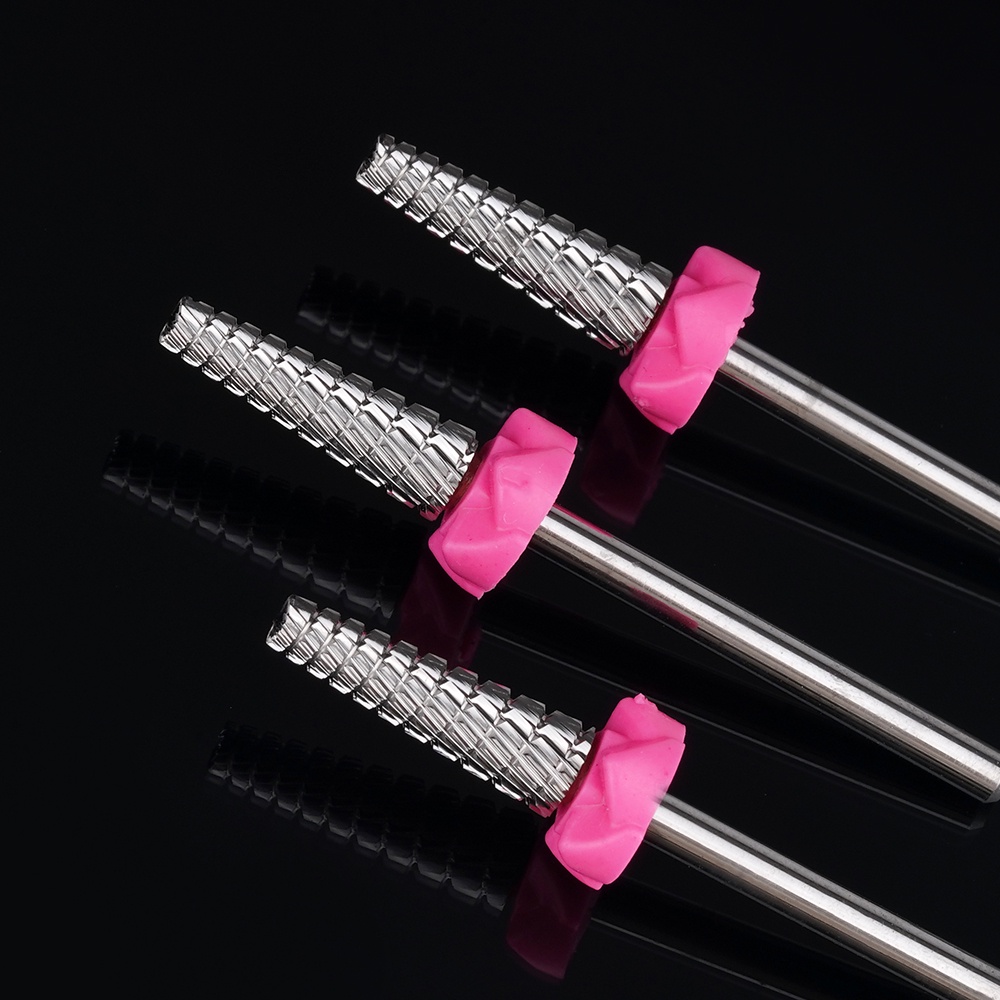
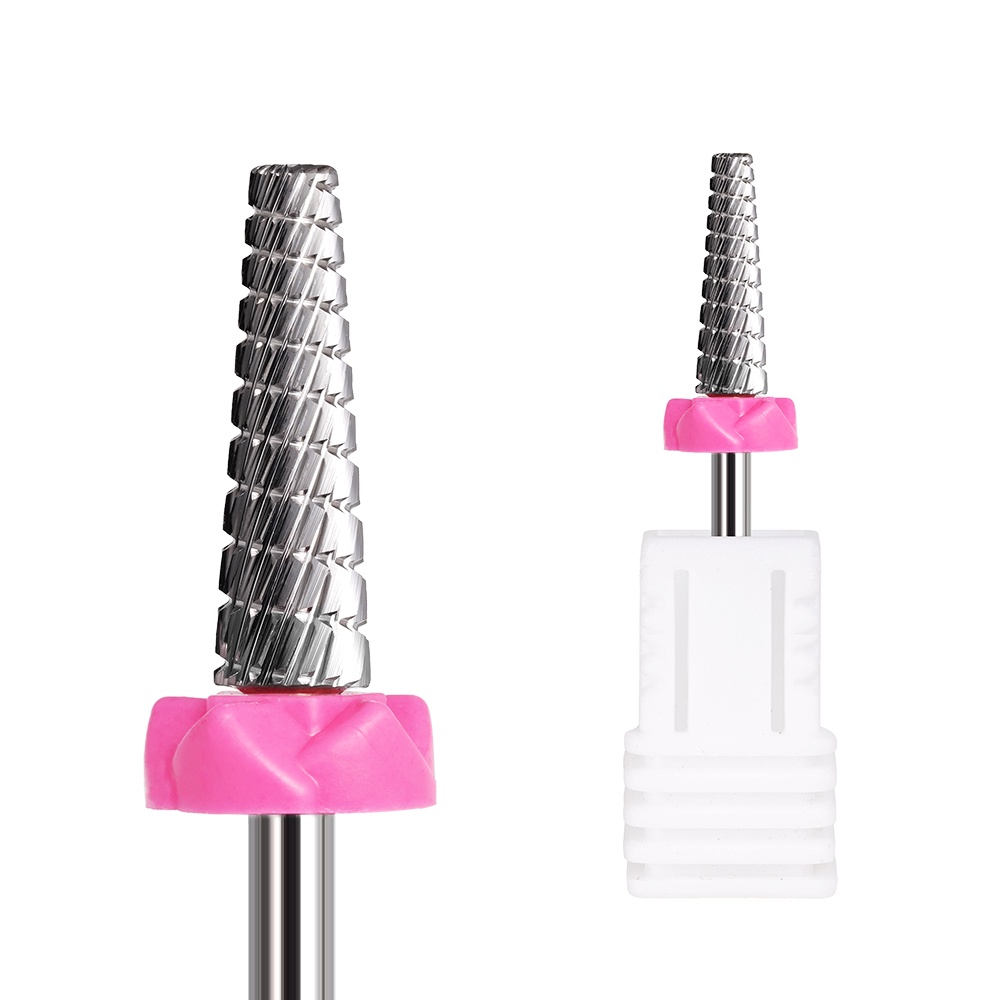
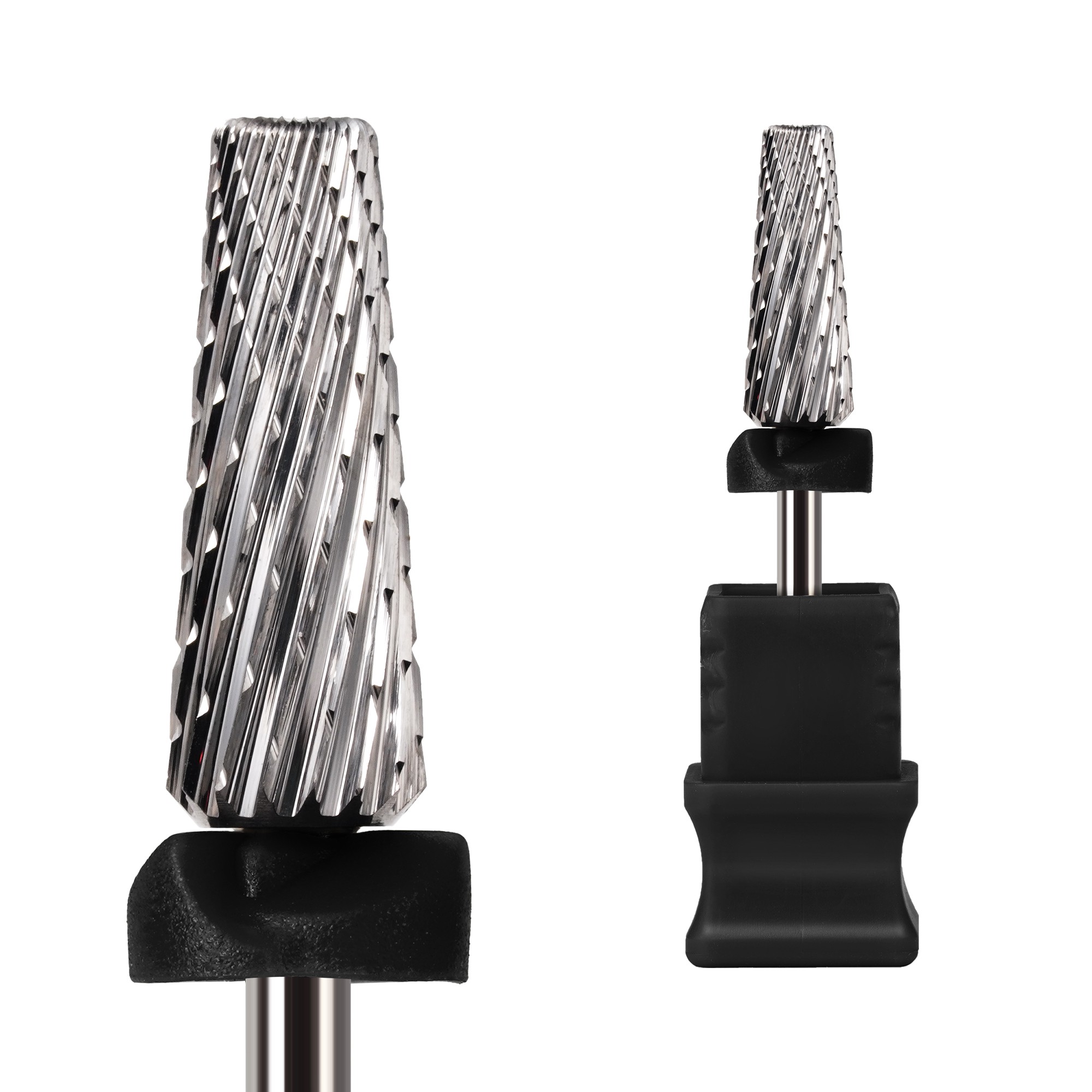
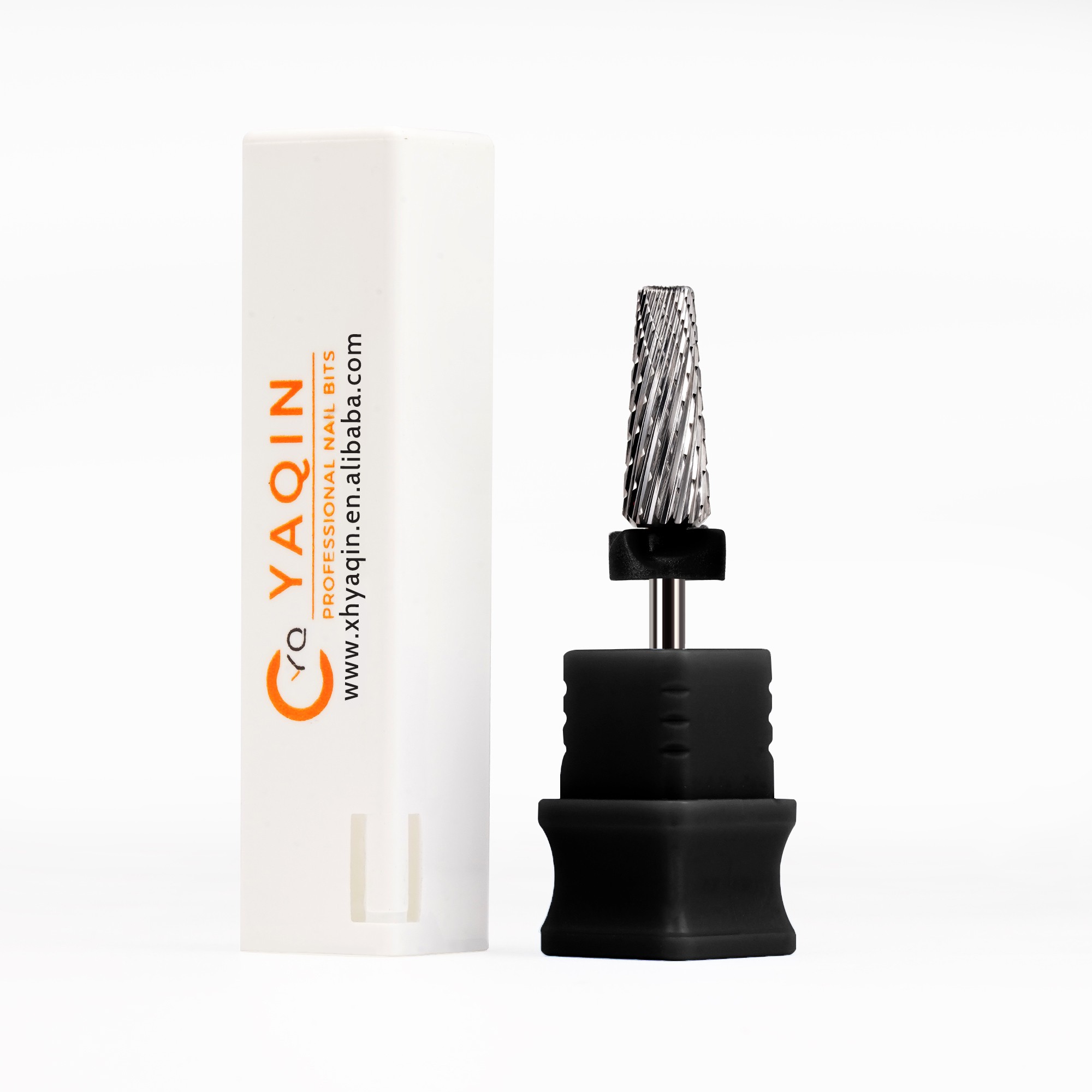
For example, a smooth flat-tip tungsten steel design may be chosen when a technician needs a more substantial removal tool but wants to reduce the chance of catching surrounding skin. The Cylinder Cuticle Nail Drill Bits Russian Manicure option is designed for dual-purpose work involving nail polish and dead-skin removal, with a consistent dust-ejection direction intended to reduce splatter. Its tungsten steel construction places it in a different working category from a diamond abrasive bit, so the choice should be based on the material being removed rather than on shape alone.
This distinction becomes even more useful in a busy salon. A technician who keeps a fine diamond bit for prep, a suitable removal bit for bulk product, and a dedicated finishing tool for smoothing can work more predictably than someone trying to complete every stage with one attachment.
A Practical Buying Checklist
Before choosing a diamond nail drill bit, consider the actual service menu rather than buying a mixed set based only on appearance. A salon focused on dry manicures may need several fine detail shapes and enough duplicates to maintain hygiene rotation. A salon performing frequent enhancement removals will need diamond bits for prep, but also appropriate carbide, ceramic, or tungsten options for product reduction.
- Confirm the grit and intended use of each bit rather than relying only on color bands.
- Check that the shank fits the e-file handpiece used in the salon.
- Choose shapes that match the technician’s technique and the services actually performed.
- Ask about cleaning and processing compatibility before establishing a hygiene routine.
- Inspect new bits for an even abrasive surface, secure construction, and clean packaging.
- Replace bits that are visibly worn, bent, corroded, damaged, or no longer cutting evenly.
The best diamond bit is rarely the coarsest one or the most visually elaborate one. It is the bit that gives a trained technician enough control to clean the nail plate and cuticle area efficiently, while respecting the natural nail and the client’s skin. In professional nail care, that balance is what turns a small abrasive tool into a reliable part of a polished service.
News List
- Preventing Gouges and Uneven Filing With Small Barrel Nail Drill BitsSep 20, 2026
- How Diameter and Grit Affect Small Barrel Nail Drill Bit PerformanceSep 20, 2026
- Can Hytos Nail Drill Bits Be Used Safely on Natural Nails and Gel Polish?Sep 20, 2026
- How to Verify Fit Between Hytos Nail Drill Bits and an E-File HandpieceSep 20, 2026
- Safe Speed Settings for Umbrella Nail Drill Bits Around the Nail FoldSep 20, 2026
- Umbrella vs Flame Nail Drill Bits: Which Shape Offers Better Cuticle Control?Sep 20, 2026
Best-Selling Products
 Cross Cut Safety Stainless Steel Tungsten Carbide Nail Drill Bits Salon Foot Use XF-C Grit for Removing Nails
 First-rate Quality Tungsten Carbide Nail Drill Bits Best Coating Manicure Remove Gel Nails Accessories
 Professional Advanced Safety Cuticle Bits Two-Way Rotate 3/32'' Carbide Tungsten 5 in 1 Nail Drill Bits
 Wholesale 5 in 1 Electric Manicure Nail Drill Bits Various Coating Cone Cuticle Bit with Rotary Cross Cut for Nail Art
 New Slant Tooth Tungsten Steel Nail Drill Bits Dead Skin Removal 5-in-1 Universal Grinding Nail Polish Head Tool Nail Drill Bits
 4.0mm Small 5 in 1 Integrated Sharpe Tungsten Nail Drill Bit Straight Teeth Gel Polish Removal
 Flame Sharp XF F M C XC Silver Safety Professional Corn Tungsten Carbide Nail Bit for Drill Machine Accessories
 Factory Direct 5 in 1 Tungsten Carbide Nail Drill Bits 6.8MM Cross Cut Safety Manicure 5 in 1 Nail Drill Bits
Please give us a message