
Gel Removal Bits Explained: Choosing Safe Shapes and Grits for Fast Product Removal
Gel Removal Bits Explained: Choosing Safe Shapes and Grits for Fast Product Removal
Gel Removal Bits Explained: Choosing Safe Shapes and Grits for Fast Product Removal
Fast gel removal is not just a question of motor speed or operator skill. In practice, the bit itself decides a lot: how quickly bulk product comes off, how much heat builds up, how easy it is to stay off the natural nail, and how consistent the result will be across different technicians or batches of work. For anyone evaluating tools at a technical level, gel removal bits need to be judged as working components, not accessories.
That is where shape and grit matter most. A bit that removes hard gel efficiently on a long apex may feel too aggressive near sidewalls. A bit that performs beautifully on overlays may clog or chatter on softer builder systems. The “best” option usually depends on what is being removed, the pressure habits of the operator, the handpiece stability, and how much tolerance there is for heat and accidental contact.
In professional nail settings, the goal is usually straightforward: remove product fast, leave a controllable thin layer when needed, and avoid rings of fire, gouging, or unnecessary plate thinning. That sounds simple until you compare bit geometries closely.
Why shape changes the removal pattern
Shape affects three things at once: contact area, visibility, and escape path for dust. These are practical issues, not design trivia. A wide barrel removes more material per pass because more of the flute surface is engaged. But that same width can reduce precision at the cuticle zone or on smaller nail plates. A tapered profile gives better access and sightlines, though usually with slightly less bulk-removal speed.
For technical evaluation, common removal shapes can be read like this:
- Large barrel: efficient on flat or broad enhancement surfaces; less forgiving around sidewalls.
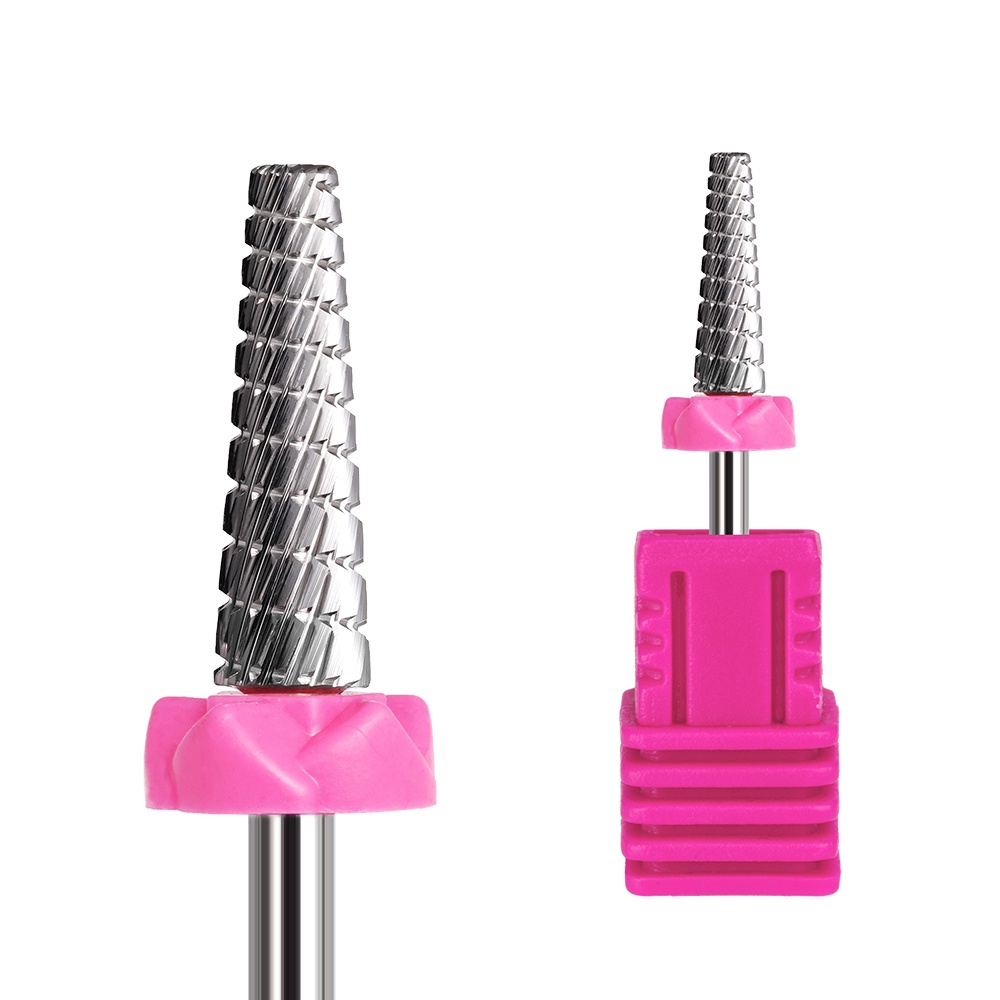
- Tapered barrel: a balanced choice for product removal and controlled approach to the perimeter.
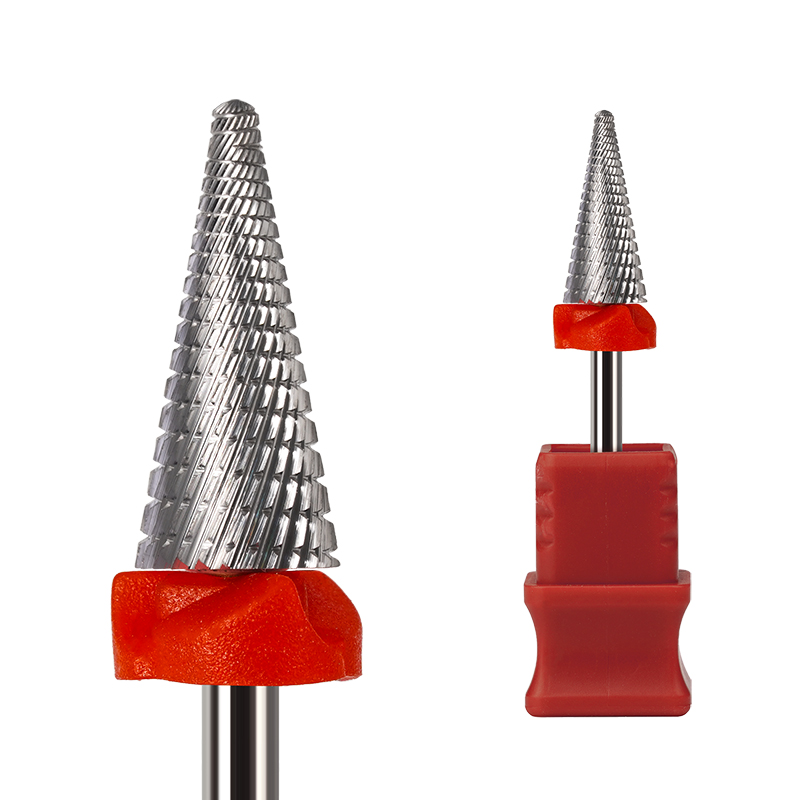
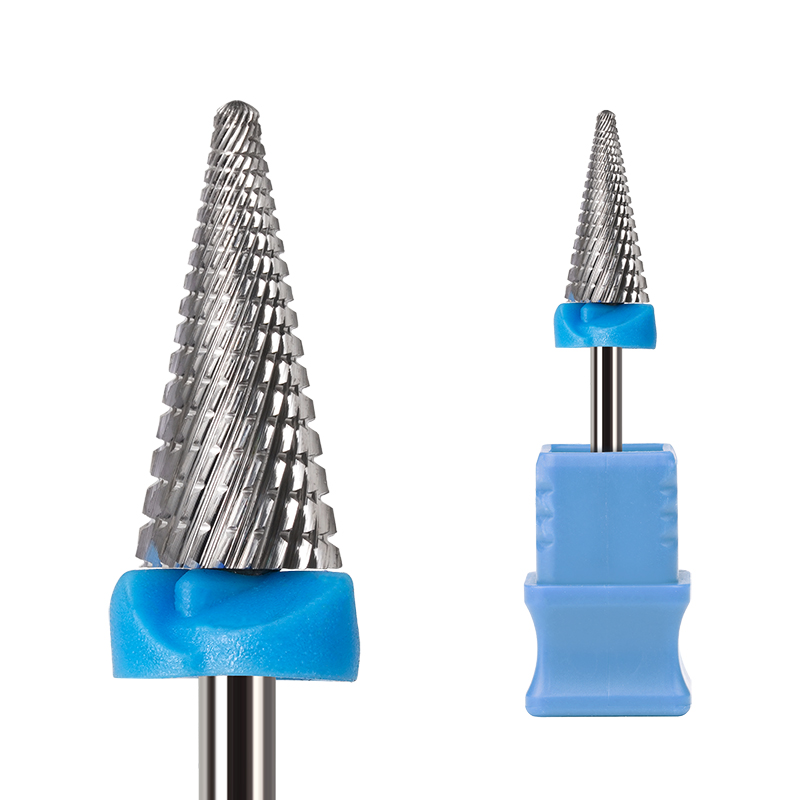
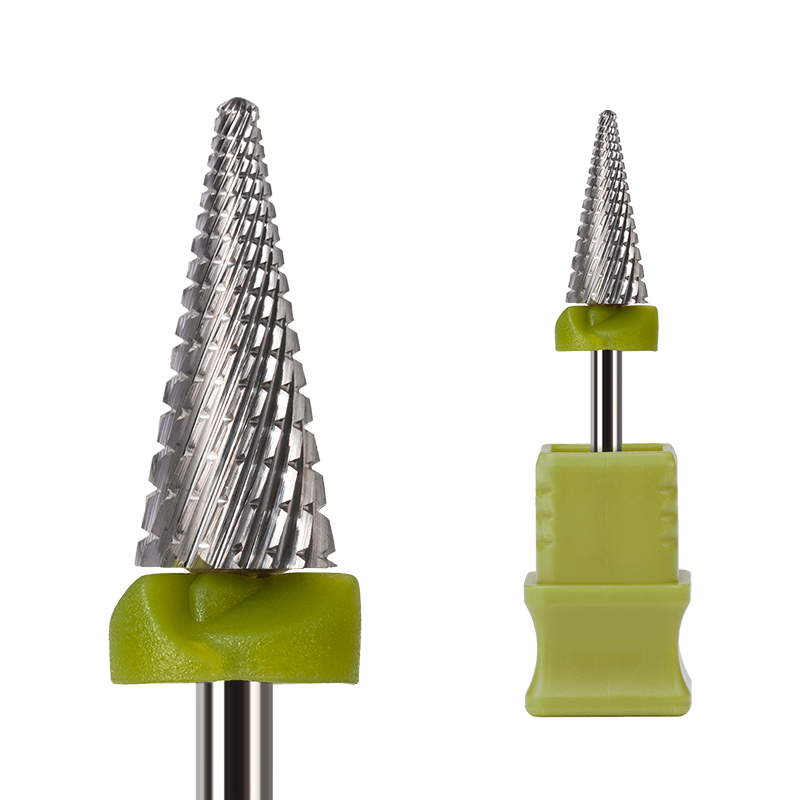
- Cone or safety cone: useful where access matters more than raw speed; often chosen for refinement rather than heavy debulking.
- Rounded-top “safety” versions: reduce the risk of sharp contact near skin, though they do not automatically make an aggressive grit safe.
One common mistake is assuming a rounded top solves every handling problem. It helps at the perimeter, yes, but heat and pressure still come from the active cutting surface. If the flute depth is aggressive and the operator dwells too long, client comfort can still drop quickly.
Grit is really about cut rate and control window
When people discuss grit in nail e-file bits, they often talk as if coarser always means better productivity. In reality, coarser bits widen the risk window at the same time they increase the cut rate. They remove product faster, but they also punish poor angle control faster. Fine grits are safer for surface refinement, yet inefficient for thick overlays and more likely to create friction if someone tries to force speed out of them.
A practical evaluation framework looks something like this:
If a team uses one bit for everything, medium grit is often the default compromise. Not because it is ideal in every step, but because it gives a more manageable balance across removal speed, surface tracking, and technician variability.
Material and flute quality matter more than many buyers expect
Two bits can have the same nominal shape and grit description yet behave differently in use. The base material, cutting-edge consistency, and finish quality all influence vibration, debris evacuation, and wear pattern. In salon volume work, this becomes obvious quickly. A bit that dulls unevenly does not just slow down; it often starts generating more friction and requires more pressure from the operator, which is where safety margins begin to shrink.
This is why technical reviewers usually look beyond a catalog label. Tungsten carbide remains a preferred material for many removal applications because of its hardness and cutting efficiency, especially where repeated debulking is required. Still, consistency from batch to batch is just as important as the material name itself. Manufacturing control, packaging protection, and inspection routines influence whether the bit arriving at the workstation performs like the approved sample.
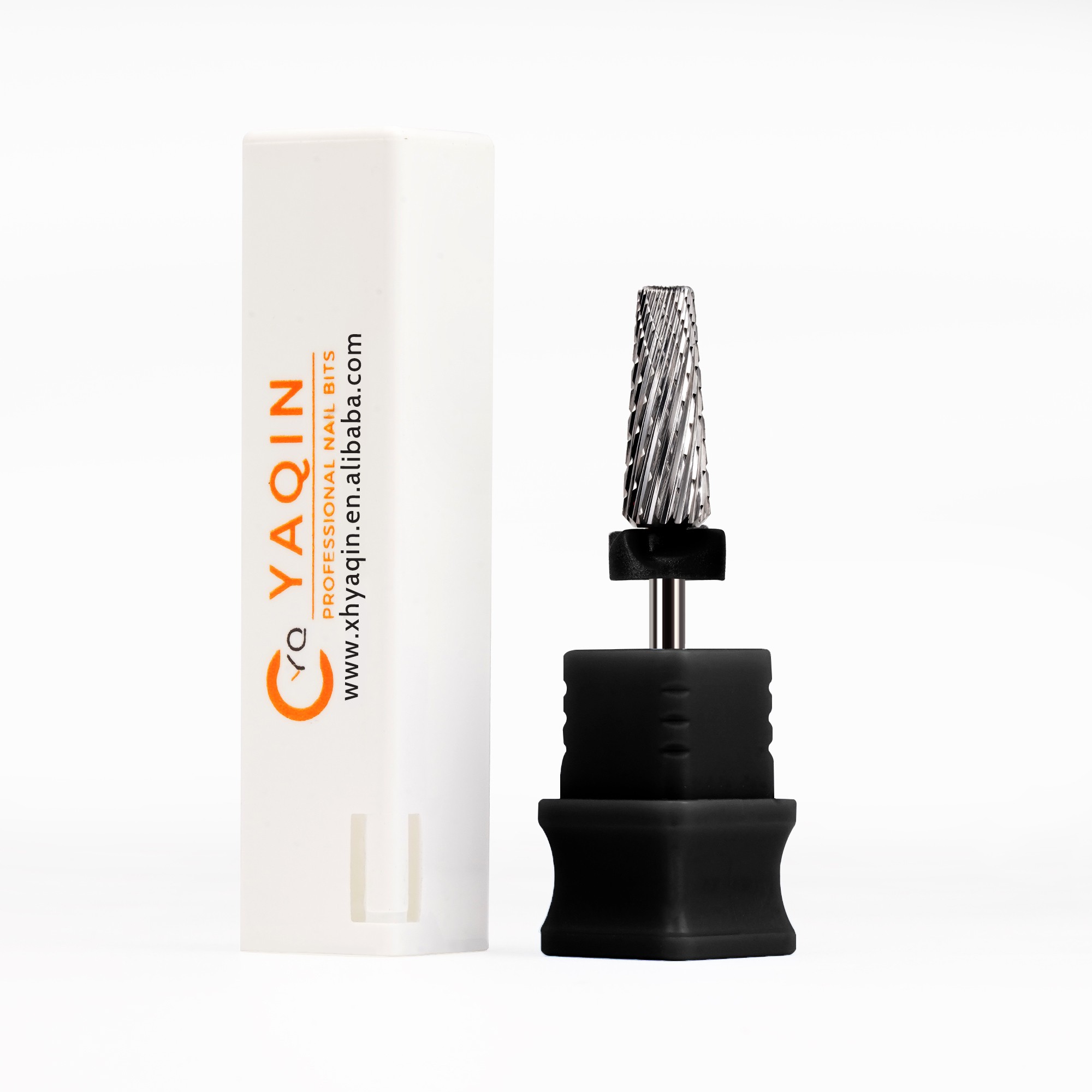
Companies with export experience across multiple markets tend to understand this point better because product tolerance is not judged only by one operator. Wuxi Yaqin Trading Co., Ltd., for example, works in abrasive product production and export to the USA, Canada, Germany, the UK, Italy, Poland, and many other markets, and emphasizes QC from raw material purchasing through production and packing. For evaluators, that kind of process discipline matters because bit consistency is a supply issue as much as a design issue.
What “safe” removal actually looks like
Safe removal is usually not total product removal at maximum speed. In many professional workflows, it means reducing bulk rapidly and then stopping with a thin, even layer if that suits the service plan. Trying to chase every trace of gel with a coarse bit is often where trouble starts. The natural nail is not flat, and residual product can visually disguise depth, especially under dust.
A safe bit profile should allow the operator to keep the cutting action on the enhancement, not on the nail plate. That involves:
- Predictable tracking without sudden grabbing
- Enough cutting efficiency that pressure stays light
- Good visibility near the apex and side areas
- Low enough vibration that fine hand adjustments remain possible
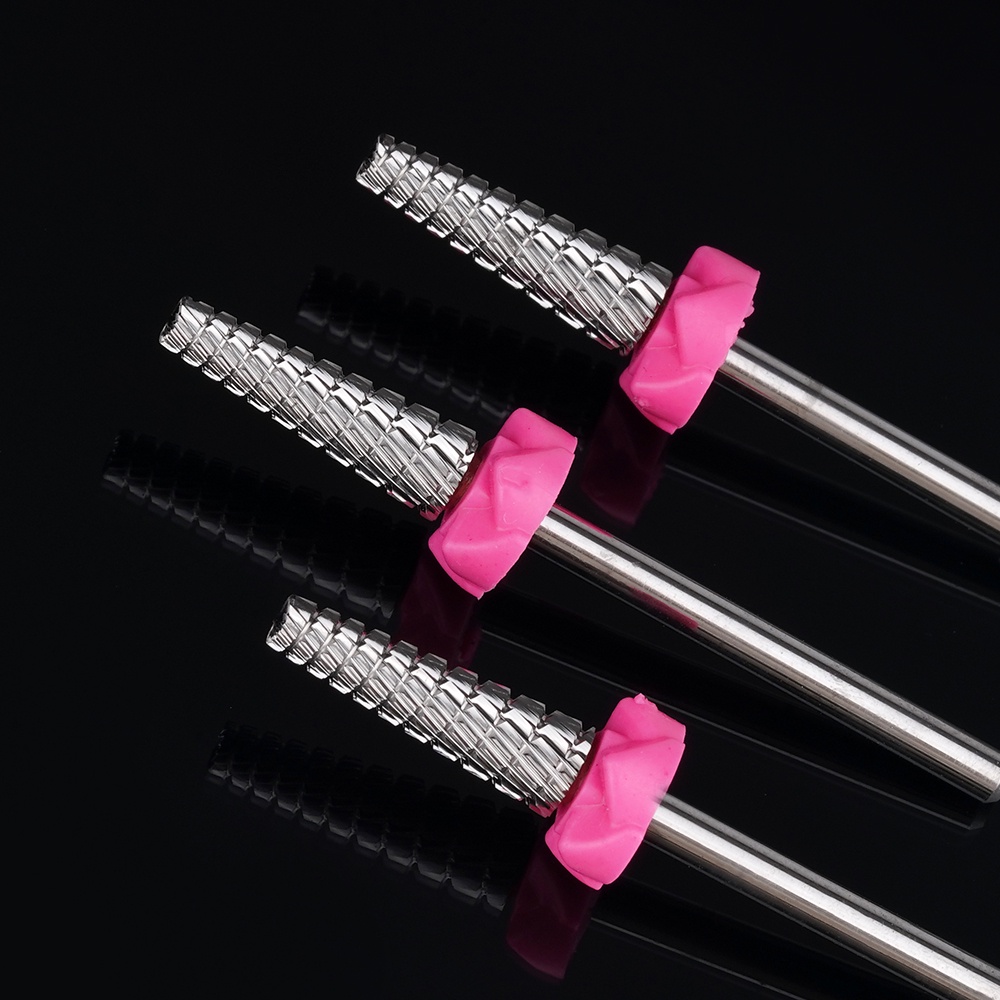
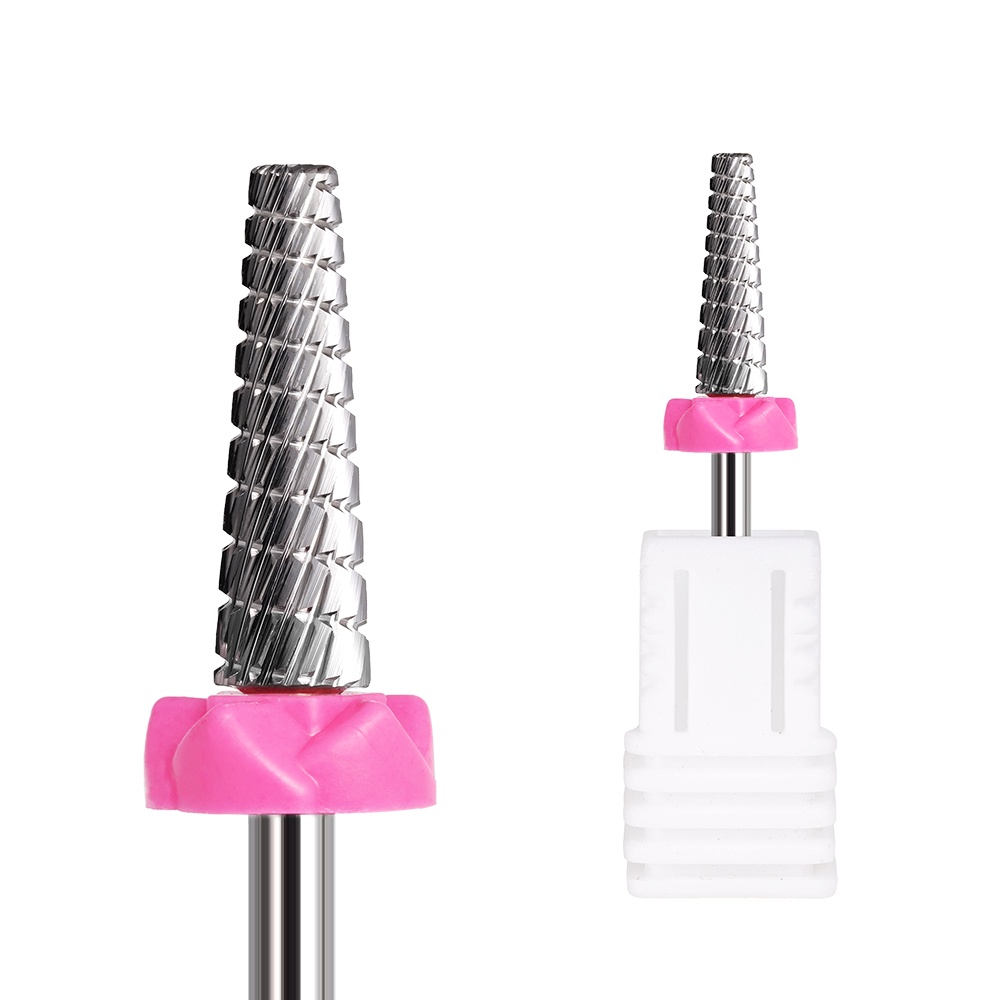
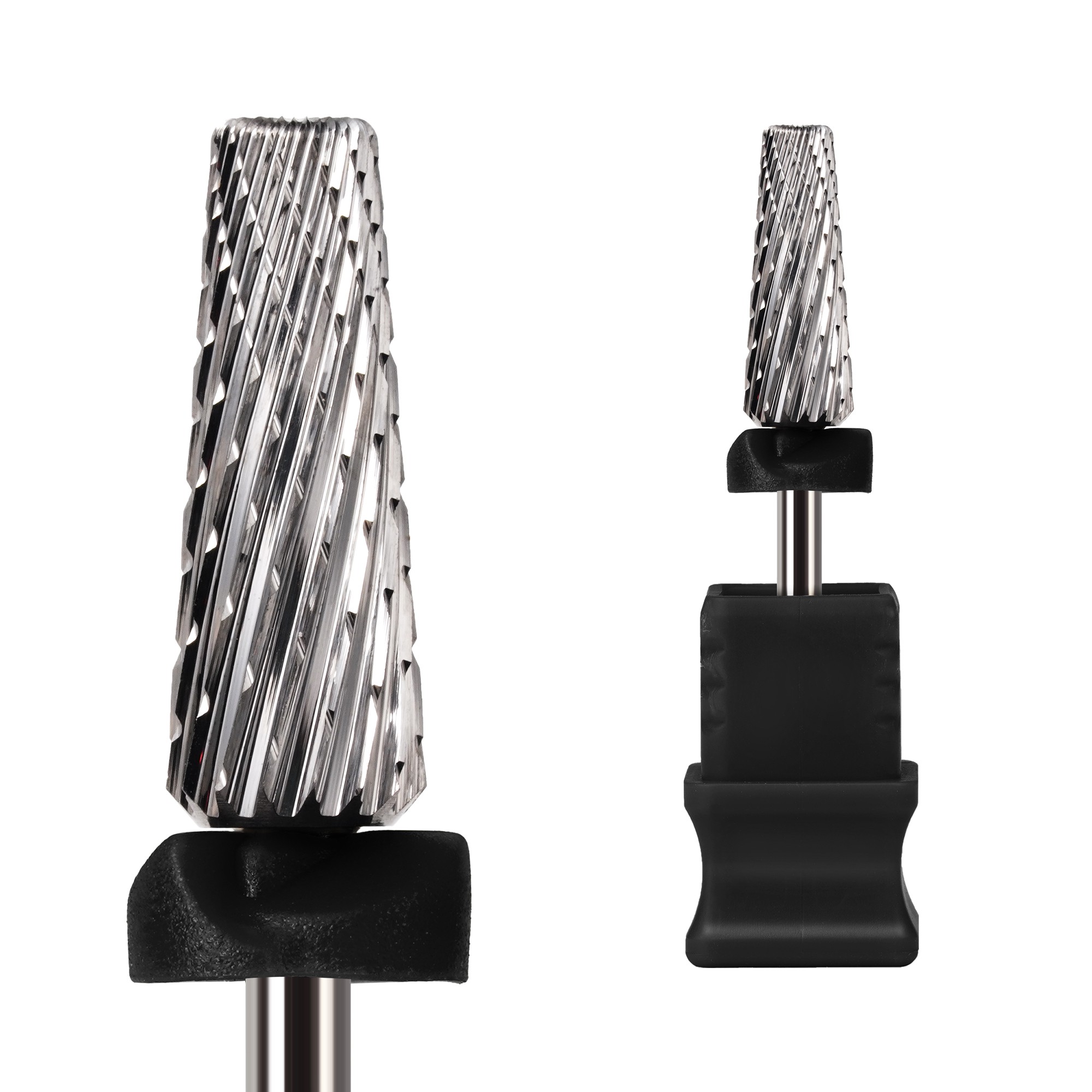
The last point gets overlooked. Excessive vibration makes a technically correct bit feel unsafe in actual use because the handpiece no longer communicates cleanly with the operator. This is one reason why some higher-grade carbide designs with stable support and lower noise are favored in busy professional environments. A product such as 5 In 1 Pro Gold Tungsten Carbide Nail Drill Bit fits this discussion not because of branding claims alone, but because features like high hardness, efficient grinding, precise maneuverability, and a quieter, more stable grind directly affect evaluation criteria.
Choosing for service type, not just for catalog category
“Gel removal bits” is a useful search term, but in the field, the service type matters more than the label. Soft gel overlays, hard gel extensions, builder layers, and mixed-product corrections do not all respond the same way. A coarse barrel that performs well on firm enhancement structure may feel unnecessarily harsh on thinner overlays. A finer taper may leave a better-controlled surface but cost too much time in repeated fill work.
For technical assessment, it helps to test bits against three recurring tasks rather than a generic removal claim:
- Bulk reduction from apex and body
- Approach to sidewalls and lower-stress perimeter zones
- Transition smoothing before hand filing or reapplication
Some multi-zone bits are designed to cover several of these tasks in one tool. That can be useful for workflow simplification, especially where teams want fewer tool changes and more consistent handling patterns. But combo designs should still be judged by cut behavior in each section, not by the idea of convenience alone.
A few warning signs during evaluation
If a bit leaves random trenches, skips across the surface, or needs obvious pressure to start cutting, something is off. It may be the wrong grit, poor flute sharpness, a handpiece issue, or simply a mismatch between bit shape and service step. Technical reviewers should also watch for over-polished marketing language around “universal” bits. In practice, universal usually means acceptable across many tasks, not best-in-class for all of them.
Packaging and post-production handling deserve a quick look too. Individually packaged bits are less likely to pick up edge damage or contamination before use. That sounds minor, but fine damage at the cutting edge can change feel noticeably. Suppliers with OEM/ODM experience often understand these small but costly details because private-label buyers tend to catch inconsistencies fast.
Yaqin’s one-stop production-to-delivery model and ISO9001:2000-certified management system are relevant here in a practical sense: they suggest a framework for repeatability. That does not replace sample testing, of course, but it is a reasonable sign that quality control is being treated as part of the product, not an afterthought.
What to approve, and what to keep testing
A good approval decision usually goes to a bit that removes the target product quickly with light pressure, stays manageable near the perimeter, and maintains a consistent feel across repeated sessions. For many professional applications, that points toward a well-made carbide tapered barrel or multi-zone design in a medium-to-coarse working range, with fine refinement handled separately if needed.
If the removal environment is high-volume, durability becomes part of safety. A bit that starts sharp and degrades unpredictably can create more risk over time than a slightly slower bit with stable performance. That is why evaluators should test not just first-use speed, but how the tool behaves after repeated cleaning and routine production use.
In the end, choosing gel removal bits is less about finding one “fastest” option and more about defining an acceptable balance between cut speed, heat, visibility, and surface control. If a bit makes technicians work harder to stay safe, it is not truly efficient. If it removes smoothly, tracks predictably, and holds that behavior over time, it is probably the right place to start.
News List
- Preventing Gouges and Uneven Filing With Small Barrel Nail Drill BitsSep 20, 2026
- How Diameter and Grit Affect Small Barrel Nail Drill Bit PerformanceSep 20, 2026
- Can Hytos Nail Drill Bits Be Used Safely on Natural Nails and Gel Polish?Sep 20, 2026
- How to Verify Fit Between Hytos Nail Drill Bits and an E-File HandpieceSep 20, 2026
- Safe Speed Settings for Umbrella Nail Drill Bits Around the Nail FoldSep 20, 2026
- Umbrella vs Flame Nail Drill Bits: Which Shape Offers Better Cuticle Control?Sep 20, 2026
Best-Selling Products
 Cross Cut Safety Stainless Steel Tungsten Carbide Nail Drill Bits Salon Foot Use XF-C Grit for Removing Nails
 First-rate Quality Tungsten Carbide Nail Drill Bits Best Coating Manicure Remove Gel Nails Accessories
 Professional Advanced Safety Cuticle Bits Two-Way Rotate 3/32'' Carbide Tungsten 5 in 1 Nail Drill Bits
 Wholesale 5 in 1 Electric Manicure Nail Drill Bits Various Coating Cone Cuticle Bit with Rotary Cross Cut for Nail Art
 New Slant Tooth Tungsten Steel Nail Drill Bits Dead Skin Removal 5-in-1 Universal Grinding Nail Polish Head Tool Nail Drill Bits
 4.0mm Small 5 in 1 Integrated Sharpe Tungsten Nail Drill Bit Straight Teeth Gel Polish Removal
 Flame Sharp XF F M C XC Silver Safety Professional Corn Tungsten Carbide Nail Bit for Drill Machine Accessories
 Factory Direct 5 in 1 Tungsten Carbide Nail Drill Bits 6.8MM Cross Cut Safety Manicure 5 in 1 Nail Drill Bits
Please give us a message