
Quartz Nail Drill Bit Applications: Where It Fits Better Than Diamond or Ceramic
Quartz Nail Drill Bit Applications: Where It Fits Better Than Diamond or Ceramic
Choosing the right nail drill bit is rarely about picking the hardest material available. For professionals and buyers comparing options, the real question is which bit gives the best control, finish quality, and working comfort for a specific task. In that comparison, the Quartz Nail Drill Bit is not a universal replacement for diamond or ceramic, but it does perform better in several practical situations where balanced abrasion and lower surface aggression matter most.
For information-focused readers, the short answer is this: quartz tends to fit best in refining, smoothing, gentle surface work, and services where technician control and client comfort are priorities. Diamond bits often win in detailed cuticle and skin-area work, while ceramic bits are widely chosen for bulk product removal and heat reduction. Quartz earns its place between those extremes.
What Is the Core Advantage of a Quartz Nail Drill Bit?
A Quartz Nail Drill Bit is generally valued for its controlled abrasive action. Instead of cutting very aggressively, it works with a more even contact pattern that helps reduce sudden grabbing, over-filing, and uneven pressure marks on the nail surface.
That makes quartz especially useful when the goal is precision with restraint. In salon work, there are many moments when technicians do not want maximum removal speed. They want a bit that supports consistency, smoother transitions, and a more forgiving touch.
This matters for both experienced nail professionals and less advanced users. A bit that removes material too quickly can create avoidable problems, including rings of fire, surface thinning, client discomfort, and extra time spent correcting mistakes.
Quartz is often appreciated because it offers a middle-ground working feel. It can be effective enough for real salon tasks, yet less harsh in contact than some harder or sharper alternatives when used for surface-level refinement.
When Does Quartz Fit Better Than Diamond?
Diamond bits are highly respected in nail services, especially for precision work around the cuticle zone, sidewalls, and dead skin removal. Their strength is detail and durability. However, that does not mean they are always the best option for every surface-related task.
Quartz fits better than diamond when the technician needs a softer, more even abrasion across broader nail areas. For example, when smoothing product transitions or lightly refining the nail plate, quartz may provide a more controlled finish with less scratch intensity.
It can also be a smart choice for clients with more sensitive nails or for services where comfort perception matters. Some technicians find diamond bits feel too sharp or too direct for certain prep and refinement stages, especially when pressure control is inconsistent.
Another advantage appears during training or routine salon use. For beginners, quartz can be easier to manage because the feedback on the nail surface is often gentler. That does not remove the need for technique, but it can lower the risk of overworking an area.
In practical terms, quartz may outperform diamond in these situations: light surface smoothing, blending uneven product edges, refining gel overlays before finishing, and controlled prep on clients who react strongly to more aggressive abrasion.
Where Does Quartz Perform Better Than Ceramic?
Ceramic bits are popular because they remove product efficiently and often generate less friction heat than some metal alternatives. They are commonly selected for gel polish, builder gel, and enhancement removal. Their cutting speed is useful when productivity is the priority.
Quartz performs better than ceramic when speed is not the main goal. If the service stage requires more tactile feedback, more gradual material reduction, or a finer touch on the nail surface, quartz can provide better control.
Some technicians also prefer quartz when moving from removal into refinement. Ceramic can be excellent for taking product down quickly, but a Quartz Nail Drill Bit may leave the operator with a better sense of moderation when approaching the final layers or smoothing transitions.
This distinction becomes important in real workflow design. Fast removal is valuable, but over-removal is expensive. It affects service quality, client trust, and correction time. Quartz can be a better fit whenever the technician wants to slow the process slightly to protect the natural nail or improve finish precision.
It is also worth noting that many salons combine materials rather than relying on one bit type alone. A ceramic bit may handle heavier removal, while quartz takes over for controlled finishing and surface correction. That division often improves both speed and results.
Best Use Cases for Quartz Nail Drill Bits
The most useful way to evaluate quartz is by task, not by marketing claims. It is best suited for applications where controlled abrasion adds value. The following use cases are where quartz usually makes the strongest practical case.
First, quartz works well for gentle nail plate preparation. When a technician needs to remove surface shine or create a more uniform prep texture without becoming overly aggressive, quartz can help maintain better balance.
Second, it is useful for blending the border between natural nail and remaining product. This is a delicate zone where too much cutting pressure creates obvious damage. Quartz often supports smoother transitions with less risk of deep surface marking.
Third, quartz is effective for refining overlays and soft contour correction. If a gel or enhancement surface has minor unevenness, a quartz bit can help improve consistency before final finishing steps.
Fourth, it can be a good option for maintenance appointments rather than full removal sessions. In fills, rebalancing, and touch-up services, there are many tasks where moderate abrasion is more helpful than maximum cutting power.
Fifth, it may be preferable in salons serving clients who prioritize comfort and a less intense filing sensation. Client experience is part of service quality, and a smoother-feeling bit can contribute to better perception during repeated visits.
What Quartz Is Not the Best Choice For
A useful buying or usage decision requires understanding limits as well as strengths. Quartz is not the best tool for every job, and readers should be careful not to overgeneralize its benefits.
It is usually not the first choice for heavy bulk removal of hard gel, acrylic, or thick enhancement layers. In those scenarios, carbide or ceramic bits often deliver better efficiency and lower service time.
It is also not the top choice for highly detailed cuticle cleaning where a fine diamond shape is designed specifically for tight, precise access. Quartz can refine surfaces well, but it does not replace every function of a detailed diamond bit.
For high-volume removal workflows, especially in professional salons where turnaround time matters, quartz may feel too moderate. That is not a weakness in itself. It simply means the material is optimized for a different stage of the service process.
This is why knowledgeable technicians build bit sets by function. They do not ask one bit to do everything. They assign each material to the task where it creates the best balance of speed, finish, and safety.
How Professionals Usually Combine Quartz With Other Bit Materials
In real salon practice, the best results often come from sequencing tools correctly. Quartz is often strongest when used as part of a system rather than as a stand-alone solution. This is especially true in professional settings with varied client needs.
A common workflow starts with a faster-removal material, then shifts to a more controlled one. For instance, some technicians may remove bulk product with ceramic or carbide, then switch to quartz for refining the remaining layer and smoothing the working surface.
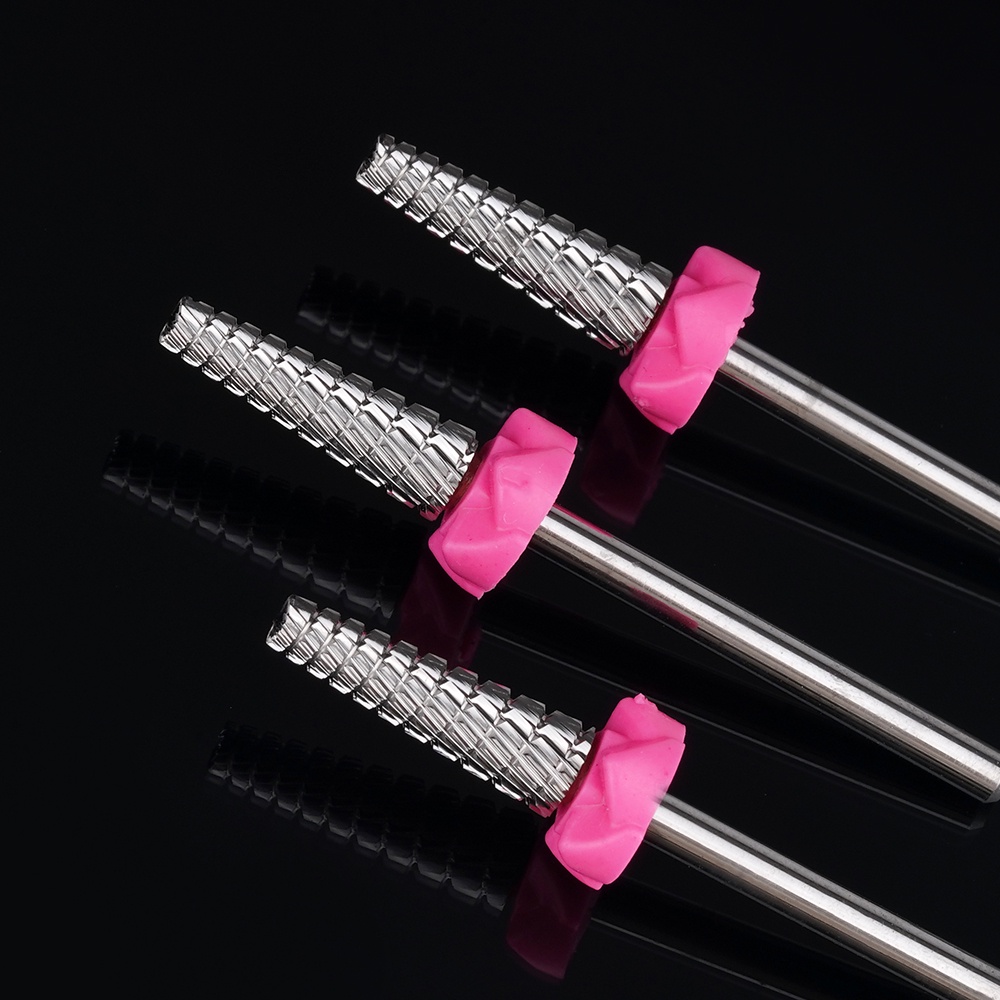
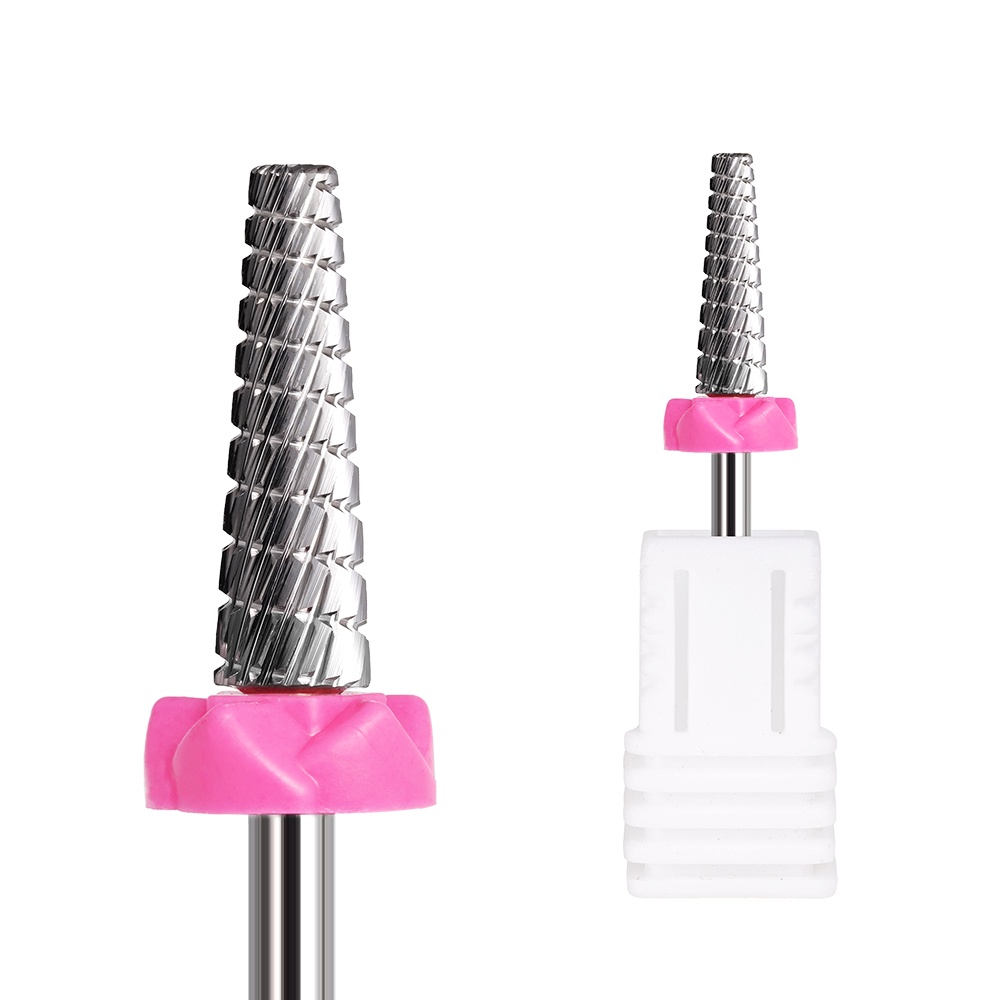
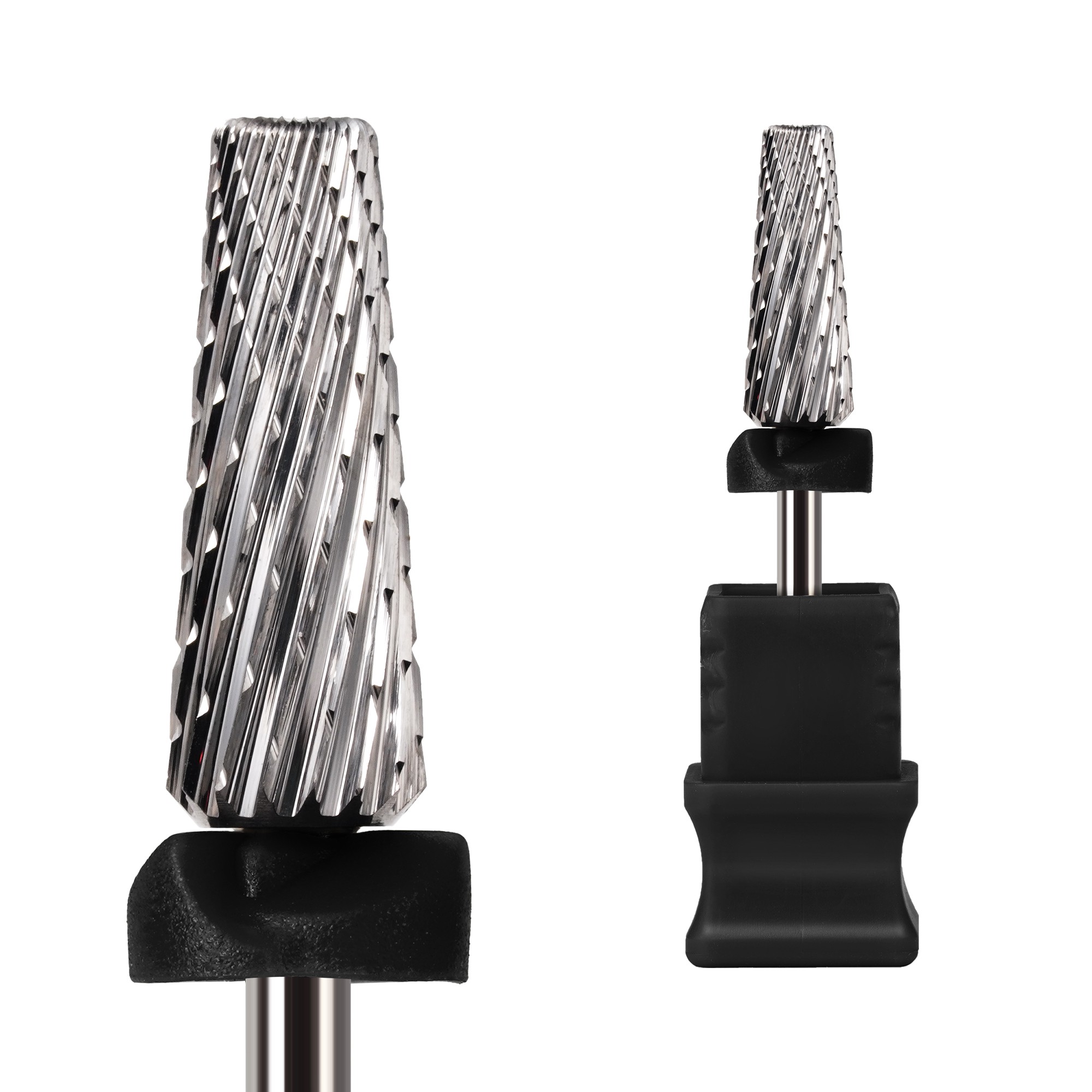
That logic is similar to how many professionals use Tungsten Carbide Large Barrel Smooth Top Nail Drill Bits for efficient gel removal before moving into more delicate finishing stages. In that type of system, each bit supports a different service objective.
For example, large barrel carbide designs in C Model, M Model, or F Model can be selected according to the level of removal needed. Coarse, medium, and fine grit options, along with narrow or wide sizes, allow technicians to match product thickness and comfort requirements.
These tungsten carbide tools are often recommended for hard gel removal at 15,000 to 20,000 RPM, and for soft gel or base gel removal at 10,000 to 15,000 RPM. Their value is quick, safe product removal, high durability, and efficient prep support.
After that heavier work is completed, quartz can be introduced where a smoother and more moderated contact is preferred. This division of labor is often more effective than trying to force one material to handle both fast removal and sensitive refinement.
What Buyers and Salon Decision-Makers Should Evaluate
For information researchers, especially buyers, educators, and salon managers, the key issue is not just material comparison. It is whether the bit fits the service menu, technician skill level, and client profile.
If your team frequently performs refinement-heavy services, natural nail prep, overlay smoothing, or comfort-sensitive maintenance work, a Quartz Nail Drill Bit may deserve a place in standard tool selection. Its value becomes clearer when service consistency matters as much as removal speed.
If the business mostly handles heavy enhancement removal, quartz may play a secondary role. In that case, ceramic or carbide may remain the primary production tools, while quartz supports finishing and lower-risk surface correction.
Quality control also matters. Consistent abrasive performance, stable shaping, balanced rotation, and packaging integrity all affect user confidence and export reliability. Suppliers with stricter QC systems, stable raw material control, and OEM/ODM experience are often better positioned to deliver repeatable tool quality.
That is particularly relevant for distributors and private-label buyers. Companies such as Wuxi Yaqin Trading Co., Ltd., with established production and export systems, ISO-certified management, and one-stop delivery support, align better with professional sourcing requirements than casual low-cost suppliers.
How to Decide Whether Quartz Is the Right Choice for Your Needs
A simple decision framework can help. Start by identifying the exact task. If the job involves aggressive removal, quartz is probably not the first answer. If the job involves refinement, smoothing, moderation, or nail-surface sensitivity, quartz becomes much more attractive.
Next, consider operator skill. Less experienced users often benefit from tools that provide more forgiving surface interaction. Quartz can support that need, although proper training, speed control, and hand stability still remain essential.
Then look at client expectations. In many markets, clients care not only about appearance but also about comfort during service. A bit that feels smoother in contact can improve the overall experience, even if it is not the fastest option on the table.
Finally, think in terms of workflow rather than single-tool replacement. The most practical question is often not “Should quartz replace diamond or ceramic?” but “At which stage does quartz improve the result more than the other options?”
Conclusion
The Quartz Nail Drill Bit fits better than diamond or ceramic in specific, valuable situations: gentle prep, surface refinement, transition blending, comfort-focused services, and controlled work where over-aggression creates risk. Its strength is not maximum hardness or maximum speed. Its strength is balance.
For readers comparing materials, the clearest takeaway is this: diamond remains strong for detail work, ceramic remains strong for efficient removal, and quartz stands out when the service demands smoother abrasion and better moderation. Used with that logic, quartz is not a compromise. It is a specialized advantage.
In professional nail care, better results usually come from matching the bit to the task rather than chasing one “best” material. When finish quality, technician control, and client comfort are central, quartz can be the smarter choice.
News List
- Preventing Gouges and Uneven Filing With Small Barrel Nail Drill BitsSep 20, 2026
- How Diameter and Grit Affect Small Barrel Nail Drill Bit PerformanceSep 20, 2026
- Can Hytos Nail Drill Bits Be Used Safely on Natural Nails and Gel Polish?Sep 20, 2026
- How to Verify Fit Between Hytos Nail Drill Bits and an E-File HandpieceSep 20, 2026
- Safe Speed Settings for Umbrella Nail Drill Bits Around the Nail FoldSep 20, 2026
- Umbrella vs Flame Nail Drill Bits: Which Shape Offers Better Cuticle Control?Sep 20, 2026
Best-Selling Products
 Cross Cut Safety Stainless Steel Tungsten Carbide Nail Drill Bits Salon Foot Use XF-C Grit for Removing Nails
 First-rate Quality Tungsten Carbide Nail Drill Bits Best Coating Manicure Remove Gel Nails Accessories
 Professional Advanced Safety Cuticle Bits Two-Way Rotate 3/32'' Carbide Tungsten 5 in 1 Nail Drill Bits
 Wholesale 5 in 1 Electric Manicure Nail Drill Bits Various Coating Cone Cuticle Bit with Rotary Cross Cut for Nail Art
 New Slant Tooth Tungsten Steel Nail Drill Bits Dead Skin Removal 5-in-1 Universal Grinding Nail Polish Head Tool Nail Drill Bits
 4.0mm Small 5 in 1 Integrated Sharpe Tungsten Nail Drill Bit Straight Teeth Gel Polish Removal
 Flame Sharp XF F M C XC Silver Safety Professional Corn Tungsten Carbide Nail Bit for Drill Machine Accessories
 Factory Direct 5 in 1 Tungsten Carbide Nail Drill Bits 6.8MM Cross Cut Safety Manicure 5 in 1 Nail Drill Bits
Please give us a message