
China Electric Nail File Sourcing Guide: Factory Capability, MOQ, and Quality Risks
China Electric Nail File Sourcing Guide: Factory Capability, MOQ, and Quality Risks
Cost pressure in a China electric nail file project usually shows up long before mass production. A quoted unit price may look acceptable, yet the real expense often comes from unstable motor performance, inconsistent abrasive parts, packaging defects, or an MOQ that forces stock to sit too long. When evaluating supply options, the useful comparison is not only factory-to-factory price, but the full combination of production depth, specification control, and risk exposure across the order cycle.
In this category, “electric nail file” can refer to the handpiece, control unit, adapters, spare bits, sanding bands, and retail or bulk packaging as one package or as separate sourced items. That distinction matters because some suppliers assemble finished devices but do not machine key components, while others mainly produce consumables such as carbide bits or sanding accessories and outsource the electrical section. A quotation can therefore hide multiple subcontract layers. If that structure is unclear, lead time drift and accountability problems tend to appear during sample revision or repeat orders.
Factory capability is easier to judge through process detail than through catalog breadth
A broad product catalog does not automatically indicate strong manufacturing control. In light industrial daily-use products, many suppliers can present dozens of models, colors, and accessory combinations, but their real capability is revealed by how precisely they answer questions on component tolerances, motor grade consistency, chuck fit, vibration control, and packaging standards. A capable source should be able to explain which parts are made in-house, which are outsourced, and where final inspection happens.
For a China electric nail file, the core technical concern is stable rotation under working load. Excessive vibration, heat rise, or noticeable speed fluctuation often signals weak assembly discipline, poor bearing selection, or uneven shaft alignment. Those issues may not be obvious in a static sample review. A factory with genuine process control should be able to discuss no-load and load testing methods, cable flex endurance, switch durability, handpiece surface finishing, and how it manages defects found during final testing.
Capability also includes document handling. If artwork approval, carton marking, plug type control, instruction language versions, and spare-part matching are handled loosely, commercial risk increases even when the product itself is usable. Mismatched labels or adapter errors can delay customs clearance or create rework at destination warehouses. In practice, the supplier that manages version control cleanly is often lower risk than the one offering the cheapest assembly quote.
MOQ flexibility needs to be read against tooling, component sourcing, and packaging complexity
MOQ is often treated as a simple negotiation point, but in this product range it usually reflects several cost locks underneath. If the electric nail file uses a standard shell, common adapter, and neutral packaging, the factory may accept a smaller opening order. Once custom color matching, logo engraving, multilingual manual sets, molded trays, or exclusive accessory combinations are added, the minimum may rise because raw material preparation and packaging procurement stop being generic.
Small MOQ offers can also be misleading. In some cases, the factory agrees to a low quantity for the device but substitutes a higher charge into packaging, sample fee, accessory pricing, or inland logistics. A better approach is to ask for the MOQ by cost element: main unit, spare bits, packaging set, barcode label, and replacement parts. This often shows whether the supplier is truly flexible or simply moving the threshold into another line item.
Another point is inventory linkage. If a supplier carries standard motors, bearings, or collet parts regularly, replenishment is usually smoother. If they purchase these only after order confirmation, lead time may expand sharply when upstream parts are short. MOQ discussions should therefore include which materials are standard stock, which are custom ordered, and whether leftover packaging or components can be reserved for a follow-up order instead of being scrapped or re-billed.
Quality risks often start with materials that look equivalent on paper
The handpiece body, internal transmission parts, cable insulation, adapter housing, and accessory bits may all pass a surface-level specification review while performing very differently in use. Material substitutions are common risk points in daily-use hardware because visual similarity is easy to maintain. Plastic can appear identical while becoming brittle under repeated cleaning exposure. Metal parts can look polished while having inconsistent hardness or poor corrosion resistance. Abrasive accessories can cut aggressively at first and then lose edge quickly.
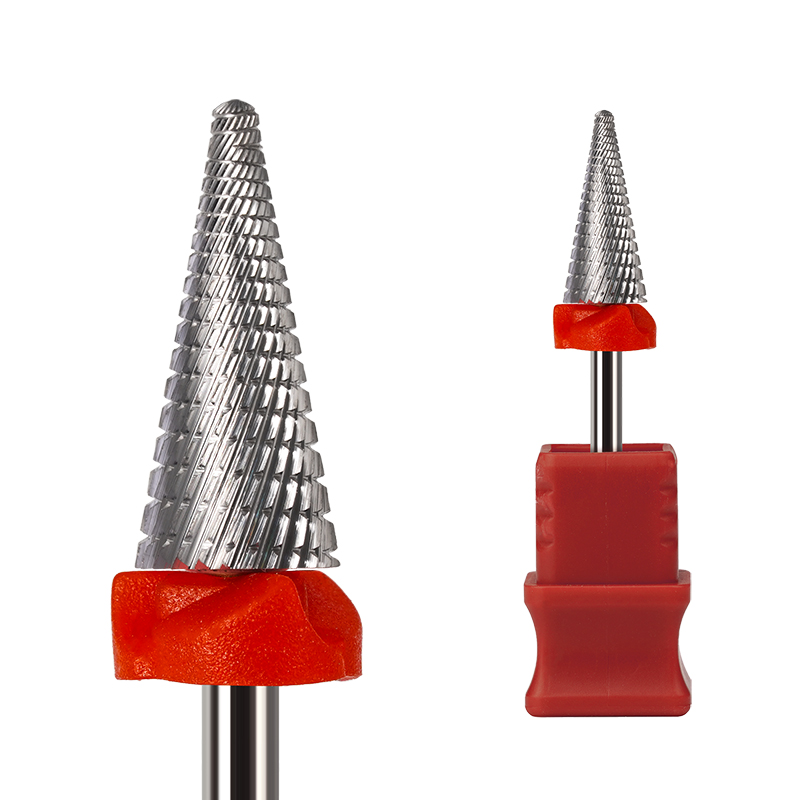
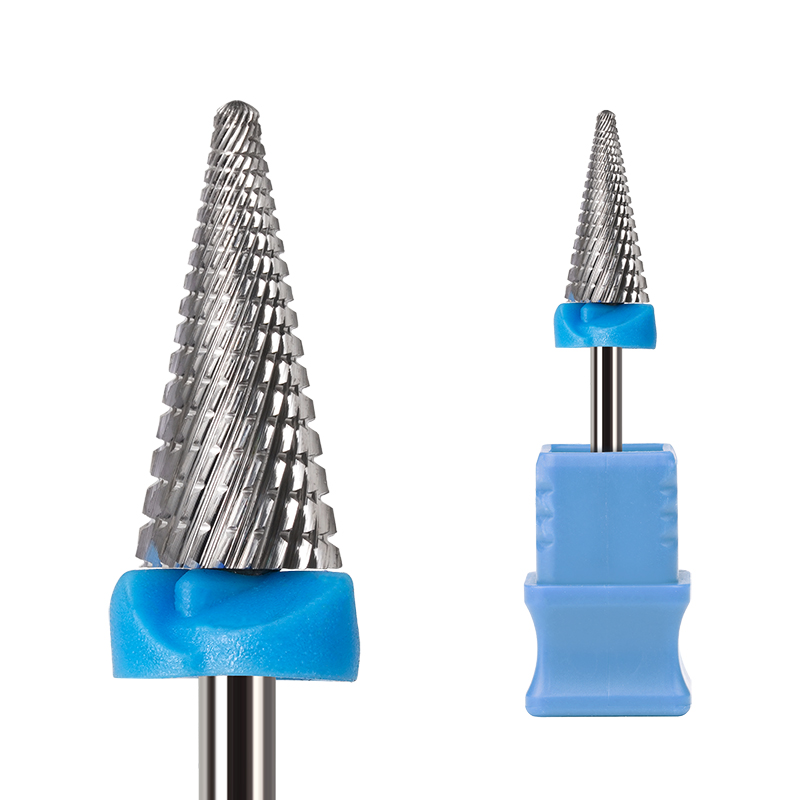
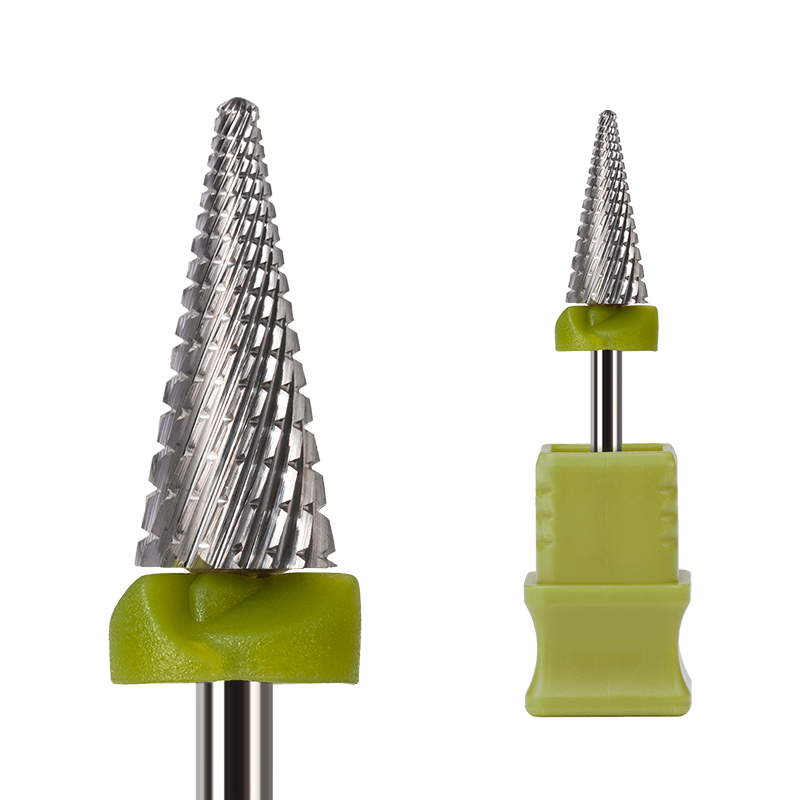
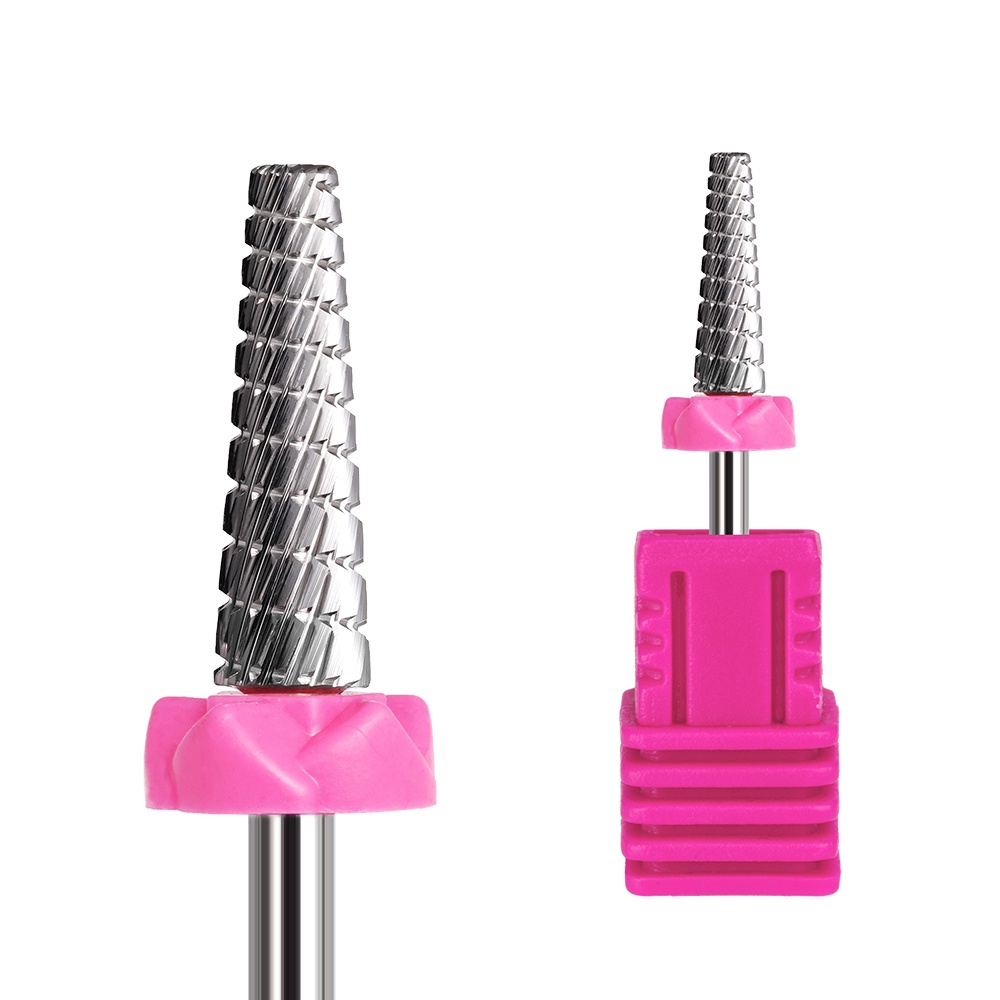
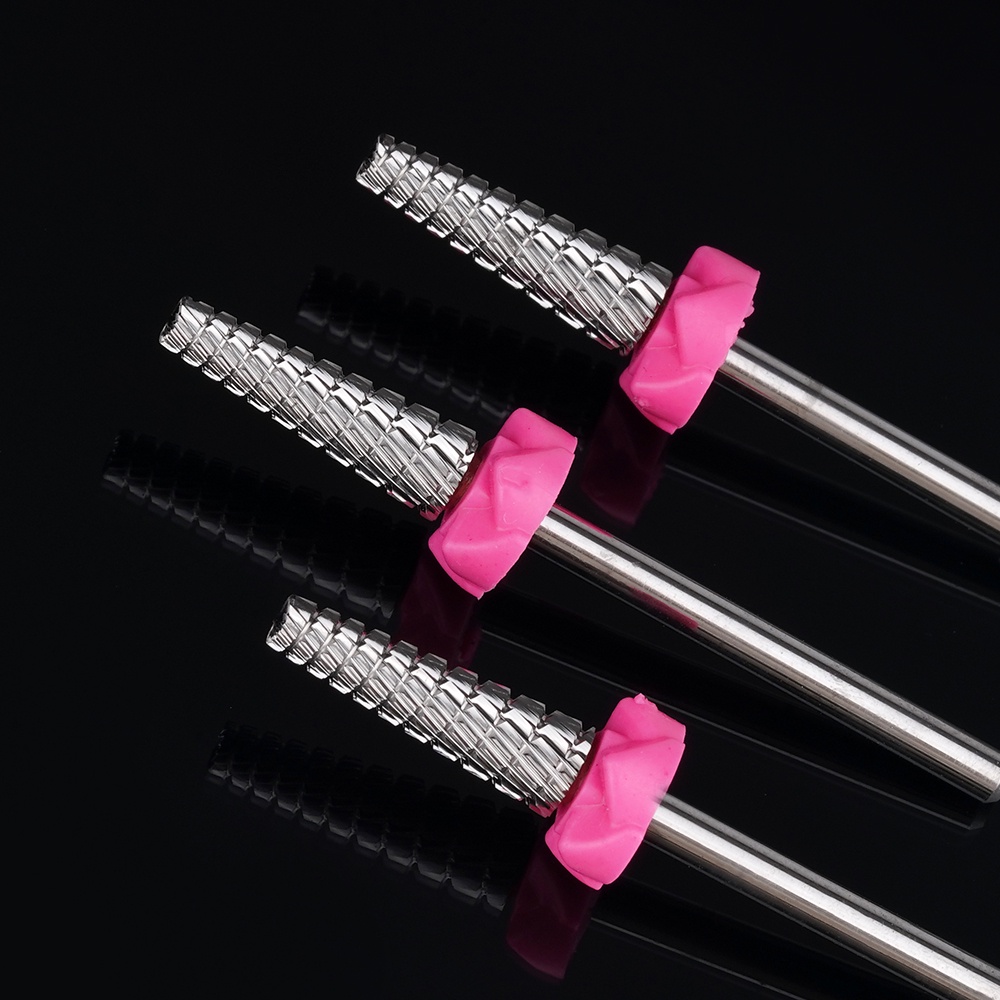
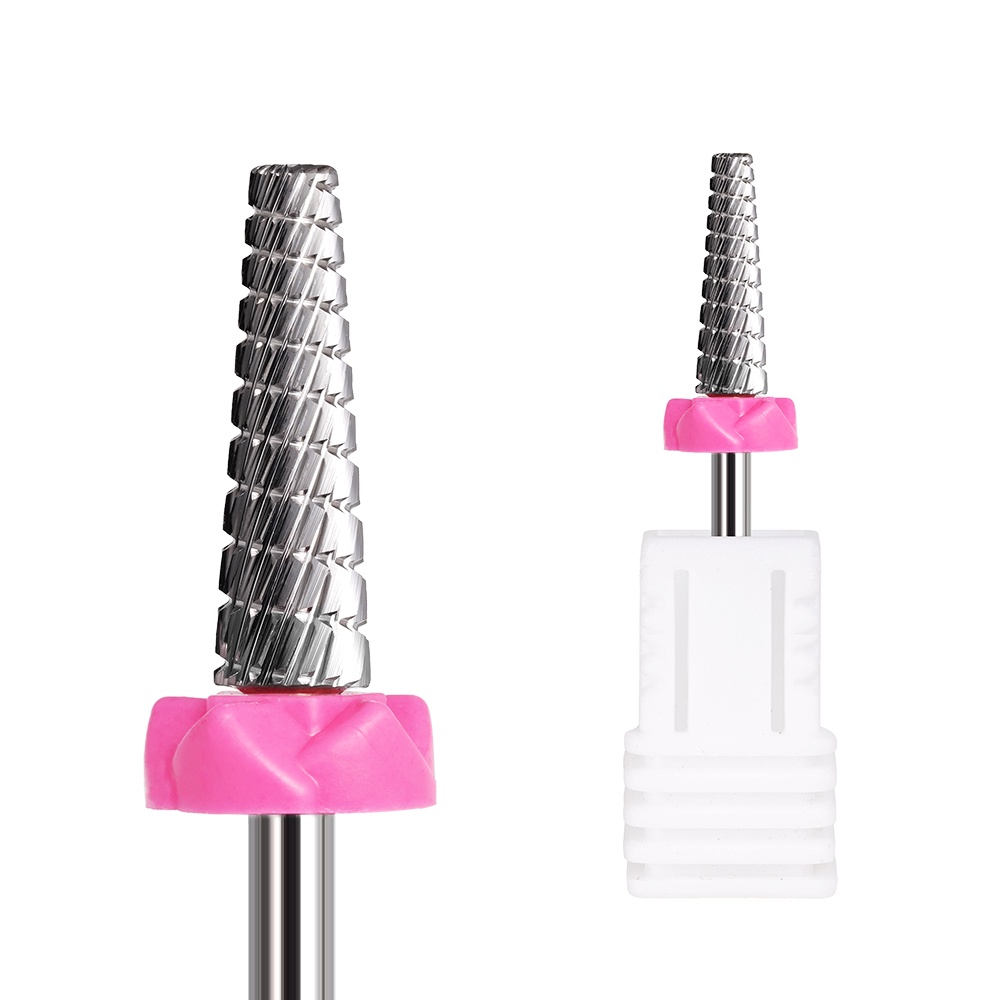
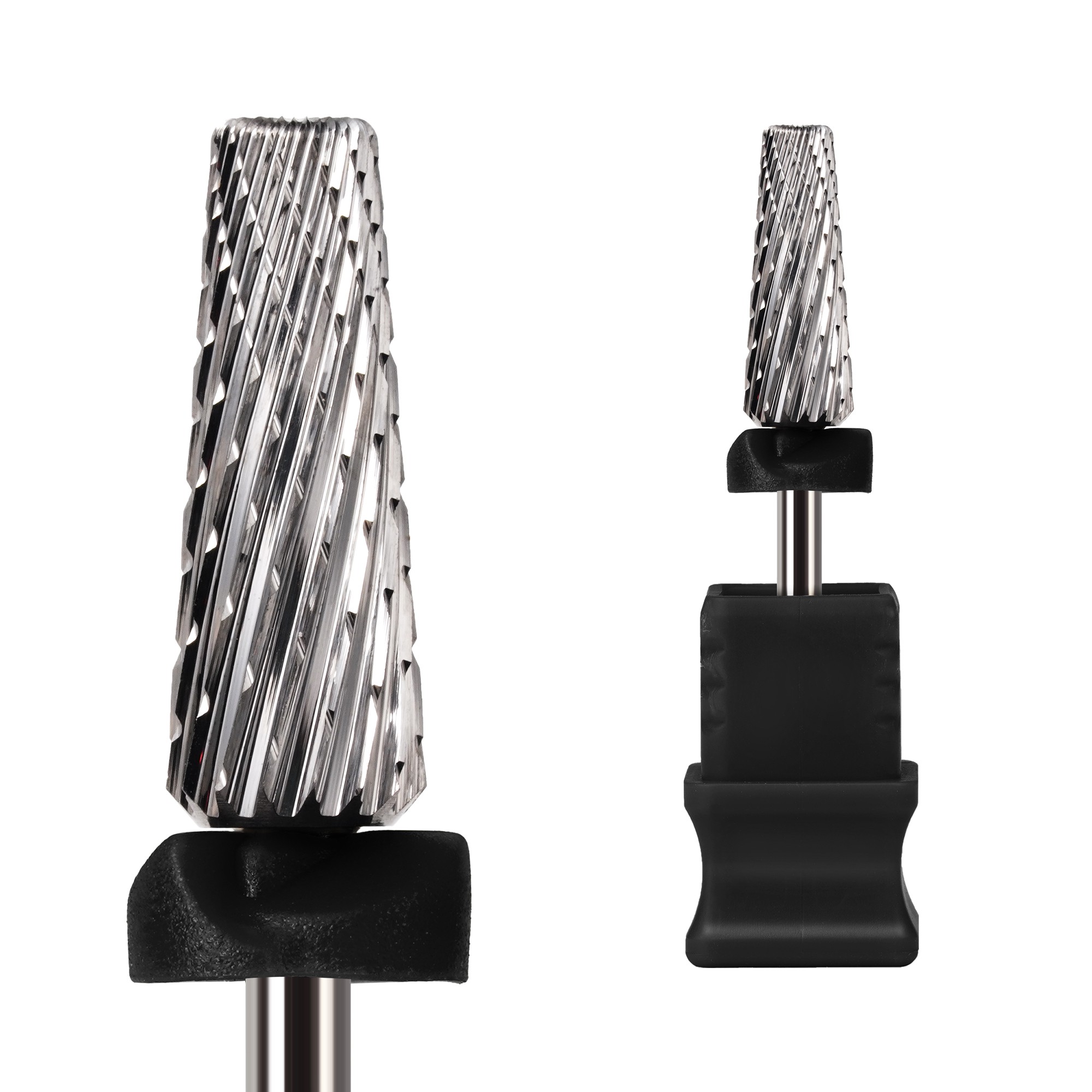
That is especially relevant when the sourcing scope includes drill bits together with the electric nail file. For example, a tungsten carbide bit with helical teeth, flat-tip safety shaping, and dust-shedding geometry may perform differently from a lower-grade copy even if the outline is similar. A technical reference such as Quick Nail Polish Remover No Vibration Your Hands Pink Label Helical Teeth 5-in-1 Universal Tungsten Carbide Nail Drill Bits is useful in evaluation because it highlights what should actually be verified: carbide grade, edge consistency, breakage resistance, smoothness at the tip, and whether the bit remains sharp after repeated use rather than only looking correct in sample photos.
For abrasive and cutting accessories, the quality discussion should move beyond “material: tungsten carbide” or “high hardness.” Useful questions are whether the cutting profile is CNC-controlled, how concentricity is checked, whether the shank diameter is held consistently for universal fit, and how the supplier separates finished goods that are cosmetically acceptable but mechanically imbalanced. A low defect rate on appearance does not guarantee stable use on an electric handpiece running at high speed.
OEM and ODM work can increase risk if revision control is weak
Private label projects in this category often involve several small revisions rather than one major redesign. A logo position changes, then the gift box insert changes, then the plug standard changes, then a bit assortment is swapped. None of these looks serious on its own. The problem appears when approvals are passed through chat screenshots, marked-up images, and spreadsheet notes without a master version record. That is how mixed packaging, wrong adapters, or old manuals end up in the same shipment.
When the project includes custom accessory kits, the risk grows further because the factory may source the electric file from one workshop, bits from another, sanding bands from a third, and packaging from a fourth. Assembly can still be smooth if there is a tight BOM and final packing inspection. Without that discipline, the order may pass internal shipment checks while containing mismatched accessory counts, inconsistent color labels, or insert trays that do not hold the handpiece securely during transit.
A practical way to test ODM maturity is to review how the supplier handles pre-production samples after comments are issued. Clear item codes, revised artwork files, and sample sign-off references usually indicate a workable system. Vague responses such as “same as before but improved” should be treated cautiously because they do not tie changes to measurable output.
Sampling should simulate use, transport, and repeat purchasing conditions
A single showroom-quality sample does not tell enough. Sample review should include hand feel, speed response, sound profile, cable flexibility, chuck stability, and heating after sustained operation. Accessories should be fitted and removed repeatedly to check shank tolerance and locking reliability. Packaging should be opened and reclosed to see whether inserts deform easily or printed surfaces scratch during handling.
Transport risk is often underestimated. If the handpiece sits loosely in the box, vibration during shipment may create cosmetic abrasion, bent shafts, or accessory damage. Carton compression matters as well, especially when the order is packed in mixed SKUs with inserts of different heights. If export packaging has not been validated through practical handling logic, the landed condition may differ sharply from the approved sample.
Repeat purchasing conditions deserve equal attention. Ask whether the supplier can reproduce the same motor spec, shell finish, cable length, and bit surface treatment on the next order without re-sourcing. This is where many light industrial products become unstable: the first batch is assembled carefully from selected parts, while later batches are filled with equivalent-but-not-identical substitutes because the original supply chain was not fixed.
Export compliance is not just a paperwork issue
For a China electric nail file, export readiness involves plug configuration, voltage compatibility, labeling language, carton marks, inner packaging statements, and in some markets the presentation of electrical information on the device body and adapter. Errors here do not always mean the product is unsafe, but they can still create port delays, relabeling cost, or warehouse rejection. The source factory should be able to provide consistent labeling logic across unit box, master carton, and product marking.
Battery-free models are usually simpler to ship than rechargeable versions, but adapter and cable combinations still need careful confirmation. If the quotation includes interchangeable plugs or multiple regional versions, SKU separation has to be strict. Mixing these variants inside one production plan without robust controls is a common source of shipment error.
Cost comparison works better when the quote is broken into failure points
Rather than ranking offers by headline price, divide each quote into the areas where margin-driven shortcuts usually appear: motor quality, bearing grade, cable assembly, bit material, finish consistency, packaging strength, and inspection depth. Then compare lead time assumptions and defect handling terms beside those details. A higher unit cost can still be commercially cleaner if it reduces rework, replacement stock, and communication drag after delivery.
- One quote may use a standard neutral box with simple protection, while another includes a molded insert and stricter accessory count control. The difference belongs in risk analysis, not only in packaging cost.
- A supplier that accepts a very low MOQ may be relying on mixed-part inventory from prior runs, which can be acceptable if traceability is maintained and problematic if component revisions are undocumented.
- When abrasive bits are bundled with the machine, low pricing sometimes comes from downgrading accessory metallurgy rather than from improving assembly efficiency.
In negotiations, the most useful signal is consistency. If specifications, sample feedback, packing details, and MOQ logic remain coherent through multiple rounds, the sourcing path is usually more controllable. If the numbers shift each time a technical question is raised, the initial quotation may not represent a stable production arrangement.
A China electric nail file project becomes easier to manage when capability is verified at process level, MOQ is tied to actual cost structure, and quality review reaches beyond appearance and brochure claims. Those three areas usually reveal whether the quoted product can be repeated reliably after the first order.
Cost pressure in a China electric nail file project usually shows up long before mass production. A quoted unit price may look acceptable, yet the real expense often comes from unstable motor performance, inconsistent abrasive parts, packaging defects, or an MOQ that forces stock to sit too long. When evaluating supply options, the useful comparison is not only factory-to-factory price, but the full combination of production depth, specification control, and risk exposure across the order cycle.
In this category, “electric nail file” can refer to the handpiece, control unit, adapters, spare bits, sanding bands, and retail or bulk packaging as one package or as separate sourced items. That distinction matters because some suppliers assemble finished devices but do not machine key components, while others mainly produce consumables such as carbide bits or sanding accessories and outsource the electrical section. A quotation can therefore hide multiple subcontract layers. If that structure is unclear, lead time drift and accountability problems tend to appear during sample revision or repeat orders.
Factory capability is easier to judge through process detail than through catalog breadth
A broad product catalog does not automatically indicate strong manufacturing control. In light industrial daily-use products, many suppliers can present dozens of models, colors, and accessory combinations, but their real capability is revealed by how precisely they answer questions on component tolerances, motor grade consistency, chuck fit, vibration control, and packaging standards. A capable source should be able to explain which parts are made in-house, which are outsourced, and where final inspection happens.
For a China electric nail file, the core technical concern is stable rotation under working load. Excessive vibration, heat rise, or noticeable speed fluctuation often signals weak assembly discipline, poor bearing selection, or uneven shaft alignment. Those issues may not be obvious in a static sample review. A factory with genuine process control should be able to discuss no-load and load testing methods, cable flex endurance, switch durability, handpiece surface finishing, and how it manages defects found during final testing.
Capability also includes document handling. If artwork approval, carton marking, plug type control, instruction language versions, and spare-part matching are handled loosely, commercial risk increases even when the product itself is usable. Mismatched labels or adapter errors can delay customs clearance or create rework at destination warehouses. In practice, the supplier that manages version control cleanly is often lower risk than the one offering the cheapest assembly quote.
MOQ flexibility needs to be read against tooling, component sourcing, and packaging complexity
MOQ is often treated as a simple negotiation point, but in this product range it usually reflects several cost locks underneath. If the electric nail file uses a standard shell, common adapter, and neutral packaging, the factory may accept a smaller opening order. Once custom color matching, logo engraving, multilingual manual sets, molded trays, or exclusive accessory combinations are added, the minimum may rise because raw material preparation and packaging procurement stop being generic.
Small MOQ offers can also be misleading. In some cases, the factory agrees to a low quantity for the device but substitutes a higher charge into packaging, sample fee, accessory pricing, or inland logistics. A better approach is to ask for the MOQ by cost element: main unit, spare bits, packaging set, barcode label, and replacement parts. This often shows whether the supplier is truly flexible or simply moving the threshold into another line item.
Another point is inventory linkage. If a supplier carries standard motors, bearings, or collet parts regularly, replenishment is usually smoother. If they purchase these only after order confirmation, lead time may expand sharply when upstream parts are short. MOQ discussions should therefore include which materials are standard stock, which are custom ordered, and whether leftover packaging or components can be reserved for a follow-up order instead of being scrapped or re-billed.
Quality risks often start with materials that look equivalent on paper
The handpiece body, internal transmission parts, cable insulation, adapter housing, and accessory bits may all pass a surface-level specification review while performing very differently in use. Material substitutions are common risk points in daily-use hardware because visual similarity is easy to maintain. Plastic can appear identical while becoming brittle under repeated cleaning exposure. Metal parts can look polished while having inconsistent hardness or poor corrosion resistance. Abrasive accessories can cut aggressively at first and then lose edge quickly.
That is especially relevant when the sourcing scope includes drill bits together with the electric nail file. For example, a tungsten carbide bit with helical teeth, flat-tip safety shaping, and dust-shedding geometry may perform differently from a lower-grade copy even if the outline is similar. A technical reference such as Quick Nail Polish Remover No Vibration Your Hands Pink Label Helical Teeth 5-in-1 Universal Tungsten Carbide Nail Drill Bits is useful in evaluation because it highlights what should actually be verified: carbide grade, edge consistency, breakage resistance, smoothness at the tip, and whether the bit remains sharp after repeated use rather than only looking correct in sample photos.
For abrasive and cutting accessories, the quality discussion should move beyond “material: tungsten carbide” or “high hardness.” Useful questions are whether the cutting profile is CNC-controlled, how concentricity is checked, whether the shank diameter is held consistently for universal fit, and how the supplier separates finished goods that are cosmetically acceptable but mechanically imbalanced. A low defect rate on appearance does not guarantee stable use on an electric handpiece running at high speed.
OEM and ODM work can increase risk if revision control is weak
Private label projects in this category often involve several small revisions rather than one major redesign. A logo position changes, then the gift box insert changes, then the plug standard changes, then a bit assortment is swapped. None of these looks serious on its own. The problem appears when approvals are passed through chat screenshots, marked-up images, and spreadsheet notes without a master version record. That is how mixed packaging, wrong adapters, or old manuals end up in the same shipment.
When the project includes custom accessory kits, the risk grows further because the factory may source the electric file from one workshop, bits from another, sanding bands from a third, and packaging from a fourth. Assembly can still be smooth if there is a tight BOM and final packing inspection. Without that discipline, the order may pass internal shipment checks while containing mismatched accessory counts, inconsistent color labels, or insert trays that do not hold the handpiece securely during transit.
A practical way to test ODM maturity is to review how the supplier handles pre-production samples after comments are issued. Clear item codes, revised artwork files, and sample sign-off references usually indicate a workable system. Vague responses such as “same as before but improved” should be treated cautiously because they do not tie changes to measurable output.
Sampling should simulate use, transport, and repeat purchasing conditions
A single showroom-quality sample does not tell enough. Sample review should include hand feel, speed response, sound profile, cable flexibility, chuck stability, and heating after sustained operation. Accessories should be fitted and removed repeatedly to check shank tolerance and locking reliability. Packaging should be opened and reclosed to see whether inserts deform easily or printed surfaces scratch during handling.
Transport risk is often underestimated. If the handpiece sits loosely in the box, vibration during shipment may create cosmetic abrasion, bent shafts, or accessory damage. Carton compression matters as well, especially when the order is packed in mixed SKUs with inserts of different heights. If export packaging has not been validated through practical handling logic, the landed condition may differ sharply from the approved sample.
Repeat purchasing conditions deserve equal attention. Ask whether the supplier can reproduce the same motor spec, shell finish, cable length, and bit surface treatment on the next order without re-sourcing. This is where many light industrial products become unstable: the first batch is assembled carefully from selected parts, while later batches are filled with equivalent-but-not-identical substitutes because the original supply chain was not fixed.
Export compliance is not just a paperwork issue
For a China electric nail file, export readiness involves plug configuration, voltage compatibility, labeling language, carton marks, inner packaging statements, and in some markets the presentation of electrical information on the device body and adapter. Errors here do not always mean the product is unsafe, but they can still create port delays, relabeling cost, or warehouse rejection. The source factory should be able to provide consistent labeling logic across unit box, master carton, and product marking.
Battery-free models are usually simpler to ship than rechargeable versions, but adapter and cable combinations still need careful confirmation. If the quotation includes interchangeable plugs or multiple regional versions, SKU separation has to be strict. Mixing these variants inside one production plan without robust controls is a common source of shipment error.
Cost comparison works better when the quote is broken into failure points
Rather than ranking offers by headline price, divide each quote into the areas where margin-driven shortcuts usually appear: motor quality, bearing grade, cable assembly, bit material, finish consistency, packaging strength, and inspection depth. Then compare lead time assumptions and defect handling terms beside those details. A higher unit cost can still be commercially cleaner if it reduces rework, replacement stock, and communication drag after delivery.
- One quote may use a standard neutral box with simple protection, while another includes a molded insert and stricter accessory count control. The difference belongs in risk analysis, not only in packaging cost.
- A supplier that accepts a very low MOQ may be relying on mixed-part inventory from prior runs, which can be acceptable if traceability is maintained and problematic if component revisions are undocumented.
- When abrasive bits are bundled with the machine, low pricing sometimes comes from downgrading accessory metallurgy rather than from improving assembly efficiency.
In negotiations, the most useful signal is consistency. If specifications, sample feedback, packing details, and MOQ logic remain coherent through multiple rounds, the sourcing path is usually more controllable. If the numbers shift each time a technical question is raised, the initial quotation may not represent a stable production arrangement.
A China electric nail file project becomes easier to manage when capability is verified at process level, MOQ is tied to actual cost structure, and quality review reaches beyond appearance and brochure claims. Those three areas usually reveal whether the quoted product can be repeated reliably after the first order.
News List
- Preventing Gouges and Uneven Filing With Small Barrel Nail Drill BitsSep 20, 2026
- How Diameter and Grit Affect Small Barrel Nail Drill Bit PerformanceSep 20, 2026
- Can Hytos Nail Drill Bits Be Used Safely on Natural Nails and Gel Polish?Sep 20, 2026
- How to Verify Fit Between Hytos Nail Drill Bits and an E-File HandpieceSep 20, 2026
- Safe Speed Settings for Umbrella Nail Drill Bits Around the Nail FoldSep 20, 2026
- Umbrella vs Flame Nail Drill Bits: Which Shape Offers Better Cuticle Control?Sep 20, 2026
Best-Selling Products
 Cross Cut Safety Stainless Steel Tungsten Carbide Nail Drill Bits Salon Foot Use XF-C Grit for Removing Nails
 First-rate Quality Tungsten Carbide Nail Drill Bits Best Coating Manicure Remove Gel Nails Accessories
 Professional Advanced Safety Cuticle Bits Two-Way Rotate 3/32'' Carbide Tungsten 5 in 1 Nail Drill Bits
 Wholesale 5 in 1 Electric Manicure Nail Drill Bits Various Coating Cone Cuticle Bit with Rotary Cross Cut for Nail Art
 New Slant Tooth Tungsten Steel Nail Drill Bits Dead Skin Removal 5-in-1 Universal Grinding Nail Polish Head Tool Nail Drill Bits
 4.0mm Small 5 in 1 Integrated Sharpe Tungsten Nail Drill Bit Straight Teeth Gel Polish Removal
 Flame Sharp XF F M C XC Silver Safety Professional Corn Tungsten Carbide Nail Bit for Drill Machine Accessories
 Factory Direct 5 in 1 Tungsten Carbide Nail Drill Bits 6.8MM Cross Cut Safety Manicure 5 in 1 Nail Drill Bits
Please give us a message